Nana Muazin

The global influencer marketing industry has reached a pivotal maturation point, with total spending in the United States alone projected to surpass $10 billion by 2025, according to industry estimates from eMarketer. As budgets swell and the complexity of creator partnerships increases, the software infrastructure supporting these initiatives has become a critical battleground for Chief Marketing Officers and digital strategists. For years, CreatorIQ has served as the dominant enterprise solution, particularly favored by Fortune 500 companies for its robust compliance frameworks and multi-brand management capabilities. However, as the industry shifts from brand awareness toward performance-driven commerce, a new wave of specialized alternatives is challenging the incumbent’s market share by offering more streamlined, sales-focused, and cost-effective solutions.
The primary tension in the current market stems from the divergent needs of global conglomerates versus agile Direct-to-Consumer (DTC) brands. While CreatorIQ provides the "approval layers" and audit trails necessary for a multi-billion-dollar corporation with hundreds of internal stakeholders, mid-market brands and specialized agencies often find themselves paying for enterprise-grade controls they never utilize. This disconnect has spurred a migration toward platforms that prioritize commerce integration, automated attribution, and artificial intelligence over traditional manual workflows.
The Shift from Engagement to Attribution: A Chronological Context
The evolution of influencer marketing software can be traced back to the early 2010s, when platforms were little more than searchable databases of social media handles. During this era, the primary metrics were "vanity metrics"—follower counts and likes. By the mid-2010s, the industry moved toward engagement rates, as marketers realized that large followings did not always equate to active attention.
In the current "Performance Era," which began roughly in 2020, the focus has shifted entirely to ROI (Return on Investment). The formula for success has been refined to a precise calculation: ROI equals the return minus the cost, divided by the cost, multiplied by 100. However, this formula is only as accurate as the sales data fed into it. This requirement for precision has exposed a flaw in legacy enterprise systems: if a platform cannot natively connect to a brand’s digital storefront, the attribution data often ends up trapped in disconnected spreadsheets, requiring hours of manual labor to reconcile.
Data from Upfluence, a leading competitor in the space, underscores the volatility of traditional engagement metrics. An analysis of 10.9 million creator profiles across Instagram, TikTok, and YouTube revealed that as an audience grows, engagement typically plummet. Nano-creators (those with fewer than 10,000 followers) maintain a median engagement rate of 2.5% on Instagram, whereas "mega-creators" (over 1 million followers) see that figure drop to a median of 0.8%. This data suggests that for brands focused on conversion, smaller, more engaged creators often provide a higher ROI, provided the software can manage a larger volume of these micro-relationships efficiently.

Evaluating the Competitive Landscape: Leading Alternatives to CreatorIQ
As brands re-evaluate their software stacks, seven platforms have emerged as the primary alternatives to CreatorIQ, each catering to specific organizational structures and geographic needs.
1. Upfluence: The Rise of Agentic AI in Commerce
Upfluence has positioned itself as the primary alternative for ecommerce brands and agencies that are judged strictly on sales performance. The platform’s most significant departure from the CreatorIQ model is its deployment of "agentic" AI, specifically through its AI agent, Jaice. Unlike traditional tools that require humans to draft every outreach email and follow-up, Jaice manages the repetitive lifecycle of a campaign.
According to a 2025 report by Net Influencer, outreach efforts managed by Upfluence’s AI achieved a 22% higher reply rate than human-written counterparts within the same campaigns. This automation allowed brands to hire approximately 160,000 creators in 2025 alone. By connecting natively to platforms like Shopify, Amazon, WooCommerce, and Magento, Upfluence removes the "attribution gap," allowing every sale to be traced directly back to a specific creator’s post.
2. Traackr: Enterprise-Grade Compliance and Global Strategy
For organizations that require the same level of control as CreatorIQ but desire a different user experience or competitive tracking capabilities, Traackr remains a top contender. It is particularly entrenched in the beauty, fashion, and consumer electronics sectors. Traackr’s strength lies in its "reputation-risk screening" and its ability to monitor how competitors are utilizing creators on a global scale. With annual plans starting at $20,000, it remains a high-end choice but offers transparency in its pricing that is often missing from other enterprise negotiations.
3. Kolsquare: Navigating the European Regulatory Environment
As data privacy becomes a central concern for global brands, Kolsquare has carved out a niche as the leading European alternative. Based in Paris, the platform is built with a "GDPR-first" philosophy. For brands operating in the UK and EU, the regulatory landscape is increasingly complex. The UK’s Advertising Standards Authority (ASA) and Competition and Markets Authority (CMA) have strict rules regarding disclosure, mirroring the FTC’s requirements in the United States. Kolsquare provides specific guidance and benchmarking for these markets, making it a strategic choice for brands with a heavy European footprint.
4. Later Influence: Integration with Social Management
Formerly known as Mavrck, Later Influence is now integrated into the broader Later social media suite. This platform is ideal for social media teams that want to manage their scheduled posts, "Link-in-Bio" tools, and influencer campaigns through a single login. However, because it relies on an opted-in index of creators, its database may be less exhaustive in highly specialized or "long-tail" niches compared to platforms that index the open web.

5. Grin and Aspire: The Community and DTC Specialists
Grin has become synonymous with the Shopify ecosystem. It is designed specifically for Direct-to-Consumer brands where product gifting and affiliate payouts are the primary drivers of growth. Aspire (formerly AspireIQ), meanwhile, focuses on the "ambassador" model. It excels in managing inbound applications, allowing fans of a brand to apply to join a community, which is highly effective for lifestyle and broad consumer categories.
6. Modash: High-Volume Discovery
For teams whose primary bottleneck is finding new talent, Modash offers one of the largest databases in the industry, covering over 250 million profiles. It stands out as the only major alternative offering a self-serve, transparently priced model with a free trial, making it the most accessible entry point for startups and smaller agencies.
Technical and Regulatory Implications of Switching Platforms
The decision to migrate from a legacy system like CreatorIQ involves more than just a comparison of feature lists; it requires a deep dive into technical compatibility and legal compliance.
Commerce Integration and Data Integrity
A critical check for any alternative is its ability to read the brand’s store data. Switching ecommerce platforms (e.g., moving from Magento to Shopify) is a massive undertaking; therefore, the influencer marketing tool must adapt to the store, not vice versa. Without a native connection, brands are forced to rely on "promo code" tracking, which often fails to capture the full scope of an influencer’s impact, particularly when consumers see an ad on mobile but purchase later on a desktop.
The Disclosure Mandate
Regulatory bodies globally are cracking down on undisclosed paid partnerships. In the U.S., the FTC requires a "material connection" to be clearly disclosed. In Canada, the Competition Bureau enforces similar standards. A modern CreatorIQ alternative must have automated systems to detect whether creators are using the required #ad or #sponsored hashtags, protecting the brand from significant legal and reputational risk.
Industry Analysis: The Future of Creator Management
The fragmentation of the influencer marketing software market reflects a broader trend in SaaS: the move away from "all-in-one" behemoths toward "best-of-breed" specialized tools. As AI continues to automate the manual labor of creator vetting and outreach, the value of these platforms will shift from their database size to the intelligence of their automation.
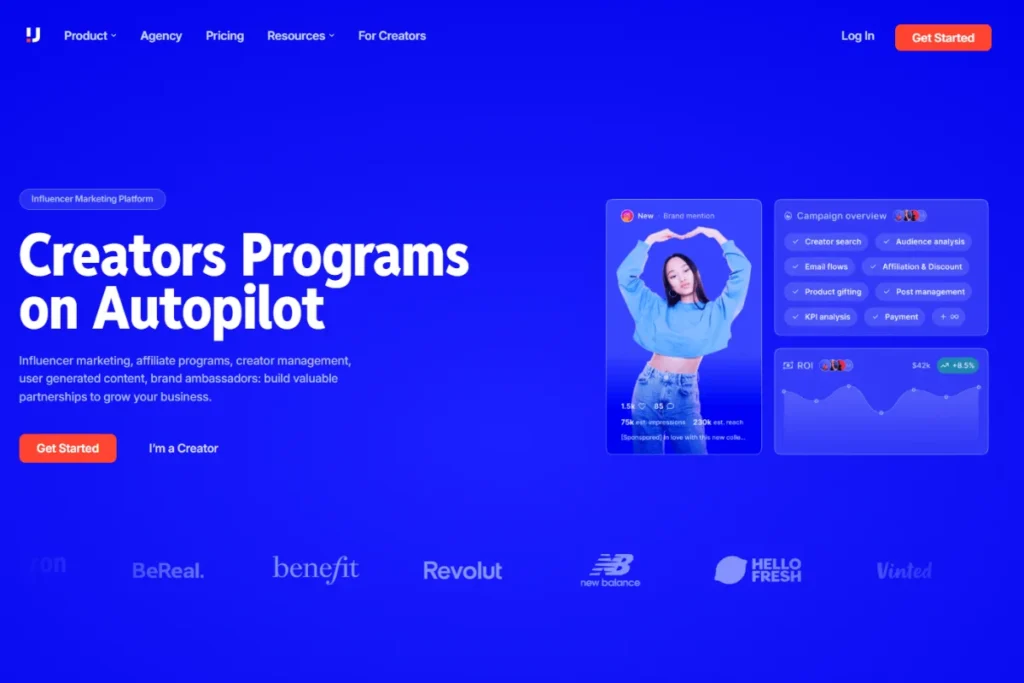
Industry experts suggest that the next frontier will be "predictive picking"—where software not only tracks past sales but uses machine learning to predict which new creators will drive the highest ROI based on a brand’s specific historical data. Platforms like Upfluence are already moving in this direction, signaling a future where the "marketing manager" role shifts from administrative coordinator to high-level strategist.
Conclusion and Strategic Recommendations
For enterprise brands currently utilizing CreatorIQ, a switch is warranted only if the cost of the software exceeds the value of its administrative controls. If a company operates across multiple international business units with a dedicated compliance department, the rigors of CreatorIQ or Traackr remain the industry standard.
However, for single-brand stores, mid-market ecommerce companies, and agencies focused on measurable sales, the alternatives offer a more direct path to ROI. The transition process should be phased: exporting creator lists and historical campaign data, testing a single program on the new platform, and verifying that the attribution matches the store’s internal sales records before a full migration. In a $10 billion market, the difference between a platform that merely tracks "likes" and one that drives "orders" can represent millions of dollars in untapped revenue.


 Dwi Wanna

 Lina Irawan