rifanmuazin
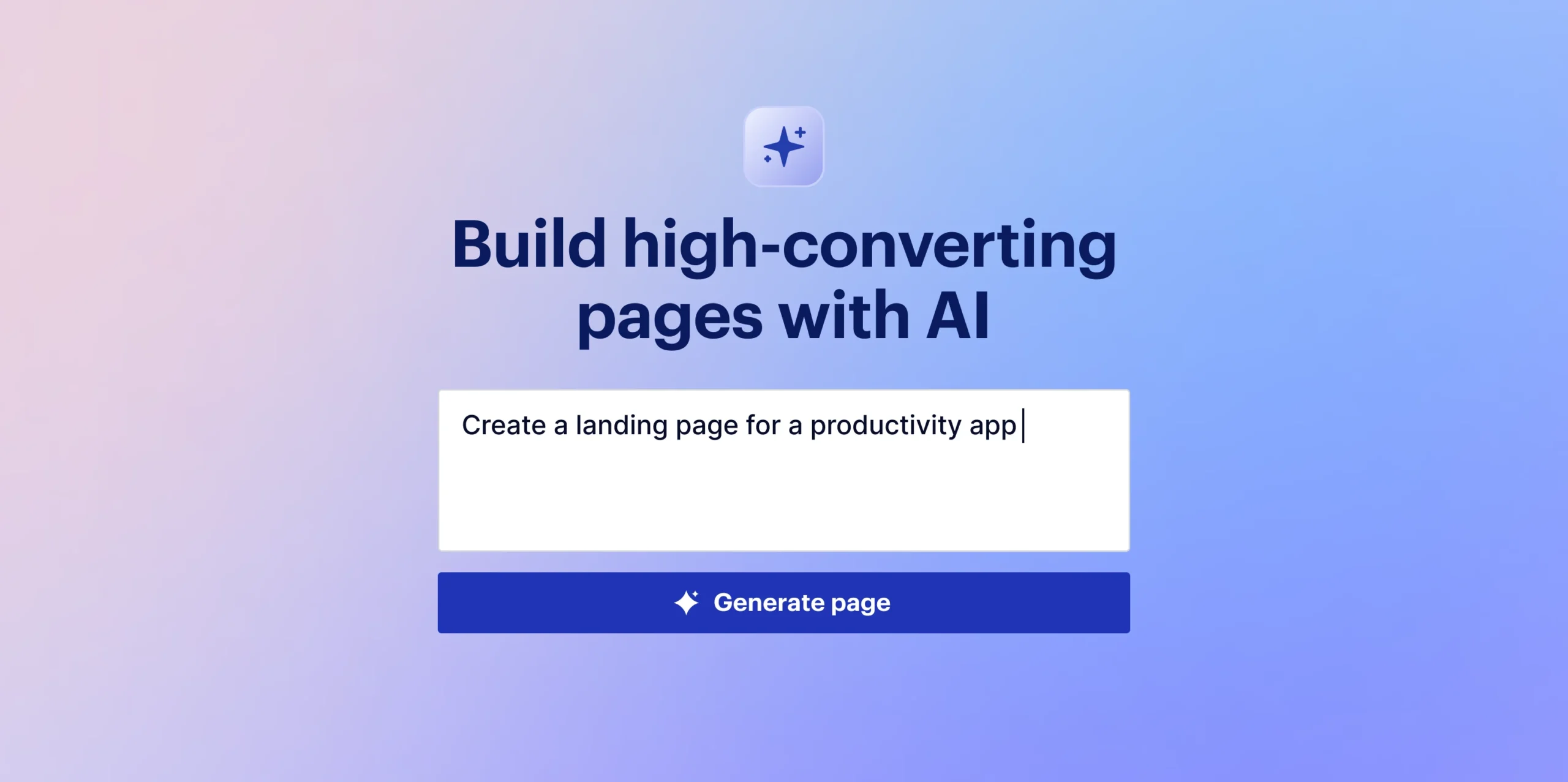
The digital marketing landscape has undergone a seismic shift as Instapage, a long-standing leader in landing page technology, officially announced the transition of its services into a comprehensive, end-to-end AI-powered marketing platform. This strategic evolution marks a significant milestone for the company, which has spent over a decade refining Conversion Rate Optimization (CRO) tools. By embedding generative artificial intelligence across every stage of the marketing funnel—from initial page design to automated lead follow-up—Instapage aims to address the growing demand for high-efficiency, low-headcount marketing solutions in an increasingly competitive digital economy.
The centerpieces of this new release include AI Page Generation, AI Email Generation, and AI Collections. These tools are designed to eliminate the friction typically associated with launching and scaling digital campaigns. According to the company, the integration of these features allows businesses to move from a conceptual idea to a live, conversion-ready campaign in a matter of seconds, bypassing the traditional bottlenecks of manual copywriting, layout design, and technical integration between disparate software tools.
The Evolution of Instapage: A Decade of CRO Innovation
To understand the significance of this shift, it is necessary to look at the historical trajectory of Instapage. Founded in 2012, the company initially entered the market with a singular focus: providing a user-friendly builder for high-converting landing pages. At the time, creating professional landing pages required either significant coding knowledge or the use of rigid, template-based systems that offered little in the way of customization.
Over the next several years, Instapage expanded its footprint, evolving from a simple builder into a sophisticated CRO and marketing suite. This expansion included the introduction of personalization features, A/B testing capabilities, heatmaps, and advanced analytics. By 2020, the platform was helping thousands of businesses scale their digital presence without the need for extensive technical teams.
The move toward AI represents the third major wave in the company’s history. While the previous decade was defined by the "drag-and-drop" revolution, the current era is defined by "prompt-and-refine" workflows. This shift is a response to the "tool fatigue" experienced by modern marketing teams, who often find themselves stitching together a dozen different platforms for email, web design, and data tracking. Instapage’s new platform seeks to consolidate these functions into a single, AI-driven environment.
Technical Breakdown: AI Page Generation and the Editing Paradigm
One of the most significant hurdles in AI-assisted web design has been the "rigidity of generation." Most standalone AI page generators function by taking a user prompt and outputting a static or semi-editable design. However, if a user wishes to make substantial changes to the layout or structure after the initial generation, the system often requires a complete restart or a new prompt, which can lead to excessive token consumption and workflow delays.
Instapage’s AI Page Generation addresses this by combining generative AI with its proprietary pixel-perfect drag-and-drop builder. When a user describes a campaign goal—such as a product launch for a specific demographic—the AI generates a complete layout with tailored messaging and optimized visual hierarchies. Crucially, once the page is generated, the user retains full creative control. Elements can be moved, resized, or redesigned manually without needing to re-prompt the AI.
This hybrid approach addresses a common pain point in the industry: the inefficiency of back-and-forth prompting for minor design adjustments. By providing a visual interface for refinement, Instapage allows marketers to maintain brand consistency and precise layout control while benefiting from the speed of AI-generated drafts.
Bridging the Gap with AI-Powered Email Automation
Capturing a lead is only the first half of the conversion equation; the second half lies in the immediacy and relevance of the follow-up. Industry data consistently shows that the likelihood of conversion drops significantly if a lead is not contacted within the first hour of engagement. Despite this, many marketing teams struggle to maintain timely responses due to the manual effort required to export lead data and craft personalized emails.
The new Instapage AI Email Generator is designed to close this gap. By housing pages, leads, and emails in a single ecosystem, the platform allows for instant, automated responses. The AI can generate tailored messaging based on the specific goal, audience, and tone defined by the user.

For example, a lead who downloads a whitepaper on a landing page can be instantly funneled into an automated email sequence where the copy is dynamically generated to match the themes of the whitepaper. This level of integration eliminates the need for manual handoffs between marketing departments and ensures that no lead falls through the cracks due to technical friction between different software platforms.
Supporting Data: The Economic Pressure on Lean Marketing Teams
The release of these AI tools comes at a time when marketing budgets are under increased scrutiny. Recent industry reports indicate that in the mid-2020s, businesses are increasingly prioritizing "lean" operations, where smaller teams are expected to produce a higher volume of personalized content.
- Efficiency Gains: Preliminary data suggests that AI-driven page generation can reduce the time spent on the "first draft" phase of web design by up to 80%.
- Cost Reduction: By consolidating email automation, landing page hosting, and AI copywriting into one platform, businesses can reduce their "SaaS tax"—the cumulative cost of multiple monthly subscriptions—by an estimated 30% to 50%.
- Conversion Impact: Personalized AI-generated content has been shown to improve engagement rates. According to internal benchmarks, pages that utilize AI-driven personalization see a marked increase in conversion rates compared to generic, static templates.
Instapage’s strategic pivot is built on the premise that in 2026 and beyond, the competitive advantage will go to teams that can iterate the fastest. As AI lowers the barrier to entry for high-quality design, the focus shifts from "how to build" to "how to optimize and scale."
Industry Response and Market Implications
While official statements from major competitors have not yet been released, the industry’s move toward integrated AI is being closely watched by market analysts. The "all-in-one" approach adopted by Instapage places it in direct competition with larger CRM ecosystems like HubSpot, but with a more specialized focus on the conversion and design aspects of the funnel.
Marketing technology experts suggest that the integration of AI into the core workflow—rather than as a peripheral "bolt-on" feature—is what will define the next generation of successful SaaS platforms. The consensus among early testers is that the ability to generate a page and an accompanying email sequence from a single prompt represents a significant leap in marketing automation.
However, some analysts caution that the rapid adoption of AI in marketing must be balanced with human oversight. "While AI can generate the layout and the initial copy, the ‘last mile’ of brand voice and strategic alignment still requires a human touch," noted one digital strategy consultant. Instapage seems to have anticipated this by keeping its manual drag-and-drop editor at the center of the user experience.
Future Outlook: The Scaling Potential of AI Collections
Beyond individual pages and emails, Instapage is introducing "AI Collections," a feature aimed at high-volume agencies and enterprise teams. AI Collections allow users to manage groups of assets that can be updated and scaled simultaneously. This is particularly relevant for businesses running multi-regional campaigns or managing hundreds of sub-brands, where maintaining consistency across thousands of landing pages was previously a logistical nightmare.
As these AI features roll out—some of which are currently in a beta phase—Instapage is positioning itself as the primary operating system for the modern marketer. The company’s trajectory from a 2012 startup to a 2026 AI powerhouse reflects the broader trends of the tech industry: consolidation, automation, and the democratization of creative tools.
For businesses looking to adopt these technologies, Instapage has launched a 14-day free trial, allowing teams to test the AI page and email generation features in a live environment. As the rollout continues, the company plans to gather further data on how AI-driven workflows impact long-term ROI for its global user base.
The transition of Instapage into an end-to-end AI platform is more than just a software update; it is a signal that the era of fragmented marketing tools is drawing to a close. In its place is a more unified, intelligent approach to digital growth that promises to let marketers focus on strategy and creativity while the AI handles the heavy lifting of execution.

 Iffa Jayyana
 Layla Zulfa