The question of “How much does Google Ads cost?” is a perennial one, particularly for businesses venturing into the realm of paid search advertising for the first time. While the immediate concern often revolves around affordability, the reality is that Google Ads can be accessible to a wide range of budgets. However, there isn’t a simple, universal answer; the cost is inherently variable. This comprehensive guide aims to demystify Google Ads pricing by exploring the multifaceted factors that influence expenditure, enabling businesses to establish realistic budgets and optimize their investment.
At its core, Google Ads operates on a pay-per-click (PPC) model, meaning advertisers are charged each time a user clicks on their advertisement. The cost of each click, known as the Cost Per Click (CPC), fluctuates significantly. Across all business types and keywords in the United States, the average CPC on the Google Search Network hovers around $5.42. This figure is a broad benchmark; clicks on the Google Display Network, which features banner and image ads, are generally more economical, often costing less than $1.
The dynamic of PPC pricing can be analogized to traditional advertising, where a full-page spread in a national magazine commands a higher price than a small classified ad in a local paper. In the digital landscape, however, the determining factors are not the ad’s format but the intent behind and the competition for the keywords being bid upon. For instance, a high-intent keyword like “emergency roof repair near me” will naturally attract higher bids than a more informational query such as “how to fix a leaky roof.”

Understanding the Auction: Quality Score and Ad Rank
Google Ads employs an auction system to determine which ads are displayed and in what order. Crucially, this auction isn’t solely based on the highest bid; other critical elements play a significant role.
-
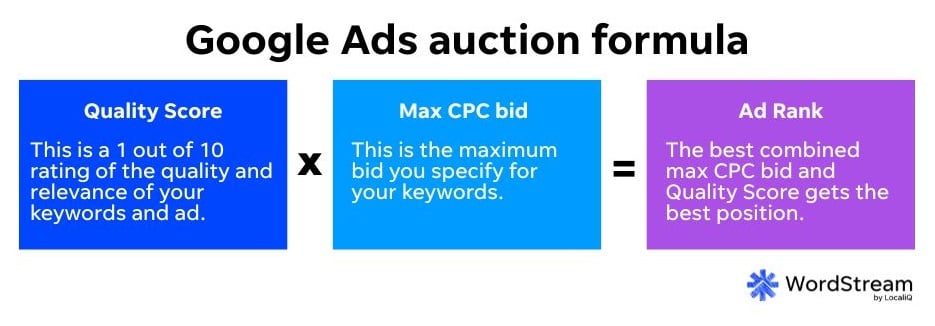
Quality Score: When a user enters a search query, Google identifies advertisers bidding on relevant keywords. An auction is then initiated, involving all eligible ads. The first crucial factor in this auction is the Quality Score, a rating from 1 to 10 assigned to each ad. This score is a composite of several elements:
- Relevance to the Keyword: How closely the ad copy and the linked landing page align with the user’s search term.
- Expected Click-Through Rate (CTR): A prediction of how likely users are to click on the ad, often influenced by past campaign performance.
- Landing Page Experience: The quality and usability of the webpage users land on after clicking the ad, including its loading speed, ease of navigation, and overall user experience.
-
Ad Rank: Following the Quality Score assessment, Google calculates each ad’s Ad Rank. This is a proprietary formula that multiplies the Quality Score by the advertiser’s maximum bid (the highest amount they are willing to pay per click). The ads with the highest Ad Rank are those that appear in the paid search results.
-
Cost Per Click (CPC): The actual amount an advertiser pays per click is not necessarily their maximum bid. Instead, it’s determined by the Ad Rank of the ad positioned directly below theirs, divided by their own Quality Score, plus one cent. This formula ensures that advertisers with a higher Quality Score can often achieve better ad positions at a lower cost per click compared to competitors with lower Quality Scores, even if their maximum bids are similar. This mechanism allows businesses with smaller budgets to remain competitive.
Factors Influencing Google Ads Costs
Several key variables directly impact the overall cost of a Google Ads campaign:
Industry
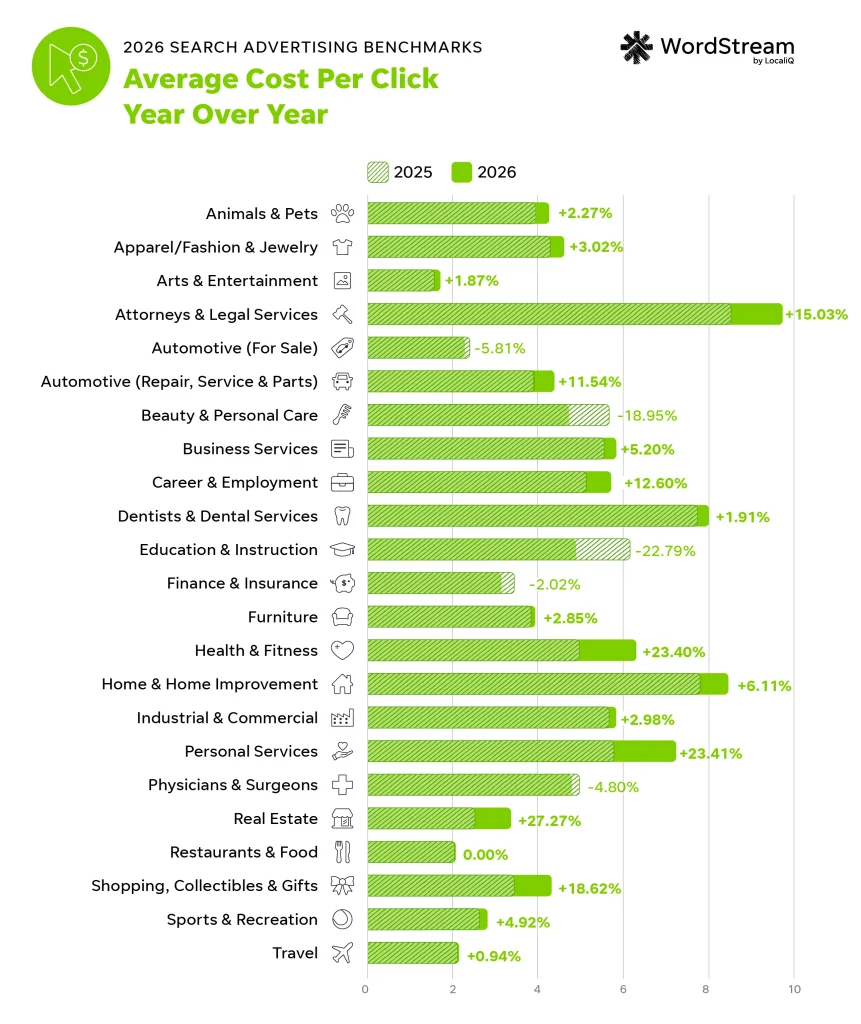
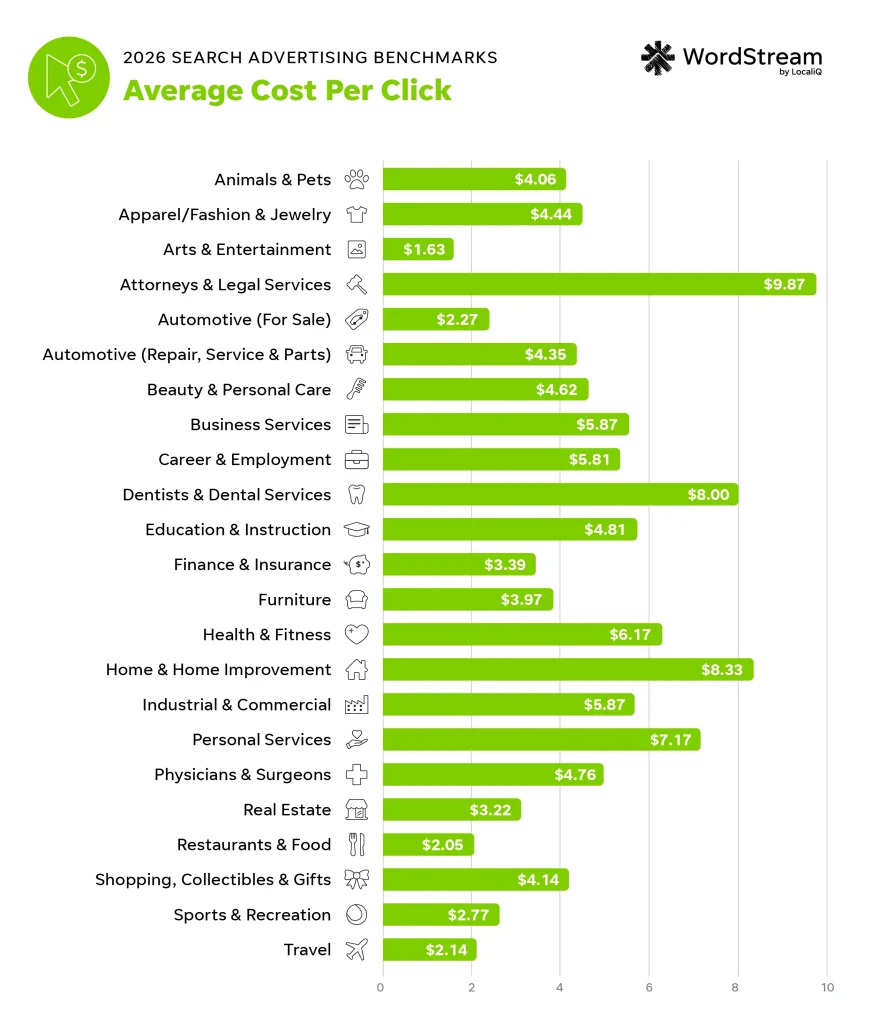
The industry in which a business operates is arguably the most significant determinant of Google Ads costs. Highly competitive sectors, such as legal services, accounting, and real estate, often experience substantially higher CPCs. This elevated cost is a reflection of the high potential value of a single customer acquisition. For example, a law firm might view a $10 CPC as a worthwhile investment if it leads to a client who generates thousands of dollars in revenue. Conversely, industries like arts and entertainment might have lower CPCs but require a greater volume of clicks to achieve comparable revenue goals.
Data from various industry benchmark reports consistently shows a wide disparity in CPCs across different sectors. For instance, while legal services might see average CPCs well over $50, industries like automotive or home goods might fall in the $2 to $5 range. These figures are not static and can fluctuate based on seasonal demand, economic conditions, and evolving consumer behavior.
Keyword Competition and Intent
The specific keywords targeted by an advertiser are central to their cost structure. Broad, high-volume keywords often attract intense competition, driving up bids. For example, a generic term like “shoes” will likely be far more expensive than a niche term like “vegan running shoes for women.”
The concept of “long-tail keywords” is particularly relevant here. These are longer, more specific phrases that, while having lower individual search volumes, often constitute the majority of total search queries. They also tend to have lower competition and associated costs. For example, instead of bidding on “exterminator,” a business might target “emergency ant exterminator in downtown Chicago.” While the broad term might be costly, the long-tail variation can attract highly qualified leads at a more affordable price point, often with a strong commercial intent.
Customer Lifecycle and Purchase Value
The length of the customer decision-making process and the average value of a sale also play a role. For businesses selling high-ticket items or services that require a longer consideration period, maintaining brand visibility across multiple touchpoints is crucial. This might involve a more extended and potentially more expensive campaign to nurture leads through the sales funnel. Conversely, for impulse purchases or low-cost items, the customer journey is typically shorter, and the cost per acquisition can be lower.
Current Trends and Seasonality
External factors, such as economic shifts, global events, or even seasonal demand, can significantly impact ad costs. For instance, during the COVID-19 pandemic, the apparel industry saw fluctuations in CPCs. Initially, costs may have dropped as consumer spending patterns changed, only to rebound as online shopping surged. Advertisers must remain agile and adapt their strategies to these evolving trends.
Account Management and Optimization
The effectiveness of an advertiser’s Google Ads management is a critical factor in controlling costs and maximizing return on investment (ROI). Simply launching ads without ongoing monitoring and optimization can lead to wasted spend. A well-managed account involves:
- Regular Performance Monitoring: Tracking key metrics like CTR, conversion rates, and cost per conversion.
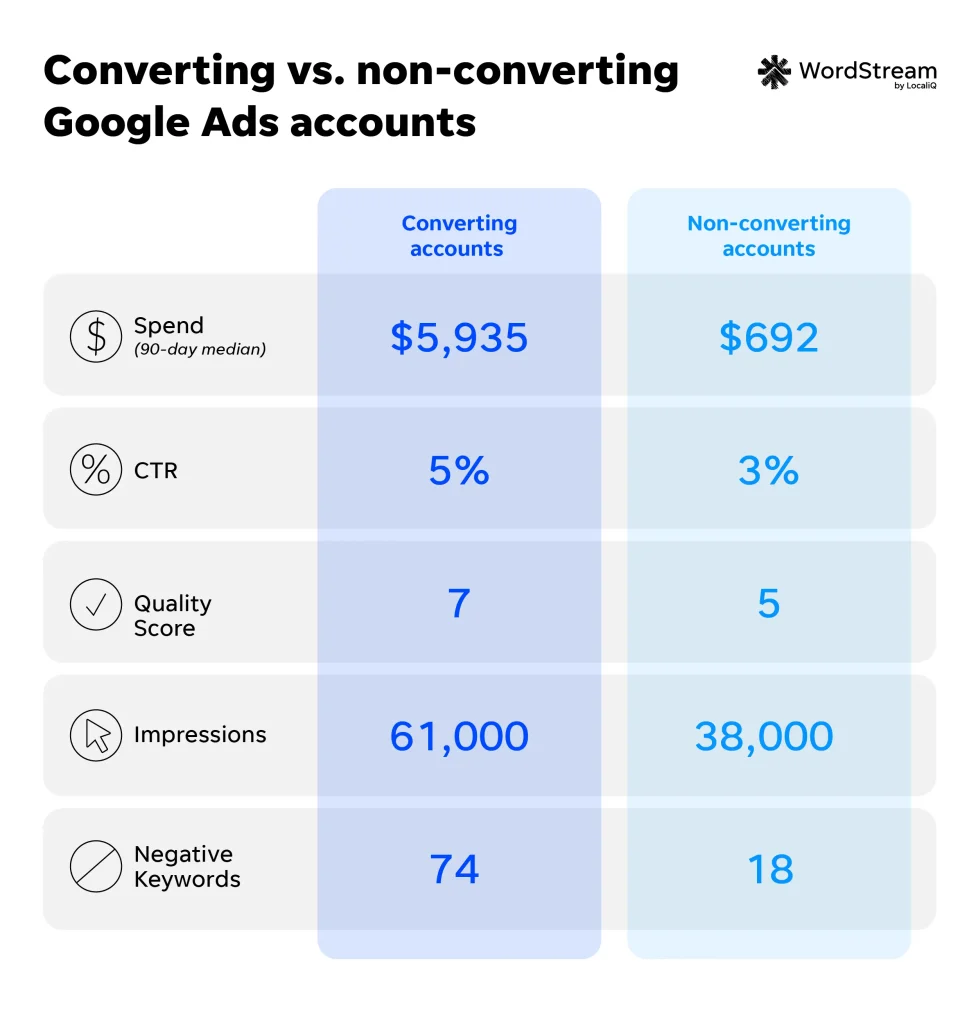
- Keyword Refinement: Continuously adding negative keywords to filter out irrelevant searches and pausing underperforming keywords.
- Ad Copy Testing: Experimenting with different ad creatives to identify what resonates best with the target audience.
- Landing Page Optimization: Ensuring landing pages are user-friendly, relevant, and designed to convert visitors into customers.
- Bid Management: Adjusting bids based on performance, time of day, location, and device.
Businesses that actively manage and optimize their Google Ads campaigns are far more likely to achieve lower costs and higher conversion rates. Industry data suggests that accounts with high conversion rates also tend to have higher engagement and better overall performance.
Budgeting Strategies in Google Ads

Understanding how budgeting works is fundamental to controlling Google Ads expenditure. Google Ads utilizes a daily budget system, but it’s essential to grasp its nuances:
Daily Budgets
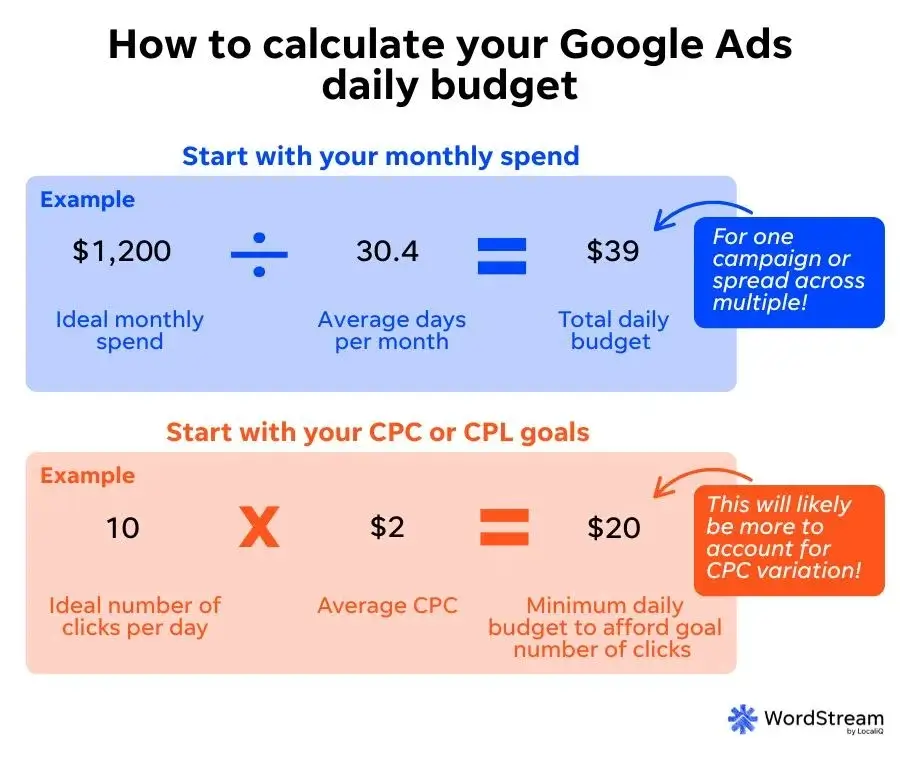
When setting up a campaign, advertisers define a daily budget, which represents the average amount they aim to spend each day. It’s important to note that Google does not spend this exact amount every single day. Instead, it aims for this figure to be the monthly average.
Spending Limits
Google may spend up to twice the advertiser’s average daily budget on any given day if it anticipates that this increased spending will lead to more clicks or conversions. However, an advertiser will never exceed their daily spending limit on any single day, and their total monthly spend will not exceed their monthly budget (calculated as the average daily budget multiplied by 30.4 days). For businesses not using the invoice payment method, it’s possible to set a specific monthly spend limit at the account level. This flexibility allows campaigns to capitalize on high-demand days while staying within overall financial constraints.
Determining Your Average Daily Budget
To calculate an appropriate average daily budget for a campaign, businesses typically divide their total monthly advertising budget by 30.4. The determination of the monthly budget itself depends on several factors:

- Business Goals: What are the overarching objectives of the campaign? Is it brand awareness, lead generation, or direct sales?
- Target Audience Size: How many potential customers are there within the target market?
- Competitor Activity: What is the general level of investment from competitors in the same ad space?
- Desired ROI: What level of return on investment is considered acceptable or desirable?
For example, a business might allocate a larger portion of its budget to a campaign promoting its flagship product compared to a campaign focused on content marketing for top-of-funnel prospects.
Bidding Strategies
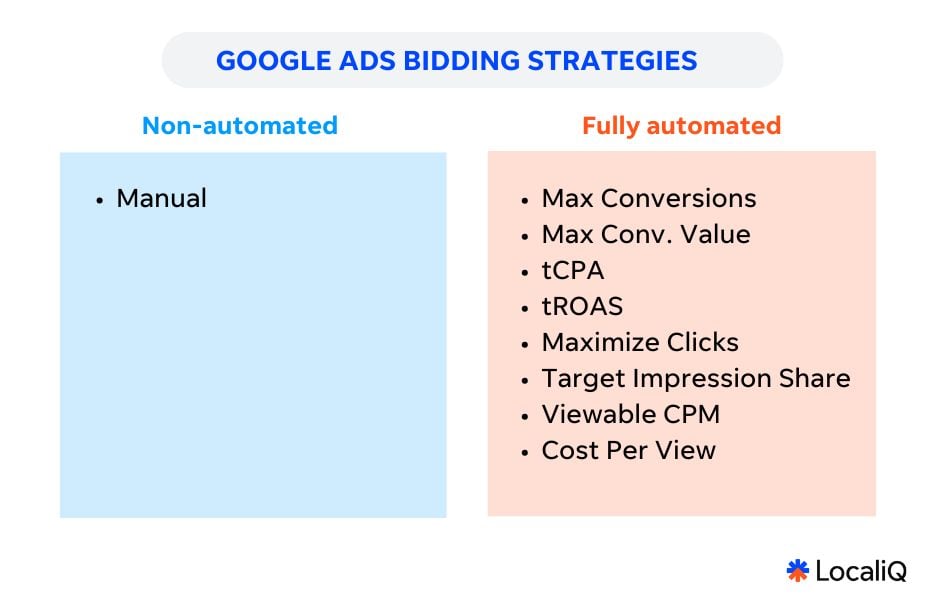
Bidding is another crucial component of Google Ads costs. The bid represents the maximum amount an advertiser is willing to pay for a click. Google offers various bidding strategies, including manual bidding, where advertisers set their own bids, and automated bidding strategies, which use machine learning to optimize bids for specific goals (e.g., maximizing clicks, conversions, or target return on ad spend).
- Manual CPC Bidding: Offers the most control but requires significant time and expertise to manage effectively.
- Automated Bidding Strategies: Tools like “Maximize Clicks,” “Target CPA” (Cost Per Acquisition), and “Target ROAS” (Return on Ad Spend) can automate the bidding process, aiming to achieve specific campaign objectives efficiently.
The choice of bidding strategy can significantly impact daily spend and overall campaign performance.
Additional Cost Considerations
Beyond the direct ad spend, other costs and considerations can influence the overall investment in Google Ads:
Marketing Partner Costs
Many businesses, particularly small to medium-sized enterprises, opt to outsource their Google Ads management to agencies or marketing partners. While this can save time and leverage expert knowledge, it introduces additional costs. These can include:
- Management Fees: Often a percentage of the ad spend or a fixed monthly retainer.
- Agency Markup: Some agencies may have their own markups on ad spend.
While these services come at a price, a skilled marketing partner can often mitigate wasted spend, improve campaign efficiency, and ultimately deliver a higher ROI, making the investment worthwhile. It is crucial to vet potential partners thoroughly and understand their fee structures and performance guarantees.
Wasted Spend
It’s a reality of digital advertising that not every dollar spent on Google Ads will directly result in a conversion. A portion of the budget can be considered “wasted spend” due to factors like irrelevant clicks, low-converting ad placements, or ineffective targeting. Industry benchmarks suggest that the average Google Ads account experiences a certain amount of wasted spend each month. Effective account management, including the strategic use of negative keywords, meticulous campaign structuring, and ongoing optimization, is essential to minimize this waste.
Ad Scheduling and Geotargeting
Advertisers can refine their spending by using features like ad scheduling and geotargeting.
- Ad Scheduling (Dayparting): This allows businesses to specify the times of day or days of the week when their ads should appear. For example, a retail store might choose to display ads only during business hours or allocate a larger portion of its budget to peak shopping times.
- Geotargeting (Location Targeting): This enables advertisers to target specific geographic areas, from entire countries to small radii around a physical location. This ensures that ad spend is focused on the most relevant audience, potentially saving money by excluding irrelevant regions.
Device Targeting
With the proliferation of mobile devices, understanding where your audience is searching is critical. Device targeting allows advertisers to adjust their bids and budget allocation based on whether users are searching on desktops, tablets, or smartphones. If mobile traffic consistently yields higher conversion rates or is more valuable to the business, a larger portion of the budget can be allocated to mobile ad placements.
Key Takeaways for Google Ads Costs
In summary, the cost of Google Ads is a complex interplay of numerous factors:

- Average CPC: While the overall average CPC is around $5.42 on the Search Network, this varies dramatically by industry and keyword.
- Industry Impact: Competitive industries like legal and finance incur significantly higher CPCs.
- Keyword Specificity: Long-tail keywords are often more cost-effective and yield highly qualified leads.
- Quality Score: A high Quality Score is crucial for reducing CPCs and improving Ad Rank.
- Budgeting Flexibility: Daily budgets are averages, and Google may spend more on certain days, up to a spending limit, to maximize performance.
- Management is Key: Active optimization, keyword refinement, and bid management are essential for cost control.
- Beyond Ad Spend: Consider potential costs from marketing partners and the inherent nature of wasted spend.
Ultimately, Google Ads is a powerful advertising platform that can be tailored to nearly any business budget. By understanding the intricate mechanisms of the ad auction, the various cost-influencing factors, and effective budgeting strategies, businesses can make informed decisions, set realistic expectations, and maximize the return on their Google Ads investment. The key lies not in finding a fixed price, but in mastering the variables to achieve strategic marketing objectives.