The landscape of online content discovery has undergone a profound transformation, moving far beyond the rudimentary keyword matching that once defined search engine optimization. Publishers clinging to outdated content strategies risk being left behind as Google’s sophisticated algorithms now prioritize a nuanced understanding of user intent, contextual relevance, and, critically, content quality, encapsulated by the E-E-A-T framework.
The Evolution of Search: From Keywords to Nuance
When Google first emerged in the late 1990s, its primary function was straightforward: to index web pages and return results based on the presence and frequency of keywords within a search query. This era saw the genesis of "keyword research and optimization" as the cornerstone of digital visibility. Content creators focused on embedding specific terms into their articles, meta tags, and URLs, often leading to practices like "keyword stuffing" in a bid to game the system. For a significant period, this approach yielded results, and the search engine’s task was largely a lexical one—connecting words typed by a user to words found on a page.
However, as the internet grew exponentially in size and complexity, so did the challenges of delivering truly relevant and high-quality results. The sheer volume of information, coupled with an increasing amount of low-quality, spammy, or even harmful content, necessitated a more intelligent approach. Google began its journey toward understanding language more holistically, incorporating semantic search capabilities that grasp the meaning and relationships between words, rather than just their individual occurrences. Milestones like the Hummingbird update (2013), which enabled Google to understand conversational queries, RankBrain (2015), a machine-learning AI system, and subsequent advancements like BERT (Bidirectional Encoder Representations from Transformers, 2019) and MUM (Multitask Unified Model, 2021) marked a significant shift towards artificial intelligence and machine learning. These developments enabled Google to interpret complex queries, understand context, and infer user intent with remarkable accuracy. This evolution fundamentally changed the definition of "quality" in content, moving it from a measurable density of keywords to a subjective assessment of value, reliability, and human relevance.
The Birth and Expansion of E-E-A-T
The challenge of teaching a machine to discern "high-quality" content is formidable, given that quality itself is inherently subjective and varies based on the searcher’s needs. To address this, Google developed a system rooted in human evaluation, formalized through its extensive "Quality Raters’ Guidelines." This comprehensive document, publicly available and regularly updated, instructs a global team of over 10,000 human raters on how to assess the quality of web pages they encounter through Google search. Their evaluations do not directly influence individual page rankings but serve as crucial training data for Google’s algorithms, helping them learn what constitutes valuable and authoritative content at scale.
It was within these guidelines that the concept of E-A-T—Expertise, Authoritativeness, and Trustworthiness—first gained prominence many years ago, becoming a critical signal for content quality. In December 2022, Google significantly expanded this framework by adding a second "E" for "Experience," evolving it into E-E-A-T. This addition underscored the increasing importance of first-hand knowledge and practical engagement with a topic, recognizing that lived experience often provides unique insights that purely academic or theoretical expertise might miss. This adjustment reflected Google’s ongoing commitment to delivering search results that are not just factually correct but also genuinely helpful and relatable.
E-E-A-T, therefore, stands for:
- Experience: The extent to which the content creator has direct, first-hand experience or lived knowledge of the topic. This is particularly relevant for reviews, personal stories, tutorials, and practical guides where personal engagement adds significant value.
- Expertise: The demonstrable skill, knowledge, or qualifications of the content creator or organization on a particular subject. This could manifest as formal education, professional certifications, specific industry roles, or a proven track record in a field.
- Authoritativeness: The recognition and reputation of the content creator or website as a go-to source within their industry or topic area. This is often reflected by mentions, citations, and backlinks from other respected entities, as well as general public perception.
- Trustworthiness: The overall reliability, honesty, and safety of the website and its content. This encompasses accuracy of information, transparency regarding sources and biases, website security (e.g., HTTPS), clear contact information, and a lack of misleading or deceptive practices.
It is crucial to note that E-E-A-T applies to both the website and the individual content creator, emphasizing a holistic approach to evaluating credibility and quality. A website may possess high E-E-A-T for one topic but not another, depending on the specific content and its creator.
E-E-A-T’s Critical Role in YMYL Topics
While E-E-A-T is a universal quality signal, its importance is amplified for what Google classifies as "Your Money or Your Life" (YMYL) topics. These are subjects where inaccurate, misleading, or low-quality information could potentially cause significant harm to a user’s health, financial stability, safety, or well-being. The implications of poor content in these areas can range from misinformed medical decisions to disastrous financial investments or even compromised personal safety and civic engagement.
Consequently, for YMYL topics, Google’s algorithms and human raters apply a much stricter standard for E-E-A-T. Content creators and websites operating in these domains must demonstrate exceptionally high levels of experience, expertise, authoritativeness, and trustworthiness. This heightened scrutiny is Google’s safeguard against the spread of misinformation and harmful advice.
Examples of YMYL topics and their corresponding stringent E-E-A-T requirements include:
- Medical, Health, and Science-Related Topics: Content providing health advice, disease information, or scientific findings must be authored by or extensively cite qualified medical professionals (e.g., licensed doctors, registered nurses), credentialed scientists, or reputable scientific institutions and publications. Information should be evidence-based, peer-reviewed where appropriate, and regularly updated to reflect the latest scientific consensus.
- Financial and Legal Advice: Articles offering financial planning, investment strategies, tax advice, or legal counsel demand expertise from certified financial advisors, chartered accountants, licensed lawyers, or official governmental/regulatory bodies. Transparency regarding disclaimers, potential conflicts of interest, and the general nature of the advice (e.g., not personalized) is also vital.
- News Reporting and Current Events: News content requires accurate factual reporting, adherence to journalistic ethics, and expertise from experienced, reputable journalists and established news organizations. Sources must be clearly attributed, and any potential biases or editorial stances should be transparently declared. The speed and accuracy of reporting are critical for maintaining trust.
- Voting, Legislation, and Public Policy: Information pertaining to civic duties, governmental processes, election procedures, or policy discussions should originate from official government websites, non-partisan research institutions, or highly respected academic sources. Accuracy in presenting facts and impartiality are paramount to avoid influencing public opinion unduly.
- Topics Related to Children: Any advice or information concerning children, from parenting tips and educational resources to product safety, must come from reliable, expert sources (e.g., pediatricians, child psychologists, educators) to ensure the safety, well-being, and healthy development of minors.
- Product Reviews and Purchasing Decisions: While often less critical than health or finance, product reviews can influence significant purchasing decisions. For these, first-hand experience with the product is highly valued, along with a detailed, transparent methodology for evaluation, comparison, and integration of third-party insights. Reviewers should disclose any affiliations or sponsorships to maintain trustworthiness.
It’s also important to note that a lack of widespread reputation does not automatically equate to low E-E-A-T. Many small websites or individual creators, particularly those with niche expertise, can still produce high-E-E-A-T content, especially when their first-hand experience shines through and is clearly demonstrated. However, the bar for demonstrating these qualities is undeniably higher in YMYL categories due to the potential for harm.
Strategic Imperatives for Enhancing E-E-A-T
The days of simply "gaming Google" with keyword density are firmly over. To succeed in the contemporary search landscape, content creators must adopt a customer-centric approach, meticulously crafting content that satisfies user intent and adheres to the principles of E-E-A-T. This transition requires a fundamental shift in content planning and execution, moving from a purely technical SEO mindset to one that prioritizes genuine value and credibility.
1. Prioritizing Quality Content Analysis
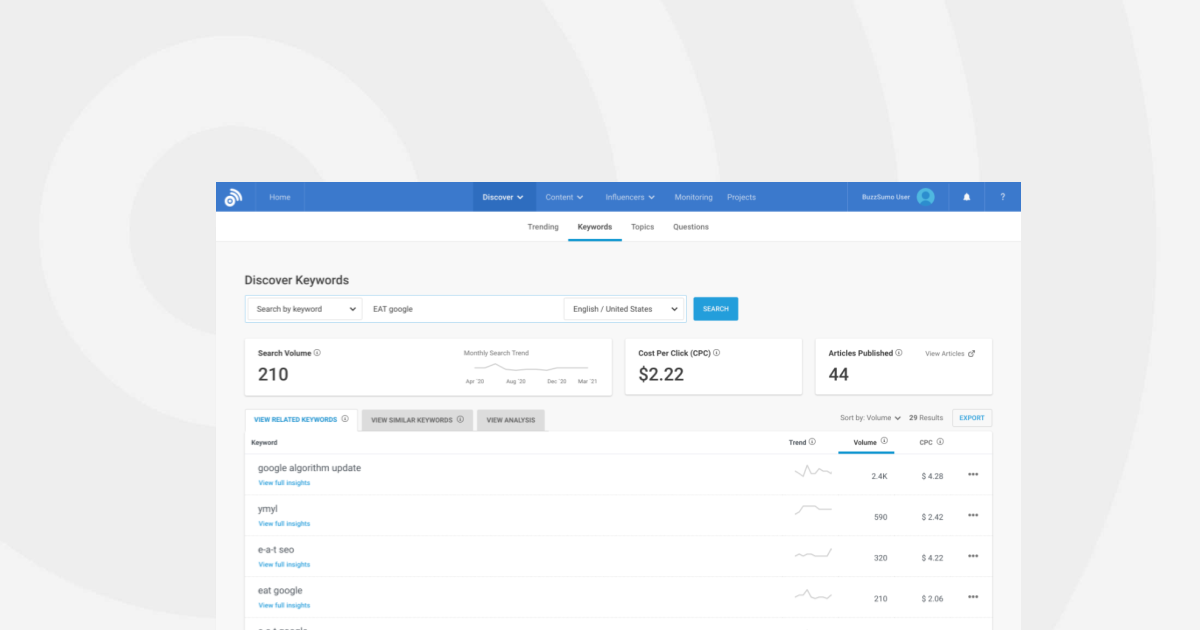
Understanding what constitutes high-quality, E-E-A-T-friendly content begins with diligent analysis of successful examples. Rather than guessing, publishers should investigate what performs well in their niche. Tools such as BuzzSumo’s Content Analyzer, SEMrush, or Ahrefs offer valuable insights into content performance. By examining articles that garner significant social shares, attract numerous high-quality backlinks, or achieve sustained "evergreen" visibility over time, publishers can reverse-engineer the elements that resonate with target audiences and signal quality to search engines. Analyzing top-ranking content in the Search Engine Results Pages (SERPs) for relevant queries provides direct clues about the depth, format, media usage, and overall user experience that Google currently favors. This involves deconstructing headlines, identifying key discussion points, observing content structure, and evaluating the comprehensiveness and authority of the competition.
2. Cultivating and Demonstrating Authority
Google actively encourages its raters to investigate the credentials and reputation of content creators and their associated websites. Building niche authority is a long-term investment, but it yields substantial benefits, including improved rankings across related content and enhanced brand trust. This involves a multifaceted approach:
- Showcasing Credentials: Clearly display author bios with relevant experience, qualifications, and affiliations on every piece of content. Utilize schema markup (Organization and Author schema) to provide structured data about your identity and expertise to search engines, making it easier for them to understand your background.
- Active Participation and Thought Leadership: Seek opportunities for interviews, podcasts, webinars, and guest contributions on reputable industry platforms. Publishing original research, insightful analysis, and unique perspectives consistently helps establish you as a leader in your field.
- Networking and Monitoring: Engage with and learn from other established authorities in your niche. Subscribing to industry newsletters, attending conferences, and monitoring influential journalists and creators (e.g., using tools like BuzzSumo’s Media Database) can offer insights into their content strategies and outreach opportunities.
- Consolidating Digital Presence: Create a unified online presence (e.g., using a personal website, LinkedIn, or platforms like Beacons.ai) that links to all your professional channels and published works, reinforcing your identity and expertise across the web. Ensure consistency in your professional narrative across all platforms.
3. Shifting from Keywords to Topic Clusters
Google’s advanced understanding means it no longer treats individual keywords in isolation but rather focuses on topics and entities. A topic-centric content strategy, utilizing "topic clusters," is therefore essential for demonstrating comprehensive authority. This involves identifying broad, foundational topics (pillar content) and then creating a network of supporting articles (cluster content) that delve into specific sub-aspects of the pillar. All cluster content links back to the pillar page, and internally links between relevant cluster articles, establishing a comprehensive and authoritative resource for the overarching topic.
Tools like BuzzSumo’s Topics Explorer, along with keyword research tools that show related questions and entities, can help identify thousands of popular associated topics around a given keyword, guiding the creation of a robust topic cluster strategy. For instance, a pillar piece on "Digital Marketing Strategies" could be supported by cluster articles on "SEO Best Practices," "Social Media Content Calendars," "Email Marketing Automation," and "Content Performance Analytics." This approach not only caters to diverse user queries but also signals to Google that your site is a comprehensive authority on the broader subject. The documented successes of SEO experts, such as Samuel Schmitt, who significantly boosted website traffic using this model, underscore its efficacy in modern SEO.
4. Crafting a "Satisfying" Depth of Content
The notion of "content length" in E-E-A-T is not about hitting an arbitrary word count but about providing a "satisfying amount" of information that thoroughly addresses the user’s intent. What is "satisfying" varies significantly based on the topic and purpose of the page. A quick definition might only need 200 words to be complete, while a comprehensive guide or investigative report could require several thousands. The goal is completeness and utility, not verbosity.
Content analysis tools can help ascertain optimal content length for specific topics. For example, BuzzSumo’s Content Analysis report can reveal the average engagement for articles broken down by word count in a particular niche. For a topic like "Social Media Marketing," analysis might indicate that content between 3,000 and 10,000 words performs best, suggesting a need for exhaustive guides that cover all facets. Conversely, for a transactional search like "buy running shoes," a concise product page with clear specifications and purchasing options would be more "satisfying." The key is to be comprehensive without being verbose, ensuring every section adds value and moves the user closer to resolving their query.
5. Building Genuine Industry Relationships
Beyond mere backlinks, Google’s sophisticated algorithms can infer relationships between entities. Cultivating genuine connections with credible authors, journalists, and publications is a powerful E-E-A-T signal. Google employs over 10,000 quality raters who audit content, and their feedback feeds into the algorithm’s self-learning process, making "who you know" increasingly important for


 Nana
Nana
 Laily UPN