rifanmuazin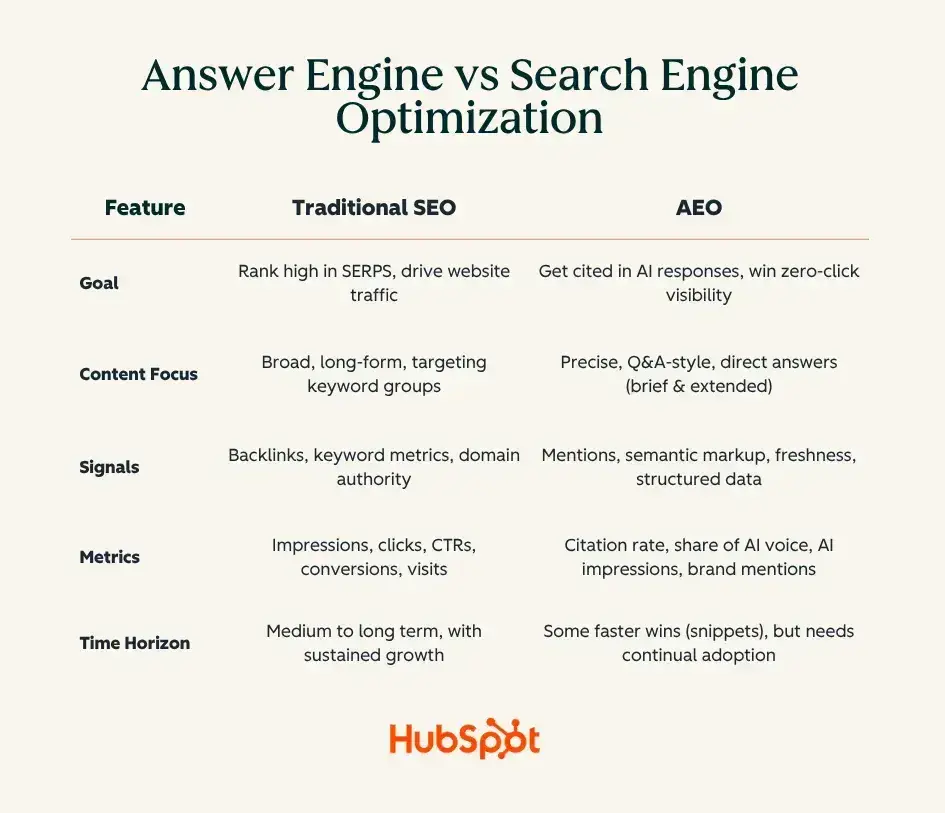
Marketers are increasingly confronted with the evolving complexities of digital visibility, often using the terms Answer Engine Optimization (AEO) and Generative Engine Optimization (GEO) interchangeably, despite their distinct applications and objectives. This article aims to clarify these crucial differences, explain their strategic importance in the contemporary search ecosystem, and outline the tactics and metrics essential for success. While AEO primarily focuses on optimizing content for direct answers in search results, such as featured snippets and voice search, GEO targets the nuanced challenge of securing brand citations and inclusion within AI chatbot responses and generated summaries. Understanding this distinction is paramount for digital strategists aiming to maintain relevance and drive engagement in an increasingly AI-powered world.
The Evolution of Search: From Keywords to Conversations
The landscape of online search has undergone a profound transformation, moving beyond simple keyword matching to embrace more sophisticated, interpretive, and conversational interactions. This evolution provides the essential background for understanding the emergence of AEO and GEO.
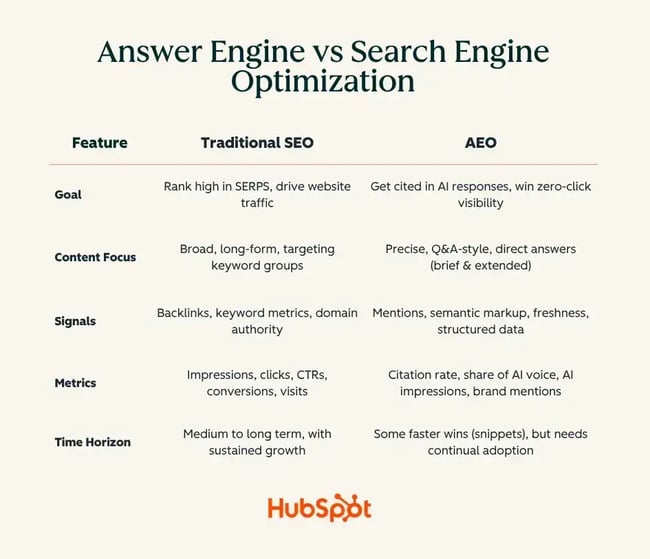
Traditionally, Search Engine Optimization (SEO) focused on securing organic rankings and driving traffic to websites. Its core pillars revolved around:
- Relevance: Ensuring content directly addressed user queries through keyword optimization.
- Authority: Building credibility through high-quality backlinks from reputable sources.
- Technical Performance: Optimizing website speed, mobile-friendliness, and crawlability for search engine bots.
- User Experience: Creating intuitive navigation and engaging content to reduce bounce rates and increase time on site.
As search engines matured, particularly with advancements in natural language processing (NLP) and the advent of knowledge graphs, they began to provide direct answers on the Search Engine Results Page (SERP) without requiring users to click through to a website. This marked the rise of "answer engines," giving birth to AEO. Google’s Featured Snippets, "People Also Ask" boxes, and direct answers for factual queries became prominent, offering immediate information to users. Voice search, powered by virtual assistants like Alexa and Google Assistant, further amplified the need for concise, direct answers that could be easily spoken aloud.
The most recent and perhaps most disruptive shift has been the widespread integration of generative Artificial Intelligence (AI) into search. Large Language Models (LLMs) like OpenAI’s ChatGPT, Google’s Gemini (formerly Bard), and Perplexity AI have introduced a new paradigm where users interact with conversational agents that synthesize information from multiple sources to provide comprehensive summaries, comparisons, and recommendations. Google’s AI Overviews (formerly Search Generative Experience, SGE) represent a significant step in embedding these generative capabilities directly into the traditional search experience. This new frontier necessitated the development of Generative Engine Optimization (GEO), focusing on how brands can influence these AI-generated outputs.
Defining the Pillars: AEO, GEO, and Their Synergy

While all three acronyms — SEO, AEO, and GEO — operate under the broader umbrella of digital visibility, they address distinct aspects of user interaction with search technologies. A clear understanding of each is vital for a comprehensive strategy.
Answer Engine Optimization (AEO): Delivering Direct Answers
AEO is the practice of optimizing web content specifically to appear as direct answers in search results. Its primary goal is to ensure that when a user asks a question, search engines can extract and display the most accurate, concise, and authoritative answer directly on the SERP, often above traditional organic links.
- How it shows up: Featured snippets (paragraph, list, table), People Also Ask sections, instant answers for definitions or facts, and voice search results.
- What it optimizes for: Clarity, conciseness, structured content (e.g., clear headings, bullet points), comprehensive question coverage, and schema markup that explicitly defines the type of information presented.
- Best use case: High-intent, question-driven queries where users seek immediate factual information, definitions, or step-by-step instructions. For example, "What is the capital of France?" or "How to tie a shoelace?"
Generative Engine Optimization (GEO): Earning Brand Citations in AI Summaries
GEO, in contrast, focuses on ensuring a brand’s products, services, or expertise are cited and recommended within AI-generated summaries and conversational responses provided by platforms like Google AI Overviews, ChatGPT, and Perplexity. The objective here is not necessarily a direct click, but rather brand visibility, credibility, and influence within the AI’s synthesized answer.
- How it shows up: AI Overviews providing brand recommendations, ChatGPT listing brands in response to "best X for Y" queries, or Perplexity citing a brand’s unique insights in a summary.
- What it optimizes for: Authority (E-E-A-T), precise entity clarity and consistency across the web, quotable insights, unique data, and a strong, verifiable digital footprint. AI models "triangulate" information, meaning they seek validation from multiple authoritative sources before citing a brand.
- Best use case: Research queries, product comparisons, informational discovery, and situations where users are looking for comprehensive overviews or recommendations that an AI might synthesize. For example, "Compare leading project management software" or "What are the benefits of cloud computing and who offers them?"
The Overarching Role of SEO
Traditional SEO remains the foundational layer. It ensures that content is discoverable, technically sound, and authoritative enough to be considered by both answer engines and generative AI. SEO builds the "trust" and "relevance" signals that AEO and GEO then leverage. Without a strong SEO base, content is unlikely to rank sufficiently to even be considered for direct answers or AI citations.
Why Both AEO and GEO are Imperative
The HubSpot Consumer Trends Report highlights a significant shift: 72% of surveyed consumers intend to rely more heavily on AI-powered search for shopping and decision-making. This statistic underscores why businesses cannot afford to choose between AEO and GEO; both are critical for a holistic digital strategy.
- AEO ensures visibility for immediate informational needs, capturing users at the initial stages of discovery.
- GEO influences brand perception and consideration when users are seeking synthesized information or recommendations from AI, often acting as a powerful, unbiased (from the user’s perspective) endorsement.
Together, these strategies ensure brands are not only discoverable through traditional organic search but also prominently featured and credibly cited across the entire spectrum of modern, AI-powered information retrieval.
Strategic Imperatives: Core Tactics for AI-Driven Visibility
Achieving success in both AEO and GEO requires a concerted effort to optimize content and digital presence with AI consumption in mind. While distinct in their ultimate goals, they share many foundational tactical overlaps.
1. Answer-First Content Structuring
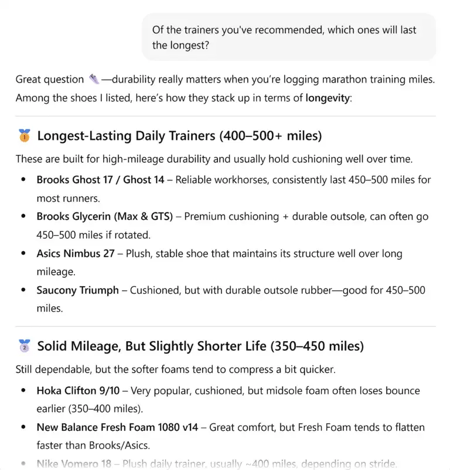
This tactic involves presenting the most direct and concise answer to a user’s question immediately, before elaborating with supporting details, examples, or context. This approach is directly inspired by the "inverted pyramid" style of journalism, where the most critical information (who, what, when, where, why) is presented first, followed by diminishing levels of detail.
- For AEO: This structure makes it easy for search engines to extract clear, unambiguous answers for featured snippets and direct response boxes.
- For GEO: AI models prefer clean, self-contained passages that can be lifted and cited directly without significant rephrasing, increasing the likelihood of your content being used in an AI summary.
- Implementation: Ensure headings are direct questions, and the first 1-2 sentences immediately provide the answer. Use bullet points and numbered lists for easy scannability and extraction.
2. Entity Management and Consistency
An "entity" refers to a distinct concept, person, place, or thing that search engines and AI models can recognize and understand. This includes your brand, products, services, key personnel, and unique concepts. Entity management is the practice of defining these entities clearly and maintaining consistent, accurate references across all digital touchpoints.
- For AEO: Consistent entity definitions help search engines accurately categorize and present your content in answer boxes, reducing ambiguity.
- For GEO: AI models rely on consistent entity signals across numerous sources (your website, press releases, social media, third-party reviews, industry forums) to build confidence in the information. Inconsistencies can lead to AI models either misinterpreting data or choosing not to cite your brand due to lack of verifiable truth.
- Implementation: Create a brand style guide for naming conventions. Use structured data (schema) to explicitly define entities. Regularly audit mentions across the web to ensure consistency. For example, if your product has a specific feature, ensure its name and description are identical everywhere it appears.
3. Crafting Quotable Insights and Data Passages
Quotable insights are concise, authoritative statements, statistics, or expert opinions that AI engines can easily extract and integrate into their summaries. These elements significantly contribute to a content piece’s E-E-A-T (Experience, Expertise, Authoritativeness, Trustworthiness).
- For AEO: Short, impactful sentences containing data or expert opinions are prime candidates for featured snippets and direct answers.
- For GEO: AI models favor information that is easily attributable and verifiable. Providing clear, quotable statements, especially those backed by original research or expert consensus, increases the chance of your brand being cited as the source.
- Implementation: Present key statistics, definitions, or expert opinions in distinct paragraphs or call-out boxes. Use strong, declarative sentences. For instance, "Research by [Your Company Name] indicates that [X specific action] leads to a [Y%] increase in [Z outcome]."
4. Leveraging Schema and Structured Markup
Schema markup is a form of structured data that provides search engines with explicit information about the content on a webpage. It translates human-readable content into a machine-readable format, clarifying its meaning and relationships.
- For AEO: Schema, such as FAQPage, HowTo, Product, Service, and Organization markup, significantly improves content’s eligibility for rich results, featured snippets, and direct answers by explicitly telling search engines what information they are looking at.
- For GEO: Structured data reinforces entity consistency and helps AI models disambiguate information. It provides a reliable, machine-confirmable source of truth about your brand, products, and services, bolstering confidence for citation.
- Implementation: Regularly implement relevant schema types using JSON-LD. Ensure the data within the schema is consistent with the visible content on the page and across your digital footprint.
5. Reinforcement Through Repetition and External Validation
AI models do not take information at face value from a single source; they "triangulate" by looking for patterns, overlaps, and repeated assertions across the web. This means consistent messaging and external validation are crucial.
- For AEO: While primarily driven by on-page factors, external validation contributes to the overall authority and trustworthiness that search engines consider when selecting direct answers.
- For GEO: If a claim or fact about your brand is only present on your website, an AI model might treat it as unverified. However, if multiple reputable, independent sources (e.g., industry publications, partner websites, academic studies, news articles, customer reviews) consistently repeat the same information, AI models are far more likely to adopt it as truth and cite your brand.
- Implementation: Actively pursue PR and media mentions. Encourage partners and resellers to use consistent messaging. Promote research and data that supports your claims. Recognize that while a social media post might only reach a small percentage of an audience, consistent repetition across various platforms and channels reinforces the message for both human and AI audiences.
Measuring Success in the New AI Search Paradigm
The advent of AEO and GEO necessitates a shift in how marketers measure digital performance. Traditional metrics like keyword rankings and organic traffic, while still important, no longer provide a complete picture of visibility and influence in an AI-first search environment. A more nuanced approach is required, focusing on AI visibility, citation quality, and the downstream impact on the business.
1. AI Visibility and Citation Coverage
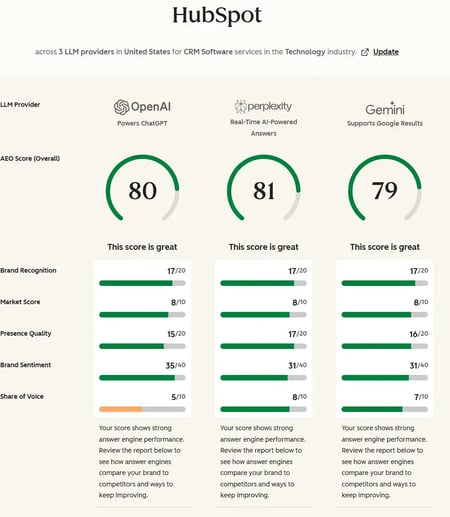
This metric quantifies how often a brand appears in generative search experiences, including Google AI Overviews, ChatGPT responses, Perplexity summaries, and Gemini outputs. It moves beyond tracking clicks to understand overall presence and recognition.
- What to measure: Frequency of brand mentions, positive vs. negative sentiment of mentions, accuracy of information cited, and the types of queries triggering citations.
- Tools: Specialized tools like HubSpot’s AI Search Grader can analyze domains for AI visibility and citation. Manual auditing for critical keywords across different AI platforms remains essential.
- Actionable insights: Identify content gaps, pages requiring optimization for citation, and areas where brand messaging might be inconsistent, leading to misrepresentation by AI.
2. Assessing Content Quality and Answer Readiness
This metric evaluates how well content is structured and written to meet the specific requirements of AEO and GEO. It goes beyond simple readability to assess extractability, clarity, and entity consistency.
- What to measure: Readability scores, presence of clear answer-first structures, consistency of entity mentions, adherence to schema markup best practices, and overall factual accuracy.
- Tools: AI-powered content assistants (e.g., HubSpot’s Breeze Content Assistant, Marketing Hub, Content Hub) can aid in generating and optimizing AEO-ready passages, FAQs, and structured updates. Manual content audits are crucial to ensure human-level quality and nuanced understanding.
- Actionable insights: Pinpoint pages that need re-writing for conciseness, better structuring for direct answers, or improved entity definition.
3. Quantifying Conversions and Revenue from AI Influence
While AI-generated answers often don’t require a click, they significantly influence user decisions. This metric tracks how AI-powered discovery contributes to the sales pipeline.
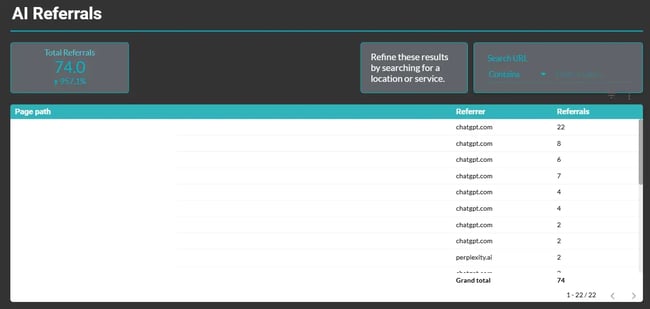
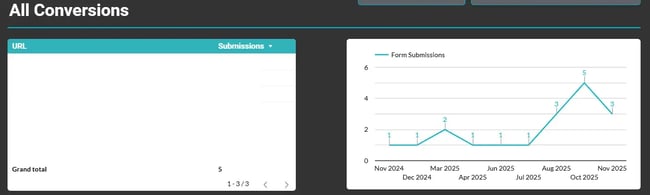
- What to measure: Direct referrals from AI platforms (e.g., ChatGPT, Perplexity), conversions from users whose journey started with an AI interaction but later navigated directly or via other channels, and the overall revenue attributed to these influenced paths.
- Tools: Integrate analytics platforms (e.g., Google Analytics, Looker Studio) with CRM systems (e.g., HubSpot) to track referral sources and customer journeys. Custom dashboards can segment traffic originating from AI tools.
- Nuance: Acknowledge that not all influence is directly trackable. Many users see a brand in an AI summary and return later via a direct search or different channel. This makes "influenced conversions" a critical, albeit challenging, metric. For example, a client might report a $10,000 lead originating from ChatGPT, demonstrating tangible impact beyond direct clicks.
4. Evaluating Lead Quality from AI-Influenced Discovery
AEO and GEO don’t just expand visibility; they can also improve the quality of leads generated. Content appearing in highly contextual AI answers often attracts users who are already well-informed and further down the decision funnel.
- What to measure: Lead-to-opportunity conversion rates, sales cycle length, average deal size, and lead fit scores (alignment with Ideal Customer Profile – ICP) for leads influenced by AI-driven discovery, compared to traditional organic leads.
- Tools: HubSpot’s lead scoring functionality can be used to compare and categorize leads based on their origin, providing insights into the effectiveness of AI-driven strategies in attracting high-value prospects.
- Actionable insights: Higher lead quality from AI sources indicates successful targeting and content strategy, validating the investment in AEO/GEO.
5. Analyzing Page Performance and User Behavior (AI Referrals)
Understanding how users interact with content after being referred by an AI tool provides valuable feedback for optimization.
- What to measure: Bounce rate, average session duration, pages per session, and conversion rates specifically for sessions where the referrer is an AI platform.
- Tools: Web analytics platforms (e.g., Google Analytics) configured to identify AI referral sources.
- Actionable insights: High engagement metrics on AI-referred pages suggest the content effectively meets the user’s advanced information needs, reinforcing the AI’s recommendation. Low engagement might signal a mismatch between the AI’s summary and the actual page content, requiring further refinement.
The Road Ahead: Future Trends in AI Search Optimization
The rapid evolution of AI search dictates that AEO and GEO are not static disciplines but dynamic fields that will continue to adapt. Three key trends are expected to define their next phase.
1. AI Discovery as the Primary Top-of-Funnel
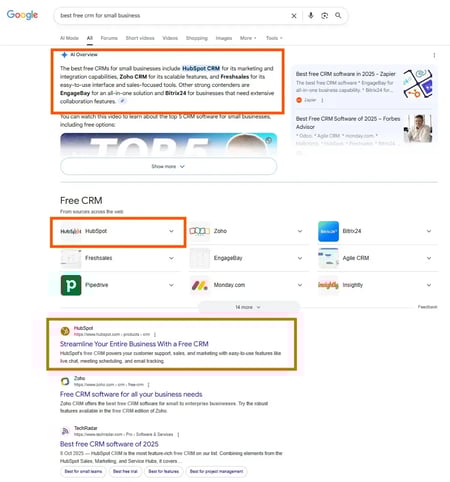
The consumer journey is shifting, with AI becoming the initial point of contact for many users. The HubSpot Consumer Trends Report’s finding that 72% of consumers anticipate increased reliance on AI for shopping underscores this change. Brands’ first impression may no longer be their meticulously designed homepage but rather the summary or recommendation provided by an AI model. This means AEO and GEO success—driven by comprehensive question coverage, robust schema, and broad distribution—will be paramount for initial brand awareness. For instance, a search for "best free CRM for small business" on Google AI Overviews might recommend HubSpot, with an external citation from a third-party like Zapier, demonstrating the power of consistent brand messaging and credible external validation, not just direct website presence.
2. Industry Alignment and Normalization
While the initial phase of AI search has been marked by rapid experimentation, hype, and sometimes confusion, the industry is gradually moving towards normalization. As noted by Mark Williams-Cook, the explosive growth and dizzying promises of LLMs may be nearing a plateau in terms of novelty. Data from sources like Datos’ State of Search Q3 2025, showing AI tool visits steadying at around 1.3% of all search activity, suggests that while AI is incredibly influential, it is settling into its role as a powerful, integrated component of the search ecosystem rather than a complete replacement. This normalization will lead to more standardized best practices and clearer expectations for AEO and GEO.
3. Integrating AEO and GEO into Standard Reporting
The sustained importance of AI search dictates that AEO and GEO metrics can no longer be treated as optional add-ons; they must become standard components of every SEO audit and reporting workflow. Just as organic rankings, backlinks, Core Web Vitals, and keyword visibility are routinely evaluated, so too must AI visibility, citation frequency, entity consistency, and AI-originating sessions. A performance gap in generative results is not an accident but an indicator of an unaddressed strategic area.
- Practical Implementation: SEO teams should embed AEO and GEO metrics into their monthly or quarterly reporting cadence. This includes tracking brand mentions in AI Overviews, analyzing referral traffic from AI chatbots, monitoring lead quality from these sources, and assessing content’s "answer readiness."
- Proactive Strategy: Treating AI visibility with the same rigor as keyword rankings will enable marketers to quickly identify patterns, optimize underperforming pages, and refine content strategies to maximize influence across all modern search surfaces.
Conclusion
AEO and GEO are not merely emerging trends but essential layers of brand visibility in an AI-first world. AEO secures direct answers, capturing immediate informational needs, while GEO earns crucial brand citations within AI-generated summaries, shaping perceptions and influencing decisions early in the customer journey. Together, they represent a complementary and indispensable framework for modern digital marketing. Brands that prioritize answer-first content, meticulous entity management, compelling quotable insights, robust schema implementation, and consistent external validation will be best positioned to dominate the evolving search landscape. The ability to measure success beyond traditional traffic metrics, focusing on AI visibility, citation quality, and the downstream impact on conversions and lead quality, will differentiate market leaders. As AI continues to redefine how information is discovered and consumed, proactive adoption and integration of AEO and GEO into a holistic SEO strategy will be the determinant of sustained brand relevance and growth.