
 rifanmuazin
This week marks a significant surge in technological advancements designed to streamline operations, enhance customer experiences, and drive sales for e-commerce merchants. A comprehensive review of recent product and service releases reveals a strong emphasis on artificial intelligence, composable commerce, and seamless integration across various platforms. From AI-powered store builders and advanced marketing tools to innovative shipping solutions and token-based checkout mechanisms, the landscape of e-commerce is rapidly evolving to meet the demands of a dynamic digital marketplace. Merchants looking to stay ahead of the curve will find a wealth of new opportunities and efficiencies in these cutting-edge offerings.
AI-Driven Transformation in E-commerce
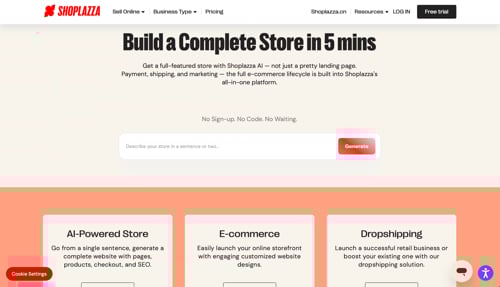
Artificial intelligence continues to be a dominant force, with several new tools promising to democratize store creation and optimize customer engagement. Shoplazza has introduced its AI Store Builder, a groundbreaking platform that allows merchants to generate complete, ready-to-sell storefronts through simple, natural language descriptions. This innovative approach eliminates the need for extensive technical expertise or manual configuration. Merchants can now describe their products, brand identity, and target audience, and the AI system will automatically construct key components such as homepage layouts, product pages, collection structures, and essential policy content. This move signifies a major step towards making sophisticated e-commerce infrastructure accessible to a broader range of businesses, potentially lowering the barrier to entry for aspiring online entrepreneurs. The platform’s ability to generate content with AI-driven product descriptions and imagery further expedites the launch process, allowing businesses to go live and begin operations in a fraction of the traditional time.
Complementing Shoplazza’s initiative, Stable Commerce emerges as another AI-powered e-commerce platform designed for intuitive store management. This platform empowers merchants to create and manage their online stores via a chat-based AI interface. By articulating their selling objectives in plain language, users can have an AI agent generate a fully functional storefront, complete with page design, product pages featuring descriptions and images, checkout integration, and shipping setup. The conversational interface extends to ongoing management, allowing merchants to easily modify layouts, products, or content through simple text commands. This user-centric design aims to foster agility and responsiveness in online retail operations, enabling businesses to adapt quickly to market trends and customer feedback.

Furthermore, Adobe is making significant strides in enhancing brand visibility within the burgeoning generative AI landscape. Their newly launched tool is specifically designed to boost a brand’s presence on these AI platforms, addressing a critical need for businesses to be discoverable in emerging digital ecosystems. Adobe is also expanding its Experience Manager with a contextual layer for AI agents, enabling more personalized and relevant interactions. The introduction of CX Enterprise, an agentic AI system, promises to simplify the entire customer lifecycle management, from initial prospect acquisition and conversion driving to fostering long-term loyalty. This comprehensive approach by Adobe suggests a strategic focus on integrating AI deeply into the fabric of digital customer experiences, aiming to provide businesses with a unified and intelligent solution for managing customer relationships.
Parsnipp has also entered the AI arena with its new Behavior-Driven AI Search and GEO Platform. This platform aims to provide brands with deep insights into their visibility within AI-driven discovery and search environments. By identifying specific signals, misconfigurations, and content gaps, the tool helps businesses optimize their presence. Key features include brand analytics across large language models (LLMs), competitor tracking, generative engine optimization (GEO) content strategies, search persona mapping, and AI readiness recommendations. In an era where AI search is becoming increasingly prevalent, Parsnipp’s offering is crucial for merchants seeking to understand and influence how their products and services are surfaced in these new search paradigms.
Streamlining Operations and Enhancing Customer Experience
Beyond AI, significant innovations are being introduced to optimize core e-commerce operations, from shipping and logistics to payment processing and platform architecture. Australia Post has introduced a convenient "Print in Store" capability for eBay sellers. This service allows sellers to generate shipping labels directly at participating post offices by simply scanning a QR code obtained from eBay. This initiative, developed in collaboration with eBay, follows Australia Post’s recent introduction of a new small parcel option for items under 250 grams, signaling a focused effort to support online sellers with efficient and accessible logistics solutions.
In the realm of payment security and efficiency, Payabl. has launched "Click to Pay" with Visa. This innovative solution aims to reduce fraud and improve checkout conversion rates by replacing manual card number entry with token-based checkouts. Once a customer’s card is enrolled, purchases can be completed in just a few clicks. Available through Payabl.checkout, this service offers a streamlined and secure payment experience across various devices, leveraging existing security protocols. This move towards tokenization is a critical step in enhancing online transaction security and user convenience, directly addressing merchant concerns about cart abandonment due to complex checkout processes.

Gr4vy, a payment orchestration platform, is also adapting to the AI revolution by introducing support for agentic transactions. This enables merchants to manage and process payments within AI-driven environments. Furthermore, Gr4vy has launched its Agentic Development Kit, a comprehensive toolkit designed to guide merchants in building and launching AI-native storefronts on platforms like ChatGPT. This kit empowers businesses to create AI-native storefronts, orchestrate AI transactions in real time, and maintain robust control over performance, security, and the overall customer experience. This development is particularly significant as it prepares merchants for the emergence of AI-powered commerce agents that can autonomously make purchasing decisions.
Advancements in Platform Architecture and Marketing
The evolution of e-commerce platforms is also accelerating, with a growing emphasis on flexibility and modularity. Vaimo has launched Nexus, a frontend orchestration platform designed for composable commerce. This platform acts as an intermediary between frontend and backend systems, offering a composable architecture that avoids the need for large-scale rebuilds or prohibitive overheads. Nexus comprises an orchestration layer for aggregating data across systems, a performance-optimized frontend layer, and connectors for popular platforms such as Commercetools, Adobe Commerce, Contentful, and Sanity. This approach allows businesses to build highly customized and scalable e-commerce experiences by assembling best-of-breed solutions.
In parallel, BlueSwitch, a Shopify Platinum Partner, has introduced its Unified Commerce Suite. This curated collection of production-ready Shopify modules is specifically designed to address the operational challenges faced by B2B merchants. The suite tackles critical gaps in pricing, ordering, onboarding, fulfillment, shipping, and account workflows, providing B2B businesses with the specialized tools they need to operate effectively within the Shopify ecosystem. This development highlights the increasing demand for tailored solutions that cater to the unique complexities of business-to-business e-commerce.
Marketing efforts are also being significantly enhanced by new integrations and tools. Klaviyo has expanded its integration with Canva, allowing marketers to seamlessly bring their Canva designs into Klaviyo. This integration enables marketers to refine and personalize campaigns using Klaviyo’s segmentation, automation, and customer data capabilities. The synergy between design and marketing automation promises to create more visually appealing and highly targeted campaigns, driving better engagement and conversion rates.

Wayvia has launched Shoppable Next Generation, an AI-powered update to its shoppable media tool. This platform enables brands to transform any marketing touchpoint, including display ads, social media posts, and email campaigns, into shoppable moments within minutes. The update provides customizable landing page templates optimized for conversion, basket building, and brand awareness, with each template mapped to specific campaign objectives in Meta Ads Manager. This advancement bridges the gap between content consumption and purchasing, making the customer journey more fluid and immediate.
Enhancing Content and Customer Interaction with AI
The integration of AI into content management systems and customer interaction tools is another key area of development. Kaltura has announced integrations for Adobe Experience Manager, WordPress, and Drupal, allowing organizations on these platforms to embed Kaltura experiences as native components. These include agentic avatars that greet visitors, conversational search functionalities, and interactive videos. This move empowers businesses to create more dynamic and engaging online experiences, leveraging AI to personalize customer interactions and provide richer content delivery. The use of conversational avatars, for instance, can humanize the digital experience and offer immediate, personalized assistance, mirroring the benefits of in-person customer service.
Logistics and Backend Innovations
Even the foundational elements of logistics are seeing AI-driven improvements. UPS is deploying radio frequency identification (RFID) sensing technology across its U.S. small package network. This technology, now present in all UPS delivery vehicles, facilities, and on every package shipped through UPS stores, automatically confirms package pickup and possession, eliminating the need for manual scanning. This widespread implementation of RFID sensing promises to enhance tracking accuracy, improve operational efficiency, and provide greater transparency throughout the shipping process, which is a critical component for customer satisfaction in e-commerce.
SiteGround has launched SiteGround Ecommerce, an all-in-one platform tailored for small businesses. This platform offers comprehensive tools for payments, shipping, taxes, order management, and inventory control. Additional built-in marketing features are designed to help store owners improve their visibility and convert visitors. This initiative aims to provide a user-friendly and integrated solution for small businesses looking to establish and grow their online presence without the complexity of managing multiple disparate tools.
Analysis of Broader Implications
The collective impact of these recent releases suggests a significant acceleration towards an AI-native e-commerce ecosystem. The proliferation of AI store builders and conversational commerce tools indicates a paradigm shift where complex tasks are being automated, making e-commerce more accessible and efficient for a wider range of businesses. This democratization of technology could lead to increased competition and innovation within the online retail space.
The emphasis on composable commerce, as exemplified by Vaimo’s Nexus platform, signals a move towards greater flexibility and customization in e-commerce architecture. Businesses are increasingly seeking to assemble best-of-breed solutions rather than relying on monolithic platforms, allowing for more agile adaptation to evolving market demands.
Furthermore, the integration of AI into marketing and customer interaction tools underscores the growing importance of personalized and engaging customer experiences. From AI avatars to enhanced campaign personalization, businesses are leveraging technology to build deeper connections with their customers.
The advancements in logistics and payment processing, such as UPS’s RFID deployment and Payabl.’s Click to Pay with Visa, highlight the ongoing efforts to build a more secure, efficient, and transparent e-commerce infrastructure. These improvements directly impact the customer experience by reducing friction, enhancing trust, and providing greater certainty in the buying process.

As AI continues to permeate every facet of the e-commerce value chain, merchants who strategically adopt these new tools and platforms are likely to gain a significant competitive advantage, fostering growth, improving operational efficiency, and delivering superior customer experiences in the increasingly digital marketplace.









