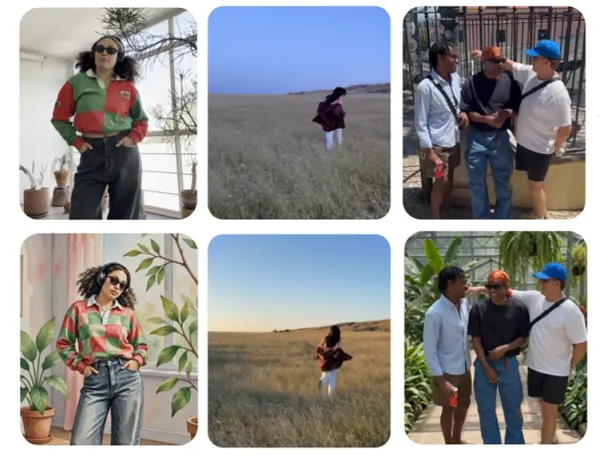
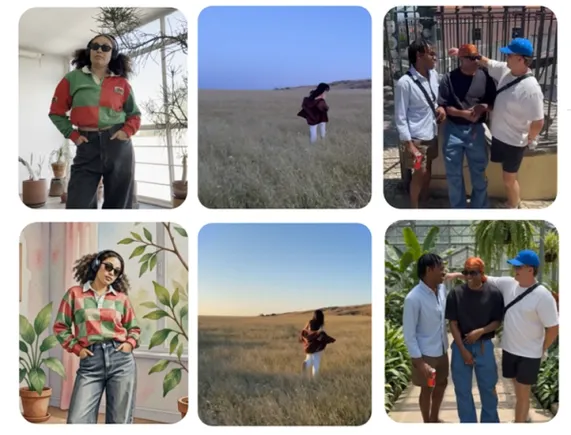
Google has officially announced a significant upgrade to its artificial intelligence-powered remix options within the Google Photos application, introducing a new feature called Video Remix. This innovative tool empowers users to generate fresh, personalized variations of their personal video clips directly within the app, leveraging the formidable capabilities of the company’s Gemini Omni artificial intelligence model. The update, detailed by Google on Wednesday, marks a substantial leap in consumer-grade video editing, making sophisticated AI-driven transformations accessible to a broader audience. The Video Remix option is designed to allow users to modify the context of their video clips, offering realistic-looking background editing and other stylistic changes that can profoundly alter a video’s narrative and aesthetic.
The core functionality of Video Remix centers on its ability to transform ordinary footage into engaging, share-worthy moments with just a few taps. Google elaborated on this, stating, "Now, with Video Remix in Google Photos, you can transform ordinary videos into share-worthy moments in just a few taps. Powered by our Gemini Omni model, Video Remix lets you make stylized, imaginative memories from a library of easy-to-use templates." This description highlights the dual emphasis on user-friendliness and creative potential, suggesting a tool that caters to both casual users seeking quick enhancements and more creative individuals looking to experiment with visual storytelling. The feature’s integration into the Google Photos ecosystem ensures a seamless experience for users already managing their media library within the platform.
Deep Dive into Video Remix Functionality and User Experience
The introduction of Video Remix in Google Photos signifies a pivotal moment in the evolution of personal video editing, moving beyond conventional filters and basic cuts to generative AI-driven transformations. Users can now manipulate various aspects of their videos, from altering the background to applying entirely new visual styles, all powered by sophisticated AI algorithms. Imagine a holiday video shot in a bustling city street being instantly re-contextualized into a serene, sun-drenched beach, or a simple home video gaining a fantastical, animated backdrop. The "library of easy-to-use templates" mentioned by Google suggests a curated selection of predefined styles and scenarios, streamlining the creative process for users who may not have extensive editing experience. This template-driven approach ensures that even complex AI operations are distilled into intuitive, accessible choices, making advanced video manipulation as straightforward as applying a photo filter.
The realistic-looking background editing is a particularly noteworthy aspect of Video Remix. Unlike traditional green-screen techniques that require specific setups and meticulous post-production, Google’s AI can intelligently identify subjects within a video and seamlessly replace or modify their surroundings. This capability is not merely about swapping static images; it involves understanding motion, lighting, and perspective to create a cohesive and believable new scene. For instance, if a person is walking in a video, the AI would generate a new background that appears to move naturally with the subject, maintaining depth and spatial consistency. This level of sophistication is a testament to the advancements in Google’s generative AI models, particularly Gemini Omni, which can interpret and synthesize complex visual information with remarkable accuracy. The potential applications for personal use are vast, from creating whimsical travel memories without leaving home to crafting unique visual narratives for social media without professional editing software.
Gemini Omni: The Technological Backbone
At the heart of Video Remix lies Google’s cutting-edge Gemini Omni model, a powerful artificial intelligence system that Google first unveiled at its I/O conference in May. Gemini Omni is distinguished by its ability to create highly realistic visual depictions, thanks to what Google describes as its "intuitive understanding of physics and Gemini’s real-world knowledge and reasoning." This unique combination allows the AI to generate content that not only looks plausible but also adheres to the fundamental laws of the physical world, a significant leap from earlier generative models that sometimes produced visually inconsistent or illogical outputs. The "Omni" designation itself hints at its multimodal capabilities, suggesting its proficiency in processing and generating various types of data, including text, images, audio, and video, which is crucial for a feature like Video Remix that synthesizes multiple visual elements.
The development of Gemini Omni represents years of intensive research and investment by Google in the field of artificial intelligence. It builds upon the foundational work of earlier large language models and expands into the realm of multimodal AI, where models can understand and operate across different data types simultaneously. At the I/O 2024 conference, Google showcased Gemini Omni’s prowess in several applications, demonstrating its ability to reason across complex scenarios, interpret nuances, and generate highly detailed and contextually relevant outputs. For Video Remix, this means the AI can analyze the content of a user’s video, understand the actions and objects within it, and then intelligently apply new stylistic or contextual elements that seamlessly integrate with the original footage. This goes beyond simple overlaying; it involves deep semantic understanding and generative synthesis, allowing for transformations that were once the exclusive domain of professional visual effects artists. The emphasis on "real-world knowledge and reasoning" is critical for maintaining visual fidelity and preventing the uncanny valley effect, where AI-generated content appears almost real but subtly off-putting due to minor inconsistencies.
Availability and Google’s AI Subscription Strategy
The new Video Remix feature is not universally available to all Google Photos users immediately. Google has specified that the updated video remix option is accessible within the "Create" tab in Google Photos and is rolling out specifically to Google AI Plus, Pro, and Ultra subscribers in select countries. This tiered availability underscores Google’s evolving strategy to monetize its advanced AI capabilities through subscription models, aligning with a broader industry trend where premium AI features are increasingly bundled into paid plans.
The Google AI Plus, Pro, and Ultra subscriptions typically offer enhanced AI functionalities across Google’s suite of products, including increased quotas for AI queries, access to more powerful AI models, and exclusive features like Video Remix. While specific pricing and exact country availability can vary and are subject to change, these subscription tiers generally cater to users who require more extensive AI assistance or desire access to the latest, most sophisticated AI tools. For instance, Google One AI Premium (often referred to as AI Plus or Pro in different contexts) usually includes access to Gemini Advanced, along with other benefits like increased cloud storage. The decision to gate Video Remix behind these subscriptions signals Google’s confidence in the feature’s value proposition and its potential to drive adoption of its premium AI offerings. This approach allows Google to recoup its substantial investments in AI research and development while also managing the computational demands associated with generative AI, which can be resource-intensive. The gradual rollout in "select countries" is also a common practice for new, complex features, enabling Google to monitor performance, gather feedback, and address any unforeseen issues before a wider global release. This controlled deployment ensures a more stable and optimized experience for early adopters and helps refine the feature based on real-world usage data.
Chronology and Context: Google’s AI Evolution
Google’s journey into advanced artificial intelligence has been a long and strategically executed one, culminating in the development of models like Gemini Omni. The company has been at the forefront of AI research for decades, with seminal contributions in machine learning, neural networks, and natural language processing. Key milestones include the development of the Transformer architecture in 2017, which revolutionized natural language processing and laid the groundwork for large language models (LLMs) like BERT and ultimately Gemini. This continuous innovation has positioned Google as a leader in the global AI race, constantly pushing the boundaries of what AI can achieve.
The immediate context for Video Remix traces back to Google’s re-energized push into generative AI, particularly following the launch of competitor models. In late 2022 and early 2023, Google intensified its efforts, leading to the introduction of Bard (later rebranded as Gemini) as a conversational AI assistant. The subsequent unveiling of the Gemini family of models – Nano, Pro, and Ultra – showcased Google’s commitment to creating a scalable, multimodal AI ecosystem. The I/O conference in May of the current year served as a critical platform for Google to announce further advancements, including the highly anticipated Gemini Omni. This event highlighted Google’s vision for integrating advanced AI across its product portfolio, from search and cloud services to consumer applications like Google Photos. Video Remix, therefore, is not an isolated feature but a direct manifestation of Google’s overarching AI strategy: to embed powerful, helpful, and intuitive AI capabilities into the tools people use every day, making technology more intelligent and user-friendly. This chronological progression underscores a deliberate and accelerated pace of innovation, driven by both internal research breakthroughs and the dynamic competitive landscape of the AI industry.
Implications for Content Creation and Marketing
The introduction of Google Photos’ Video Remix feature holds significant implications for various sectors, particularly content creation and digital marketing. For marketers and small businesses, this tool could serve as an "interesting functional update" for expanding their creative materials without the prohibitive costs and time associated with traditional video production. Crafting engaging video content for social media campaigns, product showcases, or promotional advertisements often requires substantial resources, including professional videographers, editors, and potentially location scouting or elaborate set designs. Video Remix offers an alternative by enabling rapid, AI-driven transformations of existing footage.
Imagine a small e-commerce business owner who has a video of their product shot in a standard studio setting. With Video Remix, they could instantly generate variations of that video, placing the product in different aspirational environments – perhaps a luxury apartment, a rugged outdoor setting, or a bustling marketplace – to appeal to diverse customer segments. This capability not only democratizes high-quality video production but also allows for unparalleled agility in A/B testing different visual narratives and themes. Social media influencers and individual content creators also stand to benefit immensely. They can quickly produce polished, stylized videos that resonate with current trends, enhancing their online presence and engagement without needing to master complex editing software or invest in expensive equipment. The ability to create "stylized, imaginative memories" from a library of templates means that even those with minimal design skills can produce visually striking content, thereby lowering the barrier to entry for professional-looking video creation. This shift could lead to an explosion of diverse and creative content across digital platforms, as more individuals and small entities gain access to sophisticated production tools.
The Shifting Landscape of Personal Media
While the technical achievements of Video Remix are undeniable, its introduction also prompts a broader discussion about the evolving landscape of personal media, authenticity, and creative expression. The original article questioned the practical use case for regular users, highlighting concerns about creating "false depictions" or "fantasy" that do not represent real-life experiences. This perspective points to a fundamental tension in the digital age: the desire for enhanced, aesthetically pleasing content versus the value of unadulterated reality.

For many users, particularly younger generations, the line between reality and curated digital experiences is already fluid. Social media platforms thrive on aspirational content, where users often present idealized versions of their lives. Video Remix fits squarely into this paradigm, allowing individuals to craft whimsical or aspirational content that might not have a real-world counterpart. A user might not have visited Paris, but they could create a video of themselves "there" to share with friends, blurring the lines between actual travel and imaginative storytelling. The "fun" factor cannot be understated; people often derive enjoyment from creating and sharing content that is imaginative, humorous, or visually stunning, irrespective of its literal truthfulness. This is akin to using filters on photos, which have been widely adopted despite altering reality. The critical difference with Video Remix is the scale and realism of the alteration, pushing the boundaries of what is perceived as "real."
However, this also brings ethical considerations to the forefront. As AI tools become increasingly adept at generating realistic synthetic media, the challenge of discerning authentic content from manipulated content intensifies. While Google Photos is primarily for personal use, the broader societal implications of highly realistic AI-generated video, including the potential for deepfakes and misinformation, are subjects of ongoing debate. Google, like other major AI developers, is often vocal about its commitment to responsible AI development, including safeguards against misuse. Yet, the accessibility of such powerful tools to the general public necessitates an ongoing conversation about digital literacy, media consumption habits, and the shared understanding of what constitutes genuine representation in an increasingly AI-enhanced world. The user reception of such features will ultimately determine whether the allure of creative expression outweighs the inherent questions of authenticity.
Ethical Considerations and Responsible AI
The capabilities demonstrated by Video Remix, particularly its realistic background editing and contextual transformations, inevitably bring to the fore critical ethical considerations surrounding generative AI and synthetic media. While designed for creative and personal use, the underlying technology has broader implications for content authenticity, misinformation, and the responsible deployment of artificial intelligence. The ease with which users can create highly convincing, yet entirely fabricated, video scenarios raises questions about the long-term impact on trust in visual media. As AI-generated content becomes indistinguishable from real footage, the societal challenge of verifying information and identifying manipulated media grows exponentially.
Google has consistently articulated its commitment to developing AI responsibly, guided by a set of AI Principles that address issues such as fairness, safety, privacy, and accountability. In the context of Video Remix, this commitment would ideally translate into features that help users differentiate between original and AI-generated content, or at least make the AI transformations evident. For instance, some AI tools embed watermarks or metadata to indicate synthetic origins. While Google Photos is primarily a personal media management tool, its potential for widespread sharing means that the content generated could circulate far beyond a user’s private gallery. Therefore, the responsible development of such features includes not only the technical robustness of the AI but also the design choices that mitigate potential misuse and foster a transparent digital environment. The industry-wide conversation around content provenance, digital trust, and the ethical boundaries of AI-driven creativity will only intensify as tools like Video Remix become more sophisticated and ubiquitous, placing a greater onus on both developers and users to navigate this evolving landscape responsibly.
Technical Prowess vs. User Utility: An Ongoing Debate
The tension between impressive technical achievement and tangible, widespread user utility is a recurring theme in the rapidly advancing field of artificial intelligence. Google Photos’ Video Remix serves as a prime example of this duality. From a technical standpoint, the ability of Gemini Omni to process complex video data, understand context, and generate realistic new visual elements on the fly is nothing short of groundbreaking. It showcases the immense progress in generative AI, demonstrating sophisticated models that can perform tasks once thought to be exclusive to highly skilled human professionals or resource-intensive studios. This technical prowess is a testament to the dedication of engineers and researchers who are pushing the boundaries of what machines can create and understand.
However, as the original article implicitly questioned, the practical, everyday utility for "regular users" remains a subject of debate. While marketers and content creators might find immediate, valuable applications for enhancing their creative output, the average person’s sustained engagement with a feature that allows them to create "false depictions" or "fantasy" versions of their memories is less certain. Do consumers genuinely desire to replace their actual experiences with AI-generated alternatives? Or is the novelty primarily in the "wow" factor of what the technology can do, rather than a deep, ongoing need? This isn’t to say the feature lacks value; rather, it highlights the ongoing challenge for AI developers: translating extraordinary technical capabilities into compelling, indispensable user experiences that resonate beyond initial fascination. The "AI arms race" among tech giants often drives the creation of increasingly realistic and powerful tools, sometimes with the primary goal of demonstrating superior technological muscle. For Video Remix to achieve widespread, sustained adoption among general users, it must transcend the status of a mere technical marvel and prove itself as a truly helpful, intuitive, and desirable tool that genuinely enriches the personal media experience in a meaningful and enduring way. The future success of such features will depend on how effectively they bridge the gap between groundbreaking innovation and practical, user-centric value.
Conclusion
Google Photos’ introduction of Video Remix, powered by its advanced Gemini Omni AI, represents a significant leap in consumer-level video editing, offering unprecedented capabilities for transforming personal videos with stylized and realistic elements. This development underscores Google’s relentless pursuit of AI innovation and its strategy to embed sophisticated generative AI tools into its core products, particularly through premium subscription tiers. While the feature promises to revolutionize content creation for marketers and social media enthusiasts by democratizing high-end video production, it also ignites a crucial discussion about the evolving nature of personal media, authenticity, and the ethical implications of highly realistic synthetic content. As AI continues to blur the lines between reality and imagination, tools like Video Remix challenge users and developers alike to navigate a new digital landscape where creative expression and responsible AI deployment must coexist. The journey of Video Remix from a technical marvel to a widely adopted, indispensable tool will undoubtedly shape the future of how we capture, create, and share our visual stories.