Amidst a backdrop of escalating questions concerning the tangible value, ethical implications, and long-term viability of artificial intelligence, Meta Platforms has officially introduced Muse Image, its latest visual creation and remix option. This launch emerges from the company’s significant, multi-billion-dollar investment in advanced AI research and infrastructure, particularly through its Superintelligence Labs, and is poised to integrate across key Meta applications such as Instagram and WhatsApp. However, the introduction of Muse Image also intensifies the ongoing debate about the practical utility of generative AI for everyday users, potential privacy infringements, and the broader societal impact of easily manipulated digital content.
Meta’s Ambitious AI Vision and the Genesis of Muse Image
Meta’s foray into advanced AI is not a recent endeavor but a strategic pillar underpinning its future vision, including the metaverse. The company has committed vast resources to establishing its Superintelligence Labs, a dedicated division tasked with pioneering cutting-edge artificial intelligence tools and foundational models. This initiative has seen Meta recruit top-tier talent from across the globe, investing heavily in both human capital and the computational infrastructure required to power next-generation AI experiences. Reports indicate investments amounting to billions in research and development, alongside hundreds of billions committed to building out the necessary AI infrastructure, including vast data centers and GPU clusters.

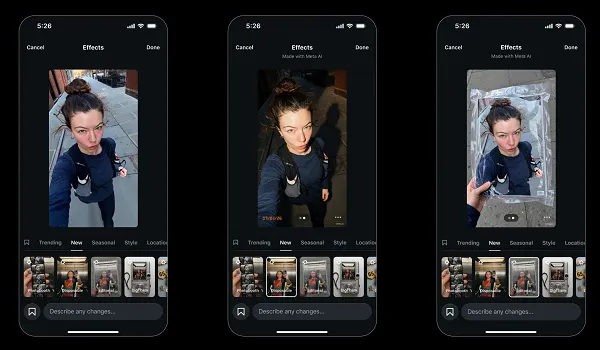
Muse Image represents a tangible outcome of these substantial investments. Utilizing advanced AI-powered reasoning, the tool is designed to offer users sophisticated visual creation and remixing capabilities. The initial promotional materials highlight features such as the ability to "place your pet in a famous painting," demonstrating the AI’s capacity for contextual understanding and realistic image manipulation. The technology is set to be integrated into Instagram Stories, offering over 30 new AI-powered effects, and will enable direct image generation within WhatsApp chats via Meta AI, initially rolling out in limited countries with plans for broader availability.
Chronology of Meta’s AI Push and Emerging Contradictions
Meta’s aggressive pursuit of AI supremacy has been well-documented. Over the past few years, the company has consistently emphasized AI as central to its strategy, both for improving existing products and building entirely new platforms. This commitment was underscored by CEO Mark Zuckerberg’s public statements outlining a vision for developing "superintelligent AI" and positioning Meta at the forefront of this technological revolution.
However, the path has not been without its complexities and internal dialogues. Just last month, Alexandr Wang, Chief of Meta’s Superintelligence Labs, offered a candid assessment of the current state of AI user experience. In an interview with The Core Memory podcast, Wang acknowledged that while many users have found AI tools "somewhat helpful," overall user experiences "are not overwhelmingly better" as a direct result of AI implementation. He stressed that the onus is on Meta to develop more genuinely valuable AI tools and to effectively communicate that value to a broader user base to improve public sentiment and drive adoption.

The release of Muse Image, shortly after Wang’s cautionary remarks, presents an interesting dynamic. While Meta’s official announcement positions Muse Image as a creative enhancement, questions arise regarding whether features like placing a pet in a painting or generating fantastical scenes truly address the "overwhelmingly better" experience challenge Wang articulated. Critics suggest that offering advanced visual filters and whimsical image transformations, while technologically impressive, might not fundamentally shift user perception regarding the indispensable value of AI in their daily digital interactions.
Supporting Data and Market Context
Meta’s massive financial outlay into AI infrastructure and talent reflects a broader industry-wide race for AI dominance. Major tech players like Google, Microsoft (via OpenAI), Amazon, and Apple are all pouring billions into AI research and development. The global generative AI market, valued at approximately $15.3 billion in 2023, is projected to grow at a compound annual growth rate (CAGR) of over 30% for the foreseeable future, reaching hundreds of billions by the end of the decade. This aggressive growth forecast fuels the intense competition, pushing companies to release new AI products and features rapidly.
Despite the significant investment and hype, user adoption and satisfaction with generative AI tools remain varied. Surveys indicate that while many users are curious about AI, a substantial portion struggles to find consistent, compelling use cases beyond novelty or specific professional applications. Concerns about accuracy, bias, and the ethical implications of AI-generated content also persist among the general public. For instance, a recent Pew Research Center study found that a majority of Americans express more concern than excitement about the increasing use of AI in daily life.

Meta’s approach with Muse Image seems to target the creative and social aspects of its platforms, aiming to enhance user engagement through novel visual tools. However, the market is already saturated with image generation tools from companies like Midjourney, DALL-E, and Stable Diffusion, which have captivated a niche of early adopters and digital artists. Meta’s challenge will be to differentiate Muse Image and demonstrate its unique value proposition to a mainstream audience, particularly within the context of social communication.
Official Responses and Implicit Justifications
Meta’s official statements regarding Muse Image focus on empowering creativity and enhancing communication. The company highlights the accessibility of these tools within its widely used apps, suggesting that by integrating advanced AI directly into platforms like Instagram and WhatsApp, it can democratize sophisticated image manipulation. The stated goal is to provide "new creative tools across Meta’s apps," enabling users to "generate images in your direct chats with Meta AI" and utilize "new AI-powered effects for Instagram Stories."
The company implicitly argues that such tools, even if seemingly whimsical, contribute to richer, more expressive digital interactions. The example of generating a party invite, for instance, points to a practical application for event planning and social coordination. From Meta’s perspective, these features are about offering more ways for users to express themselves and connect, aligning with its broader mission to build community and facilitate communication.
However, the launch comes at a time when Meta, like other tech giants, is under immense pressure to demonstrate concrete returns on its vast AI investments. Introducing user-facing features, even if their "overwhelmingly better" impact is debatable, helps maintain momentum, showcases technological prowess, and keeps Meta competitive in the rapidly evolving AI landscape. The company might view these releases as stepping stones, gathering user data and feedback to refine future, more impactful AI applications.
Broader Impact and Implications: A Multi-faceted Debate
The introduction of Muse Image carries significant implications across several domains, sparking a multi-faceted debate among users, privacy advocates, ethicists, and industry observers.
1. Data Privacy and User Autonomy:
One of the most contentious aspects of Muse Image is the revelation that Meta’s new model allows users to "remix any public image on Instagram." This capability is paired with a default opt-out policy, meaning users must explicitly choose to prevent their public Instagram content from being used in AI depictions. As reported by Wired, this raises substantial concerns about data privacy and user autonomy. Critics argue that an opt-out mechanism places the burden on individual users to protect their content, rather than requiring explicit consent for AI training and remixing. This approach could lead to public images being used in ways their original creators did not intend or approve, potentially infringing on creative rights and personal privacy. The sheer volume of public images on Instagram, combined with a likely low opt-out rate, means a vast dataset of user-generated content could be repurposed by Meta’s AI.

2. The Spread of Misinformation and Deepfakes:
The core capability of Muse Image to "completely transform the context" of images, as demonstrated by examples like a fully AI-generated scene of a person with a pet, immediately raises alarms about the potential for misinformation and the proliferation of deepfakes. While Meta states its intention for "fun" and "creative" uses, the line between harmless manipulation and deceptive content is increasingly blurred. In an era already struggling with discerning truth from fiction online, tools that make it effortlessly easy to generate realistic-looking but entirely fabricated imagery pose a significant challenge. Platforms like WhatsApp, where communication is often seen as more intimate and trustworthy, could become conduits for misleading visual content, eroding user trust and potentially impacting real-world events. Meta, like other platforms, will face increased pressure to develop robust detection and labeling mechanisms for AI-generated content, though the effectiveness of such measures remains a subject of ongoing debate.
3. Authenticity vs. Creativity in Digital Communication:
The very nature of social communication platforms like WhatsApp and Instagram revolves around sharing genuine moments and authentic expressions. Introducing tools that enable users to create highly manipulated or entirely fabricated images challenges this foundation. While filters and minor edits have long been part of digital photography, the ability to fundamentally alter reality with AI-powered tools pushes the boundaries. This raises philosophical questions about the value of authenticity in online interactions and whether an overabundance of AI-generated content might dilute the perceived reality of shared experiences.
4. Environmental and Economic Impact:
The "broad backlash against AI" cited in the original article includes concerns about the environmental footprint of large AI models, which consume immense amounts of energy for training and operation, contributing to carbon emissions. Similarly, the "job-replacing systems" aspect of AI development is a growing societal concern. While Muse Image is a user-facing tool, it is built upon the same massive computational infrastructure that fuels these broader concerns. The constant development and deployment of new AI models add to these resource demands, prompting calls for more sustainable AI development practices and a clearer understanding of the societal cost-benefit analysis.
5. User Adoption and the "Value Proposition" Challenge:
Alexandr Wang’s statement about AI tools not being "overwhelmingly better" highlights a crucial challenge for Meta. While Muse Image offers novel creative options, its long-term success hinges on whether mainstream users perceive it as genuinely valuable beyond novelty. The "why would anyone want to generate this?" question from the original article encapsulates this skepticism. For Meta to justify its colossal AI investments, it needs to move beyond "fun" features and demonstrate how AI can profoundly enhance productivity, learning, or communication in ways that are truly indispensable. Otherwise, these tools risk being seen as expensive gimmicks that fail to address core user needs.

Conclusion: An Evolving Landscape
Meta’s launch of Muse Image is a significant development, showcasing the company’s continued commitment to advancing generative AI and integrating it deeply into its ecosystem. It represents another step in the ongoing AI arms race, where tech giants are vying for supremacy in a rapidly evolving field. However, this advancement arrives at a critical juncture, where the promises of AI are increasingly weighed against its potential pitfalls.
The ethical considerations surrounding data privacy, content authenticity, and the potential for misuse demand robust solutions and transparent communication from Meta. The challenge for the company will be to not only innovate technologically but also to build trust and demonstrate a clear, positive impact on users’ lives, moving beyond whimsical features to deliver "overwhelmingly better" experiences that truly justify the monumental investments and mitigate the inherent risks. The success or failure of tools like Muse Image will not only reflect on Meta’s AI strategy but also contribute to the broader societal narrative surrounding the future of artificial intelligence.