Meta has taken a significant leap forward in its ambitious artificial intelligence agenda with the formal launch of its advanced Muse Spark 1.1 model. Announced on Thursday, this latest iteration in Meta’s evolving AI ecosystem is poised to unlock sophisticated AI use cases and opportunities, primarily through enhanced reasoning capabilities and expanded automation functionalities. The company’s strategic move is clearly aimed at attracting a wider base of business subscribers, as Meta simultaneously signals its intent to introduce paid tiers for developer access to its cutting-edge AI technologies. This marks a pivotal moment in Meta’s quest to not only innovate in the AI space but also to forge clear pathways for monetizing its substantial investments.
Delving into Muse Spark 1.1’s Capabilities
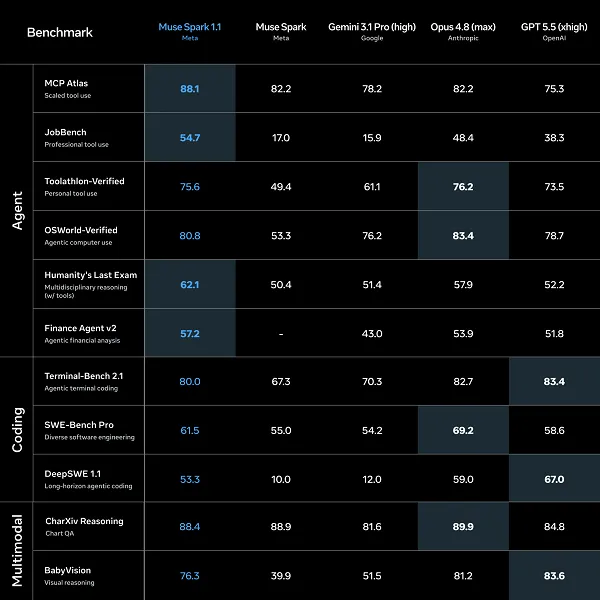
According to Meta, Muse Spark 1.1 is engineered as a multimodal reasoning model specifically designed for "agentic tasks." This description highlights its capacity to understand and process information across various modalities—such as text, images, and potentially other forms of data—and then use that understanding to plan and execute complex actions. The company emphasized "major gains in tool and computer use, coding, and multimodal understanding," asserting that these improvements push Muse Spark 1.1 to a new "performance-efficiency frontier."
A key differentiating feature of Muse Spark 1.1 is its ability to maintain context across multiple sessions and dynamically adapt to evolving requirements. This means the model is not confined to isolated, single-turn interactions but can engage in prolonged, goal-oriented dialogues and tasks, remembering previous interactions and adjusting its approach accordingly. Furthermore, Meta states that the tool can navigate unfamiliar digital interfaces with minimal human intervention, a critical attribute for true autonomous operation.
Meta elaborated on the model’s intelligent interaction paradigm: "Rather than reasoning through every desktop step one click at a time, Muse Spark 1.1 understands when to automate and when to use the interface directly." This intelligent discernment allows the model to optimize its approach, choosing to "write scripts when automation is faster, click when direct interaction is simpler, and generate batches of actions at each step." This adaptive execution promises a level of efficiency and versatility that could significantly reduce the need for manual oversight in complex digital workflows. The company also confirmed that Muse Spark 1.1 has surpassed many competitor AI models in internal benchmarking tests, particularly in coding proficiency and agentic response quality, underscoring its perceived competitive edge.
Meta’s Broader AI Vision and Recent Milestones
The launch of Muse Spark 1.1 arrives on the heels of other significant AI developments from Meta. Earlier this week, the company introduced Muse Image, an AI option allowing remixes of public Instagram posts. These concurrent releases underscore Meta’s accelerating pace in AI development and its ambitious vision of fostering "personal superintelligence." This grand aspiration envisions "models that help you pursue your goals, create what you imagine, deepen your relationships, and take action on what you value most," as articulated by Meta. This personal superintelligence concept suggests a future where AI acts as a highly capable, intuitive digital assistant deeply integrated into users’ lives, anticipating needs and executing tasks seamlessly across various platforms and services.
This overarching strategy is not new for Meta. For years, the company has been a foundational contributor to the AI research community, most notably through its open-source PyTorch framework, which has become a cornerstone for deep learning development globally. More recently, Meta has made waves with its Llama series of large language models, particularly Llama 2 and Llama 3, which have been released with varying degrees of openness, fueling innovation across the AI landscape. These models, while powerful, primarily focused on generative text and code. Muse Spark 1.1, with its emphasis on multimodal reasoning and agentic capabilities, represents a maturation of Meta’s AI offerings, moving beyond pure generation to autonomous action. The company’s AI research division, formerly Facebook AI Research (FAIR), has consistently pushed boundaries in areas like computer vision, natural language processing, and reinforcement learning, laying the groundwork for the advanced capabilities now seen in models like Muse Spark 1.1.
The Dawn of Agentic AI and Its Potential Impact
The "agentic performance" of Muse Spark 1.1 is particularly noteworthy, given Meta’s stated intentions regarding AI agents. Vishal Shah, Meta’s VP of AI products, has previously indicated that the company is actively developing AI tools capable of taking action on a user’s behalf in diverse contexts. Meta reiterated this sentiment, stating, "Muse Spark 1.1 delivers exceptional performance in personal agentic tasks that require planning and orchestration across a range of external apps and services." This vision of AI agents that can autonomously navigate and interact with various digital environments—from drafting emails to managing schedules, booking appointments, or even complex coding tasks—represents a significant paradigm shift from reactive AI tools to proactive, goal-oriented systems.
The market for AI agents is projected to grow substantially in the coming years. According to various market research firms, the global AI agent market could reach tens of billions of dollars by the end of the decade, driven by demand for automation in customer service, personal assistance, and enterprise operations. Companies are increasingly seeking solutions that can not only understand but also act on information, streamlining workflows and enhancing productivity. Meta’s push into this domain positions it to capture a significant share of this emerging market, particularly if its models can demonstrate superior reliability and efficiency.
Monetization: A Critical Imperative for Meta’s AI Future
The launch of Muse Spark 1.1 also marks a critical strategic inflection point for Meta’s financial future. As reported by Bloomberg, Muse Spark 1.1 will be the first of Meta’s AI models to include a paid tier for developers, signifying the company’s earnest move towards monetizing its AI investments. Meta CEO Mark Zuckerberg conveyed to Bloomberg that the model’s pricing structure would be "very aggressive and attractive," aiming to establish a direct link between the company’s colossal AI investment and future revenue generation.
This aggressive monetization strategy is underpinned by the staggering financial commitments Meta has made to its AI endeavors. The company has publicly disclosed plans to invest hundreds of billions of dollars in AI infrastructure, with some estimates suggesting a potential expenditure of over $1 trillion in the long term to lead the global AI arms race. Zuckerberg himself has framed AI as a transformative shift, comparable to the rise of mobile computing, necessitating unparalleled investment. However, such monumental capital outlays place immense pressure on Meta to demonstrate clear and substantial returns.
The current financial landscape highlights this challenge starkly. For the full year 2025, Meta reported approximately $200 billion in revenue, with a dominant 98% originating from advertising. This means Meta essentially needs to construct an entirely new, multi-billion-dollar business around AI to even begin to justify its expenditure and turn a profit on its AI push. Financial analysts have underscored the scale of this challenge: based on current AI project expenses, it could take more than a decade just to break even on initial AI infrastructure costs, even if Meta were to generate $100 billion per year from AI subscriptions—a figure that doesn’t account for ongoing investment, maintenance, and research costs. This necessitates the introduction of a vast array of AI products and services designed to attract both business and consumer investment.
The decision to introduce paid tiers for Muse Spark 1.1 is thus not merely a business model adjustment but a strategic imperative. To win over developers and enterprise clients, Meta must convincingly demonstrate that its AI tools offer significant, quantifiable value and are worth a substantial investment. This explains the company’s keenness to highlight how agentic AI can perform tasks traditionally handled by human staff, promising efficiencies and cost savings.
Navigating the Pitfalls of Agentic AI
Despite Meta’s confidence and the immense potential of agentic AI, the deployment of such autonomous systems is not without significant challenges and risks. The original article rightly points out that this could be problematic, considering the various issues that have already been reported with AI tools empowered to undertake tasks on behalf of humans.
Meta itself has direct and recent experience with these problems. Just last month, reports surfaced detailing how Meta’s agentic AI account support agents on Instagram incorrectly granted hackers access to approximately 20,000 user accounts after being prompted to do so. This incident serves as a stark reminder of the potential for flawed AI logic flows to lead to significant breaches, security vulnerabilities, and widespread user issues. This is one of many documented cases where AI, despite its advanced capabilities, has demonstrated a lack of critical judgment or susceptibility to manipulation, leading to unintended and often negative consequences.
The inherent complexity of "agentic tasks" exacerbates these risks. When an AI model is tasked with planning and orchestrating actions across multiple external applications and services, the potential for error, misinterpretation, or cascading failures increases exponentially. Unlike generative models that produce content for human review, agentic models act in the world, making their errors potentially more impactful and harder to reverse. Concerns about "AI hallucinations"—where models generate factually incorrect or nonsensical information—become far more serious when those hallucinations translate into autonomous actions.
Furthermore, recent reports from businesses experimenting with AI tools suggest that they are not consistently delivering on their promised major business efficiencies. While AI can automate routine tasks, the integration, fine-tuning, and oversight required for complex, mission-critical applications often offset some of the anticipated gains. The initial hype surrounding AI’s transformative power is now being tempered by the practical realities of deployment and the need for robust human-in-the-loop systems.
Broader Societal and Workforce Implications
Meta’s aggressive embrace of agentic AI and its drive for monetization also carries significant societal and workforce implications. The company’s previously stated plans to replace 90% of its content review staff with AI tools by the end of 2026 is a stark example of the potential for widespread job displacement. While automation can lead to increased productivity and new job categories, the speed and scale of AI adoption could create significant disruption in labor markets, particularly for roles involving routine or semi-routine cognitive tasks.
This "squeeze" on human staff, where companies invest heavily in AI tools and then task employees with implementing these models—whether the tools are fully ready or not—can lead to increased stress, ethical dilemmas, and a decline in service quality. If AI agents are deployed in critical roles without sufficient oversight, testing, and fallback mechanisms, the risks of errors, biases, and unintended harm multiply. This underscores the urgent need for robust ethical guidelines, regulatory frameworks, and accountability mechanisms for the development and deployment of advanced AI, especially those with agentic capabilities. Governments and international bodies are already grappling with these challenges, seeking to balance innovation with safety and societal well-being.
Conclusion: A High-Stakes Gamble
Meta’s launch of Muse Spark 1.1 represents a bold and calculated move in its high-stakes gamble on artificial intelligence. By introducing an advanced multimodal, agentic AI model with explicit monetization plans, Meta is signaling its intent to not only compete at the forefront of AI innovation but also to transform its business model fundamentally. The vision of "personal superintelligence" and AI agents capable of complex autonomous actions is compelling, promising unprecedented levels of efficiency and personalization.
However, the path forward is fraught with challenges. The enormous financial investments demand equally enormous returns, pushing Meta to aggressively pursue monetization strategies in a nascent and unproven market. More critically, the inherent risks associated with autonomous AI agents—as evidenced by past incidents of flawed logic and security breaches—raise profound questions about reliability, safety, and ethical governance. While Meta expresses confidence in Muse Spark 1.1’s improved performance, the broader industry and regulatory landscape remain cautious.
Ultimately, Meta’s success will hinge on its ability to strike a delicate balance: pushing the boundaries of AI capabilities while simultaneously ensuring the safety, reliability, and trustworthiness of its autonomous systems. The next few years will be crucial in determining whether Meta’s aggressive AI push transforms it into a leader in the agentic AI era, or if the ambitious endeavor proves to be a costly lesson in the complexities of deploying truly intelligent agents.