rifanmuazin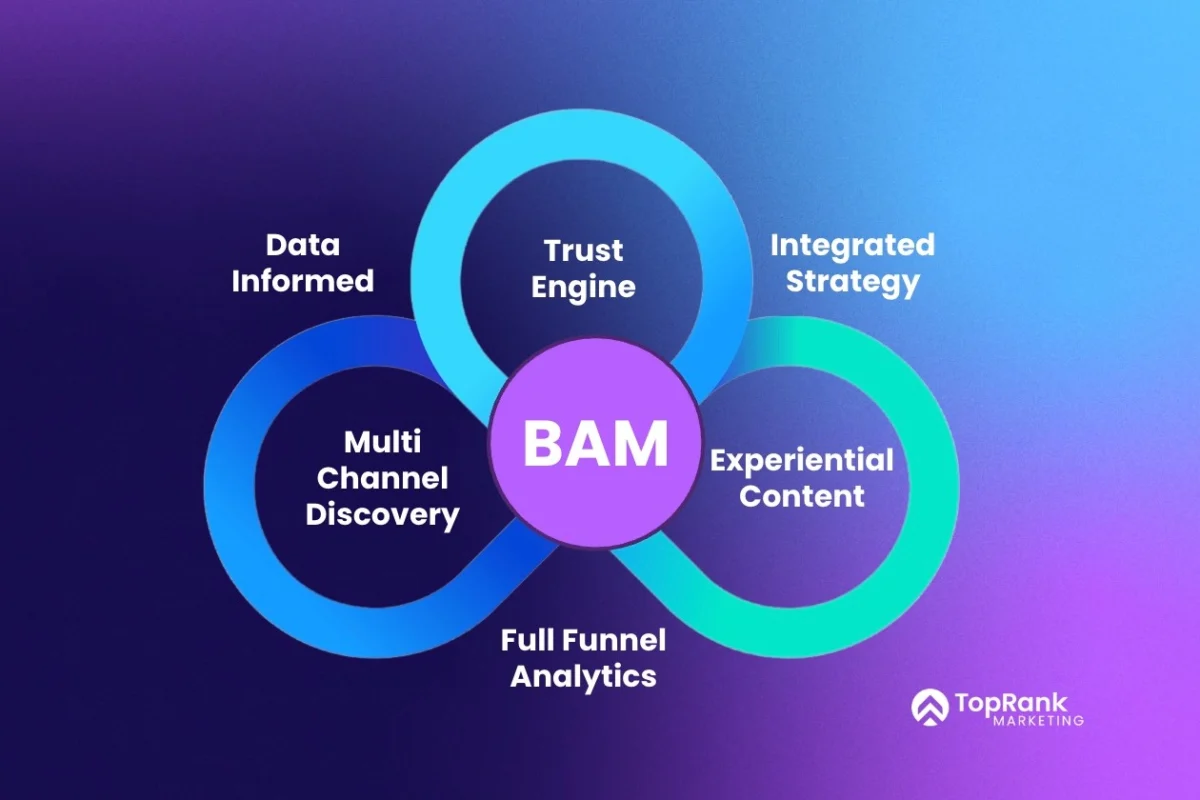
Mountain View, CA – May 20, 2026 – Google’s annual developer conference, Google I/O, concluded today with a series of announcements that fundamentally reshape the search landscape, confirming a strategic pivot towards AI-powered experiences. The dominant takeaway from I/O 2026 is the ascension of “AI Mode” as the primary search interaction for over a billion monthly users, signaling a profound departure from the traditional “ten blue links” that have defined web search for decades. This evolution demands an immediate recalibration of digital marketing strategies, particularly for Business-to-Business (B2B) brands, as the methods of customer discovery, engagement, and decision-making are irrevocably altered.
For B2B marketers who have long relied on search engine optimization (SEO) tactics centered on keyword rankings and click-through rates, the window for adaptation is rapidly closing. The new reality, as articulated by Google executives and corroborated by emerging user data, emphasizes authoritative, expert-driven content structured for AI comprehension and citation. This shift signifies a move from optimizing for visibility on a page to becoming an integral part of the synthesized answers that AI models now provide.
The Dawn of AI-Centric Search: A Look Back and Forward
The seeds of this transformation were sown at Google I/O 2025, where initial discussions about AI Mode and nascent agentic capabilities hinted at a future where search would become more conversational and contextually aware. At the time, these features were experimental, and their full impact on B2B marketing was still unfolding. A year later, the trajectory is undeniable. Google’s announcements at I/O 2026 confirm that AI Mode is no longer a supplementary feature but the core of the search experience.
Elizabeth Reid, Google’s VP of Search, described the I/O 2026 announcements as “the next step in bringing together the best of a search engine with the best of AI.” This integration is manifesting through several key advancements that are already rolling out.
Key Announcements from Google I/O 2026 Transforming Search:
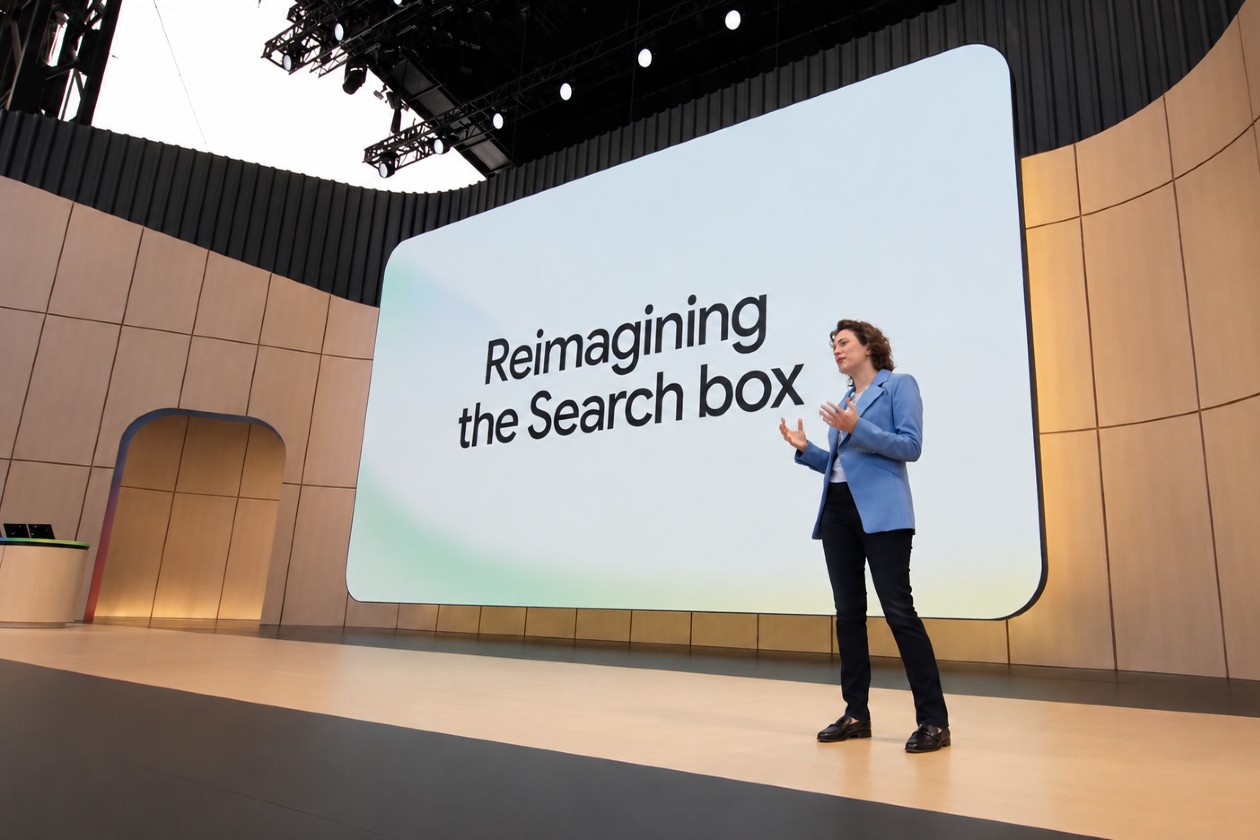
- Reimagined Search Interface: The search box itself has undergone a significant overhaul for the first time in 25 years. It now dynamically expands to accommodate longer, more conversational queries and accepts multimodal inputs, including text, images, files, and video. AI-powered query suggestions are also evolving beyond simple autocomplete, aiming to guide users toward more comprehensive information discovery.
- AI Mode at Unprecedented Scale: Following its introduction, AI Mode has rapidly surpassed one billion monthly users. Critically, the volume of queries within AI Mode has more than doubled every quarter. Furthermore, AI Overviews, a key component of this AI-driven experience, now reach an estimated 2.5 billion monthly users. This data unequivocally demonstrates that the majority of Google searches are no longer centered on traditional link lists.
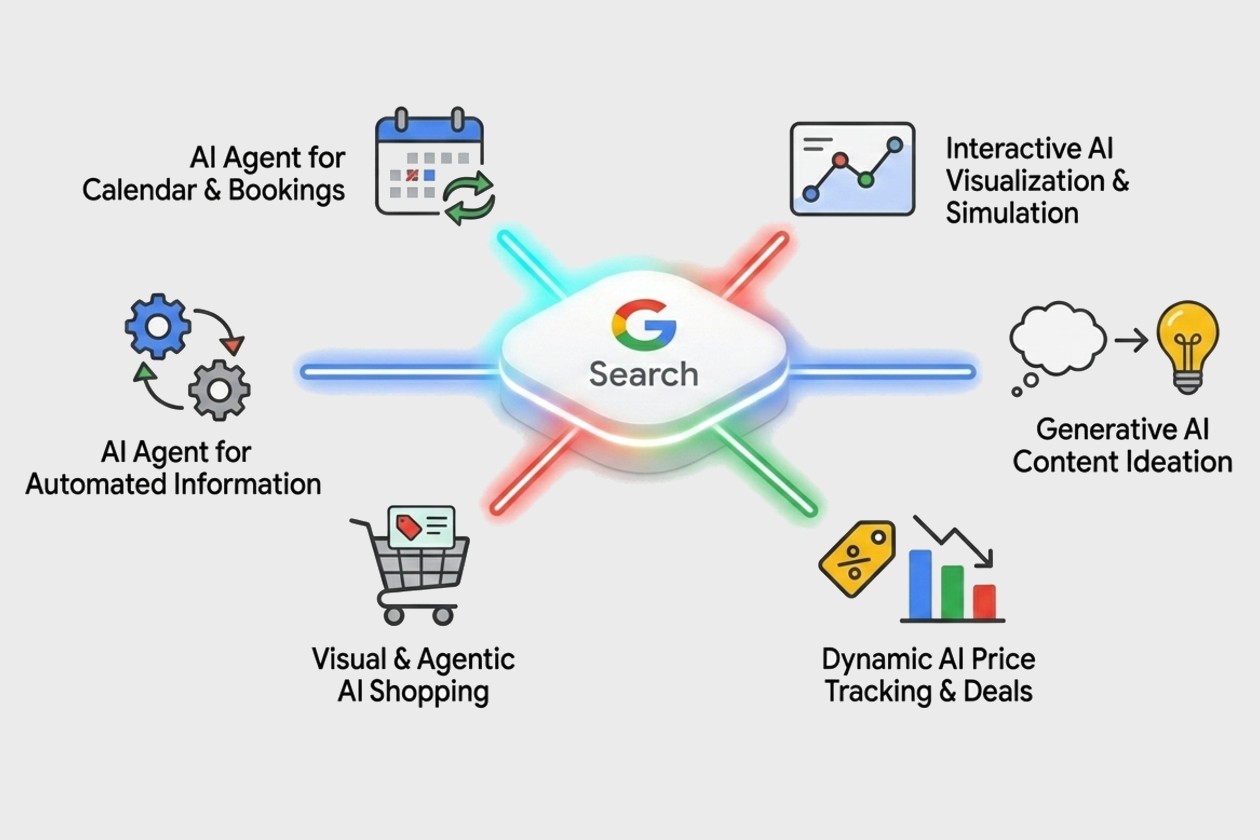
- Introduction of Search Agents: Users can now create, customize, and manage AI agents directly within the Google search interface. These agents operate autonomously, continuously scanning the web to monitor specific topics, synthesize emerging information, and deliver curated updates. Instead of a list of links, these agents are designed to return synthesized answers accompanied by recommended actions, fundamentally changing how information is consumed and acted upon.
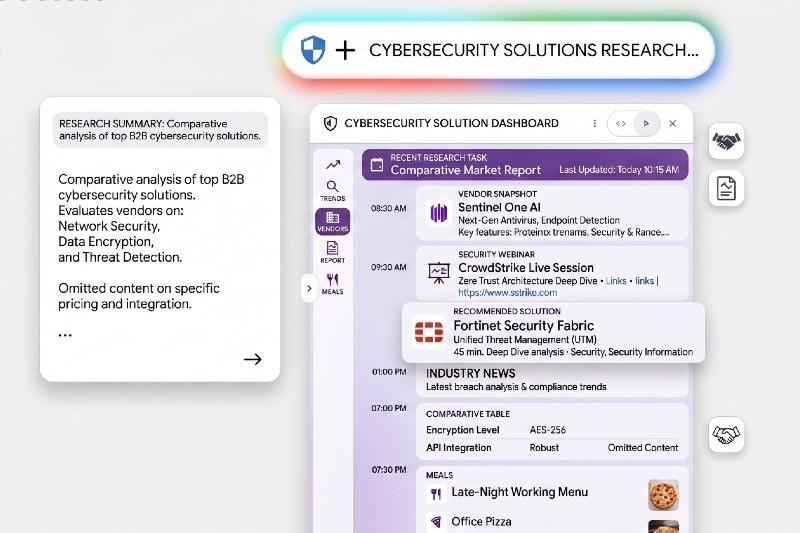
- Generative UI Capabilities: Google is empowering users to create custom, interactive experiences on the fly, directly responding to their search queries. This includes visual explainers and stateful mini-applications that users can revisit. For instance, buyers can now request a comparison table of vendor features directly within the search experience, streamlining the evaluation process.
- Evolution of “Query Fan-Out”: Building on last year’s “query fan-out” capability, where AI Mode concurrently executed multiple related searches, this has now evolved into a fully agentic system capable of autonomous operation on behalf of users. Google’s updated AI optimization guide explicitly states that both query fan-out and retrieval-augmented generation (RAG) remain critical to its core search ranking systems, underscoring the continued importance of foundational content authority.
This evolution signals a shift towards what some industry analysts are terming “zero-click marketing,” a concept gaining traction with recent publications on the topic. The focus is moving away from driving traffic to a website and towards ensuring brand presence and authority within the AI-generated answers themselves.
Behavioral Data Reveals Shifting User Habits
Complementing the product announcements, Google has released significant behavioral data illustrating how users are engaging with AI Mode in the United States. This data offers crucial insights for B2B marketers seeking to remain visible, trusted, and ultimately chosen in this new search paradigm.
The behavioral trends reveal a dramatic increase in the complexity and nature of search queries:
- Query Length Tripled: The average search query in AI Mode is now three times longer than traditional search queries. This indicates that users are moving beyond short, keyword-driven searches to more descriptive, conversational, and nuanced questions. They are no longer constrained by the perceived need to find exact keywords but are instead articulating their needs more naturally.
- Follow-Up Conversations Surge: Follow-up queries are increasing by 40% month-over-month. This highlights that users are not satisfied with a single answer; they are delving deeper, exploring related concepts, and engaging in extended information-gathering dialogues. Brands that can provide comprehensive, interconnected information across a topic are poised to maintain user engagement through these follow-up interactions.
- Multimodal Search Becomes Mainstream: One in six searches are now multimodal, meaning they involve more than just text. Image input alone has seen a 40% month-over-month increase since the launch of AI Mode. This underscores the growing importance of visual and multimedia content in the B2B content strategy.
- Dominant Query Intents: The top first words in AI Mode queries are “What,” “How,” “I,” “Is,” and “Can.” The most frequent keywords are “Information,” “Identify,” “Find,” “Explain,” and “Summarize.” Together, these patterns point to a search experience centered on seeking explanations, definitions, and actionable insights, rather than mere keyword matching. Content that directly answers “what” and “how” questions with clarity, frameworks, and expert perspectives is being prioritized by AI.
- Five Key Behavioral Modes: Google’s research categorizes AI Mode usage into five distinct behavioral modes, each offering strategic implications for B2B marketers:
- Explore: Brainstorming-related queries are growing 30% faster than overall AI Mode queries. Users are leveraging AI Mode for open-ended discovery and idea generation, aligning with the initial problem identification phase of the B2B buyer journey.
- Decide: Searches beginning with “which” have increased by 40% faster than overall AI Mode queries. This mode directly reflects the evaluation stage, where trust signals, comparative content, and third-party validation are paramount for influencing AI-powered recommendations.
- Learn: AI Mode is being extensively used for professional development and in-depth learning. This resonates with B2B buyers building expertise in a category before vendor evaluation, making educational content and expert-led explainers crucial.
- Do: Planning-related queries have grown 80% faster than overall AI Mode queries in the past six months. Google’s Canvas tool is facilitating complex, multi-step planning tasks, highlighting the value of structured, actionable content like guides and templates.
- Create: Image creation queries in AI Mode have more than tripled this year. This indicates AI Mode’s increasing role as a productivity tool, with B2B buyers using it for creative workflows. Modular, repurposable content that AI can integrate into creation processes presents a novel visibility opportunity.
The Strategic Imperative for B2B Brands: Beyond Traditional SEO
The implications of these changes are profound for B2B marketers. The outdated playbook of chasing keyword rankings and backlink acquisition is no longer sufficient. Google’s own guidance for AI search optimization explicitly debunks market tactics such as creating LLMS.txt files, content chunking for AI parsing, and artificial mention generation. Instead, Google emphasizes the enduring value of unique, non-commodity content underpinned by original research, genuine thought leadership, and robust credibility signals that AI systems can recognize and reward.
This aligns directly with the principles of “Best Answer Marketing” (BAM), a strategic framework developed by TopRank Marketing, which has been adapting to search evolution for over 25 years. BAM is built upon the premise that buyer behavior changes, and the technology used to access information must adapt in kind.
How Best Answer Marketing Addresses the New Search Landscape:
- Data-Informed Content: BAM’s “Data Informed” pillar focuses on answering the specific questions buyers are asking, leveraging customer surveys, CRM data, audience research, and original research. This directly maps to the question-centric structure of AI Mode, ensuring content is architected for AI comprehension and user relevance.
- Integrated Strategy for Depth and Coherence: The 40% increase in follow-up queries necessitates a deep and coherent approach to content. BAM’s “Integrated Strategy” pillar ensures topical coverage across the buyer journey, with consistent narratives across various formats and channels. This is vital for maintaining user engagement as they delve deeper into a topic.
- Trust Systems for Credibility: In the “Decide” phase, where “which” queries are surging, credibility is paramount. BAM’s “Trust System” focuses on producing non-commodity content that goes beyond generic knowledge. This includes original research, expert-led content, and leveraging E-E-A-T (Experience, Expertise, Authoritativeness, Trustworthiness) principles, which Google has long championed and which gain even greater weight in AI-driven decision-making.
- Experiential Content for Multimodal Engagement: With the rise of multimodal search and image creation queries, text-only content is insufficient. BAM’s “Experiential Content” pillar emphasizes rich formats and structured content designed for AI recommendation and integration into interactive experiences, directly addressing the growing demand for visual and multimedia content.
- MultiChannel Visibility Across Behavioral Modes: To ensure discovery across all five AI Mode behavioral modes, a robust multi-channel approach is essential. BAM’s “MultiChannel Visibility” pillar drives discovery across the diverse range of formats and channels that align with each buyer mode, acknowledging that B2B buyers now utilize an average of 10.2 channels during their purchase journey.
- Unified Analytics for Meaningful Measurement: As direct clicks diminish as a primary performance signal, metrics must evolve. BAM’s “Unified Analytics” pillar focuses on AI citation rates, brand mention share, topic authority, and pipeline influence, integrating disparate data sources to measure full-funnel outcomes in an agent-driven world.
Industry Reactions and Future Outlook
The seismic shifts announced at Google I/O 2026 have prompted varied reactions within the marketing and technology sectors. Jon Miller, Co-Founder of Stealth AI Startup and Co-Founder of Marketo, commented, “It’s not about showing up on page one of Google. It’s about getting referenced inside of an AI answer. Zero-click search is just a simple example of that, where they’re not going to your website. The playbooks that we used to use just don’t work anymore.”
Similarly, David Rowlands, Head of Product at B2B Marketing & Propolis, noted, “The content that we find that’s really valuable is the content that’s based in proprietary data and actually has a really strong foundation for saying something different in the industry.” This sentiment reinforces the critical need for original, authoritative content.
Kelsey Voss, Principal Marketing Analyst at EMARKETER, added, “GEO builds on great SEO tactics. It does not replace it. So, structure and clear answers and credible authorship make content easier for systems to extract data and information and reuse that.” This highlights that foundational SEO principles, when adapted for AI, remain relevant.
The rolling out of the new Search interface and generative UI capabilities signals that the transition is not a distant future but an immediate reality. B2B brands that have been investing in building topical authority, fostering trust through credible authorship, and structuring content for AI citation are already experiencing advantages in visibility and pipeline growth. Conversely, those still tethered to traditional SEO tactics face significant challenges in reaching and influencing buyers in this transformed digital ecosystem.
The era of AI-powered search has definitively arrived, demanding a strategic realignment for B2B marketers. The companies that embrace this shift, focusing on delivering “Best Answers” through data-informed, integrated, and credible content, will be best positioned to thrive in the evolving landscape of customer discovery and engagement. The window for adaptation is narrowing, and the time to evolve is now.