Mountain View, CA – May 20, 2026 – Google’s annual developer conference, Google I/O, concluded today with announcements that fundamentally alter the landscape of online search, cementing AI-powered experiences as the primary method for users to find information. The “AI Mode,” first introduced in a nascent form a year ago, has rapidly scaled to reach over a billion monthly users, with query volumes experiencing exponential growth. This seismic shift signals the end of the traditional blue-link search result page as the primary gateway for consumer and business discovery, prompting an urgent call for B2B marketers to adapt their strategies.
At the heart of the transformation is a profound change in user behavior and Google’s technological response. Data revealed at Google I/O 2026 indicates that the average search query has tripled in length, reflecting a more conversational and nuanced approach to information seeking. Furthermore, follow-up conversations within search sessions have surged by 40% month-over-month, and an astonishing one in six searches now incorporates multimodal inputs, including images and voice. This evolution underscores that users are leveraging AI search not just for quick answers, but for in-depth exploration, decision-making, learning, planning, and even content creation.
The implications for B2B brands are stark. The long-standing SEO playbook, heavily reliant on optimizing for keyword rankings and driving traditional click-through traffic, is becoming obsolete. Google’s own guidance for AI search optimization, released concurrently with the I/O announcements, directly refutes common market tactics such as creating specific “LLMS.txt” files or artificially manufacturing mentions. Instead, the search giant emphasizes the enduring importance of unique, authoritative, and expertly-backed content, structured in a way that AI systems can easily understand, cite, and synthesize. This aligns precisely with the principles of “Best Answer Marketing,” a strategic framework focused on delivering unparalleled value and credibility.
The Evolution of Search: A Chronology
The journey to an AI-centric search experience has been accelerating, with Google I/O 2025 serving as a critical inflection point. Last year, Google introduced early AI Mode capabilities and began exploring agentic functionalities. While the potential impact on B2B marketing was recognized, the full scope of the transformation was still emerging.
This year, Google I/O 2026 has solidified this trajectory. The overarching theme was the seamless integration of search engine capabilities with advanced AI. Google’s VP of Search, Elizabeth Reid, described the I/O 2026 announcements as “the next step in bringing together the best of a search engine with the best of AI.” This sentiment was echoed by industry experts, including Jon Miller, Co-Founder of Stealth AI Start-up and Co-Founder of Marketo, who stated, “It’s not about showing up on page one of Google. It’s about getting referenced inside of an AI answer… The playbooks that we used to use just don’t work anymore.”
This shift signifies a move away from a model focused on attracting website traffic through ranked links towards what is increasingly being termed “zero-click marketing,” a concept gaining prominence with recent publications from thought leaders in the field.
Key Announcements from Google I/O 2026
The conference unveiled several pivotal updates to the Google search experience:
-
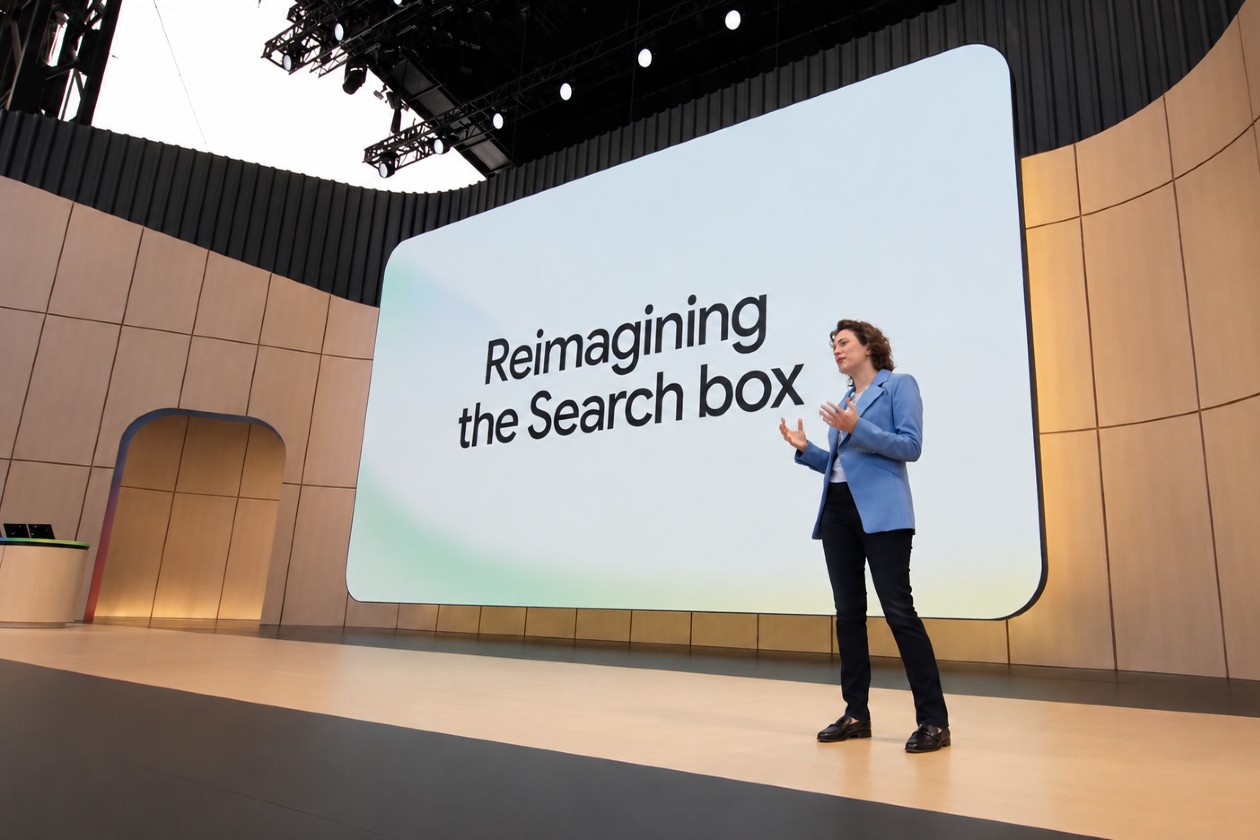
Reimagined Search Interface: For the first time in two decades, the Google search box has undergone a significant redesign. It now dynamically expands to accommodate longer, more conversational queries, accept a wider range of multimodal inputs (text, images, files, video), and offer advanced AI-powered query suggestions. This enhanced interface is designed to facilitate deeper research and more informed decision-making.
-
AI Mode at Scale: AI Mode has transcended its initial introduction, now boasting over one billion monthly users. AI Overviews alone are reaching an estimated 2.5 billion monthly users. This widespread adoption means that the majority of search interactions are no longer centered on traditional search result pages.
-
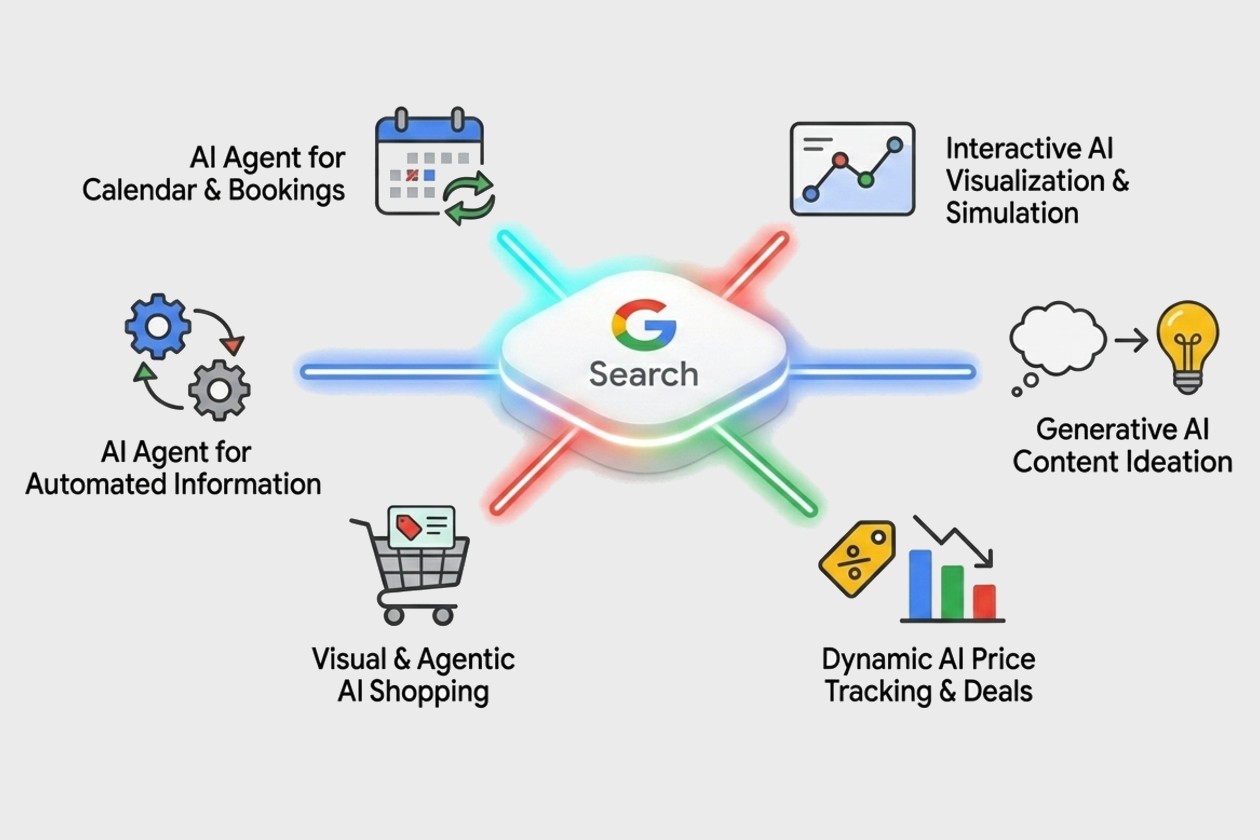
Introduction of Search Agents: Users can now create, customize, and manage AI agents within the Google search interface. These agents operate autonomously, continuously monitoring the web for specific topics, synthesizing information, and delivering comprehensive answers with actionable recommendations. This introduces a new paradigm where content must be optimized not only for human users but also for these AI agents acting on their behalf.
-
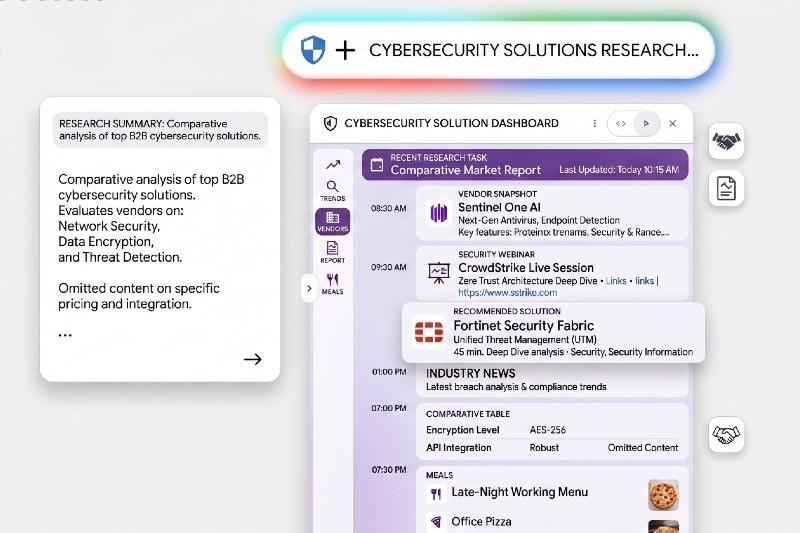
Generative UI Capabilities: Google is enabling users to create custom, interactive experiences directly within search results. This includes visual explainers and stateful mini-applications that users can revisit. For B2B marketers, this opens possibilities for dynamic content generation, such as on-the-fly comparison tables of vendor features, directly addressing user queries within the search environment.
The “query fan-out” capability, introduced last year, allowing AI Mode to simultaneously explore related subtopics, has evolved into a sophisticated agentic system. Google’s AI optimization guide confirms that both query fan-out and retrieval-augmented generation (RAG) remain integral to its core search ranking systems, reinforcing the notion that foundational content authority continues to influence AI-generated responses. As Sarah Perez of TechCrunch noted, this signifies a future where AI agents perform the bulk of web searching, with humans focusing on acting upon the information provided. This has led to discussions around “agent-based marketing” and “business-to-agent” (B2A) strategies.
Behavioral Data Reveals New User Engagement Patterns
Crucially, Google released new behavioral data shedding light on how users are interacting with AI Mode in the U.S. This data offers invaluable insights for B2B content strategy:
-
Extended Queries: The average AI Mode query length is now three times that of traditional searches, indicating users are posing more complex and natural language questions. This highlights the declining relevance of keyword-centric content strategies.
-
Conversational Depth: A 40% month-over-month increase in follow-up queries demonstrates that users are engaging in deeper exploration, moving beyond single questions to delve into related topics and nuances. Brands that fail to provide comprehensive topical coverage risk falling out of consideration.
-
Multimodal Integration: Over one in six AI Mode searches are now non-textual (multimodal). Image input, in particular, has seen a 40% month-over-month surge. This underscores the growing necessity of incorporating visual and multimedia content into B2B strategies.
The top first words in AI Mode queries – “What,” “How,” “I,” “Is,” and “Can” – coupled with top keywords like “Information,” “Identify,” “Find,” “Explain,” and “Summarize,” point to a search experience centered on questions and explanations rather than mere keyword matching. Content that directly addresses “what” and “how” questions with clear definitions, frameworks, and expert perspectives is precisely what AI Mode is designed to surface.
Google’s research further categorizes AI Mode usage into five behavioral modes: Explore, Decide, Learn, Do, and Create.
- Explore: Brainstorming-related queries are growing 30% faster than overall AI Mode queries. This reflects users seeking new ideas and exploring open-ended concepts, mirroring the initial problem identification stage for B2B buyers.
- Decide: Queries starting with “which” have increased 40% faster than average. This signifies the evaluation phase, where trust signals, comparative content, and third-party validation are critical for visibility in AI-generated recommendations.
- Learn: AI Mode is being extensively used for professional development and deep-dive learning. B2B buyers engage in this mode to build expertise before vendor evaluation, making educational content from original research and expert-led explainers highly valuable.
- Do: Planning-related queries have grown 80% faster than overall AI Mode queries. Google’s Canvas tool is being used for complex, multi-step planning tasks. Structured, actionable content like step-by-step guides and templates are becoming essential resources.
- Create: Image creation queries in AI Mode have more than tripled year-to-date, indicating AI Mode is increasingly used as a productivity tool. Modular, repurposable content that AI can integrate into creation workflows presents a novel visibility opportunity.
The Best Answer Marketing Framework: A Solution for the AI Era
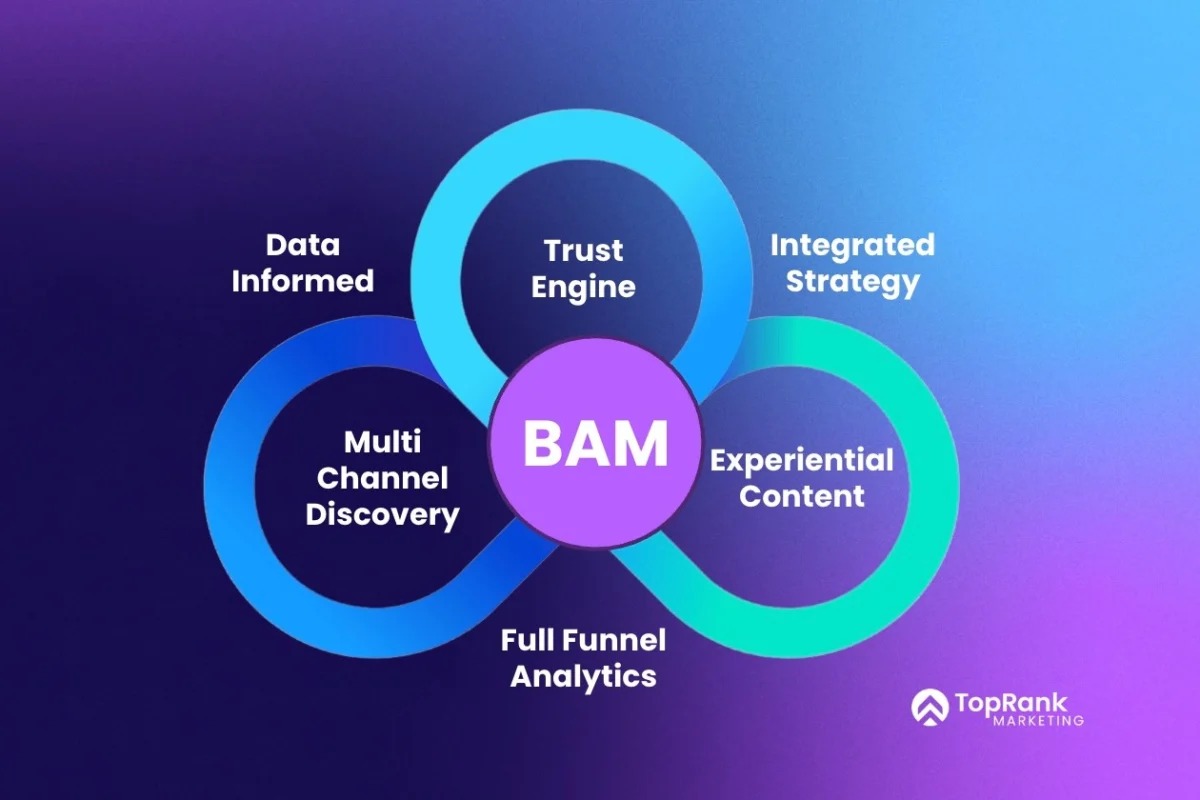
The Best Answer Marketing (BAM) framework, developed by TopRank Marketing, was designed with the foresight that buyer behavior and the technologies they use would evolve. This framework is built on five core pillars, all of which are directly aligned with the current AI-driven search landscape:
-
Data Informed: This pillar emphasizes answering the specific questions buyers are asking, informed by customer surveys, CRM data, audience research, and original research. The shift to longer, more conversational queries makes this approach more critical than ever. Brands that have invested in understanding genuine buyer questions possess a content architecture that AI Mode can effectively utilize.
-
Integrated Strategy: The surge in follow-up queries validates the importance of topic cluster depth and coherent narrative orchestration. Buyers are engaging in multi-stage research across various platforms. BAM’s Integrated Strategy pillar aligns brand, demand, and lead generation content goals into a unified plan with consistent narratives across formats and channels, ensuring topical coverage across the entire buyer journey.
-
Trust System: In the “Decide” stage, where “which” queries dominate, credibility is paramount. Google’s AI optimization guide distinguishes between “commodity content” and “non-commodity content,” with the latter—unique, expert takes—being rewarded. BAM’s Trust System focuses on building genuine thought leadership through original research, author credibility, and external validation, aligning with Google’s E-E-A-T (Experience, Expertise, Authoritativeness, Trustworthiness) principles.
-
Experiential Content: The rise of multimodal search necessitates a move beyond text-only content. With image input and creation queries soaring, visual and multimedia content are essential. Furthermore, the 80% faster growth in planning queries highlights the demand for structured, actionable content that AI Mode can leverage for tasks like planning. BAM’s Experiential Content pillar addresses both format richness and content structure for AI citation, enabling content to be easily parsed and repurposed by AI.
-
MultiChannel Visibility: The five behavioral modes identified by Google require a presence across a diverse range of formats and channels. Buyers now utilize an average of 10.2 channels during a purchase journey. BAM’s MultiChannel Visibility pillar ensures discovery across the full spectrum of formats and channels that align with each buyer mode, combating the decline in direct Google referrals and the rise of zero-click experiences.
-
Unified Analytics: As AI search diminishes the prominence of direct clicks as a primary performance metric, new measurement standards are emerging. These include AI citation rates, brand mention share, topic authority signals, and pipeline influence. BAM’s Unified Analytics pillar consolidates disparate data sources into an AI-powered data warehouse, visualizing full-funnel outcomes and providing a reliable method for assessing content program effectiveness in an agent-driven world.
The Narrowing Window for Adaptation
Google has confirmed that the new Search interface is rolling out immediately, with Generative UI functionalities to follow this summer. Information agents and mini-app building will initially be available to subscribers, with broader free access anticipated later. This accelerated rollout underscores the urgency for B2B brands to adapt.
The behavioral data from Google I/O 2026 paints a clear picture: triple-length buyer questions are now the norm, follow-up conversations are increasingly common, and multimodal search is rapidly expanding. Brands that align their content strategies with these evolving user behaviors are positioning themselves to establish authority and build preference among both AI systems and human buyers.
Last year, embracing a Best Answer Marketing strategy was presented as the path for B2B marketers to transition from merely being found to becoming the indispensable answer customers seek. A year later, Google’s comprehensive data confirms this is precisely the direction of the search experience. As Jon Miller aptly put it, “Building brand credibility and consensus across channels through integrated content experiences is how B2B companies go from blending in to becoming Best Answer Brands.” For B2B brands still optimizing for traditional clicks, the time to pivot is now.