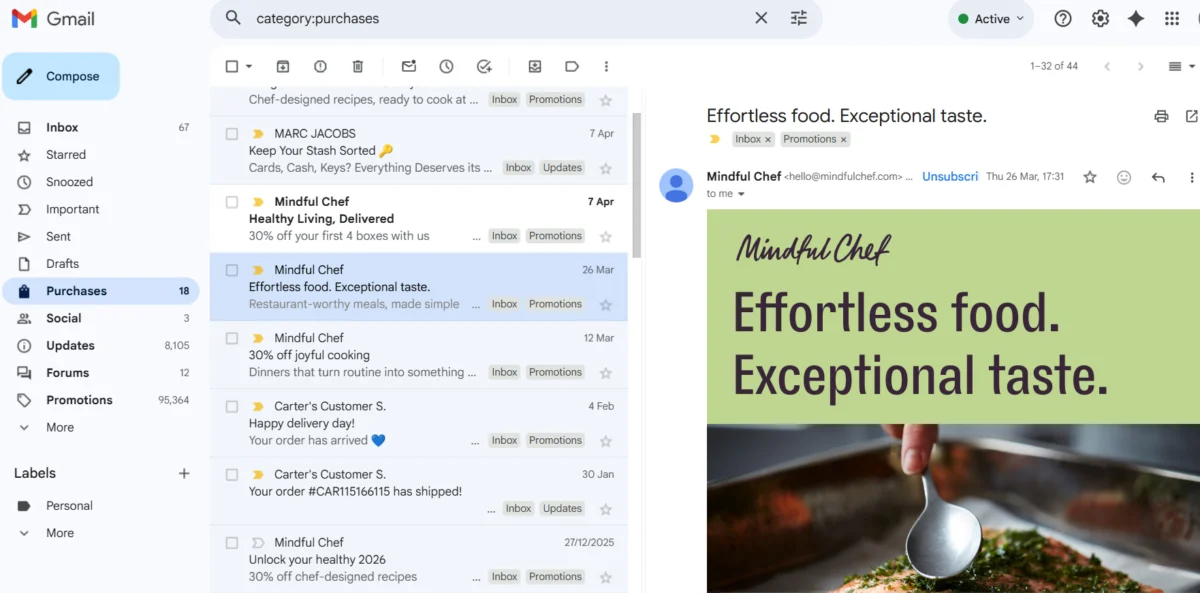
Email marketers and senders are currently navigating a significant upheaval in their performance metrics, as Gmail users report substantial declines in email open rates over the past few months. Validity, a leading provider of email deliverability solutions, has confirmed these alarming trends, with some of its clients witnessing quarter-over-quarter drops of 30 percent or more. This widespread phenomenon is directly correlated with a roughly one-third reduction in Gmail’s image loading activity, which includes critical tracking pixels, observed since late November 2025. This dramatic shift underscores a pivotal moment for email marketing, challenging long-held assumptions about engagement metrics and compelling brands to fundamentally rethink their outreach strategies.

Understanding the Core Mechanism: Reduced Image Prefetching
The primary driver behind the precipitous fall in reported open rates is widely speculated to be Gmail’s decision to reduce the frequency of image prefetching. Since 2013, Gmail has routed image loading, including the tiny tracking pixels used to register email opens, through its proxy servers. This mechanism often led to "false opens," where an email’s images were pre-loaded by Gmail’s servers even if the recipient never actually viewed the message. By scaling back this prefetching, fewer tracking pixels are triggered, leading to a more accurate, albeit lower, representation of genuine user engagement. The consequence is clear: fewer prefetched pixels mean fewer recorded opens, even if the actual human readership of emails remains consistent. While this adjustment might initially appear as a negative blow to sender statistics, industry analysts suggest it’s a necessary step towards fostering more authentic engagement and a healthier email ecosystem, pushing marketers away from vanity metrics.

A Recurring Pattern: The Broader Industry Context
This isn’t an isolated incident; rather, it’s a continuation of a broader industry trend towards enhanced privacy and inbox control, echoing similar changes seen at other major mailbox providers. Last year, Validity extensively investigated analogous engagement declines at Apple and Yahoo. Apple’s shifts were largely attributed to the introduction of features like inbox categories, digest views, groupings, and AI summaries within Apple Mail. Concurrently, Yahoo’s stricter enforcement of its bulk sender requirements significantly impacted deliverability and engagement for many senders.
Crucially, the current situation at Gmail shares parallels with Apple’s Mail Privacy Protection (MPP), introduced in 2021. MPP also generates "false opens" by pre-loading emails via proxy servers, artificially inflating open rates. Given that a substantial portion of Gmail users access their accounts through Apple Mail apps, MPP’s influence has already contributed to an overestimation of engagement. Gmail’s current adjustments, by curtailing its own prefetching, further refine this picture, moving closer to a state where an "open" genuinely signifies user interaction. These changes reflect a concerted effort by major email service providers to put more control into the hands of users and demand higher quality from senders.
Gmail’s Evolving Inbox: A Chronology of User-Centric Enhancements
Over the past two years, Gmail has systematically rolled out a series of inbox changes, each designed to empower users and encourage senders to focus on delivering highly relevant content to actively engaged subscribers. These developments, culminating in stricter enforcement of bulk sender requirements effective November 2025, collectively explain the observed decline in reported open rates.
-
Stricter Enforcement of Bulk Sending Requirements (Effective November 2025):
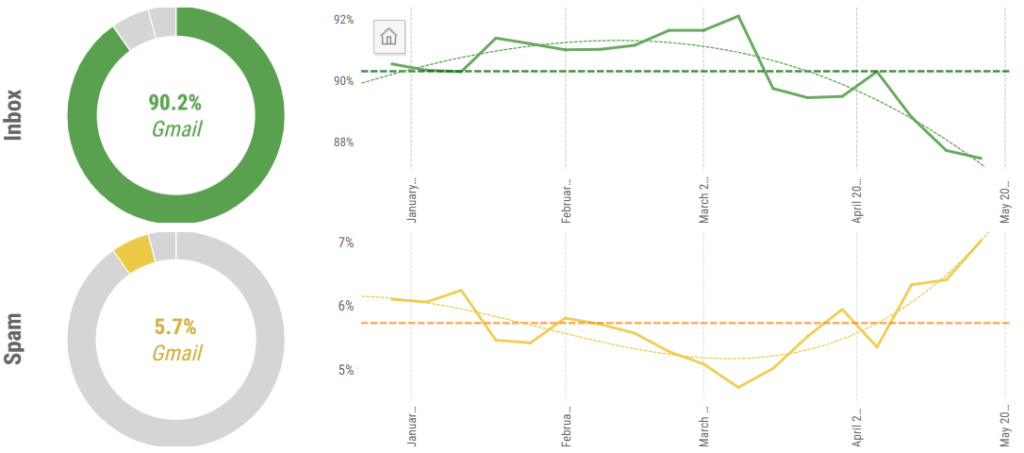
Gmail transitioned from a softer approach to actively rejecting non-compliant bulk email traffic, resulting in an increase in hard SMTP-level rejection codes. Data from the Validity Intelligence Network indicates an approximate three percent drop in inbox placement rates at Gmail over recent months. Rejected emails, by their nature, cannot generate opens, directly contributing to the overall decline. This move aligns with Gmail’s long-term commitment to reducing spam and improving the overall quality of its users’ inboxes.
- Implications: Senders must prioritize technical compliance. Failure to meet standards for authentication (DMARC, SPF, DKIM), easy unsubscription (List-Unsubscribe), and low complaint rates will lead to direct rejections rather than mere filtering to spam folders. This is a critical signal that basic email hygiene is no longer optional but foundational for deliverability. Marketers must routinely audit their email authentication protocols and ensure their complaint rates remain below industry thresholds, typically less than 0.1%.
-
Relevance-Sorted Promotions Tab (Ongoing Implementation):
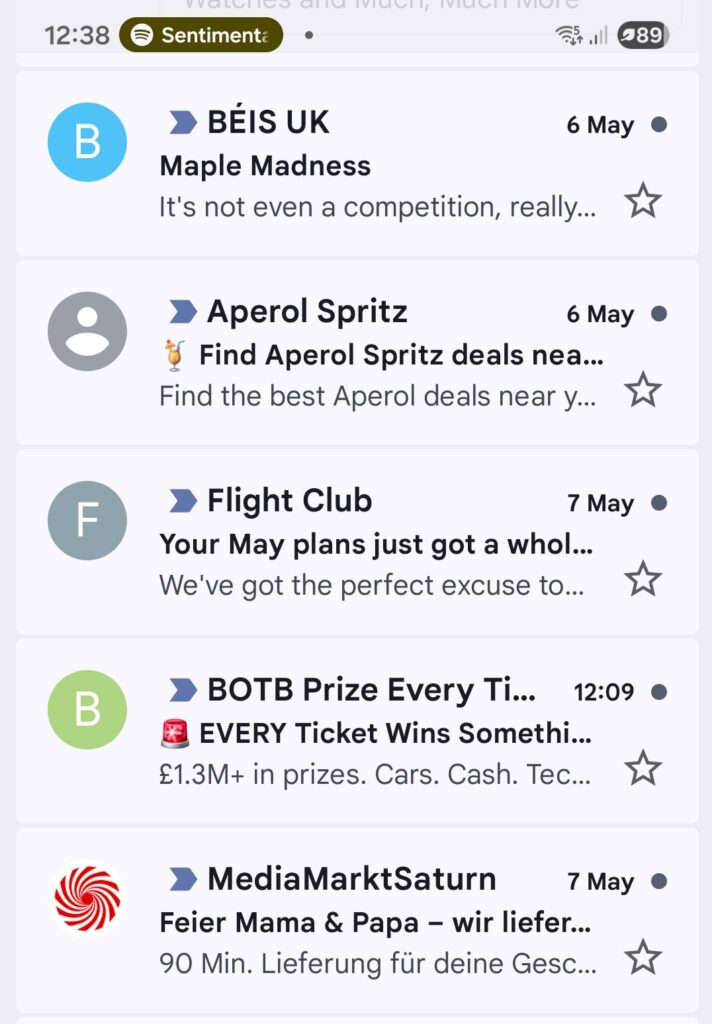
Gmail’s Promotions tab now prioritizes emails based on user engagement signals rather than simple recency. This means senders with lower engagement are positioned further down the tab, significantly reducing their visibility and, consequently, their likelihood of being opened. This creates a self-reinforcing cycle: messages that aren’t opened fail to generate positive engagement signals, further diminishing the sender’s relevance score and future placement.- Implications: This change fundamentally alters the dynamics of promotional email. Personalization, content relevance, and consistent positive interaction are paramount. Generic broadcast campaigns will struggle to gain visibility, emphasizing the need for highly segmented and targeted messaging. Marketers must prove their value to subscribers with every send, focusing on content that truly resonates with individual user interests and past behaviors.
-
Auto-Annotations (Ongoing Implementation):
Gmail now routinely extracts key details such as deal specifics, images, and discount codes from promotional emails, displaying them as rich previews directly within the Promotions tab. This occurs even if senders have not explicitly implemented Google’s Annotations markup schemas. While beneficial for users, this feature allows subscribers to grasp headline offers and promotional codes without ever opening the email. If the core value proposition is communicated effectively in the preview, the incentive to open the message itself diminishes, directly impacting open rates.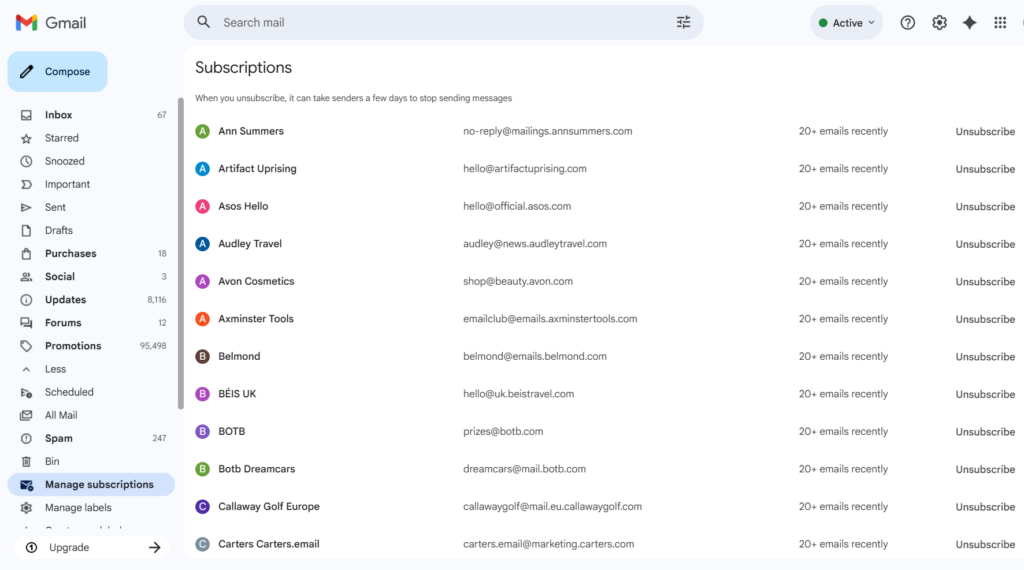
- Implications: Marketers must adapt their content strategy. The preview becomes a critical touchpoint for conversion. Senders should strategically design their email previews to either deliver immediate value (e.g., a simple discount code) or, more effectively, to entice a click for further engagement (e.g., "Exclusive details inside!"). Implementing Annotations markup gives senders full control over these crucial preview elements, ensuring brand consistency and maximizing engagement.
-
Subscriptions Manager (Launched Mid-2025, Fully Rolled Out):
Now widely available for personal Gmail accounts, the Subscriptions Manager provides users with a consolidated dashboard listing all marketing senders, ranked by sending frequency. From this interface, users can unsubscribe from any sender’s mail stream with a single click, without needing to open a single email. While this leads to list shrinkage, it often results in a more engaged, albeit smaller, subscriber base, as inactive or uninterested recipients are efficiently removed.- Implications: High sending frequency becomes a double-edged sword. While it might indicate consistent engagement for some, it also increases visibility in the Subscriptions Manager, potentially leading to higher unsubscribe rates if content isn’t consistently valuable. Brands using multiple "From" addresses