

The landscape of digital marketing reached a historic milestone in 2024 as paid search advertising generated a record-breaking $102.9 billion in revenue within the United States alone. This figure, validated by recent industry reports, cements search as the preeminent digital advertising format, commanding approximately 39.8% of all digital advertising revenue. The sustained growth of this sector is primarily attributed to the unique value proposition of search intent: the capability for brands to appear before consumers at the precise moment they express a specific need or desire. However, as the market matures, the complexity of maintaining profitability has increased, with rising cost-per-lead (CPL) averages and a shift toward AI-driven automation redefining the standard for successful campaign management.
The State of the Paid Search Market
The scale of the paid search industry is a testament to its efficacy. While other digital formats, such as social media and display advertising, rely on interruption or demographic targeting, search advertising leverages “pull” marketing. By bidding on specific queries, advertisers engage with users who are actively seeking solutions, products, or information.
Despite the sheer volume of capital flowing into the sector, market analysts note that the barrier to entry for achieving a positive return on investment (ROI) has never been higher. The average cost per lead across industries rose from approximately $66.69 in 2024 to an estimated $70.11 in 2025. This inflationary trend is driven by increased competition for high-intent keywords and the growing sophistication of automated bidding algorithms. Consequently, modern marketers must look beyond mere keyword selection, focusing instead on the holistic “post-click” experience to ensure that expensive traffic converts into tangible revenue.
A Chronology of Search Innovation
To understand the current state of paid search, one must look at the technological evolution that has shaped the industry over the last two decades.
- The Keyword Era (Late 1990s – 2005): Early search advertising was dominated by simple keyword matching and manual bidding. Overture (formerly GoTo.com) pioneered the pay-per-click (PPC) model, which Google later refined with the launch of AdWords.
- The Quality Score Revolution (2005 – 2015): Google introduced the “Quality Score” to prevent advertisers from simply buying their way to the top of the page. This forced a focus on ad relevance and landing page experience, prioritizing user satisfaction over the highest bid.
- The Shift to Mobile and Extensions (2015 – 2020): As mobile traffic surpassed desktop, ad formats evolved to include sitelinks, call buttons, and location assets. The introduction of Expanded Text Ads (ETAs) allowed for more robust messaging.
- The Automation and AI Era (2021 – Present): The industry has moved toward machine-learning-heavy formats. Responsive Search Ads (RSAs) became the default, followed by the rollout of Performance Max (PMax), which automates ad delivery across multiple Google-owned properties.
The Mechanics of the Modern Auction System
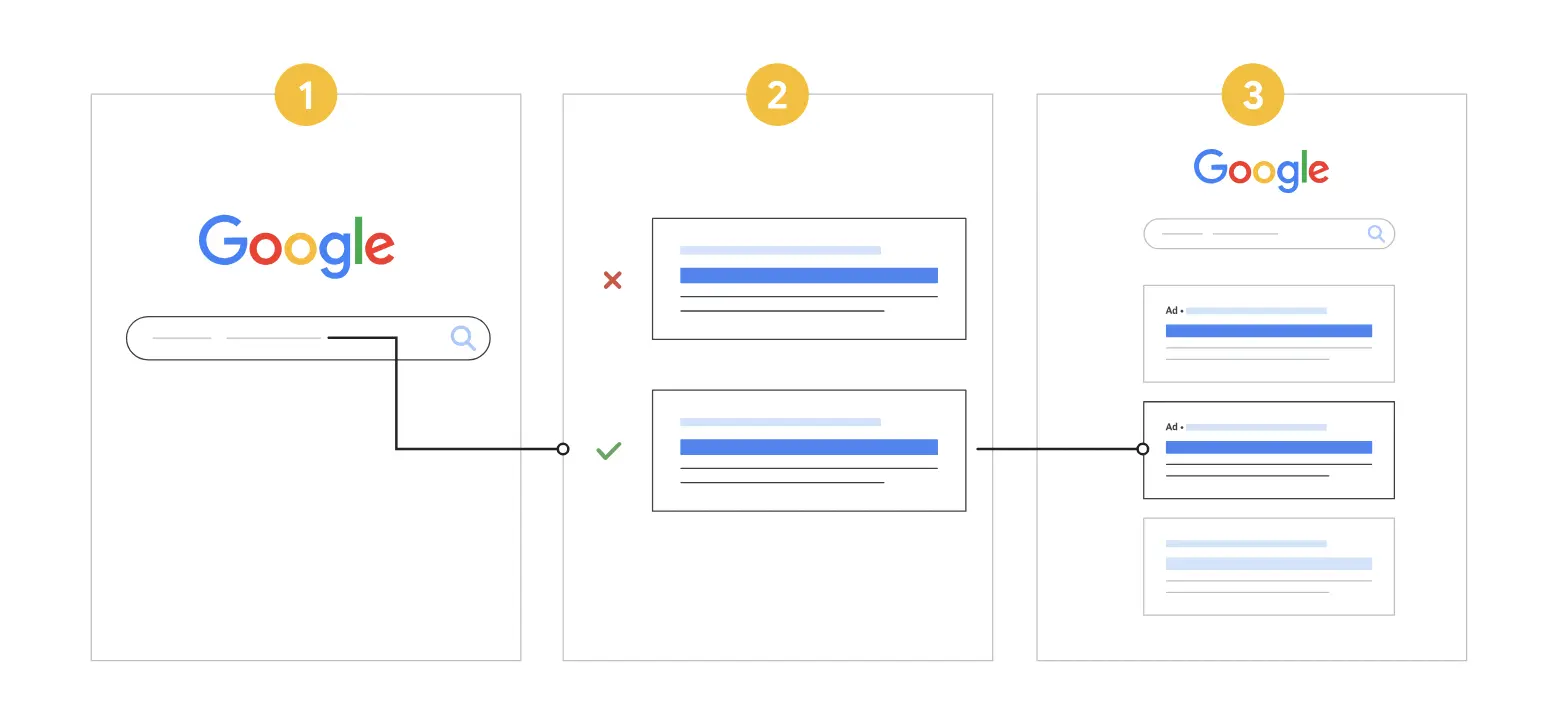
Every time a user enters a query into a search engine, a high-speed automated auction occurs in milliseconds. This process determines not only which ads appear but also their sequence on the Search Engine Results Page (SERP).
The Ad Rank Formula
The winning position is determined by “Ad Rank,” a score calculated by the search engine using several weighted variables. While the specific algorithms are proprietary, they generally include:
- Maximum Bid: The highest amount an advertiser is willing to pay for a click.
- Ad Quality and Relevance: How well the ad copy matches the user’s search intent.
- Expected Click-Through Rate (CTR): A prediction of how likely the ad is to be clicked based on historical data.
- Landing Page Experience: The speed, mobile-friendliness, and relevance of the page the user visits after clicking.
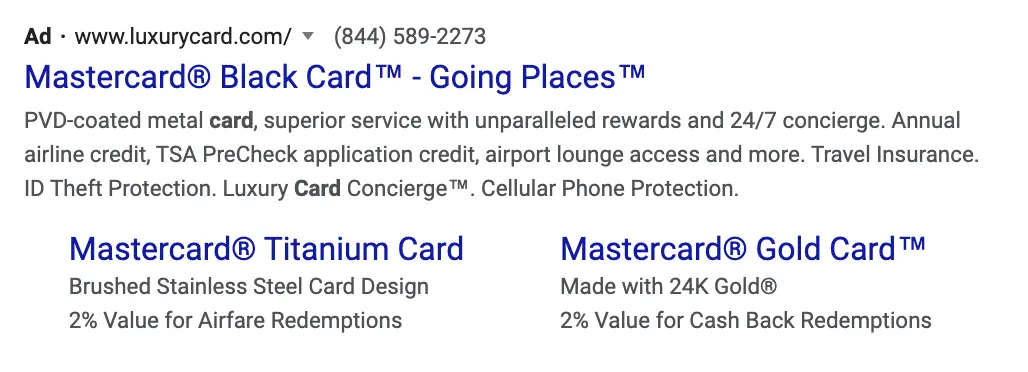
- Ad Assets and Format Impact: The presence of additional information like phone numbers or links to specific sub-pages.
Crucially, an advertiser with a lower bid can outrank a competitor with a higher bid if their ad quality and landing page experience are superior. This creates a meritocratic environment that theoretically rewards the most relevant content.

Dominant Platforms and Emerging Competitors
While “paid search” is often used synonymously with Google Ads, the marketplace is increasingly multi-polar.
Google Ads: The Global Monolith
Google continues to hold approximately 90% of the global search market share. Its ecosystem extends beyond the search bar into YouTube, Gmail, and the Google Display Network (GDN). For most businesses, Google remains the primary destination for ad spend due to its massive reach and sophisticated AI tools.
Microsoft Advertising: The Enterprise and Syndication Alternative
Microsoft Advertising, which powers Bing, has carved out a significant niche. While its search volume is lower than Google’s, it offers access to a demographic that is often older and higher-earning. Furthermore, Microsoft’s syndication network—which includes Yahoo, AOL, DuckDuckGo, and Ecosia—provides access to audiences that may avoid Google’s ecosystem. Microsoft has also moved into unique territories, such as being the exclusive advertising partner for Netflix’s ad-supported tier.
Niche and Platform-Specific Search
- Apple Search Ads: For app developers, Apple Search Ads are critical, appearing at the top of App Store results. This is a high-intent environment where users are specifically looking to download software.
- Amazon Advertising: While technically “retail media,” Amazon’s internal search function has become a major player in the paid search space, capturing a massive share of product-specific queries that formerly began on Google.
The Critical Role of the Post-Click Experience
A recurring theme among industry experts is that the “click” is no longer the end goal; it is merely the beginning of the conversion funnel. As cost-per-click (CPC) rates rise, the efficiency of the landing page becomes the primary lever for profitability.
Industry data suggests that sending paid traffic to a generic homepage is a significant cause of wasted ad spend. Homepages are designed for exploration, featuring multiple navigation links and broad messaging. In contrast, a dedicated landing page is designed for a single action. By maintaining “message match”—ensuring the headline of the landing page mirrors the promise of the ad—advertisers can significantly reduce bounce rates.
Research indicates that a one-second delay in mobile page load time can reduce conversion rates by as much as 20%. In an era where a single click can cost upwards of $50 in competitive sectors like legal or insurance, technical performance is a financial imperative.
Strategic Implementation: A Framework for Success
To navigate the complexities of the $102.9 billion market, organizations are adopting structured methodologies for campaign deployment.
1. Intent-Based Keyword Research
Modern keyword strategy involves segmenting queries by intent. “Informational” queries (e.g., “what is CRM”) are typically targeted with lower bids or organic content, while “Commercial” or “Transactional” queries (e.g., “buy CRM software for small business”) receive the bulk of the paid search budget.
2. Ad Format Diversification
Advertisers are increasingly utilizing a mix of formats:
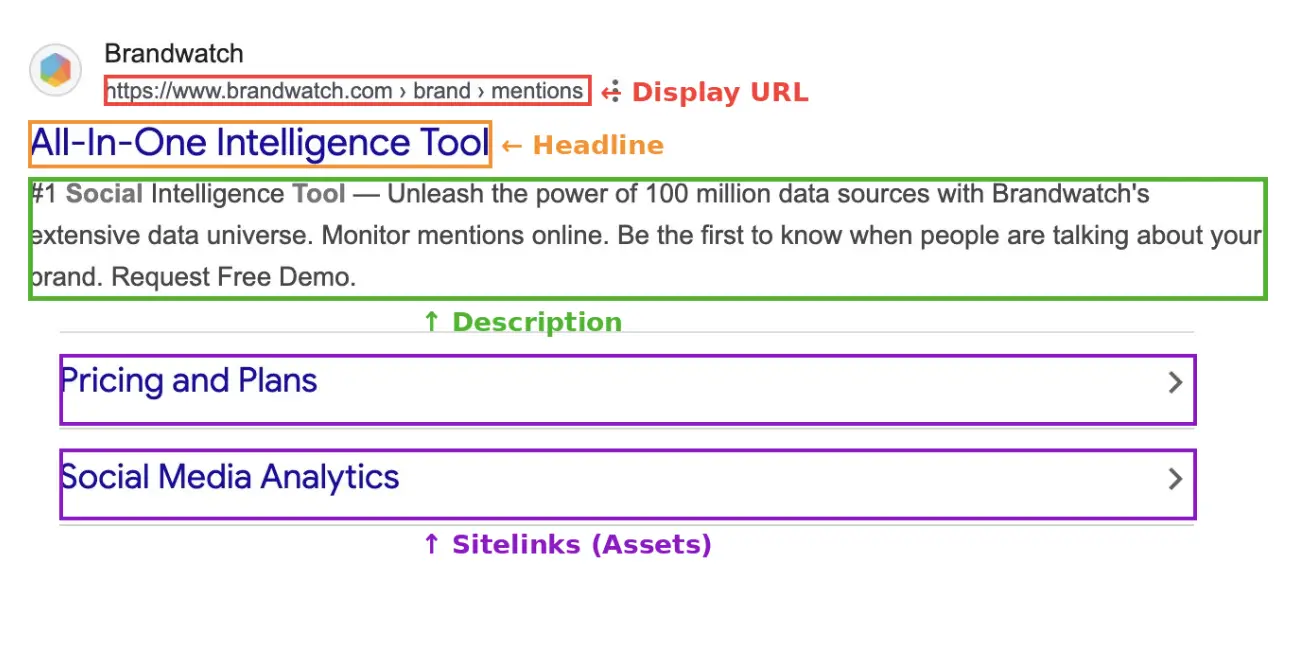
- Responsive Search Ads (RSAs): Allowing Google’s AI to test multiple headline and description combinations.
- Performance Max (PMax): Leveraging a single campaign to reach users across Search, Display, and Video.
- Shopping Ads: Utilizing product feed data from the Google Merchant Center to show images and prices directly on the SERP.
3. Rigorous Measurement and Attribution
With the shift toward a cookieless future, attribution has become more challenging. Advanced marketers are moving away from “Last Click” attribution models toward “Data-Driven” models that assign value to every touchpoint in the customer journey. Integrating search platforms with Google Analytics 4 (GA4) and CRM systems is now standard practice for tracking true Return on Ad Spend (ROAS).
Broader Impact and Industry Implications
The growth of paid search has profound implications for the broader economy. For small businesses, it offers a way to compete with established giants by targeting hyper-local or niche queries. For global enterprises, it serves as a real-time laboratory for testing messaging and consumer sentiment.
However, the increasing reliance on AI and automation has raised concerns regarding transparency. As platforms like Google and Microsoft move toward “black box” solutions where the algorithm makes more decisions on behalf of the advertiser, the role of the human marketer is shifting. The focus is moving away from manual bid adjustments and toward “creative excellence” and “strategic signaling”—providing the AI with the right assets and high-quality conversion data to learn from.
Future Outlook: 2025 and Beyond
As we look toward the second half of the decade, several trends are poised to further disrupt the paid search landscape:
- Generative AI in Search: The integration of AI-generated overviews (such as Google’s SGE) will change how ads are integrated into the search experience. Advertisers will need to adapt to a world where the search engine provides the answer directly, rather than just a list of links.
- Privacy-Centric Targeting: As third-party cookies are phased out, first-party data—information collected directly from customers—will become the most valuable asset in an advertiser’s toolkit.
- Voice and Visual Search: The rise of voice assistants and visual search tools (like Google Lens) will require ads to be optimized for more natural, conversational language and image-based queries.
In conclusion, while the $102.9 billion revenue figure highlights the massive scale of paid search, it also underscores the intensity of the competition. Success in 2025 requires a sophisticated blend of data science, technical optimization, and a relentless focus on the user’s post-click journey. As the auction becomes more automated, the human element—strategy, creative storytelling, and empathy for the customer—remains the ultimate competitive advantage.







