The digital marketplace for creators is undergoing a significant transformation, with platforms like Etsy and Fourthwall offering distinct pathways for artists, designers, and entrepreneurs to monetize their work. While Etsy has long been the go-to destination for handcrafted goods and unique items, the burgeoning creator economy demands more robust solutions for brand building and audience engagement. This analysis delves into the core functionalities, pricing structures, and strategic advantages of both Fourthwall and Etsy, providing a comprehensive overview for creators evaluating their online sales strategies.
The Evolving Creator Economy: A Need for Sophistication
The past decade has witnessed an explosion in the creator economy, fueled by social media platforms and a growing consumer appetite for authentic, directly sourced products. Creators, once relegated to niche forums, now command significant influence and revenue streams. However, the tools they employ to connect with their audience and sell their creations are crucial to their long-term success. Etsy, with its massive existing buyer base, offers immediate visibility. Yet, as creators mature and aim to establish lasting brands, the limitations of a shared marketplace become apparent. This is where platforms like Fourthwall emerge, promising a more comprehensive ecosystem for brand development.
Understanding the Platforms: Marketplace vs. Brand Ecosystem
At their core, Etsy and Fourthwall operate on fundamentally different models, catering to distinct stages of a creator’s journey.
Etsy: The Established Marketplace
Etsy functions as a vast digital marketplace, providing individual sellers with dedicated shopfronts to list and sell their products. Launched in 2005, it has cultivated a dedicated community of buyers actively seeking unique, handmade, vintage, and craft supplies. According to recent reports, Etsy’s platform continues to see significant engagement, with millions of active buyers and sellers. Its primary advantage lies in its built-in traffic. Creators can leverage Etsy’s existing customer base, estimated to be in the tens of millions, to gain exposure and make initial sales.
However, this shared environment inherently brings challenges. Competition is fierce, with sellers listed alongside thousands of others. Branding is constrained by Etsy’s overarching identity, making it difficult to cultivate a unique brand presence. Furthermore, customer data ownership rests with Etsy, limiting direct communication and marketing opportunities beyond the platform’s messaging system.
Fourthwall: The Brand-Building Ecosystem
In contrast, Fourthwall positions itself as a full-fledged brand-building ecosystem. It empowers creators to establish their own independent online stores with custom domains, offering a higher degree of control over their brand identity and customer experience. Launched with the explicit goal of supporting creator growth beyond the limitations of marketplaces, Fourthwall provides a more integrated solution for diverse product offerings, including custom print-on-demand (POD) items, digital products, memberships, and even exclusive content like HD video.
A key differentiator for Fourthwall is its role as a Merchant of Record. This means Fourthwall assumes responsibility for handling sales tax, payment processing, and, for POD products, customer service issues related to fulfillment. This significantly reduces the administrative burden on creators, allowing them to focus on product creation and marketing.
Feature Comparison: A Deeper Dive
| Factor | Fourthwall | Etsy |
|---|---|---|
| Platform Model | Full brand-building ecosystem | Marketplace for creative products |
| Built-in Buyer Traffic | No | Yes (significant, millions of active buyers) |
| Custom Domain | Yes | No |
| Storefront Design | Completely customizable website, no-code builder | Limited branding options within Etsy’s fixed structure |
| Physical Products | POD or seller’s own stock | Only approved creative products (handmade, vintage, craft supplies) |
| Digital Products | Yes | Yes, within specific categories |
| Memberships/Paid Video | Yes (recurring memberships, HD video) | No |
| Customer Data | Owned by the seller | Owned by Etsy (limited direct access for sellers) |
| Fulfillment | Fourthwall for POD, fulfillment partners, or seller | Seller or designated production partners |
| Support | Merchant of Record, POD customer service, success calls | Seller handles customer service; Etsy may act as Merchant of Record |
Pricing and Fees: Unpacking the True Cost
Both platforms offer accessible entry points, but their fee structures reveal significant differences in their long-term cost implications.
Fourthwall’s Value Proposition
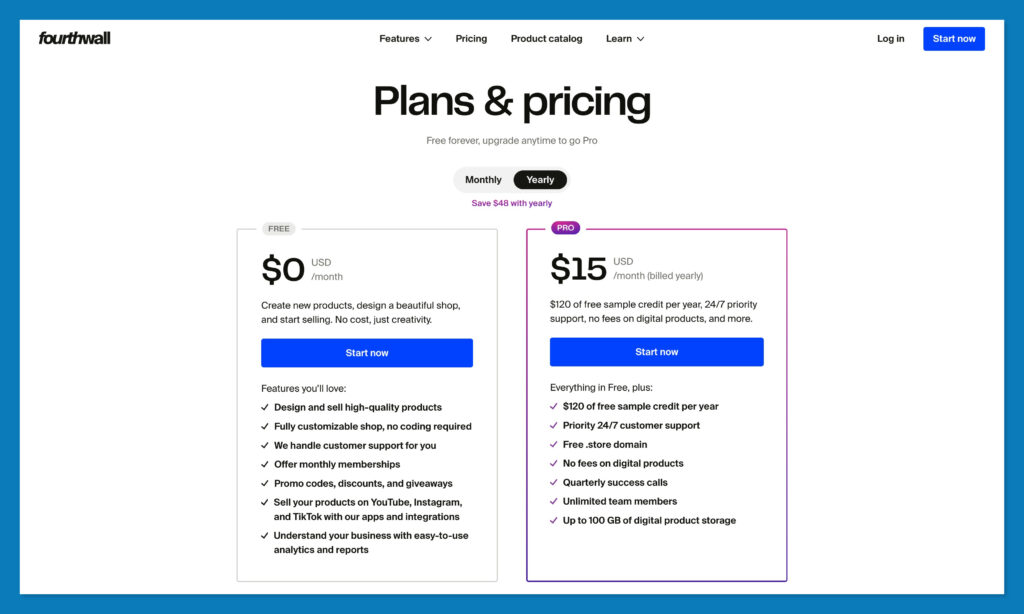
Fourthwall offers a free plan, making it an attractive option for creators starting with minimal capital. On this free tier, there are no listing fees and crucially, no transaction fees on physical products. Fees apply to digital products (5%) and memberships (5%), with creators covering the base cost of POD items.
The Pro plan, priced at $19 per month or $180 annually (averaging $15 per month), unlocks additional benefits. This includes a complimentary .store domain, waives fees on digital products, provides unlimited team members, increases digital product storage, offers $10 in monthly sample credit for POD items, and grants priority support. The Pro plan essentially provides a comprehensive e-commerce solution without the added overhead often associated with standalone website builders like Shopify.
Etsy’s Transactional Model
Etsy’s pricing model is transactional, with several layers of fees that can accumulate. Each product listing incurs a $0.20 listing fee. A 6.5% transaction fee is applied to the final sale price, including shipping. Additionally, a payment processing fee of 3% plus $0.25 (for US sellers) is charged.
Etsy Plus, available for $10 per month, offers some perks like listing credits and advertising credits, but it still operates within the marketplace framework. Pattern by Etsy, a separate offering for $15 per month, aims to provide a more standalone storefront but still involves marketplace dynamics and potential offsite ad fees. While Etsy’s fees grant access to a vast pool of potential buyers, the cumulative cost can become substantial as sales volume increases.
Storefronts, Discovery, and Integrations: Owning the Customer Journey
The divergence in platform models is most evident in how they approach storefront customization, customer discovery, and integration capabilities.
Etsy: Discovery Through a Shared Lens
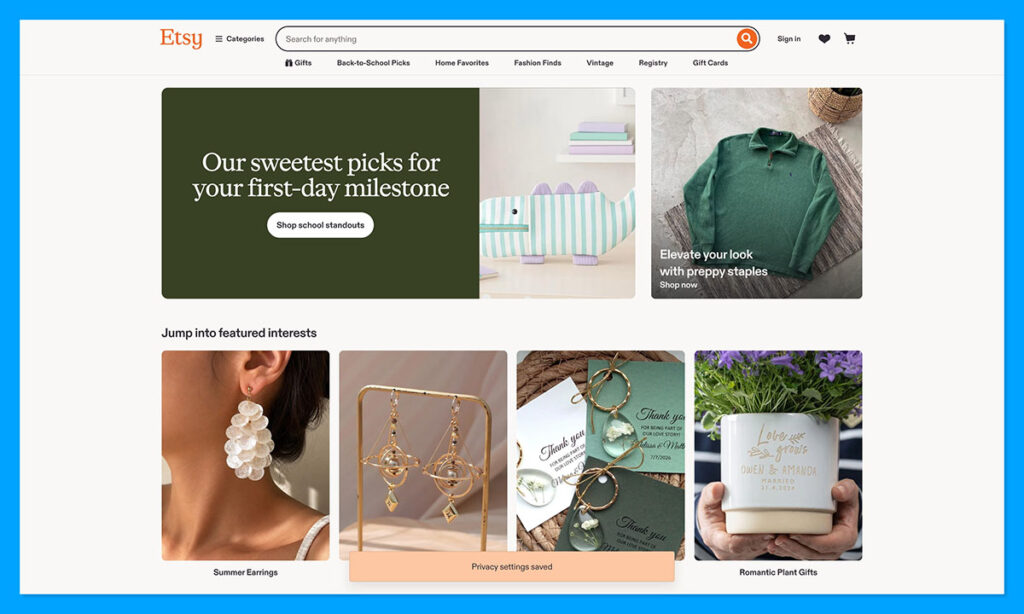
Etsy’s strength lies in its ability to put products in front of shoppers actively browsing for specific items. While sellers have some control over their shop’s appearance—adding banners, organizing products, and creating shop sections—the overall aesthetic remains tethered to Etsy’s brand. Etsy Plus offers enhanced customization options, but the core identity of the platform is ever-present. Direct customer data capture for marketing purposes is also restricted, hindering the ability to build email lists or foster deeper customer relationships.
Fourthwall: Cultivating Brand Loyalty
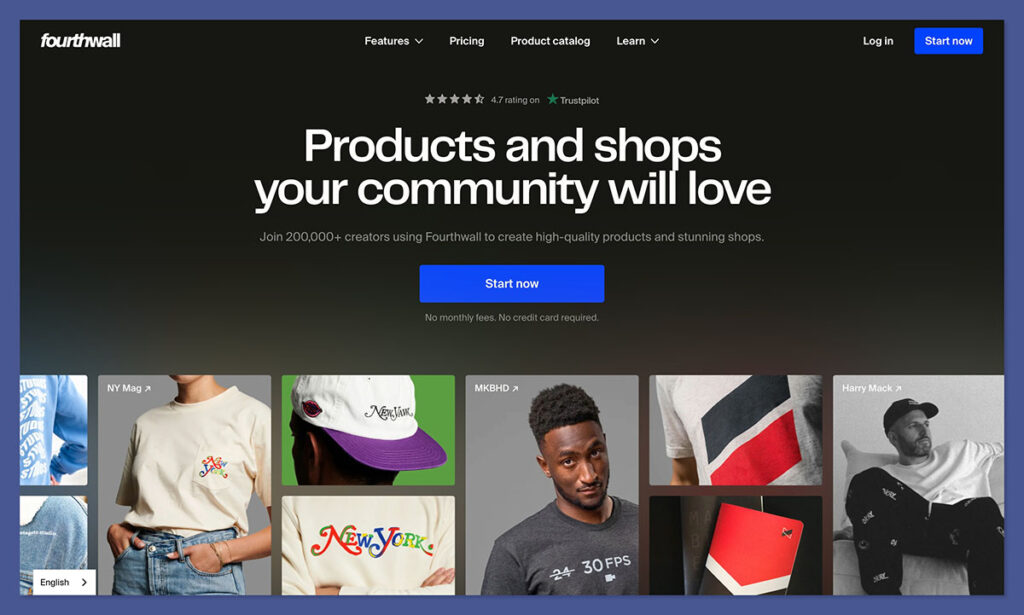
Fourthwall empowers creators with complete control over their online presence. With a custom domain and a no-code website builder, creators can design a unique storefront that reflects their brand’s personality. The ability to sell a diverse range of products—from custom merchandise to digital downloads and memberships—all within a single platform, streamlines operations. Crucially, the customer data collected through a Fourthwall store belongs to the creator, enabling direct marketing, newsletter sign-ups, and the cultivation of a loyal community.
Integrations: Both platforms offer integrations, but with different focuses. Etsy integrates with apps for listing management, bookkeeping, and point-of-sale solutions. Fourthwall connects with social selling tools like YouTube Shopping and TikTok Shop, alongside email marketing platforms like Mailchimp and Klaviyo, emphasizing audience engagement and direct sales funnels.
Product Versatility: Where Creators Can Expand
The range of products creators can offer is a critical consideration, and Fourthwall significantly outperforms Etsy in this regard.
Fourthwall: Unlocking Diverse Revenue Streams
Fourthwall excels in offering flexibility. Creators can start with POD items sourced from Fourthwall’s catalog, minimizing upfront costs and fulfillment complexities. They can then expand to custom-sourced physical goods, digital products, and recurring memberships, including HD video content and exclusive community access. The platform also supports direct community donations. This integrated approach allows creators to diversify their income streams without migrating between different platforms.
Etsy: A Curated Selection
Etsy’s product guidelines are more stringent, emphasizing a "human touch." Sellers can offer handmade goods, original designs, vintage items (over 20 years old), and craft supplies. Digital products are permitted within specific categories. While POD is an option, creators must disclose their production partners, and the design must be original or customer-provided. Memberships or recurring subscription services are not supported on Etsy.
Support and Administrative Relief: The Merchant of Record Advantage
The level of support and administrative assistance provided by a platform can be a significant factor for creators, especially those managing multiple aspects of their business.
Fourthwall: Streamlined Operations
Fourthwall’s Merchant of Record status is a substantial benefit, simplifying tax compliance and payment processing. For POD products, Fourthwall’s partners handle order fulfillment and customer service inquiries related to product issues. The platform also assists in finding suppliers for custom products. Premium support, available on the Pro plan, includes success calls, further aiding creators in optimizing their business.
Etsy: Seller-Driven Support
Etsy offers self-help resources and customer support, but creators are generally responsible for managing their own customer service and production partnerships. While Etsy can act as a Merchant of Record, this is not always the default or as integrated as Fourthwall’s offering.
Recent Updates: Embracing AI and Enhanced Functionality
Both platforms are actively evolving, with recent updates focusing on AI integration and enhanced user experiences.
Fourthwall’s AI-Powered Business Tools
Fourthwall has integrated AI assistants that can assist with creating promotional campaigns, adjusting product pricing, analyzing sales data, and even generating design variations across product lines. Additional features include custom gift card options, crowdfunding and private wish lists through partnerships, and a Design Community for finding reliable merch partners.
Etsy’s Marketplace Enhancements
Etsy’s AI initiatives are primarily geared towards seller support, with features like the Stats Assistant in testing to answer performance-related questions. They have also focused on integrating with broader AI ecosystems, allowing certain products to appear in platforms like ChatGPT and Gemini. The Seller app has seen improvements in order filtering and buyer history access, along with AI-assisted message drafting.
The Verdict: When to Choose Which Platform
The optimal platform choice hinges on a creator’s current stage, audience size, and long-term brand aspirations.
Etsy: The Ideal Starting Point for New Creators
For creators with compelling products but a nascent audience, Etsy remains an excellent entry point. Its inherent discoverability and built-in traffic can accelerate initial sales and provide valuable market feedback. The platform’s ease of use and low administrative overhead make it an accessible choice for those just beginning their entrepreneurial journey.
Fourthwall: The Scalable Solution for Brand Builders
When creators have an established audience or a clear strategy for attracting customers, Fourthwall emerges as the superior option. Its brand-building capabilities, control over customer relationships, and diverse product offerings position it as a platform for sustainable growth. The ability to own customer data and cultivate direct relationships is paramount for long-term brand loyalty.
A Hybrid Approach: Leveraging Both Platforms
Many successful creators adopt a hybrid strategy, utilizing Etsy as a discovery channel to introduce their products to new audiences while directing their core fanbase to their Fourthwall store for direct sales and exclusive content. This approach allows creators to benefit from Etsy’s reach while maximizing margins and customer ownership on their own platform.
Addressing Key Creator Concerns
- Cost-Effectiveness: Fourthwall generally offers a lower cost of operation for physical products due to the absence of listing and transaction fees. Etsy’s fees, while cumulative, are offset by its built-in buyer traffic.
- Free Usage: Fourthwall’s free plan is a fully functional option for building a store and selling POD products, memberships, and accepting donations, with a 5% fee on digital products and memberships.
- Traffic Generation: Etsy provides built-in traffic. Fourthwall requires creators to drive their own traffic through external marketing efforts.
- Print-on-Demand: Both platforms support POD, but Fourthwall offers a more integrated and hands-off experience for fulfillment and customer service.
- Memberships and Subscriptions: Fourthwall uniquely supports recurring memberships and paid video content, a significant advantage for creators seeking diversified revenue streams.
- Customer Data Ownership: Fourthwall empowers creators by giving them full ownership of customer data, enabling direct marketing and relationship building. Etsy retains ownership of customer data.
- Sales Tax Handling: Both platforms can act as a Merchant of Record, simplifying sales tax compliance for sellers.
Conclusion: A Strategic Choice for Growth
In the dynamic landscape of e-commerce, the choice between Etsy and Fourthwall is not merely a matter of features but a strategic decision aligned with a creator’s business objectives. Etsy remains an invaluable platform for initial discovery and market penetration. However, for creators focused on building enduring brands, fostering direct customer relationships, and diversifying revenue streams, Fourthwall presents a more sophisticated and scalable solution. The evolution of these platforms reflects the growing maturity of the creator economy, offering increasingly specialized tools to empower entrepreneurs in the digital age.