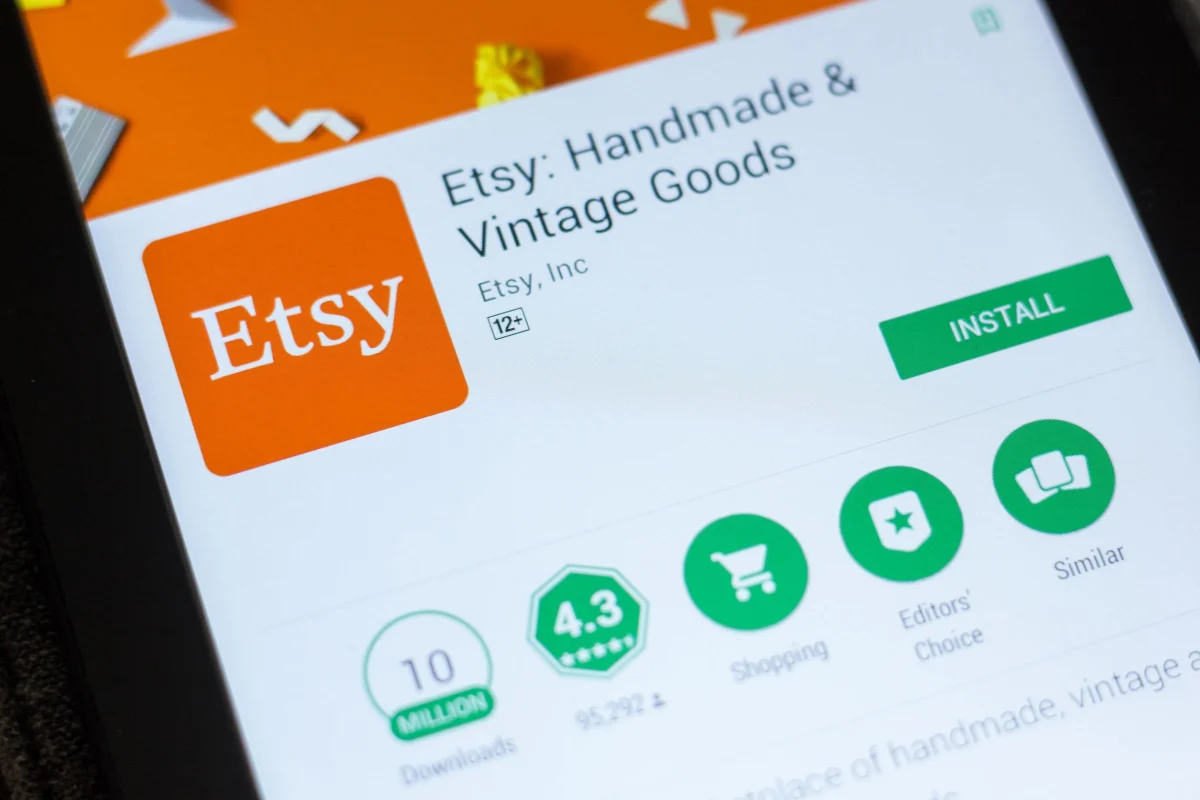
In an increasingly crowded e-commerce landscape dominated by logistical giants, Etsy has unveiled a pointed and strategic marketing campaign designed to coincide with Amazon’s annual Prime Day event. The campaign, titled “Shop Other Jeffs,” represents a bold attempt by the artisan marketplace to reclaim consumer attention by leaning into human-centric branding and social commentary regarding wealth inequality. By encouraging shoppers to bypass the “billionaire Jeff”—a clear though unnamed reference to Amazon founder Jeff Bezos—Etsy is positioning itself as the ethical alternative for consumers seeking unique, handmade goods.
The “Shop Other Jeffs” initiative highlights more than 5,000 independent sellers on the platform who share the name Jeff. This campaign is not merely a play on words but a calculated move to differentiate Etsy’s brand identity from the automated, mass-produced nature of major retail conglomerates. The ads feature real-life artisans, including woodworkers, potters, and lighting designers, under slogans such as “One Jeff should not rule commerce” and “Shop non-billionaire Jeffs.”
The Strategic Counter-Programming of Prime Day
Amazon Prime Day, which began in 2015 to celebrate the company’s 20th anniversary, has evolved into a global shopping phenomenon, often generating billions of dollars in revenue over a 48-hour period. For smaller competitors, competing on price or shipping speed during this window is historically a losing battle. Etsy’s decision to pivot toward a narrative of “human connection” serves as a defensive maneuver designed to appeal to the growing demographic of conscious consumers.
Etsy CEO Kruti Patel Goyal articulated this strategy during a recent earnings call, noting that the platform’s primary advantage lies in the relationship between the buyer and the maker. Goyal admitted that while this “defensible advantage” has always existed, the company had not yet fully capitalized on it in its messaging. The current campaign seeks to rectify this by humanizing the transaction process.
Brad Minor, Etsy’s Chief Marketing Officer, echoed this sentiment, describing the platform as an “alternative to anonymous, monolithic, mass-produced commerce.” According to Minor, the urgency of this message is underscored by current economic climates where consumers are increasingly wary of corporate consolidation. By using “defiant” and “human” language, Etsy aims to turn its smaller scale into a badge of authenticity.
Consumer Backlash Against Artificial Intelligence in Branding
While Etsy leans into human stories, a broader industry report suggests that brands moving in the opposite direction—toward automation and Artificial Intelligence (AI)—are facing a significant trust deficit. A comprehensive study by WordPress VIP, analyzed by various tech and marketing outlets, indicates a “steep trust gap” regarding the integration of AI in brand messaging.
According to the data, 60% of U.S. consumers find the use of “AI” in brand communication to be a deterrent. Perhaps more concerning for digital marketers is the finding that 86% of consumers do not fully trust AI-generated content and feel a persistent need to verify information against original, human-vetted sources. The study further revealed that 42% of respondents trust AI-generated answers without clear attribution less than they trust notoriously disliked items such as hidden airline fees, complex medical bills, or dense privacy policies.
This skepticism comes at a time when many corporations are rushing to implement generative AI to reduce costs in copywriting and customer service. The data suggests that transparency is the most critical factor for brands moving forward. Consumers are not necessarily rejecting the technology itself, but rather the perceived lack of “realness” and the potential for misinformation. As seen in recent public reactions, such as students booing AI-themed commencement speeches, the cultural zeitgeist is currently pivoting back toward a demand for human accountability.
Oatly Abandons “Novelty” Billboards for Experiential Marketing
The shift toward human experience is also visible in the beverage industry. Swedish oat milk pioneer Oatly, once famous for its verbose and eccentric “wall of text” billboards, is undergoing a fundamental transformation in its communications strategy. As oat milk transitions from a niche alternative to a household staple, Oatly is moving away from traditional advertising in favor of “beverage culture” events and high-profile collaborations.
Michael Lee, Oatly’s Executive Vice President and Executive Creative Director, noted that the original strategy of writing “novels on billboards” was essential for establishing the brand’s voice during its early growth phase. However, as the market has matured and competitors like Silk and Almond Breeze have saturated the space, Oatly is seeking to maintain its “cool factor” through more social and interactive means.
The brand’s new focus involves treating “drink drops” with the same level of exclusivity and hype as high-end sneaker releases. Oatly has even established an industry event dubbed the “Davos of beverages,” aimed at bringing together media, retailers, and influencers to shape the future of drink culture. By focusing on cafe partnerships and trend-building, Oatly is attempting to embed itself into the lifestyle and daily habits of its consumers rather than simply appearing on their commute via a static advertisement.
Structural Upheaval at the BBC: The Digital-First Mandate
While commercial brands are shifting their marketing tones, legacy media institutions are facing more existential challenges. The British Broadcasting Corporation (BBC) has announced a sweeping restructuring plan aimed at closing a significant budget gap while accelerating its transition to a digital-first platform.
The broadcaster intends to cut 550 jobs across its news, nations, and content divisions. This is part of a larger, three-year plan to eliminate approximately 2,000 roles and achieve £500 million in annual savings. The cuts also target senior leadership, with a planned 10% reduction in top-level management positions.
Director General Tim Davie (with insights echoed by executives like Matt Brittin) has outlined a three-pillar strategy for the organization’s survival:
- Protecting High-Impact Output: Sustaining content that provides the highest value to audiences.
- Meeting Audiences Online: Shifting resources away from traditional broadcast infrastructure toward digital streaming and web-based platforms.
- Operational Simplification: Reducing bureaucracy and duplication to increase the speed of decision-making.
This restructuring is a response to the “double squeeze” of stagnant license fee funding and the rapid migration of audiences to global streaming giants like Netflix and YouTube. For brands and public relations professionals, the BBC’s downsizing signals a tightening of the media landscape. With fewer reporters and more centralized desks, the threshold for a story to achieve national coverage is rising. Outlets are increasingly prioritizing content that offers immediate digital engagement and utility over traditional, broad-interest reporting.
Chronology of the Shifting Landscape
The convergence of these events paints a picture of a marketplace in flux:
- Mid-2010s: Amazon Prime Day becomes a retail juggernaut; Oatly enters the U.S. and UK markets with “quirky” outdoor advertising.
- 2020-2022: The COVID-19 pandemic accelerates e-commerce growth but also fuels a “buy local” counter-movement.
- 2023: Generative AI becomes a corporate buzzword, leading to a massive influx of automated marketing content.
- Present Day: Etsy launches “Shop Other Jeffs” to capitalize on anti-billionaire sentiment; the BBC begins its most aggressive job-cutting cycle in decades; consumer trust in AI hits a measurable low point.
Analysis of Implications: The Return to the “Human Element”
The common thread linking Etsy’s defiance, the public’s wariness of AI, and Oatly’s move toward experiential events is a resurgence of the “human element” in commerce. For the past decade, the dominant trend in business was “scale at any cost,” driven by algorithms and automation. However, the data from the WordPress VIP report and the strategic pivots of major brands suggest that the pendulum is swinging back.
Etsy’s campaign is particularly notable because it uses the scale of its competitor as a weapon against it. By highlighting the “anonymity” of Amazon, Etsy makes its own lack of global logistics infrastructure look like a choice based on values rather than a limitation. This “strategic defiance” is likely to become a more common tactic for mid-sized brands looking to survive in the shadow of trillion-dollar companies.
For the media industry, the BBC’s cuts reflect a harsh reality: legacy prestige is no longer a shield against the economic demands of the digital age. As newsrooms shrink, the “human connection” becomes even more vital for those attempting to share stories. Generic pitches and automated press releases are increasingly likely to be ignored by a workforce that is being asked to do more with less.
Ultimately, these developments suggest that in an era where AI can generate a billboard and a billionaire can control a market, the most valuable currency for a brand is genuine, verifiable human presence. Whether it is a woodworker named Jeff or a barista at an Oatly-sponsored event, the “future of commerce” appears to be looking more like its artisanal past.


 Laily UPN