Jia Lissa
The e-commerce landscape continues its rapid evolution, with dropshipping platforms playing a crucial role in enabling entrepreneurs to launch and scale online businesses. As businesses seek more efficient and cost-effective solutions, alternatives to established players like Zendrop are in high demand. Based on extensive testing of eight leading dropshipping applications, DSers has been identified as the top-performing Zendrop alternative for 2026. Its compelling free plan, which supports up to three stores and 3,000 products, coupled with its official AliExpress partnership and a scalable Pro plan accommodating up to 25 stores, positions it as a leader in the market. This comprehensive analysis delves into the key features, pricing structures, and potential drawbacks of these Zendrop alternatives, aiming to guide online retailers in selecting the optimal replacement for their operations.
Our evaluation framework at Ecommerce Platforms employs a rigorous, independent testing process, focusing on six core categories weighted for their impact on dropshipping success: pricing and value (25%), shipping speed and warehouse accessibility (20%), automation and order synchronization capabilities (20%), branding and private label options (15%), platform integrations (10%), and overall support and reputation (10%). Each application was integrated with a dedicated Shopify test store to meticulously compare its plan limitations, product mapping, and synchronization settings against Zendrop’s offerings. This detailed methodology ensures a fair and objective assessment of each platform’s capabilities.
Zendrop Alternatives: A Comparative Overview
To provide a clear understanding of the competitive landscape, a side-by-side comparison of the top Zendrop alternatives has been compiled. Zendrop itself serves as a reference point, with its pricing starting at $49/month for the Pro plan, $79/month for Plus, or $549 annually. Its Flex plan begins at $29/month. Zendrop’s free tier is limited to browsing products, with no direct ordering capabilities. It offers US and China-based warehouses, and its private labeling options, such as thank-you cards and custom packaging through its Private Agent service, are noteworthy. Zendrop integrates with Shopify, Wix, TikTok Shop, and ClickFunnels.
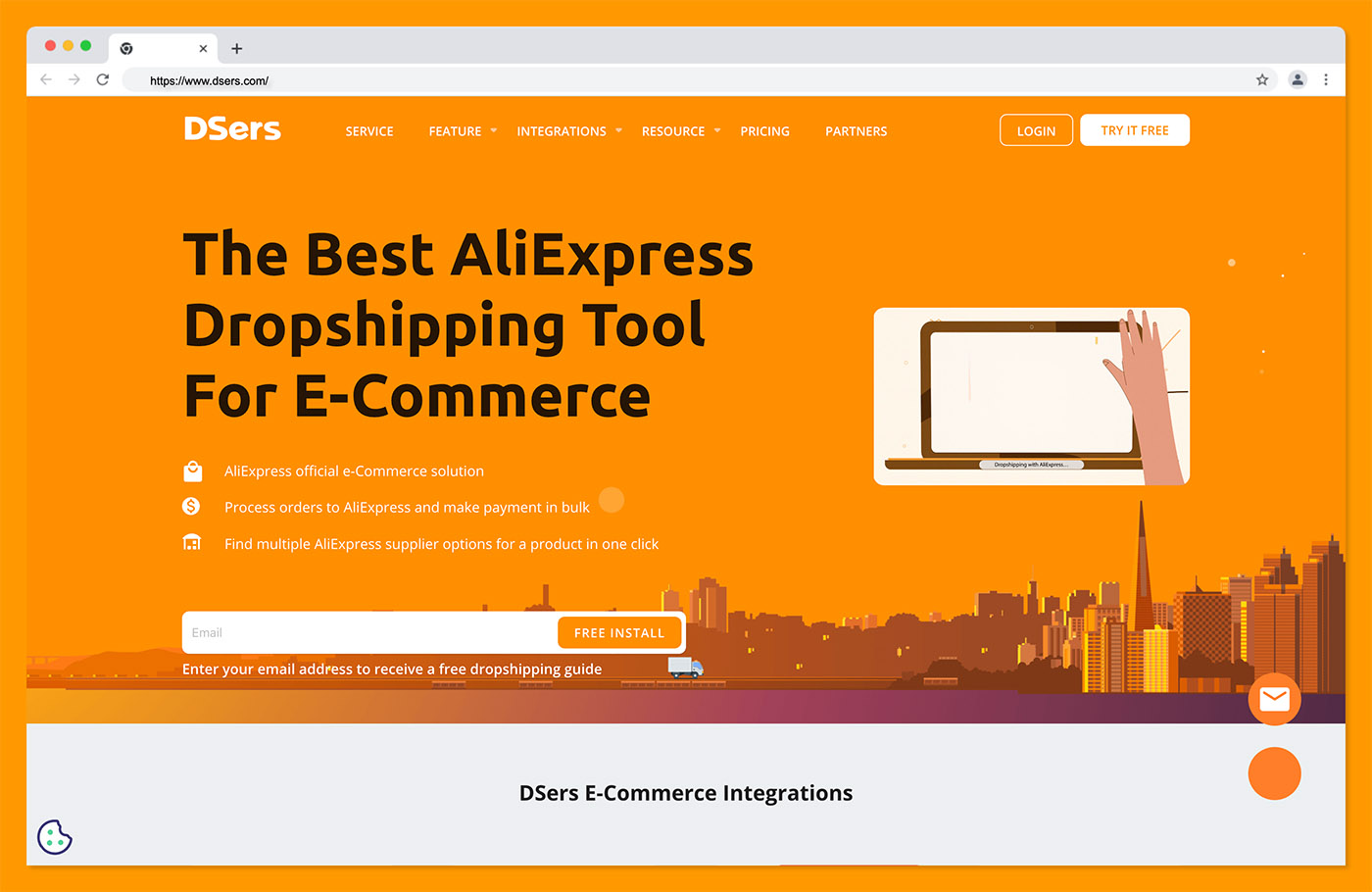
In contrast, DSers stands out with a free plan that includes three stores and 3,000 products. Its paid plans begin at $19.90/month. While DSers primarily relies on supplier-dependent locations, predominantly China, its strength lies in its official AliExpress partnership, facilitating bulk ordering and integration with various sales channels. Its Pro plan allows for up to 25 stores.
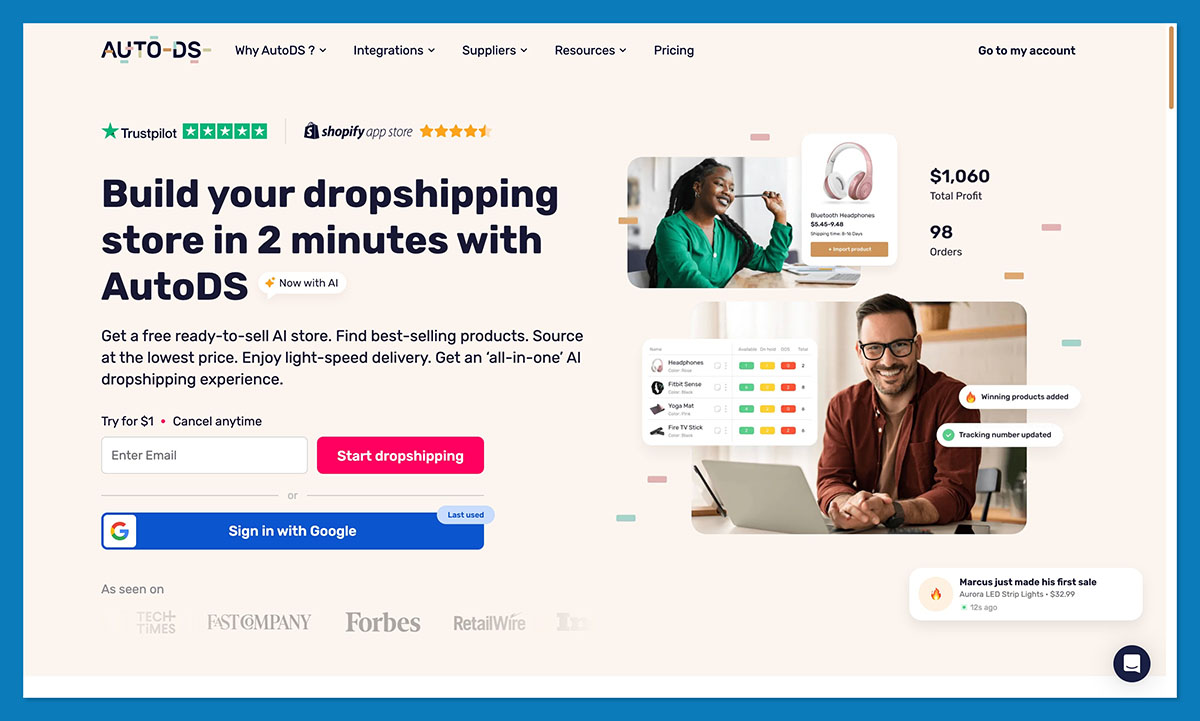
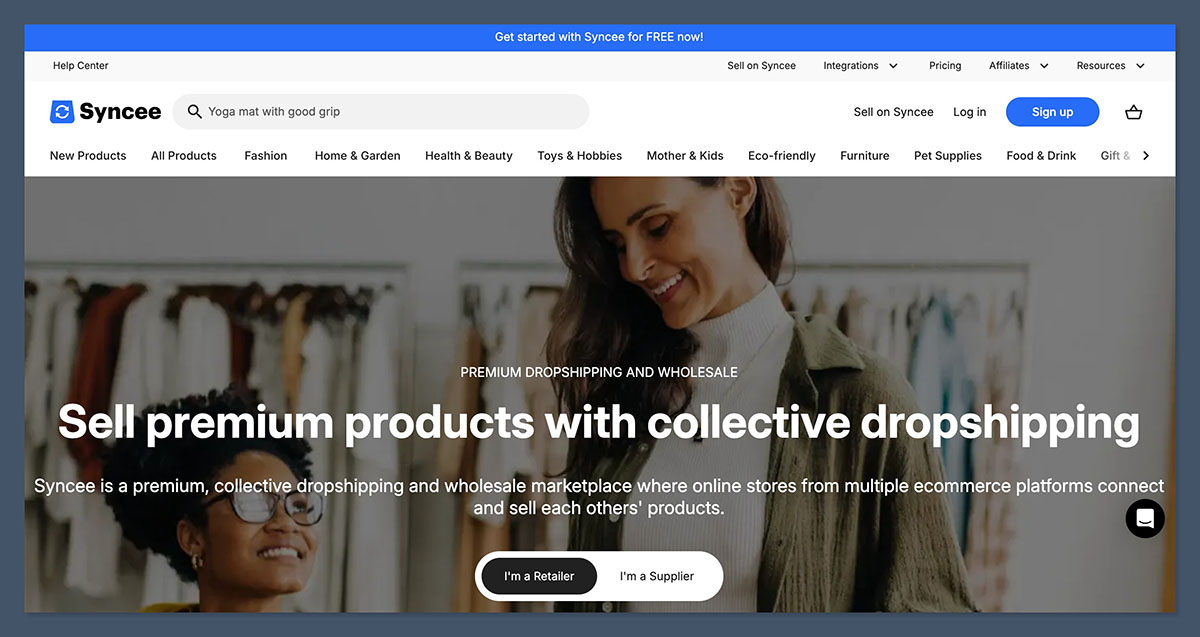
Other notable alternatives include AutoDS, priced from $26.90/month, which offers extensive multichannel automation across Shopify, WooCommerce, eBay, Amazon, Etsy, Wix, TikTok Shop, and Facebook, though it lacks a permanent free plan. CJ Dropshipping presents a compelling "pay-per-order" model with no monthly platform fees and boasts US and EU warehouses, along with branding options like custom boxes and mailers, albeit with minimum order requirements. Spocket, starting at $39.99/month, focuses on US/EU suppliers, delivering products within 4-7 business days and offering branded invoicing from $59.99/month. EPROLO offers a free fulfillment plan with budget-friendly branding options starting at $19.90/year, featuring custom labels and hangtags. Syncee, with a free plan for 25 imports and paid plans from $39.99/month, excels in compatibility with various e-commerce platforms beyond Shopify, including WooCommerce, Wix, Squarespace, BigCommerce, and Ecwid. Sell The Trend, at $29.97/month, is a strong contender for product research, offering tools that help identify trending items, but it does not handle fulfillment directly. Finally, Printify, with a free plan supporting five stores and a Premium plan at $39/month, is the leading option for print-on-demand (POD) businesses, allowing entrepreneurs to build their own brand through custom designs.
DSers: The Leading Free Zendrop Alternative
DSers has earned the distinction of being the best free Zendrop alternative due to its generous free tier, which supports up to three stores and 3,000 products, alongside robust bulk AliExpress ordering capabilities. This stands in stark contrast to Zendrop’s free plan, which is purely for browsing products, and its paid plans that start at a higher price point once products are linked.
A critical distinction is that DSers primarily functions as an ordering and automation software, rather than a fulfillment network like Zendrop. While DSers’ strong integration with AliExpress typically means shipping originates from China, potentially leading to longer delivery times, Zendrop differentiates itself with its network of US-based stock, offering delivery within 3 to 5 business days.
Pros of DSers:
- Generous Free Plan: Offers 3 stores and 3,000 products without a monthly fee, significantly reducing initial overhead.
- Official AliExpress Partnership: Streamlines product sourcing and ordering directly from AliExpress.
- Bulk Ordering: Enables efficient processing of multiple orders simultaneously.
- Scalable Paid Plans: Advanced and Pro plans offer increased store limits, product capacities, and automation features at competitive price points.
Cons of DSers:
- Primarily China-Based Shipping: While many AliExpress sellers offer expedited shipping, the default origin is often China, which can result in longer transit times compared to domestic fulfillment.
- Limited Private Label Services: DSers does not offer dedicated private-label services for custom packaging or branding.
- Stock Monitoring Requires Upgrade: Basic plan users must manually monitor stock levels, with automatic price and stock synchronization only available from the Advanced plan.
What’s New with DSers?
Recent updates to DSers include AI-powered supplier mapping features within the Pro plan, offering up to 50 AI optimizations per month. However, some users have noted that a recent interface overhaul has resulted in a less intuitive user experience.
Why Use DSers in 2026?
For businesses looking to drastically reduce operational costs, switching from Zendrop Plus ($79/month) to DSers Basic ($0/month) can result in annual savings of nearly $948, excluding the value of Zendrop’s additional services like coaching and chargeback management. The DSers Advanced plan, priced at $19.90/month, becomes an attractive option for those needing automatic price and stock updates without the higher cost of Zendrop’s premium tiers.
DSers Testing Notes:
During testing, the initial focus was on variant mapping, ensuring that product attributes like size and color were correctly linked to their corresponding supplier items. The manual price adjustment tools in the Basic plan were a notable limitation, as comprehensive stock monitoring is deferred to the Advanced tier. A detailed comparison with AutoDS highlights the trade-offs in automation features.
DSers Pricing:
DSers offers a 14-day free trial for its Advanced plan. Exceeding plan limits incurs additional charges.
| Plan | Monthly Price (Billed Monthly) | Monthly Price (Billed Annually) | Key Limit |
|---|---|---|---|
| Basic | $0 | $0 | 3 stores; 3,000 products; 1 channel |
| Advanced | $19.90 | $15.90 ($190.80/year) | 10 stores; 20,000 products |
| Pro | $49.90 | $39.90 ($478.80/year) | 25 stores; 75,000 products; 3 channels |
| Enterprise | $499.90 | Not listed | 50 stores; 100,000 products; 5 channels |
Best for: Merchants seeking to minimize subscription costs and leverage AliExpress for product sourcing.
Skip if: Prioritizing local fulfillment or integrated custom packaging solutions.
AutoDS: Optimizing Automation Across Multiple Sales Channels
AutoDS emerges as a strong contender for merchants prioritizing extensive automation across a wide array of sales channels. It excels in pairing price and stock monitoring with support for eight distinct sales channels, a notable advantage over Zendrop’s four.
However, AutoDS’s starting price does not encompass all automation features. Auto-ordering functionality requires an additional $9.90 per month, and unlike DSers, AutoDS does not offer a permanent free plan, instead providing a 3-day trial.
Pros of AutoDS:
- Multichannel Support: Integrates seamlessly with Shopify, WooCommerce, eBay, Amazon, Etsy, Wix, TikTok Shop, and Facebook, catering to diverse selling strategies.
- Comprehensive Automation: Offers robust price and stock monitoring, a critical feature for maintaining customer satisfaction and preventing overselling.
- Dedicated Trial: A low-cost trial allows users to test its capabilities before committing.
Cons of AutoDS:
- No Permanent Free Plan: Requires a paid subscription from the outset.
- Additional Cost for Auto-Ordering: The core auto-ordering feature is an add-on, increasing the total monthly expenditure.
- Variant Counting: Some users report that product variants count towards plan limits, necessitating careful consideration of plan sizing.
What’s New with AutoDS?
Since its acquisition by Fiverr in July 2024, AutoDS has seen a strategic alignment of its services. Plans are now primarily segmented by the number of imported products. It is crucial for users to carefully assess their needs regarding product variants, as these can significantly impact the total product count and thus the required plan tier.
Why Use AutoDS in 2026?
AutoDS is a superior choice for businesses operating on multiple platforms beyond Shopify, such as Amazon, Etsy, or eBay. While Zendrop focuses primarily on Shopify and its direct integrations, AutoDS provides a unified solution for managing inventory and orders across a broader e-commerce ecosystem. Its strength lies in its automation capabilities rather than its own fulfillment network or private labeling programs.
AutoDS Testing Notes:
During testing, the pricing structure was carefully analyzed, separating the base monitoring plan from the $9.90 auto-ordering add-on. Additional features like Virtual Assistant (VA) access and the product-finding hub each carry a monthly fee of $14.97. A significant recommendation from user feedback is to maintain an external backup of supplier mapping data, as exporting all fields comprehensively from AutoDS upon departure can be challenging.
AutoDS Pricing:
AutoDS provides a 3-day trial for $0.99. The following prices are based on Shopify listings; larger tiers and additional services may incur extra costs.
| Plan | Monthly Price (Billed Monthly) | Monthly Price (Billed Annually) | Key Limit |
|---|---|---|---|
| Import 200 | $26.90 | About $20.73 ($248.70/year) | 200 products |
| Starter 500 | $39.90 | About $30.73 ($368.70/year) | 500 products |
| Advanced 1K | $66.90 | About $50.73 ($608.70/year) | 1,000 products |
Quick Comparison: AutoDS is ideal for businesses requiring cross-platform automation. DSers is the preferred choice for free AliExpress bulk ordering.
CJ Dropshipping: Leveraging US Stock and Branded Packaging
CJ Dropshipping distinguishes itself as a prime option for businesses prioritizing US-based warehousing and custom packaging solutions without incurring a monthly platform fee. Its US warehouse delivery typically ranges from 3 to 8 business days, and its branded materials, such as custom boxes and mailers, do not require the invitation-only approval process mandated by Zendrop’s Private Agent program.
However, CJ Dropshipping does not publicly disclose minimum order quantities for its packaging services. Anecdotal evidence from users suggests that product variants available in US warehouses may sometimes differ from advertised specifications, necessitating careful verification.
Pros of CJ Dropshipping:
- No Monthly Platform Fee: Eliminates a recurring cost for the core service.
- US Warehousing: Offers faster shipping times for customers in the United States.
- Branding Options: Provides custom packaging solutions like boxes, mailers, and cards.
- Direct Sourcing: Facilitates finding and sourcing products directly through their platform.
Cons of CJ Dropshipping:
- Unclear Packaging Minimums: Lack of transparency regarding minimum order quantities for custom packaging can be a hurdle for smaller businesses.
- Potential Variant Discrepancies: Reports of inconsistencies between advertised US warehouse stock and actual product variants require diligent checking.
- Per-Order Costs: While there’s no platform fee, actual product and shipping costs are charged per order.
What’s New with CJ Dropshipping?
CJ Dropshipping’s Shopify application, titled "CJdropshipping: Much Faster," aims to enhance user experience. However, it’s crucial for users to confirm the warehouse location for each product variant before listing, as not all items are stocked in the US.
Why Use CJ Dropshipping in 2026?
CJ Dropshipping is an advantageous alternative to Zendrop when branded packaging is a higher priority than additional coaching or research features. The process for requesting custom packaging is more accessible, bypassing the revenue verification steps associated with Zendrop’s Private Agent program. It’s important to evaluate the total cost, as the absence of a subscription fee does not necessarily translate to lower overall landed costs.
CJ Dropshipping Testing Notes:
During the testing phase, the product catalog was filtered to include only US warehouse items to facilitate a direct price comparison with Zendrop. A key reservation is the agent-dependent nature of packaging quotes. It is strongly advised to obtain minimum quantities and material charges in writing, as there have been reports of agreed-upon rates increasing by up to 30%.
CJ Dropshipping Pricing:
CJ Dropshipping operates on a pay-per-order model. Users are advised to approve a sample product and a written quote for packaging before transitioning live products to the platform.
Spocket: Accessing US and EU Suppliers for Enhanced Delivery
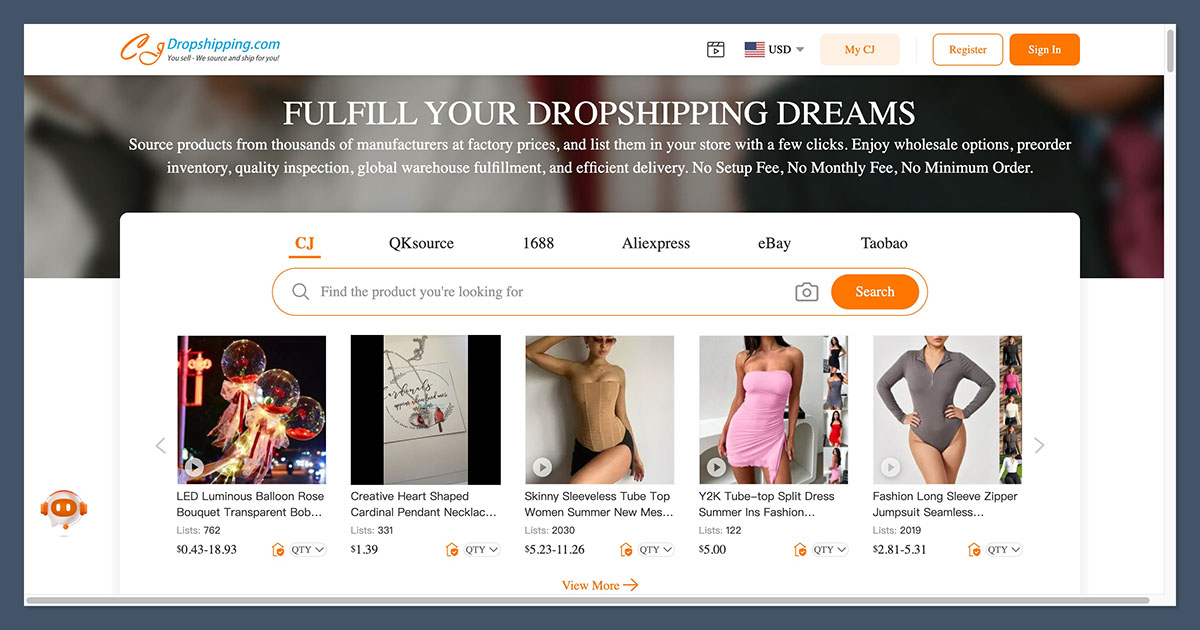
Spocket positions itself as a premier marketplace for US and EU-based suppliers, aiming to reduce shipping times for customers in these regions. Delivery through Spocket typically averages 4 to 7 business days, with an additional 1 to 3 days allocated for supplier processing.
However, the Starter plan, priced at $39.99/month, is restrictive with a 25-product limit. This pricing may be less competitive than Zendrop’s US stock delivery, which averages 3 to 5 business days, meaning a switch to Spocket doesn’t automatically guarantee faster delivery.
Pros of Spocket:
- Geographically Diverse Suppliers: Access to a broad network of suppliers located in the US and EU.
- Faster Domestic Shipping: Primarily focuses on suppliers closer to the end customer, reducing transit times.
- Branded Invoicing: Offers branded invoicing options to enhance customer experience.
- Trial Period: A 7-day free trial allows potential users to explore the platform.
Cons of Spocket:
- High Entry Cost: The Starter plan’s 25-product limit is restrictive for growing businesses.
- Limited Free Tier: Only allows browsing products and a 7-day trial, unlike more generous free options.
- Premium Product Limits: Even higher tiers have limits on "premium" products, which can impact product catalog expansion.
What’s New with Spocket?
Spocket offers significant savings through annual billing. The Professional plan reduces from $59.99 to approximately $24 per month, and the Unicorn plan drops from $299.99 to about $79 per month.
Why Use Spocket in 2026?
Zendrop’s average US delivery time can be extended by its reliance on China-sourced items, which can take 10 to 15 business days. Spocket’s focus on nearby suppliers eliminates these longer China transit legs. For businesses seeking a broader range of domestic options, exploring dedicated US dropshipping supplier lists is recommended.
Spocket Testing Notes:
During testing, suppliers were initially shortlisted based on their geographical location, followed by an assessment of processing times to establish realistic delivery promises. The branded invoicing feature is valuable, but it’s important to distinguish it from custom packaging. The premium product allowance in the Professional plan, capped at 25, contrasts with the 250 unique products available in other tiers.
Spocket Pricing:
Spocket offers a 7-day free trial.
| Plan | Monthly Price (Billed Monthly) | Monthly Price (Billed Annually) | Key Limit |
|---|---|---|---|
| Starter | $39.99 | Not listed | 25 unique products |
| Professional | $59.99 | $24 ($288/year) | 250 unique + 25 premium; branded invoicing |
| Empire | $99.99 | $57 ($684/year) | 10,000 unique + 10,000 premium |
| Unicorn | $299.99 | About $79 | 25,000 unique + 25,000 premium |
The Verdict: Spocket is ideal for merchants prioritizing sourcing from suppliers located closer to their customer base. It is not the best choice if the primary goal is simply to achieve faster shipping than Zendrop across the board.
EPROLO: The Budget-Friendly Private Label Solution
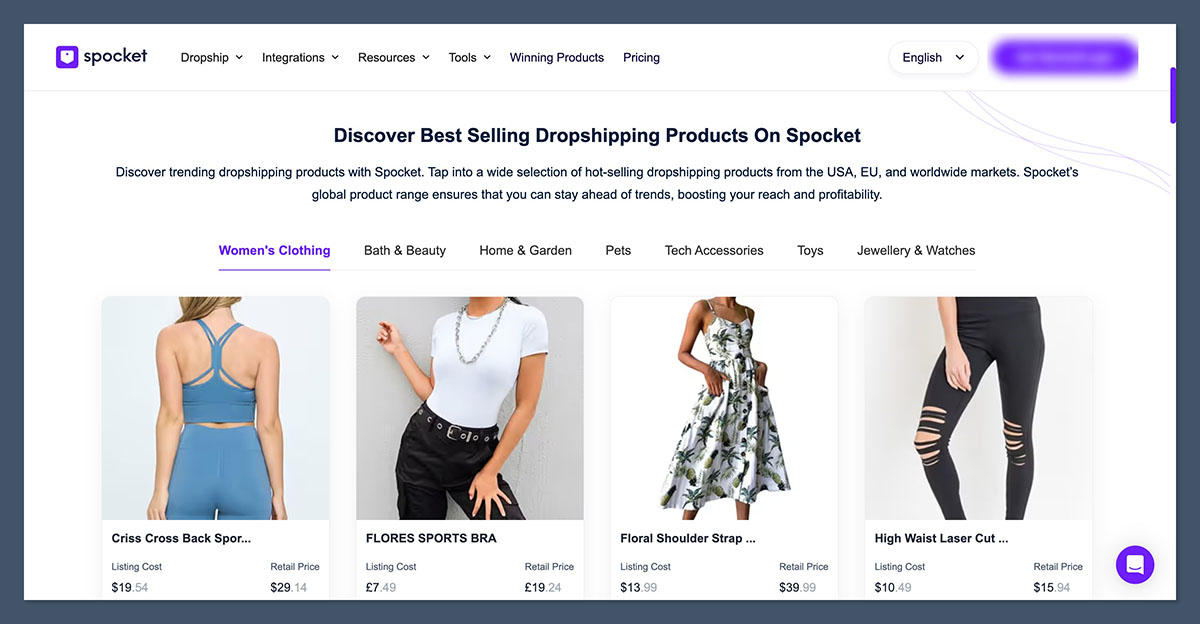
EPROLO stands out as the most cost-effective option for businesses looking to implement private labeling. Its "Branding Lite" service is available for an annual fee of just $19.90, in addition to its free fulfillment plan. This service includes custom labels, hangtags, and packing bags, offering a significant advantage over Zendrop’s Private Agent program, which requires a more stringent approval process.
However, it is crucial to note that this annual fee does not cover the cost of the materials themselves. Per-order charges still apply, and some users have reported instances of stockouts and lost shipments, indicating potential operational inconsistencies.
Pros of EPROLO:
- Affordable Private Labeling: Extremely low annual cost for basic branding services.
- Free Fulfillment Plan: Offers unlimited orders without a monthly platform fee.
- Multiple Warehouses: Operates warehouses in the US, UK, EU, and China, providing logistical flexibility.
- Customizable Materials: Includes options for labels, hangtags, and packing bags.
Cons of EPROLO:
- Materials Not Included: The branding fee covers the service, not the physical materials, which incur additional per-order costs.
- Stock and Fulfillment Issues: Some users have experienced stockouts and lost shipments, suggesting potential reliability concerns.
- Branding Pro is More Expensive: While Branding Lite is budget-friendly, the Pro tier, which adds gift cards and custom tape, is significantly more expensive.
What’s New with EPROLO?
EPROLO offers two tiers for its branding services: Branding Lite at $19.90 annually, and Branding Pro at $99 annually. Branding Pro includes gift cards and custom tape in addition to the labels, hangtags, and packing bags offered in the Lite package.
Why Use EPROLO in 2026?
Unlike Spocket’s branded invoicing, EPROLO’s services directly impact the customer’s unboxing experience by allowing for physical branding elements. Starting with the Branding Lite package is recommended, as the Pro tier is only cost-effective if the additional features like gift cards and custom tape are heavily utilized. It’s essential to verify the dispatch location for each product, as EPROLO operates warehouses across multiple continents.
EPROLO Testing Notes:
The testing process involved selecting specific branding materials first, followed by calculating their per-order cost to compare EPROLO with other platforms like CJ Dropshipping. A key observation is the global distribution of EPROLO’s warehouses. Therefore, confirming the dispatch location for every shortlisted item is paramount to managing shipping expectations and costs.
EPROLO Pricing:
Branding subscriptions are annual add-ons, not prepaid packaging allowances.
| Plan or Add-on | Monthly Price (Billed Monthly) | Annual Price | Key Inclusion |
|---|---|---|---|
| Free | $0 | $0 | Unlimited orders |
| Branding Lite | Not offered | $19.90 | Labels, hangtags, packing bags |
| Branding Pro | Not offered | $99 | Adds gift cards and custom tape |
Best for: Merchants seeking low-cost entry into private labeling.
Skip if: Requiring guaranteed warehouse stock and reliable fulfillment assurances upfront.
Syncee: Expanding Beyond Shopify
Syncee is identified as the premier solution for e-commerce businesses operating on platforms beyond Shopify. It offers seamless integration with WooCommerce, BigCommerce, Squarespace, and Ecwid – platforms not supported by Zendrop. The free plan allows for 25 product imports without any transaction fees, providing an accessible starting point.
However, the Basic plan, priced at $39.99/month, is limited to 100 products. This is less competitive than AutoDS, which offers 200 products for a starting price of $26.90/month.
Pros of Syncee:
- Extensive Platform Compatibility: Supports a wide range of e-commerce platforms beyond Shopify.
- Generous Free Plan: Allows 25 product imports without transaction fees.
- Supplier Variety: Access to a diverse range of suppliers and product types.
- User-Friendly Interface: Generally considered easy to navigate and use.
Cons of Syncee:
- Higher Starting Price: The Basic plan is pricier than some competitors for a lower product limit.
- Supplier Reliability Varies: As with many dropshipping platforms, individual supplier reliability can vary, necessitating due diligence.
- No Native Fulfillment: Syncee acts as a marketplace and integration tool; fulfillment is handled by the individual suppliers.
What’s New with Syncee?
Syncee offers a 3-day trial for its paid plans, followed by a 30-day refund policy. The Business plan significantly increases product capacity to 10,000 from the Pro plan’s 250, making catalog size a key factor in upgrade decisions.
Why Use Syncee in 2026?
Syncee enables businesses to integrate dropshipping capabilities into their existing store infrastructure, regardless of the platform. Its primary advantage over AutoDS lies in its broader platform support, particularly for niche builders like Squarespace and Ecwid.
Syncee Testing Notes:
The testing process involved curating import lists based on supplier shipping terms that aligned with customer expectations. Since Syncee suppliers fulfill orders independently, users have reported instances of unpaid orders by certain suppliers. Therefore, it is strongly recommended to place a sample order with each new supplier before listing their products on your store.
Syncee Pricing:
Syncee’s annual plans offer approximately a 25% reduction in subscription costs, but supplier-specific charges remain separate.
| Plan | Monthly Price (Billed Monthly) | Monthly Price (Billed Annually) | Key Limit |
|---|---|---|---|
| Free | $0 | $0 | 25 imports |
| Basic | $39.99 | $30 ($360/year) | 100 products |
| Pro | $59.99 | $45 ($540/year) | 250 products; 20 import lists |
| Business | $99.99 | $75 ($900/year) | 10,000 products; 50 import lists; 24/7 support |
Quick Comparison: Syncee is ideal for sourcing products across multiple e-commerce platforms. AutoDS excels in multichannel automation primarily for Shopify and similar large-scale platforms.
Sell The Trend: Enhancing Product Discovery
Sell The Trend is recognized as the best option for e-commerce entrepreneurs prioritizing product research. Its integrated suite of product discovery and store-building tools is available starting at $29.97/month. This contrasts with Zendrop, where its trending product finder is part of the more expensive $79 Plus plan.
However, it’s crucial to understand that Sell The Trend does not function as a fulfillment network. Its listed suppliers, including those from AliExpress, CJ Dropshipping, and US-based providers, require separate management for stock, processing, and delivery logistics.
Pros of Sell The Trend:
- Powerful Product Research Tools: Offers advanced features for identifying trending and profitable products.
- Competitive Pricing: Affordable entry point for comprehensive research capabilities.
- Store Building Features: Includes tools to aid in the creation and optimization of online stores.
- Multiple Supplier Integrations: Connects with various sourcing platforms.
Cons of Sell The Trend:
- No Direct Fulfillment: Relies on third-party suppliers for order fulfillment.
- Requires Separate Supplier Management: Users must manage relationships and logistics with individual suppliers.
- Potential for Overlapping Costs: If using its suppliers, additional fees for those platforms will apply.
What’s New with Sell The Trend?
The Pro plan now includes a dedicated TikTok Shop product finder, supports up to three stores, and accommodates 1,000 products. The Essential plan limits product imports to 500.
Why Use Sell The Trend in 2026?
This platform is particularly beneficial for businesses where identifying winning products is the primary challenge, and the trending product feature of Zendrop Plus is the main reason for its subscription. While the Pro plan costs $99.97/month, maintaining the Lite or Essential plan is advisable unless TikTok Shop integration is a core business strategy.
Sell The Trend Testing Notes:
The NEXUS research tools were utilized to identify potential products, with fulfillment suppliers being selected separately. A strong product research outcome does not guarantee shipping reliability or healthy profit margins. Therefore, it is essential to compare the supplier’s landed cost with Zendrop’s pricing before importing any product.
Sell The Trend Pricing:
A credit card is required to access Sell The Trend’s 14-day free trial.
| Plan | Monthly Price (Billed Monthly) | Monthly Price (Billed Annually) | Key Limit |
|---|---|---|---|
| Lite | $29.97 | $19.97 | Entry research plan |
| Essential | $49.97 | $32.97 | Up to 500 products |
| Pro | $99.97 | $66.64 | 3 stores; 1,000 products; TikTok finder |
Choose Sell The Trend for product discovery, not as a solution for slow supplier shipping.
Printify: Building a Distinct Brand Identity
Printify is the leading choice for entrepreneurs focused on building a unique brand through print-on-demand (POD) products. It allows businesses to sell items featuring their own designs, differentiating them from generic catalog items. The platform’s Free plan supports up to five stores, eliminating the need for an initial subscription fee.
However, the cost per unit for POD items is generally higher than for mass-produced goods, and the responsibility for design creation rests with the entrepreneur. Zendrop Plus also offers POD capabilities, which might be a more integrated option for existing Zendrop users.
Pros of Printify:
- Own-Brand Focus: Enables creation of unique products with custom designs.
- Extensive Product Catalog: Offers a wide variety of blank products for customization.
- Global Print Network: Utilizes a network of print providers worldwide for diverse shipping options.
- Free Plan Availability: Allows businesses to start without upfront subscription costs.
Cons of Printify:
- Higher Per-Unit Costs: POD items typically have a higher base cost than standard dropshipped goods.
- Design Responsibility: Requires entrepreneurs to create or source their own designs.
- Print Provider Variability: Quality and shipping times can vary depending on the chosen print provider.
- Premium Discounts Limited: Discounts on Premium plans apply only to eligible new products and branding, not the entire catalog.
What’s New with Printify?
The Premium plan, priced at $39/month or $24.99/month when billed annually, increases the store limit to 10. This plan offers discounts of up to 20% on eligible products and branding, not across the entire product range.
Why Use Printify in 2026?
Printify is the ideal choice when a business’s core value proposition lies in its unique designs, rather than simply offering a wide selection of generic products. It’s not a direct substitute for Zendrop’s general dropshipping catalog if the primary goal is to reduce subscription costs for standard merchandise. A lower subscription fee will not offset higher POD unit costs if the selling price point is only viable for generic items.
Printify Testing Notes:
The evaluation focused on selecting products in conjunction with print providers, recognizing that provider-dependent shipping significantly impacts both profit margins and delivery timelines. It is recommended to start with the Free plan, order a sample product, and only upgrade to Premium if the monthly savings from discounts exceed the $39 subscription cost.
Printify Pricing:
Printify Premium is an optional upgrade. Printful is another comparable POD service; its Growth plan costs $24.99/month and becomes free at $12,000 in annual sales, offering a 9% discount on branding items.
| Plan | Monthly Price (Billed Monthly) | Monthly Price (Billed Annually) | Key Limit |
|---|---|---|---|
| Free | $0 | $0 | 5 stores; no product discounts |
| Premium | $39 | $24.99 ($299.88/year) | 10 stores; up to 20% off products |
The Verdict: Printify is suited for design-centric businesses, not for sourcing the cheapest generic merchandise.
Navigating the Switch: Choosing the Right Zendrop Alternative
Selecting the most suitable Zendrop alternative hinges on identifying and addressing the most significant limitations encountered with the current platform. For instance, while DSers significantly reduces subscription expenses, it does not offer private labeling capabilities. Conversely, CJ Dropshipping provides packaging solutions but necessitates meticulous product-level stock verification.
Key Considerations When Choosing:
- Pricing and Value: Evaluate the total cost of ownership, including subscription fees, product costs, and any additional add-ons.
- Shipping Speed and Warehouses: Prioritize platforms that offer warehouses in key markets or have strong relationships with suppliers known for fast shipping.
- Automation and Order Sync: Assess the platform’s ability to automate order processing, inventory updates, and price synchronization to minimize manual intervention.
- Branding and Private Label: If brand identity is crucial, look for platforms that offer custom packaging, labels, or white-labeling services.
- Platform Integrations: Ensure compatibility with your existing e-commerce store platform (e.g., Shopify, WooCommerce) and any other sales channels you utilize.
- Support and Reputation: Research customer reviews and support availability to ensure reliable assistance when needed.
Why Businesses Transition from Zendrop:
While Zendrop’s US stock remains competitive, and overall user sentiment is largely positive, businesses may opt to switch due to specific operational constraints. Common reasons include:
- Cost: Higher subscription fees for features that may not be fully utilized.
- Limited Integrations: Lack of support for platforms outside Shopify, Wix, TikTok Shop, and ClickFunnels.
- Private Labeling Restrictions: The invitation-only nature of Zendrop’s Private Agent program can be a barrier.
- Shipping Times: While US stock is fast, reliance on China can lead to longer overall delivery estimates.
For specialized niches like home and furniture products, DropXL presents an alternative at approximately €30 per country account, without order commissions.
Seamlessly Transitioning from Zendrop:
Migrating from Zendrop to a new dropshipping platform is not an automated process and requires careful planning to avoid disrupting live product listings. The recommended approach involves preserving existing Shopify product pages and updating the supplier mapping rather than deleting and re-importing products. This ensures continuity of product URLs, associated reviews, and SEO value.
Steps for a Smooth Transition:
- Select and Set Up New Platform: Choose your preferred alternative and complete the setup process, including any necessary integrations.
- Map Products to New Suppliers: For each product, manually remap its variants to the corresponding supplier on the new platform. This typically involves updating product IDs, supplier URLs, variant IDs, and SKUs.
- Test Order Processing: Place a test order through the new platform to verify that order fulfillment and tracking information are correctly synchronized.
- Monitor Inventory and Pricing: Closely observe inventory levels and pricing adjustments on both platforms during the transition phase.
- Deactivate Zendrop Integration: Once confident in the new platform’s performance, deactivate the Zendrop integration to prevent duplicate orders.
Our Rigorous Testing Methodology:
The ranking of Zendrop alternatives is based on an extensive testing process that goes beyond mere software cost. We connect each application to a live Shopify test store, map existing products, and meticulously compare their ordering and synchronization functionalities. The pricing analysis includes the cost of the core plan plus any essential add-ons required for a fully operational store.
Our editorial weighting is allocated as follows:
- Pricing and Value: 25%
- Shipping Speed and Warehouses: 20%
- Automation and Order Sync: 20%
- Branding and Private Label: 15%
- Platform Integrations: 10%
- Support and Reputation: 10%
Prices were current as of October 2026.
Final Verdict: Recommending the Best Zendrop Alternatives
For cost-conscious sellers, DSers stands as the top recommendation. Its Basic plan effectively replaces a paid Zendrop subscription with free AliExpress ordering, and the Advanced plan offers essential automation features at a competitive $19.90/month. For businesses requiring robust multichannel automation, AutoDS is the preferred choice. CJ Dropshipping is ideal for those prioritizing US stock and integrated packaging solutions without a monthly platform fee, while Spocket is suited for merchants seeking access to US/EU suppliers.
DSers may not be the optimal solution for businesses that require custom packaging or guaranteed domestic stock. It is advisable to initiate the transition by connecting a shortlisted app and remaping a single existing product first. This allows for verification of the supplier, the total order cost, and synchronization accuracy before migrating the entire product catalog.
Frequently Asked Questions
Is there a free alternative to Zendrop?
Yes, DSers Basic offers a free plan supporting 3 stores and 3,000 products. EPROLO also provides a free fulfillment plan with unlimited orders. Syncee allows 25 free imports, Printify Free covers 5 stores, and CJ Dropshipping has no monthly platform fee. It is important to remember that product and shipping charges still apply, and free plans like DSers Basic may lack automatic price and stock synchronization.
Is Zendrop Plus worth $79 a month?
Zendrop Plus ($79/month) is justifiable if you utilize its advanced features like coaching, print-on-demand services, chargeback management, private listings, and monthly sourcing requests. The Pro plan ($49/month) includes automated fulfillment and thank-you cards. For basic ordering needs without these premium extras, DSers Free or AutoDS (starting at $26.90/month before add-ons) are more cost-effective alternatives.
Which Zendrop alternative ships fastest to the US?
CJ Dropshipping’s US warehouses and Spocket’s nearby suppliers are strong contenders. CJ’s US estimates range from 3 to 8 days, while Spocket typically delivers in 4 to 7 business days, plus processing. Zendrop’s own US stock averages 3 to 5 business days. It is crucial to verify the dispatch location for each product before making a switch.
Will I lose my Shopify product pages if I switch from Zendrop?
No, provided you retain your existing Shopify products and remap them to the new supplier instead of deleting and re-importing. This preserves product URLs and associated reviews. Be prepared for variant mapping, especially with platforms like DSers, which requires

 Raul Delapena Setiawan
 Asep Darmawan