rifanmuazin
In the dynamic landscape of digital marketing, the strategic implementation of social media Key Performance Indicators (KPIs) has become indispensable for brands and teams seeking to navigate the complexities of online engagement and demonstrate tangible business impact. These numerical benchmarks are not mere metrics; they are meticulously selected indicators that directly reflect the efficacy of a social media strategy in achieving predefined business objectives, allowing organizations to focus resources, optimize campaigns, and articulate measurable value.
Understanding the Foundation: KPIs Versus General Metrics

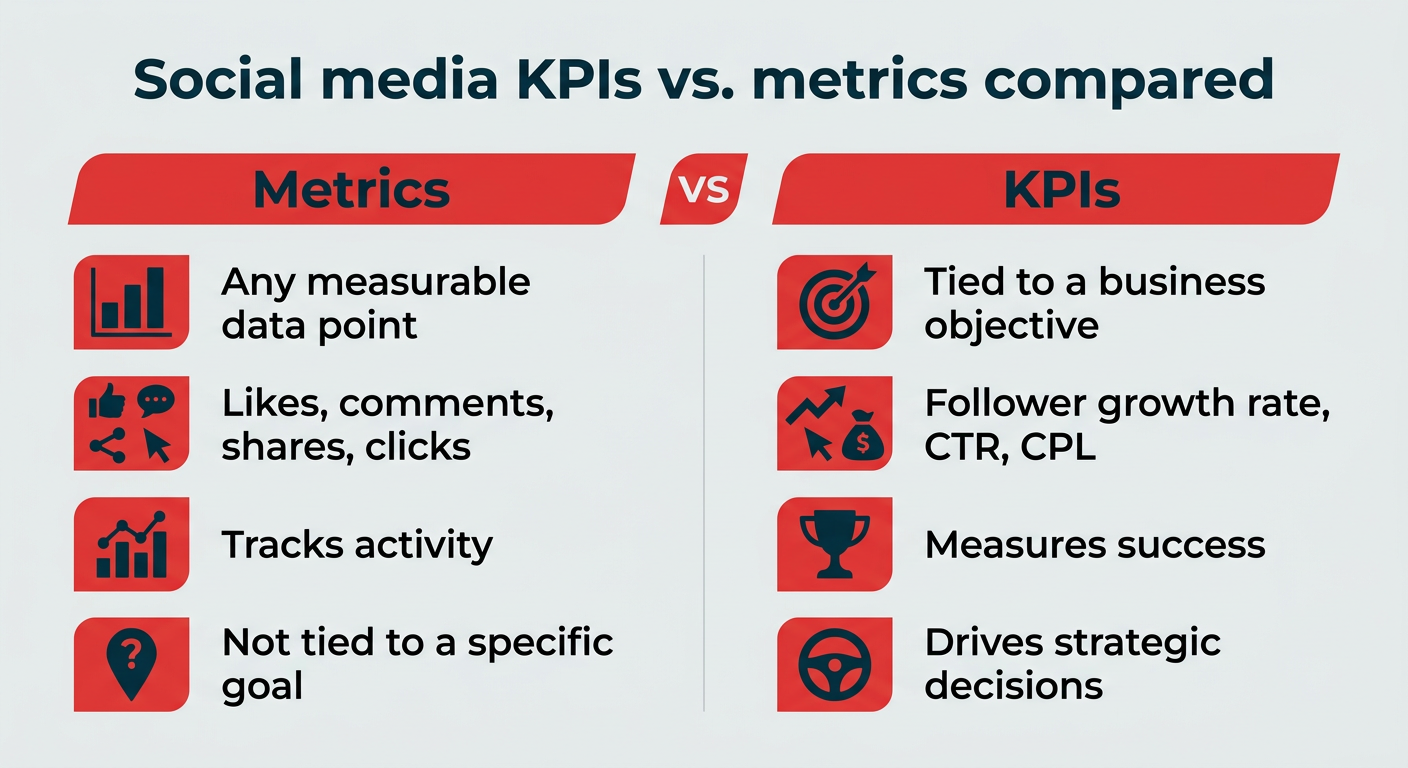
At its core, a social media KPI differentiates itself from a general metric by its direct linkage to a specific business goal. While metrics like impressions or likes offer a quantitative snapshot of activity, KPIs are the strategic compass points guiding a brand toward its desired outcomes. For instance, a brand aiming to significantly boost brand awareness might designate follower growth rate and post reach as its primary KPIs, whereas a company prioritizing customer retention would focus on metrics such as average response time or resolution rate. The defining characteristic of a KPI is its criticality: it’s the data point that unequivocally signals progress toward a strategic imperative. This distinction is crucial in an era where digital noise can easily obscure meaningful insights. Industry experts consistently emphasize that while thousands of data points can be tracked, only a select few truly inform strategic decision-making.
Consider the analogy: all KPIs are metrics, but not all metrics qualify as KPIs. A comprehensive social media strategy might monitor a broad spectrum of metrics—impressions, engagement rate, shares, click-throughs—but only those directly aligned with a strategic outcome, such as "weekly follower growth" for an audience expansion goal, elevate to KPI status. This structured approach prevents teams from becoming overwhelmed by data and ensures that analytical efforts are always directed toward actionable insights. The clear differentiation between these two analytical categories is paramount for fostering a data-driven culture within marketing departments.
The Imperative for Tracking Social Media KPIs

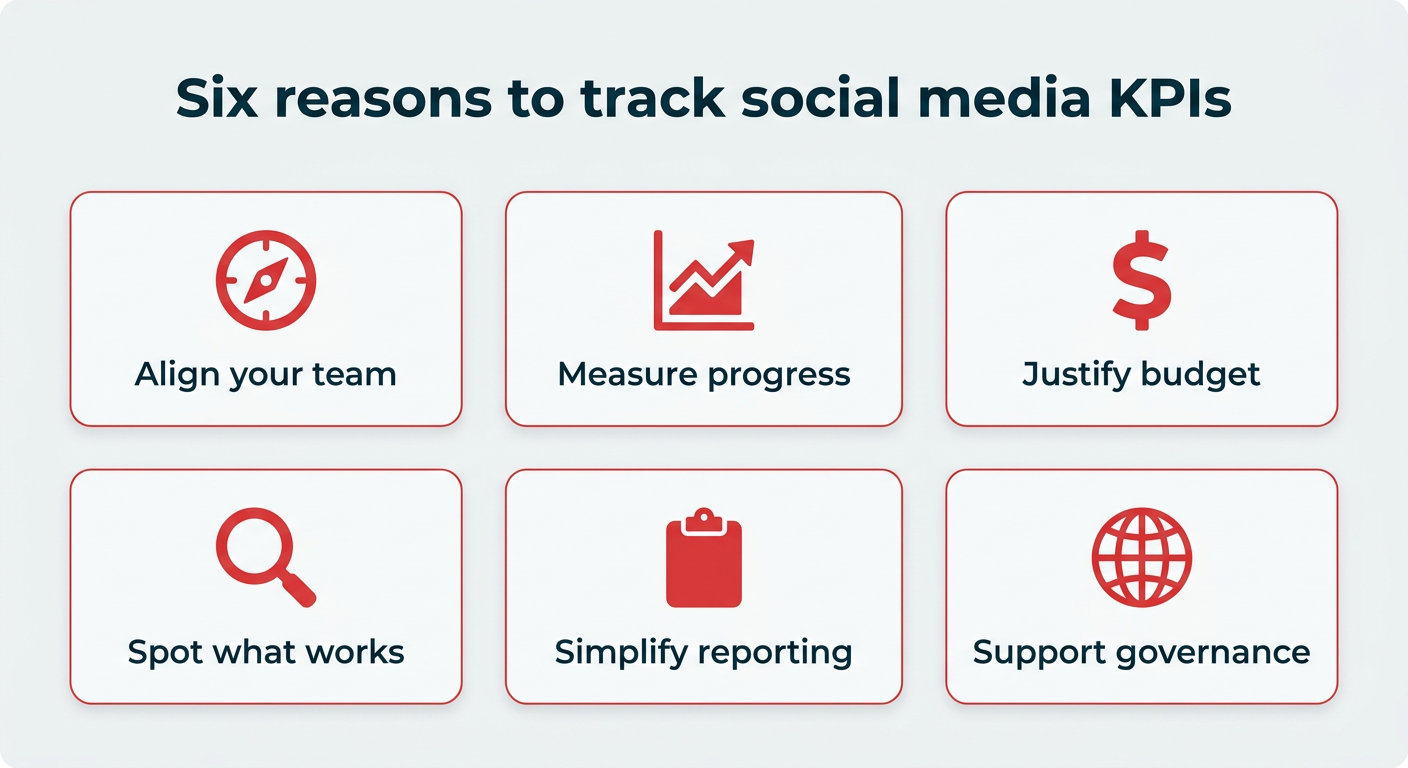
The deliberate tracking of social media KPIs serves multiple critical functions for brands and marketing teams, extending beyond simple performance measurement to strategic foresight and operational efficiency.
- Maintaining Strategic Focus: KPIs act as a North Star, ensuring that all social media activities are aligned with overarching business objectives. This alignment prevents resource dispersion and keeps teams concentrated on tasks that genuinely contribute to corporate goals.
- Demonstrating Tangible Impact: In an environment where marketing budgets are under increasing scrutiny, KPIs provide concrete evidence of social media’s contribution to the bottom line. They translate online interactions into quantifiable business results, justifying investment and proving ROI.
- Informing Data-Driven Decisions: By analyzing KPI trends, teams can identify what content resonates, which campaigns drive conversions, and where adjustments are needed. This iterative process of measurement and refinement leads to optimized strategies and improved outcomes.
- Enhancing Accountability: Clear KPIs assign responsibility and foster a culture of accountability within social media teams. When targets are specific and measurable, team members understand their role in achieving collective success.
- Optimizing Resource Allocation: Understanding which strategies and platforms yield the best KPI performance allows brands to reallocate budgets and human resources more effectively, maximizing impact while minimizing waste.
- Gaining Competitive Advantage: Tracking KPIs against industry benchmarks and competitor performance provides invaluable insights into market positioning and opportunities for differentiation. This external perspective is vital for continuous improvement and strategic adaptation.
A Framework for Social Media KPIs: The Six Pillars of Performance
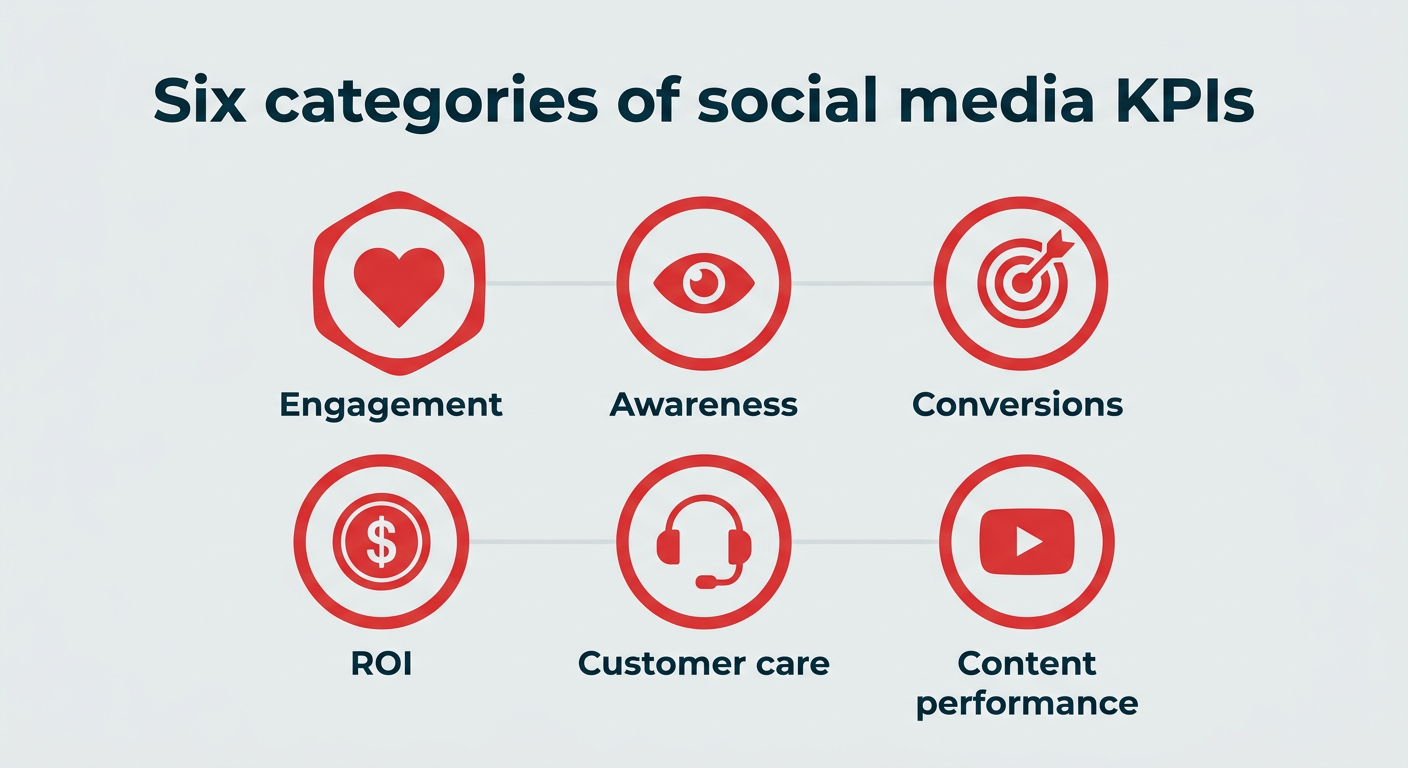
In 2026, the most critical social media KPIs are typically categorized into six distinct areas: engagement, awareness, conversions, ROI, customer care, and content performance. These categories form the foundational structure upon which a robust measurement strategy is built, each supporting different facets of a brand’s digital presence. When defining specific KPIs within these categories, it’s crucial to integrate SMART (Specific, Measurable, Achievable, Relevant, Time-bound) components, transforming general metrics into actionable, business-specific targets.
1. Engagement KPIs: Measuring the Quality of Interaction
Engagement KPIs delve into the depth and quality of interactions between a brand and its audience. They reveal whether content is resonating and if followers are actively participating in the brand’s social narrative.
- Likes: The fundamental indicator of positive sentiment and initial interaction with a post. While often termed a "vanity metric" in isolation, tracking likes over time and in conjunction with other engagement metrics can reveal content preferences and audience receptivity. For instance, a notable increase in likes on visual posts compared to text-based updates can signal a preference for multimedia content.
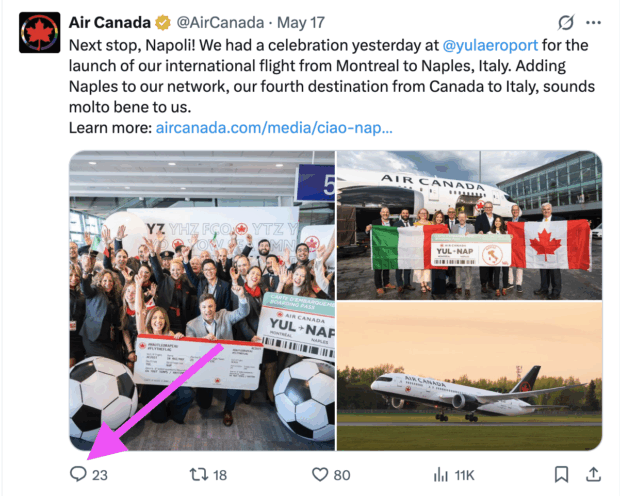
- Comments: Representing a higher level of engagement than a like, comments signify active thought and a willingness to communicate. However, the qualitative aspect is vital; robust social sentiment analysis tools are necessary to differentiate positive feedback from critical commentary. A surge in comments, even if mixed, often indicates content that has struck a chord or sparked debate.
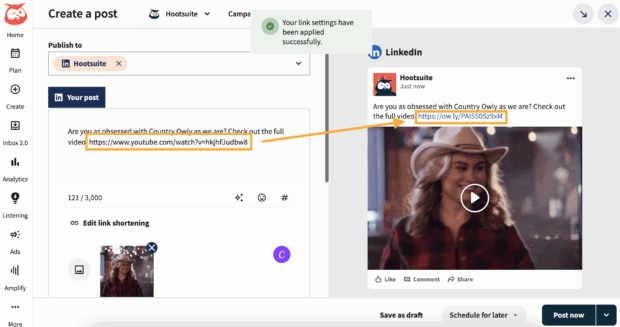
- Clicks: Essential for tracking engagement that extends beyond the social platform itself. Clicks on embedded links, particularly those directing to external websites or landing pages, are a direct measure of audience interest in further exploration. Tools like URL shorteners with integrated analytics (e.g., Ow.ly) simplify the tracking of these crucial off-platform interactions.
- Shares: A powerful testament to content virality and perceived value. Shares indicate that users find content compelling enough to disseminate within their own networks, effectively extending a brand’s organic reach. While not always indicative of positive sentiment, a high share count suggests content that is highly relevant, entertaining, or informative to a broad audience.
- Saves: Increasingly important on platforms like Instagram and Pinterest, saves (or bookmarks) suggest that users perceive content as valuable for future reference. This indicates educational, inspirational, or highly practical content that resonates deeply enough to warrant retention.
- Average Engagement Rate: This composite metric normalizes engagement across follower counts, dividing total engagements (likes, comments, shares, saves) by the total number of followers. It provides a standardized measure of content effectiveness, allowing for comparison across different posts, campaigns, or even platforms. Industry benchmarks suggest that engagement rates can vary significantly, from 1-5% being typical, though niche communities may see higher figures.
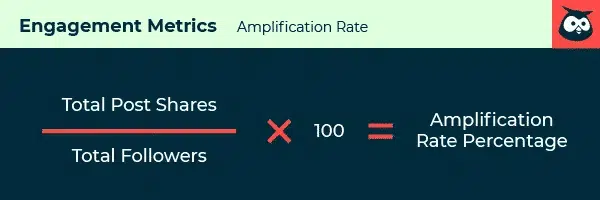
- Amplification Rate: Quantifies the extent to which followers share a brand’s content with their own networks. A high amplification rate signifies content that is highly shareable and aligns with the identity or interests of the sharing audience, effectively leveraging word-of-mouth marketing.
- Social Share of Voice: Measures a brand’s presence in conversations relative to its competitors. By tracking mentions across social channels, brands can gauge their relevance and prominence within their industry. Tools for social listening are indispensable here, providing competitive intelligence and identifying market trends.
2. Awareness KPIs: Expanding Brand Visibility
Awareness KPIs are focused on gauging the extent to which a brand’s content is seen and recognized, crucial for growth, new product launches, and establishing market presence.
- Impressions: The total number of times a piece of content has been displayed to users. While not guaranteeing active viewing, impressions indicate potential exposure and the overall reach of content within social feeds. Tracking impressions alongside engagement helps determine if visibility translates into meaningful interaction.
- Follower Count: A direct measure of audience size at a specific point. While a foundational metric, its true value emerges when analyzed in conjunction with growth rate, providing context to audience expansion or contraction.
- Audience Growth Rate: This critical KPI measures the percentage change in follower count over a defined period. It provides a dynamic view of audience expansion, helping to identify successful growth strategies and periods of accelerated or decelerated growth.
- Reach: The number of unique users who saw a piece of content. Unlike impressions, which can count multiple views by the same user, reach provides a more accurate picture of the distinct individuals exposed to content. Factors such as posting time, content quality, and platform algorithms heavily influence reach.
3. Conversion KPIs: Driving Off-Platform Actions
Conversion KPIs move beyond social interactions to measure how social media contributes to tangible business outcomes, such as website visits, lead generation, or sales.
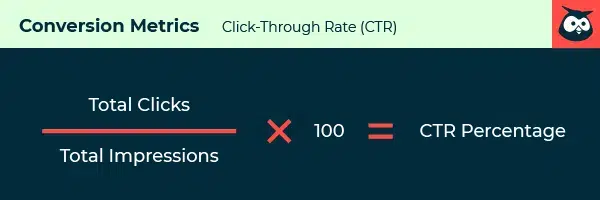
- Click-Through Rate (CTR): The percentage of users who clicked on a call-to-action (CTA) within a post, relative to the number of impressions. A high CTR indicates compelling content and effective CTAs that motivate users to take the next step.
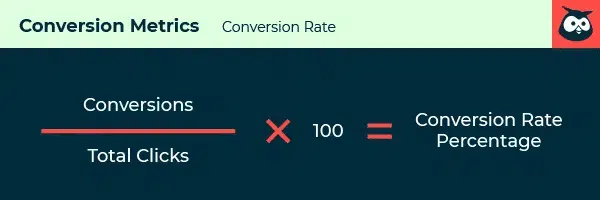
- Conversion Rate: The percentage of users who completed a desired action (e.g., purchase, signup, download) after clicking through from a social media post. This is a direct measure of social media’s effectiveness in driving business growth and funnel progression.
- Bounce Rate: The percentage of visitors who clicked a social media link but quickly left the destination page without further interaction. A high bounce rate suggests a misalignment between the social content’s promise and the landing page experience, or poor targeting.
- Cost Per Click (CPC): In paid social campaigns, CPC measures the cost incurred for each click on an advertisement. Monitoring CPC is vital for optimizing ad spend and ensuring that advertising efforts are cost-efficient.
- Cost Per Thousand Impressions (CPM): Represents the cost of 1,000 ad impressions. This KPI is particularly relevant for awareness-focused campaigns, allowing marketers to assess the cost-effectiveness of broad exposure.
4. ROI KPIs: Quantifying Financial Returns
ROI KPIs are paramount for demonstrating the direct financial contribution of social media efforts, a critical factor for securing and increasing marketing budgets. Analysts project social network ad spending to exceed $121 billion in the U.S. in 2026, underscoring the need for robust ROI measurement.
- Earned Media Value (EMV): An estimation of the monetary value of organic exposure (mentions, shares, positive sentiment) that a brand receives without direct advertising spend. EMV quantifies the financial impact of organic reach and word-of-mouth, often calculated by assigning a cost equivalent to what similar paid media would cost.
- Cost Per Lead (CPL): The total cost associated with generating a single qualified lead through social media activities, encompassing ad spend, content creation, and platform fees. CPL is essential for comparing the efficiency of social media against other lead generation channels.
- Cost Per Acquisition (CPA): Measures the total expenditure required to acquire a new paying customer via social media, from initial contact to final conversion. A lower CPA signifies a highly efficient social media strategy in converting prospects into revenue.
- Leads Generated from Social: The direct count of leads attributed to social media campaigns (e.g., form submissions, demo requests, newsletter sign-ups). Accurate tracking via UTM parameters and advanced analytics tools (like Hootsuite Advanced Analytics) is crucial for precise attribution.
5. Customer Care KPIs: Enhancing User Experience

Customer care KPIs assess how effectively social media channels are utilized for customer service, influencing satisfaction, loyalty, and brand reputation.
- Customer Satisfaction Score (CSAT): Measures customer happiness with their social service experience, typically through post-interaction surveys. A high CSAT indicates effective and empathetic customer support via social channels.
- Net Promoter Score (NPS): Gauges customer loyalty and willingness to recommend a brand after a social interaction or purchase. NPS scores, derived from a single "likelihood to recommend" question, categorize customers into Promoters, Passives, and Detractors, offering insight into overall brand advocacy.
- Customer Lifetime Value (CLV): The projected total revenue a customer will generate over their relationship with a brand. Understanding CLV helps justify investments in social customer care and acquisition strategies by demonstrating the long-term financial benefits of satisfied customers.
- Average Response Time: The average duration it takes for a brand to respond to customer inquiries on social media. Rapid response times are critical for customer satisfaction in the fast-paced social environment; chatbots can significantly improve this metric for routine queries.
- First Contact Resolution Rate: The percentage of customer issues resolved during the initial interaction with a social customer service agent. A high rate indicates efficient problem-solving and minimizes customer frustration from being transferred between agents.
- Issue Volume: Tracks the total number of customer service requests, complaints, or questions received over a period. Spikes in issue volume can signal broader product issues, campaign missteps, or service bottlenecks, requiring prompt investigation.
6. Content Performance KPIs: Optimizing Creative Output
Content performance KPIs provide insights into the effectiveness of specific content types, formats, and themes, guiding future content strategy.
- Views (for video content): The total number of times a video asset has been watched. This KPI is particularly useful for comparing the performance of different video formats (e.g., Reels vs. TikToks) and identifying topics that capture initial attention.
- Average Watch Time/Completion Rate: Measures how long users engage with video content and whether they watch it to completion. Low watch times or completion rates may suggest issues with pacing, relevance, or the video’s opening hook, prompting content refinement.
- Top-Performing Content: Not a single metric, but a practice of regularly identifying posts that excel in reach, engagement, or conversions. Analyzing common elements (formats, themes, CTAs) of top-performing content helps in replicating success and refining content calendars.
- Content Frequency: Examines the relationship between posting volume and overall performance. Finding the optimal posting frequency is crucial; too little content risks irrelevance, while excessive posting can lead to audience fatigue and diluted engagement. This KPI, when cross-referenced with engagement metrics, helps establish sustainable publishing rhythms.
Establishing SMART Social Media KPIs: A Strategic Imperative
Effective KPI setting transcends merely selecting metrics; it involves a methodical approach that aligns with broader business objectives, incorporates competitive intelligence, and adheres to the SMART framework.
- Understanding Overarching Business Objectives: The initial step involves clearly defining the brand’s strategic goals. For instance, if a CMO’s priority for 2026 is growth, the social media strategy must directly support this. If the goal is to drive website traffic, then KPIs such as click-through rate from social to the website become paramount. A brand focused on nurturing customer relationships might prioritize customer care KPIs.
- Competitive Analysis and Industry Benchmarks: To set realistic and ambitious targets, it is essential to understand how competitors and industry leaders perform on social media. Benchmarking provides context, revealing average engagement rates, audience growth, and content performance within a specific sector. Tools that offer competitive analysis allow brands to identify gaps and opportunities, informing their own KPI targets. For example, if industry average engagement is 3%, a brand currently at 1% might set an aggressive but achievable target of 2.5% within a quarter.
- Implementing the SMART Framework: Every social media KPI should adhere to the SMART criteria:
- Specific: Clearly defined, leaving no room for ambiguity (e.g., "Increase Instagram followers" is vague; "Increase Instagram followers by 10%" is specific).
- Measurable: Quantifiable, allowing for objective tracking of progress (e.g., "Improve brand perception" is not measurable; "Achieve a 4.5/5 average CSAT score" is).
- Achievable: Realistic and attainable given current resources and market conditions. While ambitious, targets should not be impossible.
- Relevant: Directly aligned with overarching business objectives and the social media strategy. KPIs should matter to the business’s success.
- Time-bound: Associated with a specific deadline, creating urgency and a clear timeframe for evaluation (e.g., "by the end of Q3" or "within 60 days").
Strategic Application: From Goals to Action
The journey from a high-level business objective to a concrete, trackable SMART KPI illustrates the power of this framework:
-
Business Goal: Grow brand awareness.
-
KPI to Track: Audience growth rate.

-
Example SMART Target: Increase Instagram followers by 10% in the next 90 days.
-
Business Goal: Boost audience engagement.
-
KPI to Track: Average engagement rate.
-
Example SMART Target: Raise LinkedIn engagement rate from 2% to 3% by end of Q3.
-
Business Goal: Drive website traffic and sales.
-
KPI to Track: Click-through rate (CTR).
-
Example SMART Target: Achieve a 1.5% CTR on link posts across all platforms within 8 weeks.
-
Business Goal: Prove social media ROI.
-
KPI to Track: Cost per lead (CPL).
-
Example SMART Target: Reduce social CPL from $25 to $18 by end of quarter.
-
Business Goal: Improve customer satisfaction.
-
KPI to Track: Average response time.

-
Example SMART Target: Reduce average social response time to under 2 hours within 60 days.
This structured approach ensures that every social media effort is purposeful and its impact is quantifiable.
Continuous Monitoring and Adaptation: The Evolving Landscape of Social Measurement

Setting KPIs is not a one-time event but rather the initiation of a continuous cycle of monitoring, analysis, and adaptation. The digital landscape is in constant flux, with new platforms emerging, algorithms changing, and audience behaviors evolving. Regular review of social media KPIs – weekly for tactical adjustments and monthly for strategic evaluation – is paramount. This vigilance allows teams to identify performance dips early, capitalize on unexpected successes, and optimize ongoing campaigns.
The advent of sophisticated analytics platforms and AI-driven insights is further transforming KPI tracking. While native platform analytics offer basic data, comprehensive social media management tools provide consolidated dashboards, cross-platform comparisons, and advanced reporting capabilities that are crucial for deep dives into performance. These tools empower marketers to track a refined set of 3-5 core KPIs per business objective, preventing data overload and ensuring focused attention on truly impactful metrics.
Moreover, the ongoing dialogue around data privacy and cookie deprecation is reshaping how social media data is collected and attributed. Marketers must stay abreast of these changes, exploring new methodologies for measuring conversions and ROI in a privacy-centric environment. This includes a greater reliance on first-party data, server-side tracking, and advanced attribution models that can navigate the complexities of fragmented customer journeys.

In conclusion, the strategic application of social media KPIs is no longer optional but a fundamental requirement for any brand aiming to thrive in the digital age. By meticulously defining, tracking, and analyzing these critical indicators, organizations can transform their social media efforts from mere presence to powerful engines of business growth, ensuring every like, share, and click contributes meaningfully to overarching corporate objectives.