

The luxury jewelry market is often characterized by high-ticket items that necessitate careful consideration from consumers. For Draco Diamond, a relatively new entrant in this space, this inherent characteristic of the industry has become a cornerstone of its success. Founder Garrett McMartin revealed that while only 14% of Draco Diamond’s web traffic originates from returning users, these dedicated visitors are responsible for a significant 78% of the company’s total sales. This statistic underscores a powerful insight: for high-value purchases, the journey from initial interest to final transaction is often a protracted process, involving multiple visits and extensive research.
McMartin elaborated on this consumer behavior, explaining that returning users are not necessarily those who simply bookmark a page and forget it. Instead, they represent individuals actively engaged in a rigorous product research phase. This often involves comparing specific diamond products and pricing with those offered by competitors, a common practice for significant investments. "When it comes to a lot of these Prime Days and Cyber Mondays, for us, that’s not really the market we’re after," McMartin stated. "We’re not looking for people that are trying to crunch in and get these sales. We’re looking for people that are researching."
This deliberate targeting of a research-oriented clientele is intrinsically linked to the nature of Draco Diamond’s product catalog. With the exception of a branded hat, the lowest-priced item on the company’s website is a pair of earrings priced at over $500. This positioning inherently filters out the casual browser and the impulse buyer. "You don’t really have those impulse buyers coming in," McMartin noted, reinforcing the idea that the purchase of fine jewelry is a considered decision, not a spur-of-the-moment whim.
Draco Diamond’s Innovative Pricing and Discounting Strategy
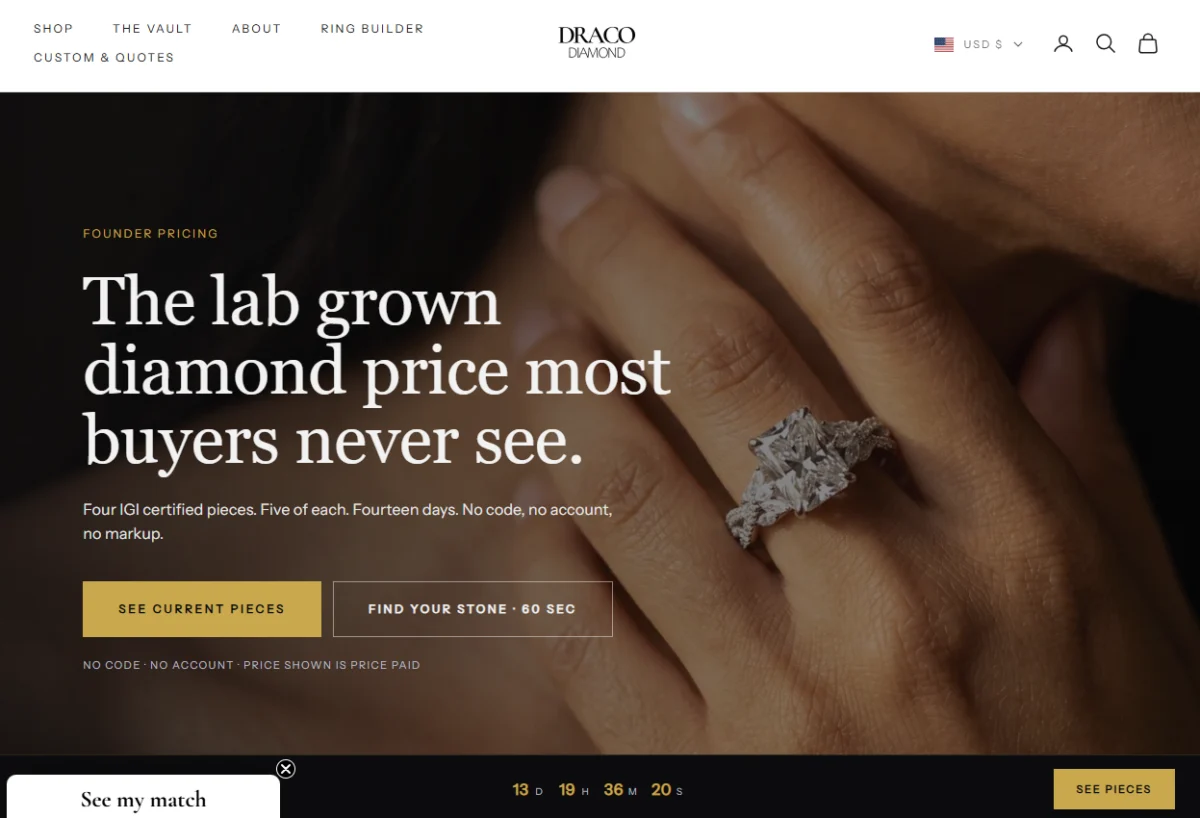
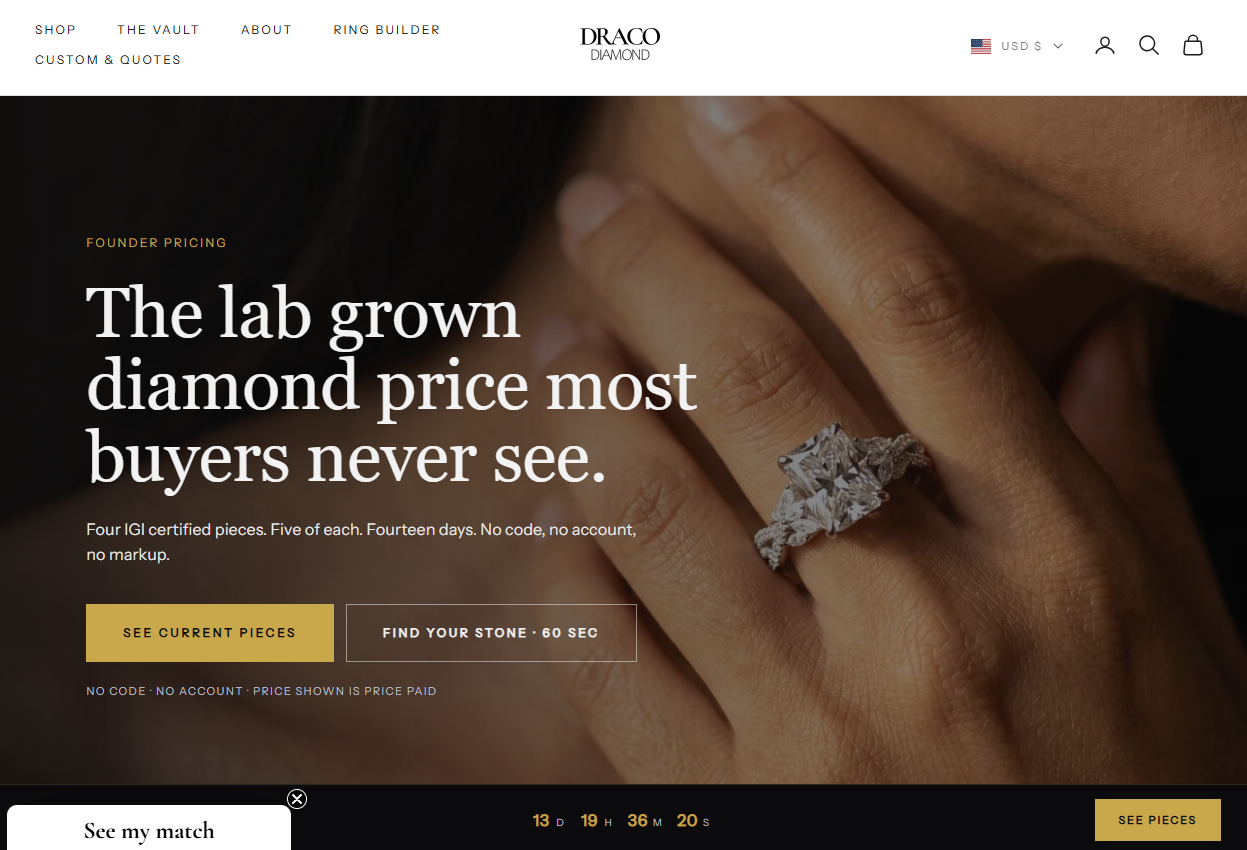
Understanding the consumer’s need for validation and confidence in their purchase, McMartin has implemented a unique approach to pricing and promotions. Rather than participating in the aggressive, discount-driven sales events common in many retail sectors, Draco Diamond focuses on a more nuanced strategy. To cater to customers who are actively seeking value without compromising the perception of luxury, McMartin introduced a collection he calls "Founder Pricing."
This collection features four carefully selected items that are updated every two weeks. With a limited stock of five units per item, these pieces are offered at a discount ranging from approximately 5% to 12%. McMartin’s rationale behind this modest discount is rooted in maintaining the brand’s luxury image. "That was the closest he could get to a discount without getting away from the luxury language associated with jewelry," the article states.
He further explained the delicate balance required in pricing luxury goods: "If you go in and you see, ‘Oh, this ring’s $1000 off?’ You’re gonna be like, ‘Well, it’s already a $2,000 ring, so why is it $1000 off? That’s really weird. It would be $1,000 [discount] when every other ring is $5,000. I don’t know, this must be a scam or something.’ So it’s a very fine line." This sentiment highlights the potential for deep discounts to erode consumer trust and devalue a luxury product in the eyes of the buyer. The Founder Pricing model, therefore, aims to offer tangible savings without raising suspicion or diminishing the perceived worth of the jewelry.
Transparency as a Brand Differentiator
Beyond its curated discounting strategy, Draco Diamond has embraced radical transparency as a key differentiator in the competitive jewelry market. The company actively lists prices for comparable items from other merchants directly on its product detail pages. This practice, according to McMartin, is designed to provide consumers with a clearer understanding of the market value of the products they are considering.
"I’m going to be transparent. I’m gonna show people what it costs," McMartin declared, emphasizing his commitment to an unconventional approach. He acknowledged that his profit margins, while still healthy, are considerably lower than those typically seen in the industry. While other jewelry retailers may achieve margins of $4,000 to $5,000 per item, Draco Diamond operates with a leaner profit structure.
This commitment to transparency is not merely a pricing tactic; it’s a strategic branding initiative. McMartin views it as an opportunity to "break down the walls" and make a bold statement that resonates with consumers seeking authenticity. "It draws that organic traffic and it draws those organic sales, and that’s what we’re seeing now," he stated, indicating the success of this transparent model in attracting and converting customers.
The Genesis of Draco Diamond and Lessons from the Past
Garrett McMartin launched Draco Diamond in early 2025, but his journey in the jewelry industry began earlier. Draco Diamond represents the second iteration of his jewelry brand ventures. His previous endeavor was a private brand characterized by limited, weekly product drops – essentially, one product released per week – which he managed for nearly three years.
While this model generated sales and sold out consistently, it did not produce the "hype" McMartin had anticipated. He had envisioned a business akin to the streetwear brand Supreme, where scarcity and anticipation would create a cult following and significant demand for each new release. However, the reality proved different. "It wasn’t generating the hype that I thought it was going to generate," he explained. "We were getting the sales, we were selling out and it was working. But I thought it would take this Supreme path and would be this elusive, ‘Oh, what design is going to be next week?’ But it actually turned out it was preventing the brand awareness."
The perceived lack of brand awareness necessitated investment in advertising that did not yield a sustainable return on investment. McMartin recognized that Supreme’s success with limited drops was built upon decades of established brand recognition, a luxury he couldn’t afford to replicate given the time constraints of building his own brand.
Embracing AI and Answer Engine Optimization
The evolving digital landscape, particularly the proliferation of artificial intelligence (AI) tools, prompted McMartin to re-evaluate his strategy. He decided to streamline the predecessor website and build Draco Diamond anew, leveraging the data and insights gathered from his previous venture. "I pretty much took all the data I had over there and built Draco," he said. "And honestly, it was the best thing I’ve ever done because now we’re at a point where people are finding us. It’s steady."
Instead of immediately resorting to traditional advertising, McMartin initially focused on Answer Engine Optimization (AEO). AEO is an evolution of Search Engine Optimization (SEO) tailored for agentic AI, aiming to provide direct, accurate answers to user queries. This strategic move, implemented even before the widespread adoption of advanced AI search capabilities, positioned Draco Diamond to be discoverable by a new generation of search engines and AI assistants.
McMartin did not commence running paid advertisements until the spring of 2026. Since then, Draco Diamond has seen a consistent return on ad spend (ROAS) exceeding 7%, a testament to the effectiveness of their targeted approach. McMartin described their current operational state as a "fine-oiled machine," where investments in marketing translate directly into substantial sales. "It’s just this fine-oiled machine now where thousands of dollars are going into this machine every week, but it’s pumping out hundreds of thousands of dollars in sales on the other side," he concluded.
Implications for the Luxury E-commerce Landscape
Draco Diamond’s success story offers valuable insights for other e-commerce businesses, particularly those operating in high-value sectors. The company’s focus on a specific customer segment—the diligent researcher—and its commitment to transparency in pricing and product information appear to be a potent combination.
The jewelry industry, historically characterized by opaque pricing and high markups, is ripe for disruption. Draco Diamond’s approach suggests that by building trust through openness, retailers can foster deeper customer loyalty and drive sales, even with potentially lower individual profit margins. The emphasis on the customer’s research journey, acknowledging that a significant purchase is rarely impulsive, allows for the development of marketing and sales strategies that align with consumer behavior.
Furthermore, Draco Diamond’s adoption of AEO and its strategic entry into paid advertising highlight the importance of adapting to evolving search and discovery mechanisms. As AI continues to shape how consumers find information and products, businesses that prioritize discoverability through relevant, informative content and optimized online presence are likely to gain a competitive edge. The company’s experience demonstrates that a foundational understanding of consumer psychology, coupled with agile adaptation to technological advancements, can pave the way for sustained growth in even the most established markets.
The journey from a limited-drop model to a transparent, research-focused e-commerce platform underscores McMartin’s strategic evolution. By learning from past limitations and embracing new methodologies, Draco Diamond has carved out a unique niche, proving that a commitment to authenticity and customer education can be a powerful engine for driving sales and building a lasting brand in the luxury goods market. The company’s trajectory suggests a future where transparency and customer-centricity are not just optional extras, but essential components of success in the digital retail age.








