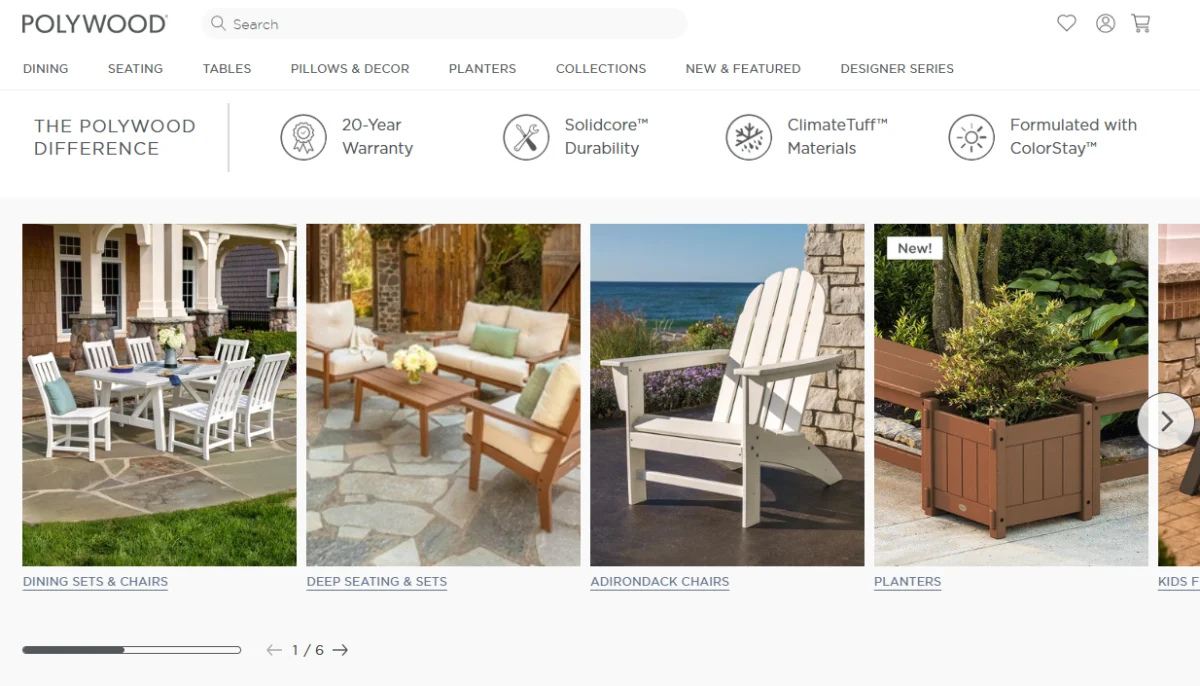
When Ben Spiegel joined Polywood in April 2025 as Chief Information Officer, he harbored expectations shaped by his previous roles in the fast-paced Health & Beauty and consumer-packaged goods sectors, where online sales dominated. However, transitioning to the Housewares & Home Furnishings industry, particularly the outdoor furniture niche, presented a surprising reality. Within roughly a year, as he transitioned to Chief Digital Officer, Spiegel found himself overseeing a business where a remarkable 75% of sales were generated through e-commerce channels, a figure far exceeding his initial projections for the category. This significant shift underscores a broader trend in consumer purchasing behavior for home goods, especially those that require specific customization or are less readily available through traditional brick-and-mortar outlets.
"I didn’t really expect coming into the category that people would do that," Spiegel confessed to Digital Commerce 360. "I realized quickly that that’s driven by: you can’t get good products locally – the ones that you want – meaning you go in a showroom and you see something, but it’s not the right color, not the right size, not the right availability. So I’ve been really impressed by our D2C demand and the demand to transact online in this category." This observation highlights a key pain point for consumers seeking outdoor furniture: the limitations of local inventory and selection, which often forces a compromise on desired specifications or leads to an unsatisfactory shopping experience.
Spiegel identified a significant gap in the market, where mass merchants and home improvement retailers offered a limited selection of outdoor furniture, often from lesser-known brands, leaving consumers uncertain about product origin, quality, and delivery timelines. This fragmented landscape created an opportunity for a direct-to-consumer (DTC) model that could offer greater choice, transparency, and a seamless purchasing experience. Polywood, with its vertically integrated manufacturing and commitment to made-to-order production, was strategically positioned to capitalize on this evolving consumer demand.
The Vertically Integrated, Just-in-Time Manufacturing Advantage
Polywood’s operational backbone is its vertically integrated, just-in-time (JIT) manufacturing process, a model that has proven to be a significant differentiator in the online retail space. This system allows for an agile response to customer orders, minimizing the need for extensive warehousing and reducing the risk of overstock. "The interesting part about our business is it’s vertically integrated, just-in-time manufacturing, meaning you literally click on checkout on Shopify and it triggers lumber being moved to a machine, being extruded, being cut and being shipped to you," Spiegel explained. "So [it’s] this whole idea of one-piece flow versus manufacturing massive amounts of inventory and then trying to push it."
This approach fundamentally alters the inventory management paradigm. Instead of producing large batches of furniture based on forecasts and then attempting to sell them, Polywood manufactures each piece as it is ordered. This strategy not only reduces carrying costs associated with inventory but also enables the company to offer an extensive product catalog without the logistical burden of stocking every variation. Spiegel estimated that Polywood maintains a maximum of 5% of its inventory on hand, a testament to the efficiency of its made-to-order system. "We make each piece custom," Spiegel stated. "That means we can give a massive assortment without having to worry about carrying too much inventory, which is a really different approach."
The typical delivery timeframe for Polywood products further reinforces the efficiency of this model. Orders generally ship out within five to seven business days, a competitive lead time for custom-made furniture. This speed is crucial for maintaining customer satisfaction and encouraging repeat business, especially in an era where consumers expect rapid fulfillment.
Navigating Seasonal Peaks and Valleys: Polywood’s Sales Strategy
As an outdoor furniture brand, Polywood’s sales cycle is intrinsically linked to the warmer months. The company experiences its peak business period between Memorial Day and Labor Day, with approximately 80% of its annual sales occurring during this timeframe. May is identified as a particularly crucial month, often marking the beginning of the significant sales surge.
While the company focuses its primary sales efforts around these two major holidays, it employs a nuanced strategy for other promotional periods, such as the Cyber 5 (Thanksgiving Day through Cyber Monday). During Cyber 5, Polywood tends to eschew deep discounting, opting instead for value-added incentives like expedited shipping or the release of limited-edition products. This approach aligns with the understanding that outdoor furniture purchases are often planned rather than impulse buys, and consumers may prioritize convenience and unique offerings over outright price reductions.
Polywood also maintains a presence on Amazon, a strategy that yielded a noticeable increase in traffic during the marketplace’s Prime Day event in June. However, Spiegel noted that this surge primarily translated into "add to carts and comparison shopping" rather than immediate purchases. He attributed this to the relatively high average purchase price of Polywood products, which hovers around $1,600. "Our average purchase price is about $1,600, so we are not as much in the realm of the spontaneous, ‘Hey, I’m emotionally triggered to buy this right now,’ and a lot more in this space of ad planning the purchase." Consequently, Polywood’s strategy for events like Prime Day involves reducing ad spend, focusing on selling lower-priced items like individual chairs, which are more accessible during promotional periods, in contrast to larger dining or deep-seating sets that are typically sold during their peak seasons.
"If you’re searching for a dining set and you see Polywood at full price and everybody else at a discount price, it doesn’t really make sense," Spiegel observed, underscoring the importance of aligning pricing strategies with consumer expectations during sales events.
The company also leverages sales centered around the Fourth of July. However, Spiegel noted that the performance of this year’s Fourth of July sales lagged behind 2025, attributing the softer results to a challenging consumer environment characterized by economic uncertainty. "We see the higher-income level, higher-priced product is not impacted as much," Spiegel stated. "We see the lower-household income/household smaller purchases were dramatically less just due to the soft consumer environment and people’s uncertainty." This observation points to a bifurcated consumer market, where discretionary spending on higher-ticket items may be more resilient than purchases by lower-income households facing greater financial pressures.
Leveraging the "Second Season" During Cyber 5
The Cyber 5 period presents a unique opportunity for Polywood, particularly in regions where the outdoor furniture season extends beyond the traditional summer months. Spiegel highlighted the concept of "second-season states," referring to warmer climates where outdoor living is enjoyed for a more extended period. "I don’t go outside until it’s November," Spiegel remarked, alluding to his Florida residence. "So as you think about Black Friday, as you think about that whole season, that is our ‘second season’ with all the southern states. That’s when they do these things, and that’s when we really double down again." This strategic focus allows Polywood to tap into demand that may not be present in colder climates during the same period.
Spiegel characterizes the outdoor furniture market as a "push sale," where the decision to purchase is often driven by need and planning rather than impulsive decision-making. Consequently, Polywood prioritizes reach, frequency, and contextual relevance in its e-commerce operations. This includes collaborations with social media influencers and content creators to feature Polywood products in curated lists and roundups, such as "top five outdoor chairs for your winter yards." This approach is considered more effective for their product category than relying heavily on pay-per-click advertising during the Cyber 5.
A notable observation during the 2025 Cyber 5 was the extended purchase window. Typically, Polywood customers convert within their first seven days of visiting the website. However, during the 2025 Cyber 5, this conversion period stretched to approximately 10 to 14 days. This shift indicated that consumers were actively researching and adding items to their carts earlier, engaging in a period of "dream shopping" and waiting for the optimal time to purchase. This behavior created a dynamic where consumers were actively stalking deals, prompting Polywood to adjust its conversion optimization strategies, including its email, ping, and retargeting campaigns, to align with these extended decision-making cycles.
"Is there going to be a flash sale? So it becomes this kind of stalking, hunting period for a lot of consumers, which was good for Google and Facebook because we spent more because we have to keep driving them to the site," Spiegel explained. "But it was a lot of just put in your cart and wait, which required us to change our conversion optimization windows and adjust our email and ping and retargeting campaigns to match that." This mirrors the behavior observed during tax-refund season, where consumers often add items to their wish lists or carts and then make collective purchases once funds are available.
Implications for the Outdoor Furniture Market and Beyond
Polywood’s success in achieving a predominantly e-commerce-driven sales model within the outdoor furniture sector offers valuable insights for retailers across various industries. The company’s ability to overcome the traditional barriers of online furniture sales – such as the inability to physically inspect products, the complexities of shipping large items, and the perceived need for in-person consultation – demonstrates the power of a well-executed DTC strategy.
The reliance on a vertically integrated, just-in-time manufacturing process not only optimizes operational efficiency and reduces costs but also empowers Polywood to offer an expansive product selection. This model challenges the conventional retail approach of managing large inventories and highlights the potential for customization and personalization to drive customer engagement and sales.
Furthermore, Polywood’s strategic approach to seasonal sales and promotional periods showcases a sophisticated understanding of consumer behavior. By adapting its marketing and discounting strategies to align with purchase intent and seasonal demand, the company maximizes its return on investment and avoids diluting brand value through indiscriminate price reductions. The identification of "second-season states" for Cyber 5 is a prime example of recognizing and capitalizing on niche market opportunities.
The company’s proactive adjustments to its digital marketing and conversion optimization tactics in response to evolving consumer shopping patterns during peak events like Cyber 5 underscore the importance of agility in the e-commerce landscape. The "stalking, hunting period" described by Spiegel reflects a more informed and strategic consumer who researches and plans purchases, requiring retailers to adopt a more nuanced and persistent engagement strategy.
As the e-commerce landscape continues to mature, retailers that can effectively blend innovative operational models, data-driven sales strategies, and a deep understanding of their target audience’s purchasing journey are poised for significant growth. Polywood’s trajectory serves as a compelling case study in how a traditional product category can be transformed through digital innovation, ultimately reshaping consumer expectations and market dynamics. The company’s continued success will likely depend on its ability to maintain its manufacturing agility, adapt to further shifts in consumer behavior, and continue to leverage its digital presence to connect with customers seeking quality, customization, and convenience in their home furnishings.