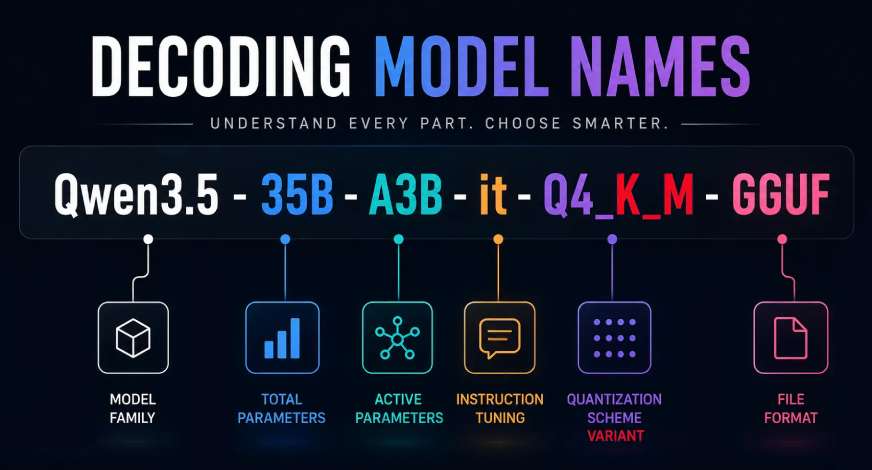
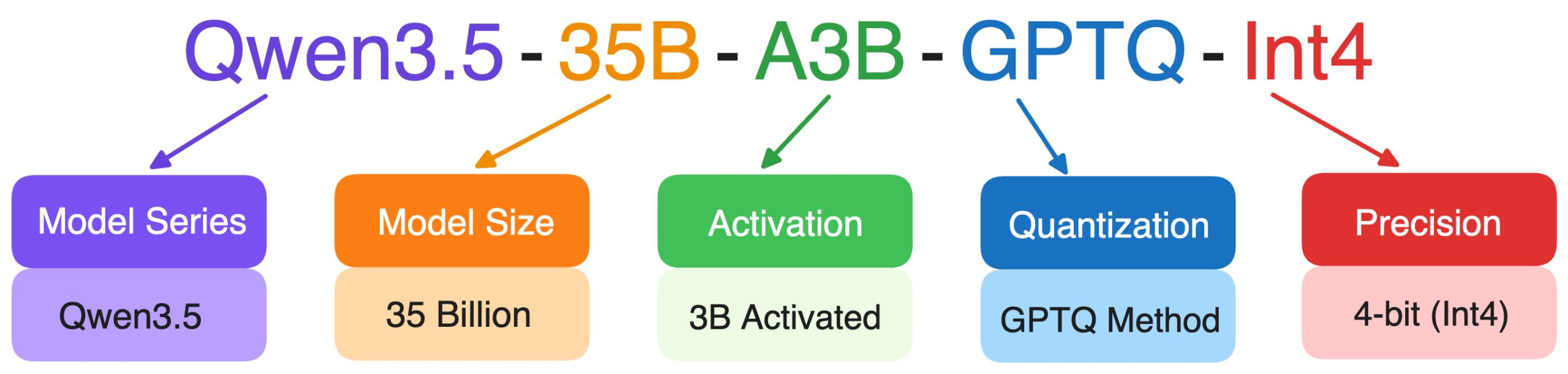
The rapid proliferation of open-source artificial intelligence has led to a surge in the availability of Large Language Models (LLMs) designed for local execution. However, for many developers and AI enthusiasts, the process of selecting a model from repositories like Hugging Face often involves navigating a dense "alphabet soup" of technical shorthand. A typical model name, such as Qwen3.8-27B-A3B-It-2507-gguf-q2ks-mixed-AutoRound, can appear impenetrable to the uninitiated. Far from being a random string of characters, these names serve as a compressed specification sheet, detailing the architecture, tuning methodology, compression level, and hardware compatibility of the software. Understanding these components is essential for optimizing performance on consumer-grade hardware and ensuring that the selected model aligns with specific functional requirements.
The Foundation of Scale: Understanding Parameter Counts
The primary identifier in any LLM filename is the parameter count, usually denoted by a number followed by the letter "B," representing billions. Parameters are essentially the numerical weights within a neural network that the model learns during its training phase. They function similarly to synapses in a biological brain, determining how information is processed and how the model predicts the next token in a sequence.
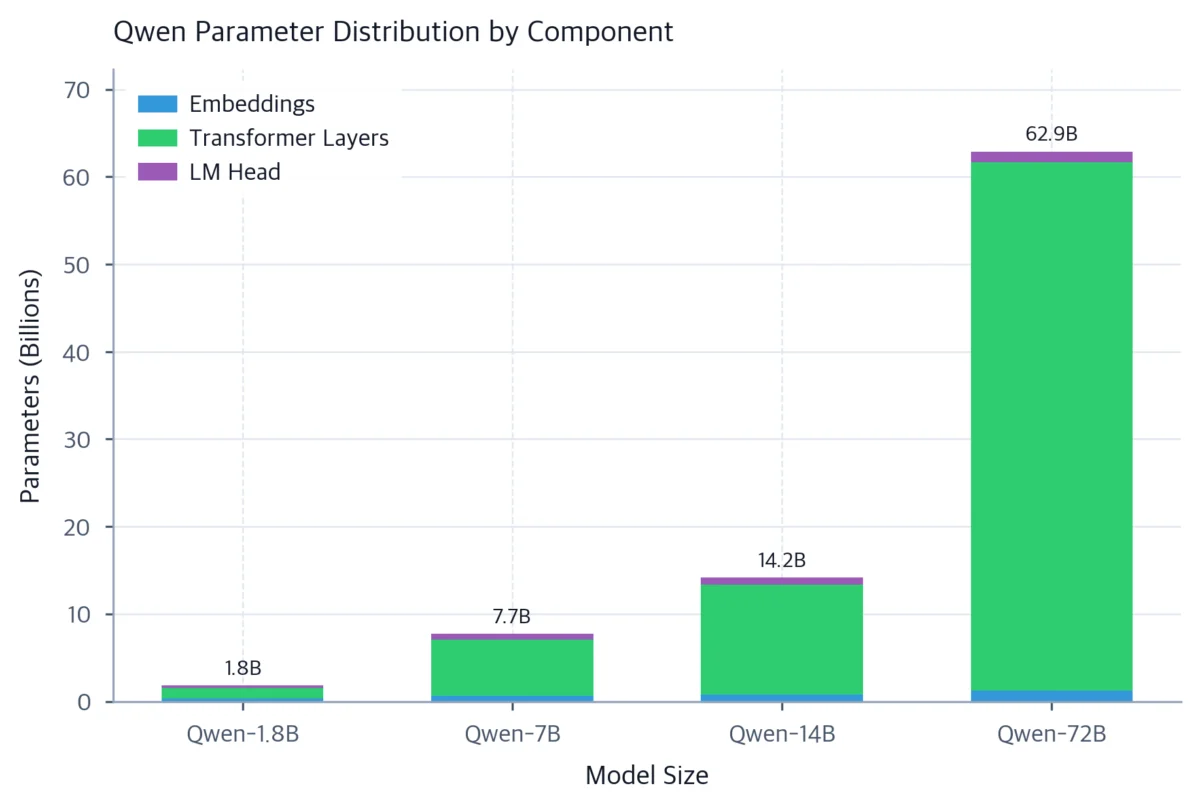
In the current landscape of local AI, models generally fall into several standardized tiers. Small Language Models (SLMs), typically ranging from 1B to 7B parameters, are designed for efficiency and can often run on mobile devices or entry-level laptops. Mid-range models, spanning 14B to 35B parameters, represent a balance between reasoning capabilities and resource consumption. High-end models, such as those with 70B parameters or more, offer sophisticated logic and knowledge but require significant Video Random Access Memory (VRAM) to operate effectively. While proprietary models like GPT-4 or Claude 3 Opus are rumored to contain trillions of parameters, the open-source community focuses on maximizing the "intelligence-per-parameter" ratio to allow for decentralized deployment.
Structural Efficiency: Dense Models vs. Mixture-of-Experts (MoE)
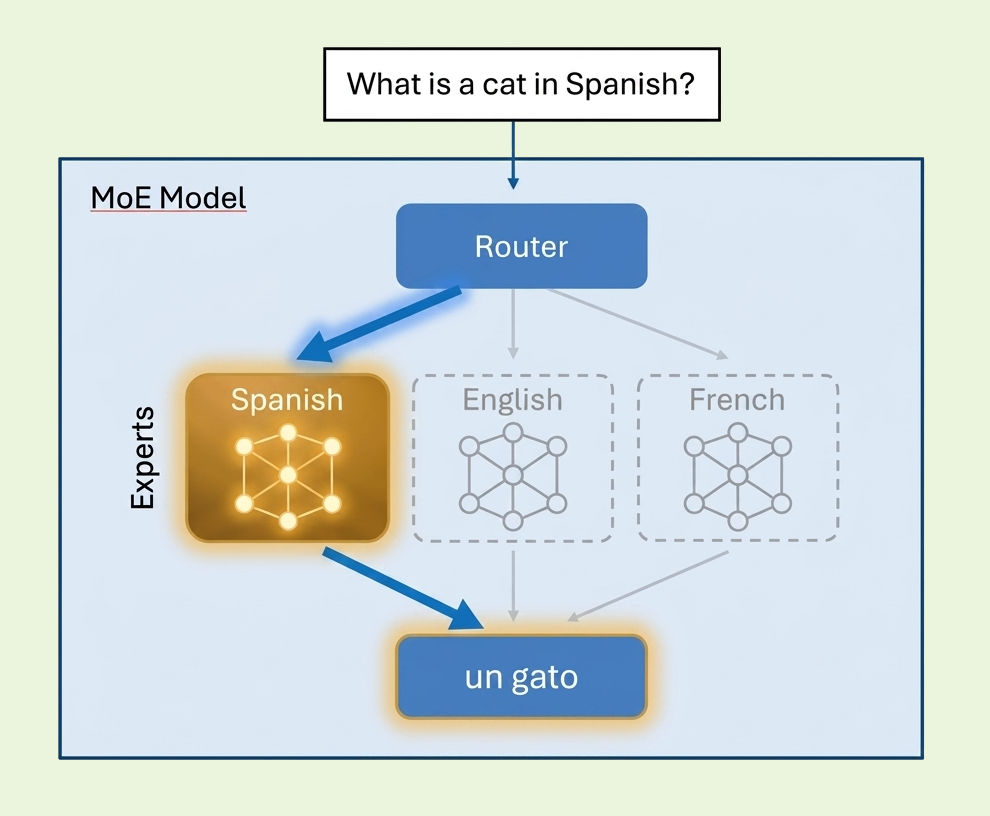
As LLMs have grown in size, the computational cost of running them has become a significant barrier. This led to the development of the Mixture-of-Experts (MoE) architecture, which is frequently reflected in modern model names through identifiers like "A3B" or "MoE."
In a traditional "dense" model, every single parameter is activated for every token the model generates. If a model has 35 billion parameters, the hardware must perform calculations involving all 35 billion weights for every word produced. Conversely, an MoE model consists of a large pool of parameters divided into specialized "experts." A routing mechanism, or "gatekeeper," determines which specific experts are best suited to handle a particular input.
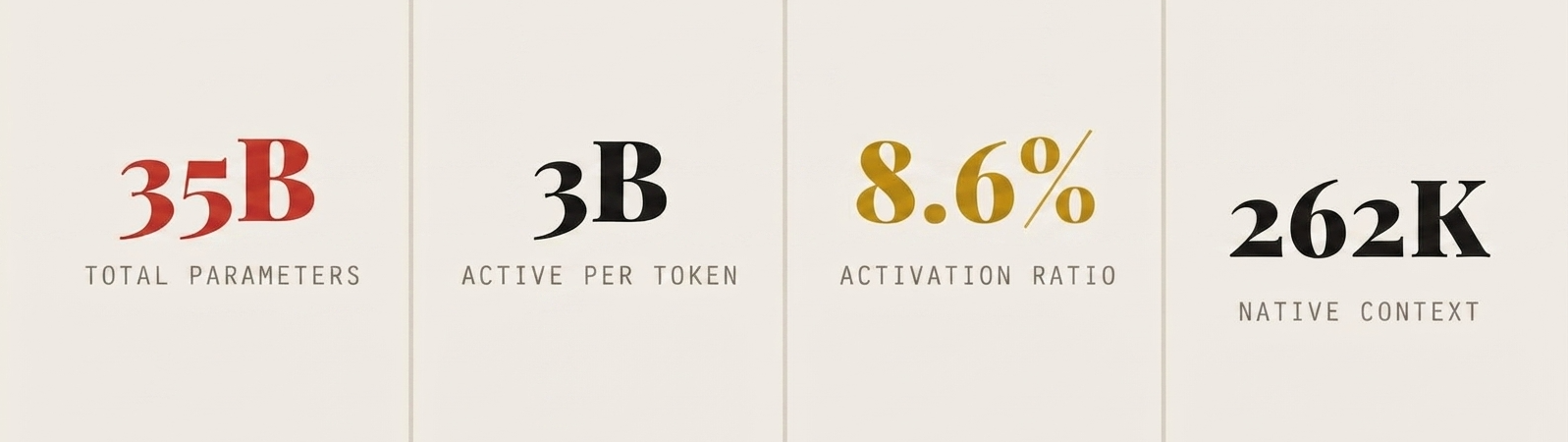
This leads to the distinction between total parameters and active parameters. In a model labeled "35B-A3B," the "35B" refers to the total number of parameters stored on the disk, while "A3B" indicates that only approximately 3 billion parameters are active during inference for any given token. This architecture allows a model to possess the vast knowledge base of a 35B model while maintaining the generation speed of a much smaller 3B model. However, users must note that while the computational load is reduced, the memory requirement remains high, as the entire 35B parameter set must still be loaded into the system’s RAM or VRAM.
Behavioral Tuning: The Distinction Between Base and Instruct Models
The training lifecycle of an LLM typically involves two distinct phases: pre-training and fine-tuning. This distinction is denoted in filenames by the terms "Base" and "Instruct" (or sometimes "It").
A "Base" model is the result of the initial pre-training phase, where the AI is exposed to massive datasets of text to learn the fundamental patterns of language. A base model is essentially a sophisticated "autocomplete" engine; if prompted with a question, it might respond with more questions or a list of related topics rather than an answer. These models are primarily used by developers as a foundation for further specialized training.
An "Instruct" model has undergone an additional phase known as Instruction Fine-Tuning (IFT) and often Reinforcement Learning from Human Feedback (RLHF). During this process, the model is trained on pairs of instructions and desired responses, teaching it to follow commands, maintain a conversational tone, and adhere to safety guidelines. For the vast majority of end-users seeking a chatbot or a coding assistant, the "Instruct" version is the appropriate choice.
Precision and Memory: The Role of FP16 and BF16
The precision at which model weights are stored determines both the accuracy of the model and its memory footprint. In their raw state, most modern models are trained using 16-bit precision, specifically FP16 (Half-Precision Floating Point) or BF16 (Brain Floating Point 16).
BF16 has become the industry standard for training because it offers a wider dynamic range than FP16, making it more stable during the complex mathematical gradients of the training process. However, storing a 35B model in 16-bit precision requires approximately 70 gigabytes of VRAM (calculated as 2 bytes per parameter). Since few consumer GPUs possess this much memory, the community relies on "quantization" to compress the models.

Quantization: Balancing Performance and Compression
Quantization is the process of reducing the number of bits used to represent each parameter weight. This is represented in filenames by "Q" followed by a number, such as Q4, Q5, or Q8.
- Q8 (8-bit): Offers near-perfect parity with the original 16-bit model but only reduces the size by half.
- Q4 (4-bit): Widely considered the "sweet spot" for local AI. It reduces the model size by 75% (e.g., a 70GB model becomes ~18GB) with only a negligible hit to reasoning capabilities.
- Q2 and Q3 (2-bit/3-bit): Significant compression that allows large models to run on very limited hardware, though often at the cost of "hallucinations" or incoherent output.
Beyond the bit-count, suffixes like "K_M" or "K_S" refer to specific quantization schemes within the "K-Quants" system developed for the llama.cpp ecosystem. "K_M" (Medium) uses higher precision for critical parts of the neural network and lower precision for less important layers, while "K_S" (Small) prioritizes file size reduction.
File Formats and Deployment: GGUF and Beyond
The final piece of the naming puzzle is the file format, with GGUF (GPT-Generated Unified Format) being the most prevalent for local execution. Developed as a successor to the older GGML format, GGUF is designed to be extensible and "forward-compatible." It allows for the storage of both the model weights and the necessary metadata (such as tokenizer settings and architecture details) in a single file.
The rise of GGUF has been instrumental in the democratization of AI, as it allows models to be run on CPUs using system RAM, or "offloaded" to GPUs for faster performance. This flexibility ensures that users without specialized enterprise hardware can still utilize state-of-the-art language models.
Chronology of Naming Standards and Community Evolution
The current naming conventions did not emerge overnight. In the early days of LLMs (circa 2022), models were often released in obscure formats with little documentation regarding their tuning or quantization. The turning point occurred with the release of Meta’s LLaMA in early 2023, which catalyzed the open-source community.
Standardization efforts were largely driven by community figures and organizations such as Hugging Face and the developers of llama.cpp. The transition from GGML to GGUF in August 2023 was a pivotal moment, forcing a more rigorous naming structure to accommodate the metadata required by the new format. More recently, the introduction of Mixture-of-Experts models by Mistral AI and Alibaba’s Qwen team necessitated the inclusion of "Active Parameter" (A) counts in filenames to prevent consumer confusion regarding hardware requirements.
Broader Implications and Future Trends
The ability to decode these model names is more than a technical skill; it is a prerequisite for participating in the "Local AI" movement. By understanding the trade-offs between parameter counts, quantization levels, and MoE architectures, users can tailor their AI deployments to their specific hardware constraints and use cases.
Looking forward, the industry is moving toward even more complex naming schemes as "multi-modal" models (capable of processing text, images, and audio) become common. We can expect to see identifiers for vision encoders and audio adapters integrated into these strings. Furthermore, as "distillation" techniques—where a large model teaches a smaller one—become more refined, new suffixes indicating the "teacher" model may become standard.
The transition from monolithic, cloud-based AI to specialized, local deployment represents a shift toward data privacy and user autonomy. As long as the "alphabet soup" of LLM naming continues to evolve, it will remain the primary map for those navigating the frontier of open-source artificial intelligence. For the end-user, a model name is no longer a barrier to entry; it is a transparent declaration of a model’s identity and its potential.