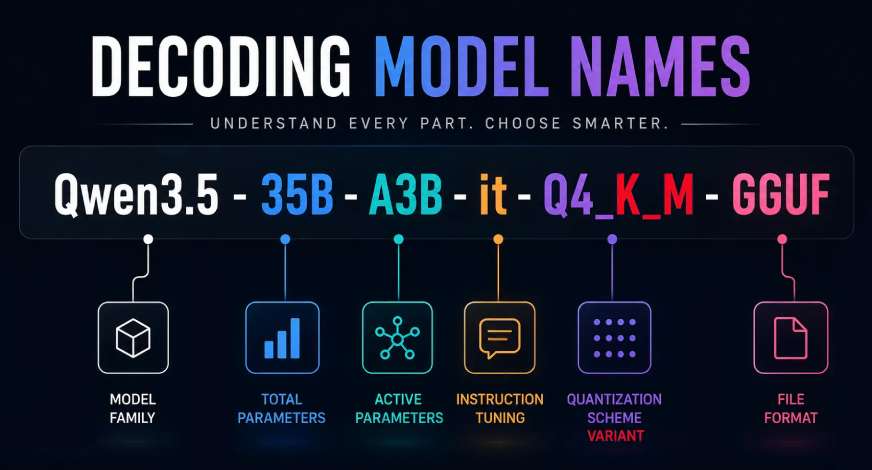
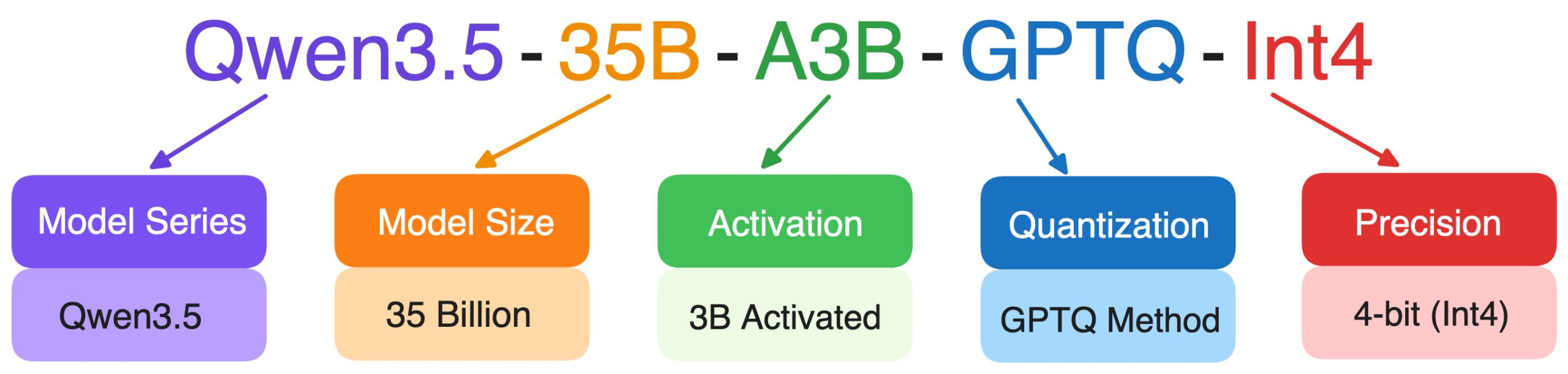
The rapid proliferation of open-weights large language models (LLMs) has transformed the landscape of artificial intelligence, moving sophisticated natural language processing from the exclusive domain of multi-billion-dollar data centers into the hands of individual developers and hobbyists. However, as the ecosystem has expanded, so too has the complexity of the nomenclature used to describe these models. A typical file hosted on platforms like Hugging Face might bear a name as convoluted as Qwen3.8-27B-A3B-It-2507-gguf-q2ks-mixed-AutoRound. To the uninitiated, this string appears to be a cryptic sequence of technical shorthand; in reality, it serves as a comprehensive specification sheet, detailing the model’s architecture, size, optimization level, and compatibility. Understanding these naming conventions is no longer optional for those seeking to deploy AI locally; it is a fundamental requirement for hardware budgeting and performance optimization.
The Foundation of Scale: Parameter Counts and the Billion-Scale Metric
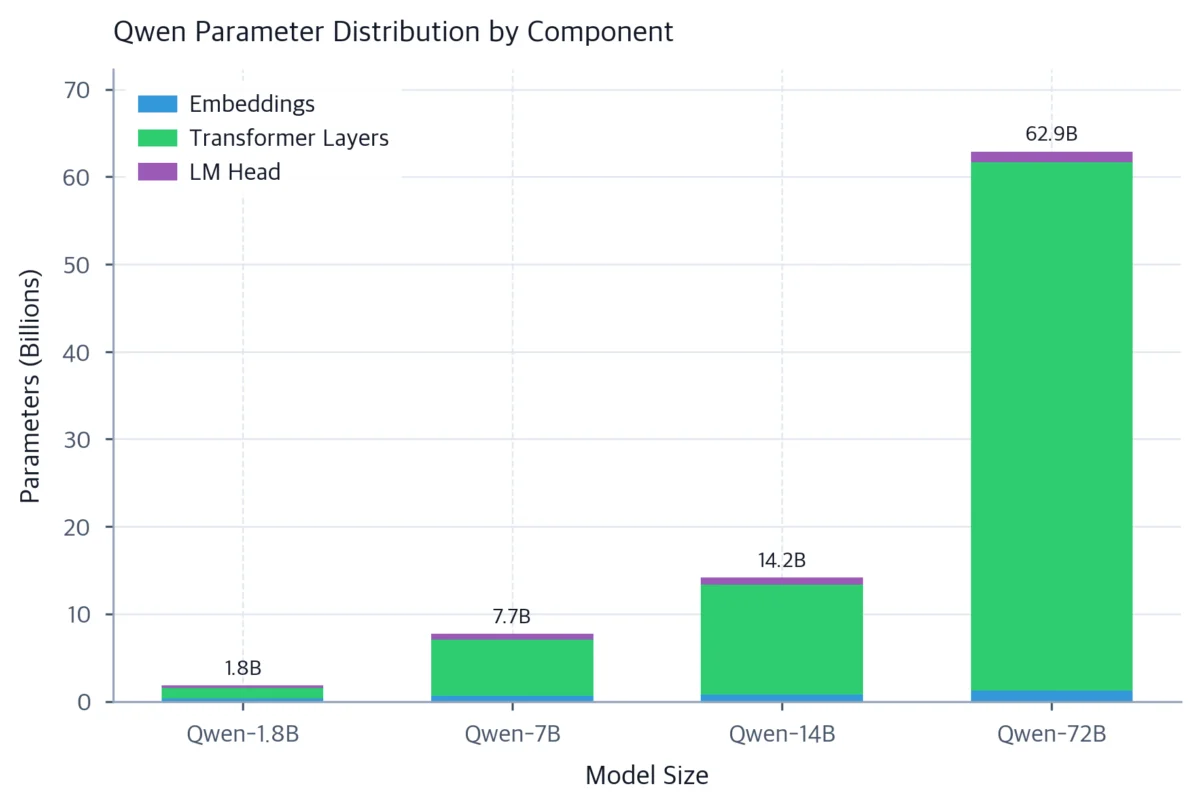
The most prominent feature of any LLM name is typically a number followed by the letter "B," such as 7B, 14B, 35B, or 70B. This figure represents the total parameter count of the model, with "B" standing for billions. Parameters are essentially the internal variables—the weights and biases—that the model has learned during its training phase. These values dictate how the model processes input text and predicts the subsequent tokens in a sequence.
In the context of local AI, the parameter count is the primary determinant of both the model’s intelligence and its hardware requirements. Generally, a higher parameter count correlates with a greater capacity for complex reasoning, broader world knowledge, and more nuanced linguistic capabilities. However, this intelligence comes at a significant computational cost. Each parameter must be stored in the computer’s memory (usually the Video Random Access Memory, or VRAM, of a GPU) during inference. A 70B model, for instance, requires substantially more memory and processing power than a 7B model. While proprietary models like Google’s Gemini or Anthropic’s Claude Opus are rumored to contain trillions of parameters, local models are typically constrained by the limits of consumer-grade hardware, making the "B" count a critical factor in model selection.
Architectural Innovation: Dense Models vs. Mixture-of-Experts (MoE)
As models have grown in size, researchers have sought ways to maintain high parameter counts without simultaneously skyrocketing the computational requirements for every single interaction. This has led to the distinction between "Dense" models and "Mixture-of-Experts" (MoE) models.
A dense model is the traditional architecture where every parameter is utilized for every token generated. If a user interacts with a 35B dense model, the system must perform calculations across all 35 billion parameters for every word the model produces. This ensures high consistency but requires massive throughput.
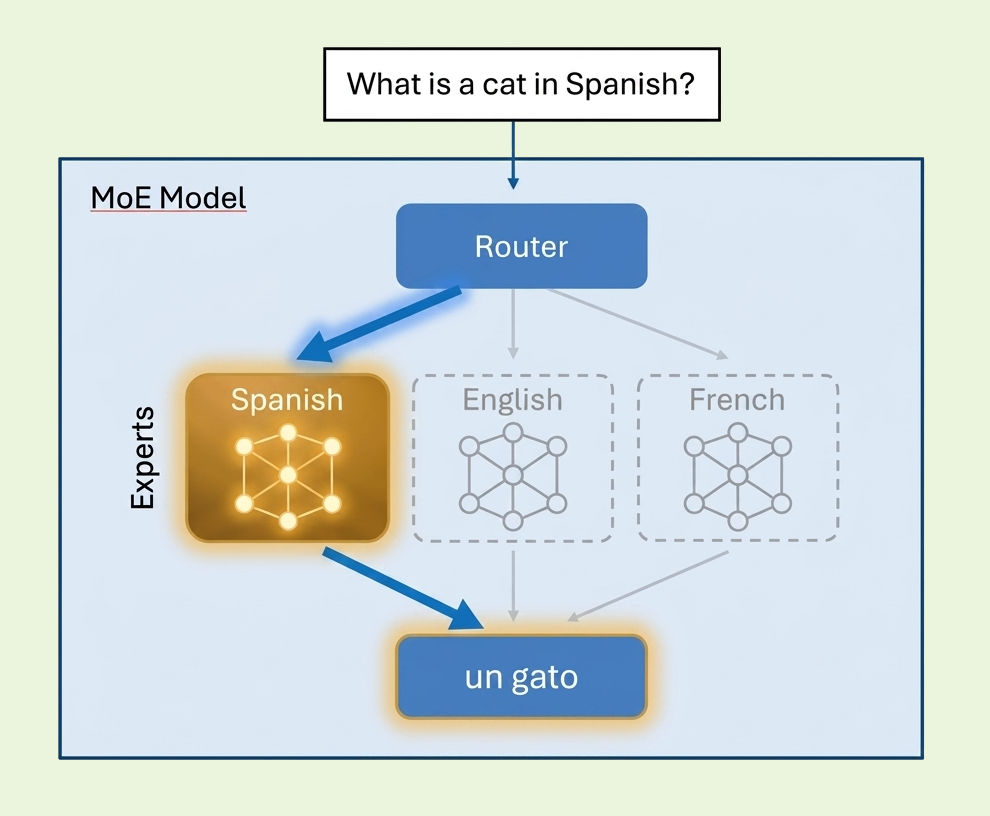
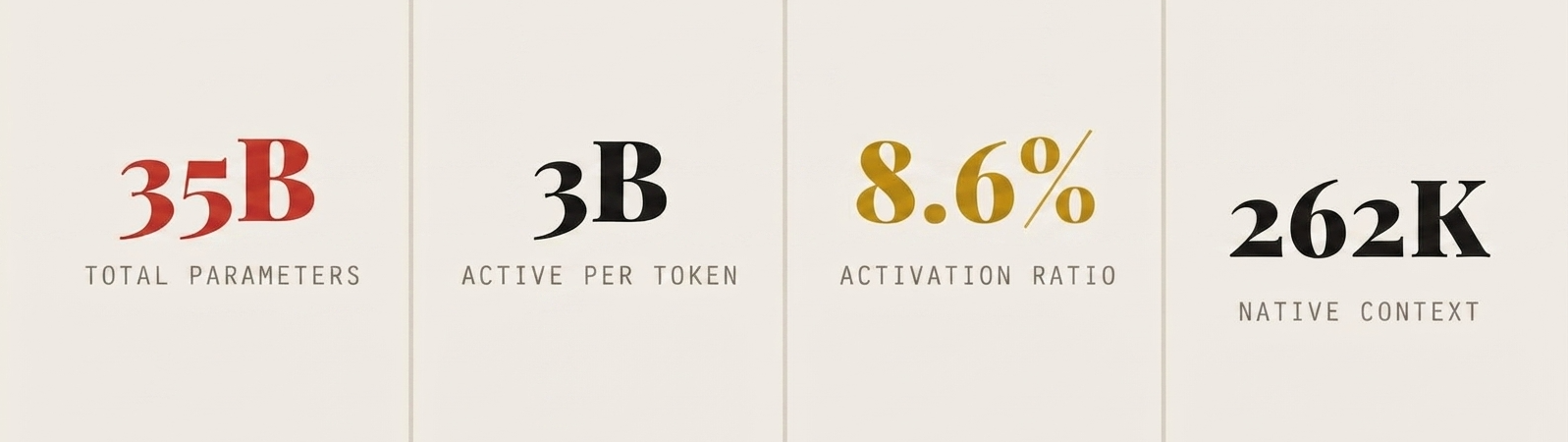
Conversely, the Mixture-of-Experts architecture, popularized by models like Mixtral and the Qwen MoE series, functions as a collection of specialized sub-networks or "experts." During inference, a sophisticated routing mechanism determines which experts are most relevant to the specific token being processed. Consequently, only a fraction of the total parameters are "active" at any given time. This is where the "A" notation in model names—such as A3B—becomes vital. In a model labeled 35B-A3B, the total pool of knowledge comprises 35 billion parameters, but only approximately 3 billion parameters are activated for each token. This allows a model to possess the vast knowledge base of a 35B system while operating with the speed and efficiency of a much smaller 3B model.
Training Heritage: The Distinction Between Base and Instruct Models
Beyond the physical architecture, a model’s name often indicates its intended use case through the labels "Base" or "Instruct" (sometimes abbreviated as "it"). This distinction refers to the post-pretraining phase of the model’s development.
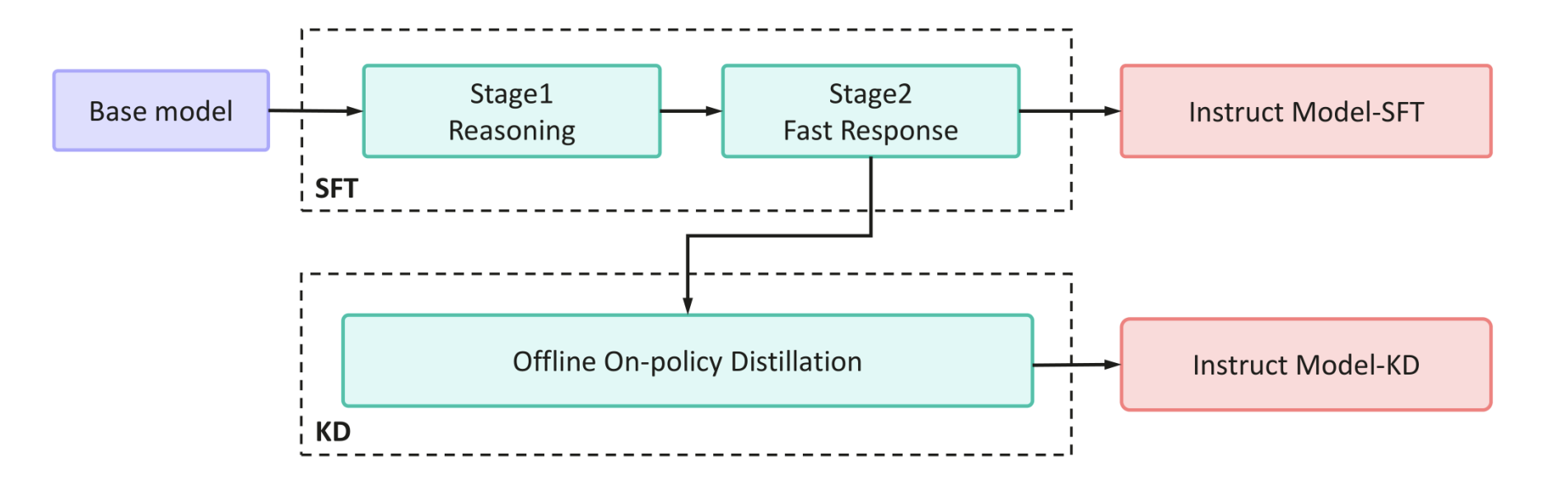
A Base model is the raw version of the AI, trained on massive datasets to predict the next token in a sequence. While highly capable of pattern recognition, a base model is often unsuited for direct interaction; if asked a question, it might respond by providing more questions or continuing the text in a non-conversational manner.
The Instruct version has undergone additional refinement through Instruction Fine-Tuning (IFT) and often Reinforcement Learning from Human Feedback (RLHF). This process teaches the model to act as a helpful assistant, follow specific formatting instructions, and maintain a conversational tone. For the vast majority of local users seeking a chatbot or a coding assistant, the "Instruct" version is the necessary choice.
Precision and Memory: The Role of FP16 and BF16
Before a model is compressed for local use, its weights are typically stored in high-precision formats known as FP16 (16-bit Floating Point) or BF16 (16-bit Bfloat). These formats determine how much digital information is used to represent each individual parameter.
FP16 has been the industry standard for years, offering a balance between precision and range. However, BF16 (Brain Floating Point), originally developed by Google Brain, has become the preferred format for modern AI workloads. While both use 16 bits, BF16 allocates more bits to the exponent and fewer to the fraction (mantissa). This allows BF16 to represent a much wider range of values, matching the range of 32-bit floats, which makes it more numerically stable during the training of deep neural networks. When a model name includes these terms, it usually indicates the original precision of the weights before any further compression.

The Quantization Revolution: Fitting Giants into Consumer Hardware
The most significant barrier to running large models locally is the sheer size of high-precision files. A 35B model stored in 16-bit precision requires approximately 70 gigabytes of VRAM—far exceeding the 8GB to 24GB found in most consumer GPUs. To solve this, the community uses "Quantization," a process of reducing the bit-depth of model weights.
Quantization levels are typically denoted by "Q" followed by a number:
- Q8 (8-bit): Minimal loss of quality, reducing the model size by half compared to 16-bit.
- Q6 (6-bit): A popular "near-lossless" middle ground.
- Q4 (4-bit): The "golden standard" for local LLMs, offering a massive reduction in size (roughly 75%) with only a minor impact on reasoning capabilities.
- Q3 and Q2 (3-bit and 2-bit): Extreme compression that significantly reduces memory requirements but often results in "hallucinations" or degraded logic.
Modern quantization schemes, such as those denoted by K_M or K_S (e.g., Q4_K_M), indicate that the compression is not uniform. These schemes use "k-means" clustering or mixed-precision approaches, where critical layers of the model are kept at higher bit-rates while less important layers are compressed more aggressively. This nuance allows a Q4_K_M model to outperform a standard Q4 model of the same size.
File Formats and the GGUF Standard
The final piece of the puzzle is the file format, with GGUF (GPT-Generated Unified Format) being the current leader in the local AI space. Developed by the creators of the llama.cpp library, GGUF succeeded the older GGML format.
GGUF is a "container" format. Unlike older formats that required separate files for metadata and weights, a GGUF file is self-contained, holding all the information the software needs to run the model, including the tokenizer settings and architecture details. It is specifically optimized for "split" inference, allowing a model to run across both a CPU’s system RAM and a GPU’s VRAM, which is essential for users who do not have enough video memory to host an entire model.
Timeline of Evolution in Model Naming
The complexity of these names has evolved in lockstep with the open-source movement. In early 2023, following the leak of Meta’s original Llama models, naming was simple (e.g., Llama-7B). By mid-2023, the introduction of the GGML format and 4-bit quantization by Georgi Gerganov necessitated the addition of quantization tags.
In 2024, the rise of Mixture-of-Experts models from Mistral AI and Alibaba’s Qwen team introduced the "Active Parameter" (A) count. Simultaneously, the development of sophisticated quantization algorithms like AutoRound and AWQ (Activation-aware Weight Quantization) added further layers to the naming convention, as developers sought to highlight the specific optimization techniques used to maintain model quality at low bit-depths.
Implications and Future Outlook
The "alphabet soup" of model naming is a testament to the incredible pace of innovation in the open-source AI community. By encoding technical specifications directly into filenames, developers allow users to make informed decisions about hardware compatibility without needing to read through pages of documentation.
As we move toward 2025, the industry expects further refinement. We are likely to see the integration of NPU (Neural Processing Unit) specific tags as dedicated AI hardware becomes standard in laptops. Furthermore, as "context windows" (the amount of text a model can remember at once) expand to millions of tokens, we may see context-limit indicators (e.g., 128k, 1M) become a permanent fixture in the naming hierarchy.
For the end user, the logic remains consistent: read the name from left to right to understand the model’s identity, its total scale, its efficiency via MoE, its behavioral tuning, its memory compression, and finally, its technical file format. This transparency is the cornerstone of the decentralized AI movement, ensuring that the power of large language models remains accessible to anyone with a computer and the knowledge to decode a single line of text.