The release of the inaugural Goalkeepers report in 2017 by the Bill and Melinda Gates Foundation marked a significant shift in how global developmental progress is tracked, analyzed, and communicated to the public. Titled "Goalkeepers: The Stories Behind the Data," the report was designed to accelerate progress toward the United Nations Sustainable Development Goals (SDGs) by diagnosing urgent problems, identifying promising solutions, and spreading best practices. Central to this data-driven initiative is the fight against maternal mortality, a metric that serves as a critical barometer for the overall health and stability of a nation’s healthcare system. By synthesizing vast datasets from organizations such as UNICEF and the World Health Organization (WHO), the report highlights both the staggering challenges that remain and the remarkable success stories that offer a roadmap for future interventions.
The Global Mandate for Maternal Health and the Goalkeepers Initiative
The Goalkeepers report emerged at a pivotal moment in international development, two years after the transition from the Millennium Development Goals (MDGs) to the Sustainable Development Goals (SDGs). While the MDGs (1990–2015) saw significant reductions in maternal deaths, the SDGs set a more ambitious target: reducing the global maternal mortality ratio (MMR) to less than 70 per 100,000 live births by 2030. Maternal mortality is defined by the WHO as the death of a woman while pregnant or within 42 days of termination of pregnancy, irrespective of the duration and site of the pregnancy, from any cause related to or aggravated by the pregnancy or its management.
In 2015, UNICEF and the Maternal Mortality Estimation Inter-Agency Group (MMEIG) recorded approximately 302,530 maternal deaths globally. This figure represents an average of 168.7 deaths per 100,000 live births. The Goalkeepers 2017 report emphasizes that maternal mortality is not merely a medical failure but a systemic one. Bill and Melinda Gates have frequently noted that maternal mortality is a devastating force that destabilizes families and puts children at immediate risk. Statistics indicate that when a mother dies, her surviving children are significantly less likely to survive, stay in school, or receive adequate nutrition, creating a cycle of poverty and vulnerability that can span generations.
A Chronology of Progress: From 1990 to the SDG Era
To understand the current landscape of maternal health, it is necessary to examine the timeline of global interventions and data collection.
- 1990–2000: The baseline era. Global maternal mortality was exceptionally high, particularly in sub-Saharan Africa and South Asia. Data collection was often fragmented, and many deaths went unrecorded.
- 2000: The Millennium Declaration is signed. MDG 5 specifically targeted a 75% reduction in the maternal mortality ratio by 2015.
- 2003: Ethiopia launches its Health Extension Program (HEP), a landmark initiative that would eventually become a primary case study for the Goalkeepers report.
- 2010: The UN Secretary-General launches the "Every Woman Every Child" movement to mobilize global action.
- 2015: The conclusion of the MDG era. While the 75% reduction target was not met globally, the MMR had fallen by approximately 44% since 1990. The SDGs are adopted.
- 2017: The first Goalkeepers report is published, utilizing advanced data visualization to make the case for continued investment in global health.
This chronology illustrates a shift from broad awareness to specific, data-backed interventions. The Goalkeepers report serves as the modern iteration of this timeline, providing a platform where data meets storytelling to drive political and financial commitment.
Case Study: The Transformation of Maternal Healthcare in Ethiopia
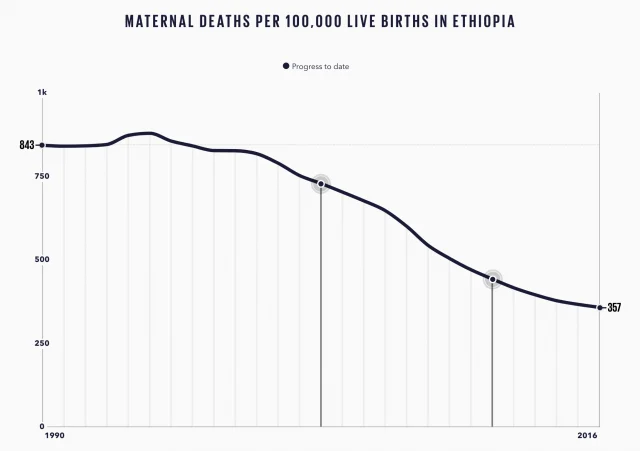
One of the most compelling narratives within the Goalkeepers 2017 report is the case study of Ethiopia. The nation has emerged as a leader in maternal health improvements within the sub-Saharan region. According to the report and supporting UNICEF data, Ethiopia’s maternal mortality ratio plummeted from 843 deaths per 100,000 live births in 1990 to 357 in 2015. This represents more than a 50% reduction, a feat achieved despite significant economic constraints.
The success in Ethiopia is largely attributed to the Health Extension Program (HEP), which deployed over 38,000 health extension workers across the country. These workers, primarily women, were trained to provide basic health services, including prenatal care, immunization, and family planning, directly within rural communities. By bringing healthcare to the doorstep of the population, Ethiopia addressed the "three delays" that contribute to maternal death: delay in seeking care, delay in reaching a health facility, and delay in receiving adequate treatment at the facility.
The Goalkeepers report utilizes simple yet powerful visualizations to contrast Ethiopia’s trajectory with global trends. The data suggests that Ethiopia’s focused investment in primary healthcare and community-based workers is a model that can be replicated in other low-income settings. However, the report also notes that even with this progress, 357 deaths per 100,000 live births remains unacceptably high compared to the single-digit ratios found in developed nations.
Analyzing the UNICEF Maternal Mortality Dataset
To provide broader context to the Goalkeepers report, an analysis of the raw UNICEF maternal mortality dataset reveals the depth of the global disparity. The data, which is publicly available through the UNICEF data portal, allows for a granular look at regional performance and the factors influencing mortality rates.
Regional Disparities and the "Long Tail" of Mortality
While the global average is 168.7 deaths per 100,000 live births, the regional breakdown is stark. Sub-Saharan Africa accounts for roughly 66% of all maternal deaths. In some countries, the MMR exceeds 500 or even 800. Conversely, in most high-income countries, the MMR is below 10. This disparity highlights that the vast majority of maternal deaths are preventable with access to skilled birth attendants, emergency obstetric care, and clean water.
The Role of Skilled Birth Attendants
UNICEF data indicates a direct correlation between the presence of skilled health personnel during birth and lower mortality rates. In regions where over 90% of births are attended by professionals, maternal mortality is negligible. In parts of South Asia and Africa where this figure drops below 50%, the mortality rates climb exponentially.
Data Transparency and Visualization
The use of tools like Google Data Studio to visualize UNICEF’s xlsx datasets has democratized the interpretation of global health trends. By converting complex spreadsheets into interactive charts and geographic heat maps, researchers and the public can identify "outliers"—countries that are performing significantly better or worse than their economic peers. This transparency is a core tenet of the Goalkeepers philosophy: using data to hold leaders accountable.
Official Responses and Strategic Goals
The Bill and Melinda Gates Foundation has positioned the Goalkeepers report as an annual "report card" for the world. In response to the 2017 findings, Bill Gates emphasized that progress is possible but not inevitable. He warned that "poverty and disease are not just problems of the past; they are choices we make today."
The World Health Organization (WHO) has echoed these sentiments, stressing that achieving the SDG target of 70 deaths per 100,000 live births will require an acceleration of current efforts. The WHO’s "Strategies toward Ending Preventable Maternal Mortality" (EPMM) focuses on addressing the social, political, and economic determinants of health. Official statements from UNICEF have also highlighted the need for better "real-time" data, as many maternal deaths in remote areas still go uncounted, leading to an underestimation of the crisis in certain regions.
Broader Impact and Future Implications
The implications of the Goalkeepers 2017 report and the subsequent analysis of maternal mortality data extend beyond healthcare. They touch upon economics, human rights, and technology.
Economic Stability
Economists argue that maternal mortality is a significant drain on a nation’s GDP. The loss of productive members of society and the subsequent cost of caring for motherless children create a "fragility trap." Conversely, investing in maternal health has a high return on investment (ROI). For every dollar spent on maternal and newborn health, the economic benefits can be up to nine times greater.
The Digital Divide in Health Data
The reliance on data visualization tools highlights a growing need for "data literacy" in the development sector. As seen in the Goalkeepers report, the ability to interpret trends—such as the horizontal bar charts showing the long list of countries struggling with high MMR—is essential for policy advocacy. There is an increasing push for developing nations to digitize their health records to provide more accurate data for global reports.
Future Challenges: Conflict and Climate Change
Looking ahead, the progress noted in the 2017 report faces new threats. Conflict and political instability in regions like the Sahel or the Middle East have been shown to immediately reverse gains in maternal health. Additionally, climate change-induced disasters disrupt healthcare infrastructure, making it harder for women to reach facilities during emergencies.
Conclusion
The Goalkeepers 2017 report, supported by the rigorous data provided by UNICEF, serves as both a celebration of human achievement and a sobering reminder of the work that remains. The story of Ethiopia’s success proves that targeted interventions and political will can overcome systemic barriers. However, the global statistics remain a call to action. By utilizing data not just as a collection of numbers, but as a narrative tool, the international community can better diagnose the "urgent problems" Bill and Melinda Gates identified and continue the fight to ensure that no woman dies while bringing life into the world. The transition from data to insight, and finally to action, remains the most critical path toward achieving the 2030 Sustainable Development Goals.