Baidu, the Chinese technology conglomerate often referred to as the "Google of China," has officially released Unlimited-OCR, a sophisticated vision-language model designed to transcribe extensive, multi-page documents with unprecedented accuracy and speed. This release follows the momentum generated by DeepSeek OCR, representing a significant iterative leap in how artificial intelligence handles the complex task of optical character recognition (OCR) within long-context environments. By addressing the fundamental computational bottlenecks that have historically plagued large-scale document processing, Baidu’s Unlimited-OCR establishes a new benchmark for enterprise-grade document intelligence.
The development of Unlimited-OCR comes at a time when the demand for high-fidelity document digitization is surging across industries such as legal, healthcare, and finance. While traditional OCR systems were limited to character-by-character recognition, modern vision-language models (VLMs) treat document pages as visual inputs to be interpreted by a transformer-based architecture. However, as documents scale from single pages to hundreds of pages, the computational resources required to maintain performance often become prohibitive. Baidu’s solution focuses on the two primary vectors of this challenge: input token management and output generation efficiency.
The Evolution of Document Processing: From Pixels to Visual Tokens
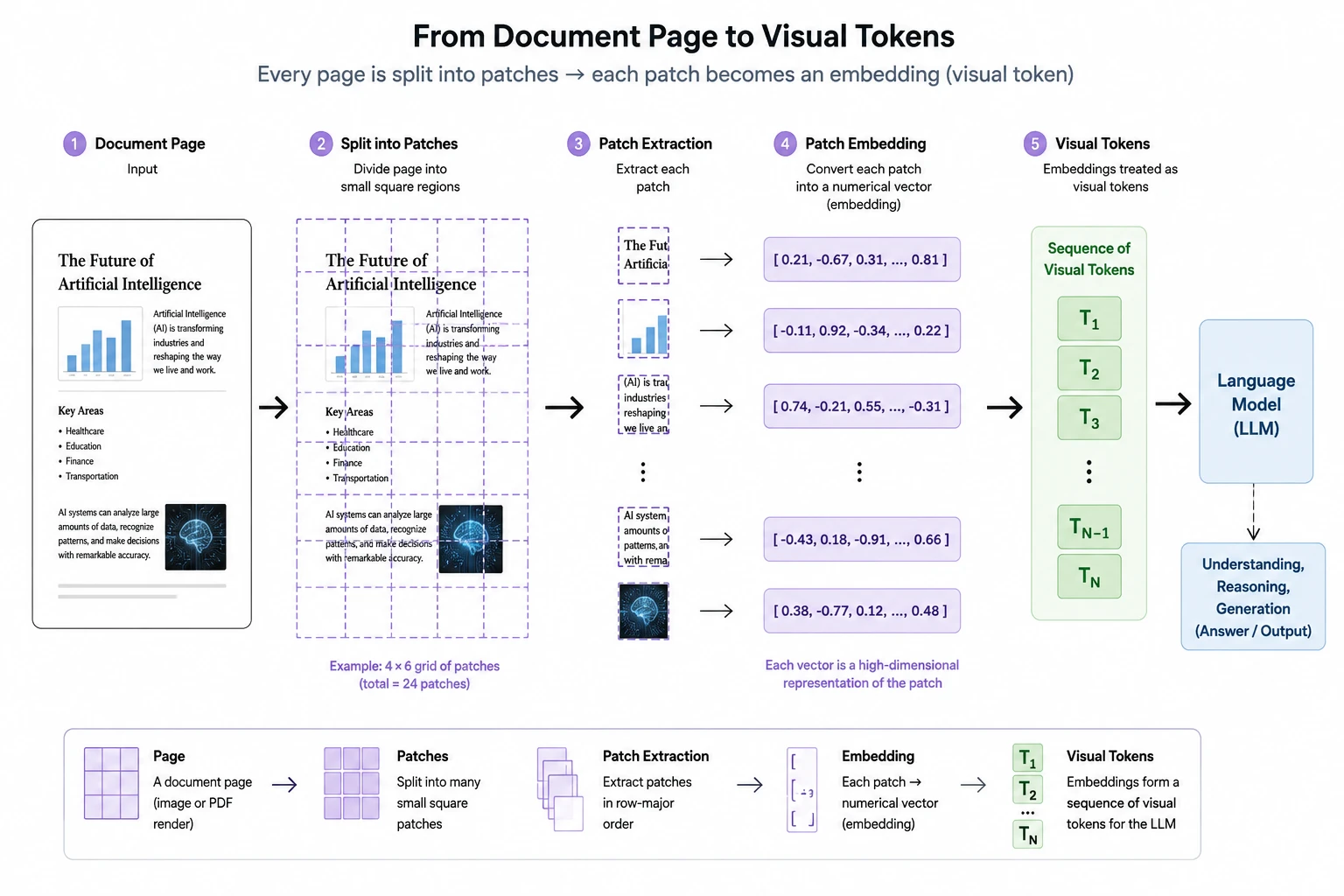
To understand the innovation behind Unlimited-OCR, one must first examine the shift in how modern AI perceives a document. Unlike legacy systems that relied on edge detection and pattern matching, contemporary VLMs utilize a patch-based representation system. Every document page is segmented into a grid of square regions known as patches. Each patch is mathematically converted into a numerical embedding—a visual token—that a language model can process in a manner similar to how it processes text.
This approach allows the model to understand the spatial relationship between text, tables, and images. However, the granularity of this grid presents a significant trade-off. High-resolution scanning requires more patches, leading to a higher number of visual tokens. While this increases the model’s ability to recognize small fonts or intricate diagrams, it exponentially raises the initial computational cost of encoding the document. For a 50-page technical manual, the resulting sequence of visual tokens can easily exceed the context window of standard models, leading to performance degradation or total system failure.
The Dual Bottleneck: Input and Output Tokens
Baidu’s research identified that long-document OCR faces two distinct computational hurdles. The first is the "Input Side," where the system must encode the visual information of the entire document. The second, and arguably more critical, is the "Output Side," which involves the autoregressive generation of the transcription.

On the input side, a high-resolution page can generate thousands of tokens. Processing a document with dozens of pages creates an enormous initial computational load. On the output side, the model must generate the text token by token. In standard transformer architectures, every newly generated token is stored in the Key-Value (KV) cache. This cache allows the model to "remember" what it has already written to ensure linguistic coherence. However, as the transcription of a long document grows, the KV cache expands linearly.
As the KV cache grows, it consumes increasing amounts of GPU memory. In extreme cases, transcribing a 100-page document can result in a KV cache that occupies several gigabytes of memory, eventually exceeding the hardware’s capacity and causing the system to crash or slow down significantly. This "memory wall" has been the primary obstacle preventing the deployment of VLMs for massive document processing tasks.
The DeepSeek Foundation and Optical Compression
Baidu’s Unlimited-OCR builds upon the architectural foundations laid by DeepSeek OCR. One of the primary innovations inherited and refined from DeepSeek is the concept of optical compression. To solve the input-side bottleneck, DeepSeek introduced a strategy that compresses high-resolution images into a significantly smaller number of visual tokens.
For example, a document page that would typically require 1,000 tokens can be compressed by a factor of 16, resulting in only 64 to 128 tokens. This process, known as optical compression, allows the model to retain approximately 97% accuracy even at a 10x compression rate. This ensures that the model receives the necessary visual details for accurate transcription without overwhelming the system with redundant data from white spaces or margins. Baidu has integrated this visual encoder—specifically the "Base" and "Gundam" variants—into Unlimited-OCR, providing a highly efficient front-end for document ingestion.
Reference Sliding Window Attention: The Core Innovation
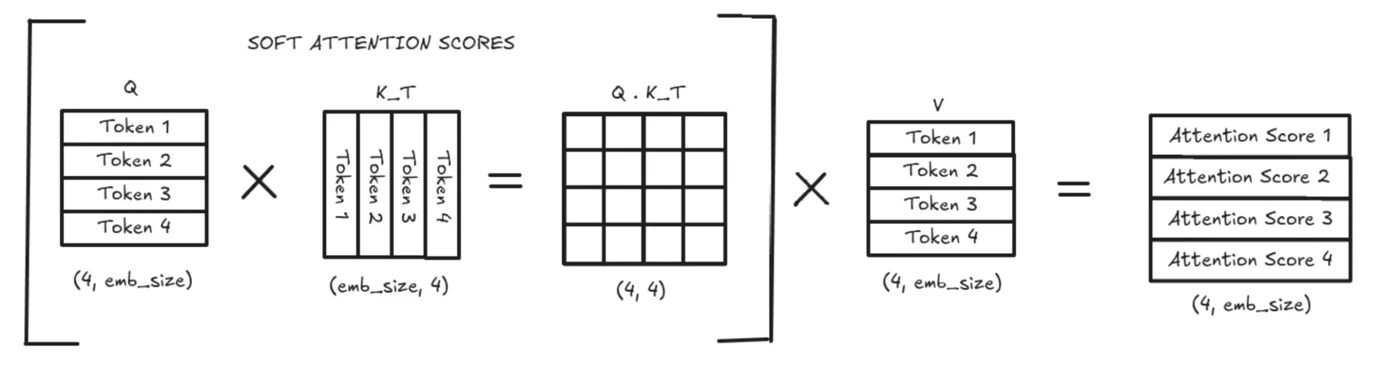
While optical compression manages the input, Baidu’s primary contribution lies in solving the output-side bottleneck through a mechanism called Reference Sliding Window Attention (R-SWA). This technique is based on a fundamental observation of human behavior during transcription: when a person copies a text, they do not need to keep every word they have already written in their immediate active memory. Instead, they focus on the source document (the reference) and the last few words they wrote to maintain flow.
Baidu translated this logic into the R-SWA architecture. Traditional transformer models allow every new token to attend to every previous token in the sequence. In R-SWA, the attention mechanism is bifurcated into two distinct segments:
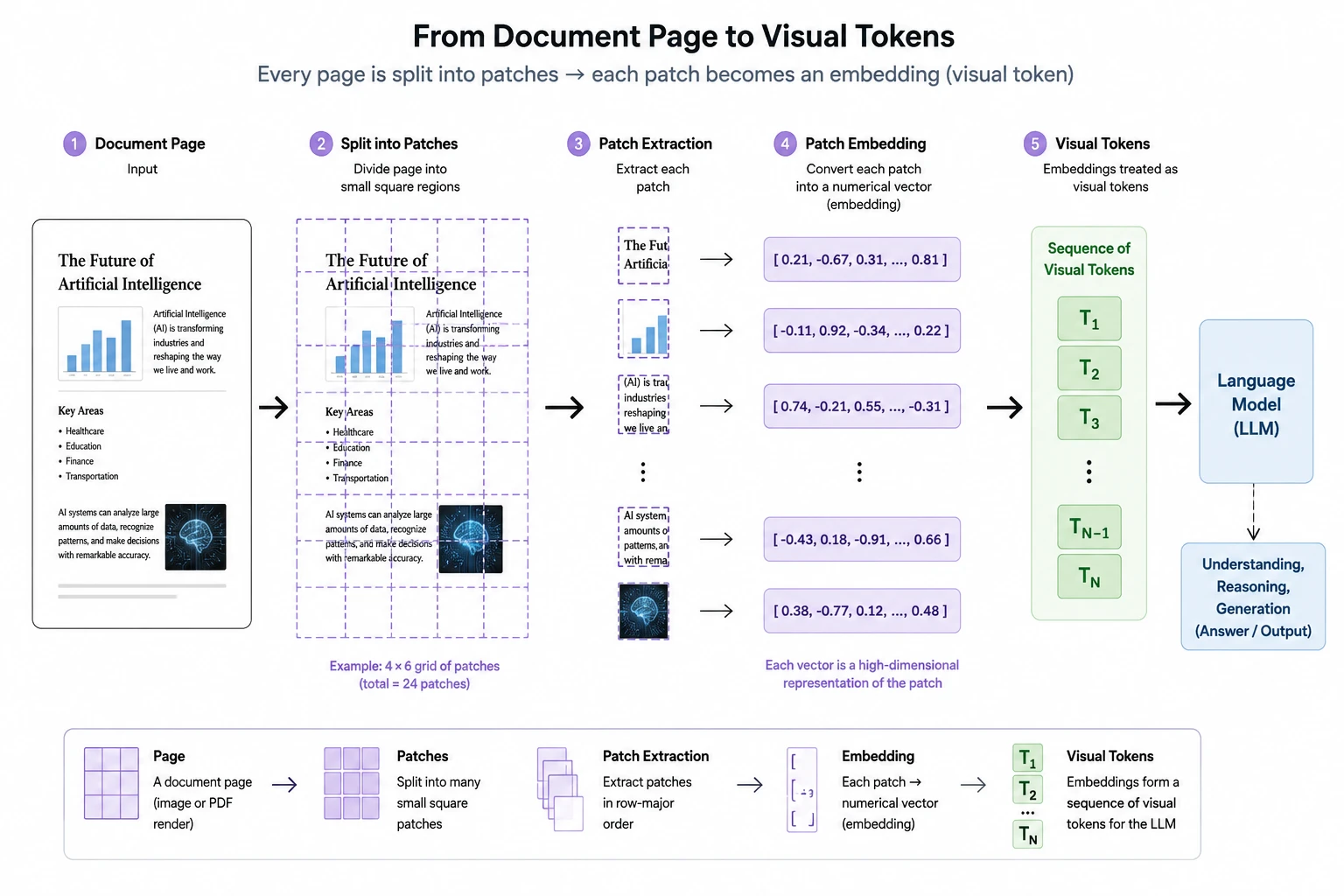
- The Static Reference Prefix: This segment contains the visual tokens of the document pages and the initial system prompt. These tokens remain permanently in the attention window, ensuring the model never "forgets" the source material it is transcribing.
- The Causal Sliding Window: This segment contains only a fixed number of the most recently generated output tokens—typically the last 128 tokens. As the model generates new text, the window slides forward, discarding older output tokens from the active KV cache.
By implementing R-SWA, the total memory footprint of the KV cache becomes fixed ($m + n$, where $m$ is the reference size and $n$ is the window size). Whether the model is transcribing the first page or the thousandth page, the memory usage remains constant. This architectural shift effectively removes the "unlimited" growth of memory consumption, justifying the model’s name.
Implementation and Technical Performance
Baidu has open-sourced Unlimited-OCR, providing weights and inference code to the global research community. The model is compatible with major frameworks, including Hugging Face Transformers and vLLM. For production environments, the integration with vLLM is particularly significant, as it allows for the deployment of Unlimited-OCR as a high-throughput API.
Technical benchmarks indicate that Unlimited-OCR maintains a stable inference speed even as the document length increases. In comparative tests against standard VLM-based OCR systems, Unlimited-OCR demonstrated a significant reduction in time-to-first-token and total generation time for documents exceeding 20 pages. Furthermore, the model’s ability to run on consumer-grade hardware—thanks to the fixed KV cache—democratizes access to high-end document intelligence tools that were previously the exclusive domain of large-scale data centers.
To deploy the model, users can utilize the following simplified structure within the Transformers library:
import torch
from transformers import AutoModel, AutoTokenizer

model_name = "baidu/Unlimited-OCR"
tokenizer = AutoTokenizer.from_pretrained(model_name, trust_remote_code=True)
model = AutoModel.from_pretrained(model_name, trust_remote_code=True, device_map="auto")
This ease of use, combined with the model’s architectural efficiency, positions it as a versatile tool for developers building Retrieval-Augmented Generation (RAG) pipelines, where the accurate ingestion of long PDF documents is a critical first step.
Chronology of Development and Industry Context
The release of Unlimited-OCR follows a year of rapid advancement in the VLM sector. In late 2023, the focus of the AI community shifted from pure text-based LLMs to multimodal models. By mid-2024, DeepSeek’s release of its OCR-specific model highlighted the inefficiencies of using general-purpose VLMs for document transcription. Baidu’s Unlimited-OCR, released in late 2024, represents the latest chapter in this chronology, moving the industry focus from "how much can we read" to "how efficiently can we read it."
Industry reactions have been largely positive, with data engineers noting that the R-SWA mechanism solves a specific "pain point" in document processing pipelines. Analysts suggest that this technology will significantly lower the operational costs for companies managing massive archives of digitized records.
Broader Implications and Future Outlook
The implications of Baidu’s Unlimited-OCR extend beyond simple transcription. By proving that "intelligent forgetting"—via the sliding window—can coexist with "perfect recall"—via the static reference prefix—Baidu has provided a blueprint for other long-context AI tasks. This methodology could eventually be applied to video analysis, where a model must maintain a "reference" of the entire video while focusing its "attention" on the current frame.
In the enterprise sector, Unlimited-OCR is expected to accelerate the automation of complex workflows. For instance, in the legal profession, the ability to transcribe and analyze 500-page discovery documents without memory-related interruptions could reduce manual labor by thousands of hours. Similarly, in the financial sector, the model can be used to ingest decades of annual reports into a searchable database with high precision.
Ultimately, Unlimited-OCR represents a shift in the AI development philosophy. It acknowledges that model performance is not just a result of scale, but of the intelligent management of information. By prioritizing the relationship between the source document and the generated output, Baidu has moved the industry closer to a future where document length is no longer a barrier to artificial intelligence.