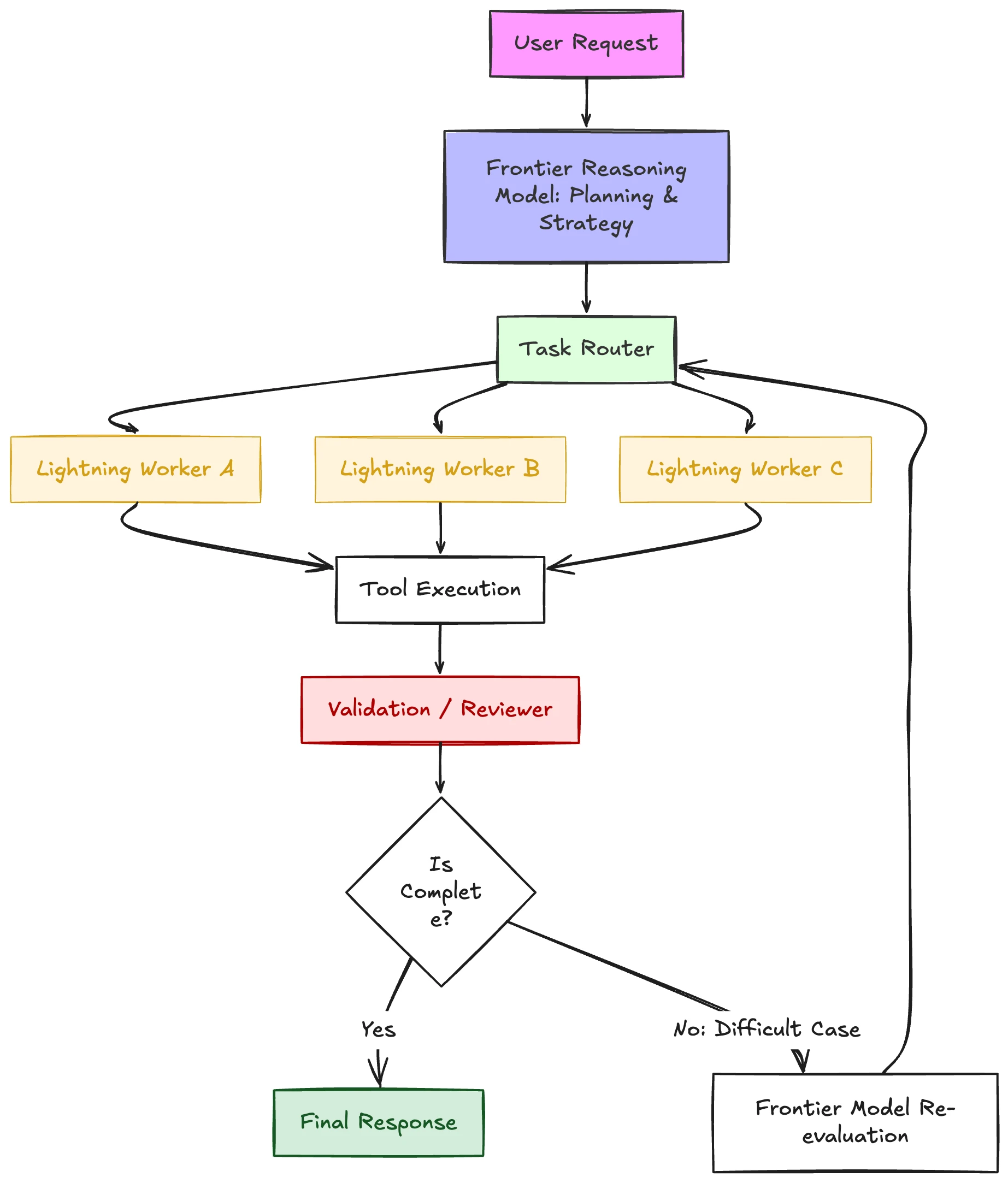
The global semiconductor and artificial intelligence leader NVIDIA has officially released Nemotron 3.5 Lightning, a specialized 30-billion parameter model engineered to serve as the high-speed execution layer for complex agentic workflows. Launched on August 11, 2026, the model addresses a critical bottleneck in the deployment of long-running autonomous AI agents: the tendency of frontier reasoning models to be prohibitively slow and expensive when performing routine, high-volume tasks. By utilizing a hybrid architecture that combines state-space modeling with transformer-based attention, NVIDIA aims to decouple the "thinking" process of AI from the "doing" process, allowing developers to route difficult reasoning to flagship models while delegating execution steps to Nemotron 3.5 Lightning.
The Strategic Necessity of an Execution-Focused Model
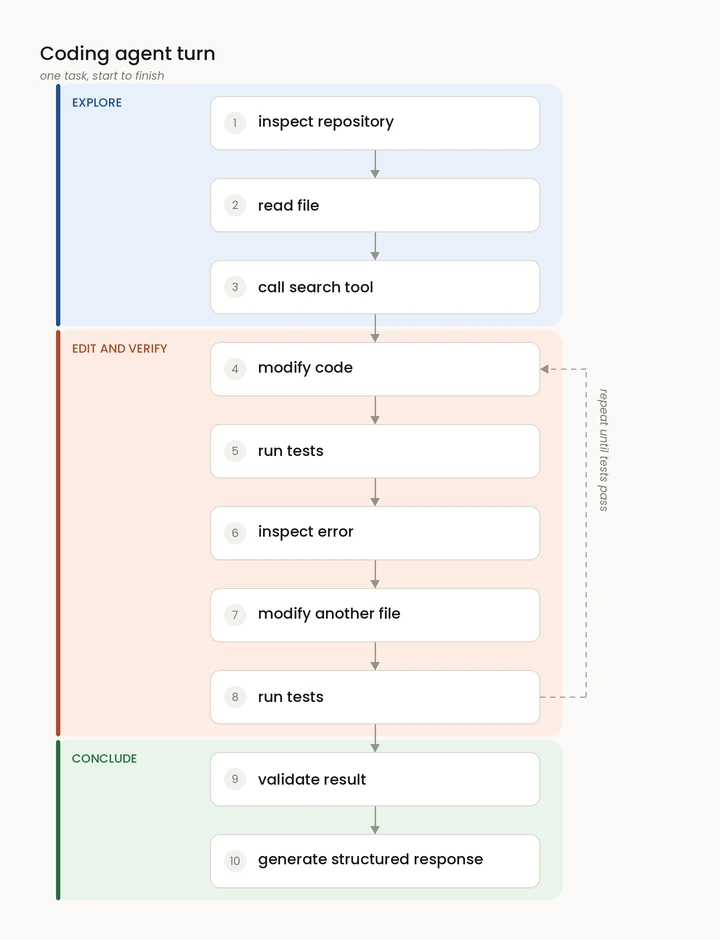
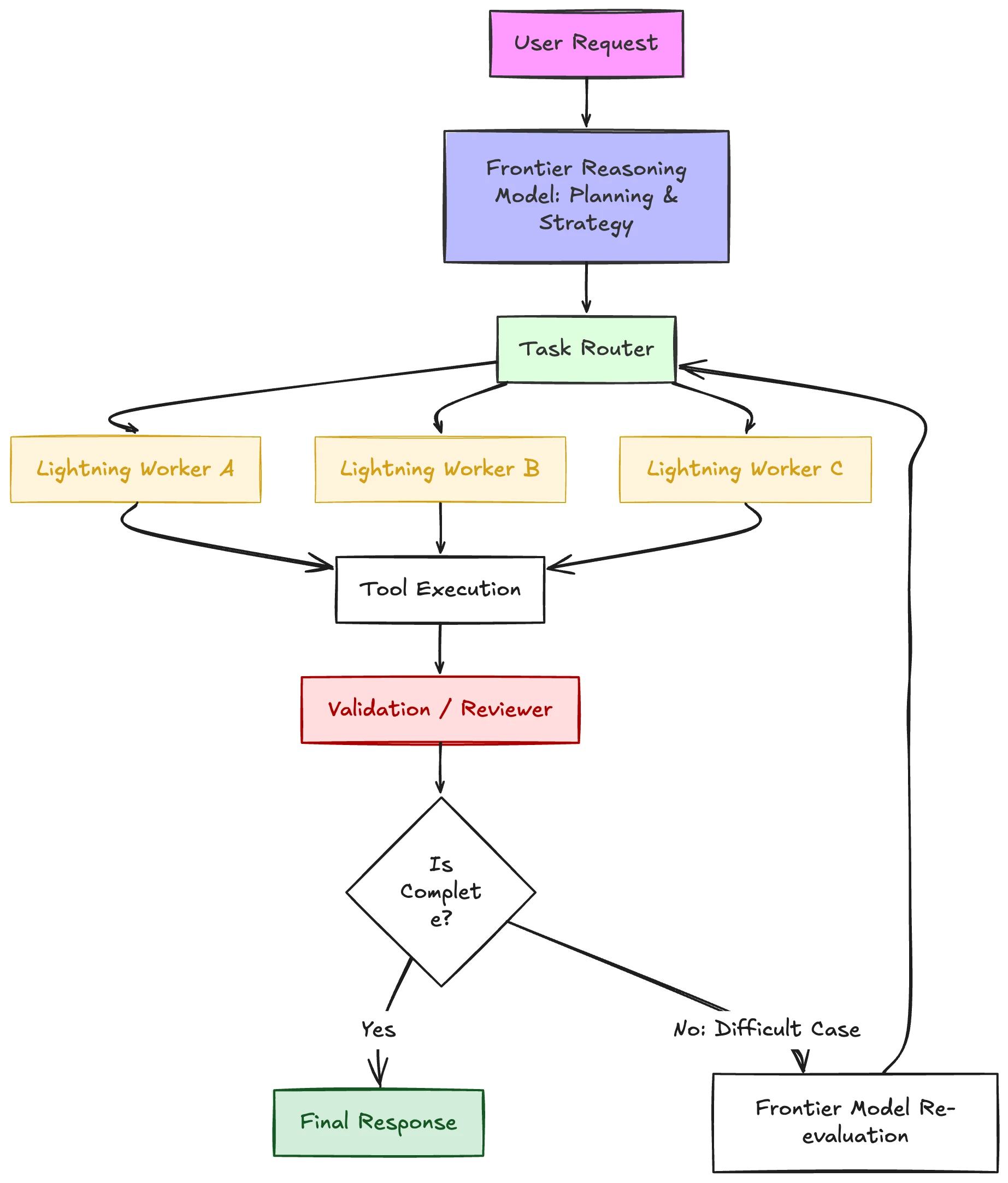
In the current landscape of generative AI, autonomous agents are increasingly tasked with multi-step operations that involve planning, tool usage, file manipulation, and iterative validation. Industry data suggests that in a typical coding or research agent loop, less than 10% of the workload involves high-level strategic reasoning. The remaining 90% consists of routine actions such as reading files, formatting JSON outputs, executing shell commands, and verifying syntax.
Historically, developers have used "frontier" models—such as GPT-4o or Claude 3.5 Sonnet—for the entirety of these loops. However, this approach introduces significant latency and high operational costs. NVIDIA’s introduction of Nemotron 3.5 Lightning proposes a tiered architectural shift. Under this paradigm, a frontier model acts as the "Architect," creating a high-level plan, while Nemotron 3.5 Lightning acts as the "Worker," executing the granular steps. This division of labor is designed to maximize throughput without compromising the overall success rate of the agentic system.
Architectural Innovation: The Hybrid Foundation
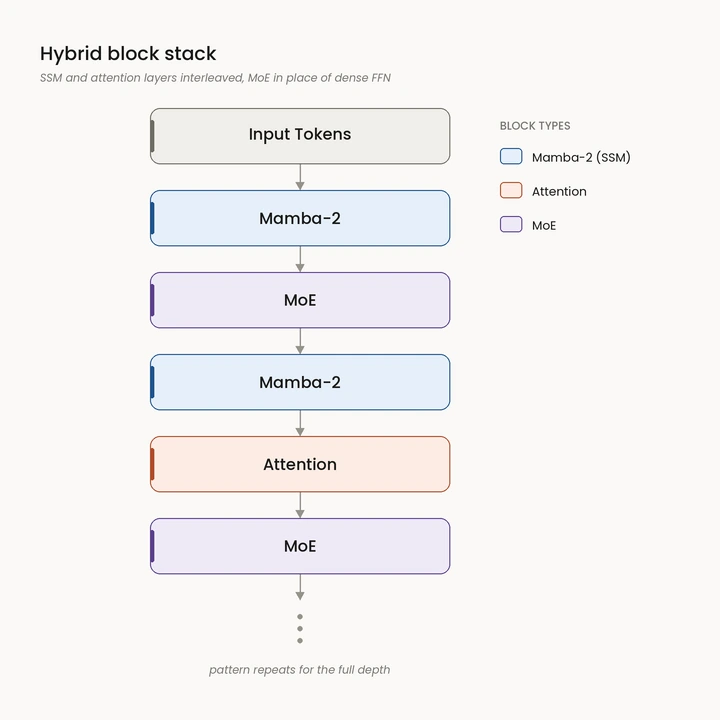
The technical foundation of Nemotron 3.5 Lightning is distinct from traditional dense Transformers. NVIDIA has implemented a sophisticated stack of four primary technologies to achieve its performance benchmarks:
1. Sparse Mixture-of-Experts (MoE)
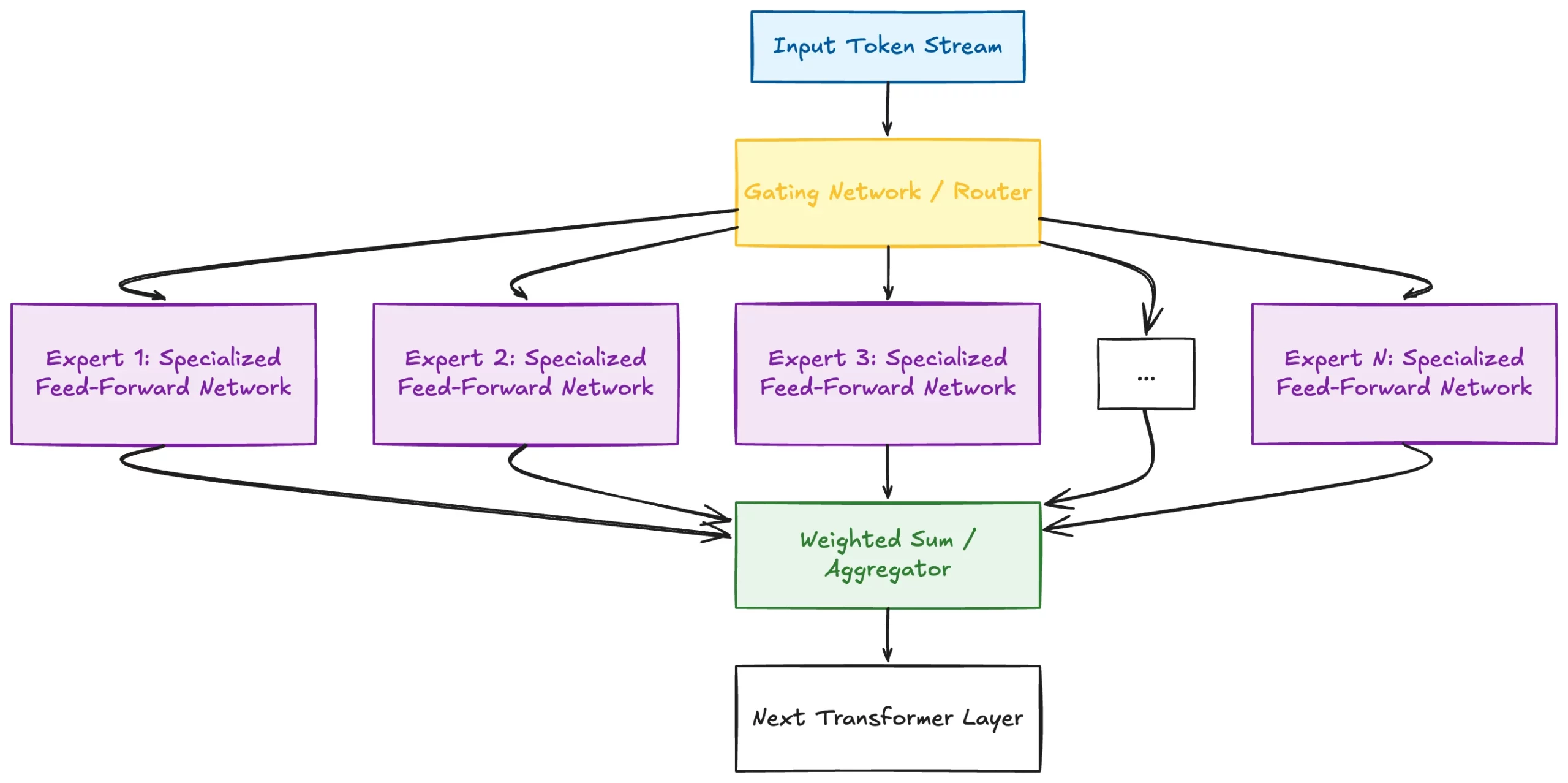
While the model contains 30 billion total parameters, it utilizes a Mixture-of-Experts (MoE) configuration that activates only approximately 3 billion parameters per token. The architecture features 128 routed experts alongside a shared expert, with six experts selected for each token. This allows the model to maintain the broad knowledge base of a 30B model while operating with the inference speed and computational requirements of a much smaller 3B model.
2. Mamba-2 and Selective Attention
A significant departure from standard LLM design is the integration of Mamba-2 layers. Traditional Transformers rely on self-attention mechanisms where the computational cost grows quadratically with sequence length. Mamba-2, based on structured state-space models (SSMs), offers linear scaling, making it exceptionally efficient for the long-context windows required by modern agents. NVIDIA does not abandon attention entirely; instead, it uses "Selective Attention" layers intermittently. This hybrid approach ensures the model can still perform global token comparisons—critical for tasks like needle-in-a-haystack retrieval—while benefiting from the speed of SSMs for the majority of the sequence processing.
3. Multi-Token Prediction (MTP)
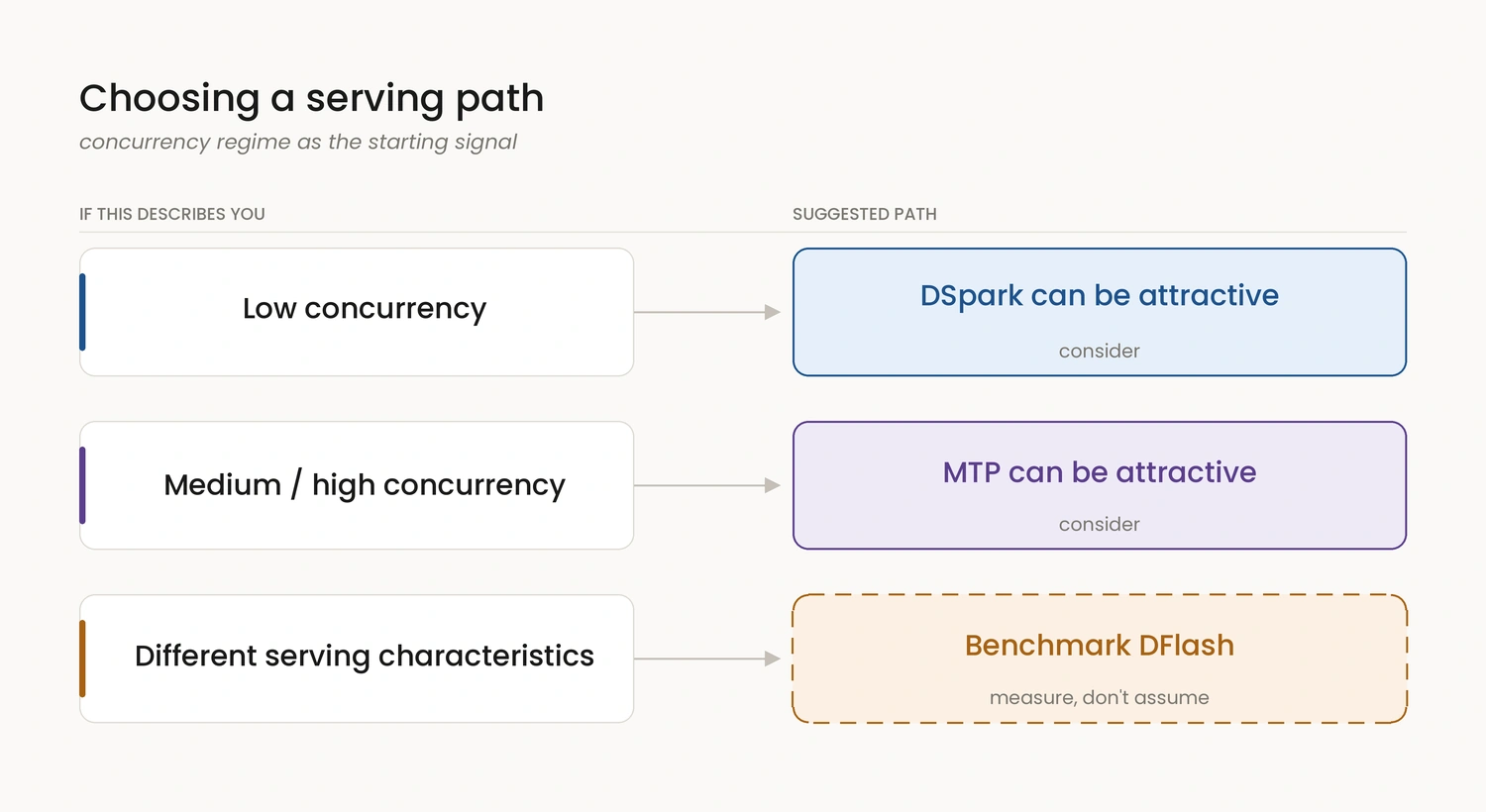
To further enhance generation speed, Nemotron 3.5 Lightning incorporates Multi-Token Prediction layers. Unlike standard autoregressive models that predict one token at a time, MTP allows the model to speculate on several future tokens simultaneously. During inference, these candidates are verified in parallel, leading to a reported 4x increase in output speed compared to traditional dense models of similar parameter counts.
4. Quantization and Hardware Optimization
The model is optimized for NVIDIA’s latest hardware, including the Blackwell, Hopper, and Ampere architectures. Specifically, the NVFP4 (4-bit floating point) quantization allows for single-GPU deployment on hardware like the DGX Spark GB10 or H100. This quantization is critical for enterprise environments where GPU memory bandwidth is a premium resource.
Performance Benchmarks and Quality Retention
A primary concern with high-speed, quantized models is the potential "intelligence collapse," where the model loses its ability to follow complex instructions. NVIDIA’s internal benchmarking, conducted through the NeMo Gym and NeMo Evaluator harnesses, suggests that Nemotron 3.5 Lightning maintains high fidelity even at lower precision.
| Benchmark | BF16 (Full Precision) | NVFP4 (Quantized) |
|---|---|---|
| MMLU Pro (General Knowledge) | 81.94 | 81.62 |
| GPQA Diamond (Hard Reasoning) | 75.44 | 75.57 |
| SWE-bench Verified (Coding) | 51.56 | 52.80 |
| IFBench (Instruction Following) | 71.88 | 72.88 |
| Terminal-Bench 2.1 (Tool Use) | 24.58 | 23.46 |
The data indicates that the transition from BF16 to NVFP4 results in negligible performance loss, and in some instances, such as SWE-bench and IFBench, the quantized version slightly outperformed the full-precision checkpoint. This stability makes the model a viable candidate for production-grade coding agents and terminal-based automation.
Chronology of the Nemotron Series
The release of 3.5 Lightning represents the latest milestone in NVIDIA’s aggressive expansion into the software and model layer of the AI stack:
- Early 2024: NVIDIA releases the initial Nemotron-3 8B models, focusing on basic chat and instruction following.
- Late 2025: The introduction of the Nemotron-3 70B and 340B models, aimed at high-end reasoning and synthetic data generation.
- August 11, 2026: The launch of Nemotron 3.5 Lightning, marking a shift toward "agentic execution" and hybrid architectures (Mamba + Transformer).
This timeline reflects a broader industry trend where the focus is moving away from simply building larger models and toward building more efficient, specialized models for specific roles within a "compound AI system."
Industry Reactions and Market Impact
Market analysts suggest that NVIDIA’s move into specialized models is a strategic attempt to lock developers into the NVIDIA ecosystem. By providing models that are natively optimized for Blackwell and Hopper GPUs via the NVFP4 format, NVIDIA creates a "full-stack" advantage where their software (NeMo) and models (Nemotron) extract maximum performance from their hardware.
Early testers from the open-source community have noted the model’s efficiency. Developers using the OpenRouter and Fireworks serverless platforms have reported that the 262K to 1M token context window, combined with the low input/output costs, makes the model significantly more attractive than specialized small models like Llama 3.1 8B for long-context retrieval tasks.
Pricing, Availability, and Deployment Routes
NVIDIA has adopted an "OpenMDW 1.1" license for Nemotron 3.5 Lightning, providing open weights and training recipes. This allows for a variety of deployment methods, ranging from free prototyping to enterprise-scale self-hosting.
As of August 12, 2026, the following pricing structures have been established:
- NVIDIA Build API: Currently offers a free prototype endpoint for developers to test the model’s 1M context window.
- Fireworks AI: Lists serverless pricing at $0.05 per million input tokens and $0.20 per million output tokens, with a specific $0.01 rate for cached input tokens, incentivizing long-running agent conversations.
- OpenRouter: Provides a free route for experimentation and a standard route priced similarly to Fireworks, though currently limited to a 262K context window.
- Local Hosting: The model is available via Ollama (
ollama run nemotron-3.5-lightning) and vLLM, allowing enterprises to run the model on private infrastructure without per-token fees.
Broader Implications for AI Development
The release of Nemotron 3.5 Lightning signals the end of the "monolithic model" era for autonomous agents. As AI systems become more complex, the industry is converging on a "heterogeneous architecture" where different models handle different parts of a task based on their cost-to-performance ratio.
By optimizing for the execution layer, NVIDIA is addressing the "latency tax" that has hindered the widespread adoption of AI agents in real-time environments. If an agent can execute 100 tool calls in seconds rather than minutes, the feasibility of using AI for real-time system administration, live coding assistance, and dynamic customer support increases exponentially.
Furthermore, the successful integration of Mamba-2 and MoE in a 30B parameter model sets a new technical standard for efficiency. It proves that state-space models can compete with, and in some cases exceed, the performance of pure Transformers when properly hybridized. This likely indicates that future iterations of frontier models from other providers may also begin adopting hybrid architectures to manage the ever-growing demand for longer context and faster inference.
As the AI industry moves toward 2027, the focus will likely remain on this "Pareto frontier" of accuracy and speed. NVIDIA’s Nemotron 3.5 Lightning is not just a new model; it is a blueprint for the next generation of scalable, agentic AI infrastructure.