rifanmuazin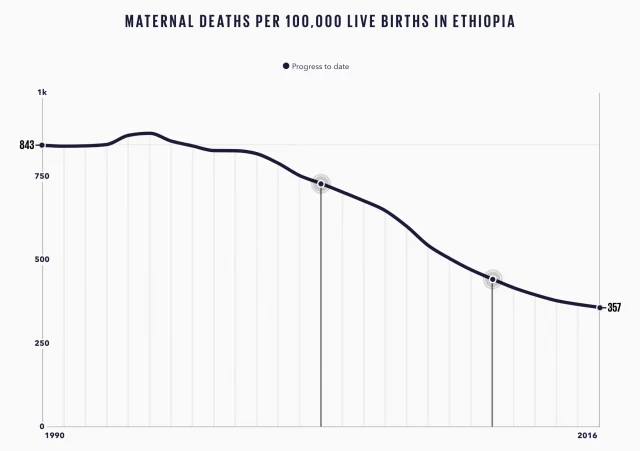
The launch of the Goalkeepers 2017 report by the Bill and Melinda Gates Foundation marked a significant milestone in the intersection of data science and global humanitarian efforts. Designed to track the progress of the United Nations’ Sustainable Development Goals (SDGs), the report serves as a diagnostic tool for identifying urgent global problems, measuring the efficacy of implemented solutions, and disseminating best practices across borders. By synthesizing complex datasets into digestible narratives, the Goalkeepers initiative aims to accelerate the fight against poverty and preventable disease. Among the various metrics analyzed, maternal mortality remains one of the most critical indicators of a nation’s healthcare health and socio-economic stability.
The Strategic Framework of the Goalkeepers Initiative
The Goalkeepers report was established to ensure that the momentum generated by the Millennium Development Goals (MDGs) continued into the era of the Sustainable Development Goals, which aim for completion by 2030. The foundation’s approach emphasizes that data is not merely a collection of numbers but a roadmap for policy intervention. By focusing on "stories behind the data," the 2017 report highlighted how specific interventions in nutrition, immunization, and maternal health have yielded tangible results in diverse geographical contexts.
The report utilizes a multi-medium approach to information design, employing text, high-resolution imagery, video testimonials, and interactive animations to engage policymakers and the public alike. This methodology is rooted in the belief that transparency and accessibility in data can foster greater accountability among world leaders. The 2017 iteration specifically focused on the "accelerators"—the innovations and leadership strategies that have the potential to bend the curve of global progress upward.
Understanding Maternal Mortality as a Global Metric
Maternal mortality is defined as the death of a woman while pregnant or within 42 days of termination of pregnancy, irrespective of the duration and site of the pregnancy, from any cause related to or aggravated by the pregnancy or its management. It is a devastating metric because, as noted by Bill and Melinda Gates, the loss of a mother often precipitates a cascade of negative outcomes for the surviving family, particularly children.
According to UNICEF data synthesized in the report, approximately 302,530 maternal deaths occurred globally in 2015. This equates to a ratio of 168.7 deaths per 100,000 live births. While these figures represent a significant tragedy, they also reflect a broader downward trend. In 1990, the global maternal mortality ratio was significantly higher, and the subsequent decades have seen a concerted effort to improve access to skilled birth attendants, emergency obstetric care, and postnatal services.
A Chronology of Global Health Commitments
The fight against maternal mortality has followed a structured chronological path over the last three decades:
- 1990–2000: The MDG Foundation: The United Nations established the Millennium Development Goals, with MDG 5 specifically targeting a 75% reduction in the maternal mortality ratio.
- 2000–2010: Scaling Interventions: During this decade, international aid shifted toward strengthening health systems in Sub-Saharan Africa and South Asia, the two regions with the highest mortality rates.
- 2015: The Transition to SDGs: As the MDG era concluded, the Sustainable Development Goals were adopted. SDG Target 3.1 aims to reduce the global maternal mortality ratio to less than 70 per 100,000 live births by 2030.
- 2017: The Goalkeepers Launch: The Gates Foundation began its annual reporting to provide a mid-way assessment of these 2030 targets, utilizing updated datasets from UNICEF and the World Health Organization (WHO).
The Ethiopian Model of Success: A Case Study in Progress
One of the most compelling narratives within the 2017 Goalkeepers report is the transformation of Ethiopia’s healthcare landscape. In 1990, Ethiopia faced one of the highest maternal mortality ratios in the world, with 843 deaths per 100,000 live births. By 2015, this figure had plummeted to 357—a reduction of nearly 60%.
Ethiopia’s success is largely attributed to its Health Extension Program (HEP), launched in 2003. This government-led initiative involved the training and deployment of over 38,000 female health extension workers to rural villages. These workers provided essential health services, including family planning, immunization, and education on safe delivery practices. By bringing healthcare directly to the community level, Ethiopia bridged the gap between rural populations and the formal medical system.
The data suggests that Ethiopia’s progress was not accidental but the result of deliberate policy choices and sustained investment in human capital. The simple yet powerful visualization used in the Goalkeepers report—showing the sharp decline in mortality rates over 25 years—serves as a proof of concept for other developing nations facing similar challenges.
Comparative Global Data and Regional Disparities
While Ethiopia provides a blueprint for success, a broader look at UNICEF’s maternal mortality datasets reveals significant regional disparities. The data indicates that nearly 99% of all maternal deaths occur in developing countries, with more than half occurring in Sub-Saharan Africa.
In contrast, developed regions such as Western Europe and North America maintain ratios as low as 5 to 12 deaths per 100,000 live births. However, analysts have noted that even within developed nations, disparities exist along racial and socioeconomic lines. For instance, maternal mortality rates in certain parts of the United States have shown an alarming upward trend, highlighting that progress is not always linear and requires constant vigilance.
The UNICEF maternal mortality dataset, which is publicly available and meticulously organized, allows researchers to perform deep-dive analyses into these trends. By formatting this data for visualization tools like Google Data Studio, analysts can identify outliers—countries that are either outperforming their economic status or falling behind despite having adequate resources.
Official Responses and Inferred Implications
The international community has reacted to the Goalkeepers data with a mixture of optimism and urgency. The World Health Organization has frequently emphasized that the majority of maternal deaths are preventable. Common causes, such as postpartum hemorrhage, sepsis, and hypertensive disorders, can be managed with existing medical knowledge, provided the infrastructure is in place.
In statements following the release of the 2017 report, global health officials underscored the necessity of "political will." The data suggests that when governments prioritize maternal health in their national budgets, mortality rates drop. Conversely, in regions experiencing conflict or political instability, healthcare systems often collapse, leading to immediate spikes in maternal and infant mortality.
The Goalkeepers report also serves as a call to action for the private sector and philanthropic organizations. By highlighting the "promising solutions" that have already worked, the foundation encourages donors to direct their resources toward proven interventions rather than unverified experiments.
The Role of Information Design in Public Health Advocacy
A critical takeaway from the Goalkeepers 2017 report is the importance of how data is communicated. The report’s "spotless" information design ensures that the gravity of the issues is not lost in a sea of spreadsheets. For professionals in the field of data analytics and public health, the report serves as a masterclass in "data storytelling."
Effective information design accomplishes two goals: it educates the uninformed and provides actionable insights for the expert. By utilizing horizontal bar charts, interactive maps, and chronological timelines, the report allows users to visualize the scale of the maternal mortality crisis while simultaneously seeing the "giant steps" taken by countries like Ethiopia. This dual perspective—acknowledging the tragedy while celebrating the progress—is essential for maintaining public interest in long-term global goals.
Broader Impact and the Path to 2030
The insights gleaned from the Goalkeepers 2017 report and UNICEF’s datasets suggest that while the world is on the right track, the pace of progress must increase to meet the 2030 SDG targets. The reduction of maternal mortality is not just a health goal; it is an economic and social imperative. Mothers are often the primary caregivers and economic pillars of their households; their survival is inextricably linked to the survival and education of the next generation.
As analysts and organizations continue to mine public datasets, the emphasis must remain on granular data. Global averages can often hide local crises. Future reporting will likely focus on sub-national data to identify specific provinces or districts where maternal health services are lacking.
In conclusion, the Goalkeepers 2017 report stands as a testament to the power of data-driven advocacy. By combining the rigorous statistics provided by UNICEF with the narrative power of the Gates Foundation, the report provides a comprehensive look at where the world stands in its fight against maternal mortality. The lessons learned from Ethiopia’s success and the challenges identified in other regions provide a clear roadmap for the decade ahead. Through continued measurement, transparency, and the sharing of best practices, the global community can work toward a future where pregnancy and childbirth are no longer life-threatening events.