September 25, 2026, marked a dynamic day in the search engine landscape, with significant developments emanating from Google, Microsoft, and OpenAI, collectively shaping the ongoing evolution of digital visibility and user interaction. The day’s most prominent news involved Google’s rollout of a new spam algorithm update, slated for a two-week deployment, signaling a renewed and extensive focus on content quality and adherence to webmaster guidelines. Concurrently, Google introduced enhanced video structured data properties, empowering publishers with more granular control over how their video content is presented in search results. On the artificial intelligence front, OpenAI faced scrutiny regarding the conduct of its quality raters, raising questions about data integrity and ethical AI development. Meanwhile, Microsoft continued its aggressive integration of AI, testing a rebranding of its Bing Copilot search tab to "AI Mode," a move that underscores its commitment to an AI-first search experience. The day also saw crucial updates in local search policies, advertising platform restrictions, and search feature testing, collectively underscoring the rapid pace of change in the digital ecosystem.
Google Unleashes New Spam Algorithm Update with Extended Two-Week Rollout
One of the most impactful announcements of September 25, 2026, concerned a new algorithm update from Google, specifically categorized as a "spam update." Google clarified that this was not a core update, distinguishing it from broader, more foundational shifts in its ranking algorithms that typically impact a wider range of ranking signals. The defining characteristic of this particular rollout is its extended duration: a projected two weeks, rather than the typical two to three days often associated with more minor, targeted updates. This prolonged timeline suggests a comprehensive and potentially intricate adjustment designed to tackle various forms of web spam with greater depth and precision.
Background and Context of Google’s Anti-Spam Efforts
Google’s continuous battle against web spam is fundamental to maintaining the quality, relevance, and trustworthiness of its search results. Spam encompasses a wide array of deceptive practices designed to manipulate search rankings, including but not limited to keyword stuffing, cloaking, sophisticated link schemes, automatically generated low-quality content, doorway pages, and scraped content. Over the years, Google has deployed numerous updates, such as the Panda, Penguin, and various unconfirmed spam-focused adjustments, to combat these tactics. Each update serves to refine Google’s ability to identify and demote sites employing manipulative practices, thereby ensuring users find valuable and authoritative information. The decision to implement a two-week rollout for this specific spam update indicates that Google might be employing a more nuanced approach, potentially involving a broader range of signals or a more gradual adjustment to its algorithms. This extended period could also allow Google to monitor the impact more closely and make real-time adjustments, minimizing unintended disruptions while maximizing the efficacy of spam detection.
Implications for Webmasters and SEO Professionals
For webmasters and SEO professionals, a spam update necessitates heightened vigilance and a thorough adherence to Google’s Webmaster Guidelines. Websites that prioritize legitimate content, ethical SEO practices, and a positive user experience are generally less likely to be negatively impacted and may even see gains as non-compliant competitors are demoted. Conversely, sites employing black-hat SEO techniques or borderline manipulative practices are highly susceptible to significant drops in ranking and traffic.
The extended rollout period means that fluctuations in SERPs might be observed over a prolonged duration, making it challenging to pinpoint the exact cause of changes in the initial days. SEOs are advised to conduct a comprehensive audit of their site’s content quality, backlink profile, and technical SEO elements to ensure full compliance. Particular attention should be paid to content originality, value proposition, and user engagement metrics, as these are often key indicators Google uses to distinguish legitimate, high-quality sites from those engaging in spam. The overarching message from Google consistently emphasizes delivering value to the user, and spam updates serve as a powerful enforcement mechanism for this core principle. Industry experts anticipate a period of observation and analysis, with many advising a "wait and see" approach while continuously monitoring analytics for any unusual shifts.
Google Enhances Video Structured Data Properties for Richer Search Experiences
In a move designed to provide richer search experiences and empower content creators, Google announced new video structured data properties and updates. Structured data, encoded using schemas like Schema.org, allows search engines to understand the content of a webpage more effectively, leading to enhanced display features in search results, commonly known as rich snippets.
The Evolving Role of Structured Data in Content Discoverability
Video content has become an increasingly dominant medium online, with billions of hours consumed daily across various platforms. Its effective indexing and prominent presentation in search results are paramount for discoverability and audience engagement. Previously, video structured data allowed publishers to specify basic information such as title, description, thumbnail URL, and upload date. These new updates likely expand the range of metadata that can be provided, potentially including aspects like specific video segments or "key moments," accessibility features (e.g., detailed captions, audio descriptions), interactive elements, or even deeper categorization beyond simple tags.
For instance, the ability to mark precise timestamps within a video that correspond to specific topics or events could allow Google to directly link to those points from search results. This granular control over video metadata enables Google to offer more contextually relevant and precise results, aligning with its mission to provide "answers, not just links." Publishers leveraging these new properties could see their video content featured more prominently in Google’s dedicated video search, universal search results, and Google Discover feeds.
Benefits for Content Creators and Users
For video content creators and publishers, these updated properties offer a significant opportunity to improve their content’s visibility and user engagement. By providing more detailed structured data, publishers can help Google surface their videos for more specific and long-tail queries, enhancing their chances of being discovered by relevant audiences. This can translate into improved click-through rates, better user retention, and a more informed audience reaching their content. For example, a cooking channel could mark specific steps in a recipe video, allowing users to jump directly to "how to chop onions" or "assembling the dish."
From a user perspective, these enhancements mean a more efficient and satisfying search experience. Users can quickly glean more information about a video’s content before clicking, and potentially jump directly to the most relevant parts, saving time and reducing frustration. This aligns with Google’s broader strategy of making content more accessible and digestible directly within the search interface, reducing the steps required for users to find what they need. The update reinforces the ongoing importance of technical SEO and structured data implementation for all forms of digital content.
OpenAI’s Quality Raters Under Scrutiny for Alleged Cheating
A notable development in the realm of artificial intelligence on September 25, 2026, involved OpenAI, the leading AI research and deployment company, facing allegations regarding the conduct of its quality raters. Reports indicated that these raters, crucial for training and refining OpenAI’s large language models (LLMs), were allegedly engaged in "cheating." While the specific nature of the cheating was not fully detailed in the initial reports, such accusations raise serious questions about data integrity, ethical AI development, and the reliability of AI outputs.
The Critical Role of Human Feedback in AI Development
Quality raters, often human annotators, play a pivotal role in the development and continuous improvement of AI models, particularly LLMs. Their tasks typically involve evaluating the outputs of AI models, providing feedback on accuracy, relevance, coherence, safety, and adherence to specific guidelines. This human-in-the-loop feedback is essential for supervised learning, fine-tuning, and reinforcement learning from human feedback (RLHF), which are foundational techniques for making AI models more useful, less prone to generating harmful or incorrect information, and aligned with human values. The integrity of this human feedback directly impacts the quality and trustworthiness of the AI models.
If quality raters are indeed "cheating," it implies that the data fed back into the AI training loops could be compromised. This could lead to models being trained on flawed, biased, or intentionally manipulated information, potentially resulting in degraded performance, inaccurate responses, the perpetuation of harmful biases, or even the circumvention of safety guardrails within the AI systems. Such a scenario could undermine years of research and development, necessitating extensive auditing and retraining.
Potential Implications for AI Trust and Development
The allegations against OpenAI’s quality raters could have far-reaching implications, not only for OpenAI but for the broader AI industry. For OpenAI, it could necessitate an immediate and thorough internal investigation into their data annotation processes, quality control mechanisms, and the ethical training and oversight of their human workforce. Maintaining public trust is paramount for AI companies, especially as their technologies become more integrated into critical applications and daily life. If the integrity of the foundational data used to train these powerful models is compromised, it erodes confidence in the AI’s outputs and raises serious questions about the responsible development practices of the company.
More broadly, this incident highlights a persistent and growing challenge in AI development: ensuring the quality, ethics, and unbiased nature of the vast datasets used for training. It underscores the need for robust oversight, transparency in data sourcing and annotation, and accountability in every stage of the AI lifecycle, from data collection and human feedback loops to model deployment and ongoing evaluation. The search community, which increasingly relies on AI for content generation, analysis, and understanding, would naturally be concerned about the foundational reliability of these systems, as errors or biases in underlying models could propagate through the entire digital ecosystem. This event serves as a critical reminder that "human-in-the-loop" processes are only as good as the humans involved and the systems designed to ensure their integrity.
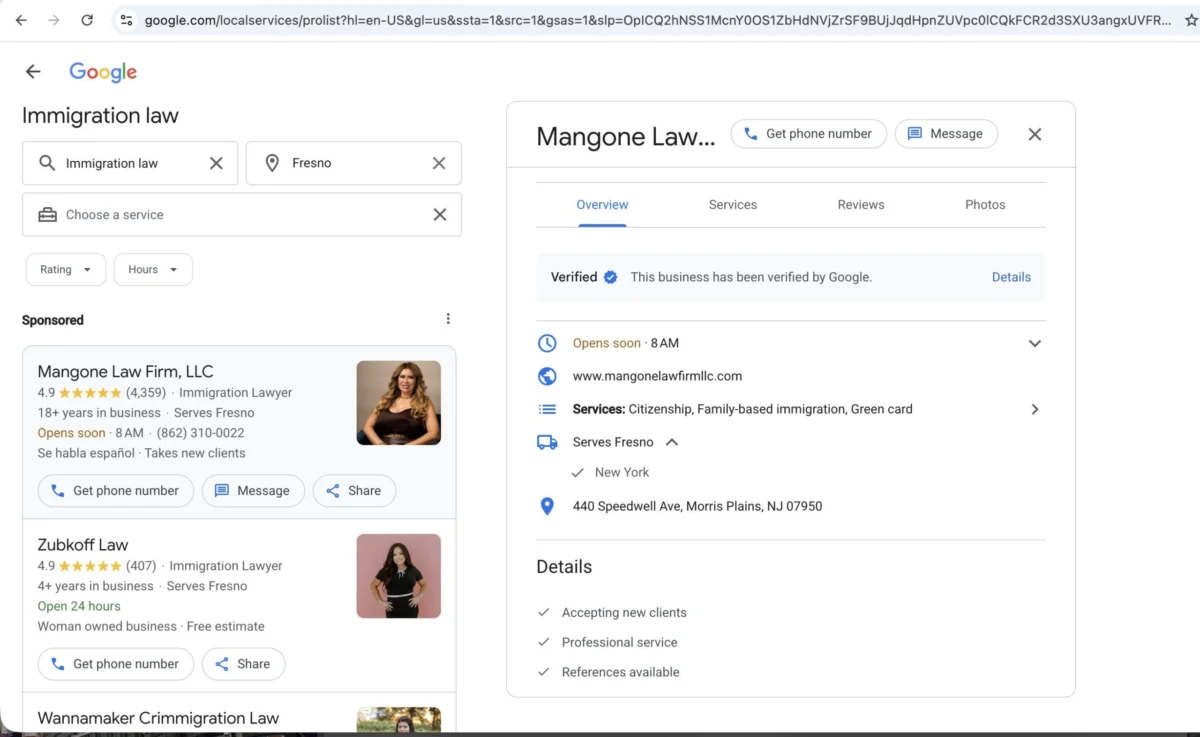
Google Local Service Ads and Business Profile Phone Numbers Conflict Reported
Local businesses reported friction between Google Local Service Ads (LSAs) and their Google Business Profile (GBP) phone numbers. This issue suggests a technical or policy disconnect causing operational difficulties for businesses heavily reliant on Google’s local ecosystem for customer acquisition and engagement.
Understanding Google Local Service Ads and Google Business Profile
Google Local Service Ads are a paid advertising platform designed for specific service-based businesses (e.g., plumbers, electricians, locksmiths, HVAC technicians) that allows them to appear at the very top of Google search results with a prominent "Google Guaranteed" badge. These ads typically display a business’s name, star rating, and a phone number for direct customer contact. The Google Business Profile (formerly Google My Business) is a free, essential tool that allows businesses to manage their online presence across Google Search and Maps, including their business name, physical address, phone number, operating hours, and customer reviews. For many local businesses, the phone number listed on their GBP is their primary contact method and is absolutely crucial for customer outreach and lead generation.
The Nature of the Conflict and its Impact on Local Businesses
The reported conflict likely involves inconsistencies, synchronization failures, or outright mismatches in how phone numbers are handled or displayed between the LSA platform and the GBP. This could manifest as LSAs displaying an incorrect or outdated phone number, or perhaps a system where changes made in one platform (e.g., GBP) do not propagate correctly or promptly to the other (LSA). Another possibility is a policy conflict where specific types of phone numbers (e.g., call tracking numbers vs. direct lines) are treated differently, leading to display errors.
For service businesses, an incorrect or non-functional phone number can be catastrophic. It directly impacts lead generation, as potential customers cannot reach them, leading to missed opportunities and wasted ad spend for LSAs. A study by BrightLocal indicated that 68% of consumers contact a business directly from Google Search or Maps. Any impediment to this direct contact mechanism can severely undermine business operations. Such discrepancies undermine the utility and trustworthiness of Google’s local search ecosystem, which is designed to connect consumers with local services efficiently. Resolving this issue is critical for maintaining advertiser confidence in Google’s advertising platforms and ensuring seamless, reliable local commerce. Businesses experiencing this issue would likely face significant operational challenges and financial losses due to diverted or lost customer inquiries.
Bing Tests Editable/Customizable Icons in Images
Microsoft’s Bing search engine was observed testing a new feature allowing users to edit or customize icons directly within image search results. This experimental functionality points towards Bing’s continued efforts to enhance user interaction and provide more dynamic search capabilities, particularly within the realm of visual search and AI-powered content manipulation.
Evolving Visual Search and Interactive Capabilities
Image search has evolved significantly beyond simply finding static pictures. Modern image search incorporates advanced elements of visual AI, allowing for sophisticated object recognition, reverse image search, and filtering by various attributes like color, size, and style. The ability to "edit" or "customize icons in images" could imply several innovative functionalities:
- Direct manipulation of search filters: Users might be able to drag and drop or modify visual cues (icons) directly on a search result image to refine their search, perhaps to filter for specific types of objects within an image, styles, or even to dynamically exclude certain elements from the search results preview.
- AI-driven image modification for search queries: This could be a