The digital landscape of social media has long been characterized by a relentless demand for fresh, engaging content. However, as Merriam-Webster’s declaration of "Slop" as the Word of the Year in 2025 underscored, the sheer volume of output often comes at the expense of quality and authenticity. Navigating this challenge, social media marketers are increasingly turning to artificial intelligence, not merely as a tool for accelerated content production, but as a strategic partner in cultivating a more refined and impactful digital presence. The key to leveraging AI without succumbing to the "slop" is not found in a clever prompt, but in the meticulous design of an integrated, human-centric workflow.
The Ascendancy of AI in Social Media Marketing
The rapid evolution of generative AI, exemplified by the mainstream adoption of tools like ChatGPT and advanced image generators in the early 2020s, has fundamentally reshaped the possibilities within content creation. Prior to this boom, AI’s role in marketing was largely confined to analytics, audience targeting, and automated customer service. The ability for machines to generate coherent text, compelling visuals, and even short video clips on demand marked a significant paradigm shift. This technological leap arrived at a critical juncture for marketers, who were already grappling with mounting pressure to maintain a consistent, multi-platform presence, personalize messaging for diverse audiences, and do so within increasingly constrained budgets. AI emerged as a potent solution to alleviate these pressures, promising unprecedented efficiency and scalability.

Industry data strongly supports this trajectory. A report by MarketsandMarkets in 2023 projected the Artificial Intelligence in Marketing market to grow from USD 13.9 billion in 2023 to USD 60.1 billion by 2028, at a Compound Annual Growth Rate (CAGR) of 34.0%. This significant growth underscores the widespread recognition of AI’s transformative potential across various marketing functions, with content creation being a primary beneficiary. This shift is not just about doing more, but about doing it smarter and faster, allowing marketers to keep pace with the ephemeral nature of social trends and consumer attention spans.
Demystifying AI Social Media Content Creation
At its core, AI social media content creation encompasses the strategic application of AI tools to assist in the planning, writing, designing, and repurposing of content specifically tailored for social platforms. Where marketers once meticulously crafted each caption, resized every graphic by hand, and ideated campaigns from scratch, AI can now shoulder significant portions of this workload. This capability, while enhancing speed and output, necessitates a sophisticated workflow that clearly delineates AI’s automated functions, human review points, and the ultimate editorial decision-making process before content reaches the public feed.
AI’s versatility extends across a broad spectrum of content formats. It can generate various forms of written copy, from concise tweets and engaging Instagram captions to longer-form blog post summaries and LinkedIn articles. Visually, AI can create original images, adapt existing graphics to different aspect ratios, and even generate simple animations or video clips. Furthermore, it can assist with video scripts, voiceovers, and the identification of trending audio. This wealth of raw material presents both an opportunity and a challenge: the opportunity to create content at scale, and the challenge of ensuring that this content remains authentically on-brand and resonant with the target audience.

The Strategic Imperative: Beyond Mere Volume
While the acceleration of content production is an undeniable benefit, the true strategic value of AI in social media content creation extends far beyond mere volume. It empowers marketers to achieve several critical objectives:
- Accelerated Content Generation and Scalability: The demand for continuous content across multiple platforms and regions can quickly overwhelm even large marketing teams. AI acts as a force multiplier, transforming a single idea into a dozen platform-specific variations, resizing visuals instantaneously, and generating first drafts that historically consumed significant creative hours. This allows brands to scale their content output without a proportional increase in human resources, fostering greater efficiency and cost-effectiveness.
- Enhanced Agility and Responsiveness: Social media operates at an unprecedented pace, with trends emerging and fading within hours. AI tools, particularly those integrated with social listening capabilities, can rapidly identify trending topics, relevant conversations, and emerging opportunities within a brand’s niche. This intelligence, combined with AI’s content generation speed, drastically reduces the time from idea conception to published post, enabling brands to participate in timely conversations and capitalize on fleeting cultural moments.
- Hyper-Personalization at Scale: Generic messaging struggles to cut through the noise. AI enables marketers to tailor content for distinct audience segments, different stages of the customer journey, and specific platforms. It can adapt tone, language, and focus, ensuring that each piece of content resonates more deeply with its intended recipient. This level of personalization, once resource-intensive, becomes achievable at scale, leading to improved engagement and conversion rates.
- Data-Driven Optimization and A/B Testing: The debate over which content performs best can be settled definitively through data. AI can rapidly generate multiple variations of a post, facilitating robust A/B testing. By analyzing performance metrics, AI can identify patterns and insights into what resonates with the audience, feeding these learnings back into the content creation cycle. This iterative refinement process ensures continuous improvement and a more data-informed content strategy.
Building a Robust AI Content Creation Workflow: A Six-Phase Model
To harness AI’s power effectively and avoid the trap of generic "slop," a structured, repeatable workflow is paramount. This process acts as a continuous loop, starting with brand context, moving through AI generation and human review, and concluding with performance analysis that informs future iterations.

1. Establish a Strategic Foundation: Brand Voice and Content Pillars
Before AI can generate anything meaningful, it requires a clear understanding of the brand’s identity. This foundational step is arguably the most critical for ensuring AI-generated content remains authentic and on-brand.
- Brand Voice: Define the unique personality and tone your brand employs across all communications. This should be encapsulated in a single, comprehensive brand voice document. This document should detail specific attributes (e.g., authoritative but approachable, witty and irreverent, empathetic and supportive), provide examples of preferred vocabulary and grammatical structures, and crucially, include a collection of real, high-performing posts that perfectly embody the desired voice. It’s also beneficial to include examples of what not to sound like, giving AI clearer boundaries.
- Content Pillars: These are the overarching themes and core topics your brand consistently addresses. They act as guardrails for AI, ensuring content remains relevant and aligned with your strategic objectives. For a fitness brand, pillars might include "Workout Tips," "Nutrition Advice," "Mindfulness & Recovery," and "Community & Motivation." By clearly defining these, AI can focus its efforts on conversations that genuinely interest your audience and align with your brand’s expertise.
2. Intelligent Draft Generation with AI
Once the AI is adequately briefed on brand voice and content pillars, it’s time to initiate content generation. This phase heavily relies on effective "prompt engineering"—the skill of crafting precise and comprehensive instructions for AI. A strong prompt should always include:
- Target Audience: Who are you trying to reach?
- Platform: Where will this content be published (e.g., Instagram, LinkedIn, TikTok)?
- Goal: What do you want the content to achieve (e.g., drive engagement, increase website traffic, build brand awareness)?
- Key Message/Topic: What specific information or idea should the content convey?
- Desired Tone: Reinforce the brand voice (e.g., "be playful," "be informative," "be empathetic").
- Format/Length Constraints: Specify desired output (e.g., "a 30-second video script," "a 280-character tweet," "3-5 bullet points").
- Keywords/Hashtags: Provide relevant terms to incorporate.
The more context and constraints provided, the less likely AI is to produce generic outputs. Iterative prompting, where initial outputs are refined through follow-up instructions, is also a powerful technique.
3. Human Curation and Editorial Oversight
This is the workflow’s most human-intensive and arguably most critical stage. AI excels at generating first drafts, but "workable" is distinct from "accurate," "interesting," or "authentically on-brand." Human review is indispensable. Before any content goes live, a human must meticulously check for:

- Accuracy and Factuality: AI can "hallucinate" or provide outdated information. Every claim must be fact-checked.
- Brand Voice and Tone Consistency: Does it truly sound like your brand, or could it be from anyone?
- Originality and Creativity: Does it offer a fresh perspective or is it merely rephrasing common knowledge?
- Cultural Relevance and Nuance: AI may miss subtle cultural references or inappropriately apply humor.
- Emotional Intelligence: Does the content resonate emotionally and avoid sounding robotic or insensitive?
- Compliance and Ethical Considerations: Ensure adherence to industry regulations, legal guidelines, and ethical standards.
- Grammar, Spelling, and Punctuation: While AI is generally good, human proofreading catches remaining errors.
As marketing expert Colleen Barry, Head of Marketing at Ketch, emphasizes, "AI can help create the post, but it doesn’t know whether a topic supports your long-term brand goals, or whether now is the right moment to join a conversation. That context comes from people who understand the business and the target audience." Investing time in thorough editing prevents the dreaded "slop" and safeguards brand reputation.
4. Streamlined Approval Processes
While not every social post requires extensive review, certain types of content demand multiple layers of approval. For smaller teams, this might be a quick peer review. For larger enterprises, content may need sign-off from brand managers, legal departments, compliance officers, or regional teams. Establishing a clear approval matrix is key, specifying which content categories (e.g., product launches, promotions, regulated content, crisis communications) require formal sign-offs. Social media management platforms like Hootsuite’s Perch are invaluable here, enabling teams to review, comment, and assign approvals within a unified workflow, preventing bottlenecks and ensuring accountability.
5. Strategic Scheduling and Publication
Once approved, content is ready for scheduling. Batching content—scheduling a week or two of posts at once—enhances efficiency and allows for a comprehensive overview of the content calendar, helping to identify gaps or imbalances. Crucially, scheduling should be informed by data. Analytics reveal optimal posting times when the target audience is most active and engaged, maximizing reach and impact. Tools that provide "best time to post" recommendations based on audience data are highly beneficial in this phase.
6. Performance Analysis and Iterative Refinement
The workflow concludes with robust performance tracking, transforming it from a linear process into a continuous improvement loop. Marketers must focus on metrics directly aligned with their strategic goals: reach and impressions for awareness, comments and shares for community building, or click-through rates for conversions.

AI-powered analytics can help identify patterns within this data—for instance, noting that short-form videos consistently outperform static images, or that polls drive higher engagement. These insights are invaluable for refining future content strategies and "training" the AI:
- Update Brand Voice/Pillars: Adjust based on what resonates.
- Refine Prompt Engineering: Learn which prompts yield the best results.
- Automate More Effectively: Identify tasks AI excels at.
- Adjust Approval Thresholds: Streamline based on content performance and risk.
By continuously feeding performance data back into the initial stages, the AI content creation workflow becomes increasingly intelligent and effective, reducing guesswork and optimizing future output.
The Human-AI Synergy: Delineating Roles
The effective integration of AI in social media content creation hinges on a clear understanding of what tasks are best suited for AI, what requires human oversight, and what remains exclusively within the human domain.

| Task | AI, Human, or Both? | Rationale |
|---|---|---|
| Brainstorming Ideas and Angles | AI (initial), Human (refinement) | AI can rapidly generate a vast quantity of ideas, providing a broad starting point. Humans then curate, select, and refine these ideas for strategic fit and originality. |
| Resizing Visuals | AI | This is a low-stakes, repetitive task perfectly suited for AI’s automation capabilities, ensuring consistent branding across platforms. |
| Writing First Drafts | Both | AI can overcome writer’s block and provide a foundational text. Humans are essential for injecting brand voice, nuance, accuracy, and emotional resonance. |
| Recommending Hashtags | AI | AI analyzes trending topics and relevant keywords to suggest effective hashtags, leveraging data beyond human capacity. Humans ensure contextual relevance. |
| Repurposing Posts | Both | AI efficiently adapts content for different platforms and formats. Human review is crucial to ensure tone, context, and platform-specific best practices are met. |
| Crafting Crisis Responses | Human | High-stakes situations demand human judgment, empathy, legal acumen, and a deep understanding of brand values and potential repercussions. AI lacks this capacity. |
| Responding to Community Conversations | Human (primarily), AI (initial filters) | Genuine connection and relationship-building require authentic human interaction. AI can assist with sentiment analysis or flagging urgent queries, but direct engagement must be human. |
Navigating Pitfalls: Avoiding Common AI Content Mistakes
While AI offers immense advantages, several common mistakes can dilute its effectiveness and even harm a brand’s reputation. Industry experts Cree Beatty, Founder of Welcome Marketing Co., and Colleen Barry, Head of Marketing at Ketch, highlight key areas of caution.
- Relinquishing Creative Direction to AI: AI is an executor, not a strategist. As Barry notes, "AI can help create the post, but it doesn’t know whether a topic supports your long-term brand goals, or whether now is the right moment to join a conversation. That context comes from people who understand the business and the target audience." Brands must retain human oversight for strategic decisions, ensuring content aligns with overarching business objectives and brand values. The "why" behind the content must always remain human-driven.
- Blind Copy-Pasting AI Outputs: A prevalent pitfall is the unedited publication of AI-generated content. Cree Beatty warns, "When I notice a caption has been blatantly AI-generated, I lose trust in the person or brand that wrote it." AI models often fall into predictable patterns—excessive use of em dashes, specific rhetorical formulas, or a suspicious number of generic emojis. These "AI-isms" are easily detectable and can erode audience trust, making a brand appear inauthentic and lazy. Every piece of AI-generated content must undergo rigorous human editing to imbue it with a unique brand voice and eliminate generic phrasing.
- Expecting AI to Innately Understand Your Brand: AI tools are only as good as the data they are fed. If marketers fail to upload comprehensive brand guidelines, voice documents, and exemplary content, AI will default to generic, often uninspired outputs, contributing to a "sea of sameness." As Beatty explains, "If you don’t upload your brand guidelines, everything is generated using the same few fonts, colors, and styles." Investing time in "training" AI with specific brand assets ensures that its output is distinct, recognizable, and authentically reflective of the brand’s identity.
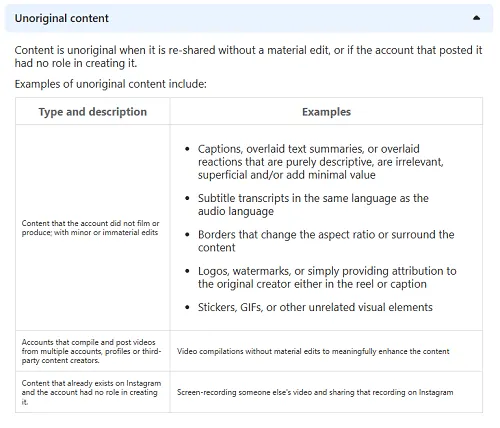
Beyond these points, ethical considerations are paramount. Marketers must be vigilant about potential AI biases, ensure data privacy, and guard against the propagation of misinformation. Some platforms, like YouTube and Instagram, now require disclosure of AI-generated content, underscoring the importance of transparency and adherence to evolving platform guidelines.
Industry Perspectives and Future Outlook
The integration of AI into social media content creation is not merely a transient trend but a fundamental shift in how brands operate. This evolution is already impacting marketing job roles, moving them from pure content creation towards more strategic functions like content curation, prompt engineering, audience analysis, and ethical oversight. Professionals capable of effectively managing AI tools and interpreting their outputs will be highly valued.
Companies that strategically embrace AI within a well-defined workflow will gain a significant competitive edge, capable of producing higher quality, more personalized, and more timely content at scale. The future of social media marketing points towards a symbiotic relationship between humans and AI, where technology augments human creativity and strategic thinking, rather than replacing it. The goal is not full automation, but intelligent augmentation, allowing marketers to focus on the truly creative, empathetic, and strategic aspects of their roles.
Tools for the Modern Social Marketer
The market for AI-powered social media tools is rapidly expanding, with platforms offering integrated solutions to streamline the entire content lifecycle. These typically combine generative AI capabilities with robust social media management features.

Hootsuite, for example, offers a comprehensive approach with two key tools:
- Wisdom: This social-first AI agent is designed to help brands generate on-brand content with minimal prompt engineering. It can brainstorm ideas, draft captions, create images, suggest ad copy, and identify trending topics relevant to a brand’s niche. Wisdom aims to provide a strong "first brief," ensuring content ideas are strategically sound from the outset.
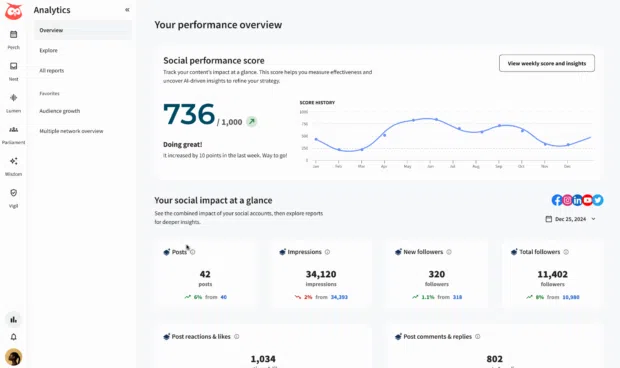
- Perch: This content planning and publishing tool complements Wisdom by managing the subsequent stages of the workflow. Perch facilitates content approvals, allows for strategic scheduling across multiple platforms, and offers performance tracking. Its "best time to post" feature, for instance, leverages data to optimize content visibility.
These integrated platforms ensure that the entire process, from ideation and drafting to approval, scheduling, and performance analysis, occurs within a unified environment, reducing friction and enhancing overall efficiency.
In conclusion, the era of AI in social media content creation is not about letting machines run wild. It is about crafting a deliberate, human-led strategy where AI serves as a powerful co-pilot. By meticulously defining brand voice and content pillars, embracing intelligent prompt engineering, prioritizing rigorous human review, streamlining approvals, optimizing scheduling, and continuously refining the process based on performance data, marketers can transcend the "slop" and deliver content that is not only efficient to produce but also genuinely impactful, authentic, and resonant with their audience. The future belongs to those who master the art of working with AI, not simply by AI.

 rifanmuazin
 Pevita Pearce