

The landscape of conversion rate optimization (CRO) and digital experience management has undergone a profound transformation over the last decade, evolving from simple A/B testing scripts into complex, AI-driven ecosystems designed to maximize user engagement and revenue. As businesses seek to navigate this increasingly competitive environment, two platforms have emerged as dominant leaders, albeit with vastly different philosophies and target demographics: Crazy Egg and Optimizely. While both tools aim to improve website performance, they cater to distinct organizational needs, ranging from agile marketing teams seeking all-in-one behavioral insights to global enterprises requiring a full-stack digital experience platform (DXP).
The choice between these two platforms often dictates an organization’s entire optimization strategy, influencing everything from technical resource allocation to the total cost of ownership. Crazy Egg positions itself as a comprehensive, accessible suite that integrates heatmaps, session recordings, and A/B testing into a single subscription. Conversely, Optimizely, following its 2020 acquisition by Episerver, has transitioned into a sophisticated enterprise suite that handles not only experimentation but also content management, commerce, and warehouse-native analytics.
Historical Context and Evolution of the CRO Market
To understand the current positioning of these platforms, one must examine their origins and the chronological development of the web optimization industry. Crazy Egg was founded in 2005 by Hiten Shah and Neil Patel, pioneers who recognized that traditional web analytics provided the "what" but not the "why" behind user behavior. By introducing heatmaps to the mainstream market, Crazy Egg allowed marketers to visualize user clicks and scroll depth, effectively launching the visual analytics category. Over the subsequent two decades, the platform has expanded its feature set to include session recordings and A/B testing, maintaining a focus on user-friendliness and rapid deployment.
Optimizely arrived later, in 2010, founded by Dan Siroker and Pete Koomen following Siroker’s experience as the director of analytics for the 2008 Obama presidential campaign. Optimizely’s initial focus was exclusively on making A/B testing accessible to non-developers. However, as the market matured, Optimizely shifted its focus toward the "enterprise" segment. The 2020 merger with Episerver marked a turning point, moving Optimizely beyond a standalone testing tool and into the realm of Digital Experience Platforms. Today, Optimizely is a multi-product giant that competes with the likes of Adobe Experience Cloud and Salesforce.
Core Feature Comparison: Experimentation and Testing Capabilities
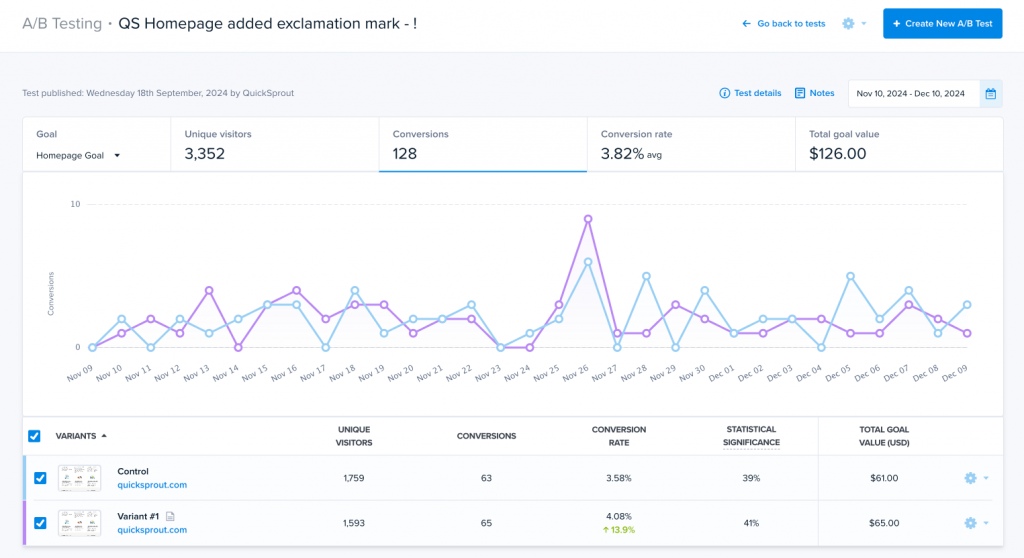
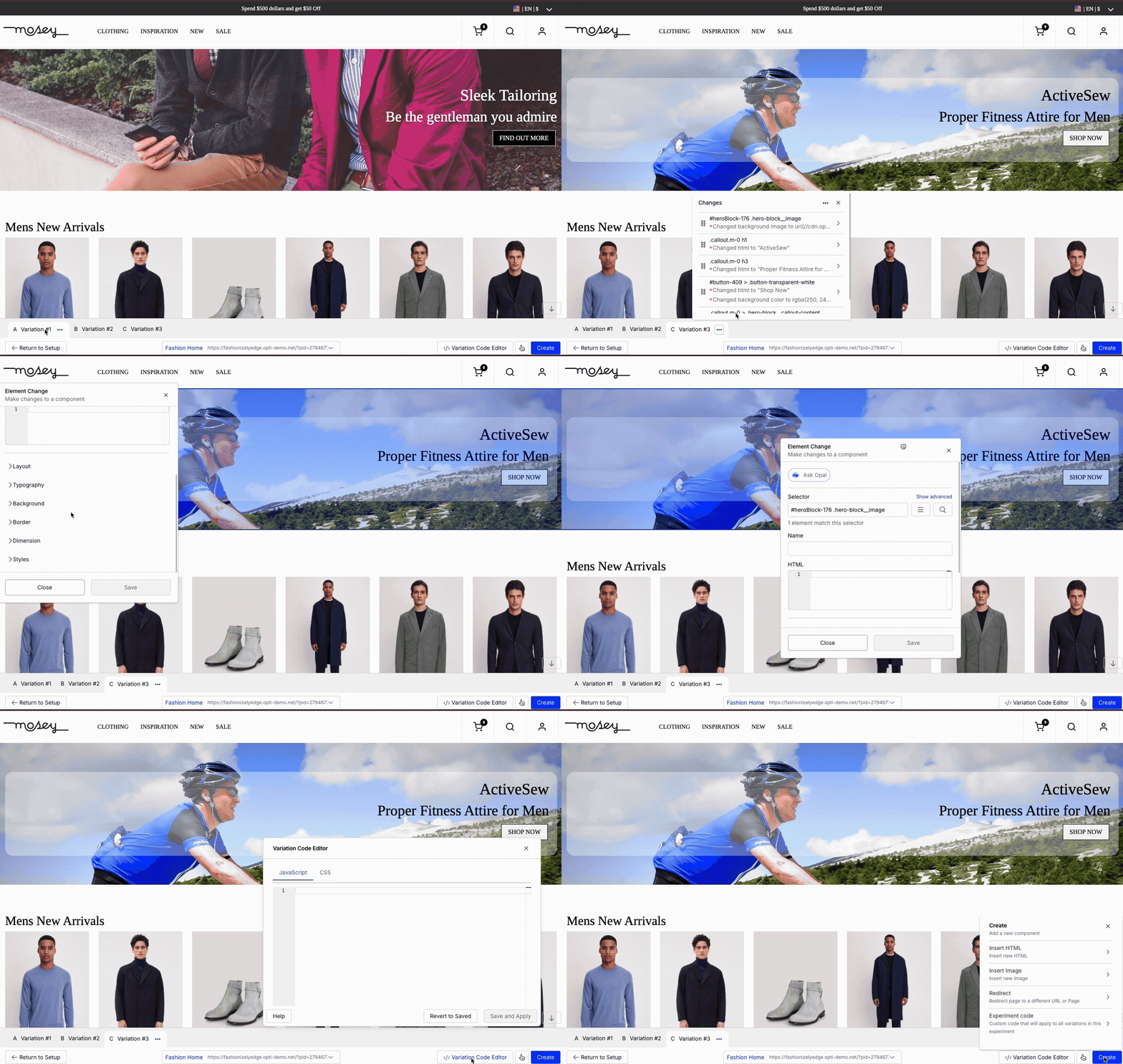
At the heart of both platforms is the ability to run experiments, yet the depth and technical execution of these tests differ significantly. Crazy Egg provides a visual editor that allows marketers to create design variants without developer intervention. Its experimentation suite focuses on standard A/B testing and split-URL testing. A notable feature in Crazy Egg is the Multi-Arm Bandit (MAB) testing, which uses machine learning to automatically direct traffic to the winning variant during the test, thereby reducing the "regret" or lost conversions associated with traditional fixed-split testing.
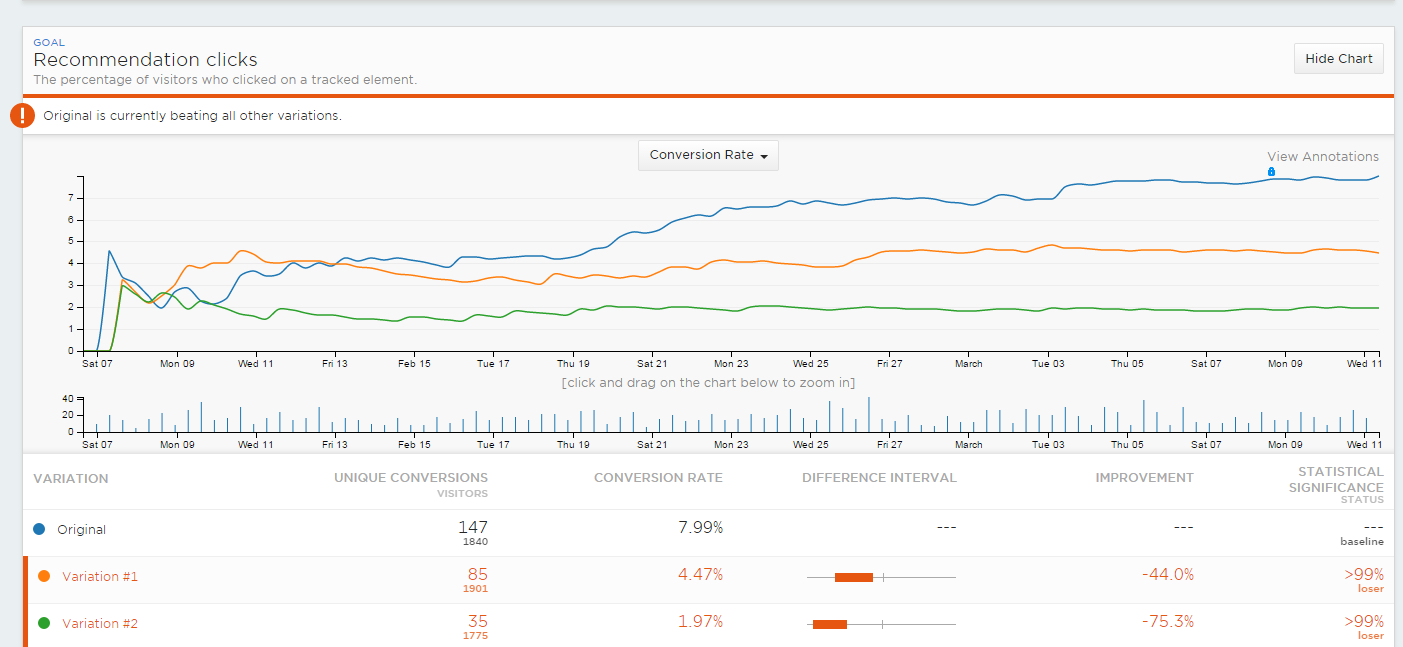
Optimizely’s Web Experimentation product offers a broader array of testing methodologies. Beyond standard A/B and MAB tests, it supports multivariate testing (MVT), which allows teams to test multiple variables simultaneously to see how they interact. Optimizely also offers "Feature Experimentation," a server-side testing product that allows developers to run experiments deep within the application’s code, facilitating feature flags and architectural tests that are invisible to the client-side browser. This is a critical requirement for high-traffic applications and SaaS products where performance and security are paramount.
Furthermore, Optimizely supports mutually exclusive experiment groups. This is a sophisticated feature for large organizations running dozens of tests simultaneously; it ensures that a user participating in one experiment is not influenced by another, preventing data "pollution." Crazy Egg, by contrast, focuses on the synergy between testing and behavioral data, automatically generating heatmaps and session recordings for every variant in an A/B test so that marketers can visually confirm why one design outperformed another.
Behavioral Insights and the "Voice of the Customer"
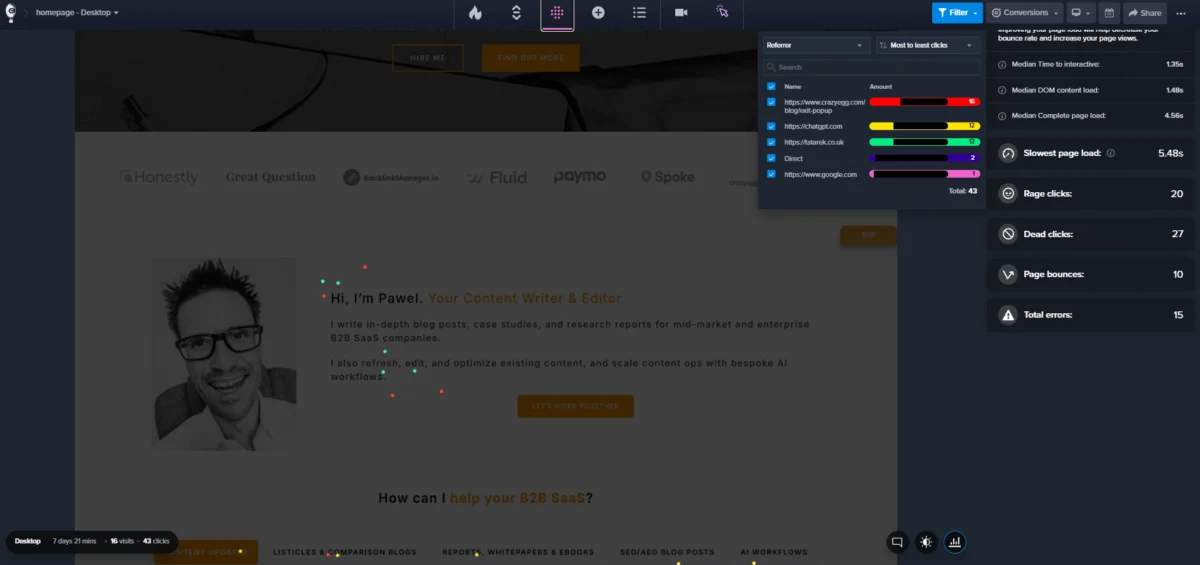
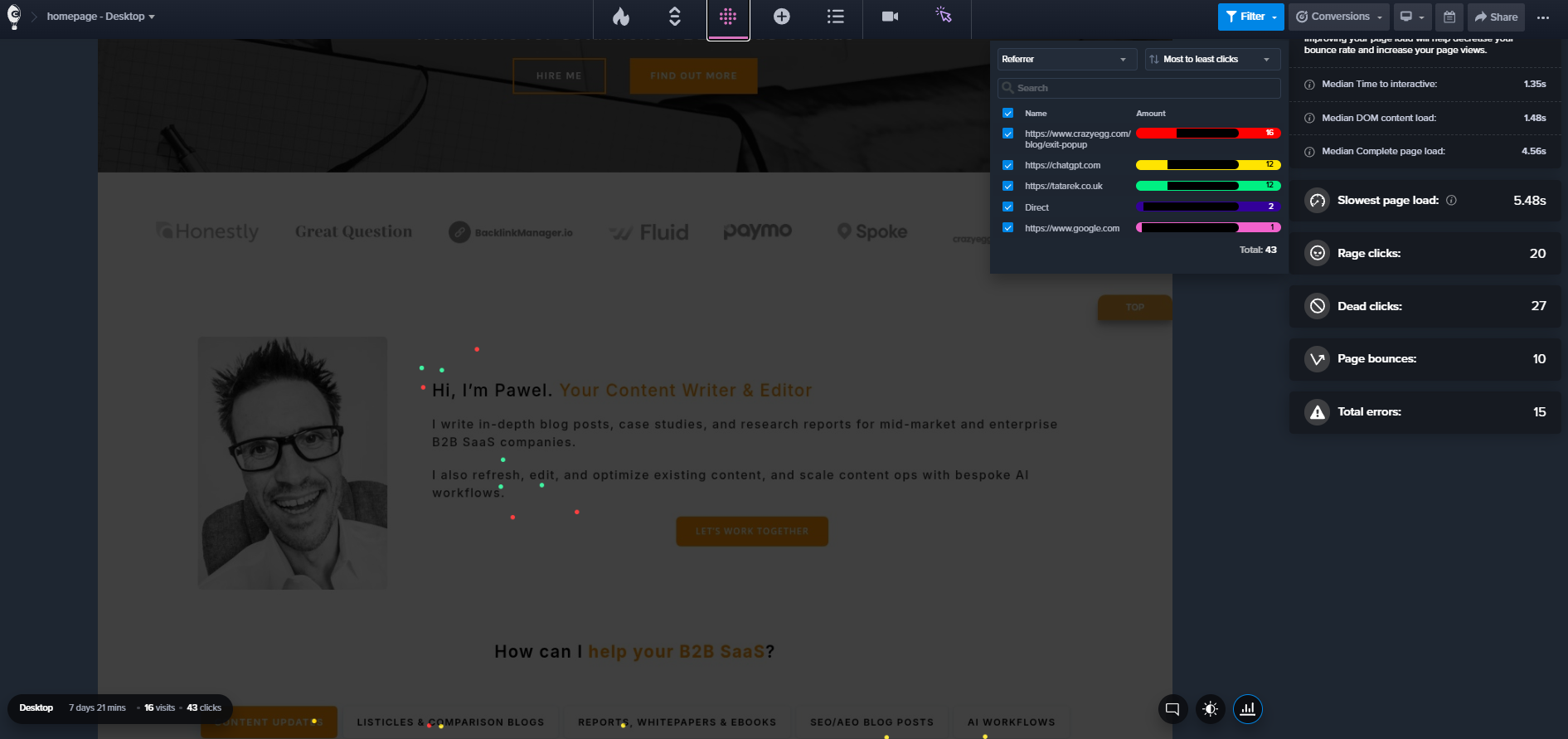
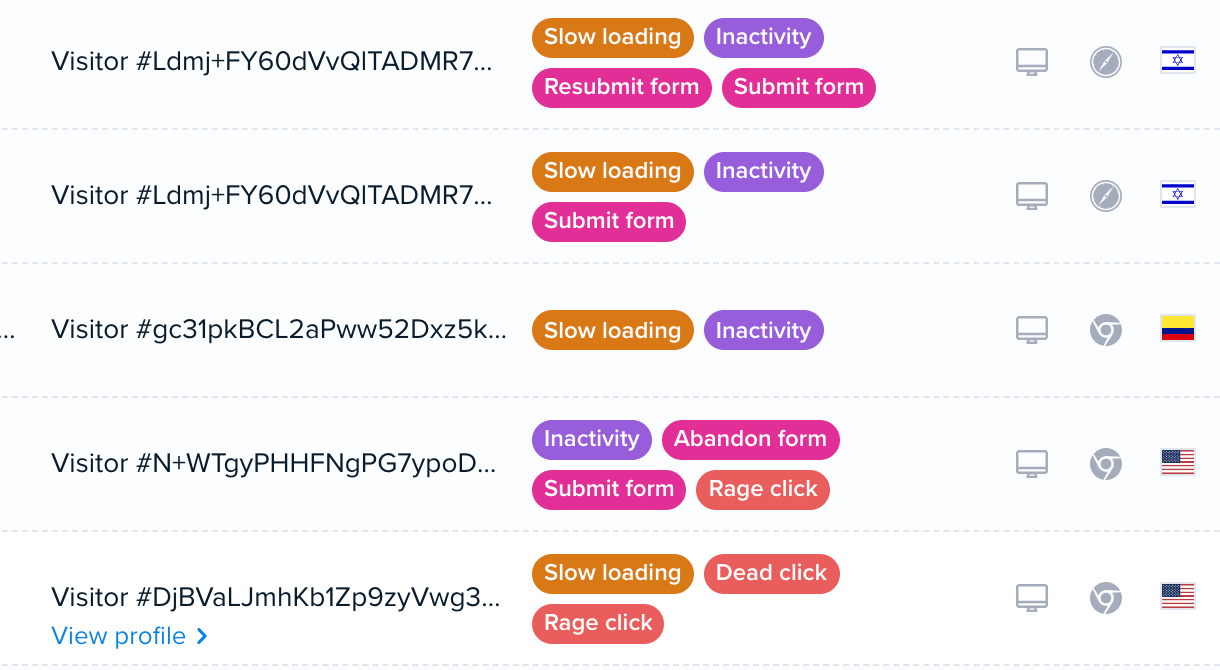
The methodology for gathering behavioral insights represents the most significant divergence between the two vendors. Crazy Egg remains a "native" powerhouse in this category. A single subscription includes five distinct types of heatmaps: click maps, scroll maps, confetti maps (which segment clicks by referral source), overlay maps, and list maps. These are supplemented by session recordings that auto-tag user behaviors such as "rage clicks" or "dead clicks," providing immediate indicators of UX friction. Crazy Egg also includes a native survey tool with over 50 templates, allowing for qualitative feedback collection that is directly linked to specific user session recordings.
Optimizely does not offer native heatmap or session recording tools. Instead, it relies on its "Opal" AI assistant and third-party integrations. To view a heatmap of an Optimizely experiment, a user must typically integrate a third-party tool like Hotjar, Microsoft Clarity, or Contentsquare. While Optimizely’s AI can interpret images of heatmaps from these external tools to suggest test ideas, the lack of native integration means that organizations must manage multiple vendors and tracking scripts to achieve the same level of insight that Crazy Egg provides out of the box.
Analytics, Data Warehousing, and Reporting
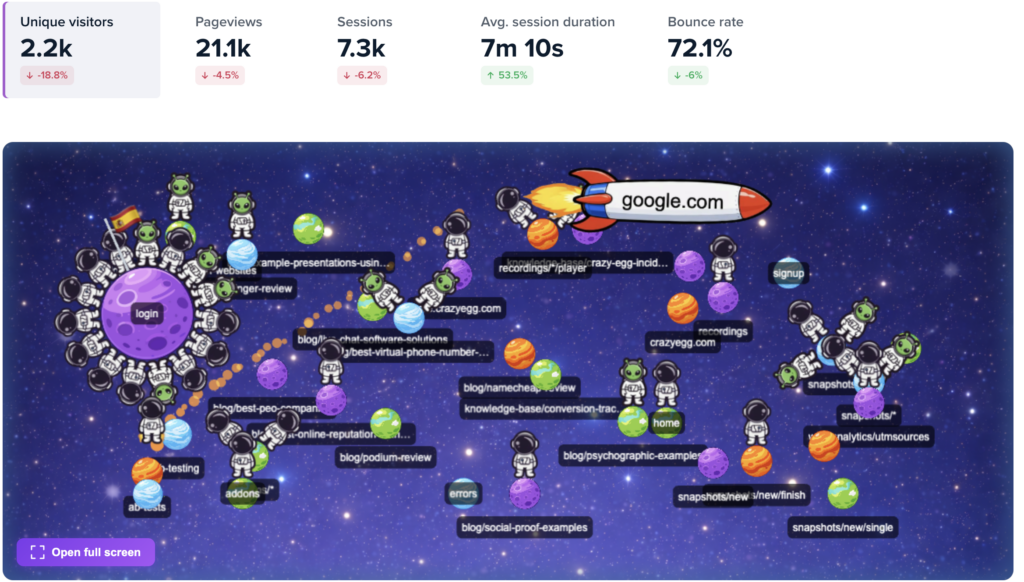
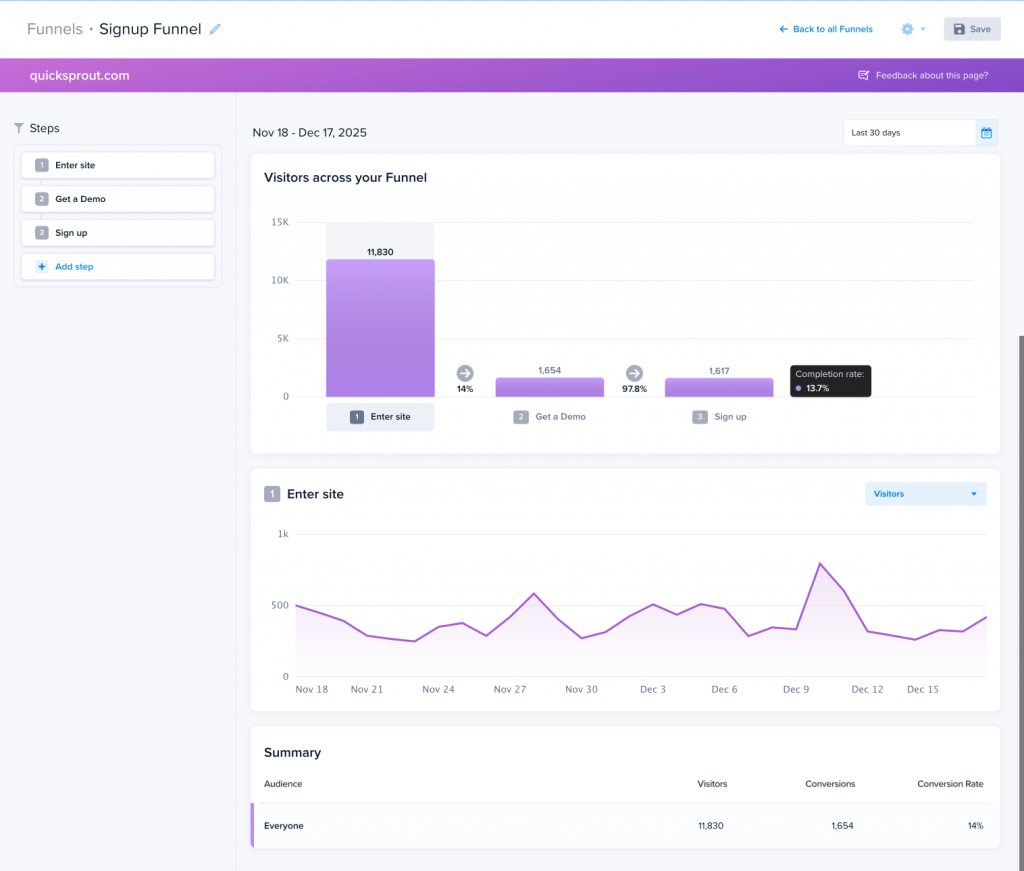
In the realm of analytics, Crazy Egg offers a user-friendly interface that acts as a bridge to Google Analytics 4 (GA4). Its "Web Analytics" dashboard provides eight core metrics, including unique visitors and bounce rates, while the "Astro Map" provides a real-time visual feed of visitor activity. One of Crazy Egg’s most praised features is its retroactive conversion funnels. Because the platform tracks events continuously, a user can build a funnel today and see how it would have performed using historical data, a feature that significantly speeds up the insight-to-action cycle.
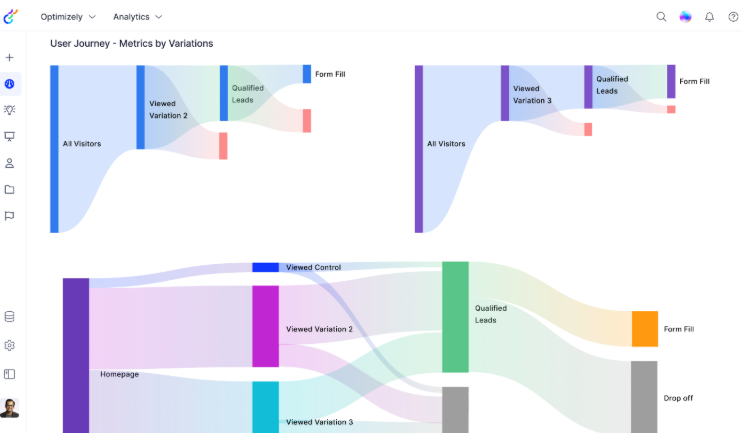
Optimizely has moved toward a "warehouse-native" analytics model. This approach is designed for enterprises that store their data in centralized warehouses like Snowflake, BigQuery, or Redshift. Optimizely Analytics provides multi-touch attribution and complex customer journey mapping, but it requires significant data engineering resources to model the data correctly. While this offers unparalleled depth for data scientists, it creates a higher barrier to entry for standard marketing teams. It is also important to note that Optimizely Analytics is a separately priced product, whereas Crazy Egg’s analytics features are bundled into its core plans.
The Rise of Artificial Intelligence in Optimization
Both companies have leaned heavily into AI to differentiate their offerings in 2024 and 2025. Crazy Egg’s AI focus is on "automated insights." Its engine analyzes raw behavioral data to produce plain-English recommendations, such as identifying specific pages where high bounce rates are linked to JavaScript errors. A new feature, "Tasks," currently in early access, aims to automate the entire optimization workflow. It can connect to GA4, identify a problem area, configure the necessary reports, and deliver an executive-ready PDF with specific page change recommendations.
Optimizely has rebranded much of its suite around "Agentic" capabilities. Its AI platform, Opal, is an orchestration layer that allows users to build and chain "agents" to perform marketing tasks. These agents can generate content, plan experiments, or conduct "Program Health Reviews." Optimizely also supports the Model Context Protocol (MCP), allowing external AI clients like Claude or Cursor to interact directly with experiment data. However, this power comes with a "credit" system; while users receive a monthly allowance, deep analytical tasks can quickly consume these credits, leading to additional costs.
Security, Compliance, and Enterprise Readiness
For organizations in regulated industries, security certifications are often the deciding factor. Optimizely holds an industry-leading array of certifications, including ISO 27001, ISO 27017, ISO 27018, SOC 2 Type 2, and QSA-audited PCI DSS. They offer regional data residency options (EU vs. US), which is vital for compliance with strict GDPR and Schrems II interpretations.
Crazy Egg, while fully GDPR and CCPA compliant, focuses on privacy-by-design for behavioral data. Its session recordings automatically mask sensitive form fields like passwords and credit card numbers. While it offers SAML Single Sign-On (SSO) and compliance audit logs for enterprise customers, its certification list is less extensive than Optimizely’s, reflecting its focus on the mid-market and agile enterprise segments rather than the highly regulated global finance or healthcare sectors.
Economic Implications: Total Cost of Ownership (TCO)
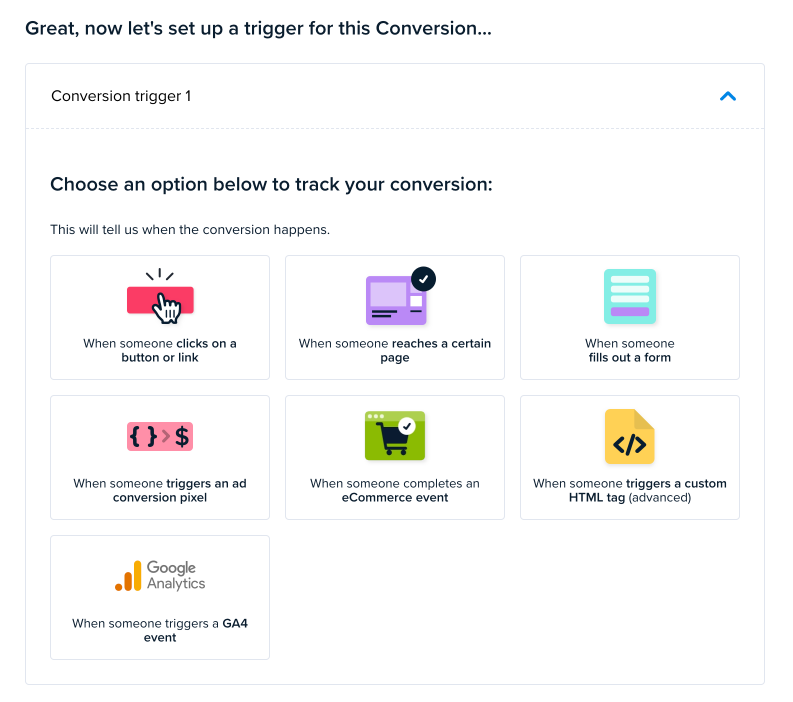
The financial commitment required for these platforms represents two different market tiers. Crazy Egg operates on a transparent, self-serve pricing model. Plans range from $29 to $599 per month, with the top-tier "Enterprise" plan covering unlimited experiments, surveys, and comprehensive behavioral tracking for up to 500,000 tracked visits. Implementation is typically handled via a single tracking script, allowing data to flow within hours.
Optimizely follows a quote-only, enterprise-sales model. Data from procurement platforms like Vendr suggests that mid-market experimentation contracts typically range from $50,000 to $80,000 per year, with a median contract value of over $81,000. When organizations add the Content Management System (CMS), Digital Asset Management (DAM), and Analytics products, the annual spend can easily exceed $200,000. Furthermore, implementation often requires professional services or specialized agencies, with setup costs ranging from $50,000 to over $200,000 depending on complexity.
Final Analysis and Market Impact
The choice between Crazy Egg and Optimizely is ultimately a choice between "agility and integration" versus "scale and ecosystem."
Crazy Egg is the optimal choice for organizations that need to move fast. It is designed for the "full-stack marketer" who needs to identify a problem with a heatmap, verify it with a recording, and launch a corrective A/B test in a single afternoon. Its all-in-one pricing makes it an efficient choice for companies looking to maximize their ROI without managing a complex "martech" stack.
Optimizely is the choice for the "digital-first enterprise" that views experimentation as a core competency across both marketing and product engineering. For companies already utilizing Optimizely’s CMS or commerce tools, the platform offers a unified "Golden Record" of the customer. While the cost and implementation hurdles are significantly higher, the ability to run server-side tests and integrate with enterprise data warehouses provides a level of sophistication that smaller tools cannot match.
As the industry moves further into the AI era, both platforms are positioned to reduce the manual labor of optimization. However, the fundamental difference remains: Crazy Egg seeks to simplify the "why" of user behavior for everyone, while Optimizely seeks to power the entire digital experience for the world’s largest brands. Organizations must weigh their internal technical resources, their long-term digital roadmap, and their budget to determine which of these two industry titans will drive their next phase of growth.







