

The digital marketing landscape offers a plethora of tools designed to connect businesses and creators with their audiences. Among the most prominent are ConvertKit, recently rebranded as Kit, and Brevo (formerly Sendinblue). While both platforms facilitate email marketing and audience engagement, they cater to distinct user profiles with specialized feature sets. ConvertKit is strategically tailored for content creators, such as influencers, bloggers, and digital product entrepreneurs, who primarily focus on monetizing and marketing their intellectual property. In contrast, Brevo positions itself as a robust solution for traditional businesses, particularly those managing extensive contact lists, complex sales pipelines, and comprehensive customer relationship management (CRM) needs. This article provides an in-depth comparison of their offerings, dissecting their pricing models, automation capabilities, marketing channels, contact management systems, monetization tools, and overarching use cases, drawing insights accurate as of September 2026.
A preliminary overview reveals significant divergences in their core philosophies and functionalities. Brevo, for instance, typically offers a more cost-effective solution as an audience grows, largely due to its pricing model based on monthly email volume rather than contact count. It also boasts impressive storage capacity, supporting up to 500,000 contacts for as little as $32 per month, though with a cap on email sends. ConvertKit, conversely, provides unlimited email broadcasts across all its plans but prices strictly by the number of contacts, leading to potentially higher costs for larger lists. A critical distinction is Brevo’s integrated CRM system, a feature entirely absent in ConvertKit, which instead focuses on advanced audience management. Conversely, ConvertKit stands alone in offering native content monetization tools, allowing creators to directly sell digital products, paid newsletters, and subscriptions, a functionality not available within Brevo.
User Sentiment and Market Perception
Understanding user experiences offers invaluable insight into each platform’s practical strengths and weaknesses. Both ConvertKit and Brevo generally receive overwhelmingly positive reviews across major platforms, consistently achieving 4+ ratings. Brevo tends to lead in satisfaction on business-focused review sites like G2, while ConvertKit often garners higher scores on platforms like Trustpilot, favored by individual creators and smaller businesses.
Brevo users frequently commend its ease of use, particularly highlighting the straightforward setup process and intuitive campaign scheduling. Derek P., a G2 reviewer, lauded Brevo for making it "easy for business owners to send transactional emails to their customers and to their business staff. It’s quick to set up, easy to understand, and it offers a considerable amount of free emails for the starter plan." This indicates Brevo’s success in simplifying complex email operations for commercial entities. However, negative feedback for Brevo often points to limitations in its more advanced features, such as automation complexity and design flexibility. Pravin G., another G2 user, expressed frustration, stating, "Some of the more advanced features feel a bit limited. Setting up basic email campaigns is straightforward, but when I need more complex automation or deeper segmentation, I sometimes end up relying on workarounds." This suggests that while Brevo excels at foundational tasks, it may require workarounds for highly sophisticated marketing strategies.
ConvertKit users, predominantly creators, equally praise its ease of use, particularly appreciating the simplicity of embedding forms and constructing emails. A verified user in consulting on G2 commented, "I use Squarespace for my website, and it’s easy to embed their forms on my websites and it’s easy to set up segments of people on my email list." This reflects ConvertKit’s intuitive interface for audience building. However, the most recurring complaint against ConvertKit is its pricing structure. Many users perceive it as expensive, especially as their subscriber lists grow. Dru R., another G2 reviewer, criticized the platform’s "extractive business practices Kit uses, like automatically ratcheting up account upgrades. They don’t make downgrades as easy and it’s incredibly hard to find that option." This highlights a significant concern for creators whose income streams might fluctuate, making predictable scaling a challenge. In essence, Brevo’s user complaints often center on feature depth, while ConvertKit’s primarily revolve around escalating costs.
Pricing Analysis: A Deep Dive into Cost Structures
The pricing models represent a fundamental divergence between ConvertKit and Brevo, directly influencing their suitability for different user bases. Brevo consistently offers a lower cost at most contact tiers because its pricing is based on the volume of emails sent per month. This means users pay for outgoing mail, regardless of how many contacts they store, up to a generous limit. ConvertKit, conversely, charges based on the number of contacts, offering unlimited email sends across all paid plans.
For a clearer comparison, let’s examine their Starter and Standard plans for Brevo against ConvertKit’s Creator and Pro plans, assuming monthly billing without discounts for up to 20,000 contacts:
| Contacts | Brevo Starter | Brevo Standard | Brevo sends/month | ConvertKit Creator | ConvertKit Pro |
|---|---|---|---|---|---|
| 1,000 | $17 | $35 | 10,000 | $33 | $66 |
| 2,500 | $25 | $49 | 15,000 | $50 | $83 |
| 10,000 | $32 | $69 | 20,000 | $116 | $158 |
| 20,000 | $32 | $69 | 20,000 | $158 | $225 |
Prices accurate as of September 2026.
A striking example of Brevo’s cost advantage is its Starter plan, which for $32 per month, allows for 20,000 monthly emails and supports storage for up to 500,000 contacts. The price remains constant whether you send to 10,000 or 20,000 contacts within that email volume limit. To house 500,000 contacts on ConvertKit, the cost would exceed $2,000 per month, highlighting a significant financial disparity for users with very large audiences. Even at just 1,000 contacts, ConvertKit’s cheapest paid plan ($33/month) is already more expensive than Brevo’s $32 Starter tier, which offers vastly more contact storage. This makes Brevo an attractive option for businesses with extensive but potentially less frequently engaged contact lists, or those managing high-volume transactional emails where the number of sends is predictable.
Free Plan Comparison:
The free tiers also reflect these differing philosophies. Brevo Free offers substantial contact storage, up to 100,000, but imposes a daily email send cap of 300 (approximately 9,000 per month). ConvertKit Free, while offering unlimited email broadcasts, limits contact storage to 10,000. Both free plans include branding on assets. Brevo’s free plan also supports email, SMS, and MMS channels, providing more multichannel options from the outset compared to ConvertKit’s email-only approach. While ConvertKit’s unlimited sends on its free plan might appeal to burgeoning creators, its stricter contact limit means users will be pushed to a paid plan sooner than with Brevo if their list grows rapidly.
Automation and Workflow Capabilities
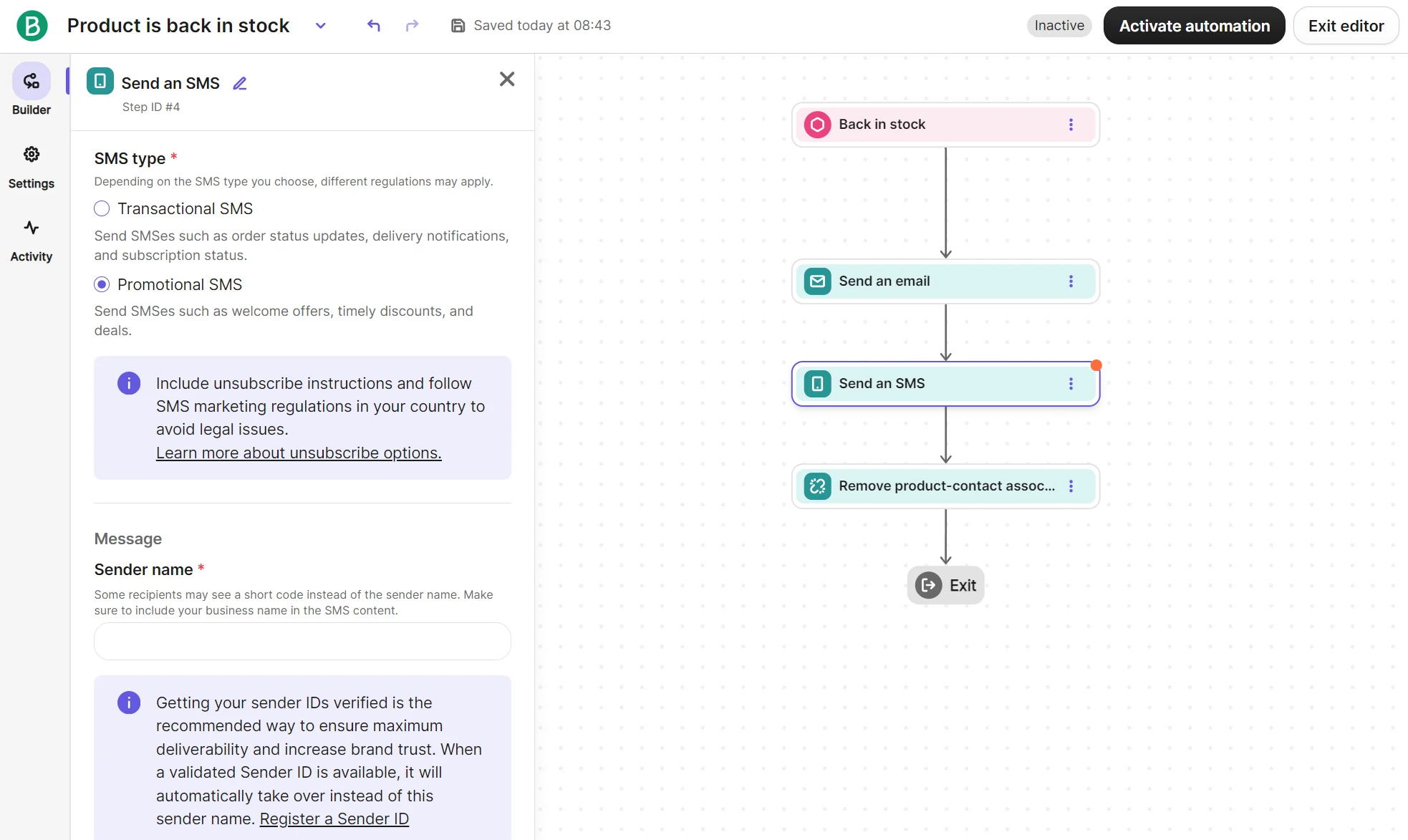
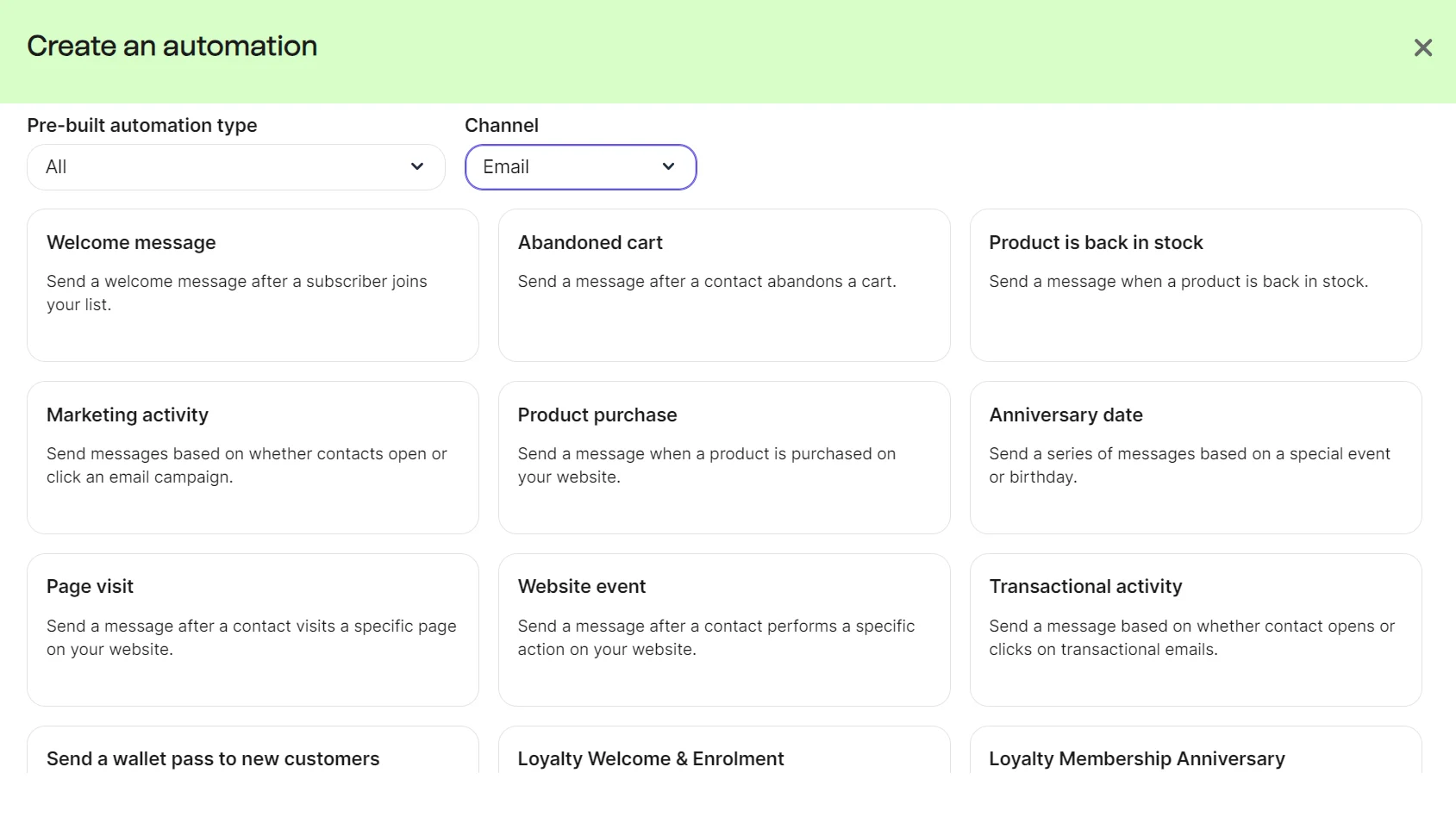
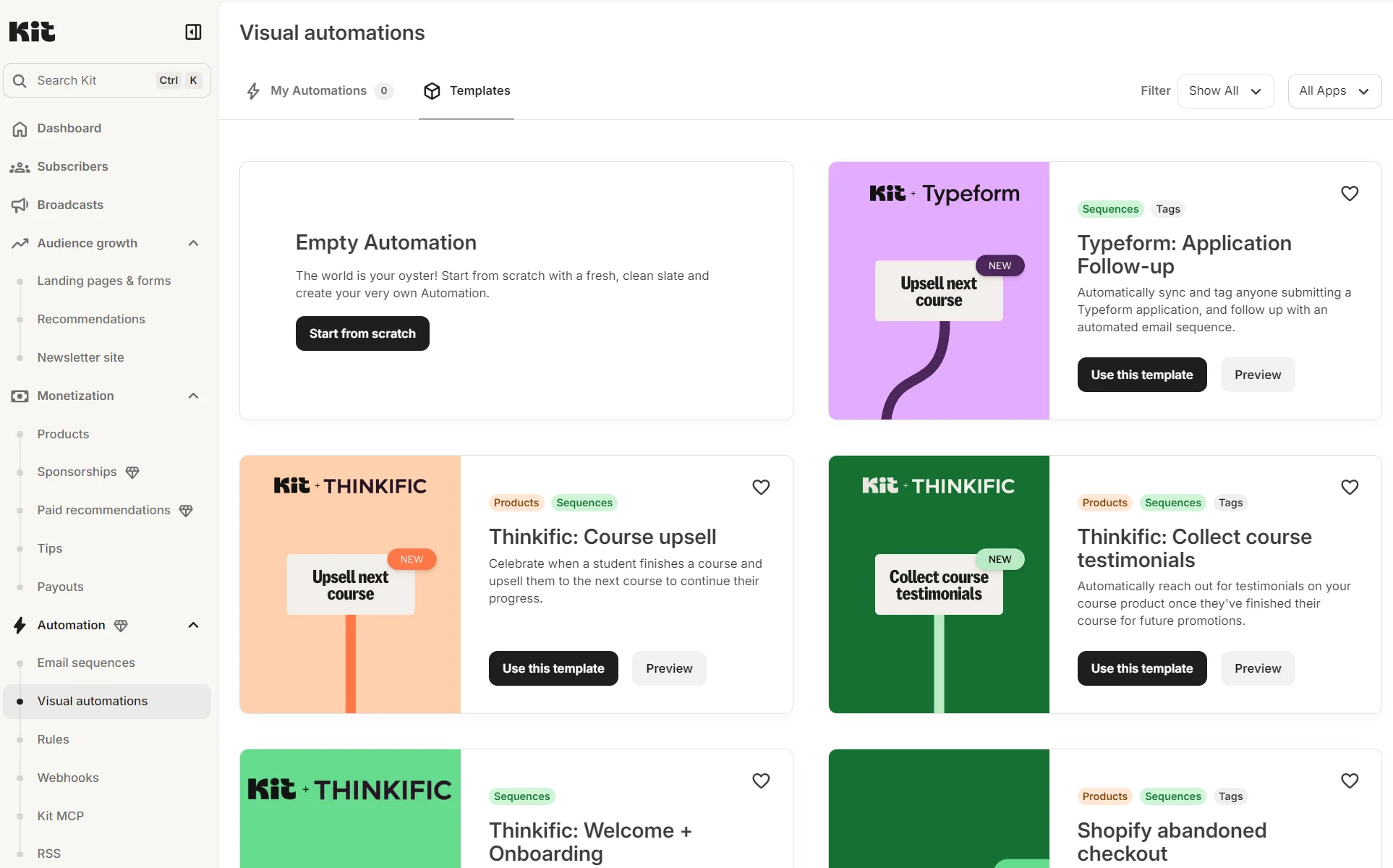
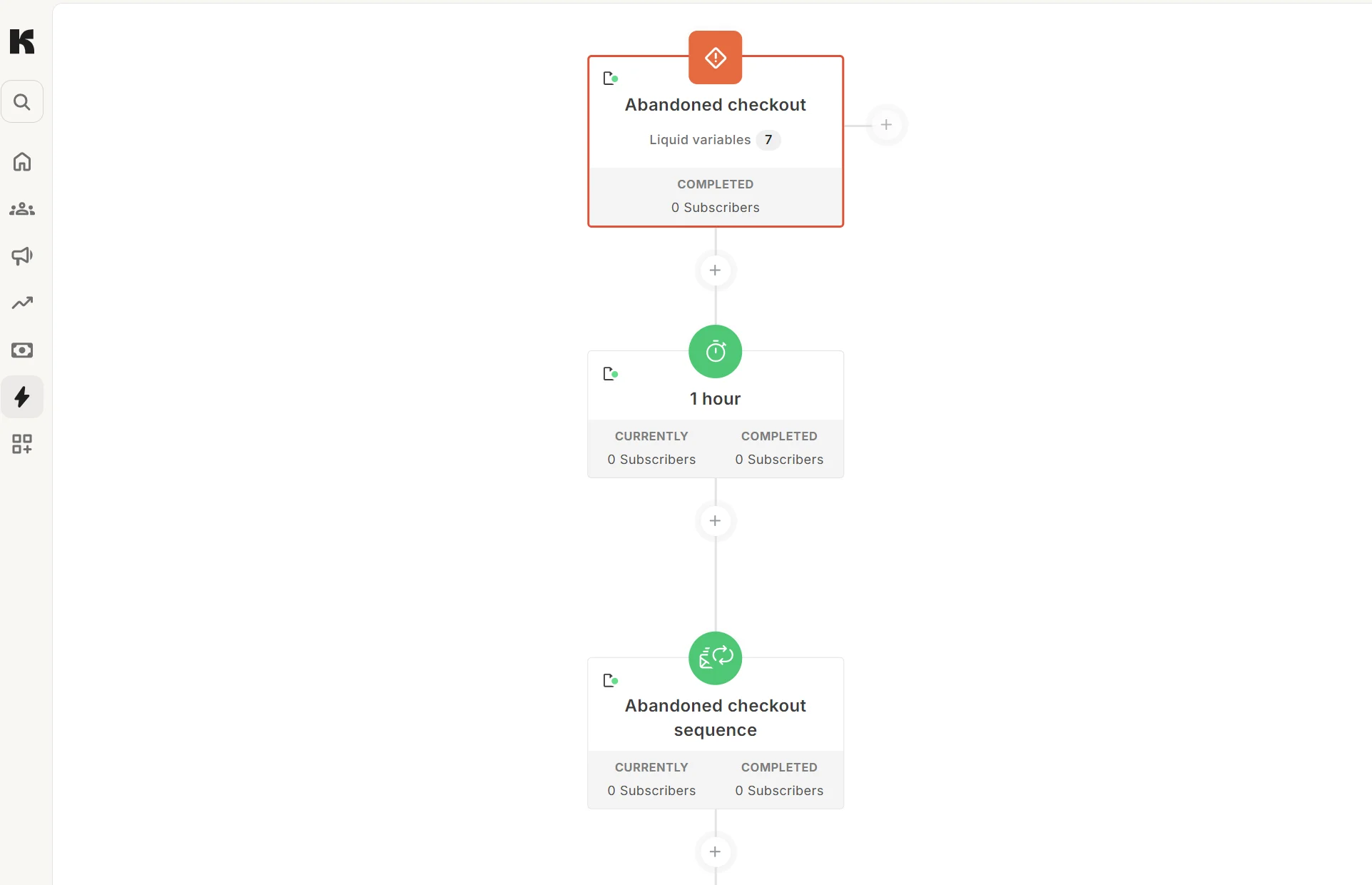
Automations are the backbone of efficient digital marketing, and both platforms offer robust tools, albeit with different focuses. ConvertKit boasts a larger library of over 60 pre-built visual automation templates, more than double Brevo’s offering. However, many of ConvertKit’s templates are tailored for integrations with specific creative tools like Shopify, Thinkific, Calendly, and Typeform, which might not be relevant to all users. Brevo’s 15 email and 4 SMS automation templates are predominantly e-commerce-focused, covering scenarios like abandoned carts, welcome sequences, back-in-stock alerts (Starter plans and above), and anniversary messages. It also includes more generic automations triggered by marketing activity (email opens/clicks) or website events.
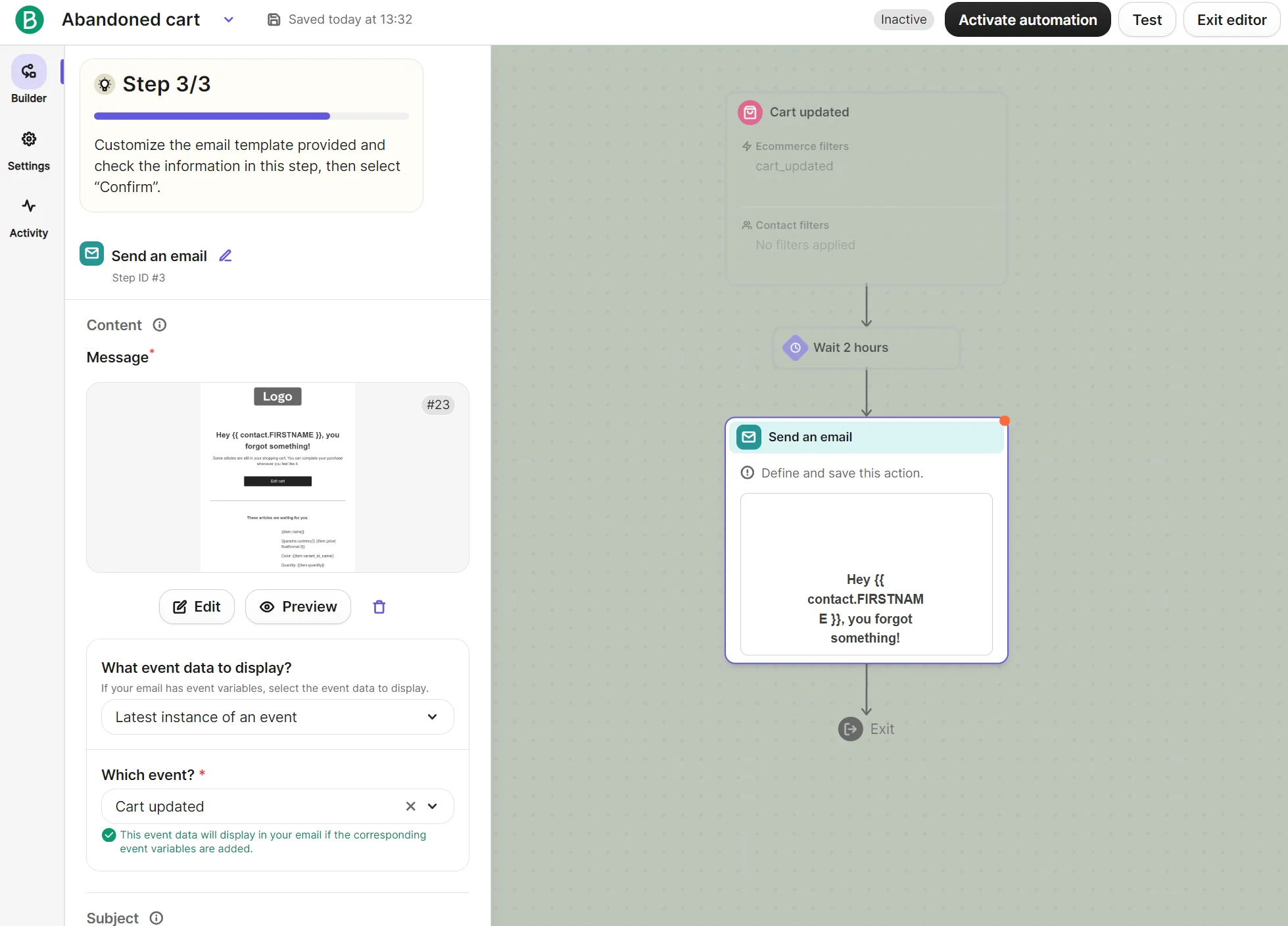
A unique advantage for Brevo is its ability to percentage-split a workflow to A/B test two different versions against each other, a critical feature for optimizing campaign performance that ConvertKit lacks. Brevo’s Aura AI agent further enhances automation creation, allowing users to build workflows from natural language prompts or a guided mode, generating both the trigger and message. The process for setting up a pre-built abandoned cart automation in Brevo is streamlined with a three-step workflow that guides beginners, a feature not found in ConvertKit.
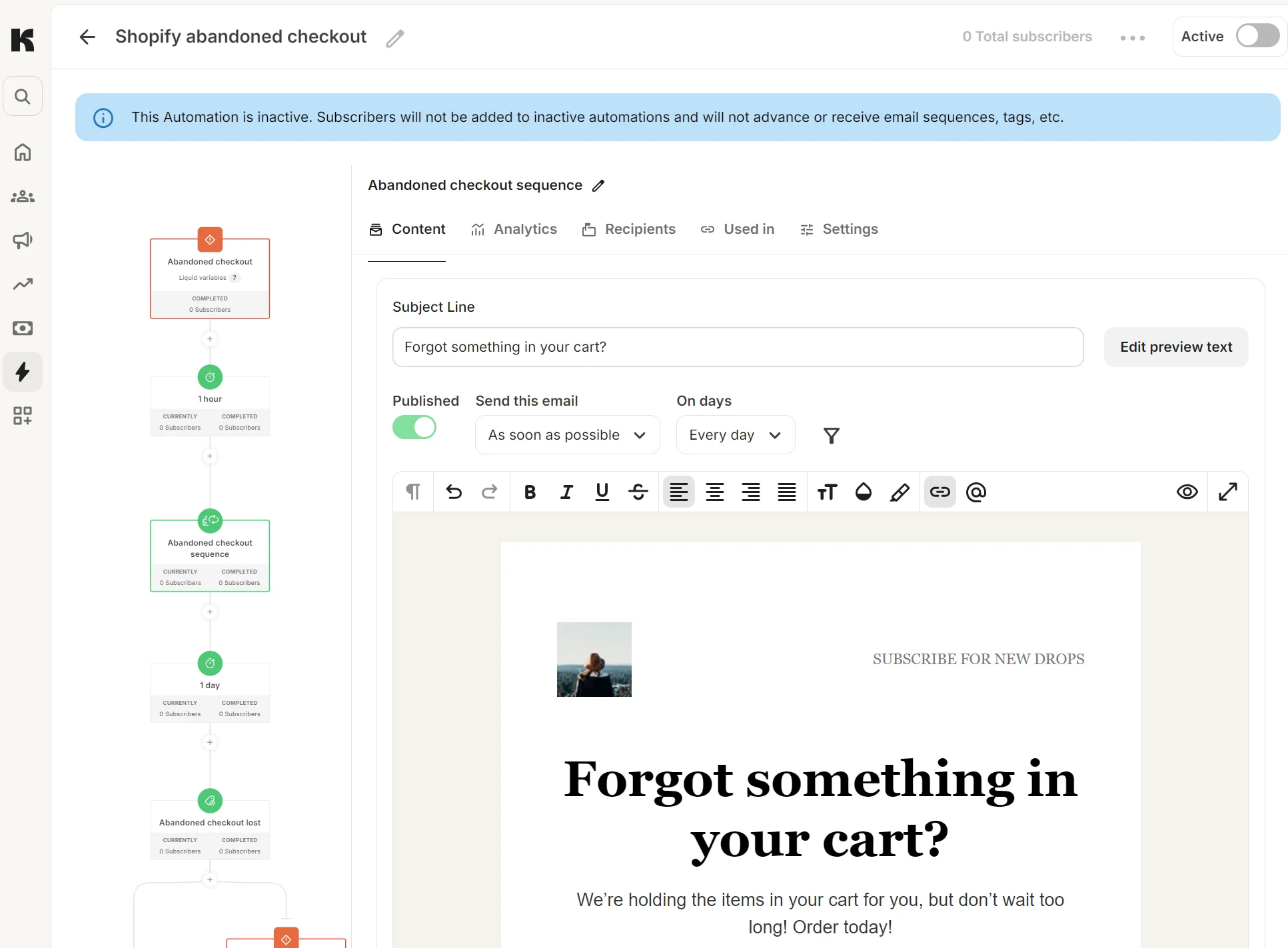
ConvertKit’s "visual automations" are highly praised for their intuitive drag-and-drop interface. Entry points for automations created from scratch include "joins a form," "tag is added," "custom field," and "product purchased," with the option to use an app as an entry point. A standout feature in ConvertKit’s automation builder is the side-loading email editor. This allows users to amend email designs directly alongside the automation builder without navigating to a new tab, significantly speeding up the workflow. ConvertKit automations are capped at five entry points per automation, providing a structured approach for creators.
CRM and Contact Management
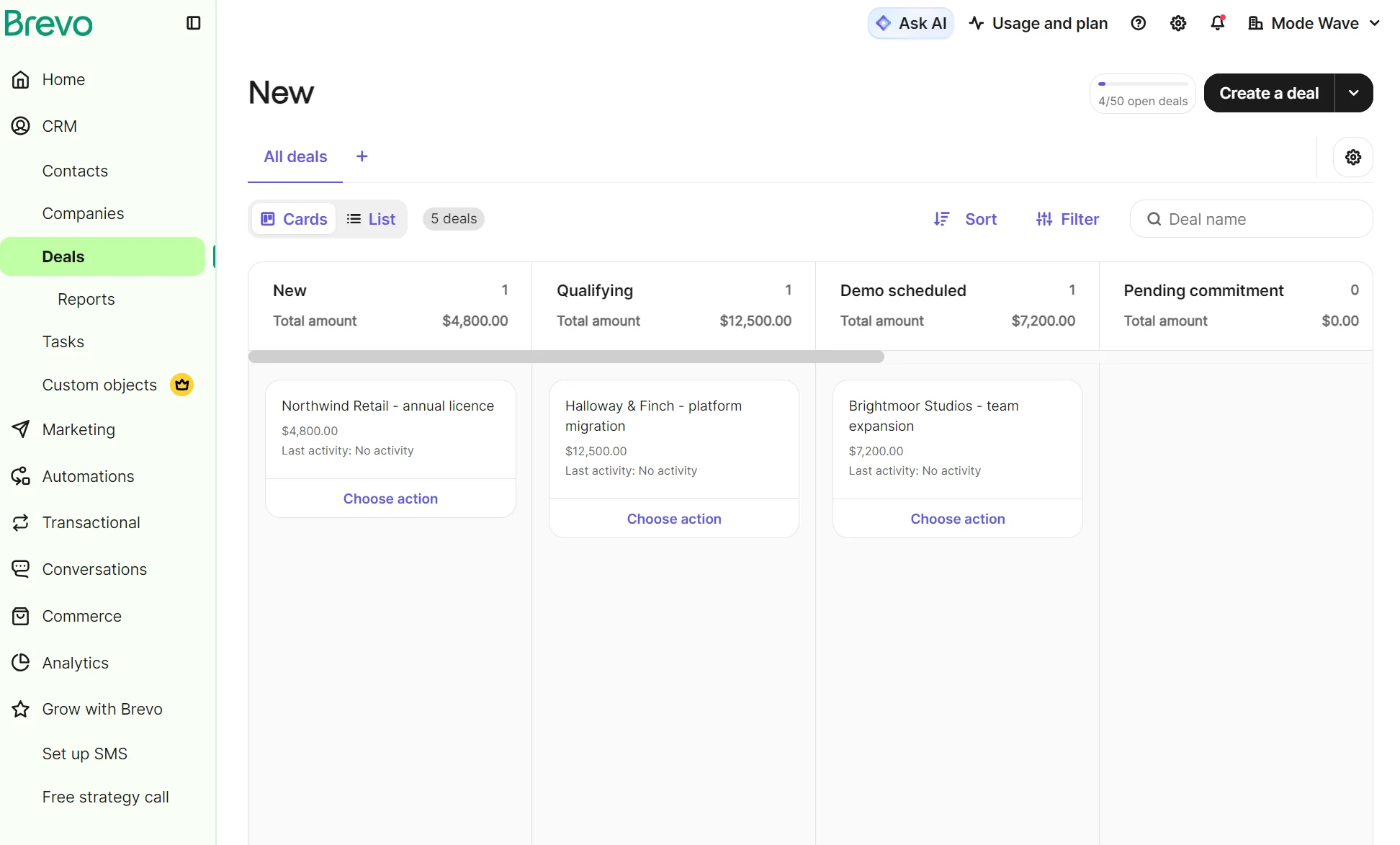
This is where Brevo fundamentally distinguishes itself. Brevo offers a comprehensive, built-in Customer Relationship Management (CRM) system, making it an ideal choice for businesses with complex sales cycles, lead nurturing, and customer support needs. All Brevo plans include a "Sales Free" package, which provides features like managing 50 open deals, automated meeting scheduling, revenue reports, and forecasting. For more advanced requirements, users can upgrade to "Sales Essentials" ($31/month per seat) for unlimited open deals, sales workflows, and AI contact enrichment, or "Sales Advanced" ($65/month per seat) which adds VoIP, multiple currencies, outreach sequences, and round-robin scheduling.
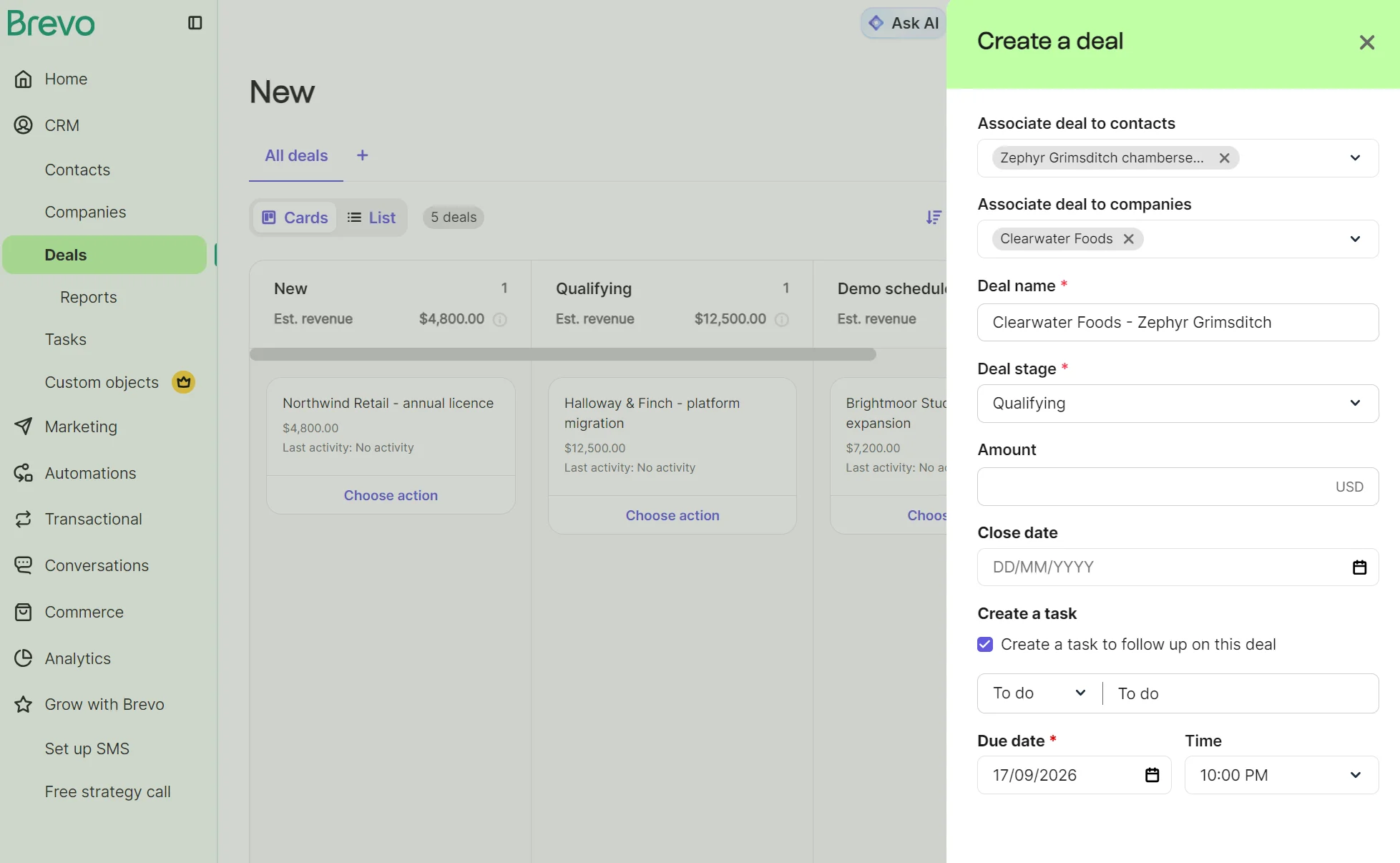
The "Deals dashboard" in Brevo is a central hub for sales teams, allowing them to track potential and current customers through various stages such as "New," "Qualifying," "Demo scheduled," and "Pending commitment." Each stage clearly displays the contacts within it, their associated value, and the last activity, providing a holistic view of the sales pipeline.
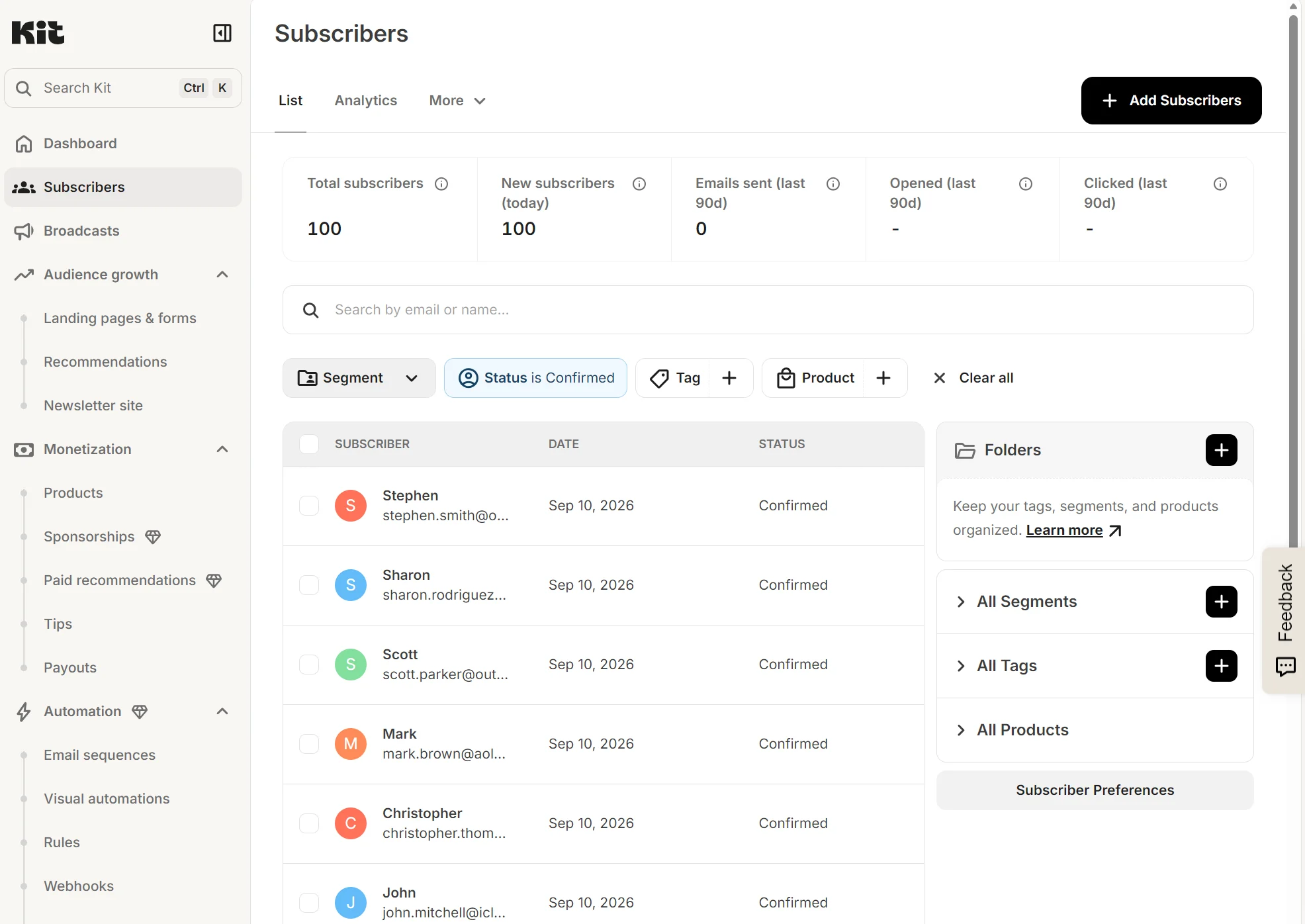
ConvertKit, by design, does not offer a CRM. Its focus remains squarely on audience management for creators. While it allows users to view and filter subscriber data in a dashboard, including basic profiles, there are no pipelines, deal stages, or sales-oriented features. This reflects its target audience, who typically manage their "customers" as "subscribers" and whose primary interaction is content delivery and direct sales of digital products, rather than managing a traditional sales funnel. For a creator, the lack of a CRM is not a deficiency but a reflection of a different business model. For a product or service business, however, Brevo’s integrated CRM is a critical advantage.
Integrations and Ecosystem
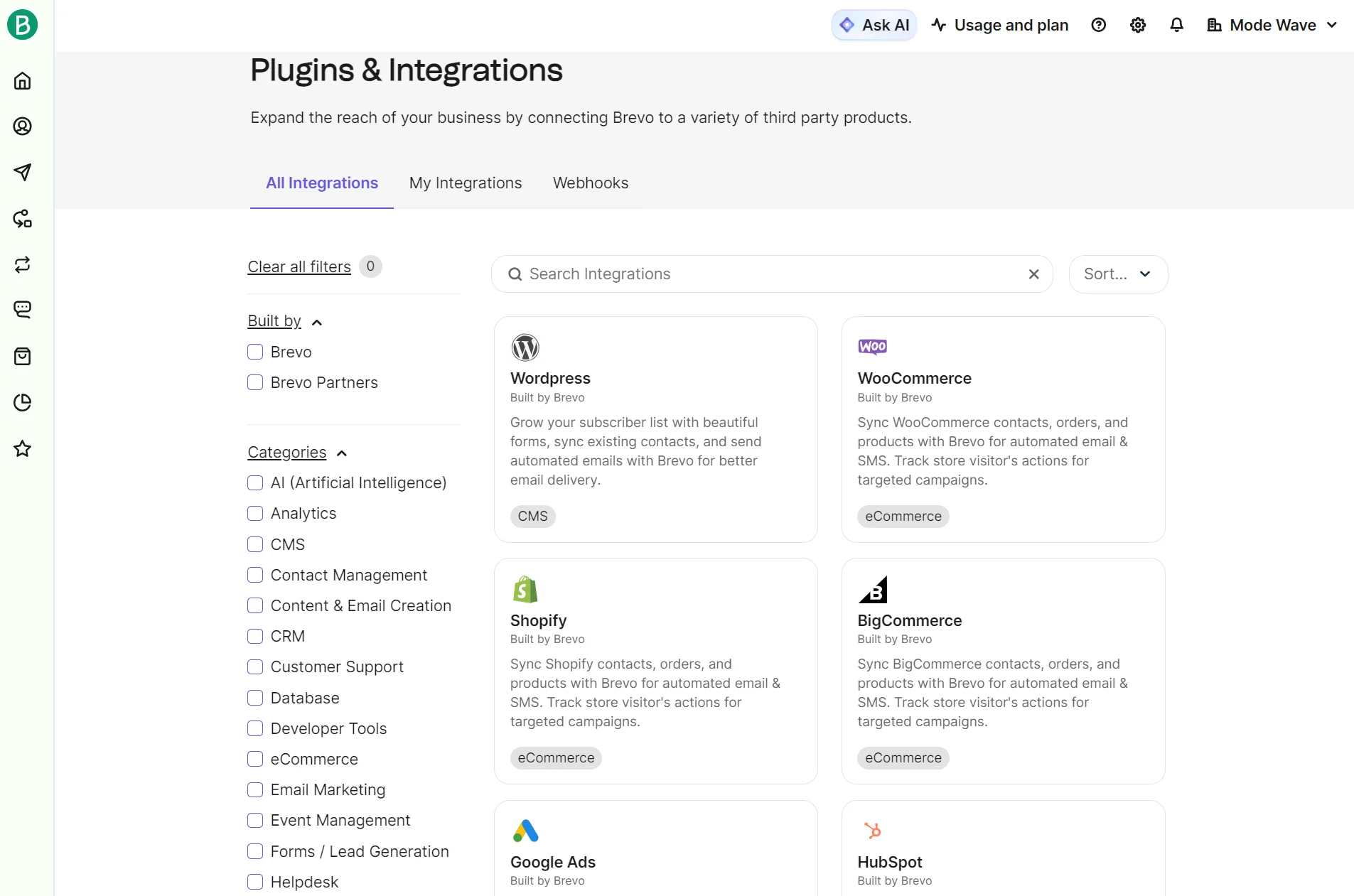
The breadth and type of integrations reveal further insights into each platform’s target market. Brevo integrates with over 140 applications, while ConvertKit supports over 100. Both platforms offer essential e-commerce integrations with popular platforms like Shopify, WooCommerce, WordPress, and Wix, enabling synchronization of contacts and orders.
Brevo’s integration ecosystem is geared towards general business operations, with a strong emphasis on e-commerce, analytics, and sales. It significantly outperforms ConvertKit in categories like Analytics (24 apps vs. 11) and, crucially, CRM. Brevo integrates with leading CRM solutions such as HubSpot, Zoho, and Salesforce, making it a powerful hub for businesses that already rely on these systems or require sophisticated lead management.
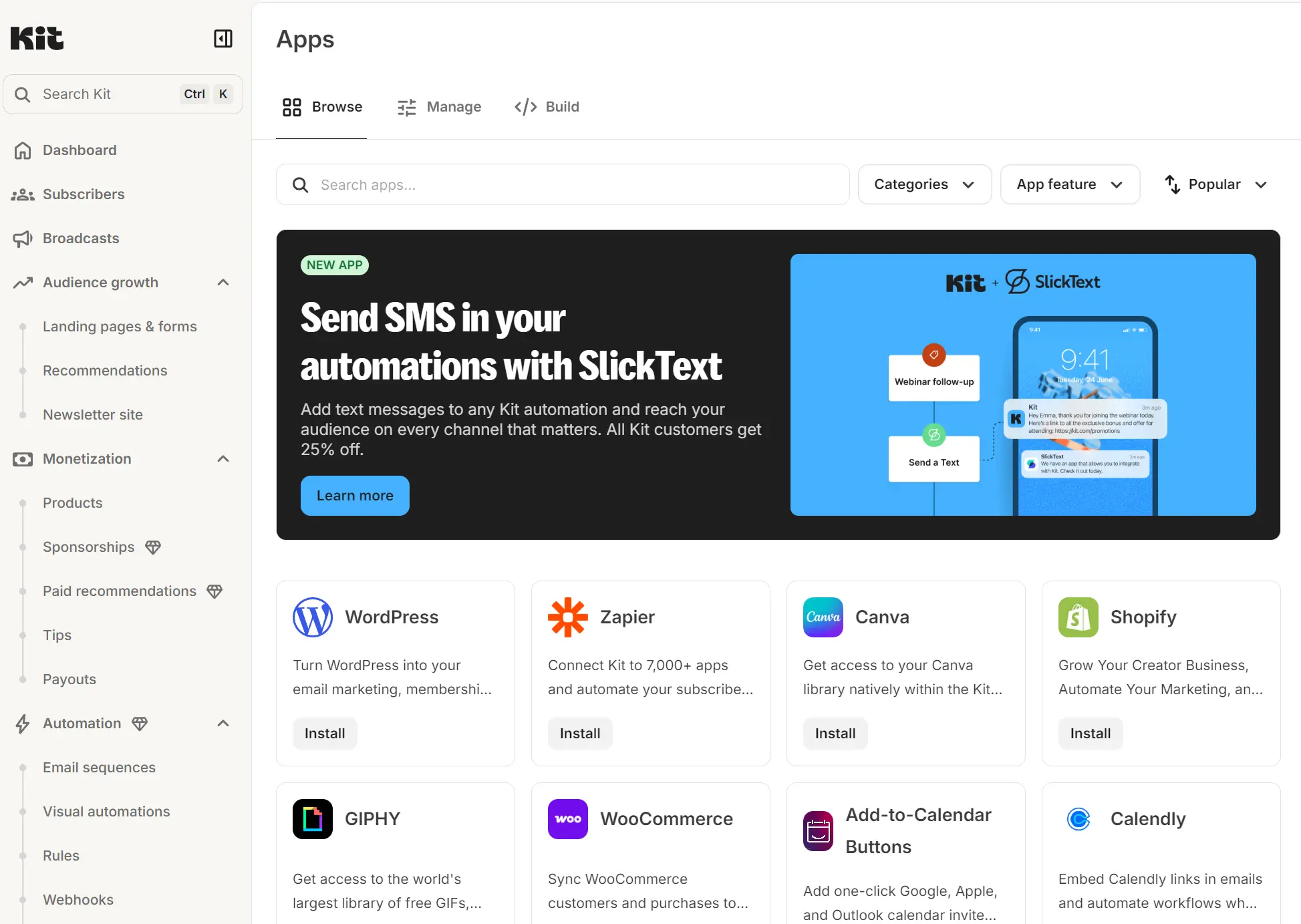
ConvertKit’s value, conversely, lies in its integrations with creative and niche platforms. Its ecosystem includes tools for course creation (Thinkific), scheduling (Calendly), surveys (Typeform), and even engaging content like GIPHY and TeachKit. This aligns perfectly with its creator-centric audience, enabling them to connect their content creation and distribution tools seamlessly.
Both platforms leverage Zapier, a powerful automation tool that allows them to connect with thousands of other applications, effectively bridging any direct integration gaps. The availability of both third-party and self-developed apps in their marketplaces underscores their commitment to expanding functionality.
Multichannel Marketing: Beyond Email
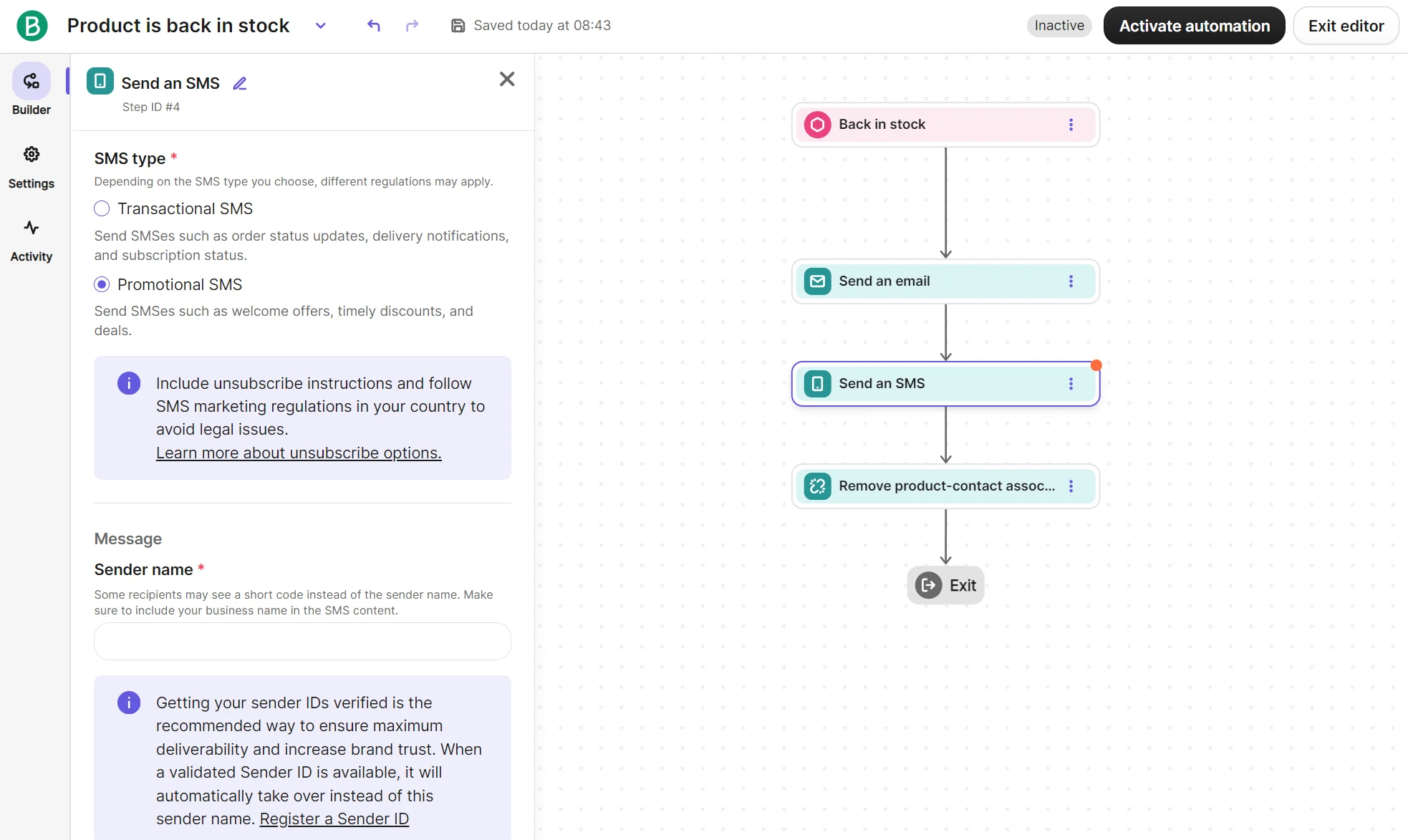
In an increasingly omnichannel world, the ability to reach customers across various communication channels is paramount. This is another area where Brevo demonstrates a significant advantage for traditional businesses. Brevo natively includes SMS and MMS capabilities across all its plans, allowing for both promotional and transactional text messages. Users purchase prepaid SMS credits that roll over without expiring, offering flexibility. Furthermore, Brevo’s Starter plan includes web push notifications, while its Professional plans extend this to mobile push and WhatsApp, providing a truly comprehensive multichannel marketing suite. Brevo’s SMS coverage spans over 180 countries, offering global reach.
ConvertKit, in stark contrast, maintains an email-only native channel focus. While it "advertises" SMS marketing from its Creator plan, this functionality is not native. It requires integration with a third-party service like SlickText, which necessitates a separate paid subscription with that vendor, in addition to a paid ConvertKit plan. This reliance on an external service also limits SMS support to the United States and Canada. This clear difference means that for any business prioritizing a robust, integrated multichannel strategy that goes beyond email, Brevo is the unequivocal choice. ConvertKit’s singular focus on email is a byproduct of its newsletter-first approach, catering primarily to creators and small businesses selling digital products who may not require broader channel outreach.
Content Monetization Features
For content creators, the ability to directly monetize their work within their marketing platform is a game-changer, and this is ConvertKit’s undisputed forte. Brevo offers no native content monetization tools whatsoever.
ConvertKit’s monetization features are robust and varied, with some advanced options available in higher-tier plans. Across all plans, users can sell their own digital products (e.g., e-books, courses), paid newsletters, and recurring subscriptions. It also allows for the setup of "virtual tip jars," enabling direct audience support. The Creator and Pro plans further enhance monetization with features like Paid Recommendations and newsletter sponsorships. The Paid Recommendations platform allows creators to earn additional revenue by recommending other newsletters, while newsletter sponsorships facilitate running ads within their content.
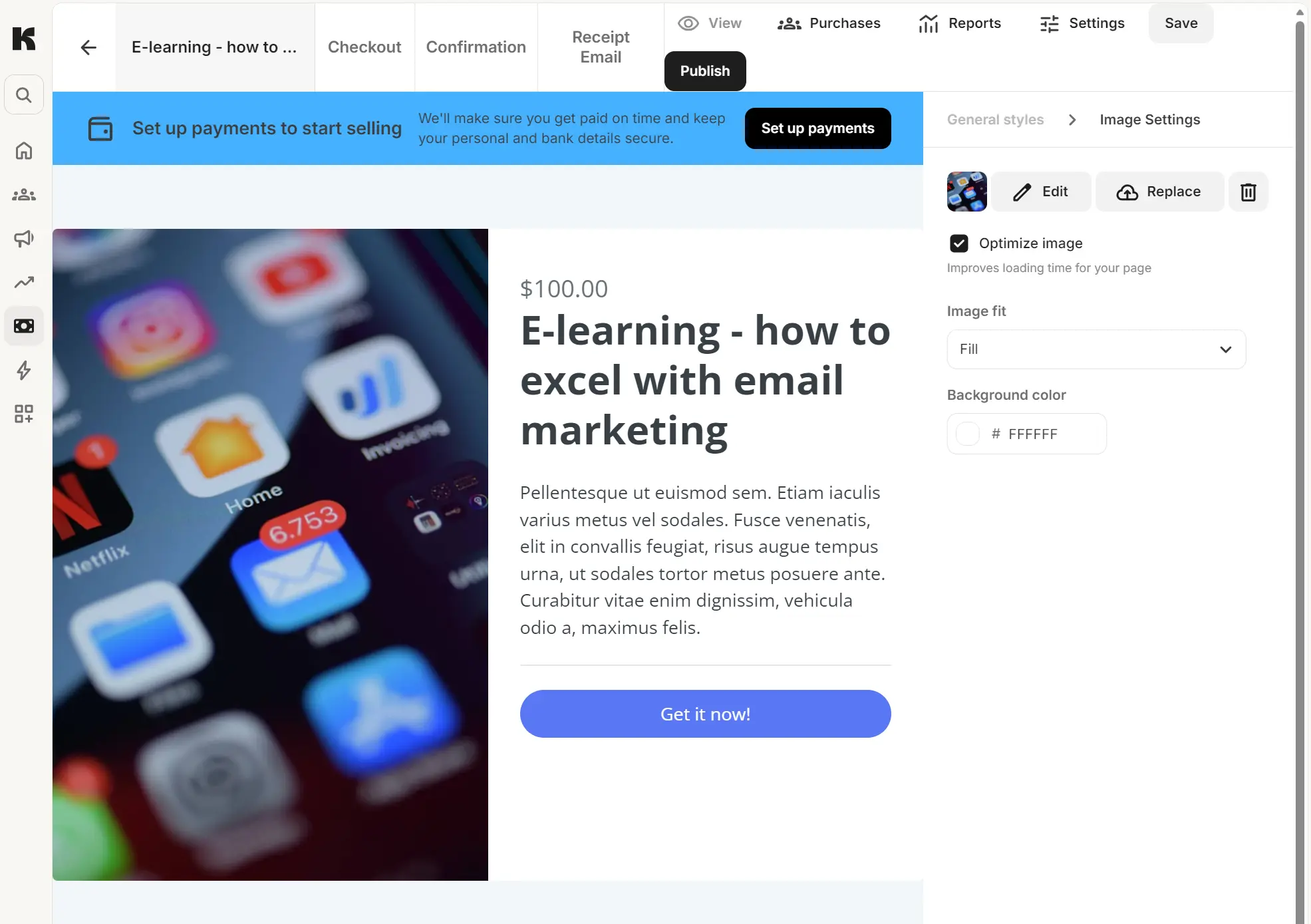
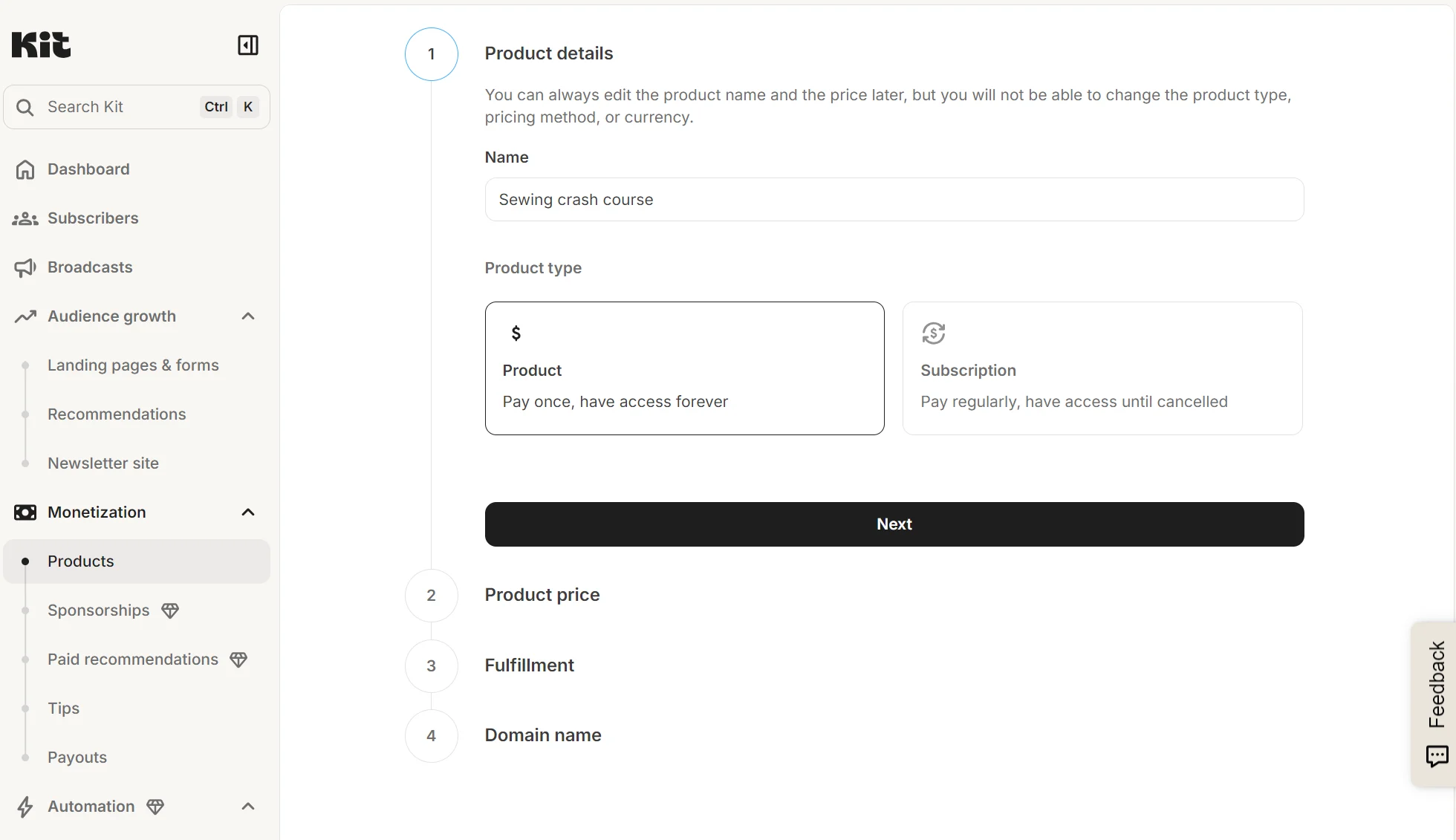
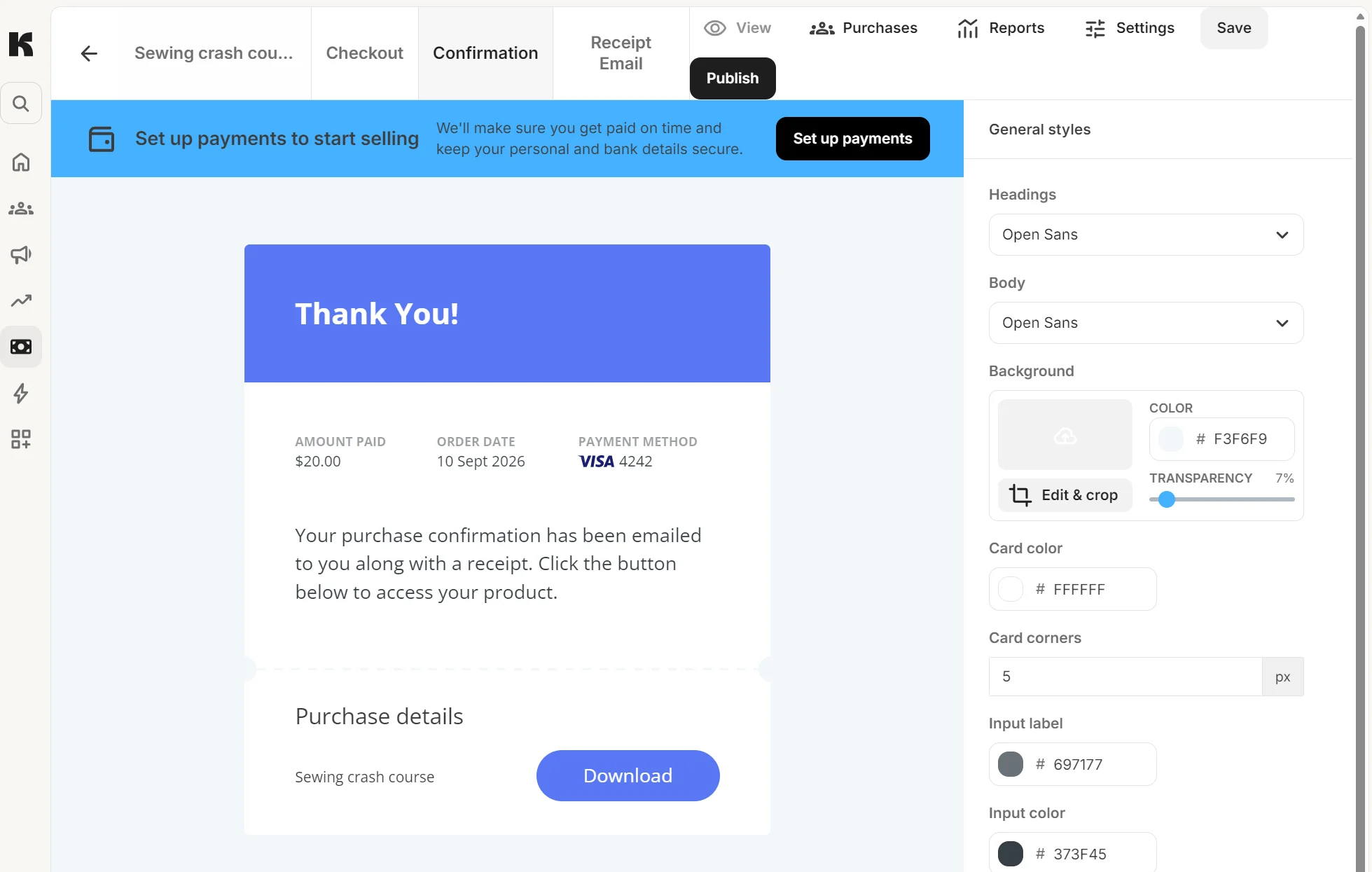
Building a digital product in ConvertKit is remarkably fast and intuitive. The platform’s product builder can guide users through the setup of an e-learning course in as few as four steps, taking less than a minute. The product page editor provides comprehensive customization options for checkout, confirmation, and receipt emails, all accessible from a single interface.
It’s important to note that ConvertKit’s monetization features come with transaction fees. Beyond the base subscription plan, users incur a 3.5% + $0.30 transaction fee per sale. Paid Recommendations carry a higher fee of 23.5%, reflecting the platform’s role in facilitating these partnerships. These fees are transparent and are a necessary consideration for creators building their business models around ConvertKit’s direct monetization capabilities.
Email Deliverability and Reporting
Maintaining high email deliverability is crucial for any email marketing effort, ensuring messages reach their intended inboxes rather than spam folders. Both ConvertKit and Brevo claim impressive delivery rates, with ConvertKit stating 99.8% and Brevo claiming 99% for transactional emails. While these numbers are excellent, the reality is that both platforms provide the necessary infrastructure and domain authentication tools (SPF, DKIM, DMARC) to facilitate strong deliverability. The key difference lies in their reporting and diagnostic tools.
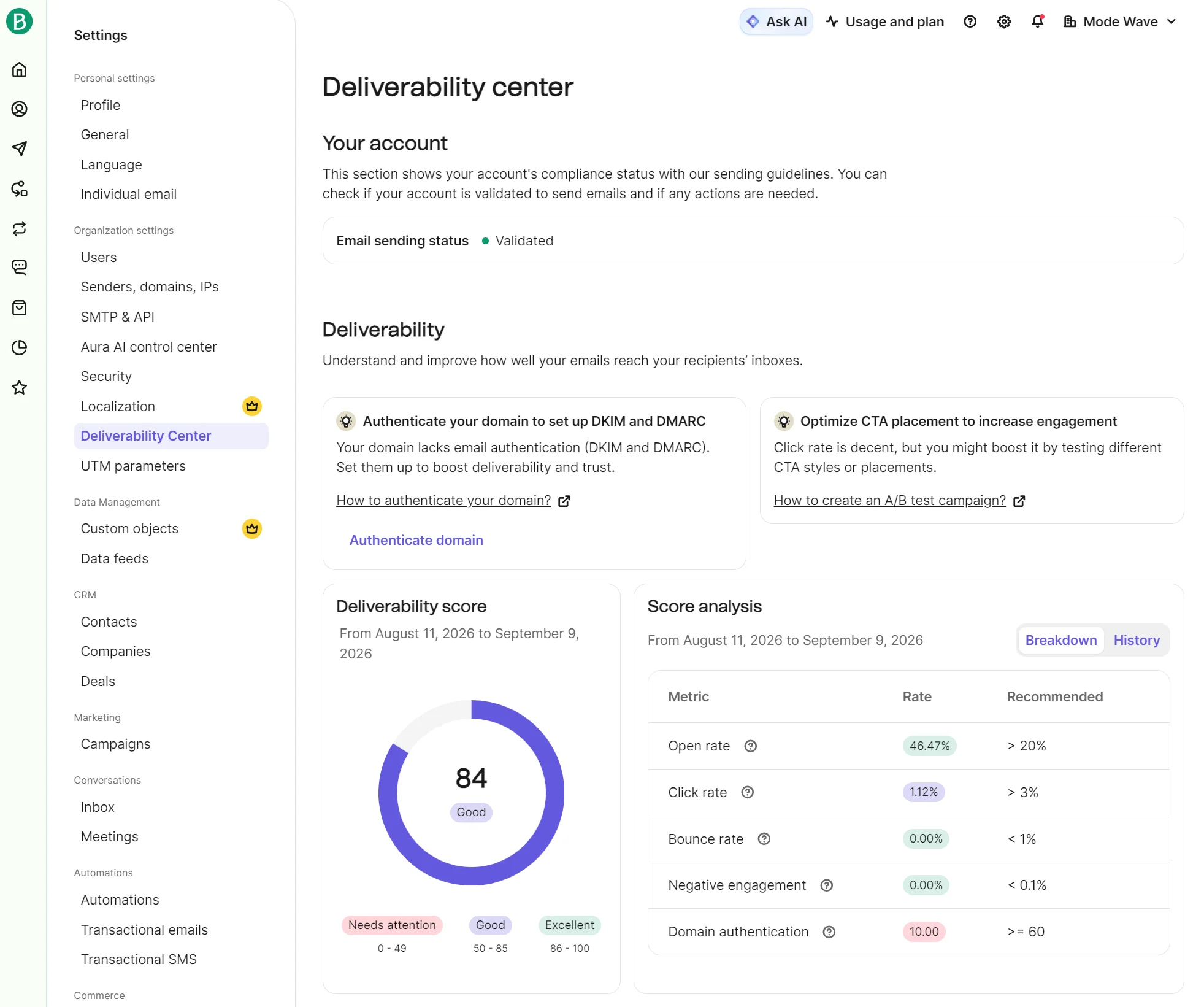
Brevo offers a comprehensive "Deliverability Center" available across all plans. This feature scores a user’s deliverability based on various metrics like open rate, click rate, bounces, and complaints. It provides actionable insights and suggestions to improve email health, allowing users to proactively identify and address potential issues. Professional plans in Brevo further include pre-built analytics dashboards, including a dedicated deliverability dashboard that displays the delivery rate for all sent emails, making it easy to monitor performance at a glance.
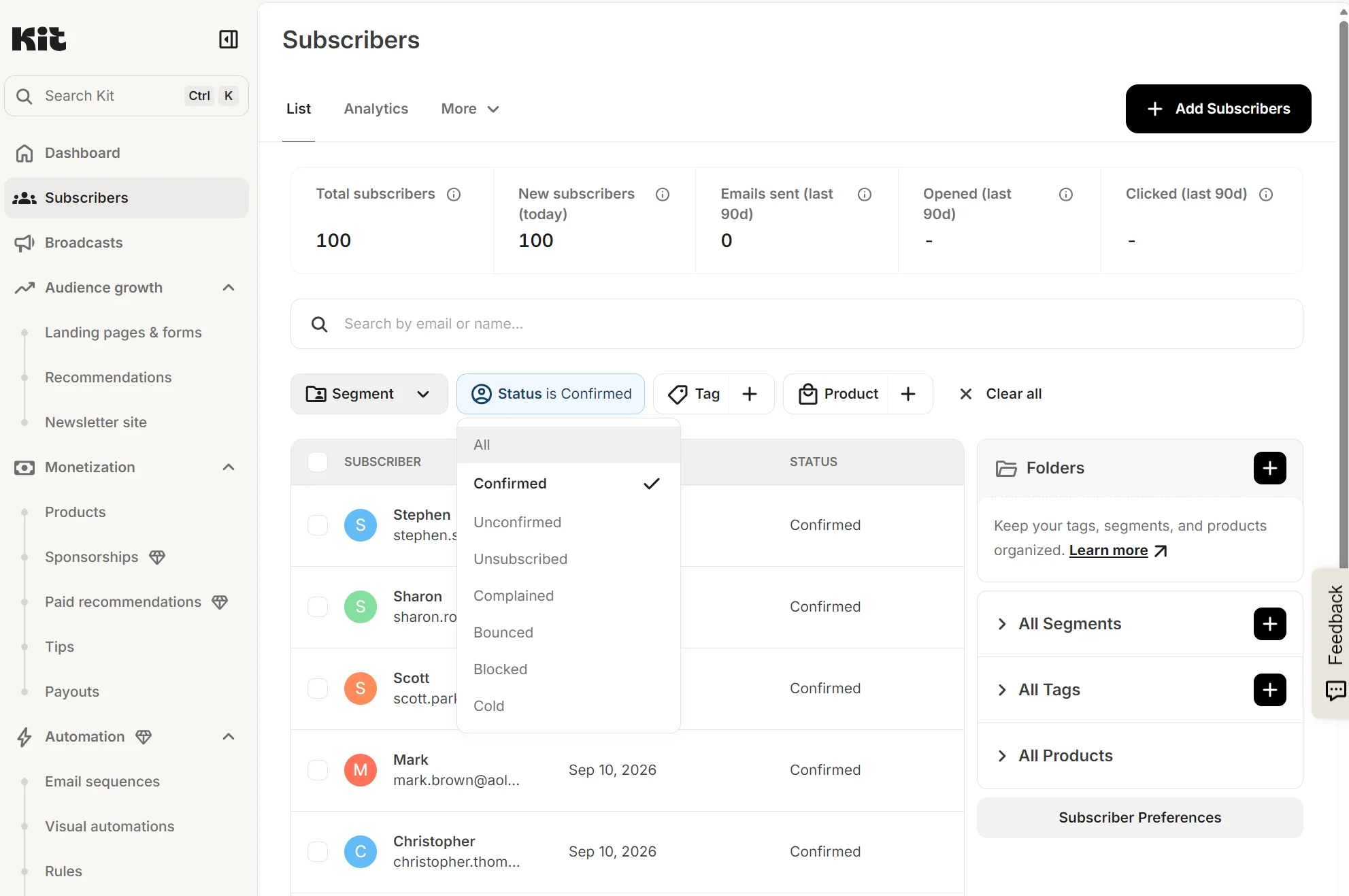
ConvertKit approaches deliverability reporting differently. For Free and Creator plans, subscriber-level statuses (bounced, blocked, complained) are accessible within the "List" menu under "Subscribers." This is particularly useful for diagnosing infrequent deliverability problems on an individual basis. However, a dedicated, aggregate deliverability report is only available in the Pro plan. With the Pro plan, users can analyze open and click rate trends for broadcasts and sequences, and filter data by Email Service Provider (ESP) or subscriber segment to troubleshoot broader engagement declines. While functional, ConvertKit’s approach requires more manual analysis compared to Brevo’s centralized, scored Deliverability Center.
ConvertKit vs. Brevo in Practice: A Look at Daily Workflow
To fully appreciate the practical implications of each platform’s design, examining typical daily workflows is essential.
ConvertKit Workflow:
For creators, a common task is building and selling digital products. ConvertKit’s product builder simplifies this into a swift, four-step process for setting up product information and domain, taking less than two minutes. The subsequent product page editor provides tabs for customizing the checkout, confirmation, and receipt emails, all easily accessible from a single interface, streamlining the sales funnel setup.
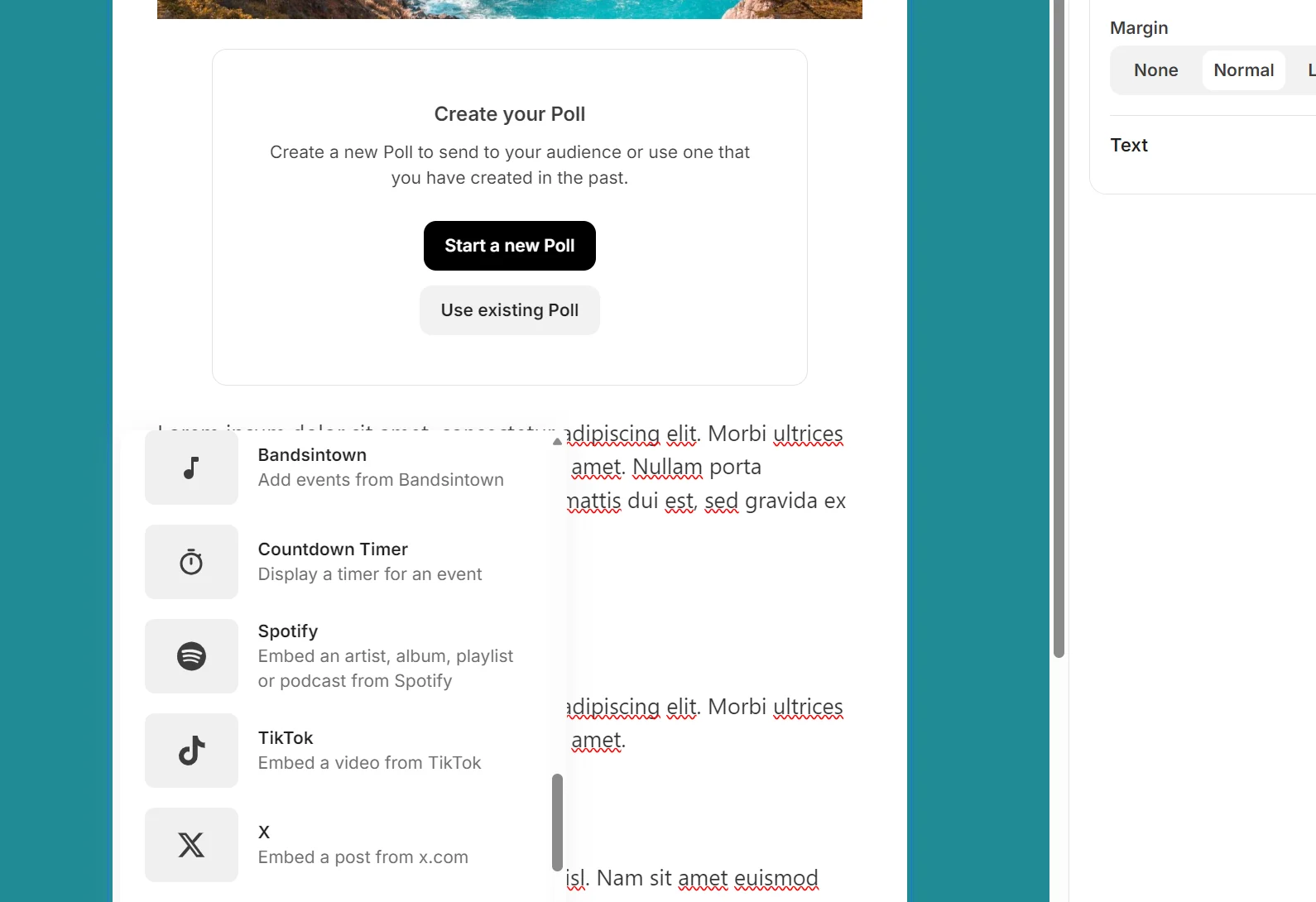
Crafting email broadcasts in ConvertKit is enhanced by pre-built templates within a drag-and-drop editor. The editor features native blocks for elements like countdown timers, polls, and unique integrations like a Spotify block for embedding tracks directly into emails. Users can save customized emails as templates for future reuse, significantly accelerating campaign launches.
Segment creation in ConvertKit is a manual process initiated from the "Subscribers" dashboard. Users add filters such as "Subscribed to" a specific form or "Within a country or region" to define segments. While effective, the builder does not display eligible subscribers during the creation process, requiring users to finalize the segment before seeing its composition. The "Visual Automations" dashboard offers an intuitive image-based view of workflows, with color-coded alerts for issues, allowing for quick identification and editing of automations directly from the canvas.
Brevo Workflow:
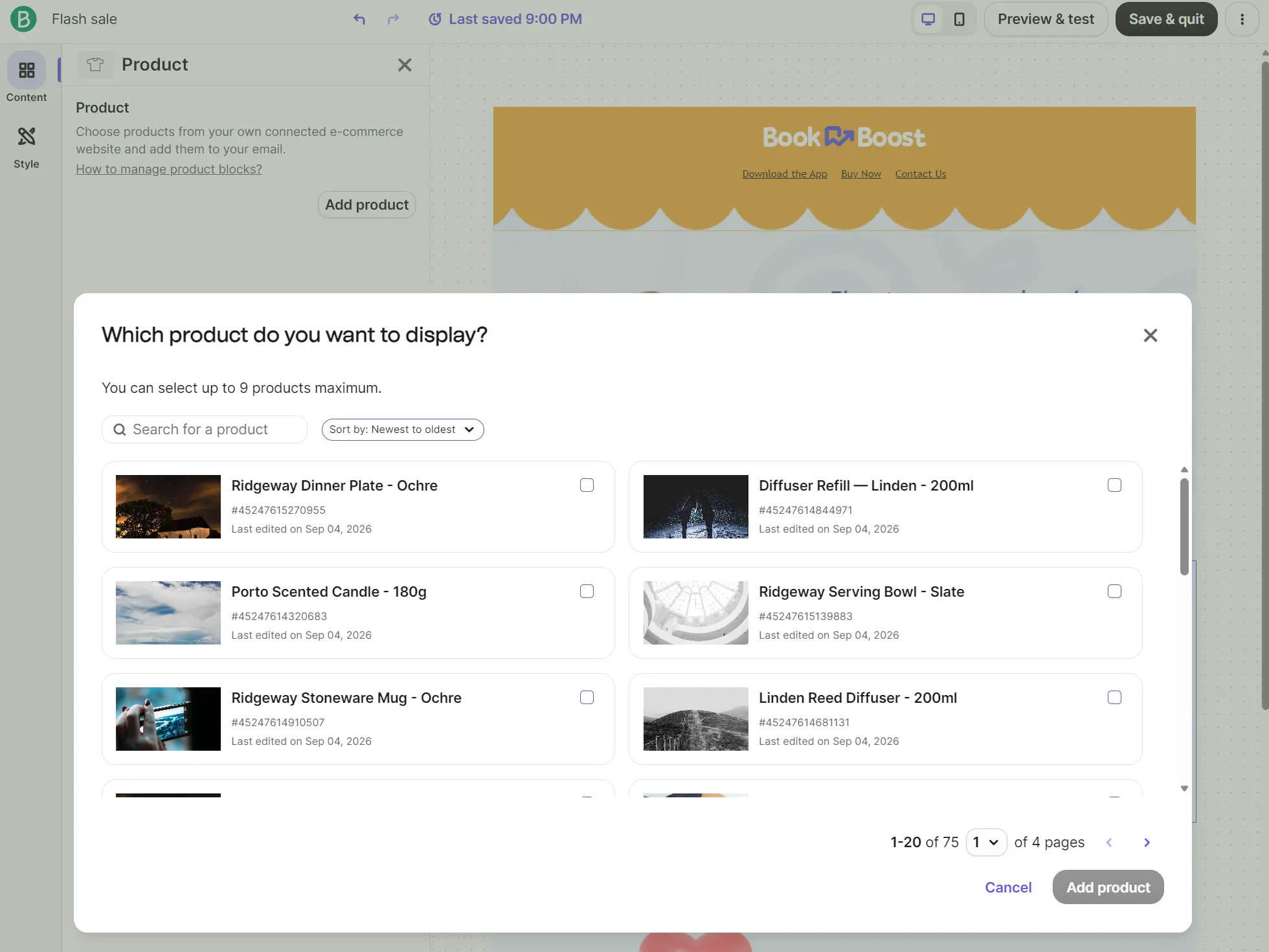
For businesses, daily tasks might involve creating email campaigns and managing sales deals. Brevo’s email campaign builder follows a structured four-step process, beginning with naming the campaign and proceeding to design using pre-built templates. The email editor features 13 blocks, including a "product block" that can dynamically feed products from a connected e-commerce store into the email template. This block offers toggles for title, description, price, and buttons, enabling professional-looking product displays with minimal effort.
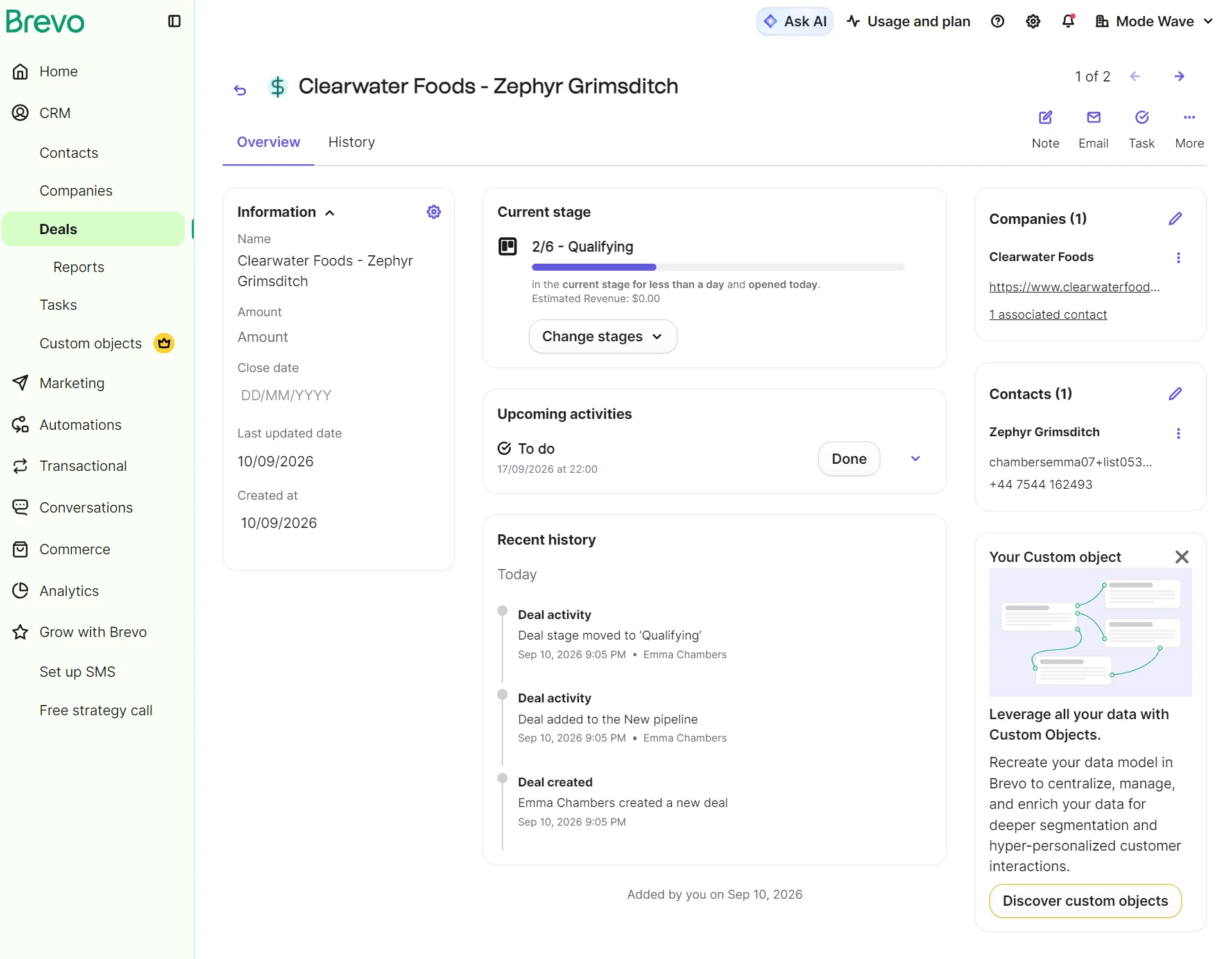
Brevo’s CRM is central to sales-focused workflows. Adding a new deal conveniently offers the option to simultaneously create an associated task, ensuring follow-up. Deal cards on the "Deals dashboard" visibly display due dates for attached tasks without requiring the deal to be opened. Contact profiles within deals provide a chronological history of interactions and upcoming activities, offering a comprehensive view of each lead’s journey.
Segment creation in Brevo is initiated from "CRM > Segments" and offers a template library for common use cases. These templates come with preconfigured events, allowing users to apply additional AND/OR logic for attributes and events. Crucially, Brevo’s segment builder displays all eligible contacts during the build process, providing immediate feedback on the segment’s size and composition. The "Workflows" dashboard lists automations with metrics like "active now," "started," "finished," and "suspended," offering quick control over their status.
Which Platform is Better: ConvertKit or Brevo?
The choice between ConvertKit and Brevo ultimately hinges on a user’s specific needs, business model, and strategic objectives. Neither platform is universally "better"; rather, each excels in its intended domain.
Choose Brevo if:
- You have a large contact list and need cost-effective storage: Brevo’s pricing model, based on email volume, allows for storing hundreds of thousands of contacts at a significantly lower cost than ConvertKit. Its free plan also offers substantially more contact storage.
- You run a product or service business with a sales pipeline: Brevo’s integrated CRM, "Deals dashboard," and sales workflow capabilities are indispensable for managing leads, tracking sales progress, and fostering customer relationships.
- You have a Shopify or WooCommerce store and need robust e-commerce automations: Brevo’s automation library is heavily geared towards e-commerce scenarios, including critical back-in-stock alerts, abandoned cart recovery, and post-purchase sequences. Its trigger depth extends seamlessly into its CRM.
- You require comprehensive multichannel marketing: Brevo natively supports email, SMS, MMS, web push, mobile push, and WhatsApp, enabling a truly integrated omnichannel strategy without reliance on costly third-party integrations for core channels.
- You prioritize detailed deliverability reporting: Brevo’s Deliverability Center provides a quantified score and actionable suggestions for optimizing email health, alongside professional analytics dashboards.
Choose ConvertKit if:
- You are a content creator, blogger, or influencer: ConvertKit is purpose-built for creators, providing tools that align with their business models, from audience segmentation for niche content to direct monetization.
- You sell digital products, paid newsletters, or subscriptions: ConvertKit’s native monetization tools are unparalleled, allowing creators to directly sell content, manage subscriptions, and even earn from paid recommendations or virtual tip jars, all within the platform.
- You send a high volume of emails per contact: ConvertKit’s unlimited email broadcasts across all paid plans make it ideal for creators who frequently communicate with their audience without worrying about email send caps.
- You value intuitive, visual automation builders with quick email editing: ConvertKit’s side-loading email editor within its visual automation builder significantly speeds up workflow for creators.
Is There a Better Alternative? Introducing Omnisend
For marketers seeking an all-encompassing omnichannel solution, particularly those in e-commerce, Omnisend presents a compelling alternative to both ConvertKit and Brevo. Designed from the ground up for e-commerce, Omnisend unifies email, SMS, and web push notifications into a single, cohesive workflow, aiming to maximize revenue and customer retention.
Omnisend differentiates itself with features like AI lifecycle stage maps, which visually represent customer journeys and suggest tailored retention tactics. Its "Reports AI" feature (available in paid plans) provides enterprise-level insights by summarizing performance, extracting specific statistics without manual searching, and breaking down data by individual workflows, offering a significant analytical advantage.
Omnisend’s pricing model is contact-based, with plans starting at $16/month for 500 contacts and 6,000 emails in the Standard plan, or $59/month for 2,500 contacts and unlimited emails in the Pro plan.
Omnisend vs. Brevo vs. ConvertKit: Key E-commerce Features
| Feature | Omnisend | Brevo | ConvertKit |
|---|---|---|---|
| Cart recovery | All plans | All plans | Paid plans |
| Product recommendations | Standard recommendations (all plans) | All plans | All plans |
| Back-in-stock alerts | All plans | Starter | Not available |
| Pop-ups | All plans | Professional | All plans |
| SMS | Pro (native) | All plans (native) | Not native; requires SlickText integration |
| Web push | All plans | Starter | Not available |
| Transactional email | All plans | All plans | Not available |
| Visual lifecycle stage map | All plans | Not available | Not available |
| CRM | Not available | All plans | Not available |
| Support | 24/7 live chat and email (all plans) | Email; phone (Professional) | Email (Free); 24/7 email/chat (paid) |
Prices and features accurate as of September 2026.
A notable success story for Omnisend comes from MUSS, a business that experienced significant authentication and deliverability problems with another popular email marketing platform. Switching to Omnisend resulted in a 41% increase in open rates year-over-year and an approximately 13% increase in revenue per recipient, demonstrating Omnisend’s effectiveness in optimizing e-commerce marketing performance.
Conclusion and Key Considerations
In summary, the decision between ConvertKit and Brevo boils down to a clear understanding of one’s operational focus. Brevo excels as a cost-effective, multichannel marketing and sales platform for businesses handling large lists, requiring a CRM, and engaging in diverse e-commerce scenarios. Its email-volume-based pricing model, comprehensive integrations, and native multichannel support make it a powerful tool for traditional businesses. ConvertKit, conversely, is the ideal partner for content creators, bloggers, and influencers who prioritize direct content monetization, seamless digital product sales, and unlimited email engagement with their audience, despite its higher cost per contact. For those in e-commerce seeking a robust omnichannel solution with advanced AI insights, Omnisend presents a compelling third option. When migrating between platforms, users with small lists can typically export and import CSVs, while larger operations can leverage professional migration services offered by both Brevo and ConvertKit on their higher-tier plans.








