The global digital experience analytics market, valued at several billion dollars and growing at a double-digit compound annual rate, has become the primary battleground for enterprises seeking to minimize friction in the user journey and maximize conversion rates. As organizations move away from traditional, siloed web analytics toward comprehensive behavioral insights, two platforms have emerged as dominant but fundamentally different choices: Crazy Egg and Contentsquare. This report provides an exhaustive comparison of their technical capabilities, market positioning, historical evolution, and economic impact on enterprise operations.
Evolution of the Behavioral Analytics Landscape
To understand the current competition between Crazy Egg and Contentsquare, one must examine the chronology of the industry’s development. Crazy Egg, co-founded in 2005 by Hiten Shah and Neil Patel, was a pioneer in the visual analytics space. It introduced the "Confetti" heatmap, a revolutionary tool that allowed marketers to see individual clicks segmented by referral source, a capability that traditional analytics like Google Analytics could not provide at the time. Over nearly two decades, Crazy Egg has maintained a philosophy of "transparent accessibility," focusing on a unified toolset that bundles heatmaps, A/B testing, and session recordings into a single subscription.

In contrast, Contentsquare, founded in 2012 by Jonathan Cherki in Paris, has pursued a strategy of aggressive enterprise-level expansion and high-value acquisitions. The company’s trajectory changed significantly between 2019 and 2023. In 2019, Contentsquare acquired Clicktale, its primary rival in the enterprise space, effectively consolidating the high-end market. This was followed by the 2021 acquisition of Hotjar, the market leader for small-to-medium businesses, and the 2023 acquisition of Heap, a major player in product analytics. This "buy-and-integrate" strategy has resulted in a powerful but modular ecosystem that caters to the world’s largest brands but often requires multiple product subscriptions to achieve full functionality.
Technical Architecture and Core Features
The fundamental difference between the two platforms lies in their approach to data visualization and user behavior interpretation.
Heatmap Methodologies
Crazy Egg utilizes a "five-pillar" heatmap strategy. Its signature tool remains the Confetti Map, which provides high-resolution click data across 20+ audience segments. This allows teams to distinguish how a visitor from a specific Facebook ad campaign interacts with a landing page compared to an organic search visitor. Additionally, Crazy Egg offers "Instant Heatmaps," a feature that auto-generates visual data across an entire site immediately upon installation, bypassing the need for manual snapshot setups.
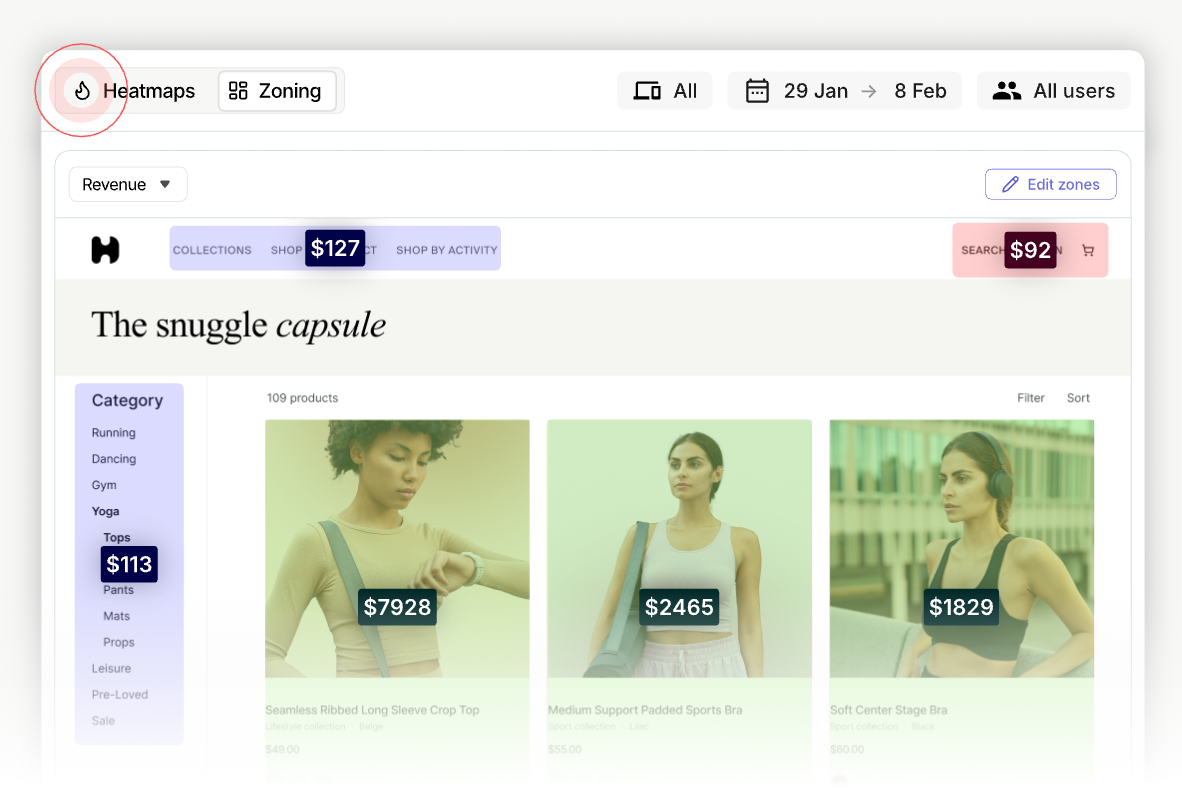
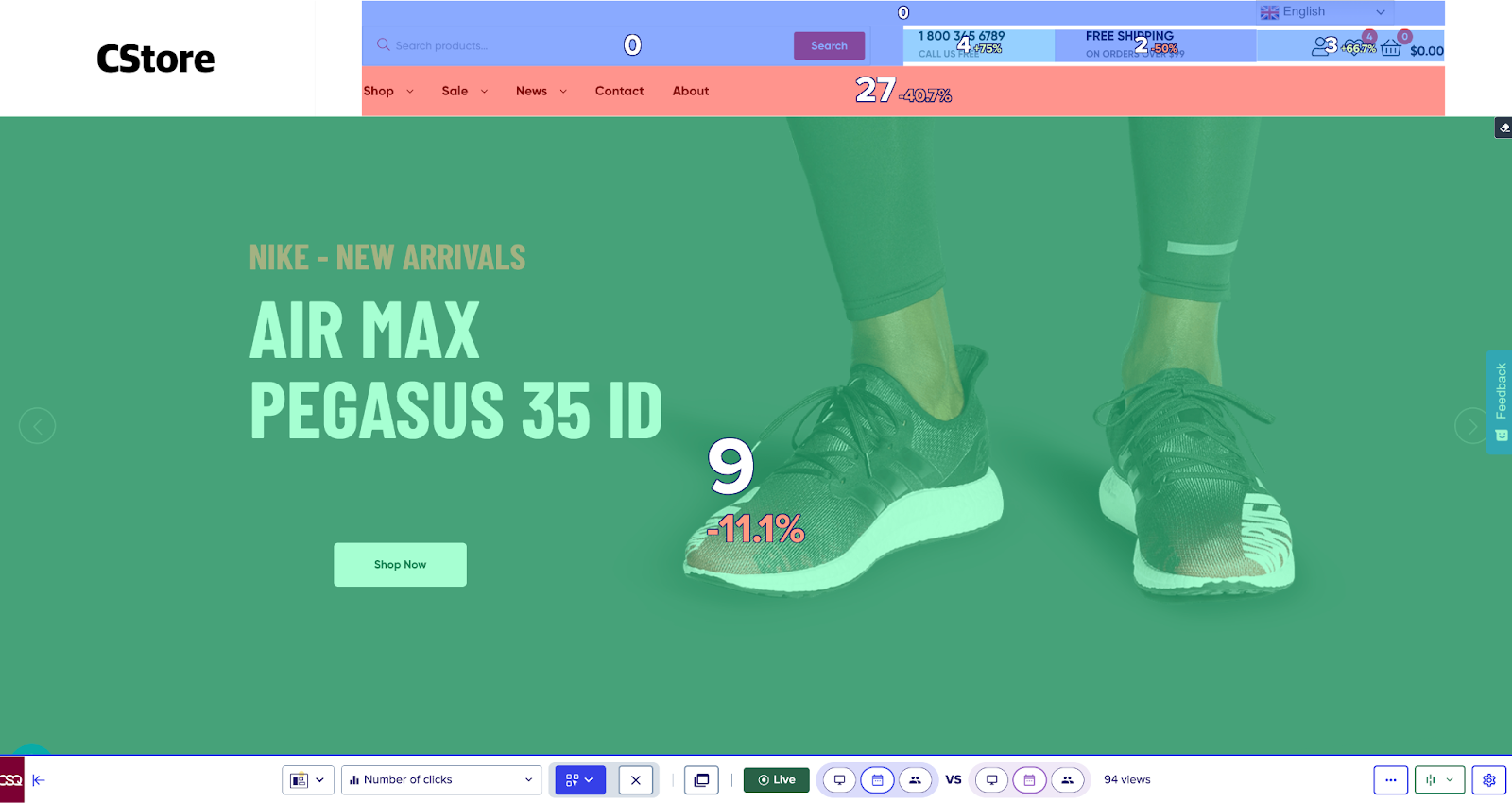
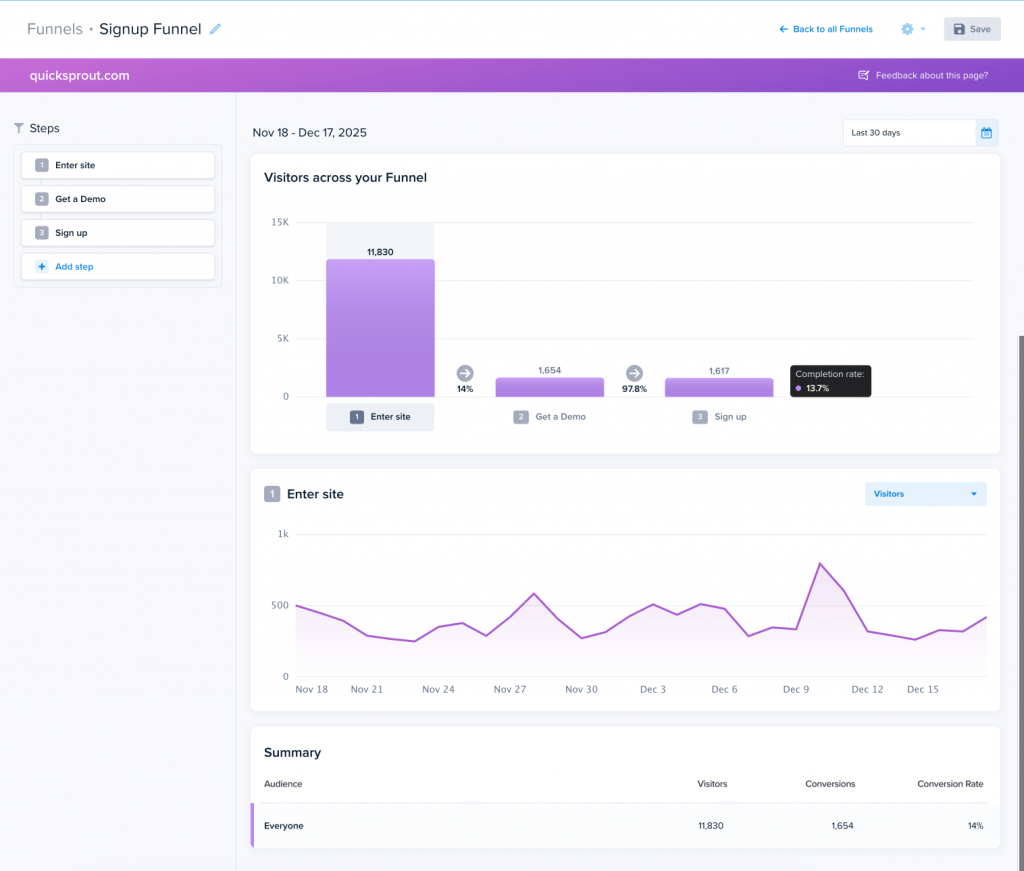
Contentsquare’s technical differentiator is its "Zone-Based Heatmaps." Born from the Clicktale acquisition, this technology allows users to draw specific boundaries around page elements—such as a "Buy Now" button or a hero image—and see sophisticated engagement, conversion, and revenue metrics tied directly to that zone. While Crazy Egg provides engagement data through its "Overlay" view, Contentsquare’s ability to attribute specific dollar amounts to individual page elements makes it a preferred choice for high-volume e-commerce retailers tracking micro-conversions.

Session Replay and Data Retention
Data retention is a critical factor for enterprise compliance and long-term trend analysis. Crazy Egg offers a default retention period of six months to two years, depending on the tier. This allows organizations to compare user behavior during peak seasonal events, such as Black Friday, year-over-year.

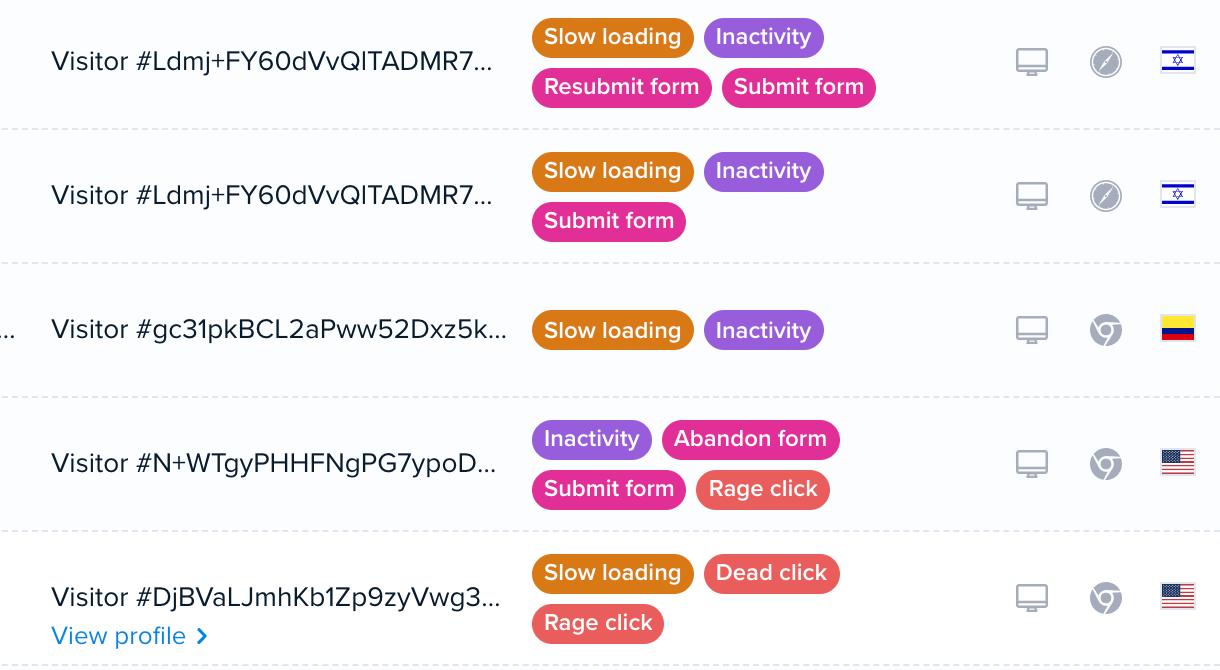
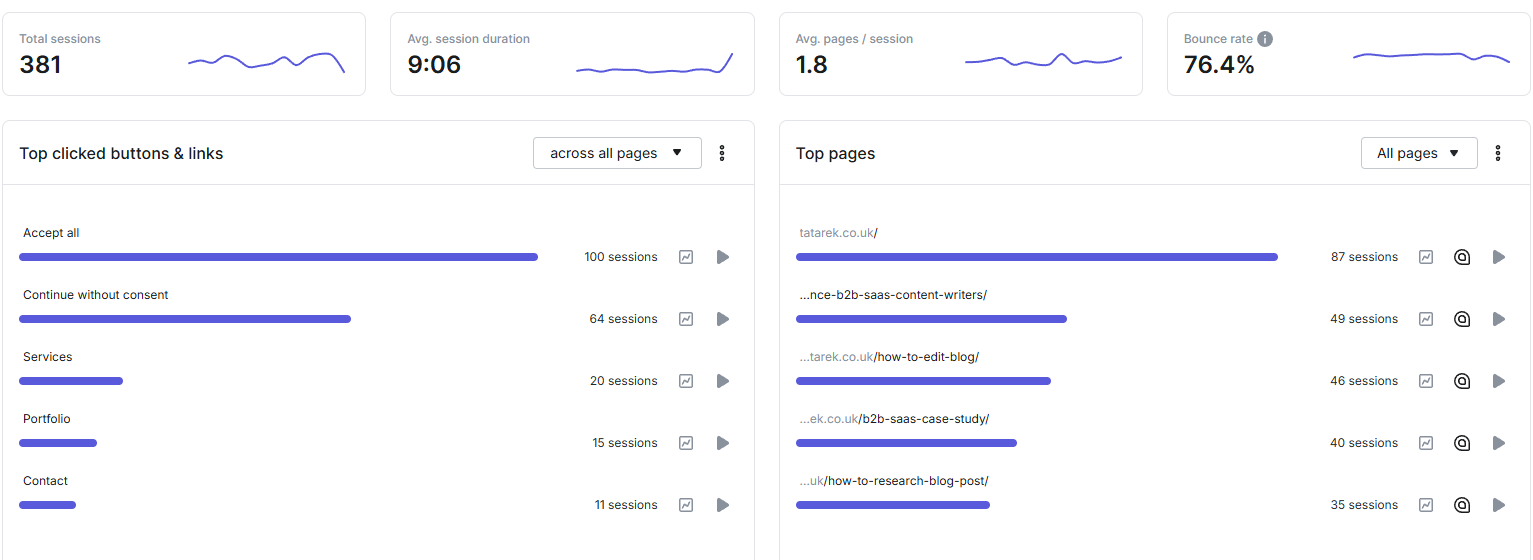
Contentsquare’s session replay, rebranded under its Experience Analytics suite, typically defaults to a 30-to-90-day retention period. While extensions to 24 months are available for Pro and Enterprise clients, these are often sold as premium add-ons. Furthermore, Contentsquare utilizes a "sampling" model where replays are often capped as a percentage of total sessions, whereas Crazy Egg provides more granular control over page-level sampling, allowing users to prioritize checkout pages over lower-value blog content.
The Shift Toward Agentic AI and Automation
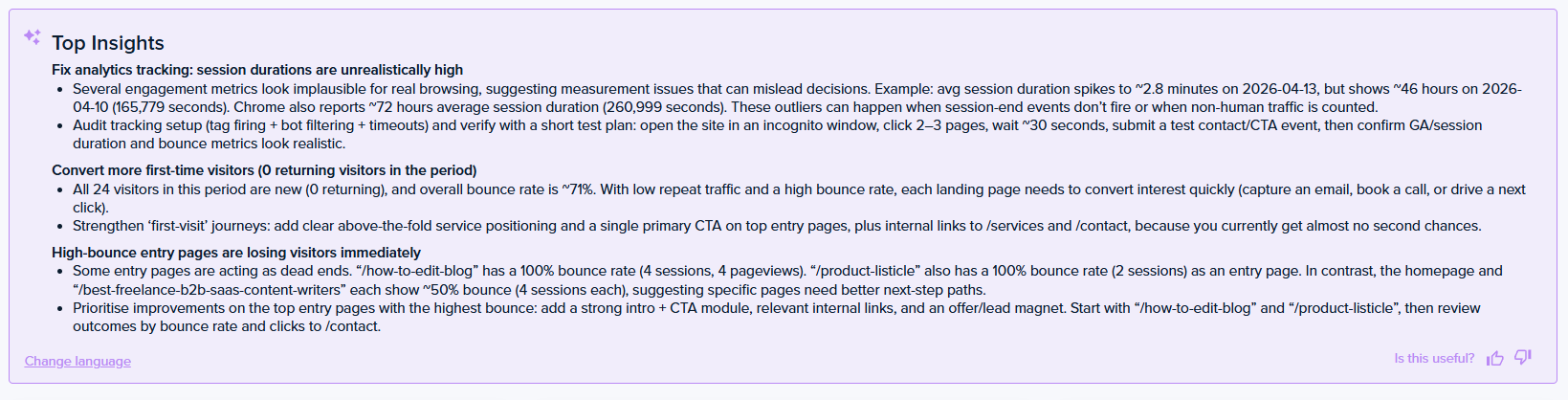
The most significant recent development in the sector is the integration of Generative AI and Model Context Protocol (MCP). Both companies are racing to move from "descriptive analytics" (what happened) to "prescriptive analytics" (what should be done).
Crazy Egg has recently introduced its "MCP Connector," which allows data scientists and marketers to link their behavioral data directly to Large Language Models (LLMs) like Claude, ChatGPT, and Gemini. This enables "agentic workflows," where an AI can query Crazy Egg data, identify a drop-off point in a funnel, and draft a new page variant to fix the issue. Furthermore, Crazy Egg’s "Tasks" feature (currently in early access) aims to automate the optimization loop by delivering prioritized recommendations and summaries directly to the user.
Contentsquare’s AI suite, known as "Sense," focuses on "Sense Chat" and "Session Replay Summaries." On higher tiers, "Sense Analyst" acts as a virtual data scientist that can answer natural language questions about user journeys. However, market data indicates that Sense Analyst is frequently positioned as a paid add-on, even for Enterprise-level contracts, reflecting Contentsquare’s modular pricing philosophy.
Economic Analysis and Total Cost of Ownership
For procurement departments, the financial disparity between the two platforms is substantial. Data provided by SpendHound, based on an analysis of 30 real-world enterprise contracts, reveals that the average Contentsquare enterprise deal sits at approximately $154,400 per year. High-traffic deployments can exceed $500,000 annually, according to figures from Vendr.
Crazy Egg maintains a transparent pricing model that tops out at $599 per month ($7,188 per year) for its Enterprise tier, which includes 1,000,000 tracked pageviews and 10,000 recordings per month. This represents a nearly 20-fold difference in base cost for organizations that do not require the specialized warehouse-grade data exports or the multi-app journey analysis offered by Contentsquare.
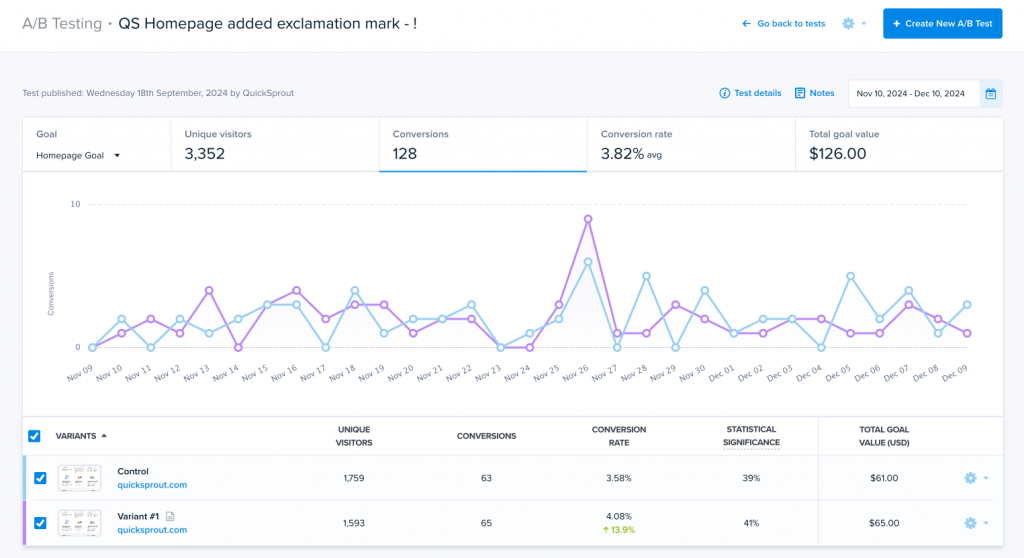
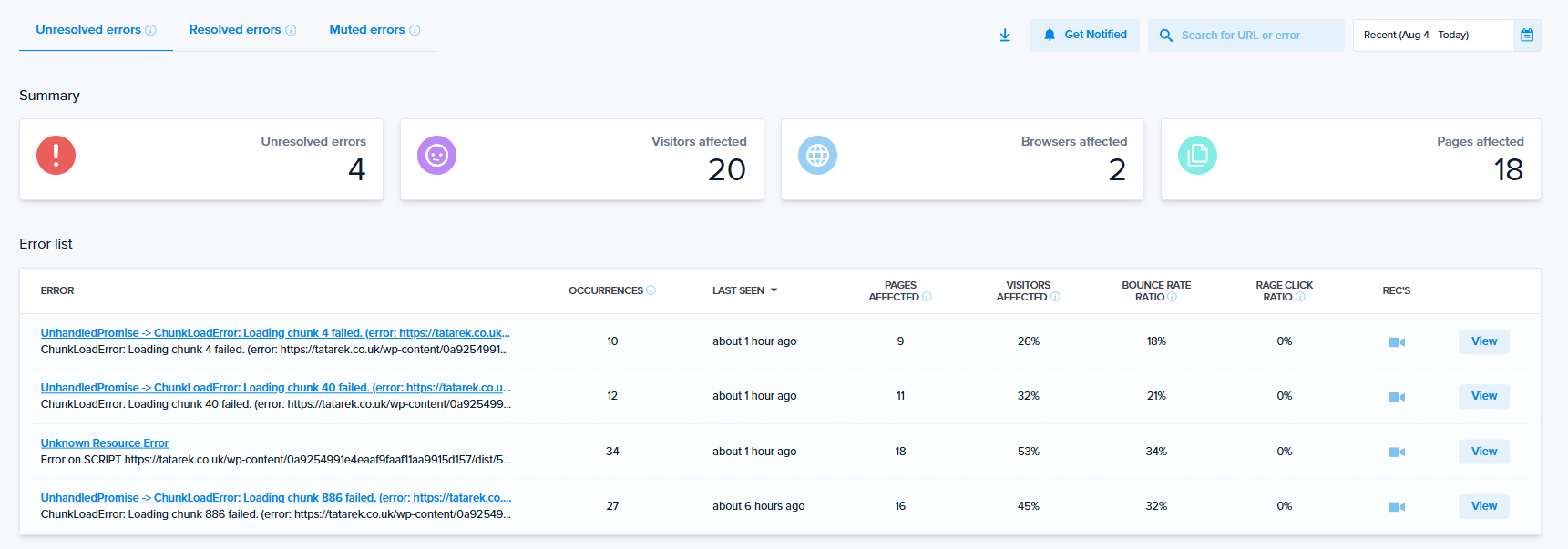
Furthermore, Crazy Egg bundles A/B testing and error tracking into its mid-tier plans (starting at $99/month). Contentsquare does not offer native A/B testing, instead providing "A/B Test Analysis" that requires a third-party subscription to tools like Optimizely or AB Tasty, adding further complexity and cost to the stack.
Market Positioning and Official Responses
Industry analysts view the competition as a choice between "Depth of Integration" and "Breadth of Ecosystem."
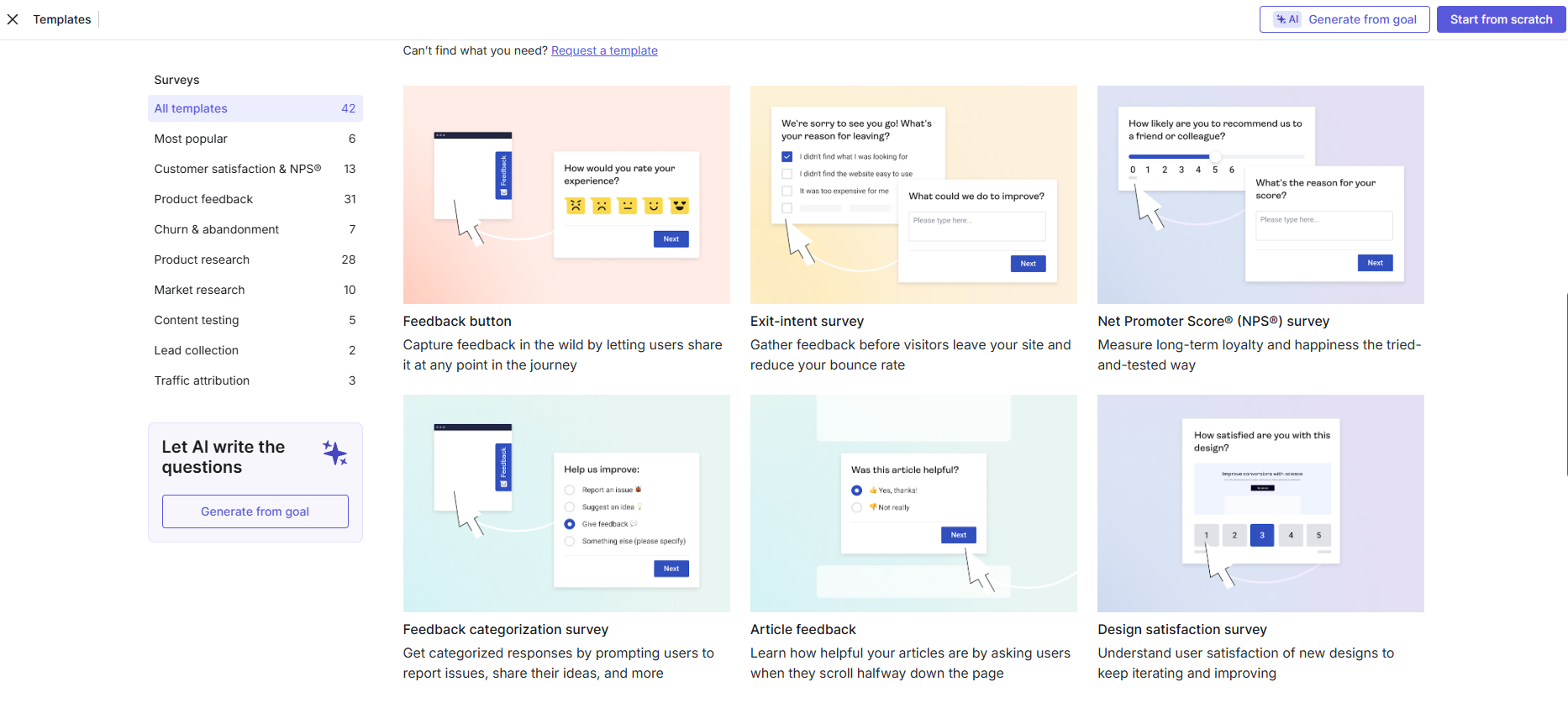
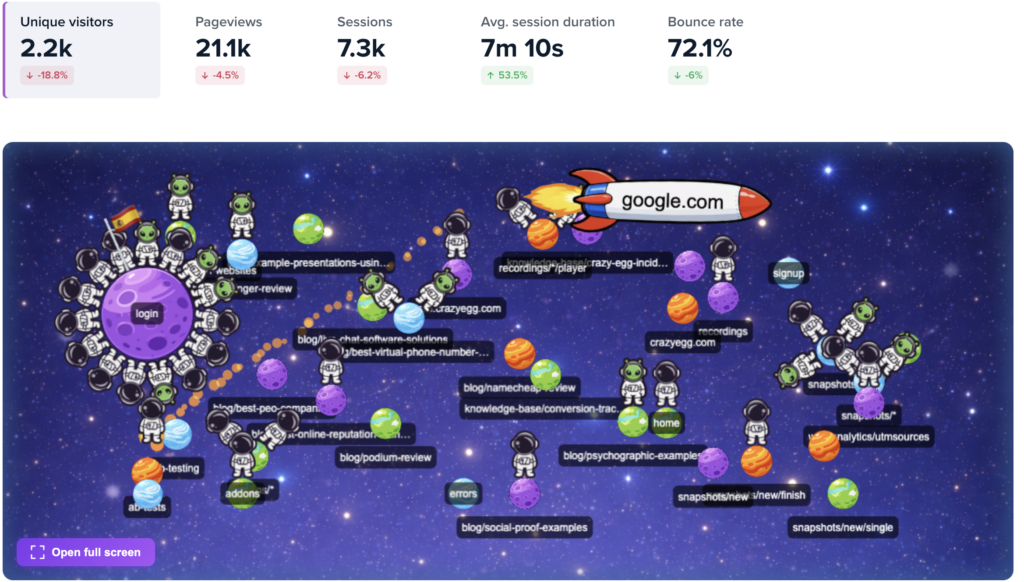
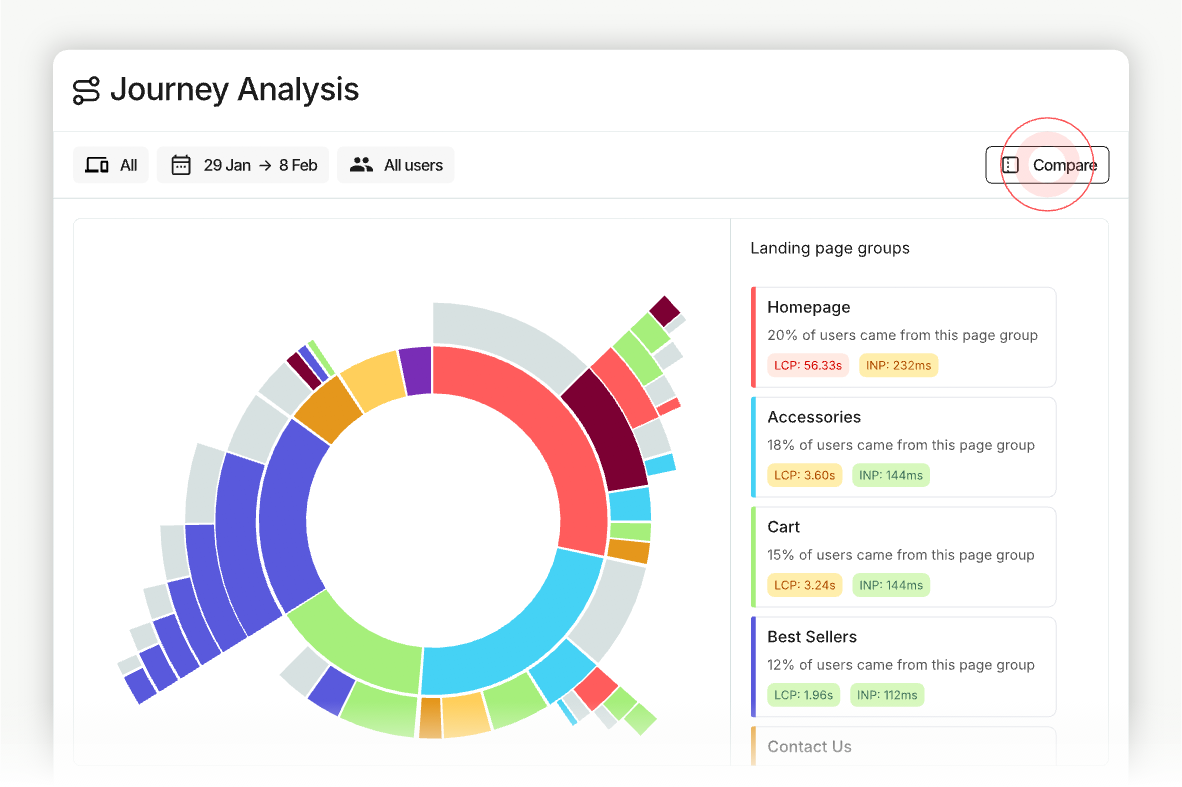
Contentsquare’s positioning is clearly aimed at the Global 2000. Their focus on "Journey Analysis"—which uses sunburst charts to show every possible path a user takes across a website—is designed for massive datasets where traditional funnels are too restrictive. Their official documentation emphasizes their "Trust Center" and SOC-2 Type 2 compliance, signaling a focus on the rigorous security requirements of the banking and healthcare sectors.
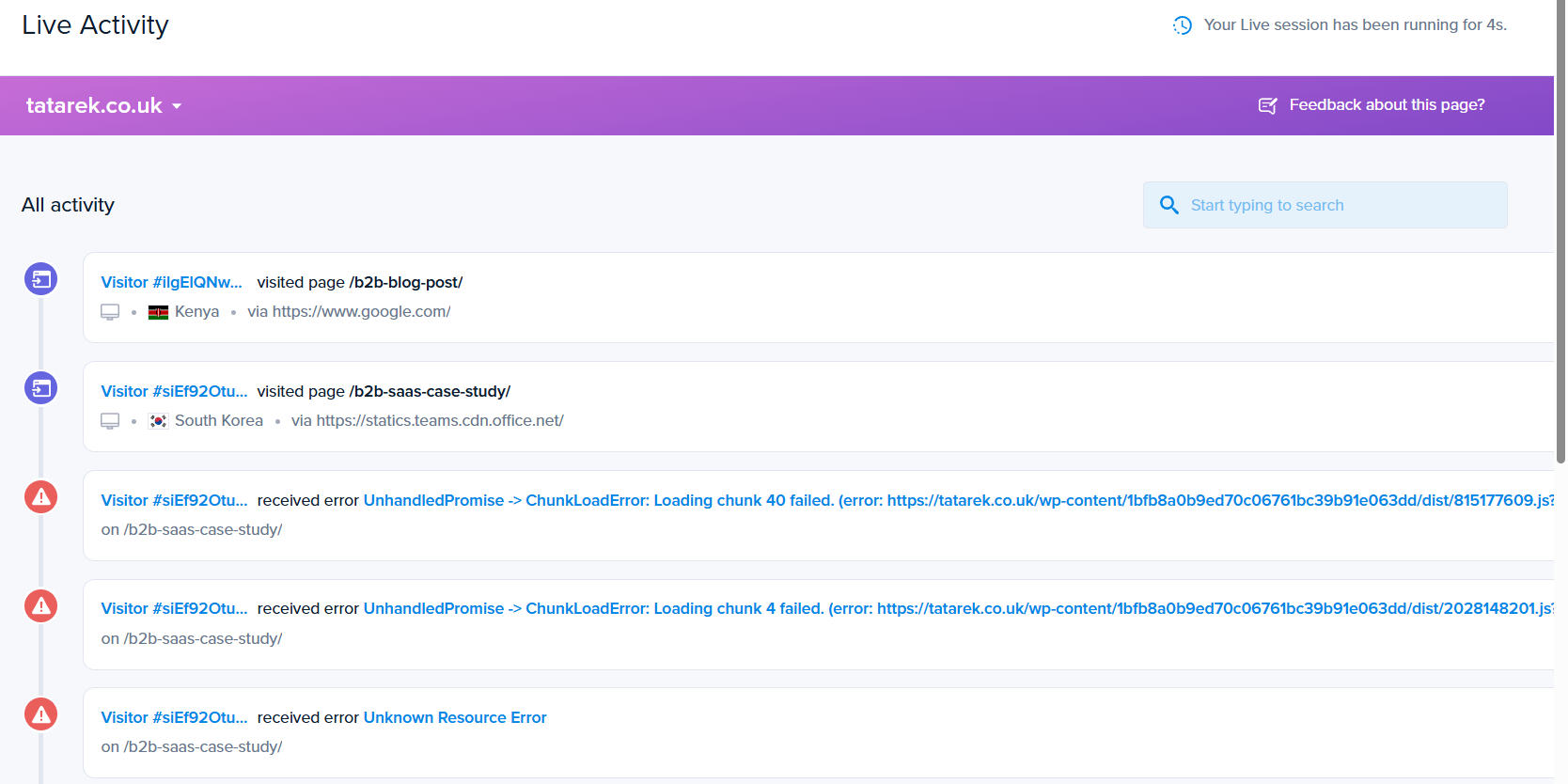
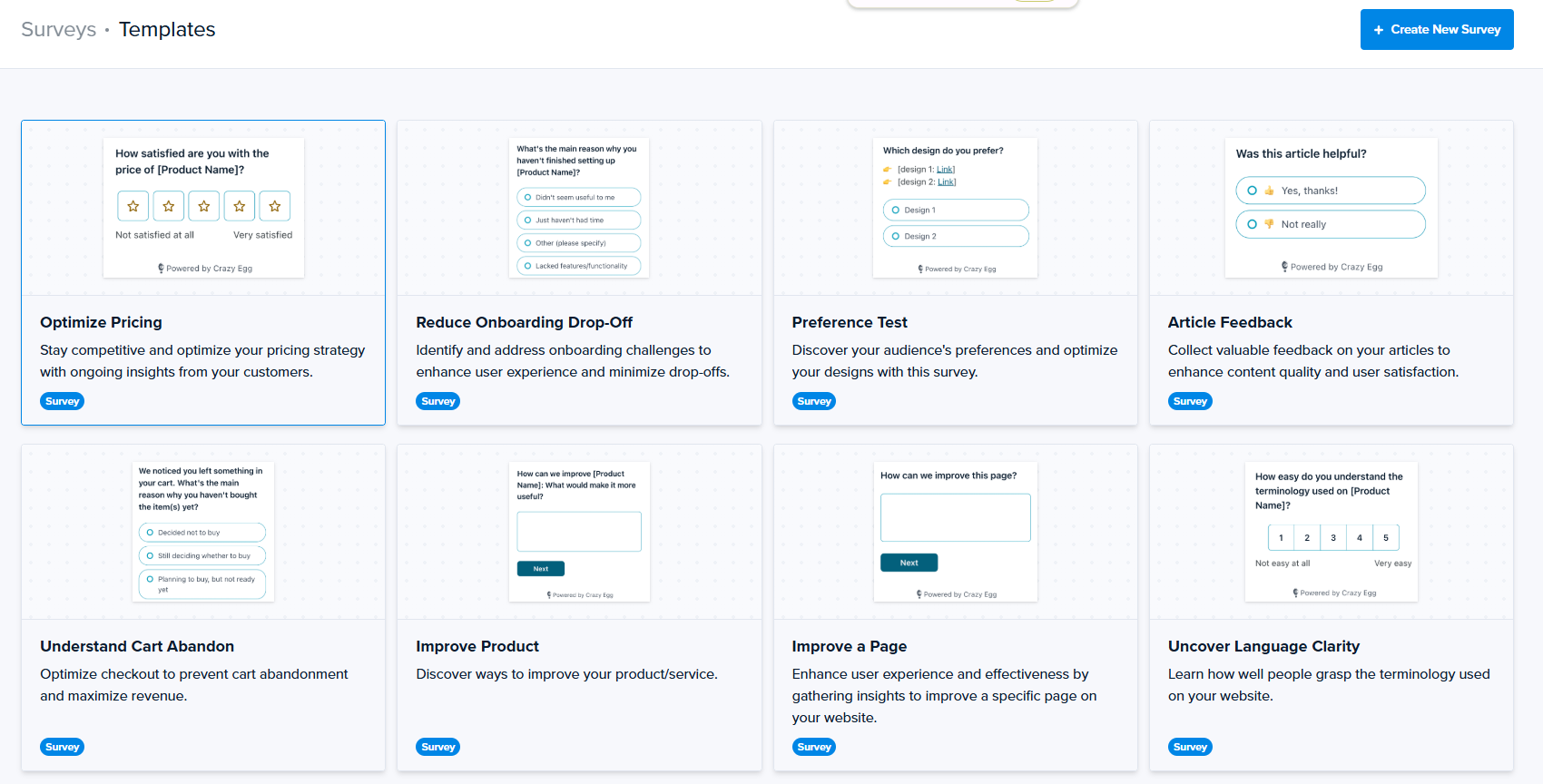
Crazy Egg’s positioning is centered on "Agile Optimization." By including surveys with unlimited responses and native A/B testing, they target growth teams that need to move quickly without waiting for cross-departmental budget approvals for separate tools. Their "Live Activity" dashboard provides real-time feedback, which is essential for startups and mid-market firms monitoring the immediate impact of new feature releases or marketing campaigns.
Broader Impact and Industry Implications
The divergence between these two platforms mirrors a larger trend in the software-as-a-service (SaaS) industry: the "Suite vs. Best-of-Breed" debate. Contentsquare represents the "Platformization" of UX, where one giant entity swallows specialized tools (Heap, Hotjar) to provide a single, albeit expensive, source of truth. Crazy Egg represents the "Utility" model, where a single, high-performance tool provides 90% of the required functionality at a fraction of the cost.
For the broader market, this competition is driving down the "time-to-insight." As AI features become standard, the value of these platforms will shift from merely "collecting data" to "interpreting intent." Organizations choosing between these two must weigh whether they need the "warehouse-grade" scale and multi-product complexity of Contentsquare or the "all-in-one" transparency and native testing capabilities of Crazy Egg.

In conclusion, Contentsquare remains the standard for multi-national corporations requiring cross-platform journey mapping and deep e-commerce revenue zoning. However, for enterprises focused on rapid conversion rate optimization, unified toolsets, and transparent cost structures, Crazy Egg offers a compelling alternative that challenges the high-cost status quo of the digital experience analytics market. As privacy regulations like GDPR and CCPA continue to evolve, both platforms have solidified their data-masking and privacy protocols, ensuring that behavioral insight does not come at the expense of consumer trust.


 Asro
Asro
 Dwi Wanna