

Black Friday, historically a pivotal moment for retailers, continues to evolve, transforming into a multi-day event that holds immense potential for small businesses. In 2026, with Black Friday falling on November 27, strategic marketing initiatives extending beyond mere discounts – encompassing early promotions, sophisticated email segmentation, tiered pricing structures, and localized partnerships – will be crucial for maximizing conversions and ensuring profitability. This period represents a concentrated window for small enterprises to significantly boost revenue, build lasting customer relationships, and establish a foothold in an increasingly competitive market.
The Evolution and Economic Significance of Black Friday
The phenomenon known as Black Friday originated in Philadelphia in the 1950s, where police used the term to describe the heavy pedestrian and vehicle traffic that occurred the day after Thanksgiving. It wasn’t until the 1980s that retailers began to reframe the narrative, linking "black" to profitability—the point in the year when businesses traditionally moved "into the black" financially. This rebranding cemented Black Friday as the unofficial start of the holiday shopping season, characterized by unprecedented discounts and consumer frenzy.
Over the decades, Black Friday has expanded dramatically. What began as a single-day event in physical stores has morphed into "Black Week," encompassing the entire week leading up to and including Thanksgiving, culminating in Cyber Monday and extending into "Cyber Week." This chronology reflects a broader shift in consumer behavior and retail strategy, driven largely by the advent of e-commerce. The digital transformation has democratized access to Black Friday deals, allowing consumers to shop from anywhere and enabling small online businesses to participate alongside retail giants. Its global adoption further underscores its economic weight, with countries across Europe, Asia, and Australasia now observing their own versions of the sales event. For the modern retail calendar, Black Friday is not merely a sales day; it is a critical bellwether for holiday season performance and often a make-or-break period for annual financial targets.
Why Black Friday is Crucial for Small Businesses
For small businesses, Black Friday presents a unique opportunity to generate substantial revenue without the protracted wait for organic demand to build. Data from 2025, for instance, revealed that a significant 16.6% of e-commerce brands generated at least 30% of their annual orders during Black Week. This figure, derived from Omnisend’s analysis of 5,000 U.S. e-commerce brands, highlights the concentrated purchasing power during this period. Small businesses simply cannot afford to miss out on this surge in demand.
However, the challenge for smaller enterprises is distinct. With often tighter marketing budgets, shorter email lists, and an inability to compete on price alone with larger counterparts, small businesses require smarter, more agile campaigns. The objective isn’t just to move inventory, but to do so in a way that protects profit margins and fosters sustainable growth. Success during Black Friday can yield several crucial rewards: a rapid increase in revenue, enhanced brand visibility, effective inventory clearance, and—perhaps most importantly—the cultivation of lasting customer relationships.
The latter point is particularly vital. While some small businesses struggle to match the aggressive price cuts of larger retailers, they can differentiate themselves through personalized service and relationship building. These efforts often translate into repeat business, which is the lifeblood of any growing company. Email marketing, in particular, demonstrates remarkable efficacy in this regard. In 2025, nearly one in three clicks on an automated email resulted in a purchase, a testament to the power of targeted communication. Moreover, email click-to-conversion rates across all sends rose from 5.9% to 9% in the same year. For small businesses, this robust email performance can drive more revenue than deeper, margin-eroding discounts. Marketing experts consistently emphasize that the success of Black Friday for small businesses hinges not on outspending giants, but on outsmarting them through targeted, value-driven campaigns that resonate with their specific customer base.
Strategic Approaches for Maximizing Black Friday Success
Effective Black Friday campaigns for small businesses are multi-faceted, leveraging various digital channels and tactical promotions. Here are key strategies, enriched with examples and broader implications:
1. Building Anticipation with Early Promotions:
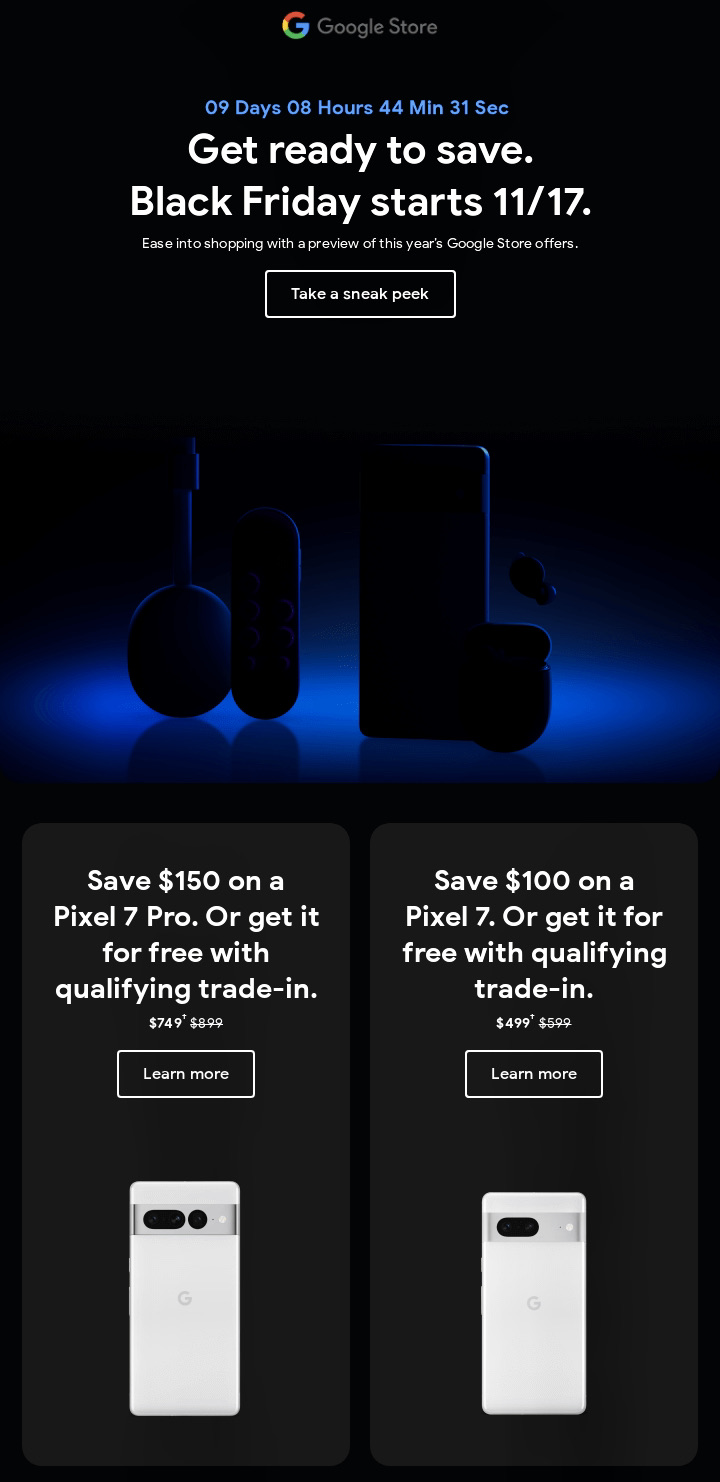
The early bird catches the worm, especially in the crowded Black Friday market. Introducing promotions ahead of the official start date, often signaled by a countdown timer in emails, builds excitement and curiosity. Unlike urgency timers for closing deals, these signal an impending launch, preparing customers for the main event. Email segmentation allows businesses to target specific customers with product previews they’ve previously shown interest in. Google’s approach, showcasing upcoming Pixel discounts with a precise countdown, exemplifies how exclusivity and a clear start date can generate significant buzz. This strategy not only primes customers for purchase but also allows businesses to gauge interest and adjust inventory.
2. Personalizing Offers Through Email Segmentation:
Personalization is paramount. Targeting shoppers who have abandoned carts with a specific discount on those exact items is a high-intent strategy. These individuals have already demonstrated a strong desire for the product, and a timely, personalized offer can be the final nudge. Automation tools, like Omnisend, streamline this process by syncing cart activity from e-commerce platforms, allowing businesses to focus on strategy rather than manual follow-ups. The timing of these emails is also crucial, with early morning sends often yielding higher engagement as deal-hunters begin their search. Analysts suggest that such targeted campaigns protect profit margins by offering discounts only where conversion intent is highest.
3. Cultivating Loyalty with Exclusive Customer Discounts:
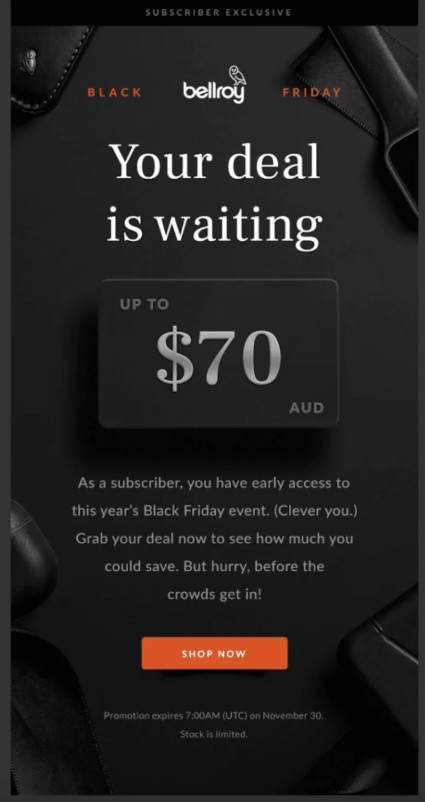
Rewarding loyal, repeat customers is a cornerstone of sustainable business growth. Offering exclusive discounts or early access to sales, explicitly communicated as a privilege for subscribers, strengthens customer relationships and boosts lifetime value. Options include tiered discounts, free shipping, or bonus loyalty points. Free shipping, in particular, remains a powerful incentive, influencing 59% of shoppers in 2025. Bellroy’s strategy of granting early access to subscribers, highlighting the exclusivity, effectively reinforces customer appreciation and encourages immediate action. Small business owners frequently report that personalized engagement and loyalty programs are key differentiators against larger retailers during high-volume sales periods.
4. Increasing Average Order Value with Product Bundles:
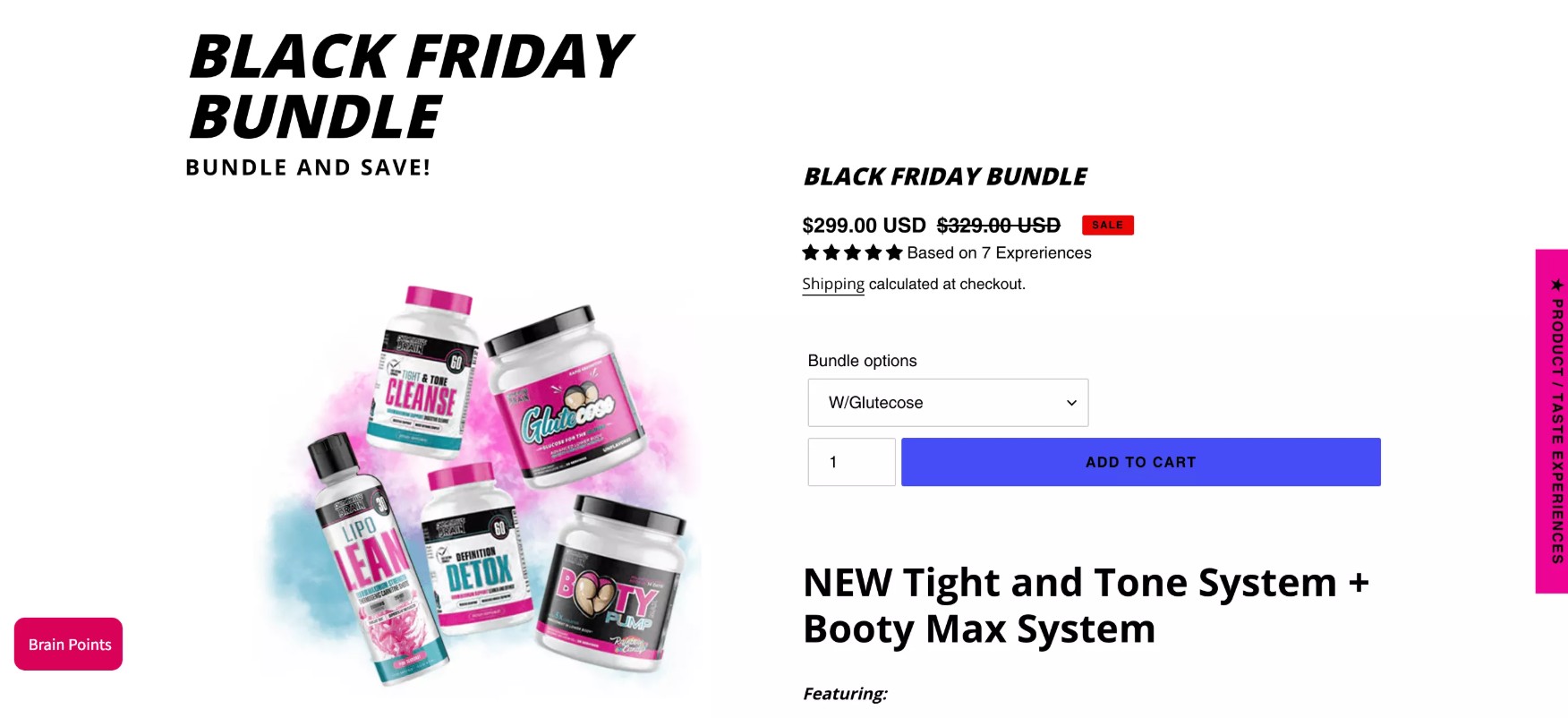
Strategic product bundling allows small businesses to increase average order value (AOV) and clear slow-moving inventory simultaneously. By combining a best-seller with a complementary, less popular item at a discounted bundled price, businesses encourage customers to purchase more than they initially intended. The key is to bundle products that naturally belong together and add value to the main purchase, as seen with Gene.In.Us Brain’s supplement bundles. This tactic is a smart way to manage inventory without resorting to store-wide deep discounts.
5. Driving Urgency with Limited-Time Flash Sales:
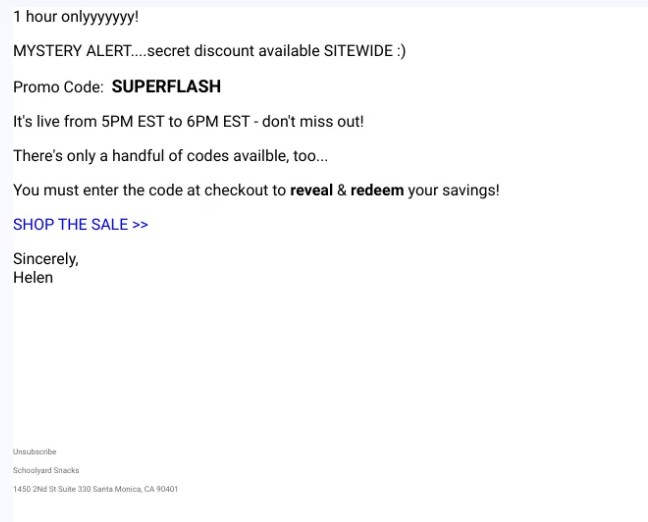
Flash sales, typically lasting between a few hours and two days, create immediate urgency. The strict time limit compels shoppers to make quick decisions, reducing cart abandonment. This method is also effective for clearing specific slow-moving stock without devaluing the entire product catalog. Schoolyard Snacks’ one-hour mystery discount flash sale, with a limited number of codes, perfectly illustrates how scarcity and a tight deadline can drive rapid conversions. Effective flash sales require clear communication of the time limit and often, a specific product focus.
6. Enhancing SEO and User Experience with Dedicated Landing Pages:
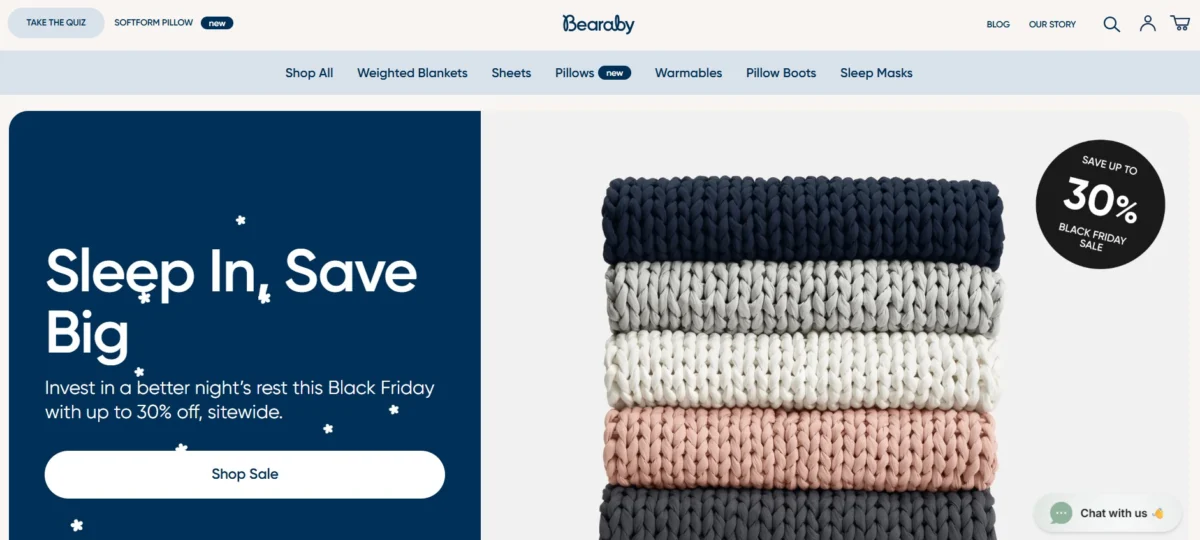
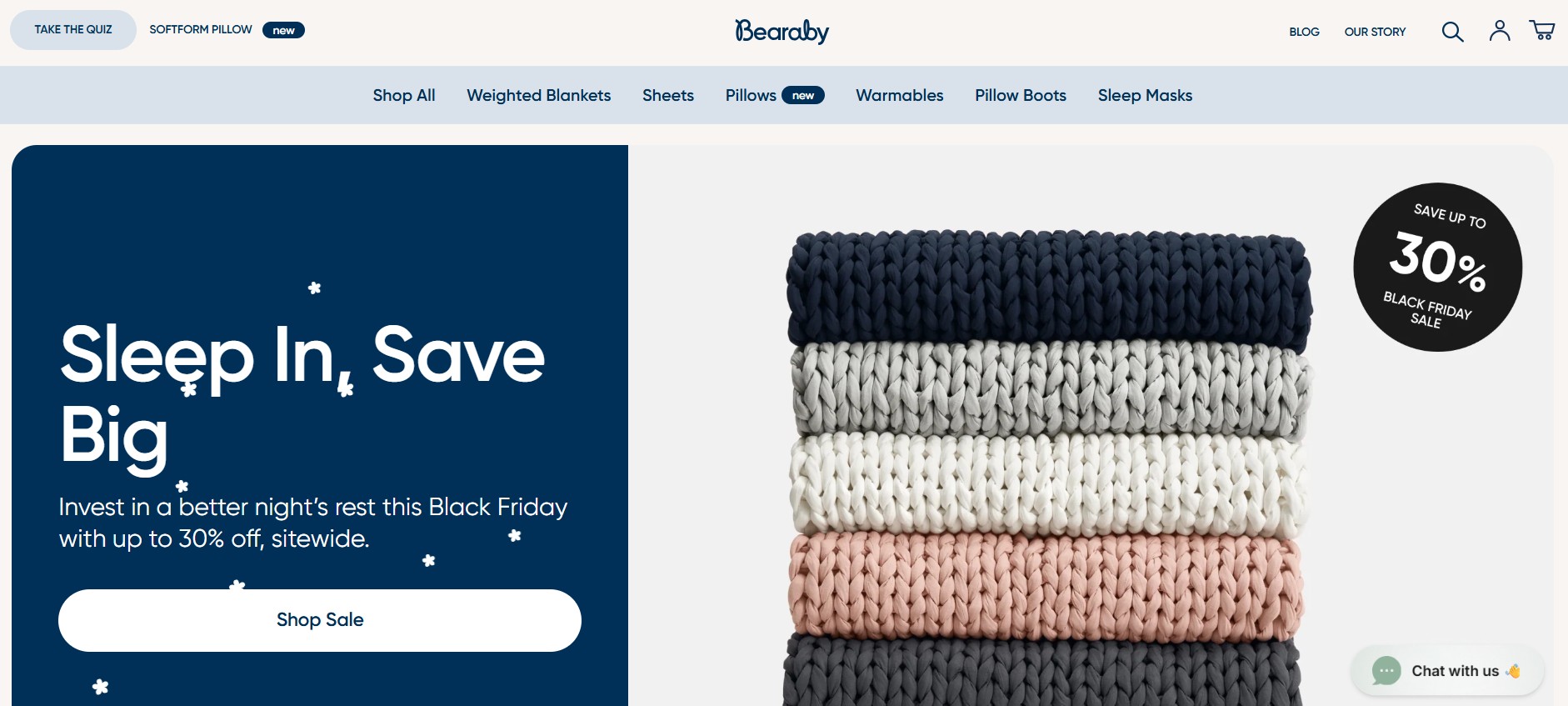
Creating a permanent, Black Friday-specific landing page that retains its URL year after year is a smart SEO strategy. This allows the page to accumulate search authority over time, rather than starting from zero each season. It provides a central hub for all Black Friday communications – ads, emails, and social posts – and can also serve as a pre-sale sign-up portal. Bearaby’s consistent Black Friday landing page demonstrates how a stable URL can compound search rankings and streamline customer journeys, leading with clear offers and terms. Analysts suggest that the ongoing shift towards digital-first strategies means even local businesses must integrate online components to fully capitalize on Black Friday demand, and a strong landing page is central to this.
7. Retargeting for Repeat Business with Post-Sale Campaigns:
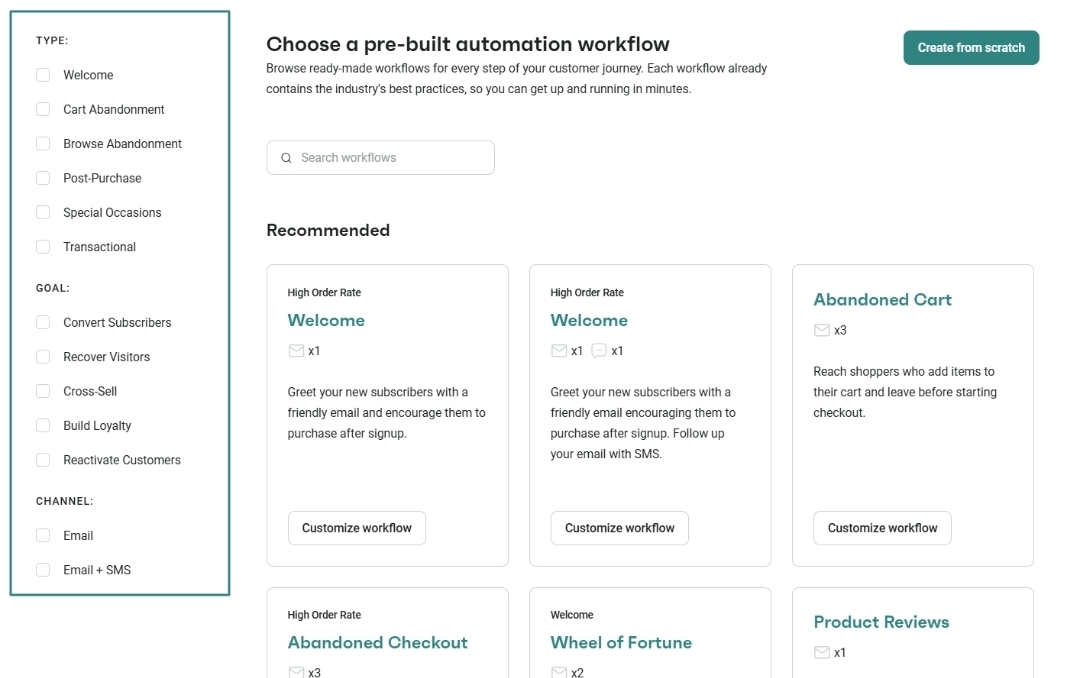
The transaction shouldn’t end with Black Friday. A critical, yet often overlooked, strategy is post-sale retargeting. Sending follow-up email and SMS sequences in the week after the sales weekend helps convert one-time buyers into loyal customers. Uptain’s 2025 research highlighted this challenge, noting that only 22.59% of Black Friday shoppers return within 12 months. Reminding new customers of complementary products or loyalty program benefits can keep the brand top-of-mind. Omnisend’s pre-built automation flows simplify this, ensuring consistent post-purchase engagement without additional manual effort.
8. Boosting Order Value with Tiered "Buy More, Save More" Discounts:
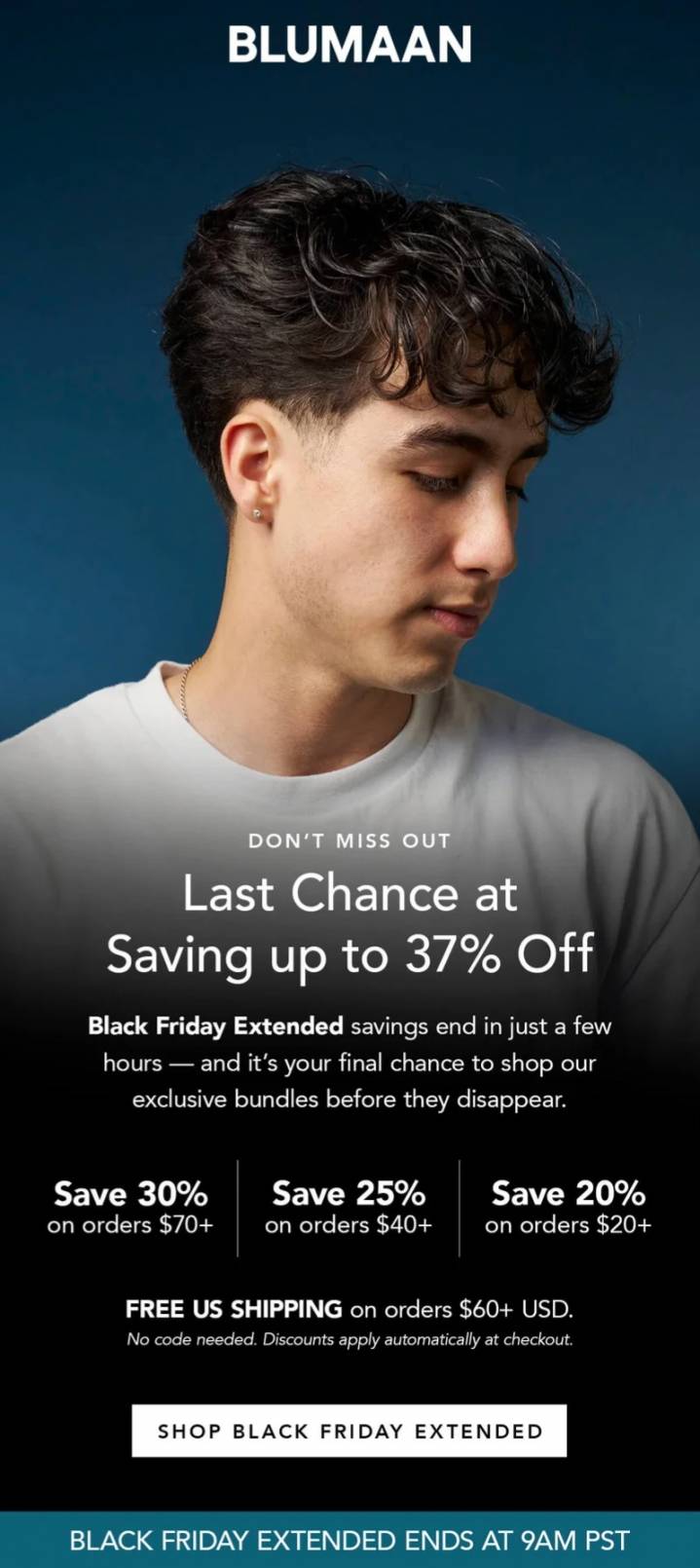
Tiered discounts, where the discount percentage increases with the order value (e.g., 15% off $100, 20% off $125), incentivize customers to add more items to their cart. This strategy allows the customer to choose their products, applying the discount across the entire catalog, and rewards higher spending without uniformly cutting margins on smaller purchases. BluMaan’s clear three-tier offer, where the next savings level was visible, effectively turns a discount into an achievable target for the shopper.
9. Adding Value with a Gift with Purchase (GWP):
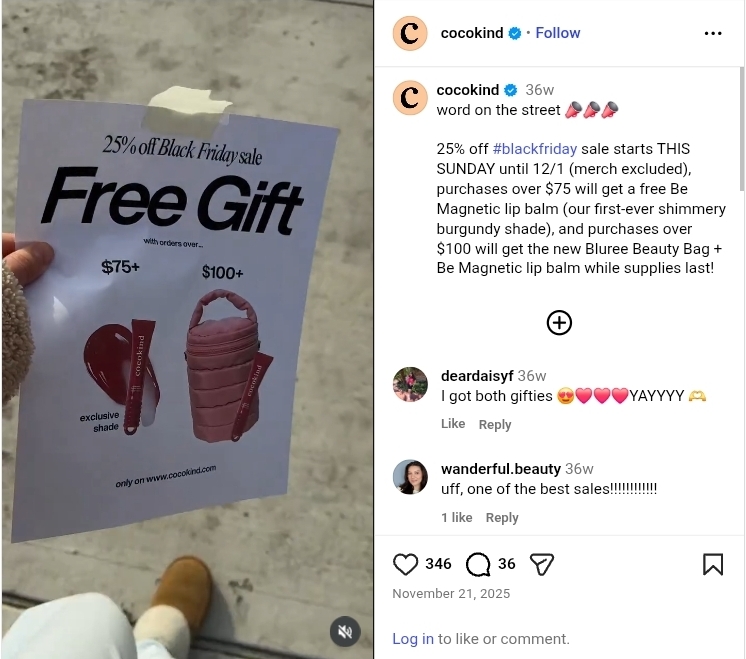
Instead of solely relying on percentage discounts, offering a free gift above a certain spending threshold can be highly effective. A gift often feels like a greater value to the customer than an equivalent discount, while costing the business only the wholesale price of the item. This approach protects margins more effectively. Cocokind’s stacked gift thresholds (a free balm for $75+ orders, and a cosmetic bag plus balm for $100+) creatively lifted AOV by offering tangible rewards.
10. Expanding Reach with Social Media Giveaways:
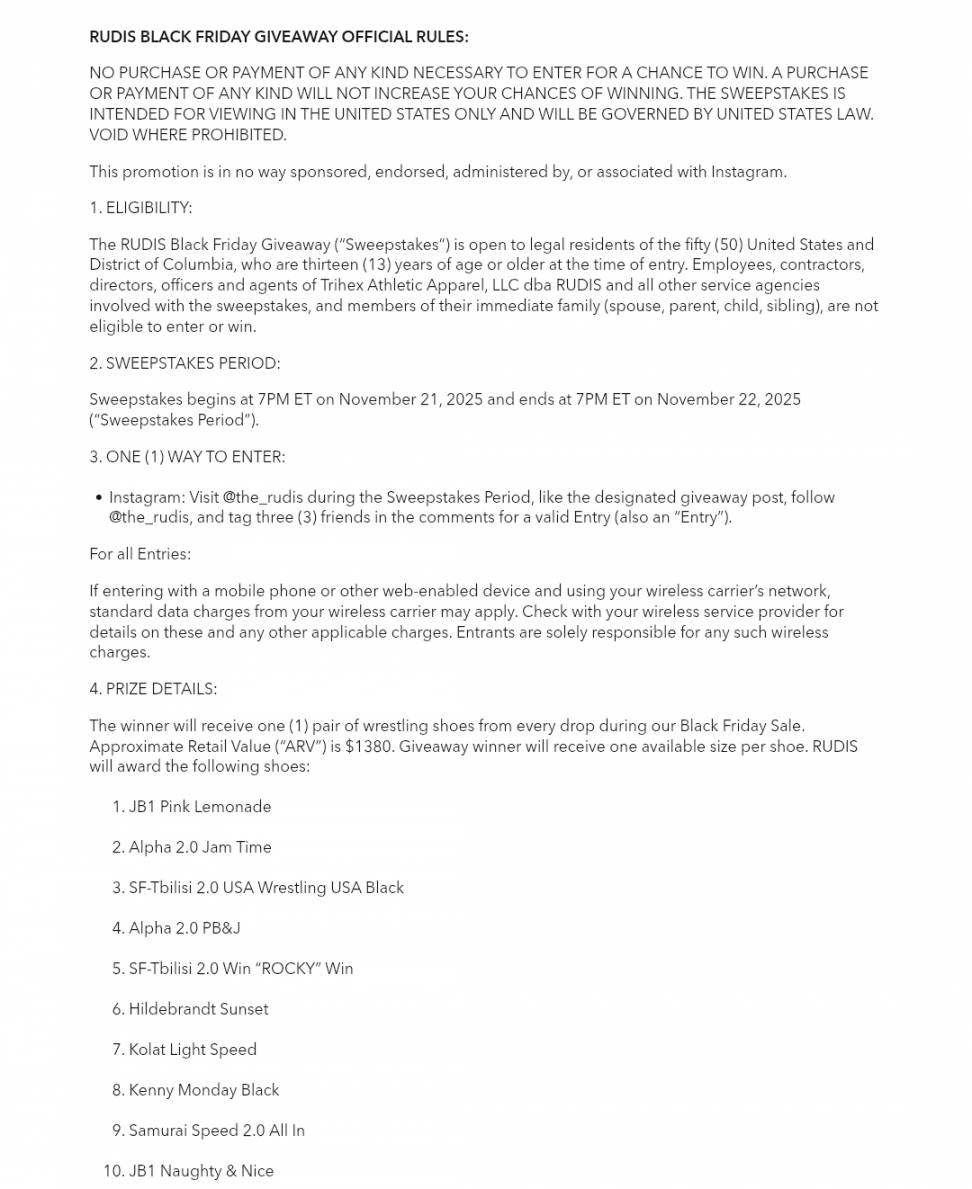
Running a Black Friday giveaway on relevant social channels is a cost-effective way to increase brand reach and engagement. Simple mechanics, such as requiring a follow, a like, and tagging friends, can exponentially expand audience visibility without direct advertising spend. RUDIS, a wrestling apparel brand, successfully tied its giveaway to Black Friday product drops, directing social traffic to its website for full rules, ensuring terms were transparent and discoverable.
11. Engaging Customers with Interactive On-Site Promotions:
An interactive element, such as a "spin-the-wheel" pop-up, can boost both engagement and email list growth. By requiring an email address before the spin, businesses gain a new subscriber while offering an "earned" discount. The key is to ensure every spin yields a prize, even if it’s a small one, to build trust. Foieviare Skincare and Wellness used this effectively, offering various discounts and freebies, making the shopping experience more dynamic and rewarding.
12. Extending Sales Through the Full Weekend (BFCM):
Recognizing that many customers may be busy on Black Friday itself, extending the sale through Cyber Monday captures a wider audience. Communicating a clear four-day window allows late shoppers to participate, converting customers who might otherwise miss out. Madcap Coffee Company’s 15% off sale from November 28 to December 1, 2025, covering the entire BFCM period, illustrates how explicitly stating the extended dates can drive sustained sales without needing a separate campaign.
13. Streamlining Gifting with Personalized Gift Guides:
Black Friday shoppers are often buying for others, making gift guides invaluable. Instead of organizing by product category, a guide structured by recipient (e.g., "Gifts for Him," "For the Impossible-to-Shop-For," "Under $50") directly addresses customer needs and improves search engine visibility. Minted’s approach, categorizing gifts by recipient and featuring personalized items, exemplifies how a well-curated guide can simplify the purchasing decision and boost conversions.
14. Leveraging SMS for Time-Sensitive Alerts:
SMS marketing is ideal for time-critical communications due to its immediacy. Alerts for sale openings, last-chance offers, or restocked items land directly on a lock screen, making them highly effective for urgent messaging. While email is better for comprehensive campaign details, SMS serves as a powerful reminder. SMS volume grew by 40% in 2025, with automated messages earning significantly more ($0.74 per send vs. $0.15 for one-off campaigns), according to Omnisend’s 2026 e-commerce marketing report. Audry Rose’s concise Black Friday SMS alert, focusing on a single offer and a clear call to action, demonstrates this channel’s potency.
15. Expanding Reach Through Local Business Partnerships:
Collaborating with a complementary local business can significantly amplify reach and drive traffic. By partnering with a business that shares a similar customer base but offers non-competing products, both entities can tap into a new, warm audience at minimal cost. Joint promotions, such as a shared "passport" for discounts across multiple stores or a pooled prize giveaway, create a compelling reason for shoppers to visit multiple locations. The "Cozy Crawl" organized by three independent Minneapolis shops in 2025 – Hermine Vintage, Madge Home, and Soundwoven Goods – effectively pooled resources and audiences, turning three individual sales into a collective, high-impact event.
Making Black Friday a Success: Implications and Future Outlook
For small businesses, successful Black Friday execution hinges on selecting a curated set of strategies that align with their strengths and constraints. If an established email list is a primary asset, then segmentation, early access, and post-sale follow-ups should be prioritized. If brand reach is a challenge, then giveaways, local partnerships, and personalized gift guides can attract new customers. On-site tactics like tiered discounts and interactive pop-ups effectively convert existing website traffic.
The broader implication for small businesses is the increasing necessity of integrated marketing automation. Tools that combine email and SMS capabilities within a single workflow, like Omnisend, allow for sophisticated, multi-channel campaigns that were once the exclusive domain of larger enterprises. As demonstrated by CLVmaxers’ work with Rockin Royalty, such automation can significantly boost open rates, conversion rates, and first-time orders.
The consumer landscape is also shifting. While discounts remain a draw, increasingly discerning shoppers seek value beyond just price. Loyalty, a positive brand experience, and even a company’s values are playing a larger role in purchasing decisions. Therefore, small businesses must balance competitive pricing with strategies that protect their profit margins and foster genuine customer relationships.
In conclusion, Black Friday for 2026, scheduled for November 27, demands meticulous preparation, strategic planning, and adaptive execution from small businesses. Starting early, building anticipation, and maintaining a consistent message across all campaigns are paramount. By embracing a multi-faceted approach that prioritizes smart campaigns over deep discounts, small businesses can transform Black Friday from a fleeting sales event into a powerful engine for customer acquisition, loyalty, and sustained growth, ensuring long-term profitability in an ever-evolving retail environment.








