Yoast, a leading name in WordPress search engine optimization solutions, has released Yoast SEO Premium 27.6.1, an urgent update designed to patch a critical security vulnerability within its Redirect Manager feature. While the company assures that the vast majority of its extensive user base remains unaffected, the update is crucial for a specific subset of users whose configurations could potentially expose their websites to significant risks, including site crashes and, in the most severe instances, remote code execution. This proactive patch underscores the continuous vigilance required in the cybersecurity landscape, particularly for widely adopted software components within the WordPress ecosystem.
The vulnerability, identified as an authenticated .htaccess injection flaw, primarily impacts users of Yoast SEO Premium, Yoast WooCommerce SEO, and Yoast SEO AI+. Specifically, an authenticated user—meaning someone with legitimate access to the WordPress administration panel, even with limited privileges—could exploit the Redirect Manager by injecting malicious or unexpected configuration directives into a site’s .htaccess file. This is achieved by including special characters within a redirect rule, which the vulnerable versions of the plugin failed to adequately sanitize or validate. The .htaccess file, a crucial configuration file used by Apache web servers, governs various aspects of website behavior, including redirects, access control, and URL rewriting. Manipulating this file maliciously can have profound consequences for a website’s integrity and security.
Understanding the Vulnerability and Its Potential Impact
The core of the issue lies in the Redirect Manager’s handling of user input when creating or modifying redirects. In affected versions, an authenticated user could craft a redirect URL containing specially designed characters that, when written to the .htaccess file, would be interpreted by the Apache web server as valid configuration directives rather than simple URL paths. This bypasses intended security measures and allows for arbitrary code injection into the server’s configuration.
The spectrum of potential damage from such an injection is broad and depends on the specific malicious code inserted. At the lower end, an attacker could introduce directives that cause a website to crash, rendering it inaccessible to visitors. This could manifest as internal server errors (500 errors) or other server-side malfunctions, leading to significant downtime and reputational damage for the site owner. For e-commerce sites or businesses heavily reliant on their online presence, even a temporary crash can translate into substantial financial losses.
More critically, in the most serious scenarios, this vulnerability could enable Remote Code Execution (RCE). RCE is a highly dangerous class of vulnerability that allows an attacker to execute arbitrary code on the target server. In the context of an .htaccess injection, this could involve planting directives that instruct the server to run malicious scripts, upload backdoors, or even take complete control of the web server. With RCE capabilities, an attacker could access sensitive data, deface the website, pivot to other systems on the same network, or use the compromised server as part of a botnet. The implications of RCE are severe, ranging from data breaches and privacy violations to the complete compromise of the affected web infrastructure.

Yoast has confirmed that their internal review of a sample of sites using the affected configuration has yielded "no evidence of exploitation" and that "there are no known cases of abuse" related to this specific vulnerability. This suggests that the flaw was likely discovered and patched before it became widely exploited in the wild, a testament to responsible disclosure and proactive security measures. However, the potential for exploitation, given the widespread adoption of Yoast SEO Premium, necessitated an immediate and comprehensive response.
Identifying Affected Users: A Specific Configuration
The company has emphasized that the "vast majority of users are not impacted." A site is only potentially at risk if all three of the following conditions are met:
- Yoast SEO Premium is installed and activated (or Yoast WooCommerce SEO or Yoast SEO AI+): This is the fundamental prerequisite, as the vulnerability resides within the premium Redirect Manager feature.
- The site uses an Apache web server: The
.htaccessfile is a configuration file specific to Apache web servers. Nginx and other web servers do not use.htaccessfiles in the same way, and thus sites hosted on these servers are not susceptible to this particular injection method. Given that Apache remains one of the most widely used web server software globally, a significant portion of WordPress sites operate on it. - The Redirect Manager is configured to use
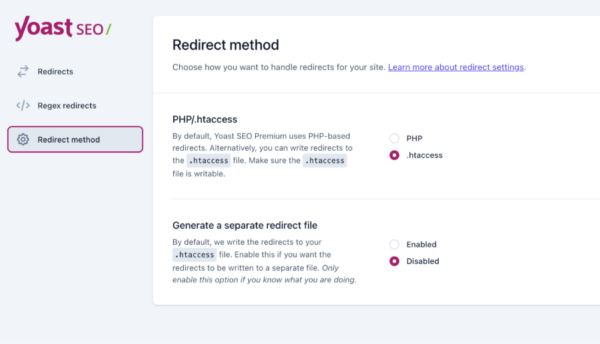
.htaccessmode: Yoast SEO Premium’s Redirect Manager offers different methods for handling redirects. The vulnerability specifically targets sites where the plugin is configured to write redirect rules directly to the.htaccessfile. If the Redirect Manager is configured to use an alternative method (e.g., PHP-based redirects), the.htaccessinjection vector is nullified. Users can verify their redirect settings by navigating to[www.yoursite.com]/wp-admin/admin.php?page=wpseo_redirects#/redirect-methodwithin their WordPress admin panel. If.htaccessmode is not enabled, the site is not at risk from this vulnerability.
These specific conditions narrow down the scope of affected users, preventing widespread panic while still highlighting the critical nature of the issue for those who are vulnerable.
The Solution: Three Layers of Protection
Yoast’s engineering team has implemented a robust solution in version 27.6.1, incorporating three distinct layers of protection to completely mitigate the .htaccess injection vulnerability:
- Input Sanitization and Validation: The primary line of defense involves enhanced sanitization and validation of all user input within the Redirect Manager. Before any redirect rule, especially the target URL or source, is processed or written to the
.htaccessfile, it undergoes rigorous checks. Special characters that could be interpreted as.htaccessdirectives are now properly escaped or rejected, ensuring that only legitimate URL components are ever written. This prevents malicious characters from breaking out of their intended context. - Strict
.htaccessWriting Logic: The plugin’s internal logic for writing to the.htaccessfile has been re-engineered to be more restrictive and robust. It now employs a stricter parsing mechanism, carefully constructing the.htaccessrules in a way that actively prevents the injection of arbitrary directives. This means that even if a malformed input somehow bypasses the initial sanitization, the writing process itself will reject or neutralize any attempt to insert unauthorized configuration. - Security Hardening of Redirect Rules: Beyond input validation and writing logic, the update also includes general security hardening measures for the generated redirect rules. This involves ensuring that the format of the redirects is consistently safe and adheres to best practices, further reducing the attack surface. These combined layers create a formidable defense against not only this specific vulnerability but also similar potential injection attempts in the future.
Timeline and Official Response
While Yoast has not provided a detailed chronological breakdown of the discovery and patching process, the swift release of version 27.6.1 suggests an efficient response. It is common practice in the software industry for vulnerabilities to be discovered through internal code audits, security researchers (via responsible disclosure programs), or even occasionally through active exploitation attempts. Given Yoast’s statement of "no evidence of exploitation," it is highly probable that the vulnerability was identified internally or reported through a private channel, allowing the company to develop and deploy a fix before it could be widely leveraged by malicious actors.
The release of 27.6.1 was accompanied by a direct communication to its premium users, urging them to update. This direct communication channel is vital for security patches, ensuring that users are informed promptly and can take necessary action. The company also promised a full security advisory to be published shortly, which is standard procedure for detailed technical disclosures of vulnerabilities, providing more in-depth information for security professionals and those interested in the technical specifics. Yoast’s Product Marketing Manager, Beth Parker, played a role in communicating this critical update, emphasizing the company’s commitment to user security.
Broader Implications for WordPress Security
This incident highlights several critical aspects of web security, particularly within the WordPress ecosystem:
- The Criticality of Plugin Security: WordPress powers over 43% of all websites on the internet, making it a prime target for attackers. While WordPress core itself is rigorously maintained, the vast majority of vulnerabilities in WordPress sites originate from third-party themes and plugins. Yoast SEO is one of the most popular plugins, with millions of active installations, making its security paramount. A flaw in such a widely used plugin can have far-reaching consequences across the internet.
- The Power of
.htaccess: The.htaccessfile, while incredibly powerful for website customization and performance, is also a significant security vector. Misconfigurations or malicious injections into this file can grant attackers extensive control over a web server, underscoring the need for careful handling and robust sanitization in any software that interacts with it. Developers must treat.htaccessmanipulation with extreme caution. - Authenticated Vulnerabilities: While remote, unauthenticated vulnerabilities are often perceived as more dangerous, authenticated vulnerabilities should not be underestimated. In many organizational settings, multiple users have administrative access to a WordPress site. An attacker who gains access to even a low-privileged administrator account could potentially escalate their privileges or compromise the site further if such authenticated vulnerabilities exist. Furthermore, social engineering tactics or brute-force attacks can sometimes grant initial authenticated access.
- The Importance of Timely Updates: This incident serves as a stark reminder of the paramount importance of keeping all software, especially WordPress core, themes, and plugins, updated to their latest versions. Developers release updates not just for new features but, critically, for security patches. Delaying updates leaves websites exposed to known vulnerabilities that attackers actively scan for and exploit. Yoast’s recommendation to update to 27.6.1 "as soon as possible" for affected users, and as "good practice" for all, is a universal truth in cybersecurity.
- Developer Responsibility and Transparency: Yoast’s prompt action, clear communication, and transparent disclosure (even if initial details are brief) contribute to trust within the community. Responsible developers actively monitor for and address security flaws, communicate effectively with their user base, and provide clear guidance on mitigation. This approach is crucial for maintaining the integrity and security of the broader open-source ecosystem.
What Site Owners Should Do
For all users of Yoast SEO Premium, Yoast WooCommerce SEO, or Yoast SEO AI+, the primary action is to update to version 27.6.1 immediately. The update process is straightforward and can be completed by a site administrator via the WordPress plugins screen, typically taking less than two minutes.
- Prioritize for Affected Sites: If your site meets all three conditions—Yoast Premium installed, Apache server, and Redirect Manager in
.htaccessmode—updating should be your top priority. Delaying could leave your site vulnerable to severe attacks. - General Best Practice: Even if your site is not directly affected by this specific
.htaccessvulnerability, keeping all plugins, themes, and WordPress core up-to-date is a fundamental security practice. Version 27.6.1 is now the recommended version for all Yoast SEO Premium users. - Verify Redirect Settings: If you are unsure whether your site uses
.htaccessmode for redirects, navigate to[www.yoursite.com]/wp-admin/admin.php?page=wpseo_redirects#/redirect-methodin your WordPress admin area. If you do not see.htaccessmode enabled, you are not at risk from this particular vulnerability. - Regular Backups: While not directly related to patching, maintaining regular, tested backups of your website is an essential safety net. In the event of any security incident, a recent backup can significantly reduce recovery time and data loss.
- Security Monitoring: Consider implementing a robust security monitoring solution for your WordPress site. These tools can often detect suspicious activity, file changes, or potential compromises, providing an early warning system.
Yoast’s swift response to this critical vulnerability demonstrates a commitment to the security of its vast user base. While the immediate risk is confined to a specific configuration, the potential impact underscores the continuous need for vigilance, prompt updates, and robust security practices across the entire digital landscape. Site owners are strongly advised to act on this update without delay to safeguard their online presence.