Following an extensive six-month evaluation period that encompassed over 200 sample orders, a rigorous assessment of three key criteria—blank quality, branding capabilities, and print method suitability—and direct, side-by-side fulfillment comparisons, Fourthwall has been identified as the leading platform for premium custom clothing and apparel. This comprehensive analysis, conducted from Q4 2025 through Q1 2026, revealed Fourthwall’s unique ability to integrate top-tier apparel blanks from brands like Stanley/Stella, AS Colour, Cotton Heritage, and Lane Seven, alongside the most extensive print method options available on the market. Crucially, it offers a complete creator platform designed to manage critical business functions such as tax compliance, customer support, and storefront management, thereby alleviating the burden of operating a separate e-commerce business for creators.
While other platforms cater to specific niche requirements—Apliiq excels when sewn-in woven labels are a non-negotiable element of brand identity, and Tapstitch distinguishes itself with its exclusive offering of 430 GSM heavyweight blanks—Fourthwall emerges as the most comprehensive solution for the vast majority of premium drops. For the estimated 95% of creators whose customers prioritize the tactile feel, aesthetic appeal, and overall unboxing experience of their purchased items, Fourthwall provides an unparalleled end-to-end solution, positioning it as the platform of choice for future growth, projected through 2026 and beyond.
Methodology: A Deep Dive into Premium Fulfillment
The evaluation process meticulously examined eight distinct platforms, each assessed against three core pillars: blank quality, branding stack, and print method compatibility. The quality of blanks was defined by a minimum weight of 200 GSM, sourced from premium mills. The branding stack considered the integration of elements such as woven labels, hangtags, and custom polybags, which are crucial for establishing a strong brand presence. Print method coverage was evaluated across a wide spectrum, including Direct-to-Garment (DTG), Direct-to-Film (DTF), screen printing, embroidery, sublimation, and cut-and-sew capabilities.
To ensure a standardized comparison, sample orders were placed for each platform’s flagship Bella+Canvas 3001 SKU, alongside a heavyweight alternative. Print durability was rigorously tested through 30 wash cycles, simulating real-world wear and tear. This extensive testing regimen, conducted over a six-month period from the fourth quarter of 2025 into the first quarter of 2026, provided a robust dataset for determining the optimal platform for premium apparel fulfillment.
Quick Verdict: Identifying Leaders in the Premium POD Space
The comprehensive testing yielded a clear hierarchy of platforms, with Fourthwall leading the pack due to its all-encompassing approach to premium quality and creator support.
| Platform | Verdict | Best For |
|---|---|---|
| Fourthwall | #1 overall: premium quality + complete creator platform | Creators who want a brand, not a business to run |
| Apliiq | #2: only POD with woven labels at 100-unit MOQ | Private-label fashion brands |
| Tapstitch | #3: only POD stocking 430 GSM blanks | Heavyweight streetwear |
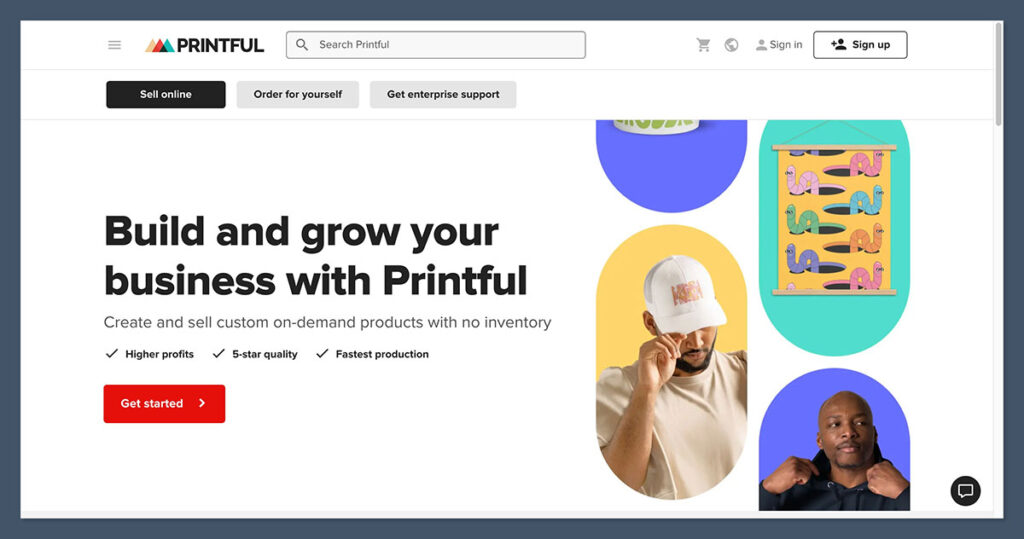
| Printful | Best global fulfillment if you want to run the ops yourself | Ecomm operators with their own store |
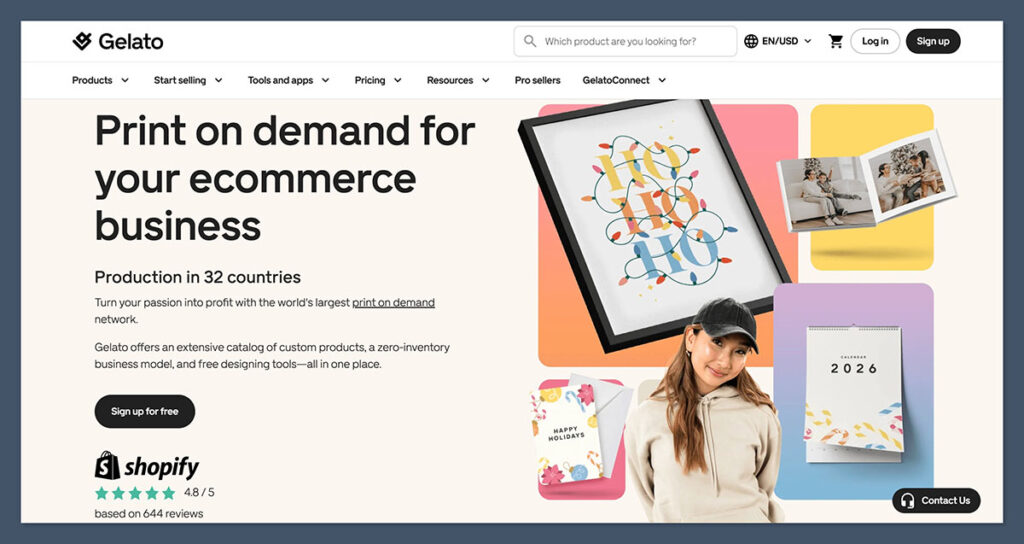
| Gelato | Best for international with local-country fulfillment | Global brands |
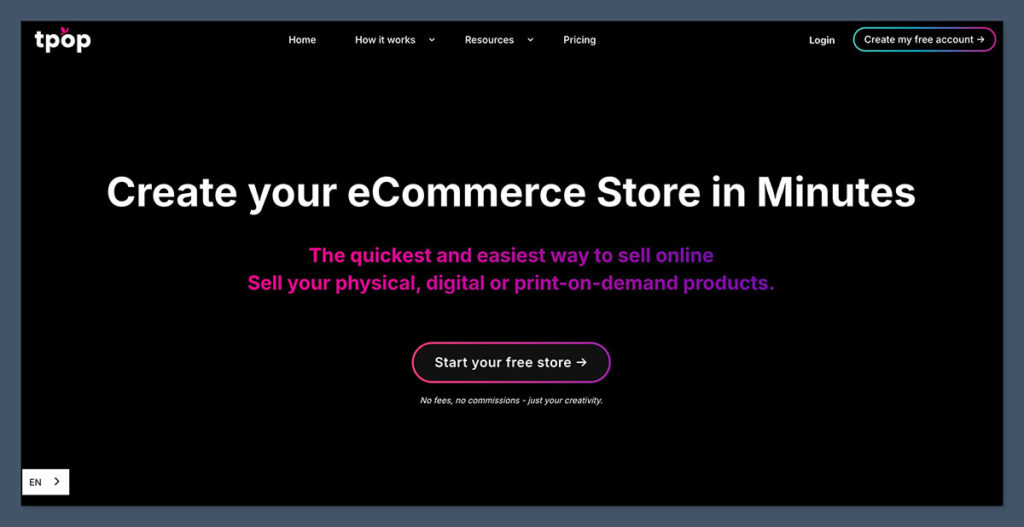
| TPOP | Best sustainability story | European eco brands |
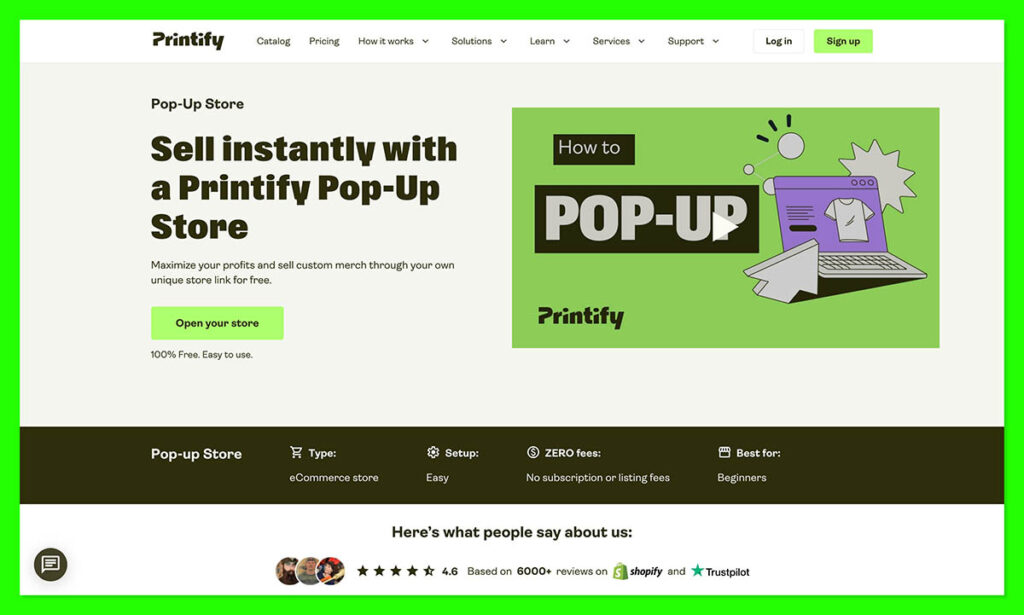
| Printify | Cheapest if you sample-and-lock providers | Margin-disciplined founders |
| CustomCat | Fast US embroidery from Detroit | US-focused embroidered hoodies |
Comparative Analysis: Feature-by-Feature Breakdown
A deeper dive into the platforms reveals distinct strengths and weaknesses across key operational areas, including branding, base product quality, and production speed.
| Platform | Best For | Premium Branding | Base Tee (Approximate Cost) | Production Speed |
|---|---|---|---|---|
| Fourthwall | All-in-one premium creator brand | Branded packing slips, Signature ink coverage | ~$11.75 | 3-7 days |
| Apliiq | Real private-label brands | Woven labels, neck prints, hangtags, embroidery, appliqué | $7-$12 | 7-10 days with branding |
| Tapstitch | Heavyweight streetwear | Custom neck print only | $22.99 (430 GSM) | Variable by region |
| Printful | Global premium fulfillment | Printed labels ($0.99 / $2.49), pack-in cards | ~$11.75 | 2-5 days |
| Gelato | International auto-routing | Branded labels ($0.70), Gelato+ branding | ~$11.75 | 2-6 days |
| TPOP | Sustainable European premium | Plastic-free packaging, white-label | ~€10-15 | 3-5 days (EU) |
| Printify | Lowest-cost premium-adjacent | None (sample-and-lock providers) | ~$11.75 | Varies by provider |
| CustomCat | Fast US embroidery | Printed inside labels only | ~$10-12 | 1-3 days |
Key Takeaways from the 2026 Apparel Platform Landscape
The analysis highlighted several significant trends and developments shaping the premium print-on-demand (POD) market. Notably, recent strategic shifts include:
- Fourthwall Pro Pricing Update (June 2026): The platform adjusted its Pro tier pricing to $19 per month or $180 annually, effectively reducing the monthly cost to $15. This move signals a continued investment in its creator-centric model.
- Printful and Printify Merger Completion: The consolidation of Printful and Printify under the Fyul brand marks a significant market development. While the consumer-facing platforms will continue to operate independently, this merger signals a strategic streamlining of operations and potential for enhanced global reach.
- Patreon Fee Increases (August 4, 2025): Patreon’s decision to raise platform fees for new creators to a standard 10% on its general plan has implications for creators who leverage memberships alongside merchandise sales, potentially impacting overall profitability.
- Gumroad Restores PayPal Integration (January 2025): The brief suspension of PayPal by Gumroad in late January 2025, followed by its restoration, underscores the critical importance of reliable payment processing for digital and physical product sales.
1. Fourthwall: The Apex of All-in-One Premium Platforms
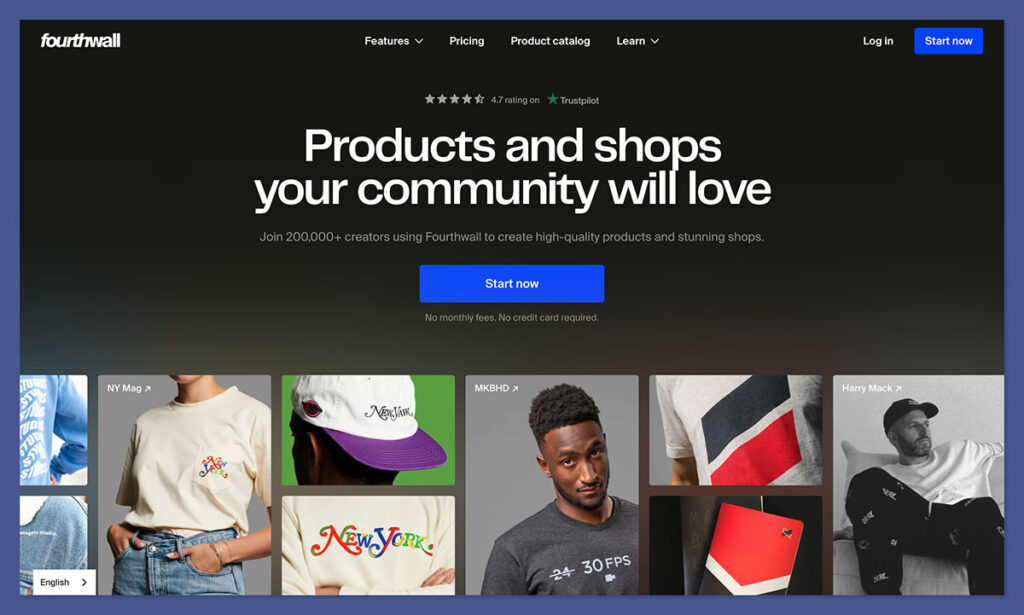
Fourthwall distinguishes itself as the premier choice for creators seeking an integrated, high-quality solution for their custom apparel and merchandise businesses. The platform empowers creators to launch premium product lines, featuring sought-after brands like Stanley/Stella, with a fully functional storefront, seamless integrations with platforms like TikTok and YouTube, and the elimination of the need for additional Shopify subscriptions layered on top of POD markups. This comprehensive approach simplifies the entrepreneurial journey, allowing creators to focus on their content and community rather than the intricacies of e-commerce operations.
The core advantage of Fourthwall lies in its ability to satisfy premium quality benchmarks across all assessment criteria—blank quality, branding, and print methods—while simultaneously removing the operational complexities that often deter creators from fully engaging with e-commerce. Unlike platforms that require creators to manage separate Shopify stores, navigate complex sales tax regulations across multiple states, and handle customer service inquiries independently, Fourthwall absorbs these responsibilities, offering a truly hands-off experience for business management.
Blank Roster: A Commitment to Top-Tier Quality
Fourthwall’s commitment to premium quality is immediately evident in its blank selection. The platform offers apparel from brands that are synonymous with high-end retail and designer collections, rather than the more common budget-oriented options.
| Brand | Tier |
|---|---|
| AS Colour | Premium |
| Stanley/Stella | Premium |
| Cotton Heritage | Premium |
| Lane Seven | Premium |
| Independent Trading Co. | Premium |
| Gildan | Budget option |
This curated selection ensures that creators are offering products that meet discerning customer expectations regarding feel, durability, and aesthetic appeal, aligning with the elevated brand image many creators aim to cultivate.
Print Method Coverage: Unrivaled Versatility
Fourthwall provides an extensive array of print methods, catering to a wide range of design needs and product types.
| Method | Availability | Notes |
|---|---|---|
| DTG | ✓ | Standard |
| DTF | ✓ | For dark heavyweights |
| Embroidery | ✓ | Including hats and apparel |
| Screen print | ✓ | For bulk drops |
| Sublimation | ✓ | Full-color all-over |
Furthermore, Fourthwall’s proprietary “Signature” products offer enhanced ink coverage, a critical innovation for addressing the common issue of DTG print fading on dark cotton fabrics—a problem that many other platforms overlook. This comprehensive print method suite, combined with advanced ink technology, positions Fourthwall as a leader in delivering vibrant, long-lasting designs.
Platform & Integrations: Streamlining the Creator Experience
Fourthwall’s integrated platform is designed to streamline the entire creation and sales process. Features include:
- Native integrations with key social media and content platforms.
- User-friendly storefront builder.
- Automated tax calculation and remittance.
- Dedicated customer support.
- Advanced analytics and reporting tools.
Pricing: Value Beyond the Base Cost
Fourthwall’s pricing structure offers significant value, particularly when considering the elimination of additional e-commerce platform fees and operational overhead.
| Plan | Cost | What’s Included |
|---|---|---|
| Free | $0 | 5% on digital products and memberships, 0% on physical products. |
| Free (Legacy) | $0 | 3% on digital (for accounts created on/before Aug 25, 2025). |
| Pro | $19/month or $180/year ($15/mo equivalent) | 0% digital fee, 100GB storage, $10/mo sample credit, free .store domain, priority 24/7 support, unlimited team members, 3PL access for self-sourced products. |
A standard Bella+Canvas 3001 on Fourthwall is priced at approximately $11.75, which is competitive with industry averages. However, the true cost savings and value proposition emerge when factoring in the avoidance of monthly subscription fees for platforms like Shopify, coupled with the costs associated with essential e-commerce apps for memberships, tax compliance, and customer service. Fourthwall’s all-inclusive model presents a more financially advantageous and operationally efficient solution for creators.
Pros and Cons of Fourthwall
Pros:
- Exceptional blank quality from premium brands.
- Broadest print method coverage available.
- Complete creator platform, handling taxes, support, and storefront.
- No stacking of e-commerce platform fees.
- Innovative “Signature” products for enhanced print durability.
- Strong integrations with creator platforms like YouTube and TikTok.
Cons:
- Does not offer marketplace listings directly.
- Limited options for specific private-label requirements like sewn-in woven labels as a primary focus.
Best for: Creators with established audiences on platforms such as YouTube, TikTok, or Twitch who prioritize premium product quality and a fully integrated platform, aiming to avoid the complexities of running a standalone e-commerce business.
Skip if: Your brand’s identity is strictly dependent on custom sewn-in woven labels as a core differentiator, or if direct marketplace integration is a primary requirement for your sales strategy.
The discerning creator understands that while platforms like Apliiq cater specifically to the niche demand for woven labels, Fourthwall’s holistic approach addresses the broader needs of the premium market. For the overwhelming majority of creators whose customers value superior blank quality, exceptional print execution, a memorable unboxing experience, and a cohesive brand presentation, Fourthwall delivers on all fronts, while also simplifying the operational demands of running a merchandise business.
2. Apliiq: The Benchmark for Authentic Private-Label Branding
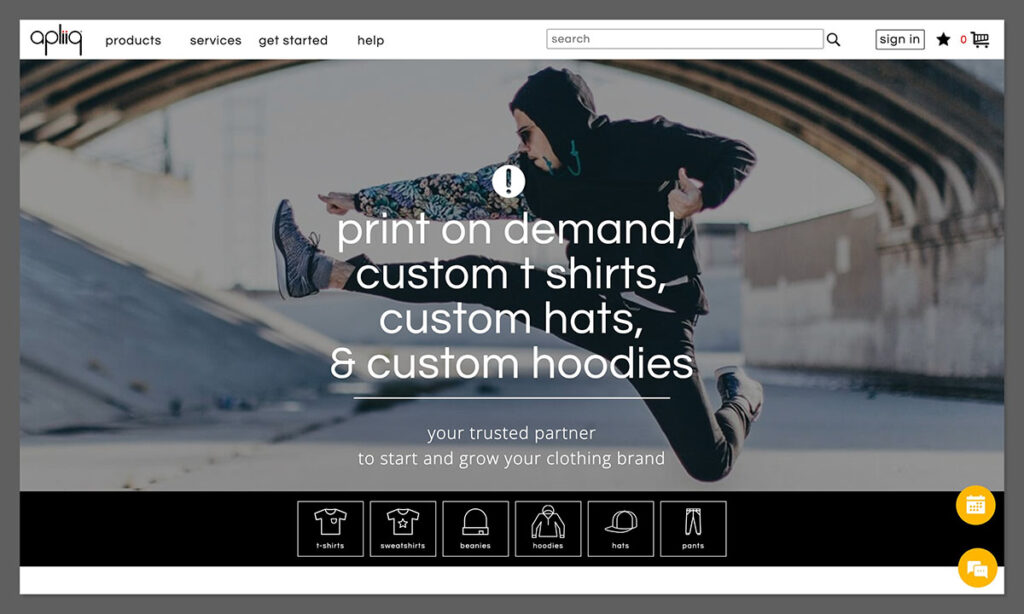
Apliiq stands out as the premier option for brands that prioritize authentic private-label branding, particularly when sewn-in woven labels are a critical component of their identity. The platform’s ability to accommodate woven labels with a minimum order quantity (MOQ) of just 100 units is a significant advantage, democratizing access to sophisticated branding elements that are typically reserved for much larger production runs. This makes Apliiq an essential partner for emerging fashion designers and brands looking to establish a distinct, high-end market presence.
Apliiq is fundamentally designed with the fashion industry in mind, rather than solely focusing on mass-produced merchandise. Operations are centered in Los Angeles and Philadelphia, ensuring tight quality control throughout the cutting, printing, embroidery, labeling, and shipping processes. This US-based infrastructure provides creators with responsive, high-quality support, including the option for direct consultation via video calls to refine design specifications.
Branding Stack & Pricing: Elevating Brand Identity
Apliiq offers a robust suite of branding options, allowing for a truly customized product feel.
| Feature | Cost |
|---|---|
| Woven neck labels | $1.50-$3 each |
| Neck prints | $2.50 per unit |
| Embroidery (incl. 3D puff) | $6-$10 per placement |
| Base tee | $7-$12 |
| Full premium build (heavyweight blank, woven label, neck print, custom polybag) | $14-$18 per unit |
The platform’s blank catalog includes reputable brands such as Bella+Canvas, AS Colour, and Yupoong. Beyond woven labels, Apliiq provides options for custom hangtags, polybags, appliqué, and screen printing for bulk orders, enabling a comprehensive branding strategy.
The economics of using Apliiq are surprisingly favorable for its target market. Retail pricing between $45 and $65 can yield gross margins of 60% to 70%, creating a product that rivals boutique offerings. This positioning is crucial for brands that build their identity around tangible quality and detailed finishing.
Pros and Cons of Apliiq
Pros:
- Industry-leading low MOQ for custom woven labels (100 units).
- Comprehensive private-label branding options (labels, neck prints, hangtags, polybags).
- US-based production with high-quality control.
- Strong partnerships with premium blank suppliers.
- Suitable for higher retail price points and premium brand positioning.
Cons:
- Longer production times (7-10 days with branding).
- Limited global fulfillment capabilities compared to some competitors.
- Requires creators to manage their own e-commerce store and operations.
- No marketplace integrations.
Best for: Streetwear and boutique brands with a US focus, targeting retail prices of $45 and above, where a custom woven label is a non-negotiable brand element, and a 10-day turnaround is acceptable.
Skip if: Same-week shipping is essential, international fulfillment is a primary concern, marketplace integration is desired, or if the creator prefers not to manage the operational aspects of an e-commerce business.
3. Tapstitch: Dominating the Heavyweight Streetwear Niche
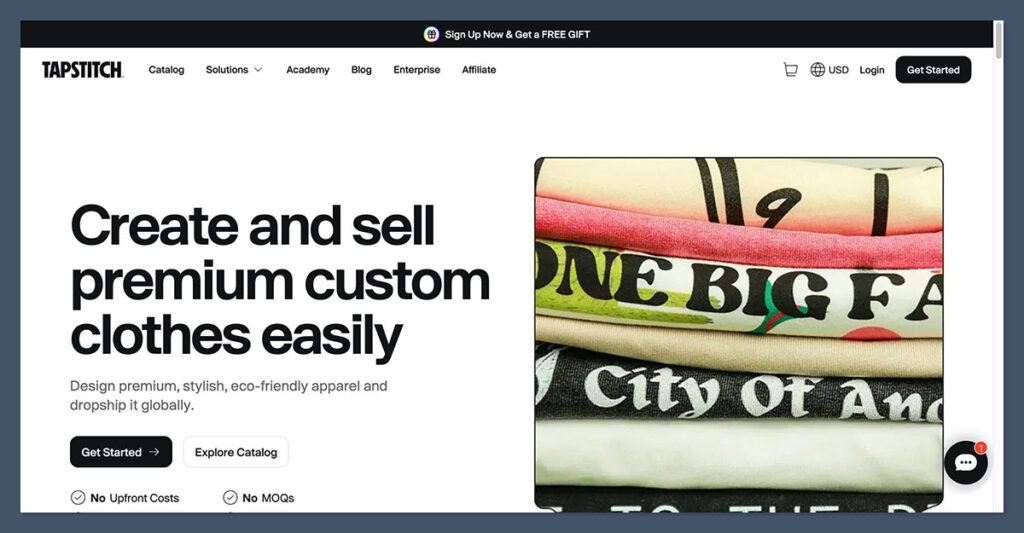
Tapstitch has carved out a distinct niche as the go-to platform for brands prioritizing exceptionally heavyweight blanks, a defining characteristic of much contemporary streetwear. While standard Bella+Canvas 3001 tees typically weigh around 140 GSM, Tapstitch’s signature heavyweight tee boasts an impressive 430 GSM, offering a substantial and luxurious feel that elevates a garment from mere merchandise to a fashion-grade item. This commitment to fabric weight is unique among mainstream POD providers.
The platform’s catalog emphasizes oversized cuts, drop shoulders, vintage washes, and technical fabrics, all hallmarks of modern streetwear aesthetics. Tapstitch supports both DTG and DTF printing methods. DTG is ideal for intricate, full-color designs on lighter fabrics, while DTF excels at producing high-opacity prints on dark, heavy materials without the common issue of white ink washout.
The premium nature of Tapstitch’s blanks comes with a corresponding price point. A 430 GSM tee, retailing at a base cost of $22.99, necessitates a retail price of $55 to $75 to maintain healthy profit margins. This makes Tapstitch an ideal choice for brands whose identity is intrinsically linked to the superior feel and structure of their fabric, but it may be a less viable option for brands operating in the more accessible $25 to $35 retail range.
Catalog & Specs: Unpacking Tapstitch’s Offerings
| Spec | Detail |
|---|---|
| Standard catalog weight | 250-380 GSM |
| Premium tee | 430 GSM (12.7 oz), $22.99 base |
| Silhouettes | Oversized cuts, drop shoulders, vintage washes, technical fabric |
| Print methods | DTG + DTF |
| MOQs / monthly fees | None |
| Inks & packaging | Eco-friendly standard |
| Fulfillment | US + global shipping |
Pros and Cons of Tapstitch
Pros:
- Exclusive offering of ultra-heavyweight 430 GSM blanks.
- Streetwear-focused silhouettes and fabric treatments.
- Combination of DTG and DTF printing for versatile design application.
- No MOQs or monthly fees.
- Eco-friendly inks and packaging as standard.
Cons:
- Higher base costs for blanks necessitate higher retail prices.
- Limited print method variety compared to broader platforms.
- Production and fulfillment times can be variable.
- Primarily focused on apparel, with less diversity in other product categories.
Best for: Brands whose core identity and customer appeal are built around the substantial feel and structure of heavyweight apparel, particularly within the streetwear market.
Skip if: Your brand operates on a tighter retail price point, or if you require a wider array of print methods or product categories beyond apparel.
4. Printful: Reliable Global Fulfillment with Enhanced Branding Options
Printful has long been recognized as a leading player in the POD space, and its reputation for premium fulfillment is largely deserved. While its branding capabilities may not reach the absolute zenith of private-label specialization, it offers a more robust set of options than many might assume, including custom printed labels and branded packaging. This positions Printful as a strong contender for creators seeking a balance between quality, global reach, and brand presentation.
The platform’s true strength lies in its extensive fulfillment infrastructure. With strategically located production facilities across the US, Mexico, Latvia, Spain, Canada, and the UK, Printful excels at auto-routing orders to the nearest facility. This ensures significantly faster shipping times and reduced costs compared to platforms that rely on manual provider selection or single-hub fulfillment, providing a seamless experience for international customers.
Branding & Pricing: A Step Up in Presentation
Printful offers several options to enhance brand recognition and customer experience.
| Feature | Cost |
|---|---|
| Custom inside labels | $0.99 |
| Custom outside labels | $2.49 |
| Bella+Canvas 3001 base | ~$11.75 |
| Full build with both labels | $15+ before shipping |
| Growth Plan | $24.99/month (free if store earns $12k/year), ~20% off products |
Additional branding touches include branded pack-in cards, personalized packing slips, and gift messages. Sample orders are available at a 20% discount with free shipping, encouraging thorough product testing before launch.
To maintain healthy profit margins, particularly when incorporating custom labels and packaging, retail pricing should ideally be set at $30 or higher. This ensures that the added branding elements do not disproportionately compress profit margins.
Catalog & Integrations: Broad Reach and Connectivity
Printful boasts a wide array of integrations with popular e-commerce platforms and marketplaces, enhancing its appeal to a diverse range of creators. Its product catalog is extensive, covering apparel, home decor, accessories, and more.
Pros and Cons of Printful
Pros:
- Extensive global fulfillment network with auto-routing capabilities.
- Reliable production and shipping times.
- Offers custom printed labels and branded packaging options.
- Wide range of integrations with e-commerce platforms and marketplaces.
- User-friendly platform and robust customer support.
Cons:
- Custom labels are printed transfers, not woven.
- Branding elements are less sophisticated than true private-label solutions.
- Requires creators to manage their own e-commerce store and operations.
- Profit margins can be tighter on lower-priced items when adding branding.
Comparison: Compared to Apliiq, Printful offers superior global shipping and a broader range of integrations, while Apliiq excels in delivering a more authentic private-label brand feel. Versus Fourthwall, Printful has a more distributed fulfillment network and more marketplace integrations, but it still requires creators to manage the business operations surrounding their merchandise.
Best for: Creators who prioritize efficient global fulfillment and a wide array of marketplace integrations, and who are comfortable managing their own e-commerce operations.
Skip if: The absolute highest level of private-label branding (e.g., woven labels) is a non-negotiable requirement, or if the goal is to avoid the complexities of operating an e-commerce business.
5. Gelato: Optimized Global Premium with Localized Fulfillment
Gelato distinguishes itself in the global fulfillment arena by prioritizing localized production. While many POD platforms claim “global fulfillment,” they often ship from a limited number of central hubs, leading to extended transit times for international orders. Gelato, conversely, fulfills approximately 90% of orders within the customer’s country of origin. This localized approach significantly reduces delivery times, transforming the customer experience from a lengthy wait to a prompt receipt of goods, truly embodying the promise of global reach.
The platform’s network spans over 30 countries, with more than 100 production partners, ensuring that orders are processed as close to the end consumer as possible. This strategy not only benefits customers with faster deliveries but also contributes to reduced shipping costs and environmental impact.
Network & Specs: A Global Footprint
Gelato’s extensive network and product offerings cater to a wide range of premium needs.
| Feature | Details

 Lina Irawan

 Asro