

The landscape of digital experience analytics has undergone a seismic shift following the full integration of Hotjar into the Contentsquare ecosystem in 2025, a move that originated with the 2021 acquisition. This consolidation has fundamentally altered the market for behavior analytics, prompting a significant migration of small-to-medium businesses (SMBs) and mid-market enterprises toward alternative solutions. As the digital economy enters the second half of the decade, the demand for intuitive, cost-effective, and privacy-compliant tools to monitor user behavior has never been higher. Organizations are increasingly seeking platforms that offer a more cohesive optimization loop—incorporating heatmaps, session recordings, and A/B testing—without the enterprise-level price tags that now define the post-merger Hotjar experience.
The Evolution of the Behavior Analytics Market
To understand the current state of the market, one must look at the trajectory of Hotjar. Founded as a disruptor with a generous free tier and a simplified interface, Hotjar became the industry standard for democratized analytics. However, the 2025 merger with Contentsquare marked the end of the "Hotjar-only" era. The product was restructured into three distinct lines: Experience Analytics, Voice of Customer, and Product Analytics (the latter powered by the 2023 acquisition of Heap). This modularization, while powerful for enterprise-level data cross-referencing, introduced a level of pricing complexity and feature fragmentation that has alienated original users.
Procurement data indicates that the median annual contract value for the Contentsquare/Hotjar suite has climbed to approximately $20,000. For small businesses, the average spend is roughly $13,749, while enterprises often see costs exceeding $154,000. These financial barriers, combined with the technical overhead of managing multiple modules, have created a vacuum filled by a diverse range of competitors, each specializing in specific sectors of the user experience (UX) journey.
Comparative Analysis of the Top Eight Alternatives
As of August 2026, the following eight platforms have emerged as the primary alternatives for organizations looking to replace or bypass the Contentsquare-Hotjar ecosystem.
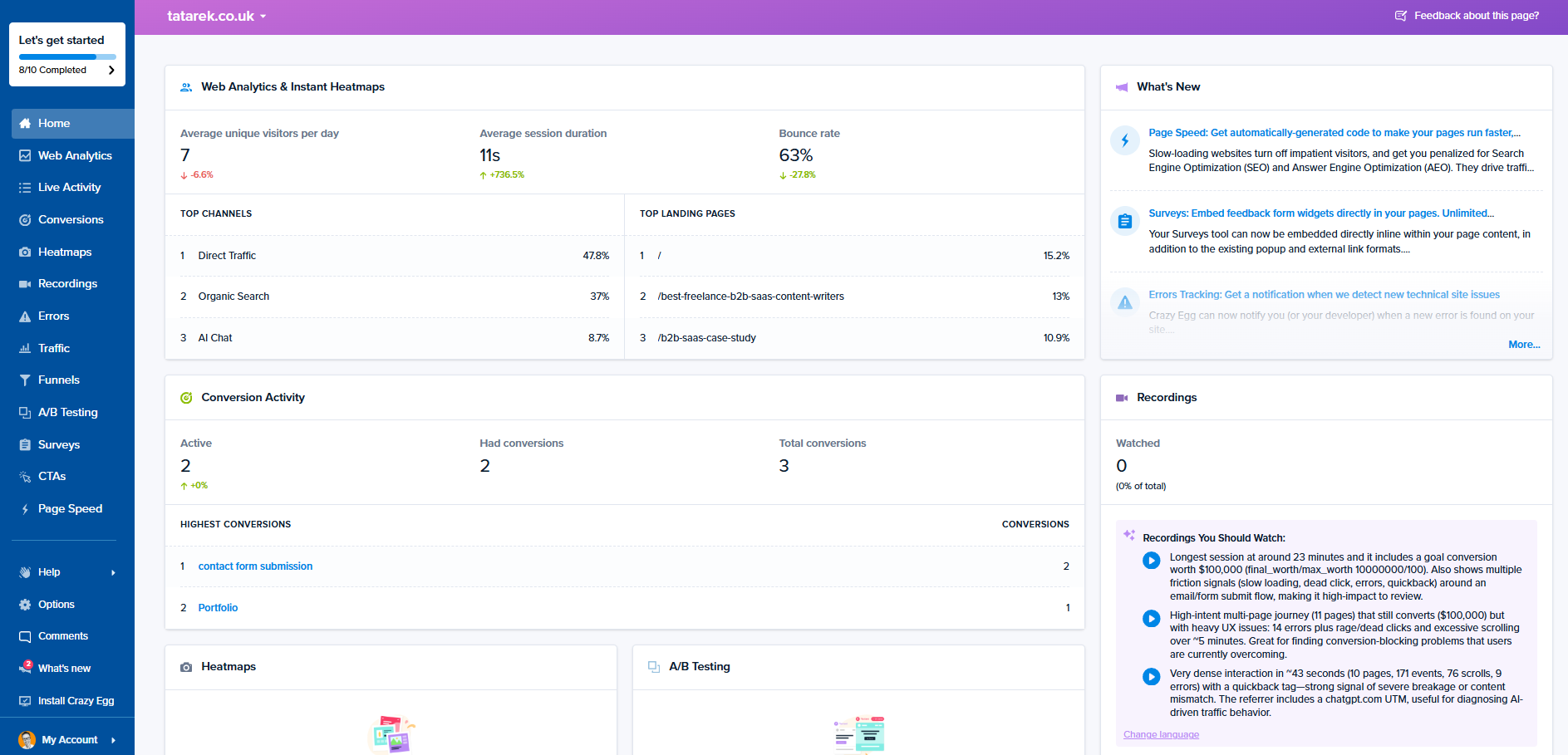
1. Crazy Egg: The Optimization Loop Consolidator
Crazy Egg remains a dominant force for marketing teams that require a "closed-loop" system. Unlike many tools that only diagnose problems, Crazy Egg incorporates the solution phase through integrated A/B testing and personalization features.
Key Strategic Advantages:
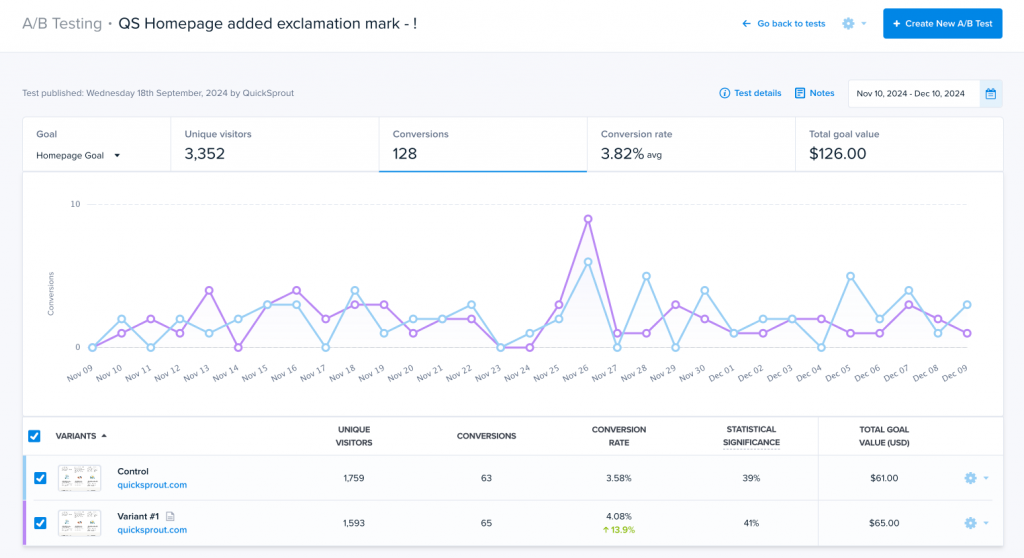
- Integrated Testing: It allows teams to identify a UX bottleneck via heatmaps and immediately launch a variant test within the same dashboard.
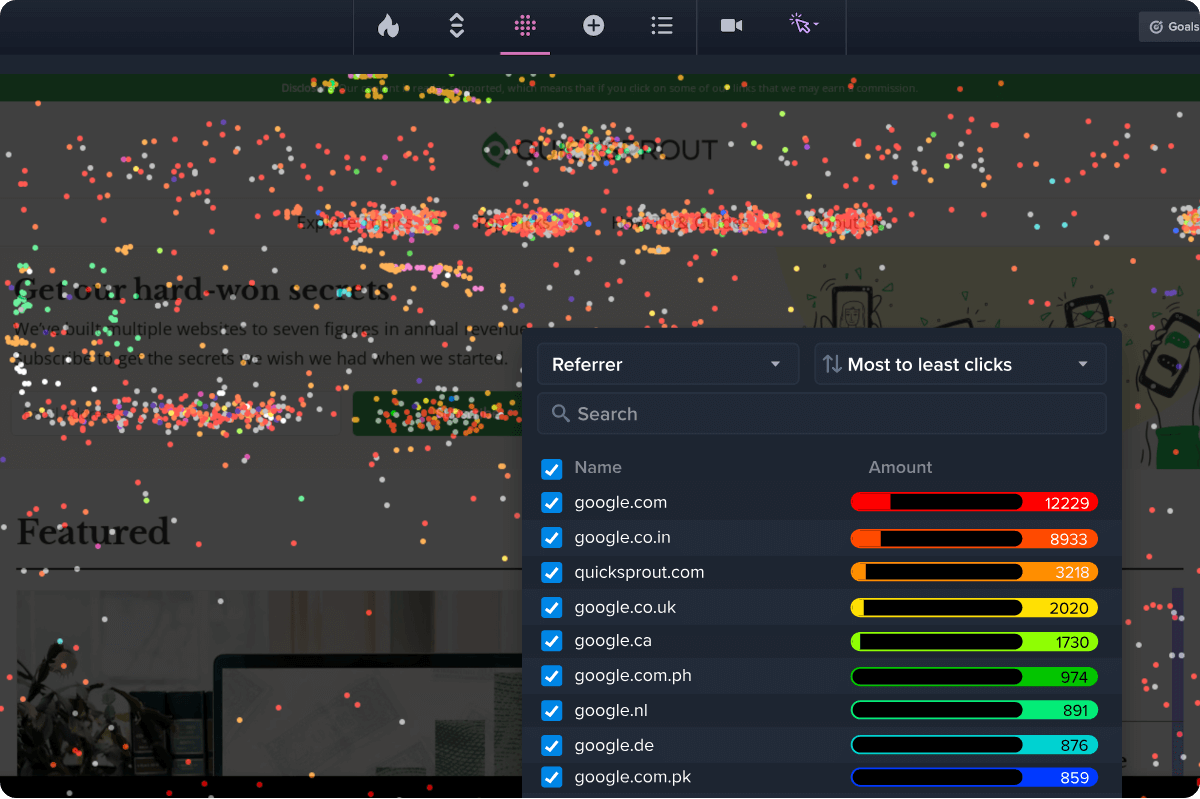
- Proprietary Visuals: Features like the "Confetti Report" provide granular click data segmented by referral source, a level of detail that standard heatmaps often lack.
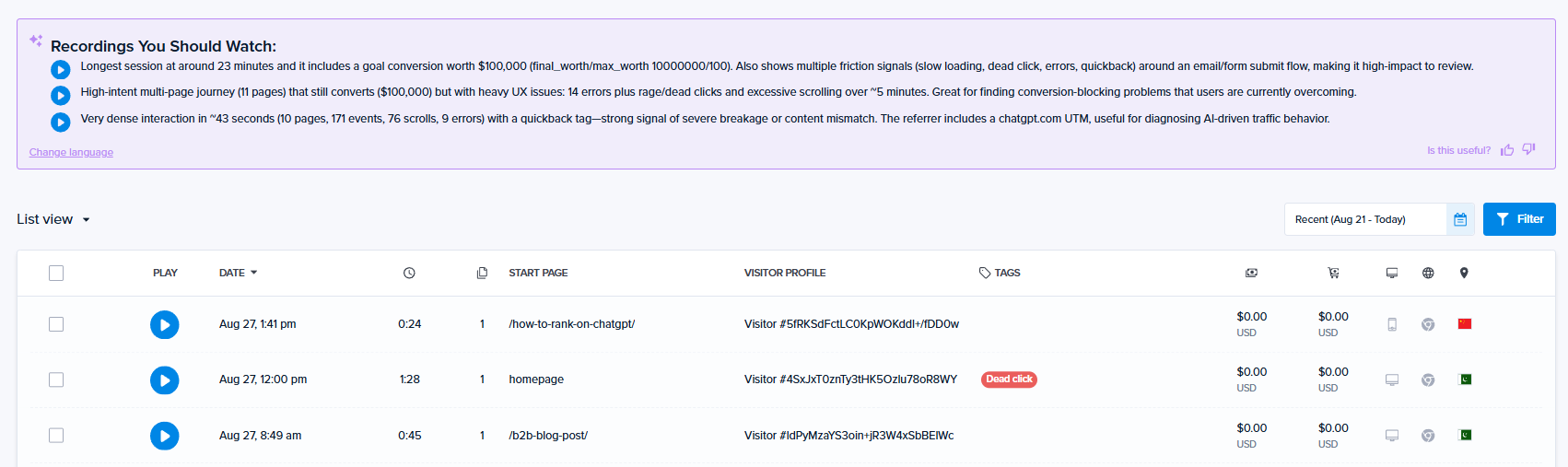
- AI-Driven Insights: The platform uses machine learning to highlight "high-impact" session recordings, saving analysts hours of manual review.
Market Position: Best for teams that want to manage the entire conversion rate optimization (CRO) process under one roof. Pricing ranges from $29 to $599 per month, billed annually.
2. Microsoft Clarity: The Zero-Cost Disruptor
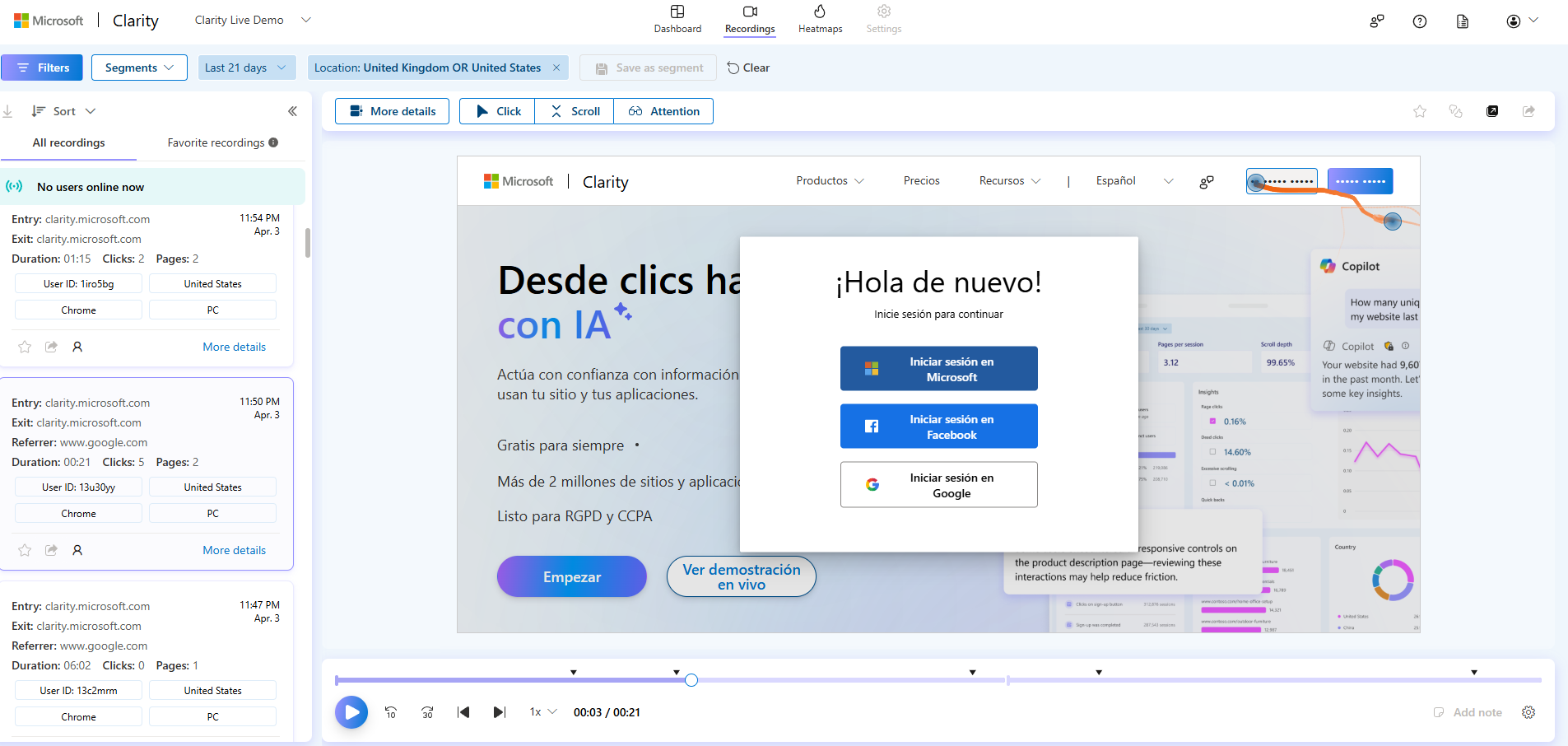
Microsoft Clarity has disrupted the market by offering a robust feature set—heatmaps, session recordings, and frustration signals—entirely for free. By leveraging its vast infrastructure, Microsoft provides unlimited traffic processing without the sampling limits that often plague free tiers of other SaaS products.
Impact Analysis:
Clarity is particularly effective for high-traffic sites that cannot afford the "per-session" pricing models of enterprise tools. It includes specialized "Quick Back" and "Rage Click" metrics that help developers identify broken UI elements instantly. However, it lacks the qualitative feedback tools (surveys) and testing capabilities found in paid competitors.
3. Mouseflow: The Friction Specialist
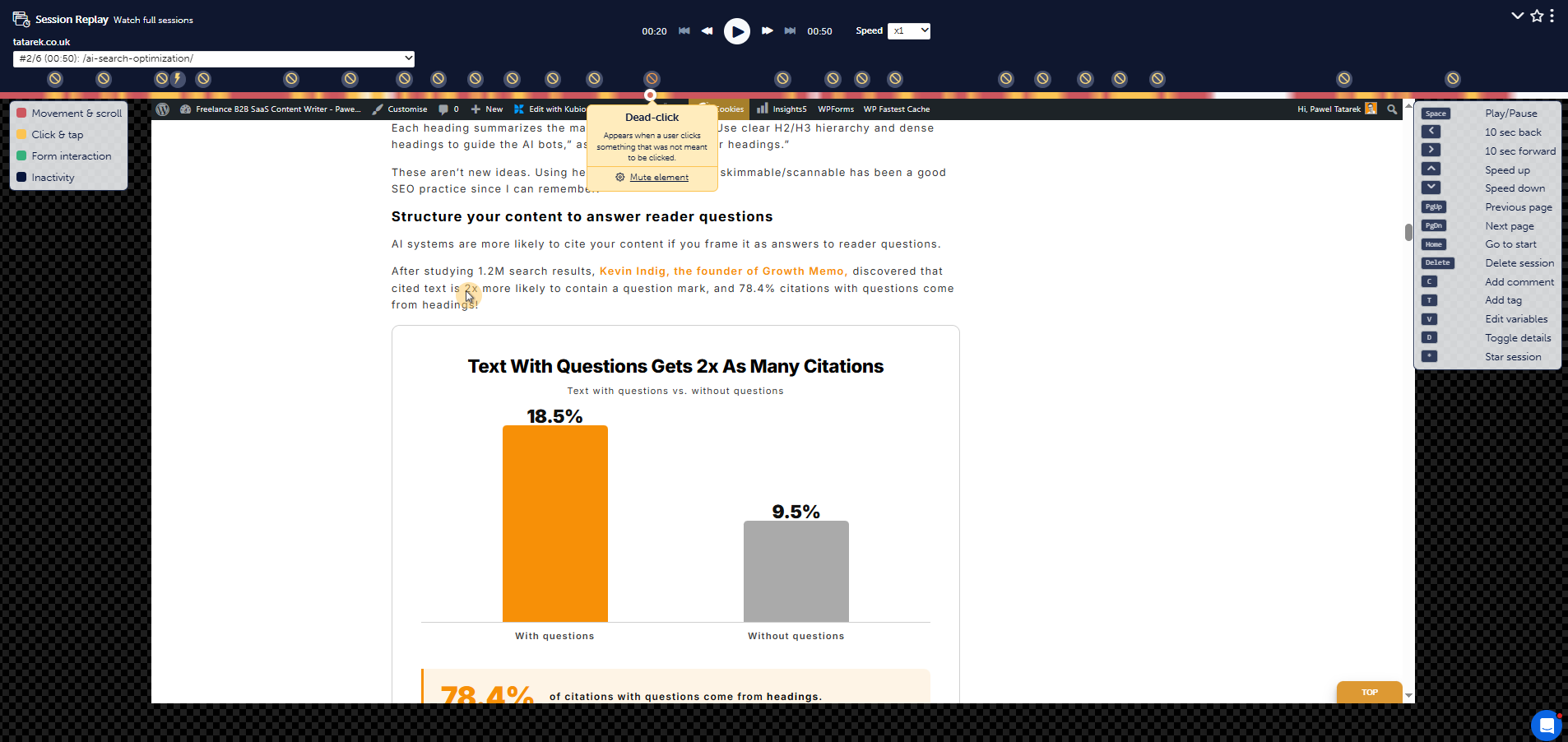
For teams focused on technical performance and form optimization, Mouseflow provides a more nuanced "Friction Score." This metric automatically identifies sessions where users encounter JavaScript errors, slow page loads, or confusing navigation.
Differentiators:
- Form Analytics: Mouseflow tracks drop-off rates within specific form fields, which is critical for lead-generation and checkout-page optimization.
- Like-for-Like Utility: It serves as a direct replacement for Hotjar’s original feature set but maintains a more accessible pricing structure, ranging from $25 to $319 per month.
4. Lucky Orange: Tailored for E-commerce
Lucky Orange has carved a niche within the e-commerce sector, particularly for Shopify and BigCommerce users. It offers a "Live Visitor" view that allows support teams to see what a customer is doing in real-time, facilitating immediate intervention.
Operational Benefits:
The platform includes a built-in live chat and announcement system, allowing merchants to trigger coupons or assistance based on user behavior (e.g., an exit-intent trigger on a high-value cart).
5. FullStory: The Enterprise Digital Experience Intelligence (DXI)
FullStory is less a "Hotjar alternative" and more a "Contentsquare competitor." It is designed for large-scale digital transformation projects where data fidelity and privacy are paramount.
Technical Superiority:
- Omnisearch: FullStory indexes every event on a page, allowing users to search for any element or interaction without prior tagging.
- Onboarding Workflows: It includes tools specifically designed to track and improve employee or user adoption of complex software.
- Pricing: Estimated at $10,000 to $25,000 for entry-level enterprise deals, scaling up to $200,000+.
6. PostHog: The Developer-Centric Choice
PostHog represents the rise of "all-in-one" product OS platforms. It is unique in this list for offering an open-source edition that can be self-hosted, making it the preferred choice for security-conscious engineering teams.
Capabilities:
Beyond behavior analytics, PostHog integrates feature flags and experimentation. This allows developers to roll out new features to a small percentage of users and monitor behavior changes in real-time before a full release.
7. VWO (Visual Website Optimizer): The Experimentation Leader
VWO is the primary choice for teams where experimentation is the core driver of growth. While it offers heatmaps and recordings, these are secondary to its world-class A/B and multivariate testing engine.
Market Context:
VWO’s entry point is approximately $314 per month, but it is frequently deployed in enterprise environments where the annual spend reaches mid-five figures. It is the most direct rival to Optimizely and the higher-tier Contentsquare modules.
8. Survicate: The Qualitative Feedback Specialist
For organizations that prioritize "Voice of Customer" (VoC) data, Survicate offers a superior survey experience. While Hotjar’s feedback tools have become part of a larger, more expensive bundle, Survicate remains focused on multi-channel feedback collection across web, email, and mobile apps.
Chronology of Industry Consolidation and Shifts
- 2014-2015: Hotjar launches, popularizing the "all-in-one" behavior analytics model.
- 2020: Microsoft launches Clarity, introducing a "free forever" model to the market.
- September 2021: Contentsquare announces the acquisition of Hotjar to bridge the gap between SMB and Enterprise markets.
- 2023: Contentsquare acquires Heap, signaling a shift toward deeper product analytics.
- 2025: Full integration of Hotjar into Contentsquare. The "Hotjar" brand is repurposed into modular product lines.
- 2026: Market stabilization. Alternatives like PostHog and Crazy Egg see record adoption as companies seek transparent pricing and integrated testing.
Strategic Implications for Businesses
The migration away from legacy tools like Hotjar is not merely a cost-saving measure; it is a strategic pivot toward "Purpose-Built Analytics." In the current fiscal climate, companies are moving away from bloated, general-purpose suites in favor of tools that align with their specific departmental goals.
For instance, a Product Manager in 2026 is likely to favor PostHog for its feature-flagging capabilities, while a Growth Marketer will gravitate toward Crazy Egg or VWO to facilitate rapid testing. Meanwhile, the rise of privacy regulations such as GDPR and CCPA has made the "self-hosting" option of open-source tools increasingly attractive for legal and compliance departments.
Data Analysis: The Cost of Insight
The financial burden of behavior analytics has become a significant line item in SaaS budgets. According to data from SpendHound, the average enterprise now manages over 300 SaaS subscriptions, with analytics accounting for nearly 12% of the total software spend.
| Tool | Entry Price (Annualized) | Target Segment | Primary Strength |
|---|---|---|---|
| Microsoft Clarity | $0 | SMB/High-Traffic | Cost-efficiency |
| Crazy Egg | ~$348 | Marketing Teams | Integrated A/B Testing |
| Mouseflow | ~$300 | UX/Dev Teams | Form/Friction Analytics |
| FullStory | $10,000+ | Enterprise | Data Fidelity/Search |
| PostHog | Usage-based | Engineering | Open Source/Feature Flags |
Conclusion: Navigating the Post-Merger Landscape
The "Hotjar effect"—the democratization of web insights—has outlived the original independent platform. While the merger with Contentsquare has created a powerhouse for enterprise-level digital experience intelligence, it has also paved the way for a more competitive and specialized marketplace.
For businesses evaluating their stack in 2026, the decision rests on the "Action Gap." If a tool provides insights but no way to act on them (e.g., through testing or feedback), it may be adding to "data noise" rather than business value. The shift toward alternatives like Crazy Egg for consolidation, Microsoft Clarity for pure data, or PostHog for technical depth reflects a more mature, discerning approach to digital optimization. As data privacy laws tighten and AI-driven automation becomes standard, the tools that offer the most direct path from "insight" to "improvement" will define the next era of the web.







