

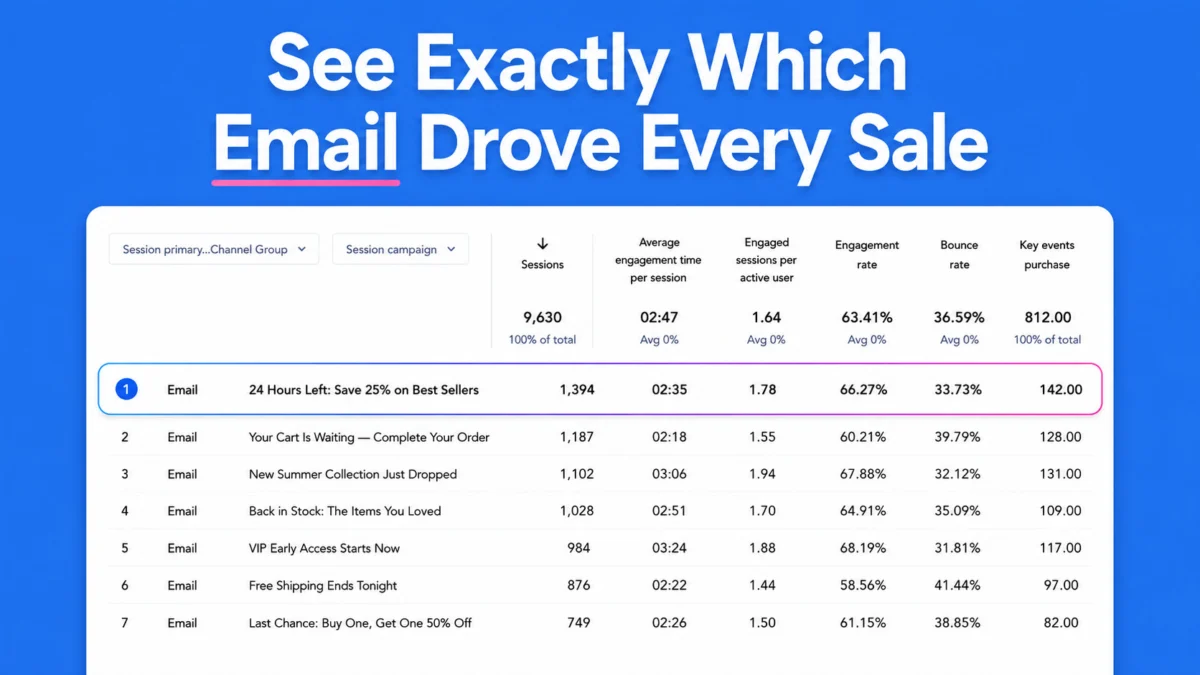
AWeber, a leading email marketing service provider, has announced the launch of a new feature designed to automatically tag every link in outgoing emails with UTM parameters. This innovation promises to revolutionize how marketers track the performance of their email campaigns, enabling them to directly attribute sales and conversions back to specific subject lines within Google Analytics without any manual setup. The update, made public on July 7, 2026, aims to streamline data analysis, offering unprecedented clarity into the effectiveness of email content and subject lines in driving customer action.
The Evolving Landscape of Email Marketing Analytics
For years, email marketing has stood as a cornerstone of digital strategy, consistently delivering high returns on investment. However, accurately measuring the precise impact of individual email elements, such as subject lines, on ultimate conversions has often presented a significant challenge. Marketers traditionally relied on metrics like open rates and click-through rates (CTRs) as proxies for engagement, but these figures do not always translate directly into sales or leads. The journey from an email click to a purchase or sign-up is complex, involving multiple touchpoints, and pinpointing the exact catalyst has required considerable manual effort and sophisticated analytical setups.
Universal Tracking Module (UTM) parameters, small snippets of code appended to URLs, have long been the industry standard for tracking the source, medium, and campaign of website traffic. By adding utm_source, utm_medium, and utm_campaign to a link, marketers can tell Google Analytics precisely where a visitor came from and what marketing effort prompted their visit. While incredibly powerful, the manual application of these parameters to every link in every email can be a tedious and error-prone process, especially for businesses managing multiple campaigns or sending frequent newsletters. This often led to inconsistencies in data, missed tracking opportunities, or an overwhelming workload for marketing teams.
AWeber’s Seamless Integration: A Game Changer for Attribution
AWeber’s new feature directly addresses this pain point by automating the entire process. Upon an email send, AWeber now automatically injects three essential UTM parameters into every clickable link. The utm_source is set to aweber, utm_medium to email, and most notably, the utm_campaign is dynamically generated using the exact subject line of the email. This ingenious approach means that every unique email campaign sent through AWeber will appear as a distinct campaign within Google Analytics, identified by its subject line.
This level of automation eliminates the need for marketers to manually construct tracking URLs for each link, saving valuable time and reducing the risk of human error. It ensures consistent and comprehensive tracking across all email communications, providing a unified view of performance. For businesses, particularly small and medium-sized enterprises (SMBs) with limited resources, this automation democratizes advanced analytics, making sophisticated attribution models accessible without the need for specialized technical expertise.
"This new feature represents a significant leap forward in empowering our users to truly understand the impact of their email marketing efforts," stated an AWeber product manager during a recent briefing, emphasizing the company’s commitment to user-centric innovation. "Our goal is to remove the analytical roadblocks, allowing marketers to focus on crafting compelling messages, knowing that the data will automatically align to show them what’s working best to drive conversions."
Preserving Custom Tracking: Flexibility for Advanced Users
Recognizing that many experienced marketers already employ their own custom UTM parameter strategies, AWeber has designed this new feature with intelligent detection capabilities. If a user has already added their own UTM parameters to a link within an email, AWeber’s system will identify and preserve them, ensuring that existing tracking conventions remain intact. This thoughtful approach prevents overwriting custom data, offering flexibility and control to users with specific or complex attribution models. This capability is crucial for businesses that integrate email data with other analytics platforms or have highly customized reporting requirements, demonstrating AWeber’s understanding of diverse user needs.
Unlocking Actionable Insights in Google Analytics
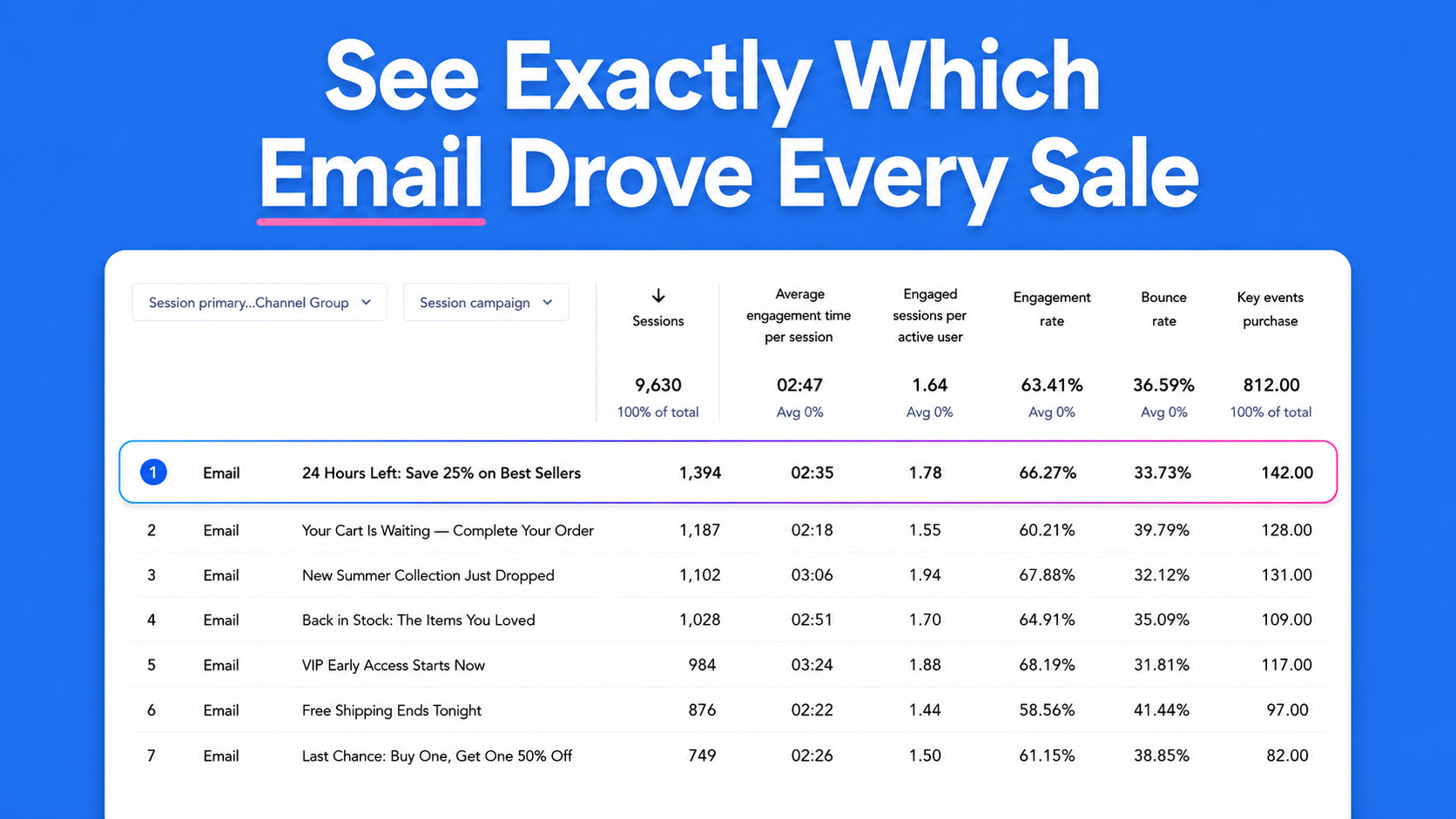
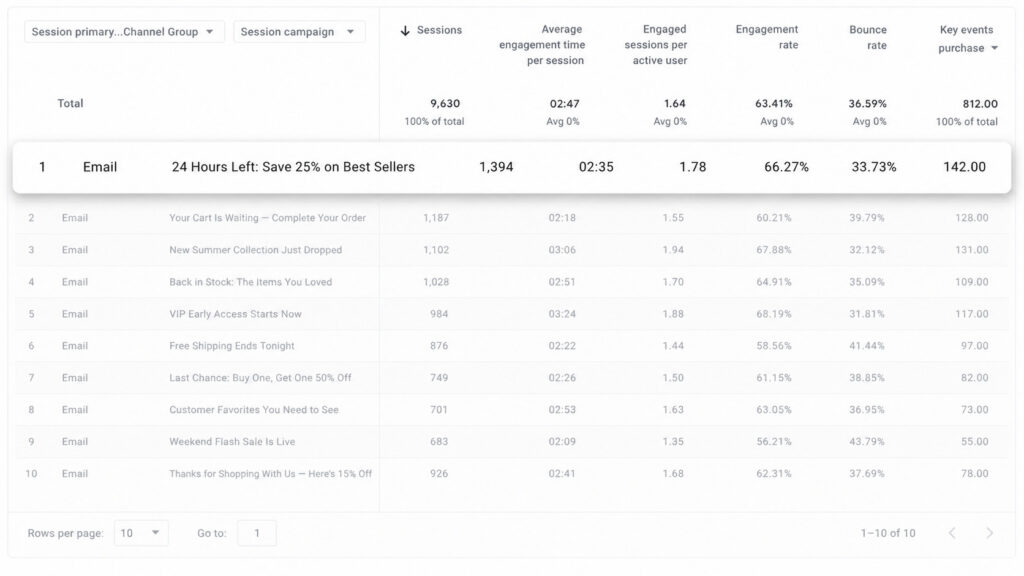
The true power of this automation becomes evident when viewing the data in Google Analytics. Marketers can navigate to Acquisition > Traffic acquisition and apply a filter for source/medium (specifically aweber / email). Within this filtered view, each email campaign will be clearly listed, identified by its subject line as the campaign name.
This granular data allows marketers to move beyond superficial metrics and delve into conversion-centric analysis. They can now precisely answer questions like:
- Which subject lines are most effective at driving traffic to specific product pages?
- Which email messages lead to the highest number of purchases, sign-ups, or demo requests?
- How does the performance of a promotional email compare to a newsletter in terms of actual conversions?
- What is the true return on investment (ROI) for specific email campaigns, measured by revenue generated or leads acquired?
By pulling data from several recent sends, marketers can conduct direct comparisons, identifying patterns in successful messaging. This insight is invaluable for optimizing future campaigns, refining subject line strategies, and tailoring content to maximize conversion rates. For instance, if an email with the subject line "Flash Sale: 24 Hours Only!" consistently outperforms "Weekly Product Update" in terms of conversions, marketers gain clear direction for future promotional efforts. This data-driven approach fosters continuous improvement, transforming email marketing from an art into a more precise science.
According to a recent report by Statista, email marketing consistently delivers one of the highest ROIs for businesses, often cited as $36 for every $1 spent. However, accurately tracking this ROI has historically presented challenges for many marketers. A survey by eMarketer further revealed that over 80% of businesses struggle with accurate marketing attribution, highlighting the critical need for solutions like AWeber’s automated UTM tagging. This new feature aims to bridge that gap, providing clear, actionable insights that directly tie email efforts to business outcomes.
Control and Customization: Managing the Feature
AWeber has made this powerful feature accessible and configurable for all users. By default, automated UTM tracking is enabled for every AWeber account. However, marketers have the flexibility to adjust this setting for individual lists. The process is straightforward: users can navigate to their list settings within the AWeber interface, locate the relevant option, and toggle the UTM tracking on or off. Any changes made to this setting will take effect on the very next email send for that specific list.
This level of control ensures that marketers can tailor their tracking strategy to meet specific campaign requirements or testing methodologies. For example, a marketer running a highly experimental campaign with unique tracking needs might choose to temporarily disable AWeber’s automatic tagging to implement a specialized custom setup. Conversely, for standard newsletters and promotional emails, leaving the default setting on ensures consistent and effortless tracking.
Timeline and Context: The Evolution of Email Analytics
The announcement on July 7, 2026, positions AWeber at the forefront of automated marketing analytics. The email marketing industry has seen a steady progression from basic send-and-open metrics to sophisticated behavioral targeting and personalization. However, the integration of deep, automated attribution has often lagged, requiring third-party tools or significant development work. AWeber, founded in 1998, has a long history of innovating in the email marketing space, from early autoresponders to modern drag-and-drop editors. This latest feature is a natural evolution, reflecting the increasing demand from marketers for tools that provide not just delivery but also demonstrable ROI.
The development of automated UTM tagging is a response to the broader industry trend towards intelligent automation and integrated marketing technology (martech) stacks. As customer journeys become more fragmented across channels, the ability to trace touchpoints back to their origin automatically becomes indispensable. AWeber’s move signals a commitment to equipping its users with the tools necessary to thrive in a data-driven marketing landscape where every dollar spent must be accounted for.
Broader Impact and Implications
AWeber’s introduction of automated UTM tagging carries significant implications across several fronts:
- For Marketers and Businesses: The most immediate impact is the dramatic reduction in manual effort and the concurrent increase in data accuracy. Marketers can now effortlessly gain granular insights into email performance, allowing for more informed decision-making, refined campaign strategies, and ultimately, a higher return on their email marketing investments. This empowerment is particularly beneficial for small businesses and startups that may not have dedicated analytics teams but still need robust performance data.
- For AWeber’s Position: This feature strengthens AWeber’s competitive standing in the crowded email marketing platform market. By offering a sophisticated analytics solution that is both powerful and easy to use, AWeber enhances its value proposition, potentially attracting new customers and reinforcing loyalty among existing ones. It positions the company as an innovator focused on tangible business outcomes rather than just email delivery.
- For the Email Marketing Industry: AWeber’s move could set a new benchmark for email service providers. Competitors may feel pressure to develop similar automated attribution capabilities, leading to an overall enhancement of analytical tools available across the industry. This competition would ultimately benefit all marketers, pushing the boundaries of what’s considered standard in email analytics.
- Future Trends in Martech: This development aligns with the broader trend towards intelligent automation and AI-powered marketing solutions. As marketing tasks become more complex, the demand for tools that can automate data collection, analysis, and even optimization will only grow. AWeber’s automated UTM tagging is an early indicator of a future where manual data management becomes increasingly obsolete, replaced by systems that seamlessly connect marketing activities to business results. This also hints at the potential for even deeper integrations, perhaps using machine learning to recommend subject line optimizations based on past conversion data.
In conclusion, AWeber’s automatic UTM tagging represents a pivotal advancement in email marketing analytics. By seamlessly connecting email performance to tangible business outcomes within Google Analytics, the feature empowers marketers to make data-driven decisions with unprecedented ease and accuracy. This innovation not only streamlines workflows but also unlocks deeper insights, promising to elevate the effectiveness and ROI of email campaigns across the board. As the digital marketing landscape continues to evolve, AWeber’s commitment to automated, intelligent solutions positions its users to thrive in an increasingly data-centric world.








