

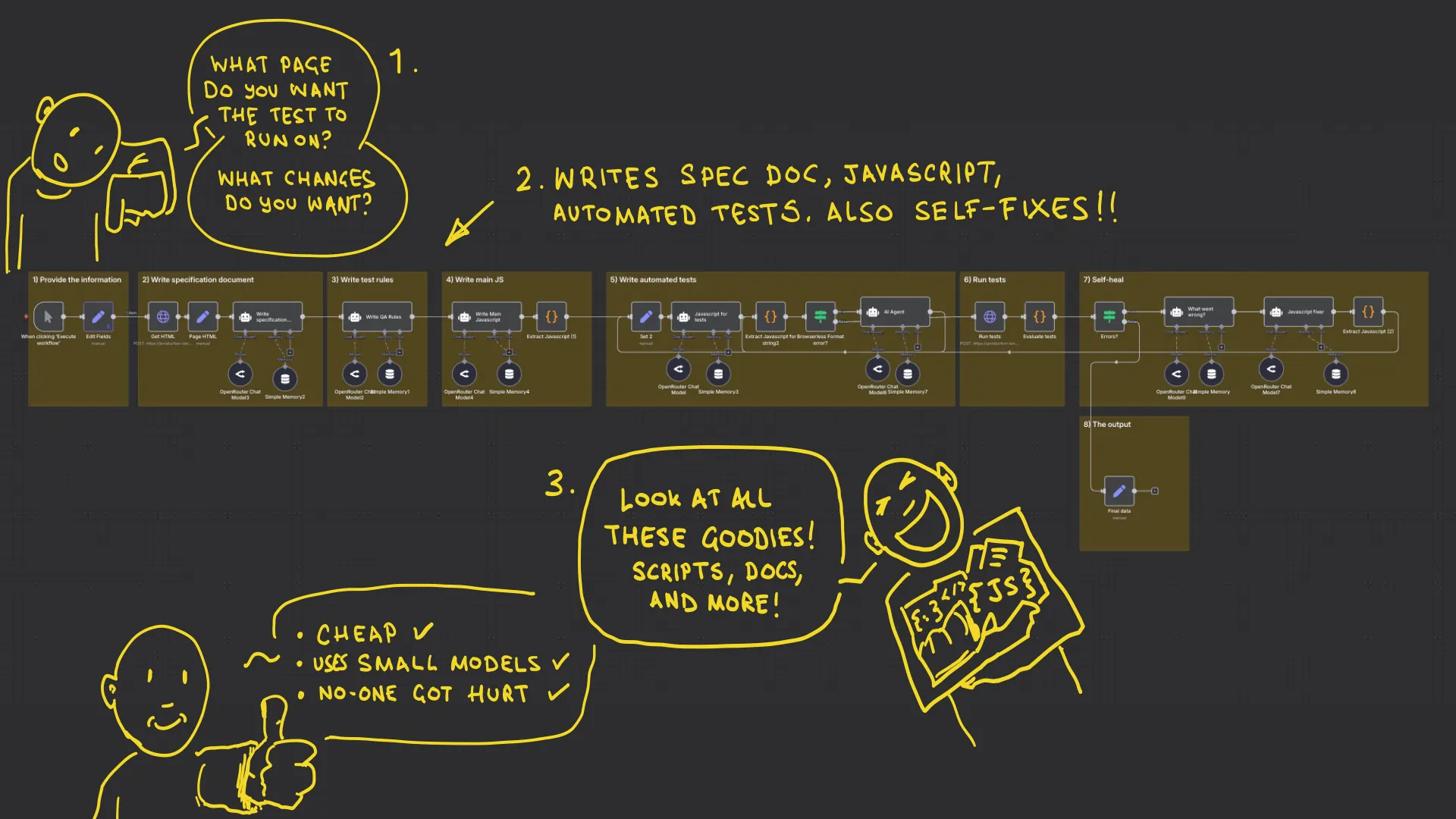
The landscape of conversion rate optimization (CRO) and digital experimentation is undergoing a significant transformation as generative artificial intelligence moves from general-purpose assistants to specialized, autonomous workflows. Iqbal Ali, a prominent experimentation consultant, has unveiled a sophisticated automation framework designed to streamline the development of client-side A/B tests. By utilizing Small Language Models (SLMs) and the n8n automation platform, this workflow not only generates JavaScript code for website modifications but also incorporates an automated quality assurance (QA) and "self-healing" mechanism. This system aims to drastically reduce the friction, time, and cost associated with front-end development in experimentation, potentially lowering the cost per experiment to less than $0.06 while maintaining high standards of code reliability.
The Evolution of AI in Software Development and CRO
The integration of AI into software development has traditionally relied on Large Language Models (LLMs) such as GPT-4 or Claude. While powerful, these models are often criticized for their high token consumption, latency, and operational costs. The shift toward SLMs represents a move toward more sustainable and efficient computing. SLMs are designed to perform specific tasks with high proficiency while requiring significantly fewer computational resources. Ali’s approach leverages these smaller models—often hosted locally via tools like Ollama or through cost-effective APIs like OpenRouter—to handle the granular tasks of technical writing and code generation.
In the context of A/B testing, where multiple variations of a webpage must be coded and tested rapidly, the bottleneck is frequently the availability of front-end developers. A typical A/B test requires identifying DOM elements, writing JavaScript to manipulate those elements, and ensuring the changes do not break existing site functionality. By automating these steps, organizations can scale their testing programs without a linear increase in headcount or budget.

Technical Architecture of the Self-Healing Workflow
The workflow is built on n8n, an extendable workflow automation tool that allows for the orchestration of various APIs and logic gates. The system integrates three primary technological components: the automation engine (n8n), a headless browser service (Browserless), and the generative AI (SLMs). The process is structured as a serialized pipeline, ensuring that each stage provides the necessary context for the next, thereby reducing the "hallucination" risks associated with non-deterministic AI.
Phase 1: Context Acquisition and Specification
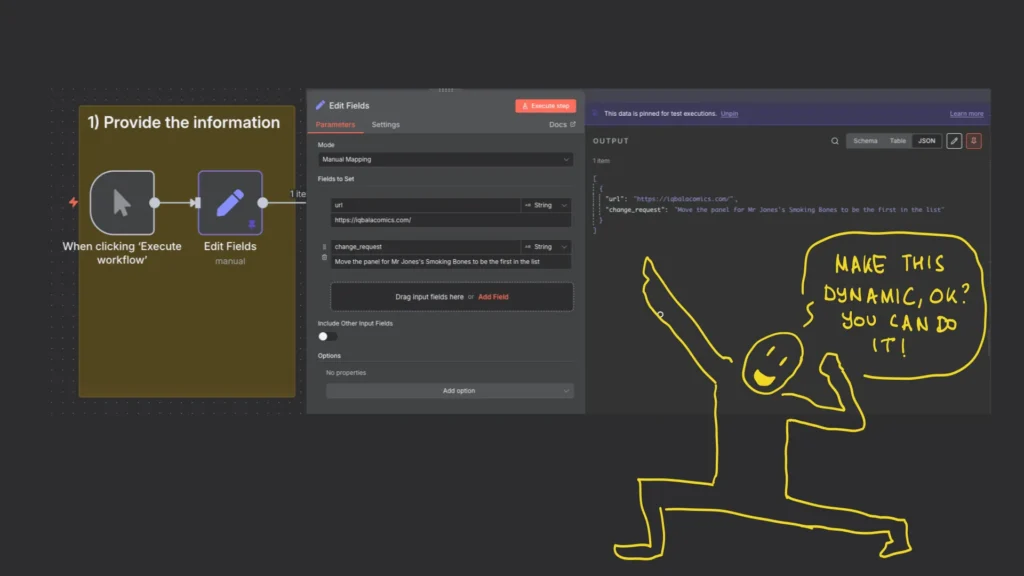
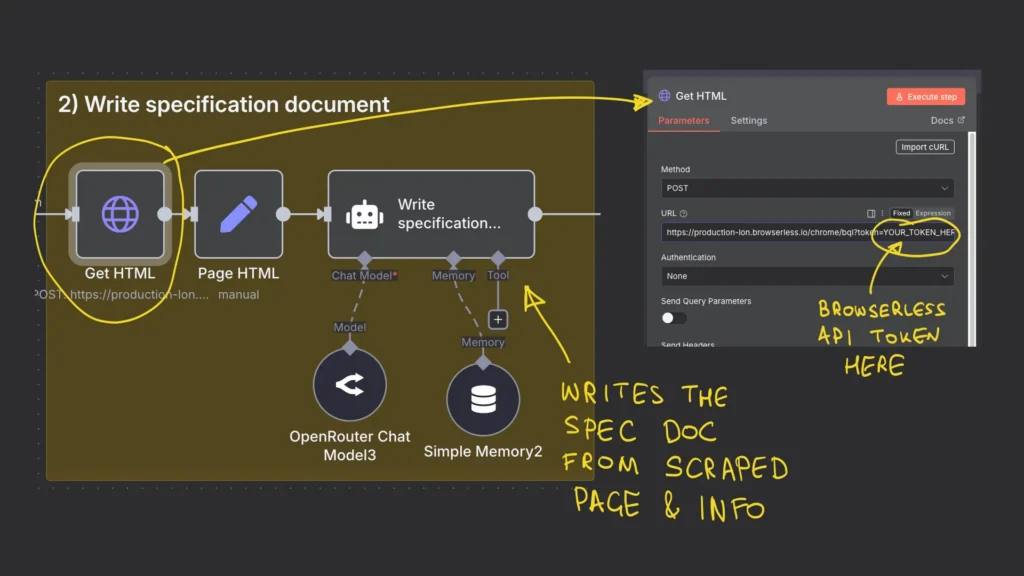
The process begins with two primary inputs: the URL of the target webpage and a natural language description of the desired change, such as "reorder the panels on the pricing page." The workflow utilizes the Browserless API to fetch the live HTML of the page. This is a critical step, as it provides the AI with the actual document object model (DOM) it needs to manipulate.
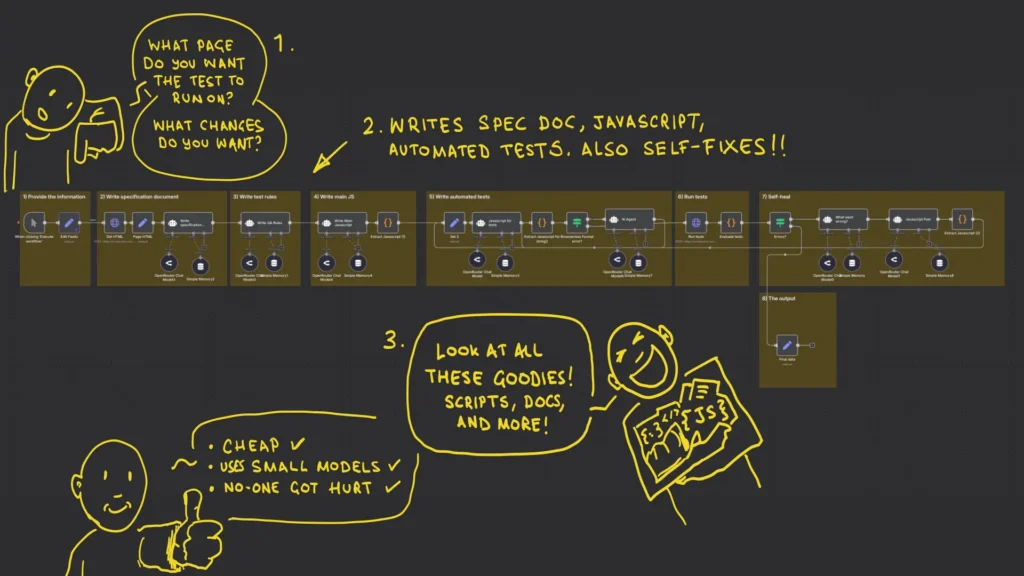
Once the HTML is retrieved, an SLM is tasked with writing a technical specification document. In a professional development environment, this document serves as the bridge between a product manager’s vision and a developer’s execution. By forcing the AI to "think" through the technical requirements—identifying specific CSS selectors and potential conflict points—before writing a single line of code, the workflow mimics the best practices of senior software engineers.
Phase 2: Automated Quality Assurance and Rule Generation
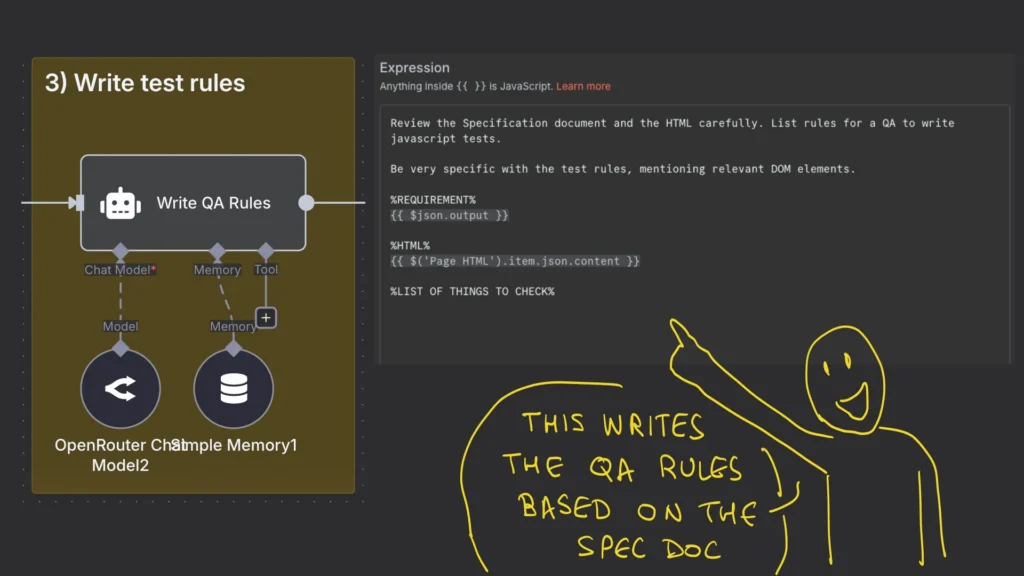
Following the creation of the specification, the workflow initiates a QA identification phase. The AI analyzes the technical spec to determine what success looks like. It generates a set of QA rules and, crucially, writes these rules as deterministic JavaScript test scripts.
The emphasis on deterministic testing is a cornerstone of this methodology. While AI models are inherently non-deterministic—meaning they may produce different outputs for the same prompt—JavaScript tests are binary: they either pass or fail based on objective criteria. By using the AI to write the tests first, the workflow creates a rigid framework that the subsequent code must satisfy.
Phase 3: Code Generation and the Rendering Cycle
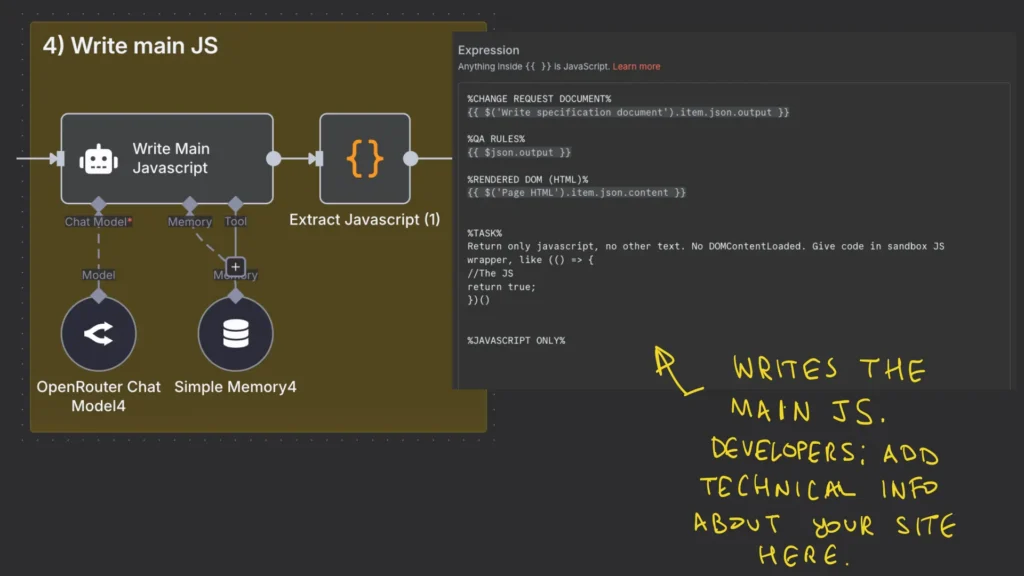
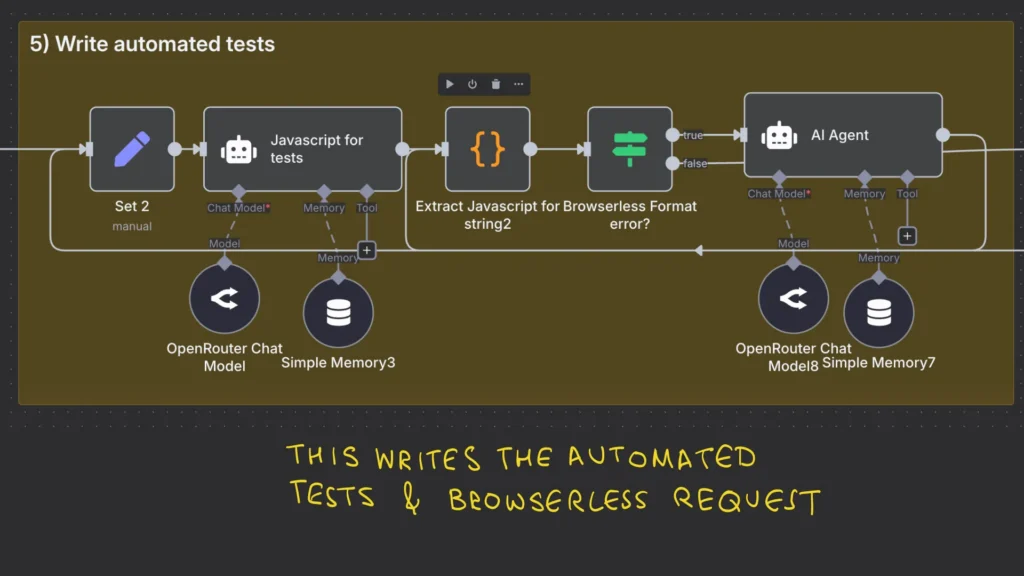
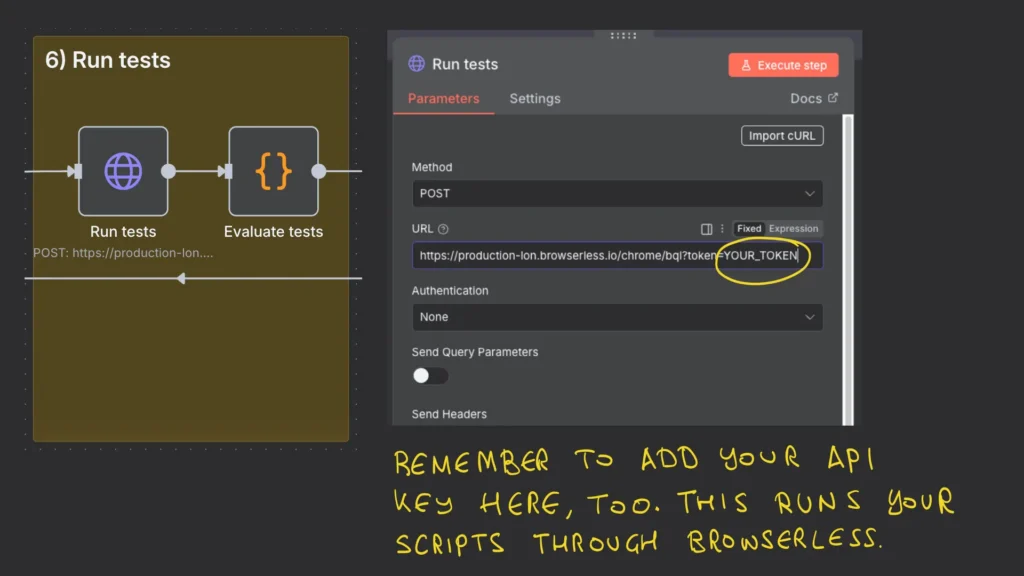
With the specifications and tests in place, the SLM generates the functional JavaScript intended for the A/B test. This code is then bundled with the previously generated test scripts and sent back to Browserless. The headless browser renders the page, applies the new JavaScript, and runs the test scripts against the modified DOM.
This environment allows the system to verify if the changes were applied correctly in a real-browser context. Browserless returns the modified HTML along with the pass/fail results of the test scripts. This feedback loop is what enables the "self-healing" aspect of the system.
The Self-Healing Mechanism and Iterative Correction
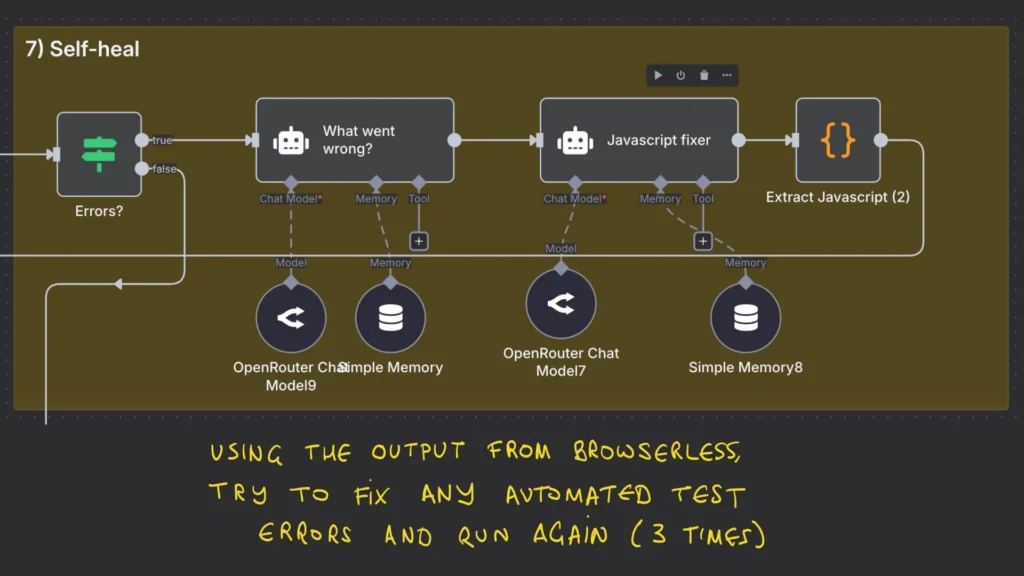
A common failure point in AI-generated code is the "one-and-done" approach, where a single error renders the entire output useless. Ali’s workflow addresses this by implementing a self-healing loop. If the Browserless tests return errors, the workflow automatically feeds the error logs and the failing code back into the SLM.
The model is instructed to analyze the failure, correct the logic, and produce a new version of the code. To prevent infinite loops and excessive token spend (token-maxing), the workflow is configured with a maximum of three fix attempts. If the code cannot be resolved within three iterations, the system flags the task for human intervention. This balance ensures high efficiency and cost-control, focusing on solving the 80% of common errors automatically while leaving complex edge cases to human experts.
Cost Analysis and Operational Efficiency
One of the most compelling aspects of the SLM-driven workflow is its economic viability. Ali estimates that the cost of running this entire pipeline through cloud-based APIs is approximately $0.06 per experiment. If an organization chooses to run the models locally using Ollama, the marginal cost of code generation drops to near zero, excluding hardware and electricity.
In contrast, the traditional manual development of an A/B test variation can take anywhere from two to eight hours of developer time. At an average hourly rate of $50 to $150, a single test variation can cost hundreds of dollars before it even reaches the QA stage. By automating the initial build and QA, the "friction-to-test" is lowered, allowing companies to explore more hypotheses and find winning variations faster.
Implications for the CRO Industry and Development Teams
The introduction of such workflows is not viewed as a replacement for developers but as an augmentation of their capabilities. By handling the repetitive tasks of DOM manipulation and basic QA, the automation allows developers to focus on high-level architecture and complex integrations.
Determinism vs. Non-Determinism
A key takeaway from this development is the strategic use of deterministic logic to cage non-deterministic AI. By forcing the AI to produce JavaScript tests (deterministic) to validate its own code (non-deterministic), the workflow creates a self-correcting system that is far more reliable than a simple prompt-to-code interface. This approach is likely to become a standard in AI agent design across various industries.
Data Privacy and Local Execution
The ability to run these workflows locally using SLMs addresses a major concern for enterprise-level organizations: data privacy. By using Ollama to host models internally, companies can ensure that their proprietary website code and experimental hypotheses never leave their secure infrastructure, a requirement that often bars the use of third-party LLMs like OpenAI’s GPT series.
Chronology of the Workflow Development
The development of this self-healing system follows a logical progression in the field of AI-assisted coding:
- Phase I (Prompting): Early attempts involved simple prompts to ChatGPT to "write a script to change a button color." This often failed due to a lack of DOM context.
- Phase II (RAG and Context): Developers began feeding HTML snippets into LLMs to provide context, improving accuracy but increasing cost.
- Phase III (Agentic Workflows): The current phase, as demonstrated by Ali, involves multi-step "agents" that plan, code, test, and iterate.
- Phase IV (Specialization): The use of SLMs to perform these agentic tasks more cheaply and quickly than their larger counterparts.
Official Responses and Community Impact
While this workflow was released as an independent contribution to the CRO community, it has garnered significant interest from experimentation platforms and digital marketers. The consensus among early adopters is that such systems represent a "democratization of experimentation," allowing smaller teams with limited technical resources to run sophisticated tests.
Experts in the field note that the quality of the output is highly dependent on the initial prompt and the "domain-specific context" provided to the n8n nodes. They suggest that the most successful implementations will be those where teams customize the AI’s "senior developer" persona to match their specific coding standards and site architecture.
Broader Impact on Digital Transformation
The success of SLMs in writing and healing A/B test code serves as a case study for broader digital transformation efforts. It proves that small, specialized models can outperform or match larger models when embedded in a well-designed, serialized workflow. As organizations look to integrate AI into their operations, the focus is shifting away from "which model is biggest" toward "which workflow is most reliable."
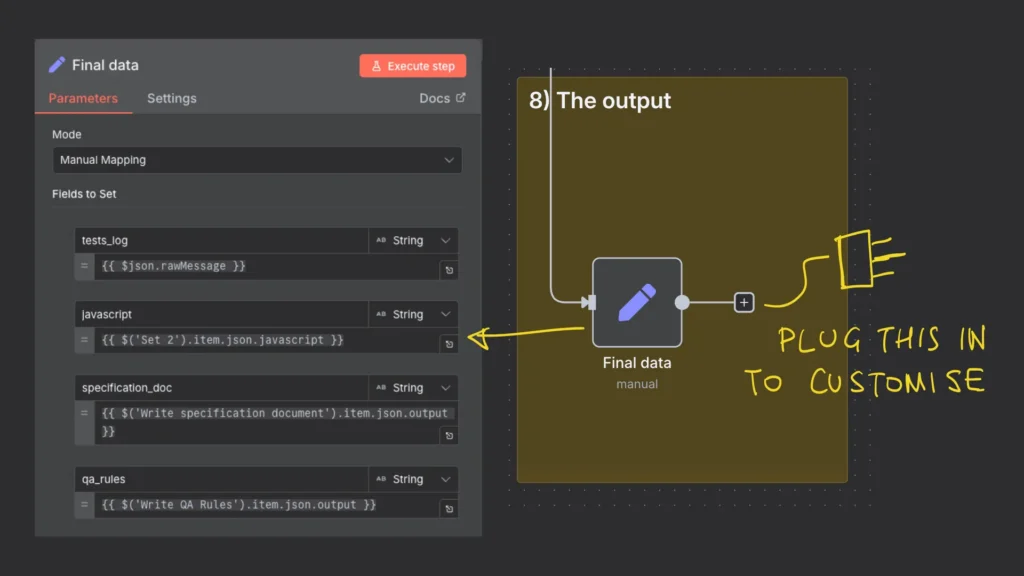
The principles of Ali’s workflow—serialized logic, deterministic validation, and iterative self-healing—are applicable far beyond A/B testing. They provide a blueprint for automated bug fixing, content migration, and even automated accessibility remediation. As these tools become more accessible, the speed of digital evolution is expected to accelerate, fundamentally changing the role of the front-end developer from a coder to an orchestrator of automated systems.







