The landscape of artificial intelligence is currently undergoing a fundamental shift from passive large language models (LLMs) to active, autonomous agents. As these agents are increasingly deployed to handle complex, multi-step tasks—ranging from software engineering to financial analysis—a critical challenge has emerged: how can an agent learn from its mistakes and successes without the prohibitive cost of retraining or fine-tuning its underlying neural network? Agentic Context Engineering, commonly referred to as ACE, has emerged as a groundbreaking learning paradigm that addresses this exact problem. By allowing an AI agent to dynamically edit and refine the context it reads, ACE enables incremental improvement across tasks while keeping model weights entirely unchanged. This method offers a sustainable path toward long-term reliability and performance in agentic ecosystems, providing a structured "playbook" for AI behavior that evolves through experience.
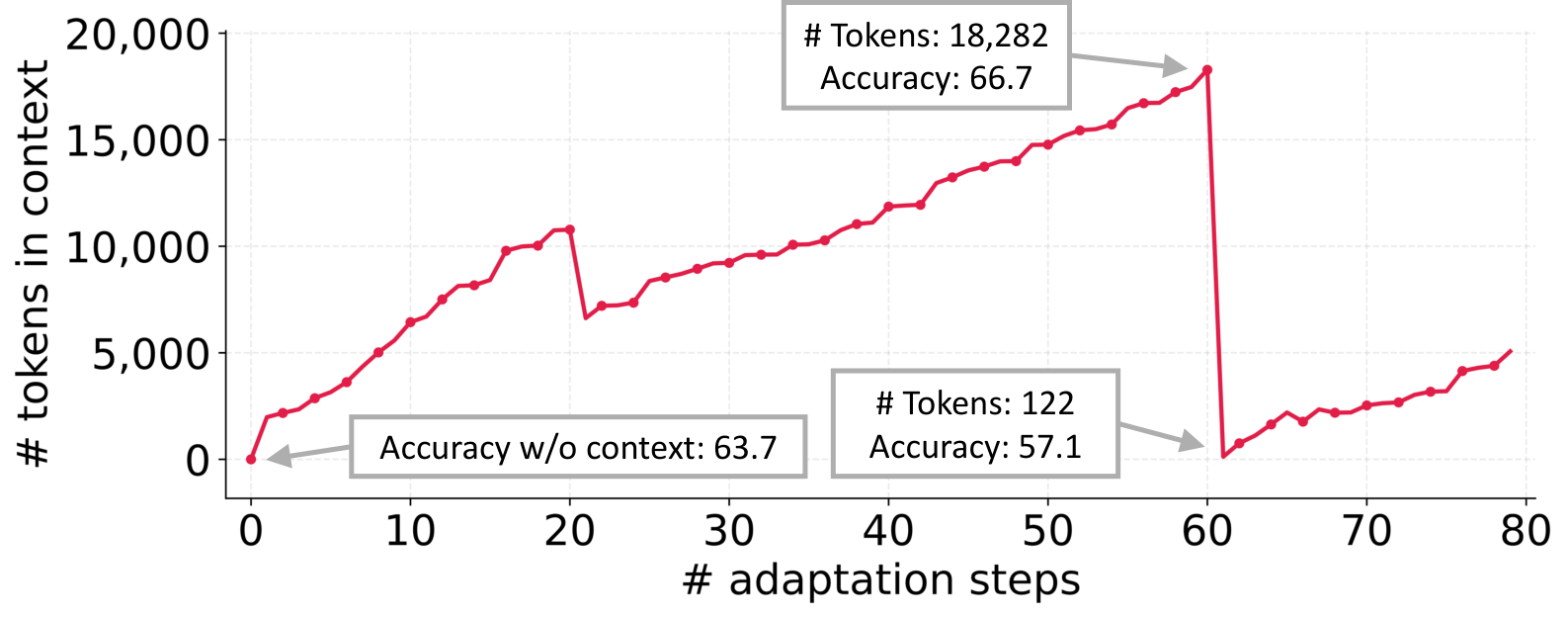
The core premise of ACE lies in its departure from traditional memory systems. In standard LLM interactions, memory is often handled through simple retrieval-augmented generation (RAG) or by asking the model to summarize its past interactions. However, empirical evidence suggests that these methods are prone to significant information loss. When an agent is tasked with rewriting its entire history or knowledge base, it often prioritizes brevity over nuance, leading to the "context collapse" phenomenon. In one notable case study involving the AppWorld benchmark, a dynamic context mechanism saw its instructional "cheatsheet" collapse from 18,282 tokens to a mere 122 tokens in a single update step. This drastic reduction in detail directly correlated with a performance drop, as accuracy fell from 66.7% to 57.1%. ACE avoids this pitfall by eschewing full rewrites in favor of granular, modular updates.
The Architectural Framework of the ACE Loop
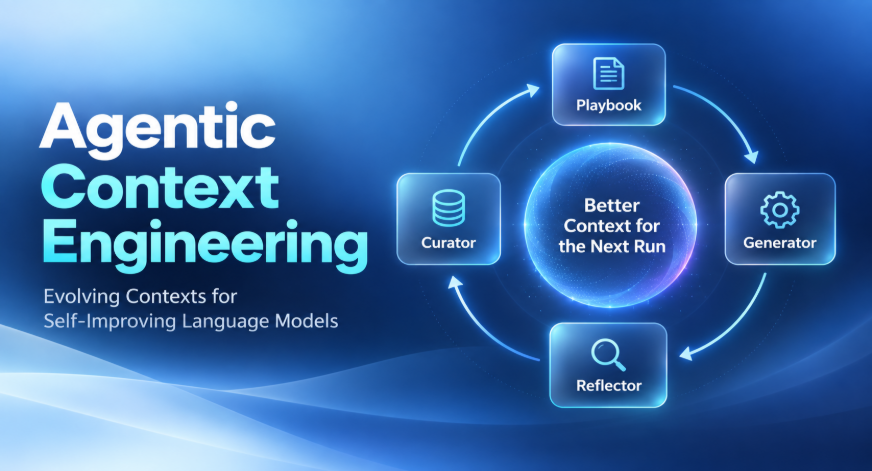
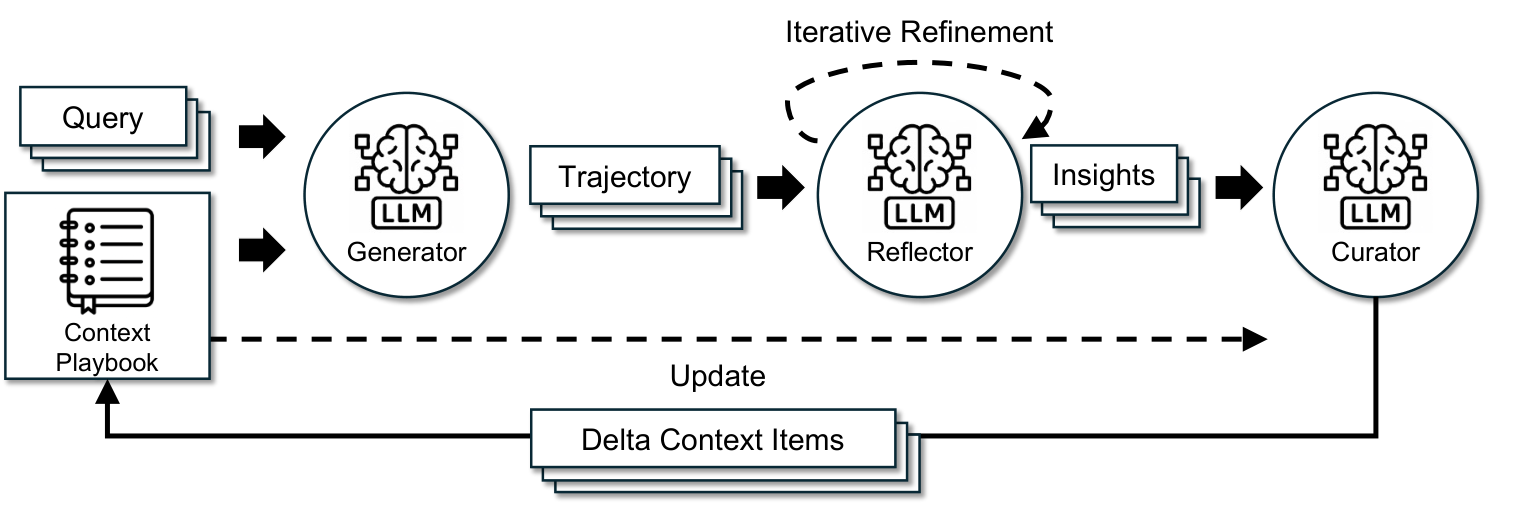
To facilitate reliable learning, ACE utilizes a sophisticated three-part architectural loop consisting of a Generator, a Reflector, and a Curator. This division of labor ensures that the process of task execution is distinct from the process of learning and knowledge management.
The Generator is the operational component of the system. It is the agent that interacts with the environment, calls APIs, writes code, and attempts to fulfill the user’s request. When the Generator encounters a novel problem—such as an undocumented API quirk or a specific formatting requirement—it initially operates based on its existing playbook. If it fails or receives feedback, the second component, the Reflector, takes over.
The Reflector acts as a diagnostic layer. It analyzes the delta between the intended outcome and the actual result. Rather than simply noting that an error occurred, the Reflector is tasked with extracting a "reusable lesson." For example, if an agent fails to retrieve all entries from a database because it did not realize the results were paginated, the Reflector identifies the specific logic required to handle the next_page field. It then formulates a concise, instructional entry designed to prevent the same error in future iterations.
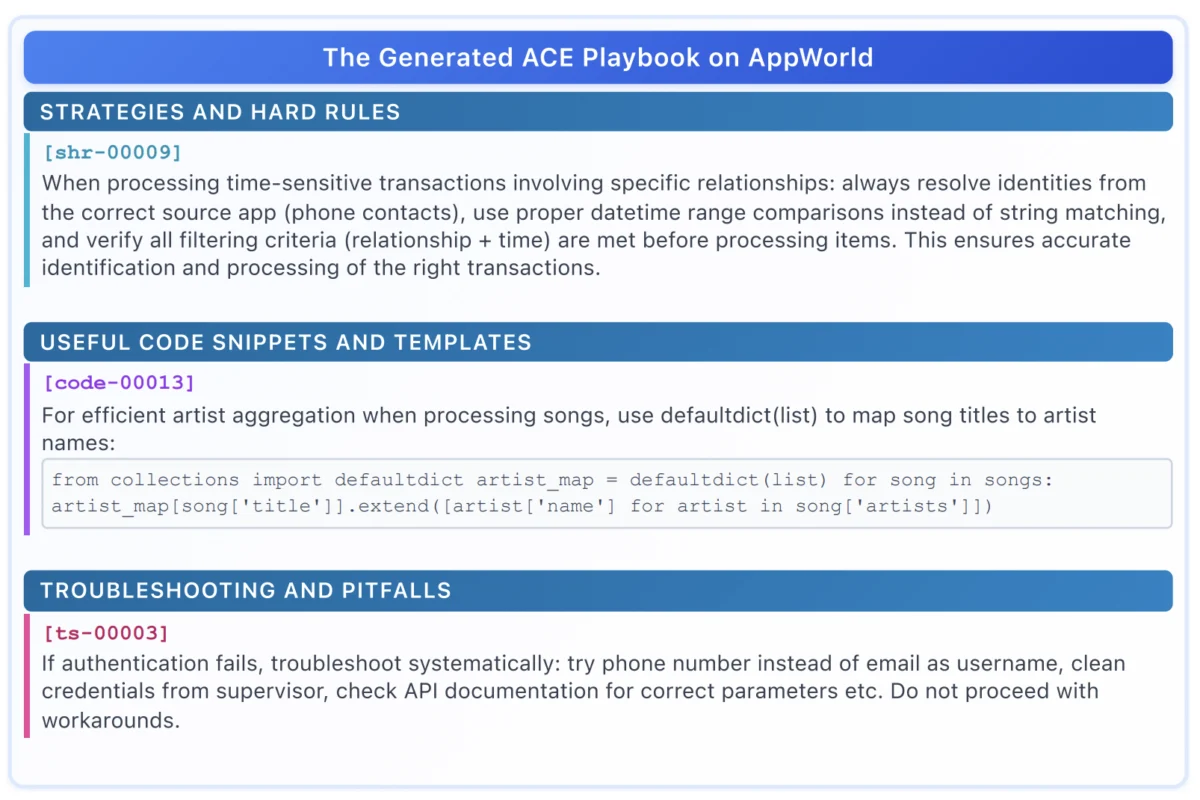
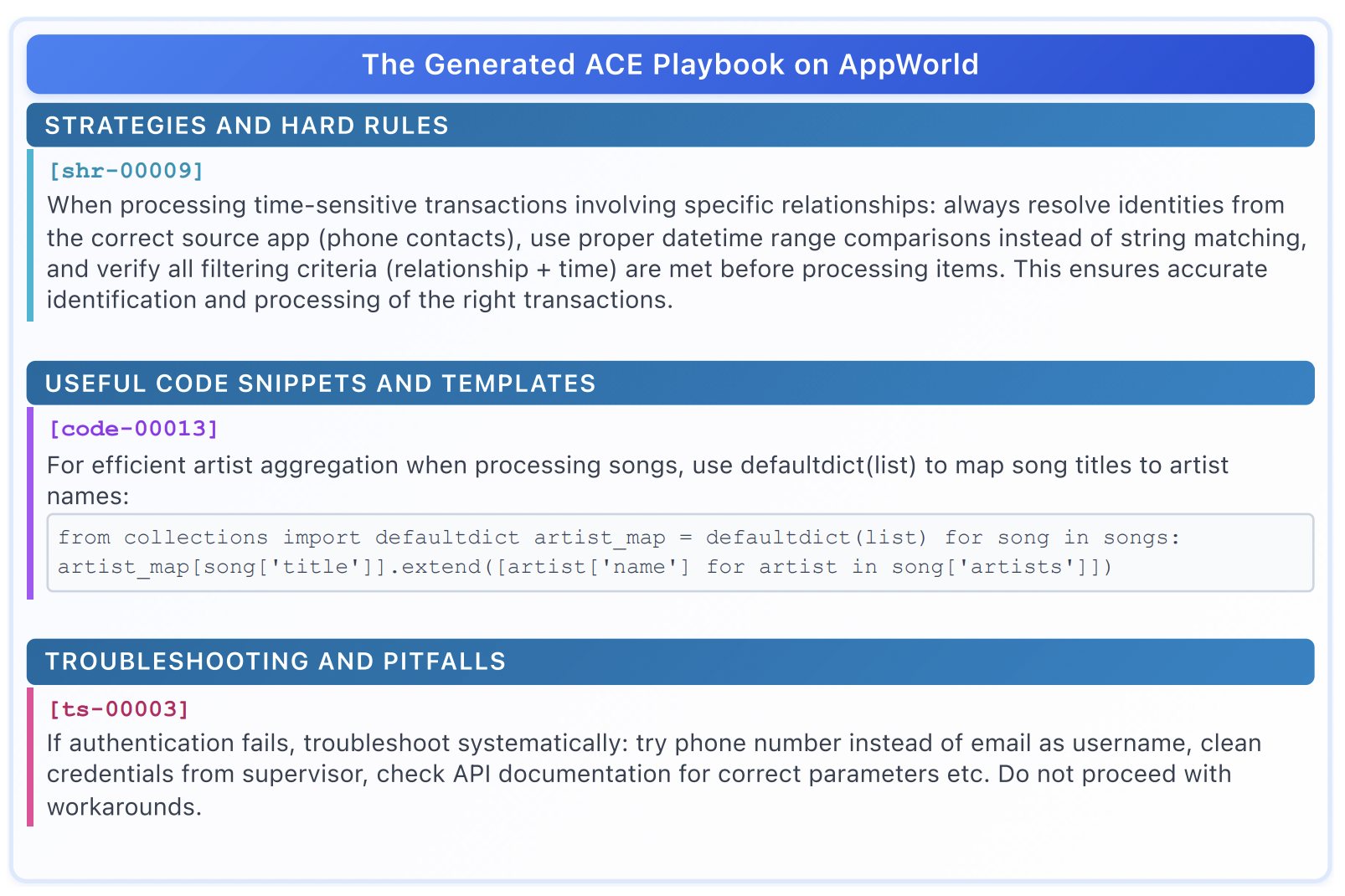
The final component is the Curator. The Curator is responsible for the integrity of the agent’s "playbook"—the externalized memory of the system. It does not simply append every thought the Reflector produces; instead, it manages the playbook as a structured database of named entries. Each entry is assigned a unique ID and is accompanied by metadata, including "helpful" or "harmful" counters that track the utility of the instruction over time. The Curator can add new entries, revise existing ones based on new evidence, merge redundant instructions to save token space, or prune obsolete rules that no longer apply. This ensures that the context remains high-density and highly relevant.
Benchmarking Performance and Reliability
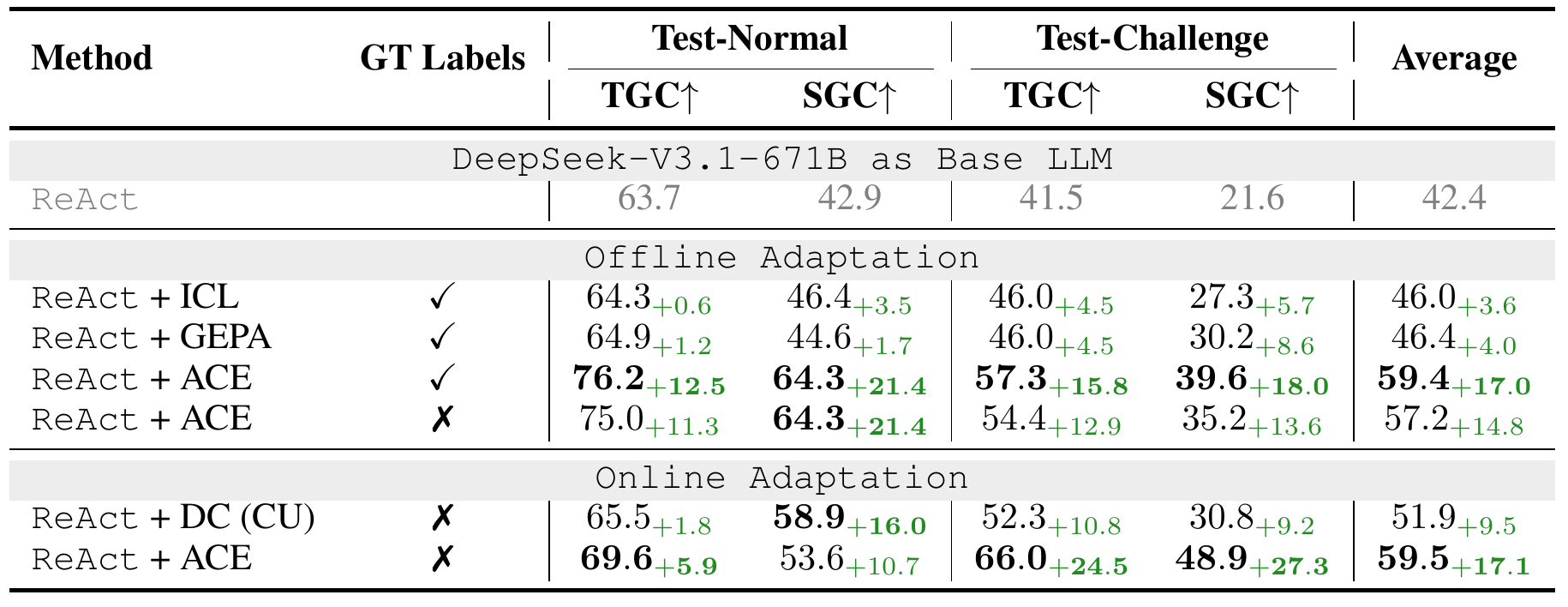
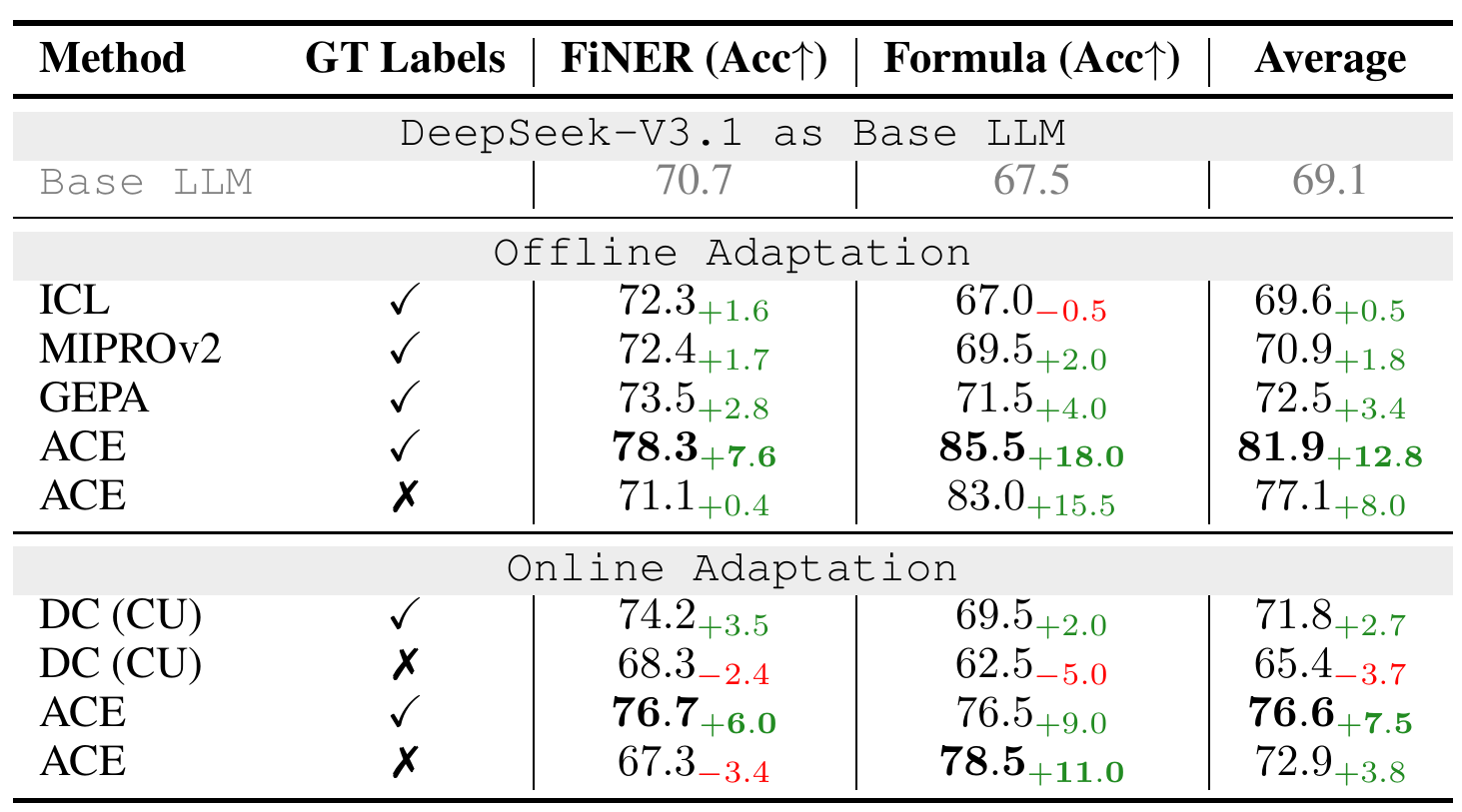
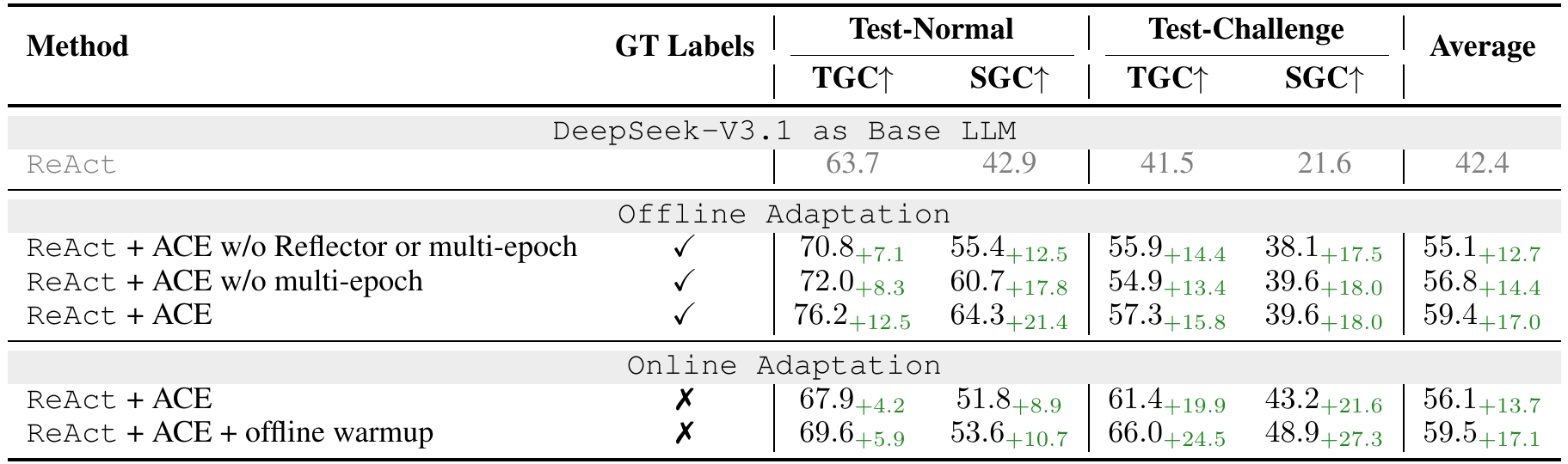
The efficacy of Agentic Context Engineering has been rigorously tested across various benchmarks, most notably AppWorld and finance-focused datasets like FiNER and Formula. These evaluations distinguish between "offline" adaptation, where the playbook is refined on a training set before being deployed, and "online" adaptation, where the agent must learn and update its playbook in real-time as it processes new items.
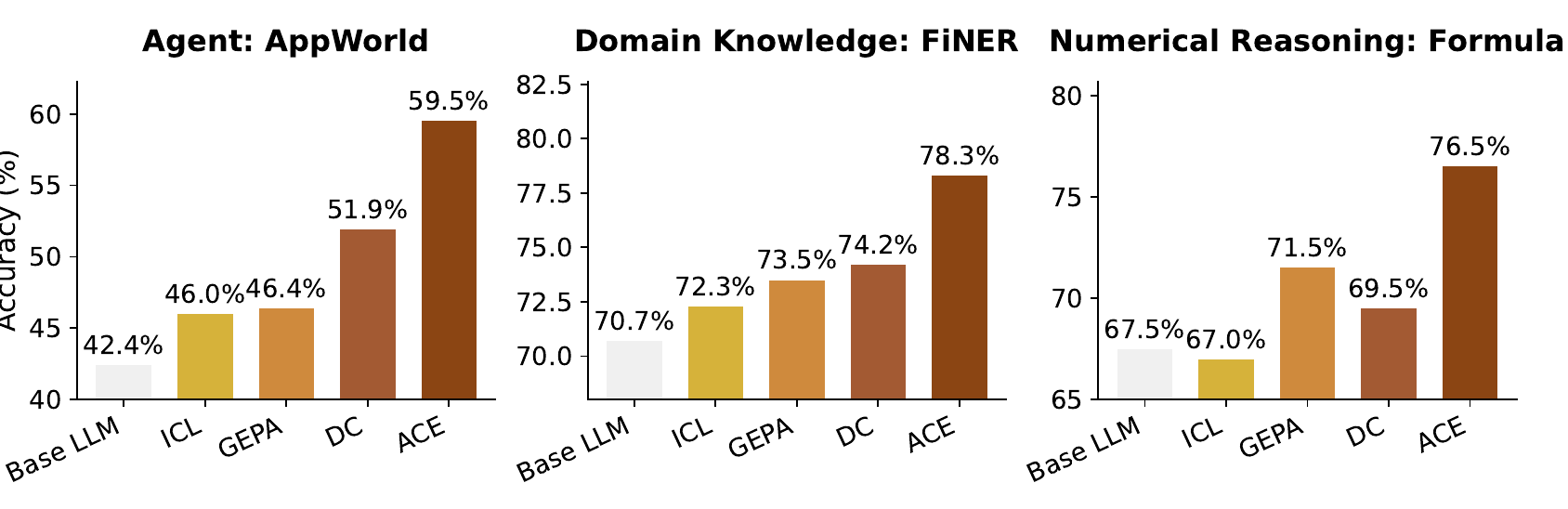
On the AppWorld benchmark—a complex environment where agents use APIs and execute code to solve domestic and professional tasks—ACE demonstrated a clear superiority over existing methods. Using the DeepSeek-V3.1 backbone, ACE significantly outperformed Generalized Experience-based Prompt Adaptation (GEPA). In offline settings, the structured nature of the ACE playbook allowed the agent to navigate "challenge" scenarios with much higher success rates than models relying on static prompts.
In the financial sector, the results further highlighted the strengths and the necessary boundaries of the ACE paradigm. In tasks involving entity recognition (FiNER) and mathematical formula generation (Formula), ACE achieved an average accuracy of 81.9% with labeled offline adaptation, compared to 72.5% for GEPA. However, the researchers noted a critical caveat: the quality of the feedback loop is paramount. In online settings where ground-truth labels were absent, ACE’s performance on the FiNER dataset dipped to 67.3%, falling below the base model’s 70.7%. This suggests that without a dependable outcome signal, an agent can inadvertently "learn" incorrect rules, effectively polluting its own playbook with bad advice.
The Economic and Operational Impact of ACE
Beyond raw accuracy, ACE introduces significant efficiencies in terms of time and computational cost. Traditional methods of improving agent performance often involve fine-tuning, which requires substantial GPU resources and the curation of massive datasets. Even "memory-heavy" prompt engineering methods can become prohibitively expensive if they require the model to process tens of thousands of tokens of history for every single request.
ACE’s modular approach to context management makes the learning stage considerably faster and cheaper. Because the system only updates relevant "delta" entries rather than rewriting the entire context, the computational overhead of the Reflector and Curator is minimal compared to the cost of retraining a model. In tests, the online setup for ACE was found to be significantly more cost-effective than the "Dynamic Cheatsheet" approach, which often struggles with token bloat and redundant processing.
However, there is an inherent trade-off regarding inference latency. As an agent’s playbook grows in complexity, the amount of information it must process during the "read" phase of a task increases. This necessitates a robust pruning strategy by the Curator to ensure that the agent does not become bogged down by an excessive number of rules, some of which may be rarely applicable.
Broader Implications for the Future of Agentic AI
The development of ACE comes at a time when the industry is looking toward "Agentic" LLMs—models specifically designed to act as autonomous entities rather than simple chatbots. Systems like GPT-6 Astra and other emerging agentic ecosystems require a form of "permanent memory" that is more flexible than hard-coded weights but more reliable than a simple chat history.
ACE points toward a future where AI agents possess a "professional manual" that they carry with them from task to task. This manual is not written by human engineers but is authored by the AI itself through its own lived experience. This shift has profound implications for software development and enterprise AI. Instead of developers having to anticipate every possible error an agent might encounter, they can provide a robust feedback mechanism that allows the agent to troubleshoot and document its own solutions.
Furthermore, ACE provides a level of transparency that is often missing in "black box" neural networks. Because the playbook consists of human-readable (or at least traceable) entries with IDs and utility counters, developers can audit what an agent has "learned." If an agent begins performing poorly, an engineer can inspect the playbook, identify a "harmful" rule, and manually override it or delete it—a feat that is impossible with traditional model weights.
Conclusion and Recommendations for Implementation
Agentic Context Engineering represents a significant milestone in the quest for self-improving AI. By treating context as a manageable, modular asset rather than a static input, ACE allows agents to turn past experiences into actionable future knowledge. The results from AppWorld and financial benchmarks confirm that this approach can lead to substantial gains in task success, provided the feedback signals are accurate.
For organizations looking to implement ACE in their own AI applications, the authors of the research provide several key recommendations. First, it is essential to maintain a clear and explicit feedback signal; without it, the agent risks learning the wrong lessons. Second, the system should be compared against a fixed-context baseline to ensure that the playbook updates are genuinely adding value rather than just increasing token costs. Finally, developers should leverage the open-source implementation provided by the researchers to ensure a consistent playbook format and robust merging logic.
Ultimately, ACE moves the field away from the "tabula rasa" approach of modern LLMs, where every new session starts from scratch. By enabling agents to build upon their history in a structured and verifiable way, ACE paves the way for AI systems that are not only more capable but also more reliable and easier to manage in high-stakes environments.