rifanmuazin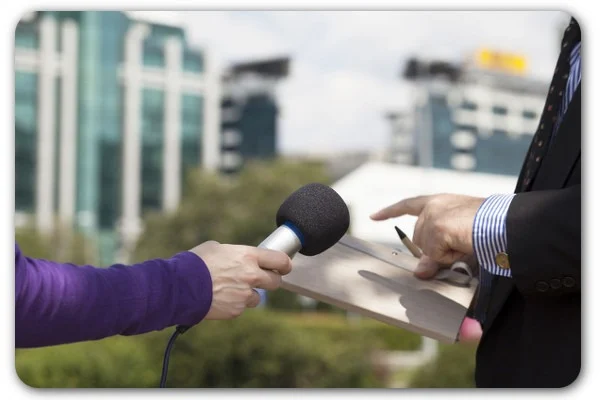
In the high-stakes environment of corporate communications, the role of a spokesperson extends far beyond the mere delivery of information. As the public face of an organization, a spokesperson carries the weight of a brand’s reputation, a task that has become increasingly complex in an era of 24-hour news cycles and viral social media clips. Recent insights from industry experts at Ragan Training have highlighted a critical reality: even seasoned executives can fall prey to subtle behavioral traps that undermine their authority and erode public trust. These errors are rarely the result of a lack of knowledge or a flawed personality; rather, they are systemic preparation failures that manifest as credibility-killing behaviors during high-pressure interviews.
The modern media landscape demands a level of authenticity and transparency that was less critical in the era of scripted press releases. Today, an on-camera interview is a psychological battleground where non-verbal cues and rhetorical agility are scrutinized as much as the factual content of the message. When a spokesperson fails to navigate these waters effectively, the damage is not limited to the individual; it radiates throughout the entire organization, potentially impacting stock prices, consumer loyalty, and internal morale. By analyzing the three most pervasive mistakes—robotic delivery, defensive pivoting, and non-verbal dissonance—organizations can better prepare their leaders for the scrutiny of the public eye.
The Mechanics of Credibility Erosion
The first and perhaps most common mistake is the transition from prepared messaging to "robotic" delivery. This occurs when a spokesperson becomes so tethered to their talking points that they lose the ability to engage in a natural, human dialogue. In the professional communication sphere, this is often referred to as "the script trap." While preparation is essential, over-rehearsal can lead to a lack of vocal inflection and a perceived lack of empathy. When an audience senses that a spokesperson is reading from an internal script rather than speaking from a place of conviction, the "authenticity gap" widens.
The second mistake involves the "defensive pivot." This is a rhetorical technique where a spokesperson ignores a direct question to deliver a pre-packaged answer. While "bridging" is a standard PR tactic used to move from a negative topic to a positive one, it becomes a liability when used excessively or clumsily. If a journalist asks a pointed question about a corporate failing and the spokesperson immediately pivots to a discussion of community service without acknowledging the premise of the question, the audience perceives this as evasion. Evasiveness is often equated with guilt or incompetence in the court of public opinion.
The third mistake is non-verbal dissonance. This happens when a spokesperson’s body language contradicts their spoken words. For instance, a leader may be announcing a commitment to safety, but if their eyes are darting, their hands are fidgeting, or they are displaying micro-expressions of discomfort, the viewer will instinctively trust the visual cues over the verbal ones. Research in social psychology suggests that in high-stakes communication, up to 90% of a listener’s perception of "truthfulness" is derived from non-verbal signals rather than the actual words spoken.
A Chronology of Media Training Evolution
To understand the current state of spokesperson readiness, it is necessary to examine how media training has evolved over the last several decades. The discipline has shifted from a focus on "message control" to "relationship management."
- The 1960s – 1980s: The Broadcast Era. Following the televised Nixon-Kennedy debates, organizations realized that appearance and "TV presence" were paramount. Training focused heavily on attire, posture, and speaking in "soundbites" suitable for evening news broadcasts.
- The 1990s – 2000s: The 24-Hour News Cycle. With the rise of CNN and later Fox News and MSNBC, the demand for content increased. Spokespeople had to be prepared for longer, more aggressive interviews. The "pivot" became a standard tool during this era as leaders sought to survive adversarial questioning.
- The 2010s: The Social Media Revolution. The advent of Twitter (now X) and YouTube meant that a single ten-second clip of a mistake could be seen by millions within hours. Media training began to incorporate "crisis simulation" and the need for immediate, "human" responses to breaking news.
- 2020 – Present: The Era of Radical Transparency. In the post-pandemic world, audiences demand vulnerability and transparency. The "corporate mask" is no longer effective. Training now emphasizes "readiness" for the unexpected and the ability to hold a genuine conversation in a digital-first environment.
Supporting Data: The Cost of Poor Communication
The impact of spokesperson performance is quantifiable. According to the 2023 Edelman Trust Barometer, "my employer" is often the most trusted institution, but that trust is fragile. When a CEO or spokesperson is perceived as dishonest or out of touch during a media appearance, the "trust tax" can be significant.
A study by the Knight Foundation on media trust indicated that 68% of Americans believe that most news organizations are more concerned with supporting an ideology than with informing the public. In this skeptical environment, a spokesperson who appears evasive or robotic confirms the audience’s existing biases against corporate entities. Furthermore, data from FTI Consulting suggests that companies experiencing a "communications-led" crisis—where the primary damage comes from how an event was handled rather than the event itself—see a 15% to 20% greater drop in share price compared to those who communicate effectively.
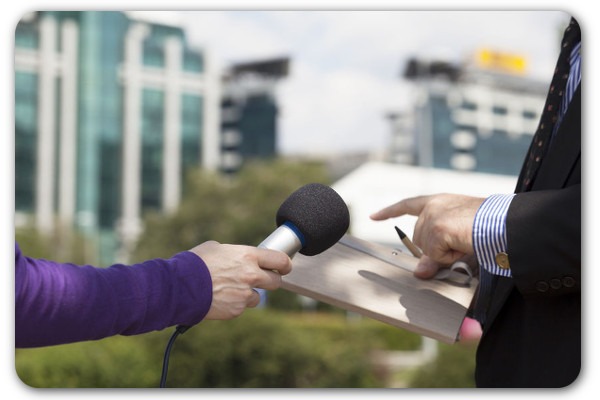
The "quiet" nature of these mistakes is what makes them so dangerous. Unlike a major factual error or a scandalous comment, these behavioral ticks slowly bleed away credibility over time. A spokesperson may finish an interview feeling they "stayed on message," while the audience walked away feeling the brand is untrustworthy or cold.
Industry Responses and Expert Perspectives
Public relations professionals are increasingly moving away from the "gatekeeper" model of communication. In response to the rising frequency of these mistakes, many firms are adopting a "coaching" rather than "scripting" approach.
"The goal of modern media training isn’t to turn an executive into a politician," says one senior PR strategist familiar with the Ragan Training curriculum. "It’s about removing the barriers that prevent their natural expertise and personality from coming through. When a spokesperson is too afraid of saying the wrong thing, they end up saying nothing at all, which is the biggest mistake of all."
Legal teams and PR teams often find themselves at odds during the preparation phase. While legal counsel may advise a "no comment" or a strictly limited statement to minimize liability, PR experts argue that silence is often interpreted as an admission of wrongdoing. The consensus among top-tier communication consultants is that spokespeople must be trained to navigate the "gray zone"—answering questions truthfully without compromising legal positions.
Broader Impact and Implications for the Future
The implications of spokesperson mistakes extend beyond the immediate news cycle. In an age of artificial intelligence and "deepfakes," the value of a genuine, credible human voice is at an all-time high. If an organization’s primary representatives cannot establish a baseline of trust, the brand becomes vulnerable to misinformation and digital manipulation.
Moreover, the internal impact of a poor spokesperson performance can be devastating. Employees look to their leaders to represent their values and hard work. When a spokesperson appears incompetent or evasive on national television, it can lead to a decline in employee engagement and an increase in turnover. Conversely, a leader who handles a difficult interview with poise and honesty can serve as a powerful rallying point for the workforce.
Looking forward, the definition of a "spokesperson" is also expanding. It is no longer just the CEO or the VP of Communications. Subject matter experts, engineers, and front-line managers are increasingly being called upon to speak to the media. This democratization of the spokesperson role means that the "three mistakes" identified by Ragan Training are no longer just an executive problem; they are an organizational challenge that requires a culture of open, honest communication.
In conclusion, the quiet death of credibility often happens in the small moments of an interview: the missed eye contact, the overly rehearsed answer, or the refusal to acknowledge a difficult truth. By focusing on preparation that prioritizes readiness over scripting, and authenticity over control, organizations can ensure that their spokespeople build trust rather than destroy it. In the court of public opinion, credibility is the only currency that truly matters, and once spent, it is incredibly difficult to earn back. Organizations must treat media training not as a one-time event before a product launch, but as a continuous process of leadership development designed to meet the demands of an increasingly skeptical and interconnected world.