rifanmuazin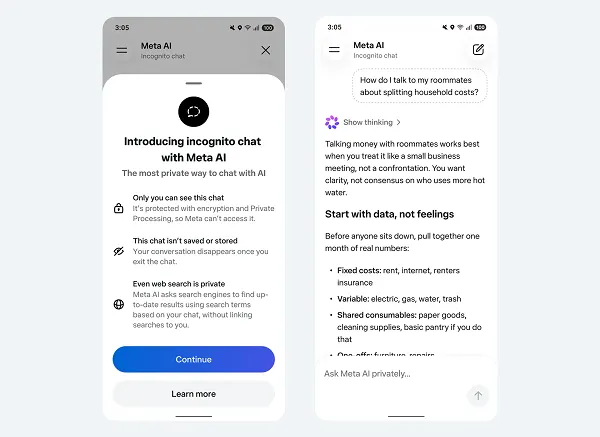
Meta Platforms, Inc. has announced the launch of a new Incognito Chat mode for its artificial intelligence chatbot on WhatsApp, designed to enhance user comfort and privacy during AI interactions. This innovative feature leverages private processing to ensure that all conversations users engage in with Meta AI within the WhatsApp application remain confidential, secure, and inaccessible to Meta itself, even for accuracy assessment. The move is a significant step towards aligning AI integration with WhatsApp’s established privacy-centric architecture, which has long championed end-to-end encryption for user communications.
The Evolution of AI Integration and Privacy Imperatives
The introduction of Incognito Chat mode comes at a time of unprecedented growth in AI chatbot adoption across various digital platforms. Tools like OpenAI’s ChatGPT, Google’s Gemini (formerly Bard), and Microsoft’s Copilot have rapidly become ubiquitous, transforming how individuals seek information, generate content, and interact with technology. Millions, if not billions, of users globally now routinely prompt AI systems with a broad spectrum of queries, ranging from mundane requests to highly personal and sensitive inquiries. This widespread usage has, however, brought to the forefront significant privacy concerns.
Traditionally, interactions with AI chatbots have often involved the collection and analysis of user data—including conversation logs, prompts, and responses—for the purpose of model training and refinement. This data-driven approach is crucial for improving the AI’s systematic understanding, enhancing response accuracy, and making the tools more relevant and effective over time. However, this process inherently raises questions about data sovereignty, the potential for human review of sensitive information, and the persistence of personal data within company servers. Surveys consistently indicate a high level of user apprehension regarding the privacy implications of AI, with many individuals hesitant to share sensitive financial, health, personal, or work-related information due to fears of data breaches, misuse, or unintended exposure.
WhatsApp, a cornerstone of Meta’s family of applications, has built its reputation on a foundation of robust privacy, notably its pervasive use of end-to-end encryption. This core principle means that only the sender and recipient can read messages, and not even WhatsApp or Meta can access their content. Integrating an AI chatbot into such an environment presented a unique challenge: how to offer the utility of AI without compromising the stringent privacy standards users expect from WhatsApp. Incognito Chat mode is Meta’s direct response to this challenge, aiming to bridge the gap between AI utility and user privacy expectations.
Deep Dive into Incognito Chat Mode Functionality
Meta’s Incognito Chat mode on WhatsApp is engineered to offer an unprecedented level of privacy for AI interactions. When a user initiates an Incognito Chat with Meta AI, the system creates a private, temporary conversational instance. A key differentiator of this mode is its commitment to private processing. Unlike standard AI interactions where data might be logged for future model training or analysis, Meta explicitly states that in Incognito Chat, user messages are processed in a secure, isolated environment that even Meta itself cannot access. This robust isolation is intended to provide a sanctuary for sensitive queries.
Furthermore, a critical feature of Incognito Chat is its ephemeral nature. Conversations within this mode are not saved, and by default, messages disappear after a certain period or upon the chat’s conclusion. This "disappearing messages" functionality mirrors a similar privacy option available in standard WhatsApp chats and is designed to leave no persistent digital footprint. This commitment ensures that users can engage with the AI to explore ideas, ask questions, or process sensitive information without the anxiety of a permanent record being stored or potentially accessed by third parties, including Meta.
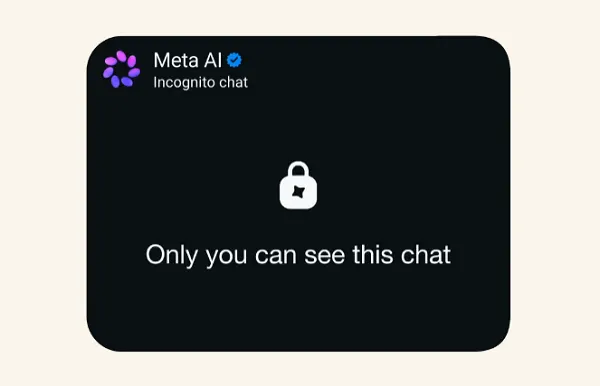
As explained by Meta in its official communication, "Chatting with AI has quickly become a critical part of how people get information and ask important questions. And many of these questions can be deeply sensitive, or include situations where people are including private financial, personal, health or work data with their questions." The company further elaborated on the Incognito Chat mechanics: "When you start an Incognito Chat with Meta AI, you’re creating a private, temporary conversation that only you can see. Your messages are processed in a secure environment that even Meta cannot access. Your conversations are not saved and by default, your messages disappear – giving you a space to think and explore ideas without anyone watching." This explicit declaration underscores Meta’s intent to provide a truly confidential AI interaction experience.
Chronology and Context of Meta’s AI Rollout
Meta’s journey into widespread AI integration has been a strategic, multi-phased initiative. While the exact internal development timeline for Incognito Chat is not publicly detailed, its announcement and planned rollout are part of a broader, more aggressive push by Meta to embed its proprietary AI capabilities across its vast ecosystem of applications.
The initial introduction of Meta AI itself began earlier, with the AI assistant progressively rolling out to users across Facebook, Instagram, Messenger, and WhatsApp. This initial phase focused on general availability and demonstrating the AI’s core functionalities, such as answering questions, generating images, and assisting with tasks. The integration into WhatsApp, with its over 2 billion global users, represents a significant expansion of Meta AI’s reach and potential impact. The subsequent announcement of Incognito Chat mode indicates a rapid evolution in Meta’s approach, driven by a clear understanding of user feedback and the paramount importance of privacy, especially within a platform like WhatsApp. This suggests that as Meta scaled its AI offerings, the critical need for a privacy-focused interaction mode became evident, leading to its relatively swift development and announcement following the initial AI integration. The sequential introduction highlights Meta’s iterative strategy: launch core AI functionality, then enhance it with privacy features based on platform ethos and user expectations.
Broader Impact and Ethical Considerations: The Double-Edged Sword of Privacy
While the private use case for Incognito Chat mode is clear and addresses a legitimate user need for confidentiality, its implementation also raises profound ethical and safety questions that demand careful consideration. The very features that ensure privacy – conversations not being saved, not being accessible to Meta, and not being used for model training – also introduce significant challenges, particularly concerning accuracy and potential misuse.
Accuracy Concerns and AI Hallucinations:
AI chatbots, despite their advanced capabilities, are not infallible. They are known to occasionally "hallucinate," generating false information, fabricating sources, or providing incorrect answers. This phenomenon is a well-documented challenge in the field of generative AI. In a standard AI development cycle, user interactions and feedback, often combined with human oversight and review, are crucial for identifying and correcting these inaccuracies. However, with Incognito Chat mode, where interactions are explicitly shielded from Meta’s access and are not used for training, the traditional feedback loops for error correction are fundamentally disrupted.
If Meta cannot access or analyze these private conversations, how will it effectively monitor and improve the AI’s accuracy for highly sensitive queries, such as health advice, financial planning, or legal information? An AI chatbot offering incorrect health advice, for instance, could have severe real-world consequences, yet without oversight, such errors might go undetected and uncorrected. This creates a tension between absolute privacy and the imperative for accuracy and reliability in AI systems, especially when users are increasingly relying on these tools for critical information.
Potential for Misuse and Public Safety:
Perhaps the most contentious aspect of Incognito Chat mode is the potential for misuse. The original reporting explicitly highlighted this concern, posing critical questions: "What if people use this option to get advice on how to build a bomb, how to make drugs or how to launder money? What if Meta’s AI tool offers incorrect health advice, and no one has any insight into its responses?" These are not hypothetical scenarios but represent real risks that platforms grapple with.
While AI models are typically designed with guardrails to prevent them from generating harmful or illegal content, these guardrails are themselves products of training data and ongoing refinement. If conversations within Incognito Chat are entirely private and beyond Meta’s purview, it becomes exceedingly difficult for the company to detect, prevent, or intervene in instances where the AI might be prompted for or inadvertently provide information related to illegal activities. This creates a significant ethical dilemma for Meta: balancing user privacy with its responsibility to ensure public safety and prevent the proliferation of harmful content on its platforms. The feature, while offering a sanctuary for legitimate private inquiries, could also inadvertently create a shielded environment where malicious actors might test the limits of the AI’s safety protocols without immediate detection. This raises questions about platform accountability and the evolving regulatory landscape surrounding AI, which increasingly emphasizes safety and transparency.
The Side Chat Feature: Enhancing Utility, Retaining Concerns
In addition to the Incognito Chat mode, Meta has also announced the development of a new "Side Chat" option for AI interactions on WhatsApp. This feature is designed to allow users to access Meta AI for assistance directly within any ongoing chat, without interrupting or derailing the main conversation thread. The utility case for Side Chat is clear: it enables users to quickly retrieve information, draft messages, summarize lengthy conversations, translate content, or generate ideas contextually relevant to their current discussion, all without leaving the chat interface. For instance, a user planning a trip with friends could instantly ask Meta AI for flight details or restaurant recommendations directly within their group chat.
While Side Chat enhances the convenience and integration of AI into daily communication, the underlying concerns about accuracy and the potential for misinformation persist, albeit potentially to a lesser degree than with Incognito Chat. Even if Side Chat conversations are not explicitly incognito, the seamless integration means users might rely on the AI’s responses for immediate decisions or information sharing within a social context. Therefore, the imperative for Meta AI to provide consistently accurate and reliable information remains paramount, even in these more casual, integrated use cases.
Conclusion: Navigating the Complexities of AI, Privacy, and Responsibility
Meta’s introduction of Incognito Chat mode for WhatsApp AI represents a bold and significant stride in addressing user privacy concerns within the rapidly evolving landscape of artificial intelligence. It underscores a commitment to aligning AI functionalities with the foundational privacy principles that have defined WhatsApp. By offering a truly private, ephemeral, and inaccessible AI interaction experience, Meta aims to foster greater user trust and encourage engagement with its AI chatbot for even the most sensitive inquiries.
However, this innovation is not without its complexities and profound implications. The very features that guarantee unparalleled privacy—the non-retention of data, the lack of Meta’s access, and the exclusion from model training—simultaneously introduce substantial challenges regarding the AI’s ability to maintain accuracy and, more critically, to prevent misuse for harmful or illegal purposes. The tension between absolute user privacy, the continuous improvement of AI models, and the overarching responsibility of platforms to ensure public safety is now starkly illuminated.
As AI continues its inexorable integration into every facet of digital life, companies like Meta will face increasing scrutiny from users, regulators, and civil society regarding their ethical frameworks and safety protocols. The Incognito Chat mode is a testament to the industry’s capacity for innovation in privacy-enhancing technologies, but it also serves as a potent reminder that such advancements must be meticulously balanced against the broader societal impacts and potential risks. The path forward will undoubtedly involve ongoing dialogue, iterative refinement, and perhaps even new regulatory paradigms to ensure that AI serves humanity responsibly, balancing innovation with accountability.