rifanmuazin
WhatsApp, Meta’s ubiquitous messaging platform, has transcended its origins as a personal communication tool to become a formidable channel for businesses seeking direct, personalized engagement with their customer base. As 2026 approaches, marketers are increasingly recognizing the imperative of integrating WhatsApp into their digital strategies, leveraging its immense global reach and high engagement rates to drive conversions, enhance customer service, and build brand loyalty. This comprehensive guide delves into the nuances of WhatsApp marketing, outlining its strategic importance, diverse applications, and the step-by-step process for building a robust and effective strategy.

The Rise of Conversational Commerce: WhatsApp’s Strategic Imperative
WhatsApp’s journey from a simple messaging application launched in 2009 to a global powerhouse with over 2 billion monthly active users underscores its unparalleled influence. Acquired by Meta (then Facebook) in 2014 for a staggering $19 billion, WhatsApp has been strategically developed into a dual-purpose platform, catering to both individual users and businesses. This evolution has paved the way for "conversational commerce," a burgeoning trend where businesses interact with customers through messaging apps for sales, support, and marketing.
The financial indicators reinforce WhatsApp’s growing significance in the business landscape. By Q4 2025, paid WhatsApp messaging had already achieved a remarkable $2 billion annual run rate, signaling Meta’s substantial investment and commitment to evolving the platform into a revenue-generating channel for enterprises. This growth is largely fueled by the WhatsApp Business App, designed for small businesses, and the more robust WhatsApp Business Platform (API), which caters to medium and large enterprises requiring scalable, integrated solutions.

For marketers, WhatsApp offers a unique proposition: a direct, personal line to customers on a platform they use daily. Its global footprint is particularly compelling, dominating communication in key emerging markets like India, Brazil, Indonesia, and across large parts of Europe and Africa. This widespread adoption means businesses can reach diverse demographics with unparalleled immediacy and intimacy, a distinct advantage in an increasingly fragmented digital ecosystem.
Distinguishing WhatsApp: Beyond Email and SMS
In the crowded realm of digital communication, WhatsApp stands out by offering a blend of immediacy, rich media capabilities, and cost-effectiveness that often surpasses traditional channels like email and SMS. While each channel has its strengths, understanding their differences is crucial for strategic deployment.
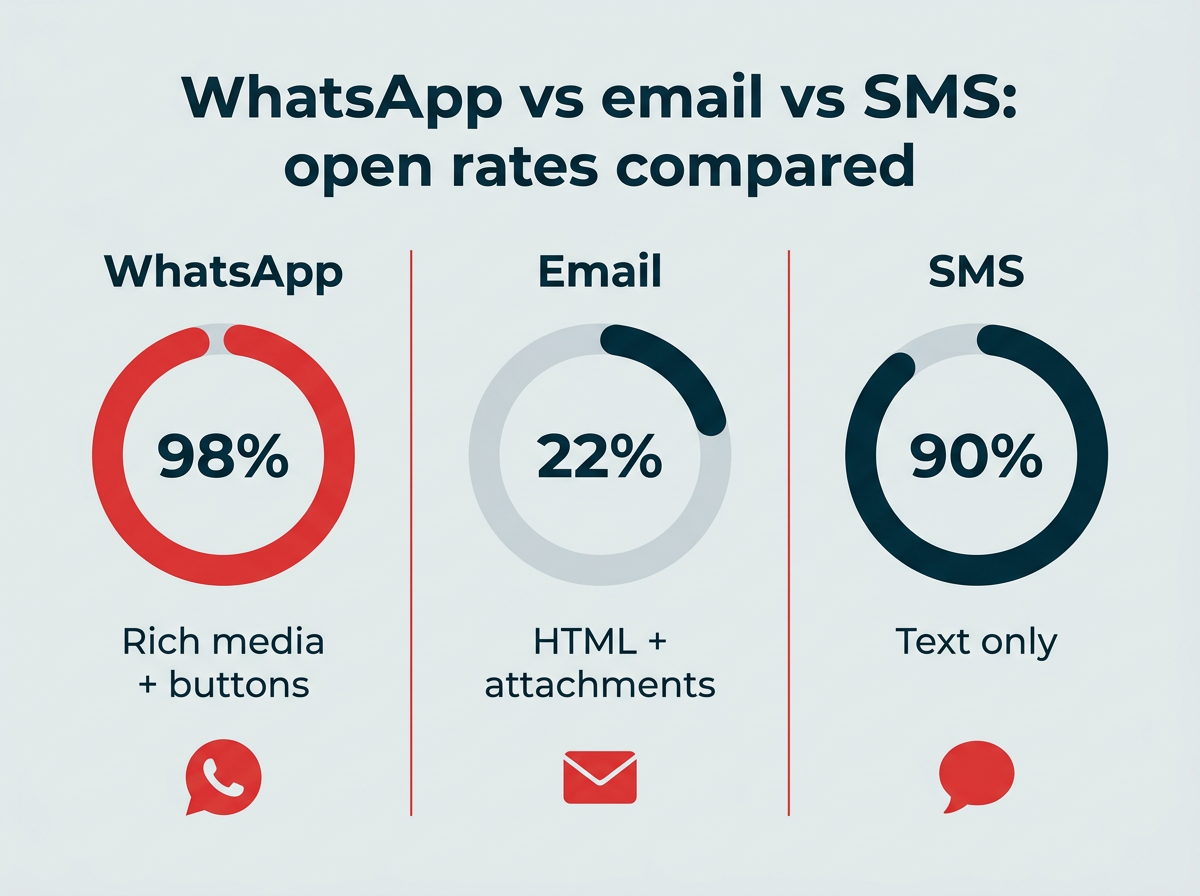
Email, a cornerstone of digital marketing, typically sees open rates hovering around 20-25%. While valuable for detailed newsletters and broader campaigns, it often struggles with immediacy and direct engagement. SMS, conversely, boasts strong open rates, often in the range of 90% or higher, thanks to its succinct nature and direct delivery. However, SMS is limited in its media capabilities, primarily supporting text-only messages, and can incur per-send costs for recipients, particularly in international contexts, creating a potential friction point.
WhatsApp bridges this gap by combining the high engagement of SMS with the rich media capabilities of more sophisticated platforms. Messages on WhatsApp often achieve astonishing open rates nearing 98%, rivaling or even exceeding SMS. Crucially, WhatsApp supports rich media formats such as images, videos, documents, and interactive buttons, allowing for more engaging and informative communications. Furthermore, unlike traditional SMS, WhatsApp messages do not typically incur per-send costs for the recipient, eliminating a significant barrier, especially for international audiences.
Despite its advantages, WhatsApp marketing is most effective when viewed as a complement to, rather than a replacement for, email and SMS. A synergistic approach allows marketers to leverage each channel’s strengths: email for comprehensive updates, SMS for urgent, concise alerts, and WhatsApp for personalized, interactive conversations and real-time support.
Diverse Applications: Types of WhatsApp Marketing Messages
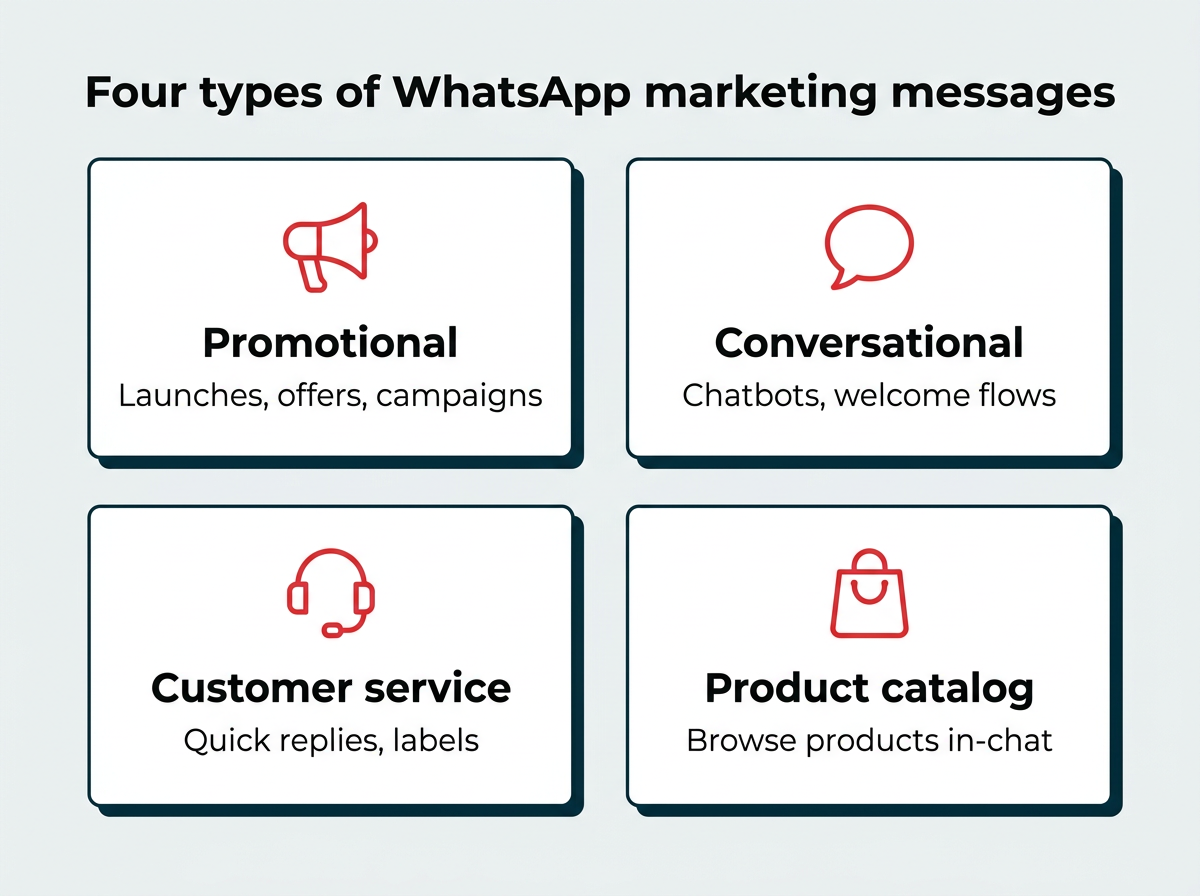
WhatsApp’s versatility allows for various message categories, each tailored to specific stages of the customer journey and business objectives. Understanding these types is fundamental to crafting an effective strategy.

-
Promotional and Awareness Messages: These communications are designed to inform customers about new products, seasonal promotions, flash sales, shipping notifications, and exclusive offers. Similar to SMS marketing but enhanced by rich media, these messages land directly in a user’s personal inbox, often outperforming email in terms of engagement. For instance, a fashion retailer might send images of a new collection with a direct link to purchase, or a food delivery service could announce a limited-time discount code. The immediacy and visual appeal drive higher click-through rates and conversions.
-
Conversational and Automated Messages: Automation is where WhatsApp marketing truly scales. Through integrated chatbots and pre-programmed flows, businesses can respond to customer inquiries, guide them through product selections, and even complete transactions without manual intervention. Common use cases include:

- Welcome Sequences: Automatically greet new subscribers and introduce them to the brand.
- Order Confirmations and Updates: Provide real-time status updates for purchases and deliveries.
- Abandoned Cart Reminders: Nudge customers who left items in their cart, potentially with an incentive.
- FAQs and Support Automation: Offer instant answers to common questions, freeing up human agents.
- Interactive Product Browsing: Allow customers to explore product categories and receive recommendations directly within the chat interface, as exemplified by "Wind and Wool" showing yoga pants with color selection. This enhances user experience by reducing friction and keeping the customer within the familiar WhatsApp environment.
-
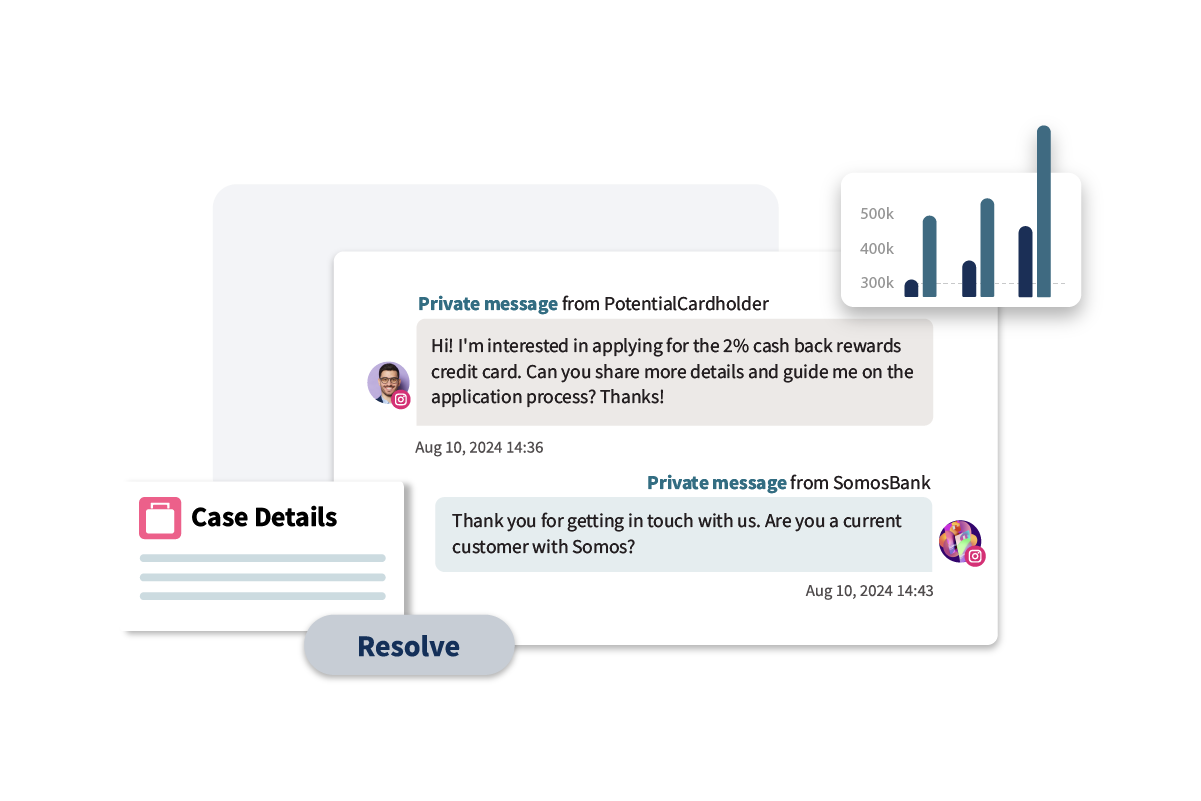
Customer Service Messages: WhatsApp Business significantly enhances social media customer service by providing a direct, personal, and efficient channel for support. Beyond direct messaging, the platform offers built-in tools like:
- Quick Replies: Pre-saved messages for common questions, allowing agents to respond swiftly.
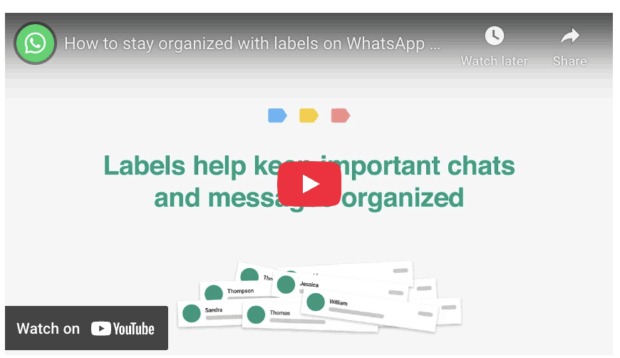
- Labels: Categorize chats (e.g., "New Customer," "Pending Order," "VIP") for better organization and follow-up.
- Away Messages: Inform customers of unavailability and expected response times.
- Greeting Messages: Automatically welcome new contacts and set expectations.
This suite of tools helps businesses manage inquiries efficiently while maintaining a personal touch, crucial for building customer satisfaction and loyalty. The ease and affordability of communicating with international customers also make it a preferred channel for global support.
-
Product Catalog Messages: The WhatsApp Business catalog tool functions as a mobile storefront, allowing customers to browse products directly within the app. This reduces friction in the buying journey, as users don’t need to navigate to an external website immediately. Catalogs can highlight new arrivals, seasonal collections, or bestsellers with rich images, descriptions, and prices. Key features include:
- Product Collections: Organize items into browsable categories.
- Shareable Links: Easily share individual products or the entire catalog.
- Direct Inquiries: Customers can message the business directly about specific products, streamlining the sales process.
This capability transforms WhatsApp into a powerful sales channel, enabling discovery and purchase intent within a single, familiar interface.
Crafting Your WhatsApp Marketing Blueprint for 2026: A Step-by-Step Guide
Building a successful WhatsApp marketing strategy requires more than simply downloading an app. It demands a structured approach, careful planning, and continuous optimization. Here’s a six-step framework for implementation:
1. Strategic Account Setup: App vs. Platform
The foundational step is choosing the right WhatsApp Business product for your company’s scale and needs.
-
WhatsApp Business App: Ideal for small businesses and solo operators, this free app functions similarly to the consumer version but includes business-specific features like profiles, quick replies, away messages, and labels. It supports up to five users managing the same account, making it suitable for smaller teams initiating direct customer conversations. Setup is straightforward: download from app stores, register with a business phone number, and create a business profile.
-
WhatsApp Business Platform (API): Designed for mid-size to enterprise teams requiring high-volume messaging, advanced automation, and CRM integration. The API allows businesses to connect WhatsApp with their existing systems (CRMs, marketing automation platforms, chatbots) to create sophisticated conversational flows, send promotional messages at scale, and manage interactions efficiently. This option incurs per-message fees, varying by message category, volume, and country. To get started, businesses typically contact WhatsApp’s sales team or work with a Meta-approved Business Solution Provider (BSP). This platform enables capabilities like complex chatbot flows and advanced analytics, making it the choice for serious scaling.
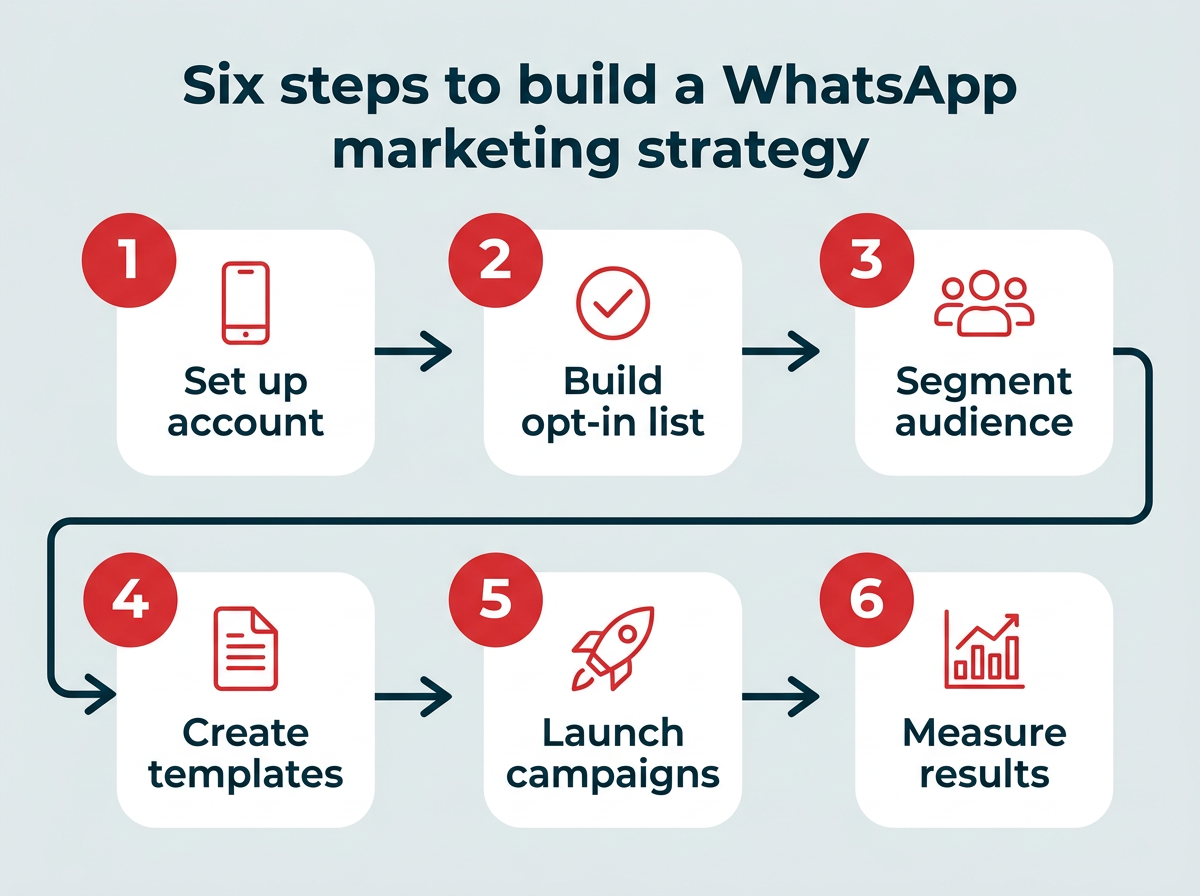
2. Building a Compliant Subscriber Base with Opt-in
WhatsApp mandates explicit user consent before businesses can send marketing messages, a critical policy enforced by Meta and vital for maintaining trust and avoiding account restrictions. Building an opt-in list requires transparency and clear value proposition.
Effective strategies include:

- Website Widgets: Implement "Click to WhatsApp" buttons on your website.
- QR Codes: Place QR codes on physical products, packaging, or in-store displays.
- Social Media CTAs: Encourage opt-ins through Instagram Stories, Facebook ads, or other social channels.
- Transactional Messaging: Offer opt-in during purchase flows for order updates.
- Email Campaigns: Invite existing email subscribers to join your WhatsApp channel.
- In-App Prompts: If applicable, prompt users within your own app to subscribe.
The key is to clearly communicate the value customers will receive (e.g., exclusive deals, faster support, personalized recommendations) to incentivize their consent. Compliance with global data privacy regulations like GDPR and CCPA is paramount, requiring clear consent mechanisms and easy opt-out options.
3. Precision Audience Segmentation
Not all subscribers are created equal, and generic messages often lead to low engagement and high opt-out rates. Segmenting your audience allows for highly relevant and personalized communication.
Leverage WhatsApp’s Labels feature (in the Business App) or robust CRM data (with the Business Platform) to group contacts based on:

- Demographics: Age, location, gender.
- Purchase History: First-time buyers, repeat customers, high-value clients.
- Interests: Products viewed, categories browsed.
- Engagement Level: Active responders, inactive contacts.
- Customer Journey Stage: Leads, prospects, existing customers.
Even basic segmentation, such as "new subscribers" versus "loyal customers," can significantly boost engagement, open rates, and conversion rates by ensuring messages resonate with specific needs and preferences.
4. Mastering Message Templates and Approval
For businesses utilizing the WhatsApp Business Platform, all outbound marketing messages initiated outside a 24-hour customer service window must use pre-approved message templates. This process ensures quality and prevents spam.
Tips for successful template creation and approval:
- Clarity and Conciseness: Messages should be straightforward and easy to understand.
- Clear Call-to-Actions (CTAs): Guide users on the next step (e.g., "Shop Now," "Learn More").
- Personalization Variables: Use placeholders (e.g.,
1for customer name) to personalize messages. - Value Proposition: Ensure the message provides clear value to the recipient.
- Compliance: Adhere strictly to WhatsApp’s commerce policy and business policy, avoiding deceptive or illegal content.
Approval typically takes minutes to a few hours, but planning ahead for potential revisions is advisable. Templates can incorporate text, images, videos, documents, and interactive buttons for richer interactions.
5. Executing and Automating Campaigns
With approved templates and segmented audiences, it’s time to launch campaigns. Start simple, perhaps with a welcome sequence for new subscribers or a targeted promotional blast for an upcoming sale, then gradually build complexity.
Automation is the cornerstone of scaling WhatsApp marketing. Integrate WhatsApp with your CRM or marketing automation platform to trigger messages based on customer actions. Examples include:
- Cart Abandonment Reminders: Automatically send messages to users who left items in their cart.
- Post-Purchase Follow-ups: Send thank-you notes, delivery updates, or product care tips.
- Birthday/Anniversary Greetings: Personalized messages to celebrate special occasions.
The Business Platform supports complex chatbot flows, capable of handling multi-step conversations, answering queries, and even guiding customers through a purchase, all without human intervention, thereby optimizing resources and improving response times.
6. Analytics and Continuous Optimization
Measurement is critical for improvement. Track key metrics to understand campaign performance and identify areas for optimization.
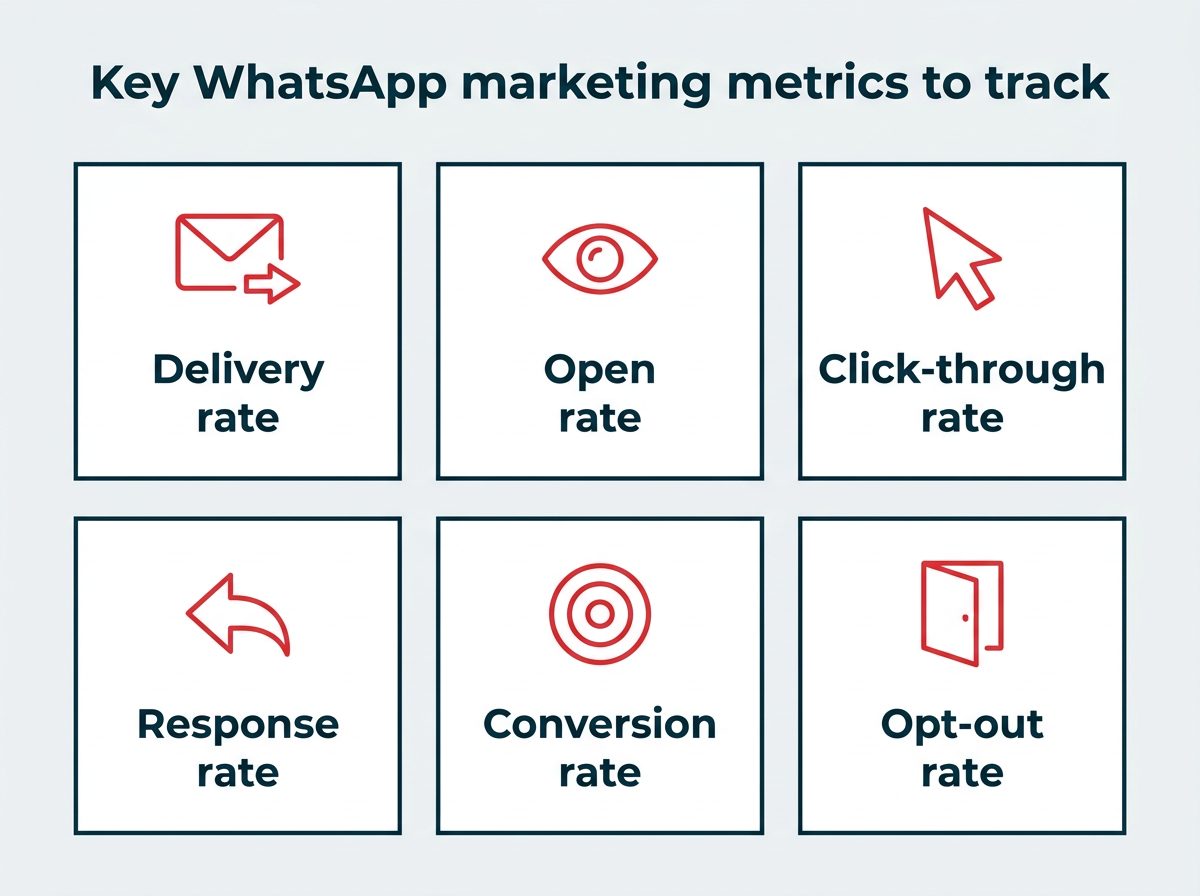
Essential WhatsApp marketing metrics include:
- Delivery Rate: Percentage of messages successfully delivered.
- Read Rate: Percentage of delivered messages that were opened.
- Reply Rate: Percentage of messages that received a response.
- Click-Through Rate (CTR): Percentage of users who clicked on a link within the message.
- Conversion Rate: Percentage of messages leading to a desired action (e.g., purchase, sign-up).
- Opt-Out Rate: Percentage of users who unsubscribed from messages.
- Customer Satisfaction Scores (CSAT): Measure customer happiness with support interactions.
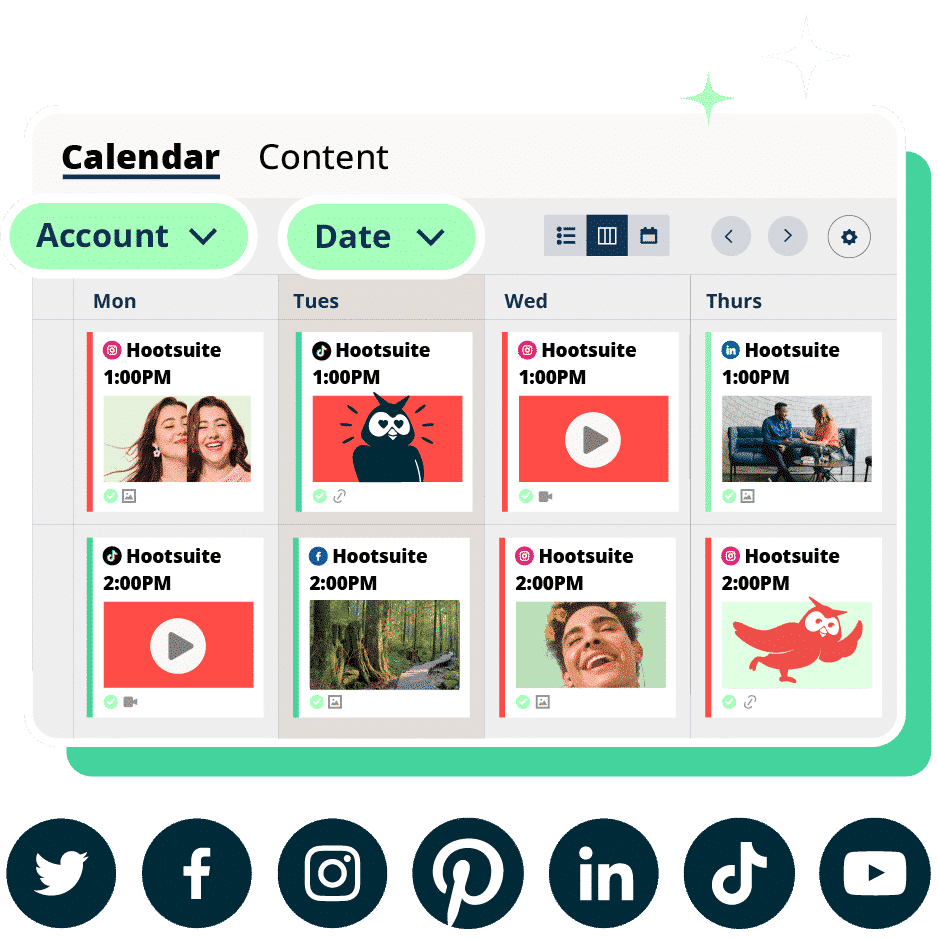
WhatsApp’s native analytics offer basic insights, but integrating with a social media management platform like Hootsuite centralizes reporting across all social channels, providing a holistic view of performance and facilitating data-driven decision-making.
Best Practices for Maximizing Impact
Adhering to best practices is crucial for fostering trust, driving engagement, and avoiding potential account restrictions.
- Explicit Opt-in is Non-Negotiable: Always secure clear, unambiguous consent from users.
- Respect Message Frequency: Avoid overwhelming customers with too many messages. Over-messaging is a primary driver of opt-outs.
- Personalize Messages: Use customer names and tailor content based on their preferences and past interactions.
- Utilize Rich Media: Incorporate images, videos, GIFs, and documents to make messages more engaging and informative.
- Clear Calls-to-Action: Every message should have a purpose and guide the user on what to do next.
- A/B Test Everything: Experiment with different message types, CTAs, and timing to discover what resonates best with your audience.
- Maintain Brand Voice: Ensure consistency in tone and style across all communications.
- Provide Value: Every message should offer something useful, whether it’s an exclusive deal, helpful information, or efficient support.
- Prompt Responses: Especially for customer service inquiries, quick replies are essential for customer satisfaction.
- Stay Compliant: Regularly review WhatsApp’s policies and local data protection laws.
Real-World Success Stories
Examining how leading brands leverage WhatsApp marketing provides valuable insights into its potential.

-
Benefit Cosmetics: This beauty brand successfully automated booking for brow and lip waxes through the WhatsApp Business Platform. Their system sends appointment reminders and necessary information, including links to modify or cancel appointments. This streamlined process led to a remarkable 30% increase in appointments and contributed to a 200% year-over-year increase in sales, demonstrating the power of conversational commerce in driving service bookings and revenue.
-
HolidayPirates: An international travel company, HolidayPirates uses WhatsApp to deliver personalized travel deals. By quizzing subscribers on their travel preferences, they send highly relevant offers, achieving open rates as high as 97% and click-through rates up to 40%. This significantly outperforms their email engagement, highlighting WhatsApp’s efficacy for targeted promotional content.

-
The State Plate: This Indian food delivery company integrated WhatsApp into its customer support strategy, utilizing pre-set templates and automated messages to answer customer inquiries efficiently. Their WhatsApp-powered support resolves 85% of queries with a 90% decrease in response time, showcasing the platform’s capability to enhance customer service operations and reduce operational costs.
Essential Tools for Scalable WhatsApp Marketing
Effective WhatsApp marketing, particularly at scale, often requires specialized tools.

-
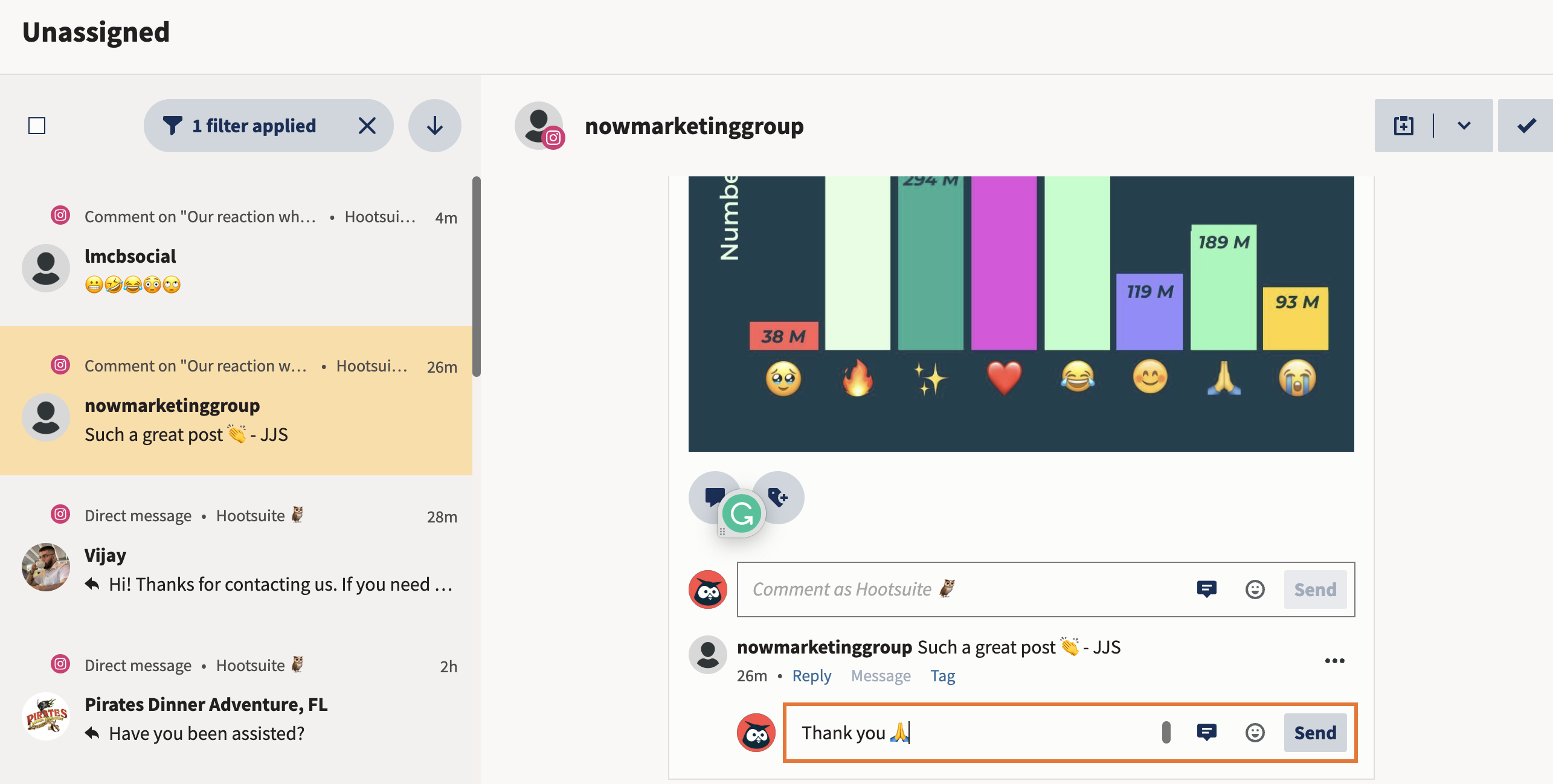
Hootsuite: For businesses managing multiple social channels, Hootsuite offers a unified inbox to handle WhatsApp conversations alongside interactions from Facebook, Instagram, X/Twitter, LinkedIn, and more. This centralizes communication, allows for conversation assignment to team members, tracks customer history, and ensures no message goes unanswered, enhancing team efficiency and customer experience. Hootsuite also supports features like saved replies for quick responses.
-
WhatsApp Business Platform’s Native Tools: Even without a third-party integrator, the WhatsApp Business Platform provides a solid suite of native capabilities. These include creating and managing message templates, setting up basic chatbot flows, managing product catalogs, and accessing conversation-level analytics directly through Meta Business Suite. These tools are sufficient for teams just beginning their WhatsApp marketing journey, but integration with a broader social media management platform becomes invaluable as messaging volume and channel complexity grow.
Challenges and Future Outlook
While WhatsApp marketing offers immense opportunities, businesses must also be cognizant of potential challenges. These include managing customer expectations regarding response times, adapting to evolving platform policies, and guarding against spam perception. The ethical use of data and maintaining user privacy will remain paramount.
Looking ahead, the future of WhatsApp marketing is poised for further innovation. Advancements in AI will enable more sophisticated chatbots capable of handling complex, multi-turn conversations and offering hyper-personalized experiences. The integration of payments directly within WhatsApp, already present in some markets, is expected to expand, further streamlining the purchase journey. Richer media experiences, augmented reality filters, and enhanced interactive elements will likely become standard, making conversations even more engaging.

Conclusion
WhatsApp marketing represents a significant frontier for businesses aiming to connect with customers in a direct, personalized, and highly engaging manner. With its vast global user base, robust business features, and proven ability to drive conversions and enhance customer satisfaction, WhatsApp is no longer just an optional add-on but a strategic imperative for marketers in 2026. By embracing a structured approach to strategy development, leveraging automation, adhering to best practices, and continuously optimizing performance, businesses can unlock the full potential of conversational commerce and forge deeper, more meaningful relationships with their customers.