
 rifanmuazin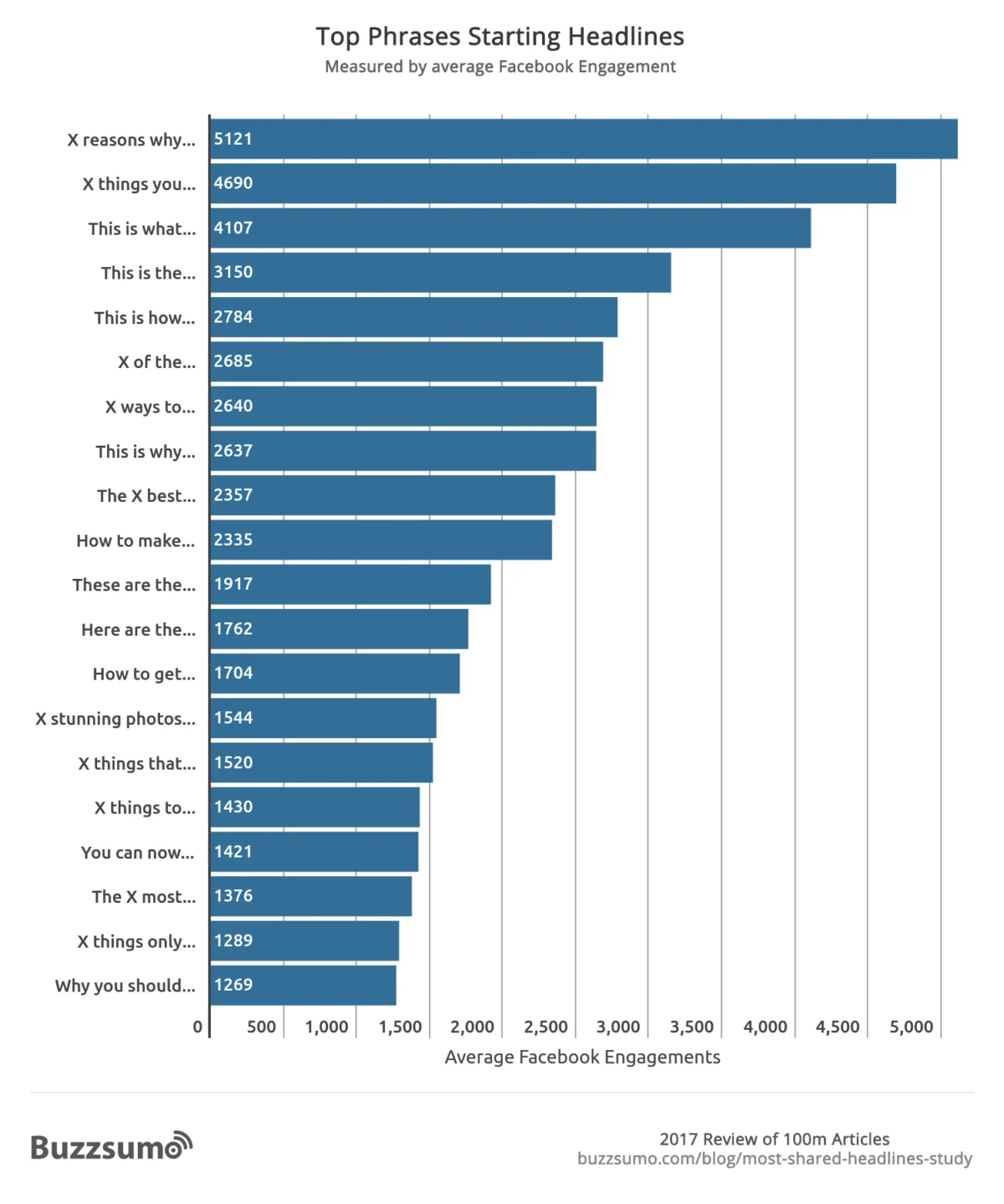
In the rapidly expanding digital ecosystem, a headline transcends its traditional role as a mere article title; it serves as a critical gateway, a subject line, a tweet, or a video title, representing a fleeting opportunity to capture audience attention and drive engagement. The contemporary landscape, shaped by sophisticated algorithms, intense competition, and increasingly discerning audiences, makes crafting effective headlines a formidable challenge. To demystify what constitutes a "good" headline in this dynamic environment, BuzzSumo has conducted an extensive analysis of 100 million headlines, building upon a similar seminal study from 2017 by co-founder Steve Rayson. This latest research, enriched by insights from leading marketing experts, provides a comprehensive blueprint for content creators aiming to maximize their reach and impact across Facebook and Twitter.
The Evolving Art of the Headline: A Chronological Shift
The digital content sphere has undergone a profound transformation since BuzzSumo’s initial 2017 study. Back then, the internet was awash with headlines characterized by explicit emotional appeals, viral quizzes, and tribal affirmations. Phrases like "will make you," "melt your heart," "shocked to see," "can we guess," and "things only X will understand" were prevalent, driving significant engagement on platforms like Facebook. These headlines often leaned into sensationalism and a sense of exclusive identity, capitalizing on inherent human curiosity and emotional responses.
However, a pivotal shift began on May 17, 2017, when Facebook announced its intention to demote "clickbait" content—headlines that exaggerate details or withhold crucial information. This algorithmic evolution continued with further refinements: on January 19, 2018, Facebook began prioritizing news from "trustworthy sources," and by June 30, 2020, it explicitly boosted original and authoritative news reporting. These changes, coupled with a staggering 64% increase in online content published since 2016, have fundamentally reshaped audience preferences and the strategies required for headline success. The sheer volume of information has cultivated an audience that demands clarity, value, and efficiency, leading to a demonstrable decline in the efficacy of overtly emotional, tribal, and quiz-based headlines. In the updated analysis (2019-2020), the explicitly emotional phrases that dominated in 2017 were largely absent, replaced by more direct and value-driven approaches. For instance, the top Facebook phrase "will make you" in 2017 garnered 1.7 million shares for its peak headline, while in 2020, the same trigram’s top headline achieved only 143,000 shares, highlighting a drastic reduction in its once-potent viral capability.
Key Findings from the 2019-2020 Analysis
BuzzSumo’s latest deep dive into 100 million headlines reveals critical insights into current best practices for engagement on Facebook and Twitter:
-
Optimal Headline Length: Contrary to older advice favoring brevity, the ideal headline length for maximum engagement across Facebook and Twitter is now precisely 11 words and 65 characters. This marks a significant reduction from the 2017 optimal length of 15 words and 95 characters. This trend reflects a clear audience preference for conciseness and "speed to insight" in an era of information overload. Readers want enough detail to be drawn in, but without unnecessary verbosity.
-
The Enduring Power of Numbers: The "magic number" in headlines remains 10. Beyond this, single-digit numbers from three to ten consistently drive the most social media engagement. While there isn’t a strong preference for odd or even numbers, larger numbers like 15 or 20, once popular in listicles, appear to have fallen out of favor, further emphasizing the demand for digestible information.
-
Thematic Shifts: From Emotion to Instruction: The most striking change since 2017 is the dramatic decline in emotional and tribal headlines. The new era is defined by themes that offer clear value and utility:
- Ranking: Headlines focused on awards or public votes, such as "Person of the Year 2020," continue to perform strongly, generating discussion and debate.
- Newness: Phrases like "in X years," particularly when part of "for the first time in X years," evoke intrigue by highlighting rare or unique circumstances.
- Hyperbole: Exaggerated statements, especially those using superlatives (e.g., "One of the most important," "of the best"), remain effective if they promise exceptional content.
- Instructional: This category has emerged as a powerhouse. Phrases like "you need to know," "everything you need," and "why you should" resonate by creating a sense of urgency, obligation, and FOMO (Fear Of Missing Out), promising essential information.
- Curiosity: Headlines that hint at revelations, explanations, or analyses (e.g., "Here Are The Results," "X reasons why") continue to engage by piquing interest.
- Guidance: "How to" and tutorial-based headlines indicate a strong audience desire for learning and actionable advice.
- Story: Headlines centered around a person or topic, akin to case studies (e.g., "Inside the Story of How…"), also find traction.
Deep Dive: Platform-Specific Engagement
While some themes overlap, successful headline strategies differ notably between Facebook and Twitter.
-
Facebook Engagement Strategies:
- Facebook audiences respond strongly to instructional headlines. The data shows 13 of the top 60 most engaging Facebook headlines were instructional or part of an instructional phrase. These phrases, often employing second-person pronouns like "you," create a direct connection and imply the reader needs this information, lest they miss out. For example, "Everything you need to know about washing your hands to protect against coronavirus (COVID-19)" garnered 2.2 million shares.
- Hyperbole also maintains its effectiveness, particularly when referencing exceptional quality ("One of the most beautiful").
- Starting Phrases: Listicles (headlines beginning with a number) are highly effective, alongside instructional and curiosity phrases. "How to" headlines are particularly popular for guidance. The word "The" surprisingly ranks as the most common starting word, followed by "new" and "how," indicating a preference for definitive statements and new information.
- Ending Phrases: Time-centric phrases, especially those related to current events (e.g., "of the year," 2020, 2021), dominate the most shared ending phrases, reflecting a societal preoccupation with contemporary issues like the pandemic. Numbers used at the end often induce surprise or promise quick insights. Social media trends fueling content (e.g., "goes viral on social media") also perform well, creating a content-conversation loop.
-
Twitter’s Unique Engagement Patterns:
- Twitter audiences demonstrate a keen interest in the "future of" various subjects, making this the most shared three-word phrase and the most common starting phrase on the platform. This suggests Twitter users are often seeking forward-looking analysis and predictions.
- Research-driven content thrives on Twitter, with "study" and "report" emerging as top starting words for headlines. This indicates a preference for credible, data-backed insights.
- Immediacy and Reactivity: Headlines ending with specific dates (e.g., "2020") or referencing current developments are highly effective, underscoring Twitter’s role as a platform for real-time news and current affairs.
- Curiosity and Storytelling: While instructional headlines work on both platforms, curiosity-driven and narrative-focused headlines ("the story of," "the history of," "the rise of") tend to fare better on Twitter, where users engage with unfolding narratives and discussions around people and topics.
Cross-Platform Dynamics and Engagement Disparity
A notable finding is the increased homogenization of headline phrases across platforms. In 2017, only one top-20 phrase overlapped between Facebook and Twitter. By 2019-2020, this increased to eight shared phrases, and ten shared starting phrases. This suggests that certain headline structures and language have universal appeal, allowing for some duplication in content distribution strategies.
However, a significant disparity in engagement levels persists. The most shared headline phrase on Facebook garnered an astonishing 590 times more average shares than the most shared phrase on Twitter. This indicates a fundamental difference in how content is consumed and shared on each platform. While Facebook’s average shares for top phrases increased threefold since 2017, Twitter saw a 14% drop in overall shares, despite its monthly active users remaining largely stable. This could point to a more fragmented and varied content consumption on Twitter, or simply a different sharing culture. Consequently, a nuanced approach to headline writing is essential, even for cross-platform content.
Expert Perspectives and Strategic Implications
Industry leaders emphasize the profound implications of these findings for content creators and marketers:
- Heidi Cohen, Chief Marketing Officer at Actionable Marketing Guide, highlights the pandemic’s influence on customer behavior, leading to a demand for utility and trust. She advises marketers to focus on core marketing basics and continually adapt to evolving customer needs.
- Julian Shapiro, Founder of Demand Curve, praises the report for its "highest signal-to-noise" data, underscoring BuzzSumo’s unique capability to deliver such insights.
- Rand Fishkin, Founder of SparkToro, sees the study as invaluable for contrasting past and present content strategies, affirming some long-held beliefs while debunking others regarding clickbait, emotional triggers, and listicles.
- Ross Simmonds, Founder of Foundation, notes the widespread adoption of "click-friendly" headlines, even by traditional outlets. He particularly points to the success of instructional copy ("you need to," "you should") as a powerful insight into human psychology and the desire to avoid missing out on important information.
- Brian Dean, Founder of Backlinko, emphasizes the "huge shift" on Facebook from BuzzFeed-style clickbait to instructional headlines, signaling that Facebook users now prioritize learning something new.
- Amanda Milligan, Marketing Director at Fractl, connects the rise of instructional headlines to a growing desire for expert insights and authority. She encourages brands to leverage their expertise through this type of language, inherently demonstrating their authoritative position.
The consensus among experts is clear: the modern digital audience prioritizes value, clarity, and authority. Headlines must convey a clear benefit, spark genuine curiosity without resorting to clickbait, and set accurate expectations for the content within.
Methodology and Tools for Marketers
BuzzSumo’s rigorous methodology involved analyzing 100 million article headlines published between 2019 and 2020 (and previously in 2017) to identify the three-word phrases (trigrams) that garnered the highest average median shares on Facebook and Twitter. To prevent popular domains from skewing results, only one headline trigram example per domain was included in the analysis. This robust approach ensures the findings are reliable and actionable for publishers and content creators.
Marketers are encouraged to utilize tools like the BuzzSumo Content Analyzer to conduct their own granular research. By searching for specific phrases in inverted commas (e.g., "need to know"), users can uncover top-performing headlines, analyze share counts, backlinks, evergreen scores, and even identify top sharers. The platform also allows for more specific searches, such as trigrams:, starting_trigram:, bigrams:, starting_unigram:, and ending_bigram:, across various languages and domains, providing unparalleled flexibility for in-depth content strategy development.
Conclusion: The Enduring Principles of Effective Headlines
Whether crafting news headlines, email subject lines, blog titles, or social media posts, the principles unearthed by this extensive research offer invaluable guidance. The goal is not merely to copy popular phrases, but to internalize the underlying themes and psychological drivers of engagement. Effective headlines in today’s landscape:
- Provide Clear Benefits: Explicitly state what the reader will gain (knowledge, solution, entertainment).
- Spark Genuine Curiosity: Intrigued readers are more likely to click.
- Are Specific and Detailed: Offer enough information to be compelling without being exhaustive.
- Strategically Utilize Numbers: Especially "10" and single digits for listicles, signaling digestible content.
- Set Accurate Expectations: Avoid misleading or sensational language that disappoints readers and risks algorithmic demotion.
The shift away from overt emotional manipulation and generic clickbait towards more informative, instructional, and authority-driven headlines reflects a maturing digital audience and a more sophisticated algorithmic environment. For content to truly resonate and be shared, it must demonstrate immediate value and align with the reader’s pragmatic quest for knowledge and credible insights. The headline, as the first point of contact, must embody this ethos, enticing a click even before the full article is consumed. The data unequivocally confirms that understanding context—audience, industry, topic, and platform—is paramount, reinforcing the need for continuous research and iterative testing to master the evolving science of headline writing.









