rifanmuazin
Paid search advertising achieved a historic milestone in 2024, generating $102.9 billion in revenue within the United States alone and cementing its status as the most dominant format in the digital advertising landscape. This scale is driven by a fundamental shift in consumer behavior, where the search engine serves as the primary gateway for commerce, connecting brands with users at the precise moment of high-intent inquiry. However, as the market matures, the landscape is becoming increasingly complex, characterized by rising costs, the integration of artificial intelligence, and a heightened focus on the post-click user experience.
While the sheer volume of search revenue suggests a thriving ecosystem, advertisers are facing significant headwinds. Recent industry benchmarks indicate that the average cost-per-lead (CPL) across all industries rose from $66.69 in 2024 to approximately $70.11 by early 2025. This inflationary trend in digital auctions means that mere participation is no longer a guarantee of profitability. Success in the current climate requires a sophisticated understanding of auction mechanics, campaign architecture, and the technical optimization of landing pages to ensure that paid traffic results in measurable conversions.
The Historical Trajectory of Search Advertising
The journey to a $100 billion domestic market began in the late 1990s with the emergence of GoTo.com (later Overture), which pioneered the pay-per-click (PPC) model. Google entered the space in 2000 with the launch of AdWords, initially starting with only 350 advertisers. Over the subsequent two decades, search advertising evolved from simple text-based links into a multi-faceted ecosystem encompassing video, shopping, and map-based results.
By the mid-2010s, the "mobile-first" revolution forced search platforms to adapt to smaller screens and shorter attention spans, leading to the development of ad extensions and localized targeting. In the early 2020s, the industry shifted toward automation. The introduction of "Performance Max" by Google in 2021 signaled a departure from manual keyword management toward AI-driven asset allocation across multiple platforms. This transition has culminated in the 2024-2025 era, where machine learning determines the majority of ad placements, and the global search advertising spend is forecasted to reach $355.10 billion by the end of 2025.
Dominant Platforms and Market Share Dynamics
The search landscape remains a lopsided duopoly, though specialized entrants are beginning to carve out high-value niches. Google Ads continues to be the undisputed leader, commanding roughly 90% of the global search market. Its dominance is supported by a sprawling ecosystem that includes YouTube, the Google Display Network, Gmail, and Google Maps. For many enterprises, Google Search is the cornerstone of digital strategy, accounting for nearly 40% of all digital advertising revenue.

Microsoft Advertising represents the second-largest player, capturing a modest but significant single-digit share of the search market. However, its value proposition extends through a vast syndication network that includes Yahoo, AOL, DuckDuckGo, and Ecosia. Recent strategic moves by Microsoft, such as its exclusive partnership to provide ads for Netflix’s ad-supported tier, have allowed it to reach premium audiences that are often unavailable through the Google ecosystem.
Beyond the traditional web search, Apple Search Ads has emerged as a critical channel for the mobile economy. Operating exclusively within the App Store, Apple’s platform offers a direct line to users on iPhones and iPads. As app-based commerce continues to grow, this "closed-loop" search environment has become essential for developers and mobile retailers.
The Mechanics of the Modern Search Auction
The modern search auction is a high-speed, automated process that occurs in the milliseconds between a user hitting "enter" and the results page loading. Unlike a traditional auction where the highest bidder always wins, the search auction utilizes a proprietary "Ad Rank" system designed to balance revenue with user experience.
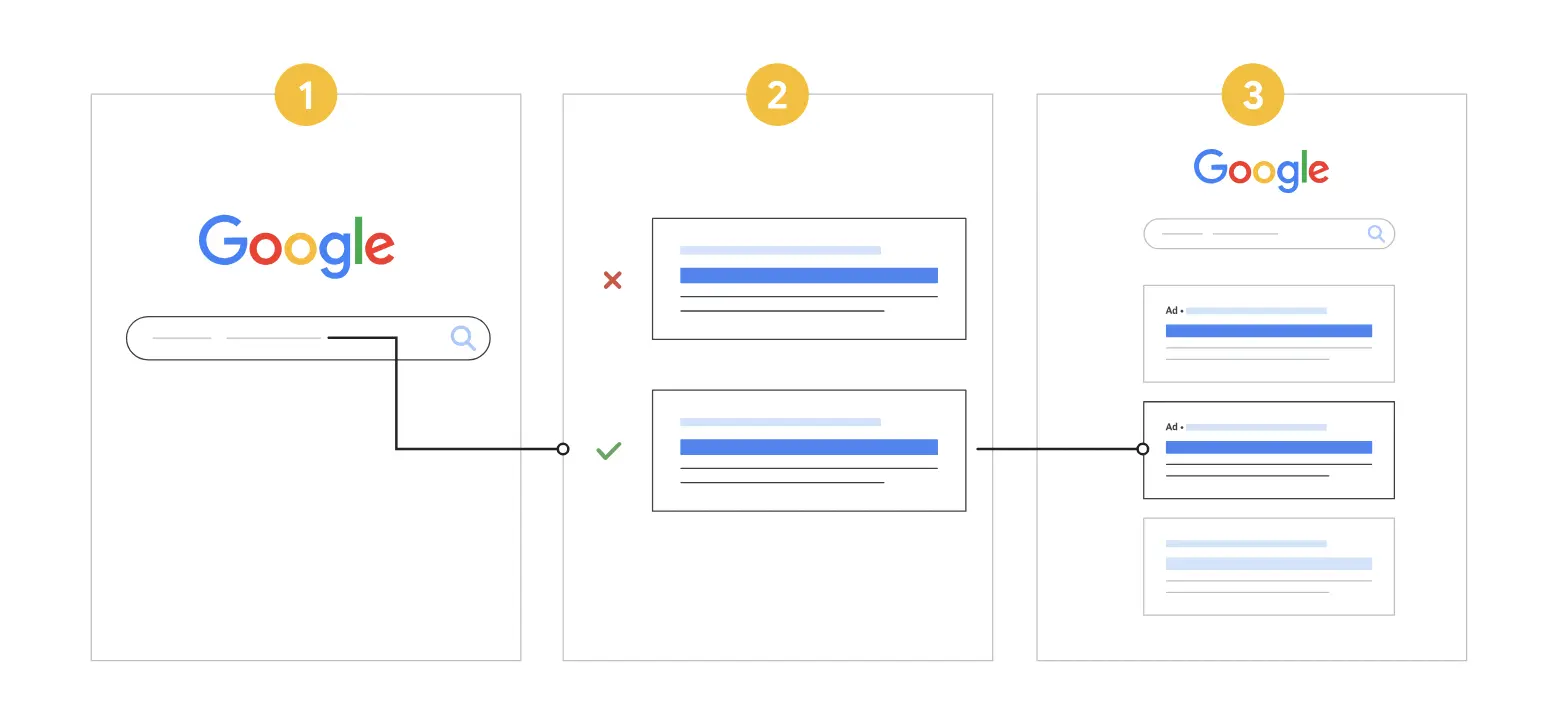
The calculation of Ad Rank involves several critical variables:
- The Bid: The maximum amount an advertiser is willing to pay for a click.
- Quality Score: A metric reflecting the relevance of the keyword, the expected click-through rate (CTR), and the quality of the landing page.
- Ad Thresholds: Minimum quality standards required for an ad to show in a specific position.
- Context of the Query: Factors such as the user’s location, device, time of day, and search intent.
- Ad Assets and Formats: The expected impact of extensions like phone numbers, sitelinks, or location markers.
The financial efficiency of this system is governed by the "actual CPC" model. An advertiser does not pay their maximum bid; instead, they pay the minimum amount necessary to maintain their position above the next-highest competitor, typically just $0.01 more. This incentivizes advertisers to focus on "relevance" rather than just "spending," as a highly relevant ad with a lower bid can often outrank a poor-quality ad with a higher bid.
Categorization of Modern Search Ad Formats
To maintain market share, search platforms have diversified their ad formats to cater to different stages of the buyer’s journey:
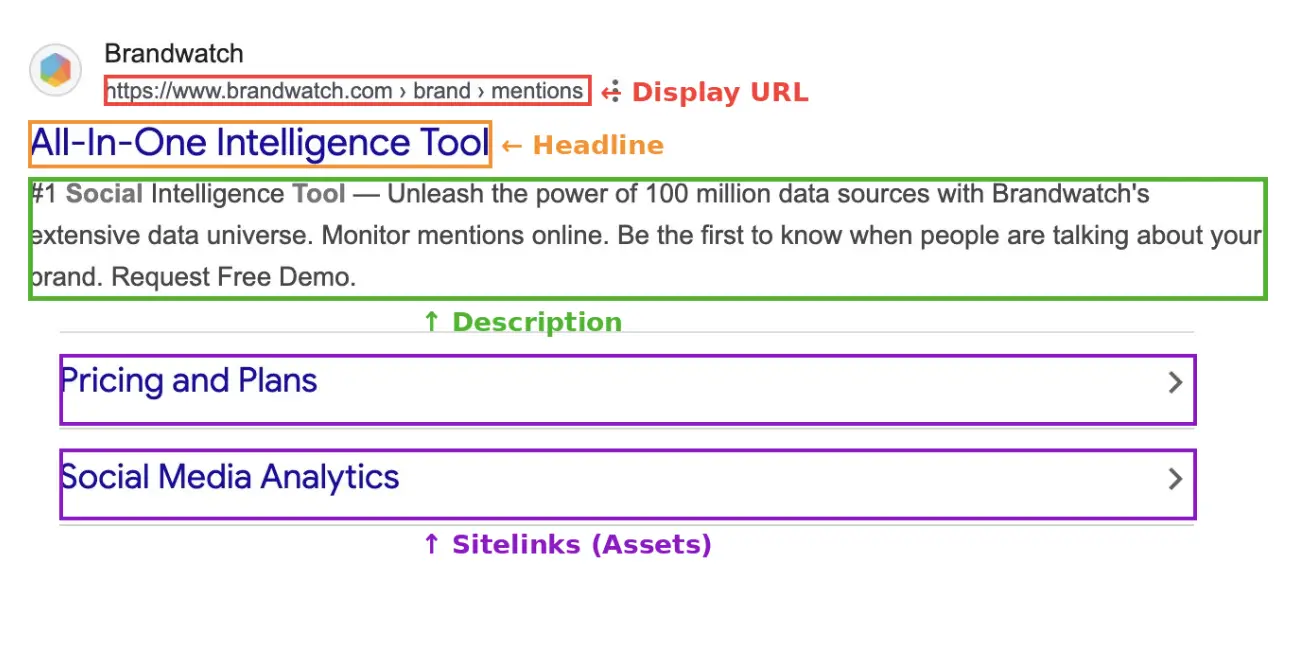
- Responsive Search Ads (RSAs): Now the standard for Google and Microsoft, RSAs allow advertisers to input multiple headlines and descriptions. The platform’s AI then tests various combinations to determine which version performs best for specific user profiles.
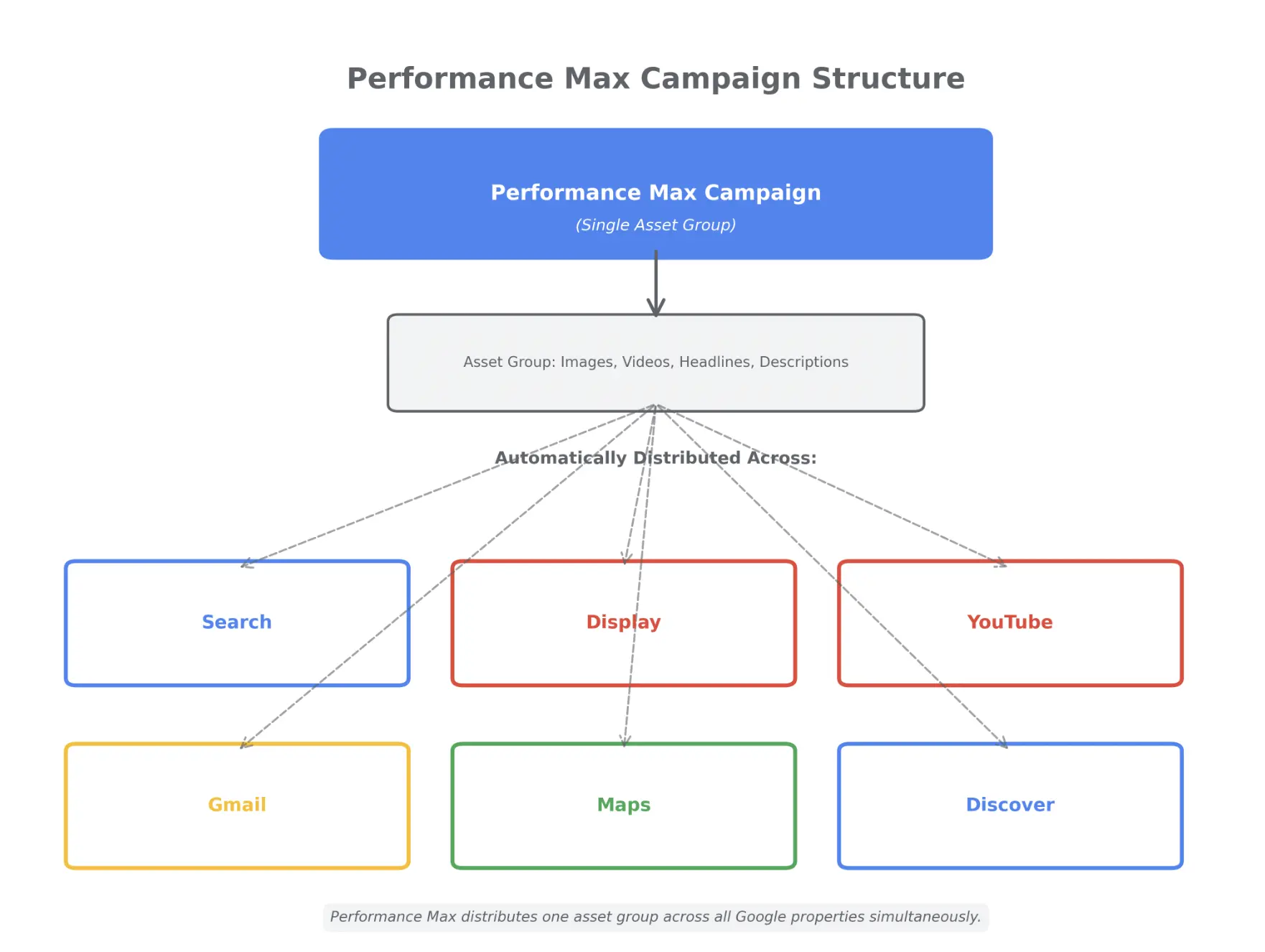
- Performance Max (PMax): A fully automated campaign type that utilizes all of Google’s inventory—Search, YouTube, Display, and Discover—from a single budget and set of creative assets.
- Shopping Ads: Critical for e-commerce, these ads are driven by product feed data rather than keywords. They display images, prices, and merchant names directly at the top of the SERP.
- Dynamic Search Ads (DSAs): These ads bypass keyword bidding entirely, instead using the content of an advertiser’s website to automatically generate headlines and target relevant queries.
The Strategic Interplay Between Paid and Organic Search
While paid search provides immediate visibility and granular control, it exists in a symbiotic relationship with Search Engine Optimization (SEO). Industry analysts suggest that the most resilient digital strategies employ both channels to capture different types of demand.
Paid search is ideally suited for "commercial intent" keywords where competition is high and immediate results are required. Conversely, SEO remains the most effective tool for building long-term brand authority and capturing "informational intent" queries. Data from multi-channel campaigns indicates that running paid ads can actually improve organic click-through rates by increasing brand familiarity on the results page. Furthermore, the keyword data generated by paid campaigns provides invaluable insights that can inform a brand’s organic content strategy.
The Post-Click Experience: A Critical Failure Point
A recurring theme in the 2024-2025 market is the "conversion gap." While platforms have become highly efficient at delivering clicks, many advertisers struggle to turn those clicks into revenue. Research indicates that sending paid traffic to a generic homepage is one of the most common causes of wasted ad spend. Homepages, designed for general exploration, often lack the singular focus required to convert a high-intent searcher.

The industry has moved toward the "Message Match" philosophy, where the landing page must explicitly mirror the promise made in the ad. Disconnects between ad copy and landing page content are cited as a primary driver of high bounce rates. Technical performance is equally vital; data suggests that a one-second delay in mobile page load time can reduce conversion rates by as much as 20%. In a competitive environment where clicks may cost $5 to $50 each, these technical inefficiencies represent a direct drain on corporate profitability.
Measurement, Attribution, and the Future of Search
As privacy regulations like GDPR and CCPA tighten and the industry moves away from third-party cookies, measurement has become the new frontier of search advertising. The transition to Google Analytics 4 (GA4) has introduced a more user-centric tracking model, allowing advertisers to view the entire customer journey across multiple devices and sessions.
The primary leverage point for modern marketers is the conversion rate. With CPCs rising across sectors like legal, insurance, and finance—where some keywords exceed $50 per click—lowering the cost-per-acquisition (CPA) is often achieved more effectively through conversion rate optimization (CRO) than through bid reductions.
Looking forward, the integration of Generative AI into search results (such as Google’s Search Generative Experience) is expected to fundamentally alter how ads are displayed. Advertisers will likely need to shift from targeting specific keywords to providing high-quality data "seeds" that AI can use to synthesize answers for users. Despite these technological shifts, the core value proposition of paid search remains unchanged: it is the only advertising medium that allows a brand to answer a customer’s question at the exact moment it is asked. With over $355 billion in global spend on the horizon, paid search is not merely a marketing tactic but a foundational pillar of the global digital economy.