rifanmuazin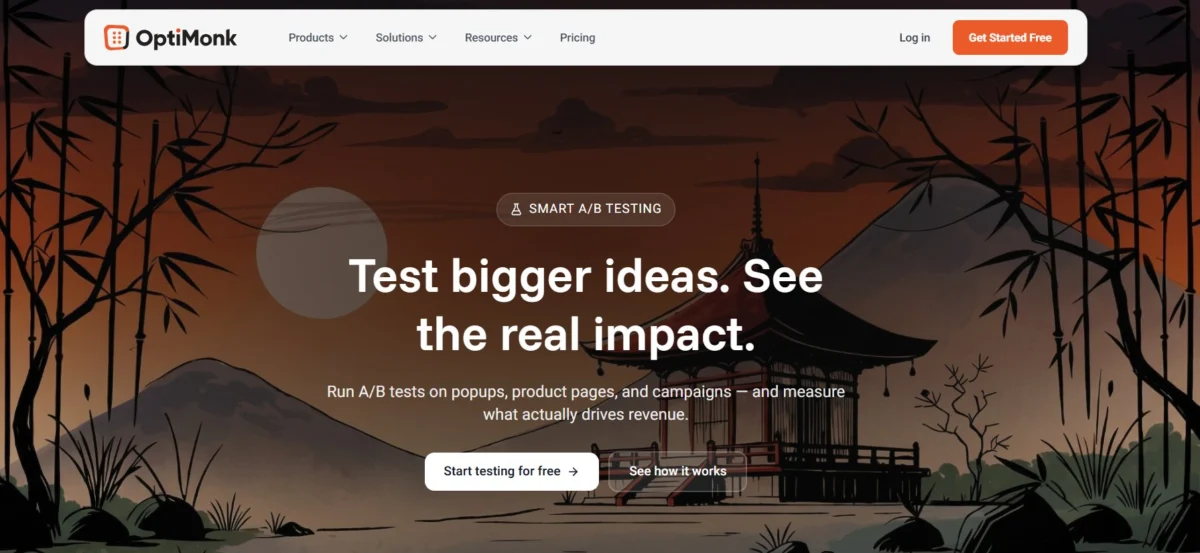
The Strategic Shift Toward Split URL Methodology
The landscape of conversion rate optimization (CRO) in 2026 is defined by a move toward holistic experimentation. Industry data suggests that while minor UI tweaks can yield incremental gains, structural changes to the user experience often provide the "quantum leaps" required for market dominance. Split URL testing is specifically designed for these high-stakes scenarios. By hosting the control and the variation on separate URLs, developers can build entirely new page architectures—incorporating different tech stacks or content management systems—without the constraints of the original page’s code.
This approach is increasingly utilized during full-site redesigns, where the goal is to validate a new visual identity against the legacy version. It is also the preferred method for testing significant backend changes, such as a new pricing engine or a revamped recommendation algorithm, where a client-side JavaScript injection would be insufficient to handle the complexity of the data processing required.
Comparative Analysis of the Top 8 Split URL Testing Platforms
As the market for experimentation software matures, the distinction between platforms has become more specialized. The following eight platforms represent the industry leaders for 2026, categorized by their technical capabilities, statistical rigor, and target enterprise needs.
1. VWO (Visual Website Optimizer)
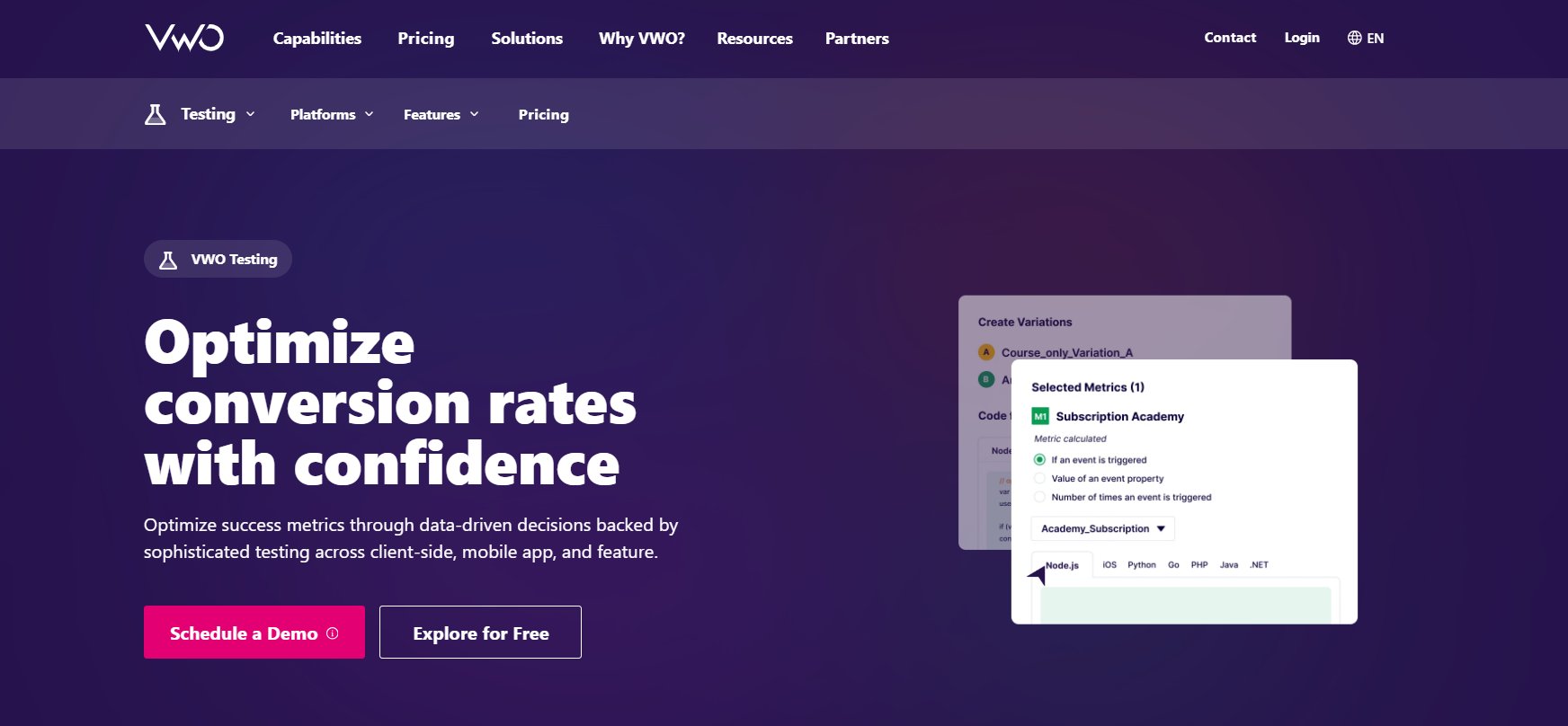
VWO remains a dominant force in the all-in-one experimentation space. Its split URL testing capability is integrated into a broader suite that includes heatmaps, session recordings, and AI-driven variation generation. In 2026, VWO’s "AI Copilot" has become a central feature, assisting teams in predicting which structural changes are likely to resonate with specific audience segments.

A notable case study involves the SaaS company Hubstaff, which utilized VWO to execute a split URL test on a complete homepage redesign. By combining redirect testing with behavioral analytics, Hubstaff achieved a 49% increase in visitor-to-trial conversions and a 34% lift in form submissions. This underscores the platform’s ability to validate broad experience shifts through data-backed evidence.
2. Webtrends Optimize
Positioned as an enterprise-grade solution, Webtrends Optimize focuses on minimizing development friction. It offers a robust "What You See Is What You Get" (WYSIWYG) editor alongside its split testing features, allowing marketing teams to launch experiments with minimal reliance on IT departments. Its "flicker-free" delivery mechanism is a critical selling point for brands prioritizing site performance and Core Web Vitals.
3. Convert Experiences
Convert Experiences has carved out a niche as the preferred platform for privacy-conscious organizations. In an environment where GDPR and CCPA compliance are non-negotiable, Convert offers a full-stack experimentation suite that operates without impacting site speed or user privacy. Its support for both Bayesian and Frequentist statistical engines allows data scientists to choose the methodology that best fits their internal reporting standards.
4. Optimizely
Long considered the pioneer of the A/B testing industry, Optimizely has evolved into a comprehensive digital experience platform. Its split URL testing (redirect experiments) is powered by advanced machine learning that automatically allocates traffic to winning variations—a process known as "Multi-armed Bandit" testing. This reduces the "opportunity cost" of running a test by ensuring fewer visitors see a lower-performing variant.
5. Kameleoon
Kameleoon distinguishes itself through its "prompt-based experimentation" and sophisticated statistical tools. It utilizes CUPED (Controlled-experiment using pre-experiment data) to reduce variance and reach statistical significance faster than traditional methods. This makes it ideal for high-traffic sites that need to iterate rapidly without sacrificing accuracy.

6. Omniconvert
Specializing in the eCommerce sector, Omniconvert integrates deeply with analytics platforms like Adobe Analytics. Its focus is on the "customer journey," allowing for "stacked tests" where multiple experiments are run across a single funnel to determine the cumulative impact of various structural changes.
7. Optimonk
While originally known for on-site messaging and pop-ups, Optimonk has expanded into a full AI-powered experimentation platform. It is particularly effective for high-impact testing of landing pages and product detail pages, offering AI suggestions to help teams refine their value propositions in real-time.
8. ABsmartly
ABsmartly is built for scale and technical precision. Founded by experimentation experts from companies like Booking.com, the platform uses a Group Sequential Testing (GST) engine. This allows teams to check results at any point during the experiment and stop early if a winner is found, without the statistical "peeking" errors that plague less sophisticated tools.
Evolution and Chronology of Experimentation Technology
The journey to the sophisticated tools of 2026 began in the early 2010s, when testing was largely limited to "button color" experiments managed by engineers.
- 2010–2015: The rise of client-side visual editors. Platforms like VWO and Optimizely democratized testing, allowing marketers to make front-end changes without writing code.
- 2016–2020: The "flicker" crisis. As websites became more complex, the delay caused by JavaScript-based testing began to negatively impact user experience, leading to the development of more robust split URL and server-side testing methods.
- 2021–2024: Integration of AI and Privacy. Platforms began incorporating machine learning for audience segmentation and ensuring compliance with tightening global data laws.
- 2025–2026: The era of Full-Stack Experimentation. Testing is no longer a marketing "add-on" but is baked into the product development lifecycle, with split URL testing serving as the primary method for validating major architectural changes.
Supporting Data: The Business Case for Split URL Testing
Market research indicates that the global Conversion Rate Optimization software market is projected to grow at a CAGR of over 10% through 2028. This growth is driven by a realization that user experience is the primary differentiator in a saturated digital economy.
Key metrics currently driving platform selection include:
- Latency Impact: A 100ms delay in page load time can result in a 7% drop in conversions. Split URL testing, when executed correctly via server-side redirects, minimizes this latency compared to heavy client-side scripts.
- Statistical Velocity: Tools using CUPED or GST engines can reduce the time required to reach a 95% confidence interval by up to 30%, allowing businesses to implement winning variations faster.
- Revenue Attribution: Modern platforms now offer direct integration with backend revenue data, moving beyond "click-through rates" to measure the actual dollar impact of a redesign.
Industry Perspectives and Expert Insights
Industry leaders emphasize that the tool is only as effective as the strategy behind it. Dom Light, a noted experimentation strategist, suggests that the future of the industry lies in reducing friction between data collection and action. "To truly support fast-growing businesses, testing tools need to go beyond basic test execution and provide a comprehensive view of user behavior," Light noted. "Seamless integration with analytics platforms ensures that experimentation isn’t just about isolated test results but contributes to a broader understanding of customer interactions across the entire funnel."
Furthermore, technical experts warn that while split URL testing is powerful, it requires careful handling of SEO. Utilizing rel="canonical" tags is essential to inform search engines that the variation URLs are versions of the original page, preventing duplicate content penalties and ensuring that search rankings remain stable during the testing period.
Broader Impact and Future Implications
The widespread adoption of split URL testing platforms in 2026 has significant implications for how digital products are built. We are seeing a move away from the "big bang" redesign—where a company launches a new site and hopes for the best—toward a "validated redesign" model. In this new paradigm, every structural change is treated as a hypothesis to be proven.
This shift is also influencing the workforce. There is an increasing demand for "Growth Engineers"—developers who specialize in building experimental variants and maintaining the integrity of redirect flows. As AI continues to automate the creation of these variants, the human role is shifting toward high-level strategy and the interpretation of complex behavioral data.

Ultimately, the choice of a split URL testing platform in 2026 depends on an organization’s specific needs: VWO for all-in-one ease, Optimizely for AI-driven enterprise scale, or ABsmartly for rigorous statistical accuracy. Regardless of the tool, the message from the market is clear: in 2026, if you aren’t testing at the structural level, you are leaving revenue on the table.


 Dwi Wanna
 Reynand Wu