rifanmuazin
In the increasingly competitive landscape of business-to-business (B2B) engagement, many organizations find themselves grappling with inconsistent pipeline development and engagement metrics. While the instinct often leads to the exploration of new marketing channels or the expansion of existing ones, a closer examination by industry experts suggests that the fundamental issue may not be the channels themselves, but rather the timing of their deployment. This evolving perspective highlights a critical shift from a broad channel mix strategy to a more nuanced approach focused on marketing orchestration.
The current reality for many B2B teams involves a multi-faceted approach to outreach. This typically includes the implementation of paid advertising campaigns, sophisticated email nurturing sequences, direct outreach from Sales Development Representatives (SDRs), and various forms of retargeting. Individually, these tactics are proven to be effective. However, their efficacy plummets when executed at suboptimal moments in the buyer’s journey. This misalignment can not only diminish engagement but also negatively impact the overall buyer experience, leading to missed opportunities and a diluted brand perception.
The Orchestration Deficit: A Deeper Look at Engagement Challenges
The prevailing response to a perceived decline in engagement often manifests as a strategy of simply adding more. This might involve increasing the volume of emails, launching additional ad campaigns, or expanding the reach of SDR outreach. The underlying assumption, though often unarticulated, is that digital fatigue is a technological problem that can be overcome by more sophisticated tools or a wider array of platforms. However, marketing consultants and seasoned B2B strategists increasingly point to this as a misdiagnosis. The true challenge, they argue, lies not in the available technology but in the intelligent orchestration of these tools and tactics.
This orchestration deficit means that teams are often:
- Overwhelmed by the sheer volume of their own outreach: Prospects can become desensitized or even annoyed by a constant barrage of communications that do not align with their immediate needs or stage in the buying process.
- Employing a "spray and pray" approach: Without a clear understanding of where a prospect is in their decision-making journey, efforts are often diluted and less impactful.
- Lacking a coherent strategy for transitioning between digital and human touchpoints: This leads to disjointed experiences where a prospect might receive an automated message just after expressing high intent, or a personalized human outreach before any prior digital engagement has established context.
The consequence of this lack of orchestration is a diminished buyer experience, where messages, however well-crafted, arrive at the wrong time. A perfectly relevant email sent too early in the awareness phase can feel intrusive, while an automated follow-up that arrives long after a prospect has demonstrated significant interest can feel disconnected and impersonal. This underscores the importance of context and precise timing, rather than solely relying on the perceived relevance of the content.
Beyond Personalization: The Primacy of Context and Timing
Many B2B marketing strategies have pivoted towards personalization, a crucial element in modern engagement. However, even the most personalized message will fall flat if it is delivered at the wrong moment. Personalization can tailor the what of a message, but it does not inherently fix the when. A prospect who is not yet ready to consider a solution, regardless of how well the message speaks to their pain points, will likely not convert. Conversely, a high-intent prospect who is actively researching solutions and receives a delayed, automated follow-up may already have engaged with a competitor.
The key differentiator for successful B2B engagement, therefore, lies in the ability to align outreach efforts with actual buyer behavior and readiness. This requires a shift in the fundamental question guiding marketing and sales actions. Instead of asking, "What should we send next?", the more pertinent inquiry becomes, "What do we actually know about this account and where are they in their buying journey?"
A foundational understanding of an account’s status can be distilled into key questions:
- What is their current stage of awareness? Are they aware of the problem, exploring solutions, or actively evaluating vendors?
- What is their level of engagement? Have they interacted with our content, visited our website, or engaged with our sales team?
- What is their perceived intent? Are there signals indicating a strong need or urgency for a solution?
Consistently answering these questions provides a data-driven basis for aligning outreach strategies to real buyer behavior, moving away from assumptions and towards informed decision-making.
Common Pitfalls in B2B Outreach Timing
Several common missteps highlight where B2B teams often falter in their timing strategies:
-
Human Outreach Too Early: Initiating direct human contact, such as a phone call or personalized email from an SDR, before a prospect has demonstrated any level of awareness or interest can lead to low response rates and create a negative first impression. This is not only inefficient for the sales team, consuming valuable time with little reward, but it can also prematurely alienate potential buyers. The effort required for such early-stage human outreach is substantial, and its effectiveness is significantly diminished when the prospect is not yet receptive.
-
Automation Too Late: Conversely, allowing high-intent accounts to languish in generic nurture streams while competitors are actively engaging them represents a significant missed opportunity. Automation, when used strategically, can be highly effective for engaging lower-priority accounts or for initial outreach. However, the transition to a more personalized, human-led approach must be triggered by specific engagement thresholds, indicating a heightened level of buyer interest. Failing to make this switch in a timely manner allows valuable leads to become cold or to be captured by more agile competitors.
-
No Prioritization of Effort: A critical oversight for many organizations is the failure to differentiate their engagement efforts based on account value or engagement level. When all prospects are treated with the same level of intensity and approach, regardless of their potential or demonstrated interest, resources are often misallocated. This indiscriminate approach dilutes the impact of high-value outreach and can lead to significant inefficiencies. A robust account-based marketing (ABM) strategy, for instance, emphasizes identifying and prioritizing key accounts, tailoring outreach to their specific needs and demonstrating a deep understanding of their business objectives.
The Framework for Effective Engagement: Aligning Effort with Signal
High-performing B2B teams adopt a more sophisticated approach by aligning their outreach efforts directly with identifiable signals of buyer interest and readiness. This involves a strategic deployment of both digital and human touchpoints:
- Digital Engagement for Initial Awareness and Exploration: Automated campaigns, content marketing, and targeted advertising are most effective in the early stages when prospects are becoming aware of a problem or exploring potential solutions. These channels allow for broad reach and efficient delivery of relevant information.
- Human Touch for High-Intent and Deeper Engagement: As prospects demonstrate increased engagement and intent – for example, by downloading in-depth resources, requesting demos, or attending webinars – the transition to human-led outreach becomes paramount. This is when personalized calls, tailored emails from account executives, and direct conversations can effectively nurture interest and move deals forward.
- Leveraging AI for Scalable Execution and Intelligent Prioritization: The advent of artificial intelligence (AI) in marketing and sales offers unprecedented opportunities to scale execution and refine prioritization. AI-powered tools can analyze vast datasets to identify buying signals, predict intent, and even automate personalized outreach at scale. This allows teams to focus their human resources on the most promising opportunities, ensuring that valuable interactions are reserved for prospects who are most likely to convert.
Crucially, these high-touch, high-value interactions must be initiated at the appropriate time, avoiding the mistake of premature human engagement. The principle is to follow the buyer’s lead, responding to their signals with the most effective form of engagement.
A Practical Framework for Timing B2B Engagement
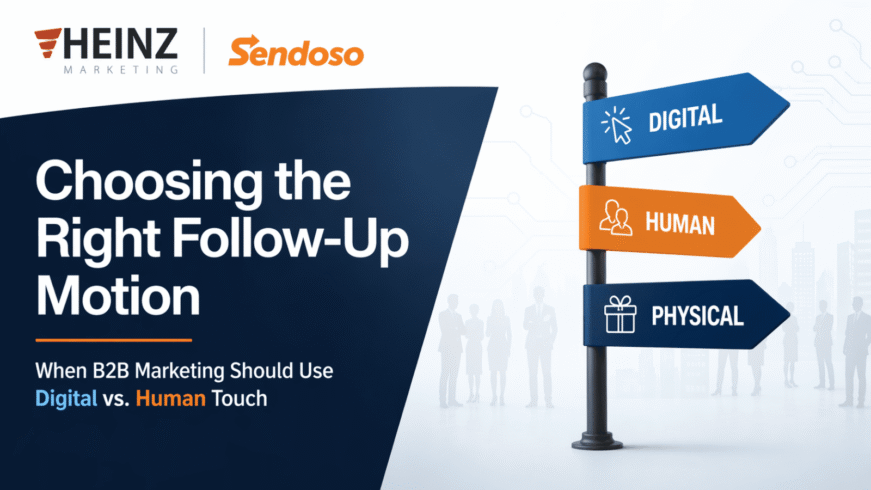
To translate these principles into actionable strategies, a clear framework is essential. Recognizing the need for guidance in this area, Heinz Marketing, in collaboration with Sendoso, has developed a practical approach to help B2B teams determine when to prioritize digital outreach and when to escalate to human interaction. This framework is designed to provide clarity and strategic direction for sales and marketing efforts.
This comprehensive guide aims to equip teams with the tools to:
- Identify the optimal moment for digital engagement: Understanding when automated sequences and digital content are most effective in capturing initial interest and providing foundational information.
- Determine the precise trigger for human-led outreach: Establishing clear criteria for when to transition from automated to personalized, human-driven conversations.
- Map engagement stages to the appropriate outreach method: Creating a clear understanding of how to progress a prospect through the funnel using a combination of digital and human touchpoints.
- Avoid common timing errors: Providing insights into the pitfalls of reaching out too early or too late, and how to mitigate these risks.
- Leverage data to inform timing decisions: Emphasizing the importance of tracking engagement metrics and buyer behavior to make informed choices about outreach strategies.
Conclusion: The Strategic Imperative of Timing
In conclusion, the quest for improved pipeline development and consistent engagement in the B2B arena is not a matter of accumulating more tactics or channels. Instead, it hinges on a more sophisticated understanding and implementation of timing. The strategy for success lies not in doing more, but in making more intelligent decisions about what to do next, and critically, when to do it.
By embracing a principle of marketing orchestration, where digital and human touchpoints are strategically deployed in alignment with buyer signals and journey stages, B2B organizations can significantly enhance their engagement effectiveness, improve the buyer experience, and ultimately drive more predictable and robust pipeline growth. The focus must shift from the breadth of channels to the precision of their application, ensuring that every interaction is not only relevant but also perfectly timed.
For those seeking to refine their outreach strategies and implement a more effective timing framework, the guide "Choosing the Right Follow-Up Motion: When B2B Marketing Should Use Digital vs. Human Touch" offers a detailed roadmap. This resource provides the full framework and practical applications for integrating timing into ongoing campaign management. For further inquiries or to discuss specific challenges, reaching out to [email protected] can provide valuable insights and personalized guidance.

 Sagoh
Sagoh
 Asep Darmawan