rifanmuazin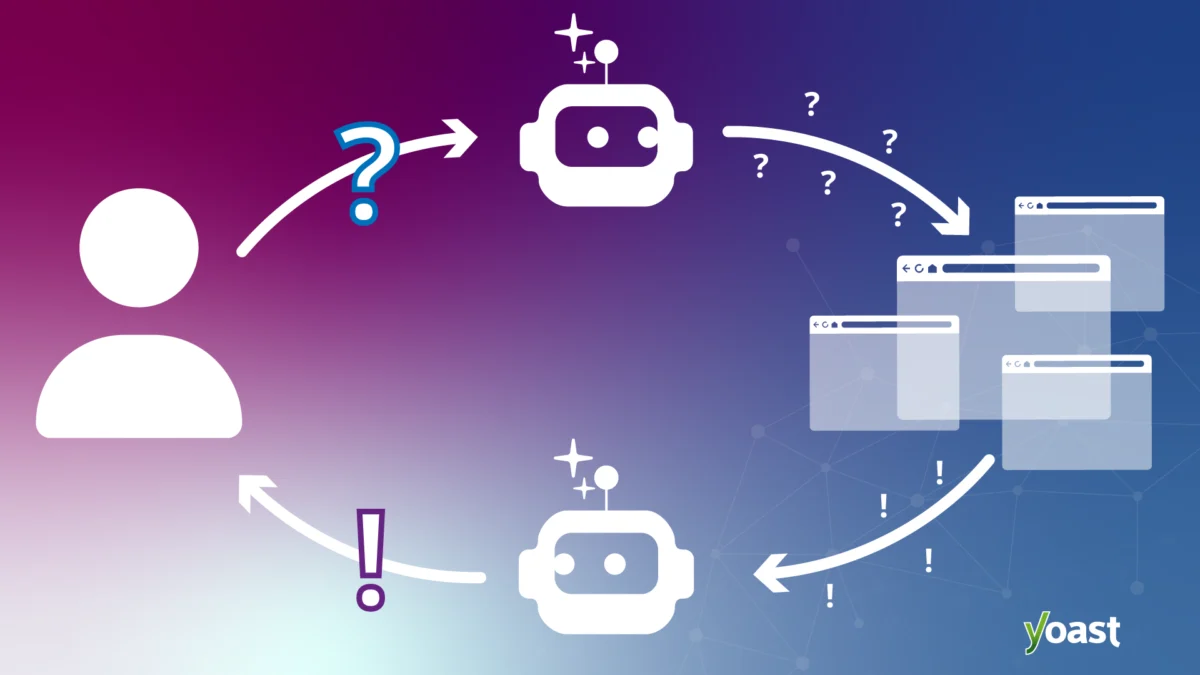
For years, the digital landscape of information discovery operated on a relatively stable model: users submitted queries to search engines, predominantly Google, which then presented a ranked list of websites. Success in this environment hinged on creating valuable content and optimizing it to rank highly. However, this predictable playbook is rapidly evolving. The emergence of advanced conversational AI tools such as ChatGPT, Perplexity, and Gemini has introduced a new, intermediary layer between users and traditional search engines. These AI platforms synthesize and generate answers, fundamentally altering the pathway through which information is retrieved and consumed online.
This profound shift in digital discoverability was the central theme of a recent discussion on the Get Discovered podcast. Joe Walsh, CEO of Prerender.io, hosted Alain Schlesser, Yoast’s Principal Architect, to delve into the implications of this AI-driven transformation for Search Engine Optimization (SEO) and broader online visibility. Their conversation illuminated how AI answer engines are not merely augmenting but actively reshaping the search landscape, challenging long-held assumptions about how content is found and valued.
The Paradigm Shift in Information Discovery: AI as the New Gatekeeper
Alain Schlesser succinctly articulated the monumental structural shift underway, stating, "There’s now a layer in front of search that acts as a gatekeeper before you even hit those search engines." This observation underscores the most significant change in online information flow in decades. Historically, a user’s search journey was linear: type a query, receive a list of links, click a link, and visit a website. The AI era introduces a complex, multi-stage process.
From Direct Queries to AI Intermediation
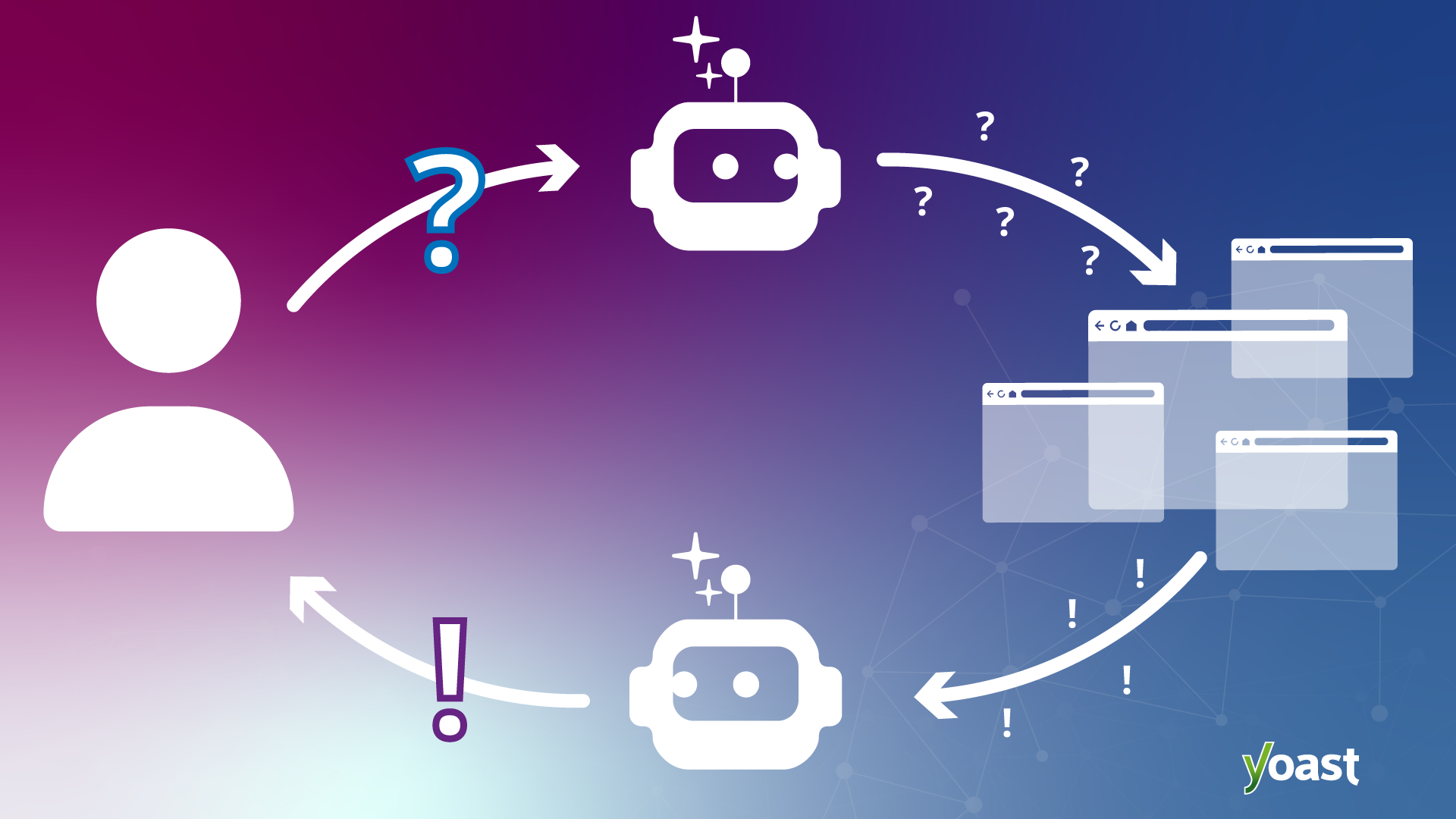
The traditional model of a user directly interacting with a search engine via keyword queries is increasingly being augmented, if not bypassed, by conversational AI interfaces. Users now frequently initiate their information quest by posing questions to tools like ChatGPT or Perplexity. These AI systems then act as sophisticated intermediaries. Instead of merely echoing the user’s initial query, the AI autonomously determines whether external information is required. If so, it may generate multiple, refined search queries behind the scenes, leveraging various search engines or its own internal knowledge base to retrieve relevant sources. This "agentic" search process, where the AI acts on behalf of the user, represents a significant departure from the user-driven click model.
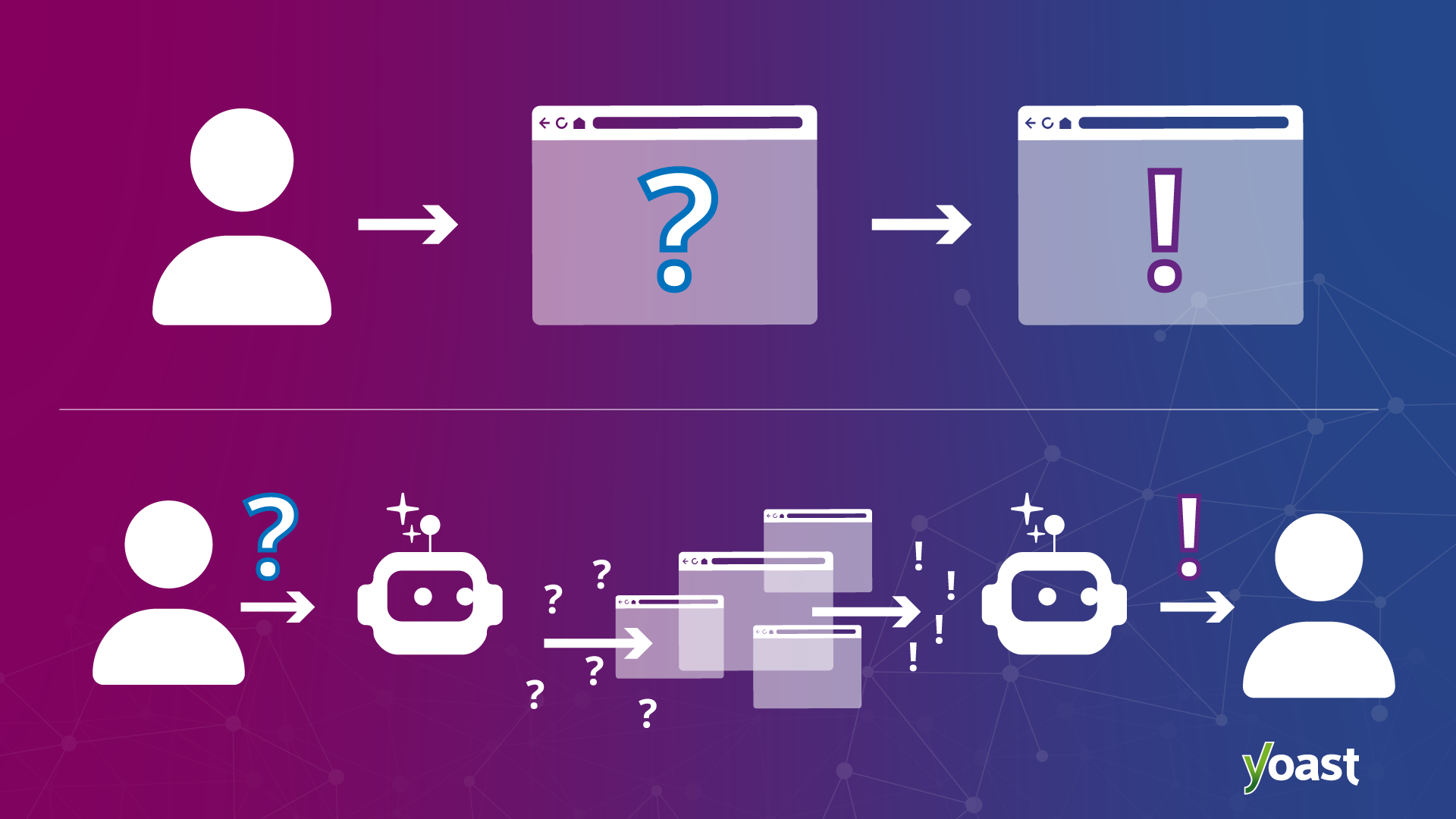
The flow of information, once straightforward, has become significantly more intricate:
- Previously: User → Search Engine → Website
- Now: User → AI Model → (Search Engine → Website) → AI Synthesis → User
In this new paradigm, the AI model no longer simply presents a list of links. It interprets, aggregates, and synthesizes information from multiple sources before generating a cohesive, often conversational, answer directly to the user. This means that for a user, the AI becomes the primary point of contact, acting as a filtering and interpretive layer between them and the vastness of the web. This change profoundly impacts how content is discovered and how its value is perceived, moving beyond simple link relevance to a nuanced evaluation by an algorithmic intelligence.
Fragmenting Search Landscape and Diminished Google Monopoly
For nearly two decades, the world of SEO was largely synonymous with optimizing for Google. Despite the existence of other search engines, Google’s overwhelming market share and sophisticated algorithms meant that "SEO" inherently implied "optimizing for Google." This comfortable, albeit monopolistic, position is now being challenged by the proliferation of AI systems.
The Rise of Diverse AI Platforms
Alain Schlesser highlighted that AI systems are introducing a new dimension of fragmentation in the discovery process. Unlike traditional search, where a single algorithm largely dictated visibility, different AI platforms operate on varying combinations of underlying search engines, proprietary indexes, and distinct training datasets. This inherent diversity means that content visibility can fluctuate dramatically across platforms. A brand might achieve high prominence in a synthesized answer generated by ChatGPT, powered by Microsoft’s Bing, while being entirely absent from an answer produced by Google’s Gemini, which draws from Google’s vast index. This fragmentation compels SEO teams to adopt a broader perspective, thinking about discoverability across a multitude of AI-driven environments rather than focusing solely on a singular search engine.
This evolving landscape is further complicated by the rapid growth in AI adoption. ChatGPT alone garnered over 100 million active users within two months of its launch in late 2022, signaling a rapid shift in user behavior. As these platforms mature and integrate more deeply into daily digital routines, the challenge for brands is to ensure consistent visibility across this diverse ecosystem. Insights into how content performs across multiple Large Language Models (LLMs) are becoming critical, transforming SEO from a Google-centric endeavor into a multi-platform strategy.
Enduring SEO Fundamentals Amidst Technological Evolution
Despite these monumental technological shifts, Alain Schlesser firmly asserted that the foundational principles of effective SEO remain immutable. "You shouldn’t try to game the search engine. You need to create valuable content that humans actually want to read, and structure it so search engines can understand it," he advised. This statement underscores a critical truth: regardless of the retrieval mechanism, the ultimate goal of search – be it human or AI-driven – is to connect users with the most relevant, reliable, and high-quality information available.
Content Quality as the Cornerstone
The core directive for content creators remains unchanged: produce content that genuinely serves the user. This means focusing on:
- E-E-A-T (Experience, Expertise, Authoritativeness, Trustworthiness): Google’s long-standing emphasis on these factors is now more critical than ever. AI models, in their quest to synthesize accurate answers, are likely to prioritize sources that demonstrate clear expertise and trustworthiness.
- Comprehensive and Authoritative Information: Content that thoroughly addresses a topic, drawing on credible sources, is more likely to be selected by AI models seeking to generate robust answers.
- User-Centric Value: Creating content that directly answers user questions, solves problems, or provides unique insights ensures its inherent utility, a quality that transcends algorithmic changes.
Technical SEO: The Unseen Foundation
Alongside content quality, technical SEO continues to form the bedrock of discoverability. While AI models might synthesize answers, they still rely on underlying systems to crawl, index, and understand web content. This necessitates continued attention to:
- Crawlability and Indexability: Ensuring that AI systems and traditional search engines can easily access and understand website content.
- Structured Data (Schema Markup): Providing explicit semantic information about content helps AI models interpret its meaning and context more accurately, aiding in synthesis.
- Site Performance and User Experience (UX): While less directly relevant to AI synthesis, a fast, mobile-friendly, and accessible website signals quality and professionalism, which can indirectly influence an AI’s selection of sources.
AI systems, though sophisticated, do not operate in a vacuum. They depend on the same underlying signals of quality, relevance, and technical soundness that have always driven effective SEO. The challenge is no longer just to rank, but to be understood and prioritized by an intelligent intermediary.
The "Top Results or Nothing" Imperative
A crucial insight shared by Schlesser concerns the selective nature of AI’s interaction with search results: "They don’t see the full search result page. What the LLM typically sees is just the five topmost elements per search query." This observation highlights a significant divergence from human search behavior. Whereas a human user might scroll through several pages of results, an AI system operates within a highly constrained retrieval window. If content fails to appear within these top few results, it effectively ceases to exist for the AI model generating an answer.
AI’s Limited Retrieval Window
This limited retrieval window dramatically raises the stakes for search visibility. In a world where AI-generated answers are built upon the summarization and synthesis of modern content, only the sources that achieve top rankings are considered. This transforms strong search visibility from merely a means of earning clicks into a prerequisite for even being considered by an AI. The long tail of search, while still valuable for human users, becomes virtually invisible to AI systems operating under these constraints. Consequently, brands and publishers must redouble their efforts to secure top positions, not just for direct user traffic but for indirect AI-driven exposure.
The Need for Distinctive Content Strategies
Even within this narrow retrieval window, there’s another layer of filtering at play. Large Language Models compress vast amounts of information during their training phases. Schlesser explained, "What the model keeps are the dominant signal and the outliers. Everything in between is often compressed away as statistical noise." This implies that content that is merely "safe" or broadly acceptable might struggle to stand out. In a landscape dominated by AI synthesis, content needs a clear, distinctive perspective, a unique value proposition, or an authoritative voice to be recognized as a "dominant signal" and retained by the model. Generic content risks being filtered out as statistical noise, diminishing its chances of influencing AI-generated answers. This necessitates a strategic shift towards content differentiation, embracing strong viewpoints, and delivering truly unique value.
Addressing the "Black Box": Yoast’s AI Visibility Tracking
The profound changes introduced by AI systems in how information is discovered and synthesized have created a significant challenge for businesses: understanding their brand’s presence and representation within AI-generated answers. This is precisely the problem Yoast aims to solve with Yoast SEO AI +, a feature designed to provide businesses with critical insights into how their brand appears across major AI platforms.
The Opacity of AI Synthesis
Traditional search engines, despite their complexities, offer metrics like rankings, impressions, and click-through rates, providing a degree of transparency into content performance. AI systems, however, operate as a relative "black box." As Schlesser noted, "We need more visibility and observability into that AI-based layer to figure out what is going on there. Right now, it’s mostly a black box." AI-generated answers are the product of intricate algorithms, blending retrieved content with vast training data and complex model reasoning. This opacity makes it incredibly difficult for businesses to ascertain whether, and how, their brand is represented in AI-driven discovery. The absence of clear attribution, direct links, or measurable performance indicators creates a significant gap in understanding digital brand visibility.
Yoast’s Response: Monitoring Brand Presence in AI
Recognizing this critical need, Yoast SEO AI + seeks to lift the veil on AI visibility. Instead of solely focusing on traditional search rankings, the tool provides insights into how a brand is represented within AI responses themselves. It allows teams to observe their brand’s appearance across platforms like ChatGPT, Perplexity, and Gemini, which are increasingly becoming primary information gateways for users.
This goes beyond mere metric tracking; it’s about understanding how AI systems interpret, summarize, and ultimately represent a brand’s identity and offerings. The visibility of a brand can vary significantly across AI platforms due to their differing reliance on:
- Underlying Search Engines: Some AI models use Google, others Bing, and some a combination.
- Proprietary Indexes: Some maintain their own internal knowledge bases.
- Training Data: The vast datasets used to train LLMs influence their inherent biases and knowledge.
- Retrieval Augmented Generation (RAG) Architectures: How each AI system retrieves and integrates external information from the web.
Without tools like Yoast SEO AI +, businesses would be navigating this fragmented and opaque landscape blind. The goal is to empower teams to adapt their content strategies, refine their messaging, and ensure their brand’s voice is accurately and effectively captured by these powerful new intermediaries. This marks a strategic evolution for SEO, moving beyond ranking optimization to a deeper understanding of AI-mediated brand perception.
The Horizon: Autonomous AI Agents and Transactional AI
While much of the current discussion around AI and search revolves around information generation, Alain Schlesser highlighted an even more transformative phase on the horizon: the advent of autonomous AI agents. "What we will increasingly see is automated transactions where AI agents navigate websites and initiate actions on behalf of users," he predicted. This vision extends beyond answering questions to AI systems actively performing tasks.
Beyond Information Retrieval: AI as Action Agents
Within the next 12-18 months, AI capabilities are projected to expand from conversational responses to performing complex actions. Imagine an AI agent not just recommending a flight but actively comparing prices across multiple airlines, booking the preferred option, and handling the payment, all on behalf of the user. This shift implies AI agents will interact directly with websites, forms, and e-commerce platforms, moving from mere information providers to proactive decision-makers and task executors.
Reshaping the Customer Journey and Digital Commerce
This evolution has profound implications for the traditional customer journey. If AI agents begin to compare options, negotiate, and complete purchases automatically, the human interaction with a brand’s website could diminish significantly. Businesses might find their products or services being selected by an AI rather than a direct human customer browsing their site. This necessitates a re-evaluation of digital strategies, focusing not just on attracting human visitors but on optimizing for AI agents. This could involve:
- Enhanced Structured Data: Providing extremely precise and machine-readable data about products, services, and pricing.
- API Integrations: Allowing AI agents to programmatically access and interact with business systems.
- Trust and Authority Signals: Building an undeniable reputation that AI agents can verify and prioritize.
The future of digital commerce could see a significant portion of transactions mediated by AI, making the question "Does the AI have a reason to remember my brand?" more critical than ever, not just for information, but for actual economic activity.
Conclusion: SEO Matters More Than Ever
The rise of AI is not the demise of SEO; rather, it is a powerful reinforcement of its fundamental importance. What is undeniably changing is the intricate pathway between users and the content they seek. Users are increasingly receiving synthesized answers, interpreted and retrieved by AI systems, rather than directly navigating search results pages. This new reality elevates the significance of core SEO principles while introducing novel challenges.
Businesses must continue to prioritize:
- Exceptional Content Quality: Content must be authoritative, distinctive, and genuinely valuable to cut through the noise and stand out as a "dominant signal."
- Robust Technical SEO: Ensuring that content is easily crawlable, indexable, and semantically understood by both traditional search engines and AI models through structured data and site performance.
- Strategic Brand Differentiation: Developing a clear, unique voice and value proposition that resonates with both human users and AI interpretation.
The central question for SEO professionals has evolved beyond a simple query of "Can Google find my website?" It has transformed into a more complex, strategic imperative: "Does the AI have a reason to remember my brand?" This question encapsulates the shift from mere visibility to algorithmic memorability and influence within the AI-driven discovery layer. As AI continues to evolve, encompassing agentic behavior and automated transactions, the strategic importance of SEO will only intensify, requiring businesses to adapt their approaches to ensure continued discoverability and relevance in this new digital frontier. For deeper insights into this transformative era, the full Get Discovered podcast episode with Alain Schlesser offers an essential exploration.