rifanmuazin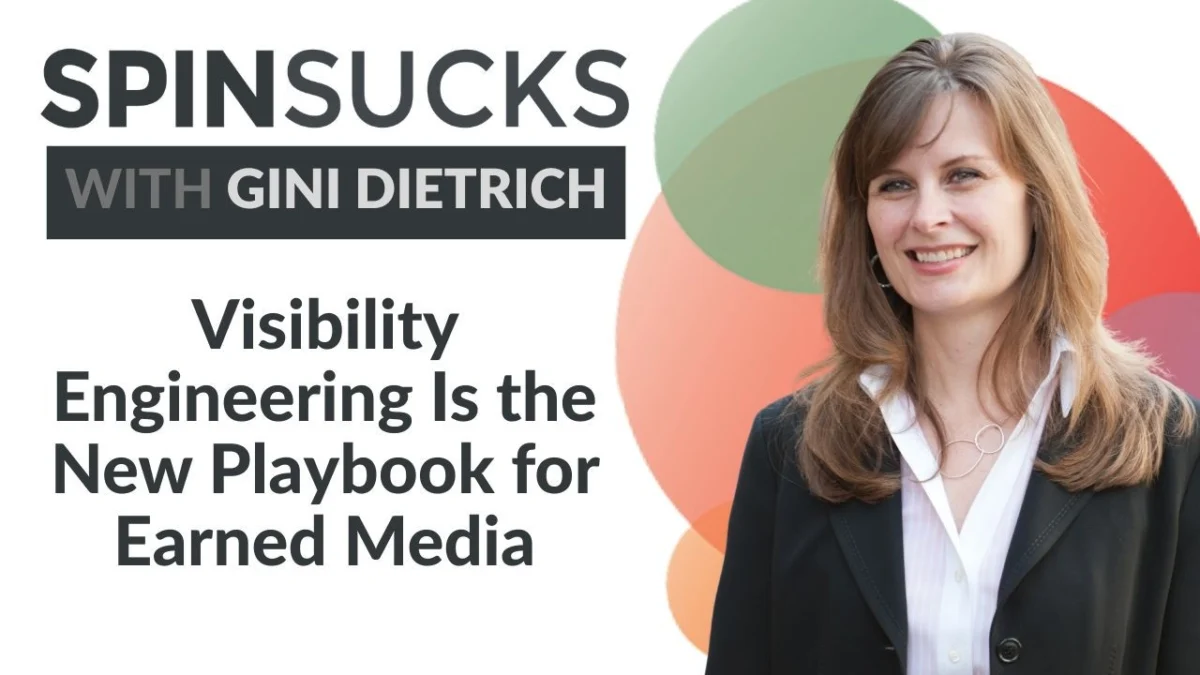
The traditional landscape of public relations and corporate communications is undergoing a fundamental transformation as artificial intelligence redefines how information is discovered, validated, and synthesized. Industry analysts and communications experts are observing a shift away from isolated media placements toward a holistic practice known as "visibility engineering." This methodology prioritizes the interconnection of owned and earned media to establish a clear, consistent, and defensible footprint that satisfies the algorithmic requirements of Large Language Models (LLMs) and the trust requirements of human stakeholders. As search engines evolve into answer engines, the "trophy case" approach to public relations—where a single high-profile media mention was considered a standalone victory—is being replaced by a systemic "credibility loop" designed to provide proof across the entire digital ecosystem.
The Shift from Discovery to Validation in an AI-Shaped Market
For decades, the primary function of earned media was two-fold: discovery and credibility. A placement in a major trade publication served as the mechanism by which a prospect found a company, while simultaneously providing the third-party validation necessary to prove the company’s legitimacy. However, the rise of generative AI platforms such as OpenAI’s ChatGPT, Anthropic’s Claude, and Google’s Gemini has decoupled these functions.
Current market data indicates that a growing percentage of B2B and B2C buyers now consult AI interfaces before visiting a corporate website or engaging with traditional search results. These AI systems do not merely list links; they synthesize vast amounts of data to provide summaries, comparisons, and recommendations. Consequently, a single media placement, regardless of the outlet’s prestige, is no longer sufficient to ensure a brand is surfaced by an AI. LLMs prioritize patterns of information and repeated signals of expertise across multiple reputable sources. If a brand’s presence is fragmented or inconsistent across the web, it risks being omitted from AI-generated shortlists.
The Evolution of the PESO Model
The concept of visibility engineering is deeply rooted in the evolution of the PESO Model (Paid, Earned, Shared, Owned), a framework developed by Gini Dietrich of Spin Sucks. While the PESO Model has long advocated for the integration of these four media types, the current AI-driven environment has elevated the importance of the "Owned" and "Earned" relationship.
Historically, PR teams focused heavily on Earned media (media relations), while marketing teams focused on Owned media (blogs, white papers). Visibility engineering argues that these two must function as a single operating system. In this new paradigm, earned media acts as the external validation for the deep expertise housed within a brand’s owned assets. Without this connection, earned media hits remain "moments" rather than "momentum," failing to build the compounding authority required to influence modern search algorithms.
The Anchor Hub: Establishing a Defensible Source of Truth
At the center of the visibility engineering framework is the "anchor hub." This is defined as a deep, authoritative, and defensible piece of owned content hosted on a company’s primary digital property. Unlike a standard blog post or a promotional services page, an anchor hub is designed to be a definitive reference entry for a specific topic or buyer question.
The strategic purpose of an anchor hub is to provide a "source of truth" that AI systems can easily identify and associate with a specific brand or expert. To be effective, an anchor hub must meet several criteria:
- Specificity: It must address a real-world question or challenge faced by the target audience.
- Depth: It must provide comprehensive context, definitions, and methodological frameworks.
- Citatability: It must contain clear, repeatable language and evidence that journalists, creators, and AI systems can easily reference.
- Expert Attribution: It must be associated with a named internal expert to satisfy "E-E-A-T" (Experience, Expertise, Authoritativeness, and Trustworthiness) criteria.
When a brand lands an earned media placement—such as a bylined article, a podcast interview, or a quote in a trade publication—that placement should reinforce the themes and expertise established in the anchor hub. This creates a "credibility loop" where the third-party validation of the media hit points back to the foundational proof of the owned content.
Data and Market Trends: Why Consistency Now Trumps Volume
The shift toward visibility engineering is supported by emerging data regarding digital consumption habits. According to recent search industry reports, "zero-click" searches—where a user finds the answer directly on the search results page or via an AI snippet without clicking through to a website—now account for over 50% of all queries.
Furthermore, LLMs are trained on a "probabilistic" basis. They determine what is true or relevant based on the frequency and consistency of information across their training data. If a CEO is quoted discussing "Sustainable Supply Chains" in one outlet, but the company’s owned content focuses exclusively on "Logistics Efficiency," the AI may fail to make a strong association between the brand and the sustainability topic. Visibility engineering solves this by ensuring that every media touchpoint reinforces a singular, strategic narrative, thereby increasing the probability that the brand will be cited as an authority by AI agents.
A New Framework for Measurement
The adoption of visibility engineering requires a significant shift in how communications success is measured. Traditional metrics, such as "number of placements" or "total reach," are increasingly viewed as vanity metrics that do not correlate with business authority in an AI-dominated market.
New performance indicators (KPIs) for visibility engineering include:
- Message Consistency: The degree to which earned media placements mirror the language and frameworks established in owned anchor hubs.
- AI Surface Rate: The frequency with which a brand or expert appears in answers provided by major LLMs for specific industry queries.
- Asset Reuse: The extent to which owned content is cited or repurposed by third-party media outlets and influencers.
- Topic Ownership: The measurable association between a brand and a specific "problem-solution" set within digital search environments.
Chronology of the Communications Pivot
The transition to visibility engineering has occurred in three distinct phases over the last decade:
- The Content Era (2010–2018): Brands focused on high-volume content production to satisfy traditional SEO requirements. Success was measured by traffic and keyword rankings.
- The Authority Era (2019–2022): Search engines began prioritizing "E-E-A-T." PR and content marketing started to converge as brands realized that high-quality backlinks from reputable news sites were essential for search visibility.
- The AI Synthesis Era (2023–Present): The launch of public-facing LLMs forced a move toward "engineered visibility." The focus shifted from being "found" to being "the answer."
Implementation: Building the Credibility Engine
For organizations looking to implement visibility engineering, experts recommend a three-step process to begin building a credibility engine.
First, organizations must conduct an "AI Audit." This involves querying multiple AI platforms using incognito modes to determine how the brand is currently perceived and categorized. This audit reveals whether the existing digital signals are thin, inconsistent, or non-existent.
Second, the organization must identify a singular topic of expertise. Rather than attempting to own multiple broad categories, the goal is to become the "obvious answer" for one specific buyer question. This leads to the creation of the first anchor hub—the definitive resource on that topic.
Third, all subsequent earned media efforts must be tethered to this hub. Every pitch, interview, and guest contribution is treated as a reinforcement of the anchor hub’s core message. This ensures that even if a media outlet does not provide a direct hyperlink, the semantic connection between the expert, the topic, and the brand is strengthened for both human readers and AI crawlers.
Broader Impact and Industry Implications
The move toward visibility engineering signals a professionalization of the PR industry, moving it away from the "hit-or-miss" nature of traditional media relations. It requires PR professionals to possess a deeper understanding of content strategy, data science, and how LLMs process natural language.
Industry analysts suggest that agencies and internal teams that fail to adopt these integrated practices will find their earned media wins providing diminishing returns. Conversely, those who successfully engineer their visibility will build a defensible competitive advantage. By creating a system where proof compounds over time, these organizations ensure they remain visible not just during a single news cycle, but whenever a human or an AI system asks who in their space should be trusted.
The future of brand authority is no longer about who shouts the loudest or who appears in the most headlines; it is about who has built the most interconnected and validated body of evidence. In an AI-shaped market, the brands that win will be those that treat visibility not as a series of isolated events, but as a deliberate and engineered system of credibility.