rifanmuazin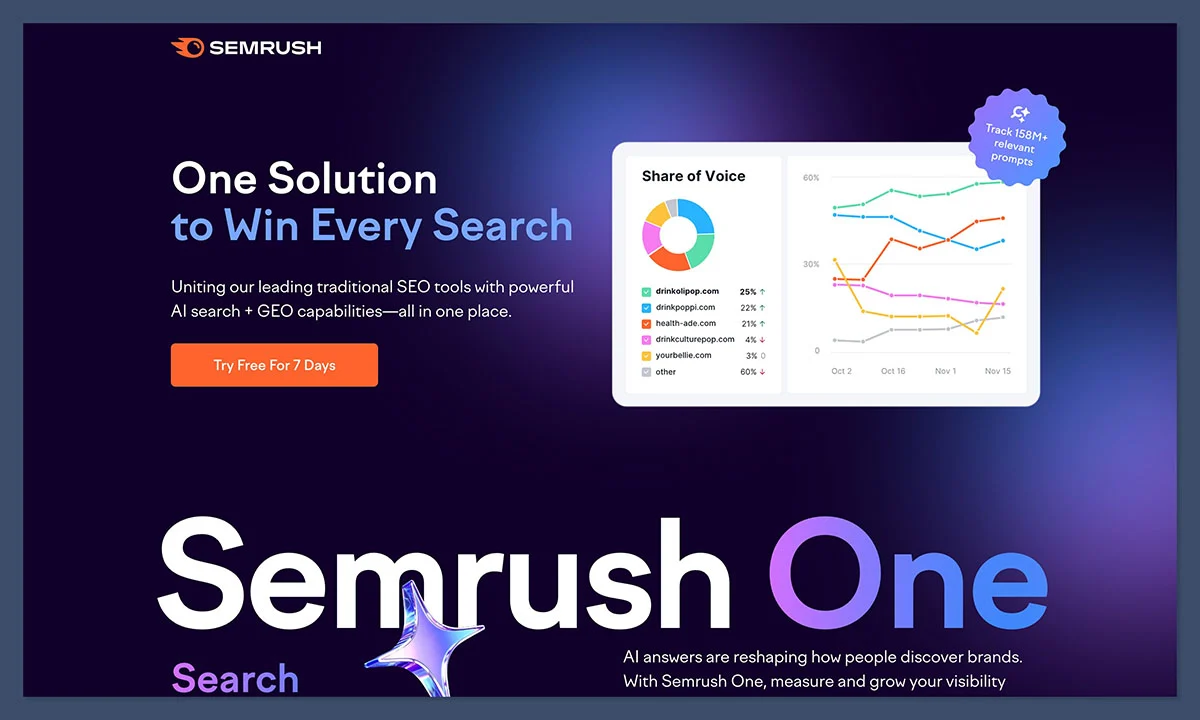
Forty-three percent of all e-commerce traffic originates from organic search, establishing it as the single largest and most influential channel for online retailers. This organic presence directly contributes to a significant 23.6% of all online orders, underscoring its critical role in driving revenue and customer acquisition. The digital marketplace, however, is in constant flux, with search engine algorithms evolving and new technologies like generative AI rapidly reshaping how consumers discover and interact with products online. Navigating this dynamic environment demands a strategic approach to Search Engine Optimization (SEO), leveraging the right tools to maintain visibility and capture a substantial return on investment.
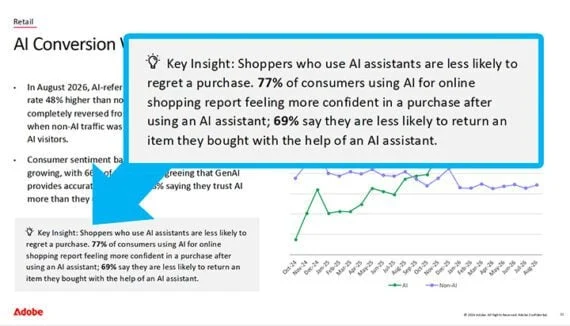
A recent comprehensive study by First Page Sage, analyzing data from 80 clients, revealed that e-commerce SEO continues to deliver an impressive 317% Return on Investment (ROI) with an average break-even period of nine months. This performance significantly outstrips other major digital marketing channels, with Google Ads yielding a 1.9x ROI and Meta Ads a 1.4x ROI. To capitalize on this lucrative channel, online stores must now focus on optimizing for a multifaceted search landscape that increasingly incorporates AI-driven results. Notably, traffic referred from ChatGPT already demonstrates a 31% higher conversion rate compared to standard organic search, signaling the growing importance of adapting SEO strategies to these emerging platforms.
To equip online retailers with the necessary resources, an evaluation of twelve leading SEO tools across major e-commerce platforms like Shopify, WooCommerce, and BigCommerce has been conducted. These tools range from comprehensive enterprise suites to free, essential utilities, each offering distinct functionalities to address various aspects of SEO. Understanding their capabilities and pricing structures is paramount for businesses seeking to enhance their organic search performance.
The Leading SEO Tools for E-commerce: A Comprehensive Review
1. Semrush: The All-in-One SEO Powerhouse
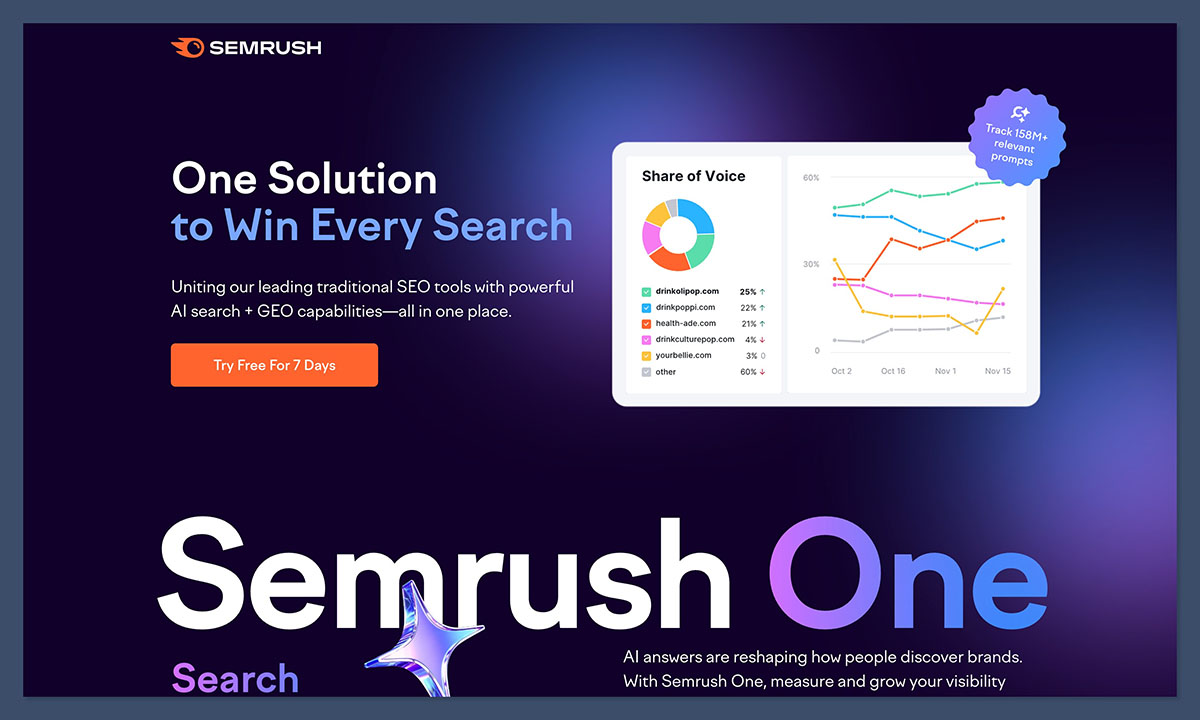
Semrush stands out as a robust, all-in-one SEO suite designed to consolidate critical tasks into a single, intuitive dashboard. For e-commerce businesses grappling with fragmented workflows, this consolidation is invaluable. Instead of juggling separate tools for keyword research, backlink analysis, and rank tracking, Semrush offers a unified platform, boasting the industry’s largest keyword database with over 27 billion keywords across 217 countries.
For e-commerce specific needs, Semrush excels in several key areas:
- Competitor Analysis: It allows businesses to dissect competitors’ strategies, identifying their top-performing keywords, backlink profiles, and content gaps. This insight is crucial for developing a competitive edge in crowded online markets.
- Keyword Research: The extensive keyword database facilitates the discovery of high-intent search terms, enabling the creation of product and category pages that directly address customer needs.
- Site Auditing: Comprehensive site audits identify technical SEO issues that can hinder search engine crawling and indexing, such as broken links, duplicate content, and missing meta descriptions.
A significant addition for modern e-commerce is Semrush’s AI SEO Toolkit add-on ($99/month). This feature directly addresses the growing influence of generative AI in search, tracking a brand’s visibility across platforms like ChatGPT, Perplexity, and Google AI Overviews. With AI Overviews now appearing on approximately 14% of shopping queries, this data is no longer optional but essential for maintaining search visibility.
Pricing: Semrush offers tiered monthly plans: Pro ($139.95), Guru ($249.95), and Business ($499.95). A 7-day free trial is available, though users are advised to carefully review the terms and conditions to avoid potential unexpected charges. While powerful, the sheer volume of features can be overwhelming for beginners, and smaller businesses might find themselves paying for functionalities they do not utilize.
2. Ahrefs: Unrivaled Backlink Analysis and Competitor Intelligence
Ahrefs is widely recognized by SEO professionals for its unparalleled backlink index and sophisticated competitor analysis capabilities. Despite lacking a free trial and a refund policy, its dominance in link research remains undisputed, driven by the industry’s largest backlink index and the fastest crawler.
Key modules vital for e-commerce teams include:
- Site Explorer: This feature provides deep insights into a website’s backlink profile, referring domains, and anchor text distribution, enabling the identification of link-building opportunities and competitor strategies.
- Content Explorer: It helps uncover trending content and popular topics within an industry, providing inspiration for content creation and marketing campaigns.
- Keywords Explorer: While not as extensive as Semrush’s database, Ahrefs’ Keywords Explorer offers valuable data on keyword difficulty, search volume, and click potential.
Similar to Semrush, Ahrefs offers a Brand Radar add-on ($99/month per index) for monitoring AI visibility across major generative AI platforms. However, it reportedly lacks the competitive positioning recommendations found in Semrush’s toolkit.
Pricing: Ahrefs offers several plans, starting with the Starter plan at $29/month, which is a valuable entry point for evaluation. Higher tiers include Lite ($129/month) and Standard ($249/month), with increasing features and data access. Daily rank tracking incurs an additional monthly cost, ranging from $20 to $200, as the Lite and Standard plans only provide weekly tracking by default. A significant drawback for businesses with a physical presence is Ahrefs’ lack of local SEO tools.
A point of caution for users is that Ahrefs’ organic traffic estimates can sometimes be inaccurate, with reports of inflated numbers compared to actual Google Search Console data. Cross-referencing with official Google analytics is therefore recommended.
3. Google Search Console: The Indispensable Free Foundation
Before any financial investment in SEO tools, integrating Google Search Console (GSC) is a non-negotiable first step for every e-commerce store. This free platform provides unparalleled, direct data from Google itself, offering insights that no third-party tool can replicate. Its consistent ranking as the #1 must-have SEO tool, regardless of budget, is a testament to its foundational importance.
GSC reveals the precise search queries driving impressions and clicks to a store, alongside the average position for each indexed page. For e-commerce, this direct line to Google’s data translates into a clear understanding of:
- Customer Search Intent: Identifying the exact terms customers use to find products, enabling better content and keyword targeting.
- Performance Benchmarking: Tracking the visibility and ranking of individual product pages and categories.
- Technical Health: Monitoring indexing status, mobile usability, and crawl errors that can impact search performance.
Key reports within GSC for e-commerce include:
- Performance Report: Details impressions, clicks, average position, and click-through rates for specific queries, devices, and pages.
- Index Coverage Report: Identifies pages that are indexed, excluded, or have errors, crucial for ensuring all products are discoverable.
- Enhancements Report: Highlights issues with structured data, such as product schema, that enable rich results.
While GSC offers an extensive array of data, its limitations are notable. It does not provide competitor analysis or advanced keyword research capabilities, necessitating the use of complementary tools to fill these gaps. However, for its accuracy and direct access to Google’s search data, GSC remains an essential, foundational tool.
4. Screaming Frog SEO Spider: Technical Audits for Large Catalogs
E-commerce stores with extensive product catalogs, often numbering in the thousands, are prone to accumulating technical SEO debt. Issues like duplicate title tags, broken canonical tags, orphaned product pages, and missing structured data can proliferate rapidly. Manually identifying these problems across a vast inventory is practically impossible. Screaming Frog’s SEO Spider is a desktop-based crawler specifically engineered to address this challenge, providing comprehensive technical audits.
The SEO Spider can identify over 300 distinct SEO issues within a single crawl, including:
- Broken Links: Detecting 404 errors and other broken internal and external links.
- Duplicate Content: Identifying pages with identical or near-identical content that can dilute SEO value.
- Redirect Chains and Loops: Pinpointing inefficient or problematic redirect paths.
- Missing Metadata: Flagging pages without crucial elements like title tags and meta descriptions.
- Hreflang and Canonical Tag Issues: Ensuring proper implementation for internationalization and preventing duplicate content penalties.
Its JavaScript rendering support is particularly beneficial for modern, dynamic e-commerce platforms like headless Shopify implementations or React-based storefronts. The ability to segment crawls by product category allows for precise analysis of crawl budget allocation and the identification of products that may be missed by search engines. Integration with Google Analytics and Search Console further enhances its utility by combining technical audit data with actual performance metrics, enabling prioritization of fixes based on revenue impact.
Pricing: Screaming Frog offers a free version capable of crawling up to 500 URLs per session, which is sufficient for smaller sites or initial assessments. The paid version, priced at $259 per year (approximately $22 per month), offers unlimited URLs, JavaScript rendering, and priority support, representing a significant value compared to monthly SaaS tools.
5. Surfer SEO: AI-Powered Content Optimization for Product Pages
Crafting product descriptions that not only appeal to customers but also rank highly in search results requires a strategic approach that goes beyond mere copywriting. Surfer SEO excels at reverse-engineering the structural patterns and on-page elements that top-ranking pages employ, providing real-time optimization guidance.
The Content Editor module within Surfer SEO analyzes the top search engine results pages (SERPs) for any given keyword, assigning a content score from 0 to 100 based on:
- Keyword Density and Usage: Ensuring relevant keywords are incorporated naturally.
- Content Structure: Recommending optimal heading usage (H1, H2, H3).
- Word Count: Suggesting appropriate length targets for pages.
- Semantic Relevance: Identifying related terms and entities that enhance topical authority.
- Page Audit Factors: Analyzing various on-page elements that influence rankings.
For e-commerce, this translates into the ability to optimize category page copy, product descriptions, and buying guides against current Google standards. Surfer SEO provides actionable insights into precisely which terms to include, the ideal number of headings, and target word counts, along with identifying entities and adjacent topics that top-ranking pages cover – a crucial gap often missed by purely AI-generated copy.
Additional modules include a Content Planner for keyword ideation and a SERP Analyzer for in-depth competitor content analysis.
Pricing: Surfer SEO offers two primary plans: Essential ($99/month) and Scale ($219/month). Annual billing provides a 20% discount. Integrations with popular platforms like Google Docs, WordPress, Jasper, and Semrush allow for seamless optimization within existing workflows.
6. SE Ranking: The Budget-Conscious All-in-One Solution
For businesses seeking a comprehensive SEO toolkit without the higher price tags of industry leaders like Semrush and Ahrefs, SE Ranking presents a compelling alternative. It delivers approximately 80% of the functionality of its more expensive counterparts at a significantly lower cost.
SE Ranking’s platform covers the essential SEO workflow:
- Keyword Research: Identifying high-potential keywords for content and product pages.
- Rank Tracking: Monitoring search engine positions for targeted keywords across various locations.
- Competitor Analysis: Gaining insights into competitors’ SEO strategies, including their keywords, backlinks, and content.
- Website Audits: Identifying technical and on-page SEO issues that need addressing.
- Backlink Monitoring: Tracking a site’s backlink profile and identifying new link opportunities.
A standout feature for 2026 is the AI Overview Tracker, which is included in all plans at no additional cost. This is a significant differentiator when compared to Semrush’s AI Toolkit and Ahrefs’ Brand Radar, both of which charge an extra $99 per month for similar AI visibility monitoring. For budget-conscious stores prioritizing AI search visibility, this bundled offering is a major advantage.
Furthermore, SE Ranking includes robust Local SEO tools, covering aspects like:
- Local SEO Checklist: Guiding users through essential local optimization tasks.
- Google Business Profile (GBP) Management: Tools for optimizing and managing GBP listings.
- Review Management: Features to monitor and respond to customer reviews.
These local SEO capabilities are absent in Ahrefs, making SE Ranking a more comprehensive solution for businesses that operate physical stores alongside their online presence.
Pricing: SE Ranking’s plans are structured as follows: Essential ($65/month), Pro ($119/month), and Business ($259/month). All plans offer unlimited keyword rank tracking, a feature that Semrush and Ahrefs typically meter by credits, making SE Ranking particularly attractive for agencies or businesses managing multiple brands.
7. Moz Pro: Beginner-Friendly SEO with Domain Authority Insights
Moz, a pioneer in SEO analytics, is renowned for its Domain Authority (DA) metric, a widely referenced indicator of a website’s overall ranking strength. Moz Pro’s tools are designed with an emphasis on user-friendliness, making SEO more accessible for teams that may not possess deep technical expertise.
Key strengths for e-commerce teams new to SEO include:
- Keyword Explorer: A user-friendly tool for discovering and analyzing keywords.
- Rank Tracker: Monitoring keyword rankings and competitor performance.
- Site Crawl: Identifying technical SEO issues that impact site health.
- Link Explorer: Analyzing backlink profiles and identifying link-building opportunities.
- Domain Authority (DA) and Page Authority (PA): Providing metrics to gauge a site’s and individual pages’ ranking potential.
However, Moz Pro has notable gaps when compared to more advanced suites:
- Limited Keyword Database: Its keyword database is not as extensive as Semrush or Ahrefs.
- Basic Technical Audit: While it identifies issues, it may not offer the granular detail required for highly complex sites.
- No AI Overview Tracking: It does not currently offer features to monitor visibility in generative AI search results.
Pricing: Moz Pro offers tiered plans: Starter ($49/month), Standard ($99/month), and Large ($299/month). Annual billing provides a 20% discount.
8. Google Analytics 4 (GA4): Free Conversion Tracking for SEO ROI
While SEO tools can effectively track rankings and traffic volume, they often fall short in directly attributing revenue to organic search efforts. Google Analytics 4 (GA4) bridges this critical gap at no cost, providing indispensable conversion tracking capabilities.
GA4’s Enhanced Ecommerce reporting meticulously tracks the entire purchase funnel, from initial product views to completed transactions. This granular data allows businesses to directly link organic traffic to revenue, a crucial capability given the 8-to-9-month break-even window for e-commerce SEO investments. With 23.6% of all online orders stemming from organic search, maintaining an unbroken attribution chain is vital for demonstrating the ROI of SEO initiatives.
The platform’s event-based tracking model captures micro-conversions that were often missed by older, session-based analytics. These signals, such as adding items to a wishlist or initiating checkout, provide deeper insights into user intent and engagement. By understanding which organic landing pages generate buying intent, even if the purchase occurs later, businesses can optimize their content and user experience more effectively. Audience segmentation within GA4 further allows for the identification of high-converting organic segments based on device, location, and landing page, enabling highly targeted optimization efforts.
When paired with Google Search Console, GA4 creates a comprehensive query-to-conversion pipeline. This synergy allows businesses to see not only what queries are driving traffic but also which of those visitors are converting into paying customers. Organic search consistently demonstrates a strong conversion rate for e-commerce, averaging around 2.8%, outperforming many other digital channels.
The learning curve for GA4 can be steep, particularly for those accustomed to Universal Analytics. Proper setup of Enhanced Ecommerce events often requires technical implementation. However, once configured, the data provided is irreplaceable for understanding the true impact of SEO on business outcomes. It is strongly advised to set up Enhanced Ecommerce tracking before investing in any paid SEO tools, as optimizing without conversion data is akin to navigating blind.
9. Mangools (KWFinder): Affordable Keyword Research for Smaller Stores
Not every e-commerce store requires a high-end, comprehensive SEO suite. Mangools, with its flagship tool KWFinder, offers a compelling solution for smaller businesses seeking essential keyword research, rank tracking, and SERP analysis at a fraction of the cost of major players.
The core modules of Mangools include:
- KWFinder: Facilitates in-depth keyword research, identifying relevant terms with manageable difficulty.
- SERPChecker: Analyzes search engine results pages to understand competitor strengths and weaknesses.
- Keyword Map: Organizes keyword research into a structured plan for content creation.
- LinkMiner: Assists in finding backlink opportunities by analyzing competitor link profiles.
- SiteProfiler: Provides a high-level overview of website authority and performance metrics.
Pricing: Mangools offers an accessible entry point with its Entry plan starting at $37.70 per month, making it significantly more affordable than comparable Moz plans and a fraction of the cost of Semrush or Ahrefs.
The trade-offs for this affordability include a less extensive keyword database, less granular data for competitor analysis, and a simpler interface that may not cater to advanced SEO professionals. However, for small to medium-sized businesses, Mangools provides a robust and cost-effective foundation for their SEO efforts.
10. Rank Math: The Premier Free SEO Plugin for WooCommerce
For WooCommerce store owners, Rank Math emerges as the standout choice, offering an exceptionally feature-rich free tier that rivals the paid offerings of many competitors. The free version includes essential functionalities like WooCommerce product schema, over 20 schema types, and the ability to use up to five focus keywords per post. In contrast, Yoast SEO, a popular alternative, charges extra for basic WooCommerce SEO features on top of its premium plan, significantly increasing the overall cost.
Rank Math automatically generates correct Product Schema for every WooCommerce product, encompassing:
- Product Name and Description: Essential information for search engines.
- Price and Availability: Crucial for displaying accurate product details in search results.
- Ratings and Reviews: Incorporating user-generated content to enhance trust and visibility.
- SKU and Brand: Providing additional structured data points.
This structured data is instrumental in enabling rich snippets in Google search results, significantly enhancing product visibility. The impact of complete schema implementation is substantial, leading to higher click-through rates and improved search presence.
The free version’s inclusion of over 20 schema types, such as Article, Recipe, Event, and FAQ, is a significant advantage, as many competitors reserve these behind paid plans. Additionally, users benefit from a built-in redirect manager, seamless integration with Google Search Console, and local SEO features, all within the free tier.
| Comparison of Free Tiers: | Plugin | Focus Keywords (Free) |
|---|---|---|
| Rank Math | 5 per post | |
| Yoast | 1 per post |
While Rank Math is compatible with any WordPress site, its value is most pronounced for WooCommerce users, where automatic product schema generation eliminates the need for separate schema plugins. For those operating on Shopify or BigCommerce, platform-native apps are the recommended approach, including options like the Shopify Magic tool for AI product descriptions.
11. Jasper: AI-Powered Product Description Generation at Scale
For e-commerce businesses managing large product catalogs, manually writing unique and optimized descriptions for hundreds or thousands of items is an arduous and time-consuming task. Inadequate or duplicate descriptions can lead to products being filtered out by search engines, severely impacting visibility. Jasper offers a solution to this scalability challenge by leveraging artificial intelligence to generate product descriptions efficiently.
Key capabilities of Jasper include:
- AI Content Generation: Creating compelling and SEO-friendly product descriptions from basic input.
- Tone of Voice Customization: Adapting the writing style to match brand identity.
- Template Library: Offering pre-built templates for various content needs, including product descriptions.
- Integration Capabilities: Connecting with other tools for a streamlined workflow.
Pricing: Jasper offers tiered plans, with the Creator plan starting at $49 per month for 50,000 words. The Pro plan is $69 per month and includes a 7-day free trial. Annual billing provides a 20% discount.
A critical caveat, however, is the necessity of human oversight. As noted by industry professionals, AI-generated content requires thorough review before publication to prevent common issues such as factual inaccuracies, repetitive phrasing, or a lack of brand voice. Jasper should be viewed as a tool to create first drafts at scale, which are then refined by human editors. The urgency for this careful approach is underscored by data showing that ChatGPT referral traffic converts 31% higher than non-branded organic search, highlighting the importance of accurate and engaging descriptions for products featured in AI-driven recommendations.
12. Google Rich Results Test: Free Schema Validation for Product Pages
The advent of Google’s Universal Commerce Protocol (UCP) in January 2026, enabling AI agents to autonomously find and purchase products using Schema.org data, underscores the critical importance of correctly implemented structured data. Broken product schema can render products invisible to this burgeoning new shopping channel. The Google Rich Results Test is a free, indispensable tool for validating JSON-LD structured data, providing immediate feedback on how products will appear in Google search results.
By simply pasting a URL, the Rich Results Test assesses the accuracy of schema implementation for various types, including:
- Product Schema: Essential for displaying product details like price, availability, and ratings.
- Offer Schema: Detailing pricing and sales information.
- AggregateRating Schema: Displaying average customer ratings.
- Breadcrumb Schema: Enhancing site navigation and discoverability.
Any errors or warnings are presented with specific line references, simplifying the debugging process. This validation is not merely about future-proofing; current data indicates that schema-compliant pages are cited 3.1 times more frequently in AI Overviews.
The Rich Results Test should be used in conjunction with schema generation tools. For WooCommerce, Rank Math’s free tier offers robust schema capabilities. For Shopify, paid solutions like Webrex AI Schema ($9.99/month) or Ilana’s JSON-LD ($399/year) are available. Generating the markup and then validating it through the Rich Results Test before relying on it for search visibility is a prudent strategy.
Combined with Google PageSpeed Insights, the Rich Results Test offers a complete, free technical audit of product pages, addressing two of the most impactful technical SEO factors for e-commerce. Running this test on top-performing product pages is a fundamental step before investing in other SEO tools.
Addressing Key E-commerce SEO Questions
What is the Best Free SEO Tool for E-commerce?
Google Search Console stands out as the single most valuable free tool for e-commerce SEO. It provides direct, accurate data from Google regarding search queries, click-through rates, and indexing status for every page. Building a free SEO stack around GSC is highly recommended. This stack should include Google Analytics 4 for conversion tracking and, for WooCommerce stores, Rank Math’s free tier for product schema and on-page optimization.
Is Semrush or Ahrefs Better for E-commerce SEO?
The choice between Semrush and Ahrefs often depends on specific priorities:
- Semrush excels in breadth: It offers a more comprehensive suite of tools, including extensive keyword research capabilities, broader competitor analysis features, and integrated AI visibility tracking.
- Ahrefs excels in depth: It is unparalleled for backlink analysis, boasting the largest backlink index and a highly effective crawler, making it the industry standard for link research and competitive intelligence.
| Pricing Comparison: | Tool | Starting Price | Trial |
|---|---|---|---|
| Semrush | $139.95/month | 7-day trial | |
| Ahrefs | $129/month | No trial, no refund |
How Much Should I Spend on SEO Tools for My Online Store?
It is advisable to start with free tools. Google Search Console, GA4, and Rank Math (for WooCommerce) provide essential keyword tracking, technical health monitoring, and schema management at no cost. Many businesses can operate effectively with this free foundation.
- Small Stores ($0 to $100/month): Augment the free stack with an affordable all-in-one solution like Mangools ($37.70) or SE Ranking ($65).
- Growing Stores ($100 to $300/month): Consider Semrush Pro ($139.95) or Ahrefs Lite ($129) in conjunction with Surfer SEO ($99) for advanced content optimization.
E-commerce SEO consistently delivers a high ROI, with stores in the $1 million to $10 million revenue range reporting the highest returns at 3.3x.
What SEO Tools Work Best with Shopify?
For Shopify stores, Semrush, Ahrefs, and Screaming Frog integrate seamlessly. Within the Shopify ecosystem, platform-native apps are highly effective:
- SEO Apps: Shopify’s App Store offers numerous options, including SEO Manager and Plug in SEO.
- Schema Apps: For schema implementation, WebEx AI Schema ($9.99/month) or Ilana’s JSON-LD ($399/year) are recommended.
- AI Content Generation: Shopify Magic, available on all plans (starting from $39/month), provides free AI product description generation.
Do I Need Separate SEO Tools for AI Search Optimization?
Given that AI Overviews now appear on 14% of shopping queries – a 5.6x increase in just four months – ignoring AI visibility poses a significant risk to e-commerce revenue. Three primary tools track AI visibility:
- Semrush AI Toolkit: $99/month add-on.
- Ahrefs Brand Radar: $99/month per index.
- SE Ranking’s AI Overview Tracker: Included from $65/month.
SE Ranking offers the most value for businesses prioritizing AI monitoring on a budget. However, the most impactful step requires no paid tool: ensuring schema-compliant pages. These pages are cited 3.1 times more in AI Overviews. Therefore, utilizing the free Google Rich Results Test on top product pages is a foundational strategy for AI search optimization.