rifanmuazin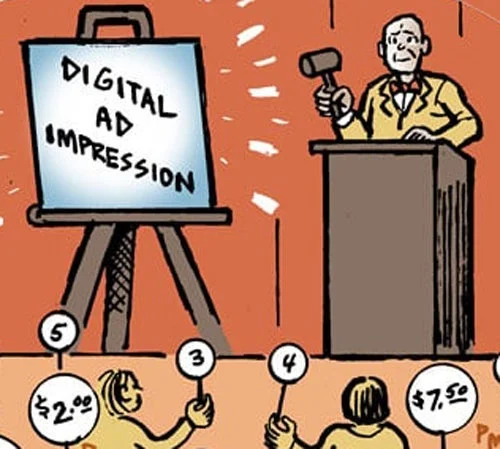
The digital advertising landscape, long criticized for its inherent opacity, is taking a significant step towards greater clarity with the Media Rating Council (MRC) releasing a comprehensive set of new standards for digital ad auction transparency. These standards, accompanied by a voluntary certification program for platforms that adhere to them, aim to illuminate the complex "black boxes" of programmatic advertising where advertisers and publishers often lack visibility into crucial behind-the-scenes operations.
The initiative, spearheaded by the MRC, is not intended to enforce a singular auction methodology or algorithm across all platforms. Instead, it establishes a consistent framework for explaining the mechanics of ad auctions. This framework encourages platforms to disclose their "key decision variables" – the factors that determine auction outcomes – and to transparently communicate any alterations to their auction rules. While platforms can retain proprietary elements in their auction logic, they must meet specific best practices to earn the MRC’s new transparency seal of approval. This includes embracing industry-backed specifications like OpenRTB, which have seen slower adoption in some sectors.
The Genesis of Transparency: A Collaborative Effort
The impetus for these new standards arose from a growing industry concern regarding the lack of standardized disclosures for programmatic ad auction mechanisms. Ben Hovaness, Chief Media Officer of Omnicom Media Group’s OMD Worldwide, has been a central figure in driving this initiative. Hovaness expressed his long-held fascination with programmatic auction theory and his surprise at the industry’s lack of uniformity in explaining practical auction operations.
"It always seemed unreasonable to ask advertisers or agencies to place a bid in an auction where the rules are unknown," Hovaness stated in an interview. He believes this lack of transparency not only erodes trust between advertisers and sellers but also negatively impacts the advertiser-agency relationship. Hovaness drew a parallel to traditional auction houses like Sotheby’s and Christie’s, where detailed term sheets outlining auction mechanics, fees, and rules are readily available, ensuring a high degree of integrity.
The collaborative effort to develop these standards began in earnest in 2024, with Omnicom Media Group and the MRC assembling a steering team. This team garnered support from a broad coalition of nearly 70 companies and organizations, spanning major players like Meta, TikTok, and X, leading publishers, prominent ad agencies, and ad tech vendors such as The Trade Desk and Hearst. Key industry trade organizations, including the 4A’s, ANA, WFA, and the IAB Tech Lab, also contributed to the process. Hovaness has been actively involved since 2014, running an internal ad auction education program and collecting auction rule disclosures from major platforms for Omnicom’s Council on Accountability and Standards in Advertising. His ambition was to create the industry’s first robust standard for auction rules and change disclosures, a goal now realized with the MRC’s new framework.
Unpacking the New Transparency Mandates
To qualify for the MRC’s transparency certification, platforms will be required to disclose a detailed list of auction parameters. This includes specifying whether they operate on a first-price, second-price, or modified second-price auction model. Crucially, they must reveal if factors beyond the bid price, such as demand source priority or seller-defined rules, influence which bid ultimately wins.
On the publisher and Supply-Side Platform (SSP) side, the standards mandate transparency regarding the use of reserve prices or pricing floors. Furthermore, these floors must be applied uniformly to all buyers, rather than being differentiated for specific entities. This aims to level the playing field and prevent preferential treatment.
Addressing Industry Hurdles: OpenRTB and Beyond
The MRC’s standards are designed not only to increase transparency but also to encourage the adoption of crucial industry specifications that have faced resistance. Ron Pinelli, MRC’s SVP of Digital Research and Standards, highlighted that these requirements could accelerate the adoption of updated OpenRTB specifications promoted by the IAB Tech Lab, some of which have been slow to be embraced or have ignited significant debate.
A key example is the requirement for platforms to exclusively use the new video.plcmt field for labeling and decision-making in online video ad placements. The IAB Tech Lab introduced video.plcmt to OpenRTB in 2023 to create a clearer distinction between "instream" and "outstream" video ad formats. However, many Demand-Side Platforms (DSPs) and SSPs have continued to rely on the older, now-deprecated video.placement spec, or even a combination of both. The MRC’s new standards aim to enforce a universal adoption of the updated specification, thereby reducing confusion and mislabeling.
Transaction IDs and Placement Identifiers: A Step Towards Standardization
The new MRC standards also mandate the universal adoption of Transaction IDs (TIDs), aligning with the IAB Tech Lab’s OpenRTB specification. TIDs have been a point of contention in the industry, notably highlighted by a public dispute last year between Prebid.org and The Trade Desk. Prebid had initially disabled TIDs by default in an August update, a move that was met with concern from publishers. While Prebid later allowed publishers to revert to universal TIDs, they remained disabled by default. The absence of Prebid from the list of contributors to the MRC’s new transparency standards is noteworthy, though Prebid declined to comment on its non-participation.
Pinelli emphasized that the MRC is not solely prioritizing buy-side concerns. The transparency standards also require DSPs to submit multiple bids per auction. This provision grants publishers greater insight into bidding competition without necessitating duplicate bid requests or obscuring TIDs to facilitate bid duplication. This multi-bidding requirement also serves as a compromise for mandating publishers and SSPs to include a Global Placement ID (GPID) – a unique identifier for each ad placement – in every bid request. The GPID is crucial for providing granular information about where an ad is being served.
Broader Implications and Future Outlook
While the MRC has sought broad industry involvement, the absence of major players like Google and Amazon from direct participation is notable. Both companies operate dominant ad-buying platforms and also sell publisher inventory, and have faced scrutiny regarding their auction transparency. Neither company provided comment by the publication deadline.
Ron Pinelli acknowledged that participation is voluntary and that the MRC cannot compel any organization to join. However, he indicated that many organizations did engage by providing comments during the public consultation period. Platforms that seek MRC certification will undergo annual reevaluations to ensure ongoing compliance. This transparency accreditation is a separate initiative from other MRC accreditations.
The MRC’s transparency steering team is already planning future initiatives, including the development of solutions for mid- and long-tail publishers who may lack the resources for the full accreditation process. The team is also working on new standards for incrementality measurement.
The success of these new standards hinges on industry adoption, which can be a challenging endeavor. Hovaness urged advertisers, particularly larger brands, to actively engage with their contacts at major sell-side platforms. "If there’s enough advertiser interest," he stated, "then this is going to move ahead." The underlying principle is that increased demand for transparency from advertisers will incentivize platforms to embrace these new MRC standards, fostering a more accountable and predictable digital advertising ecosystem. The ultimate goal is to move beyond an era where programmatic advertising was "almost synonymous with opacity" and usher in a new phase of verifiable fairness and trust.