admin
admin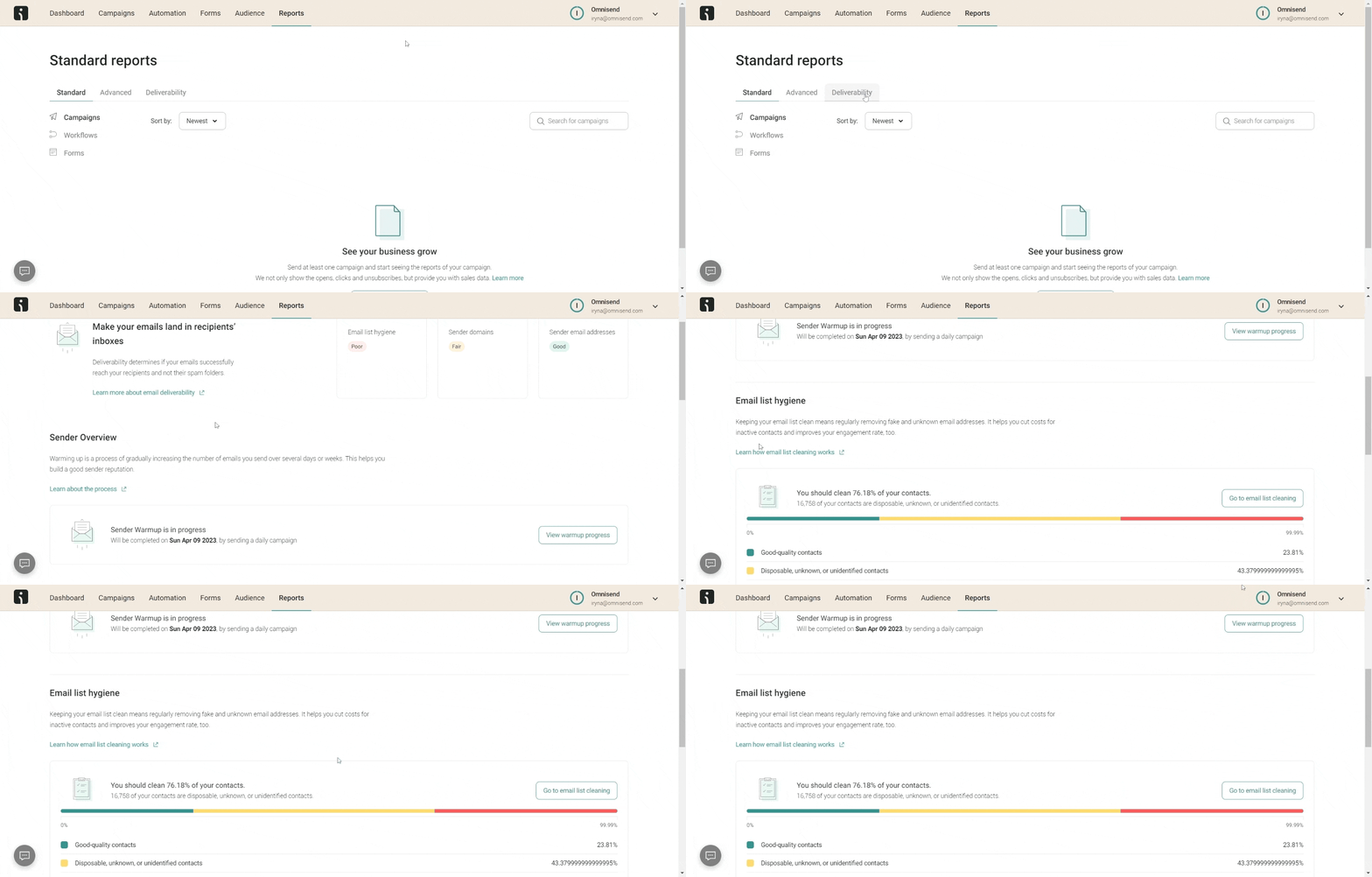
Email deliverability, the crucial metric determining whether digital communications land in a subscriber’s inbox rather than being diverted to spam or blocked entirely, stands as a foundational pillar for any successful e-commerce operation. For online brands, a dip in deliverability rates directly translates to tangible revenue loss, missed customer engagement opportunities, and a gradual erosion of brand credibility. The assumption that every sent email reaches its intended destination is a perilous misconception, with global benchmarks revealing a stark reality: a significant portion of emails never make it to the primary inbox, rendering even the most compelling subject lines and lucrative offers utterly ineffective.
The Unseen Chasm: Understanding the Deliverability Crisis
The digital landscape has become increasingly crowded, and mailbox providers (ISPs) like Gmail, Yahoo, and Microsoft have continually evolved their spam filtering algorithms to protect users from unwanted solicitations. This heightened vigilance, while beneficial for recipients, poses a significant challenge for legitimate senders. According to Validity’s 2025 benchmark report, a mere 83.5% of emails globally successfully reach the inbox. This means approximately one in six emails dispatched by an e-commerce store may never be seen by the intended recipient, effectively disappearing into a digital void. When considering critical customer touchpoints such as cart abandonment reminders, promotional offers, or shipping updates, such a failure rate represents a direct hemorrhage of potential sales and customer satisfaction.
Further exacerbating this challenge, Unspam’s 2025 Email Deliverability Report indicates an even more concerning figure: 36% of emails are relegated to spam folders, with an additional 4% either blocked or unaccounted for. This suggests that a staggering 40% of emails might not reach the inbox, irrespective of the quality or relevance of their content. For e-commerce marketers, this underscores that deliverability is not merely a technical concern but a core performance indicator directly impacting the return on investment (ROI) of their email marketing efforts.
Distinguishing Delivery from Deliverability: A Crucial Nuance
A common point of confusion in email marketing terminology is the interchangeable use of "email delivery" and "email deliverability." However, these terms denote distinct stages in an email’s journey and measure very different outcomes.
- Email Delivery: This simply indicates whether a receiving server accepted your message. A high delivery rate, often reported by Email Service Providers (ESPs) in their dashboards, primarily confirms that your email did not "bounce" back due to an invalid address or server issue. It signifies that the message was successfully handed off to the recipient’s mail system.
- Email Deliverability: This goes a significant step further. It measures whether that accepted message actually landed in the recipient’s primary inbox, or if it was filtered into a spam folder, a promotions tab, or blocked entirely. This is the metric that truly matters for engagement and revenue generation.
An e-commerce brand might boast a 98.5% email delivery rate globally, as per Validity benchmarks. However, if a substantial portion of those "delivered" emails are ending up in spam, the perceived success of delivery masks a critical failure in deliverability. This gap is precisely where e-commerce brands often unknowingly lose substantial revenue. The increasingly stringent requirements from major mailbox providers, such as the mandatory implementation of SPF, DKIM, and DMARC for bulk senders (over 5,000 emails per day) and the maintenance of spam-complaint rates below 0.3%, highlight the growing importance of deliverability over mere delivery.
Why Deliverability is Non-Negotiable for E-commerce
Email permeates every facet of the e-commerce customer journey, from initial brand discovery to post-purchase support. Each email represents a critical touchpoint, a direct line of communication with a customer or prospect.
![Email Deliverability: Complete Ecommerce Guide [2026 ]](https://www.omnisend.com/blog/wp-content/uploads/2021/12/Email-Deliverability-Guide.png)
Consider the diverse range of emails an e-commerce business dispatches:
- Welcome Series: Onboarding new subscribers and introducing them to the brand.
- Promotional Campaigns: Announcing sales, new product launches, or special offers.
- Abandoned Cart Reminders: Nudging interested customers to complete their purchases.
- Browse Abandonment Emails: Re-engaging customers who viewed products but didn’t add to cart.
- Order Confirmations and Shipping Updates: Essential transactional communications building trust.
- Customer Feedback Requests: Soliciting reviews and fostering loyalty.
- Personalized Recommendations: Driving repeat purchases through tailored suggestions.
When any of these crucial communications fail to reach the inbox, the ripple effects are immediate and severe. If a store sends 50,000 emails a month and its deliverability drops from a healthy 95% to a concerning 80%, that translates to 7,500 emails missing the inbox. For an e-commerce business with a 2% conversion rate and a $50 average order value, this could equate to a staggering $7,500 in lost revenue each month. Beyond the immediate financial impact, long-term sender reputation suffers, making future deliverability even harder to achieve.
Conversely, e-commerce sellers who prioritize and invest in robust email deliverability practices consistently outperform their competitors. Research conducted on Shopify merchants revealed that strong inbox deliverability correlated with a 17% higher conversion rate and a 40% lower bounce rate. These gains compound over time, establishing a significant competitive advantage. The success story of 123Presets, which saw its revenue at least double and open rates increase by 62.3% and click rates by 600% after addressing deliverability issues with a dedicated platform, serves as a compelling testament to the direct link between inbox placement and commercial success.
The benefits of strong deliverability are multifaceted and measurable:
- Increased Revenue: More emails reaching the inbox means more opportunities for conversions, especially for high-impact campaigns like abandoned cart flows.
- Enhanced Customer Engagement: Customers are more likely to open, click, and interact with emails that consistently land in their primary inbox.
- Improved Brand Reputation: Consistent and reliable communication builds trust and portrays a professional image.
- Accurate Analytics: Reliable deliverability data ensures that other metrics, such as open rates and click-through rates, accurately reflect campaign performance, enabling better strategic decisions.
- Reduced Marketing Waste: Resources invested in email content creation and segmentation are maximized when emails actually reach their audience.
Without diligent attention, poor inbox deliverability can rapidly undermine an entire email marketing strategy, leading to a detrimental cycle of declining engagement and revenue.
Email Deliverability Benchmarks: Navigating the Current Landscape (2026 Outlook)
Defining a "good" email deliverability rate is crucial for setting performance targets. Industry consensus suggests a target of 95%+ email delivery with at least 80%+ inbox placement. While this is the aspirational benchmark, many senders operate below it, often unaware of the extent of their underperformance until engagement metrics significantly decline.
As previously noted, Validity’s 2025 report places the global inbox placement rate at 83.5%, with 6.7% of emails going to spam and 9.8% vanishing entirely. This starkly contrasts with the higher email delivery rate of 98.5%, illustrating the critical distinction. The divergence between these two figures represents the lost opportunities for many e-commerce brands.
Inbox Placement Rates by Mailbox Provider:
The destination of an email also heavily depends on the subscriber’s mailbox provider, each with its own filtering nuances and reputation systems.
- Gmail: With a dominant 48.5% market share, Gmail’s inbox placement currently stands at 87.2%, though this has shown a recent decline from 89.8% in early 2024 to 84.2% by Q4, largely attributable to intensified spam filtering updates. Spam rate is 6.8%, with 6.0% missing.
- Microsoft (Outlook): Representing 16.8% of the market, Microsoft is notably more challenging, exhibiting an inbox placement rate of 75.6%, a spam rate of 14.6%, and 9.8% missing emails.
- Yahoo/AOL: Holding 14.0% market share, these providers show an 86.0% inbox placement rate, 4.8% spam, and 9.2% missing.
- Apple Mail: At 3.8% market share, Apple Mail presents similar challenges to Microsoft, with 76.3% inbox placement, 14.3% spam, and 9.4% missing.
Source: Validity 2025 Email Deliverability Benchmark Report
![Email Deliverability: Complete Ecommerce Guide [2026 ]](https://www.omnisend.com/blog/wp-content/themes/omnisend/assets/img/ai-generated.png)
For e-commerce brands with diverse subscriber lists, overall deliverability is a weighted average. A poor performance with a particular provider, such as Microsoft, can silently depress overall metrics even if performance with Gmail appears satisfactory.
E-commerce Specific Benchmarks:
Retail and e-commerce sectors generally perform slightly better than other industries, with an average inbox placement rate of approximately 87.6%. This marginal advantage is often attributed to the inherently higher engagement rates of transactional and personalized e-commerce emails (e.g., order confirmations, shipping updates) compared to generic newsletters. However, this advantage is contingent upon maintaining a meticulously clean list and adhering to robust sending practices. During periods of peak volume, such as Black Friday and Cyber Monday, even well-managed campaigns may experience a temporary dip in inbox placement as mailbox providers apply stricter filters to manage the surge in email traffic.
The implication for e-commerce stores is clear: if your reported delivery rate is high (e.g., above 95%) but your open rates are consistently low, the problem likely lies with inbox placement, not content. This common misdiagnosis highlights the imperative of tracking both metrics concurrently to accurately assess email marketing effectiveness.
Key Factors Influencing Email Deliverability
Email deliverability is a complex interplay of various factors, which mailbox providers meticulously evaluate to determine where an email ultimately lands. These factors can be broadly categorized into technical, behavioral, and content-related aspects.
1. Technical Factors: These relate to the foundational setup of your email sending infrastructure, establishing trust with mailbox providers.
- Authentication (SPF, DKIM, DMARC, BIMI): These protocols verify that your emails are legitimately originating from your domain. SPF (Sender Policy Framework) specifies which mail servers are authorized to send email on behalf of your domain. DKIM (DomainKeys Identified Mail) provides a digital signature, allowing the recipient’s server to verify that the email was not altered in transit. DMARC (Domain-based Message Authentication, Reporting, and Conformance) builds upon SPF and DKIM, providing instructions to receiving servers on how to handle emails that fail authentication. For bulk senders, these are now mandatory for major providers. Additionally, BIMI (Brand Indicators for Message Identification) allows your brand logo to appear next to your emails in supported inboxes, further enhancing brand recognition and signaling trustworthiness.
- IP Reputation: Your sending IP address carries its own reputation score. If you are on a shared IP plan with an ESP and other senders on that IP engage in poor sending practices (e.g., spamming), your deliverability can be negatively affected. High-volume e-commerce senders are often advised to consider a dedicated IP address to isolate and control their sending reputation.
- Domain Reputation: This is a comprehensive score that mailbox providers assign to your sending domain, based on its historical sending behavior across the internet. A history of spam complaints, high bounce rates, or blacklisting can severely impair your domain’s ability to reach inboxes, requiring significant time and effort to rehabilitate. This makes your domain’s sender reputation a critical long-term asset.
- Sending Infrastructure and Volume Consistency: Erratic sending patterns can raise red flags. A sudden jump from sending a few hundred emails to tens of thousands overnight can appear as spamming behavior to algorithms. Consistent, predictable sending volumes build trust with mailbox providers. When warming up a new domain or IP, a gradual ramp-up in volume is essential.
2. Behavioral Factors: These reflect how you manage your subscriber list and how recipients interact with your emails.
- List Quality: Sending to invalid, outdated, or unverified email addresses inflates bounce rates, signaling poor list hygiene to mailbox providers. Purchased lists are particularly detrimental as they often contain spam traps and uninterested recipients. A clean, permission-based email list is paramount for deliverability.
- Engagement Signals: Mailbox providers closely monitor how recipients interact with your emails, including opens, clicks, replies, forwards, and even deletions without opening. Positive engagement signals train spam filters to prioritize your emails, while low engagement over time can lead to deprioritization or direct filtering to spam. Segmenting your audience by engagement level and regularly re-engaging or removing inactive contacts is crucial.
- Complaint Rates: Every instance of a subscriber marking your email as spam severely damages your sender reputation. Gmail and Yahoo have set a strict complaint threshold of 0.3%, but aiming for below 0.1% is advisable. Even a single complaint per 1,000 emails can significantly increase the risk of future emails being filtered.
- Bounce Rates: A bounce rate exceeding 2% signals to mailbox providers that your list is not well-maintained. Hard bounces, which are permanent failures due to invalid or non-existent addresses, are particularly damaging and should lead to immediate removal of the offending email address from your list.
3. Content Factors: These encompass the design, language, and structure of your emails, which spam filters analyze for suspicious patterns.
- Spam Triggers: Certain words, phrases, and formatting styles are commonly associated with spam and can activate filters. Examples include excessive use of exclamation points, all-caps subject lines, overt sales language ("act now!", "100% free!"), and suspicious attachments or links. A thorough understanding and avoidance of common spam triggers is essential.
- Email Structure (HTML/CSS): Poorly formatted HTML, broken links, excessive inline CSS, or missing ALT text for images can raise red flags. The Unspam report notes that 74% of emails contain HTML structural issues, making them 18-25% more likely to land in spam. Clean, well-structured HTML is crucial for both deliverability and accessibility.
- Text-to-Image Ratio: Emails that are heavily reliant on images with minimal text can be flagged as spam, especially if images are blocked by default in some email clients, leaving a blank or unreadable message. A balanced ratio, ensuring sufficient readable text to convey the message, improves both deliverability and user experience.
Strategies for Improving Email Deliverability
Achieving and maintaining high email deliverability requires a consistent, proactive approach across technical setup, list management, engagement optimization, and content creation.
![Email Deliverability: Complete Ecommerce Guide [2026 ]](https://www.omnisend.com/blog/wp-content/uploads/2026/01/1.-123-presets-logo.jpg)
1. Authenticate Your Emails:
Implement SPF, DKIM, and DMARC records on your sending domain. This is now a non-negotiable requirement for bulk senders by major providers. Go beyond the basics by exploring BIMI to display your brand logo, enhancing trust and recognition. Rigorously monitor your spam complaint rate, aiming for below 0.1%, and ensure compliance with global anti-spam regulations (GDPR, CAN-SPAM, CASL). Many ESPs, like Omnisend, offer step-by-step guides and integrated tools for seamless authentication.
2. Maintain a Pristine Email List:
Regularly clean your email list by removing invalid addresses, hard bounces, and subscribers who have shown no engagement (opens or clicks) for six months or more. Employ double opt-in for all new subscribers to verify their intent and prevent the accumulation of low-quality or fake addresses from the outset. Consider running re-engagement campaigns for dormant subscribers, offering them a final chance to reconnect before permanent removal. Platforms like Omnisend provide built-in list cleaning tools to automate this vital process.
3. Segment by Engagement Level:
Avoid the common mistake of blasting the same email to your entire list. Instead, segment your audience based on their engagement levels. Prioritize sending to your most active and engaged contacts first to generate positive signals that reinforce your sender reputation. Gradually expand your reach to less engaged segments. This strategy, as demonstrated by AcreValue’s success in increasing open rates from 5-7% to 60-70% by focusing on engaged segments, effectively leverages positive signals. ESPs often offer pre-built engagement segments for easy implementation.
4. Optimize Your Email Content:
Craft honest and compelling subject lines that accurately reflect the email’s content, avoiding spam triggers like excessive punctuation, all-caps, or overly promotional language. Within the email body, maintain a healthy balance between text and images, ensure clean and valid HTML, and always include a clear, easy-to-find unsubscribe link. Every email should deliver value, providing recipients with a genuine reason to engage and remain subscribed. Personalized and timely content, such as cart reminders or tailored offers, significantly boosts engagement. Utilize subject line testers within your ESP to proactively identify potential spam triggers.
5. Optimize Your Sending Practices:
Establish and adhere to a consistent sending schedule. Predictable sending patterns build trust with mailbox providers. Leverage email automation to maintain this consistency across various campaigns and flows. Steer clear of sudden, drastic spikes in sending volume, which can mimic spamming behavior and trigger filters, especially on new domains or shared IPs. During high-volume periods like Black Friday and Cyber Monday, follow specialized holiday deliverability best practices to protect your sender reputation. If migrating to a new ESP, ensure a clean sending setup and warm up your new domain or IP gradually. Features like "Time Zone Optimized" sending can help ensure emails reach subscribers when they are most active.
6. Build and Protect Your Sender Reputation:
Your sender reputation is a fragile but invaluable asset, built over time through consistent, responsible sending and easily damaged by missteps. Send consistently, keep complaint rates minimal, and prioritize quality engagement over sheer volume. Proactively monitor your domain and IP reputation scores using tools like Google Postmaster Tools. Early detection of any dips in reputation allows for timely corrective action. If your reputation is already compromised, the most effective immediate remedy is to reduce sending volume and focus exclusively on your most engaged contacts until scores stabilize.
Essential Tools for Email Deliverability Monitoring
Regularly testing and monitoring email deliverability is critical for early issue detection and timely adjustments, safeguarding revenue streams. A layered approach using various tools is most effective:
- Email Service Providers (ESPs) with Built-in Tools: Many modern ESPs, especially those focused on e-commerce, integrate deliverability features directly into their platforms. These often include list cleaning, authentication setup, engagement segmentation, and performance dashboards.
- Reputation Monitoring Tools: These track your IP and domain reputation across various blacklists and provide insights into your sender score with major mailbox providers.
- Inbox Placement Testers: These tools send your email to a network of seed accounts across different mailbox providers to report exactly where your email lands (inbox, spam, promotions, or missing).
- Authentication Validators: Tools that verify the correct setup of SPF, DKIM, and DMARC records.
- Spam Content Checkers: Analyze your email content for potential spam triggers before sending.
Comparative Overview of Key Deliverability Tools:
| Tool | Strengths | Key Features | Pricing