Suro Senen

The digital marketing landscape is undergoing a profound transformation with the advent of social-first artificial intelligence, a specialized category of AI engineered specifically for the dynamic, fast-paced environment of social media. Unlike conventional general-purpose AI systems that rely on static web crawls and historical data with knowledge cutoffs, social-first AI operates on live signals across diverse social platforms. This fundamental distinction enables it to generate insights and content that genuinely reflect current conversations, emerging trends, and nuanced shifts in online culture, offering marketers an unprecedented capability to engage audiences authentically and in real-time.

The Evolving Landscape of Social Media Marketing

Social media has firmly established itself as an indispensable marketing channel, characterized by its inherent volatility and rapid evolution. A viral trend can emerge, peak, and fade within a mere 48-hour window, demanding instantaneous responsiveness from brands. Furthermore, the appropriate tone and content style vary significantly not only across platforms but also among different audience segments and even week-to-week, making a one-size-fits-all approach increasingly ineffective. The global social media management market, valued at approximately USD 15.6 billion in 2023, is projected to surge to over USD 60 billion by 2032, underscoring the escalating importance of sophisticated tools to navigate this complexity. Early iterations of AI in marketing, while promising efficiency, often fell short in addressing these unique social media demands, frequently producing generic, risk-averse, and subtly outdated content that failed to resonate with contemporary online discourse. This gap necessitated a more specialized approach, paving the way for social-first AI.
General AI’s Shortcomings: A Reality Check for Marketers
The initial enthusiasm for integrating general-purpose AI into social media strategies has been tempered by practical challenges and a significant disconnect between expectation and reality. These tools, largely built for broader applications, struggle to adapt to the idiosyncratic rhythm and tone of social platforms, often requiring extensive human intervention and micromanagement.
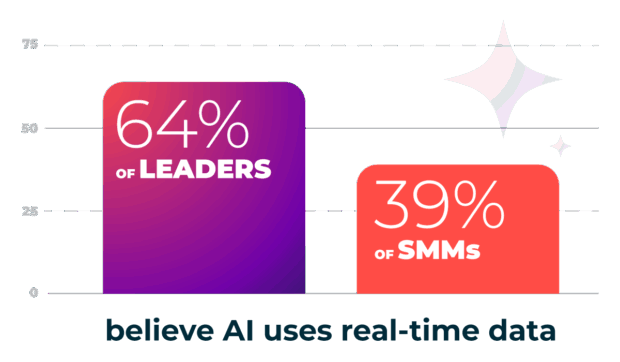
- The Illusion of Real-Time Data: A striking disparity exists in how real-time data capabilities are perceived. While 64% of senior marketers express confidence that their AI tools utilize real-time data, only 39% of social media managers—the practitioners on the front lines—concur. This highlights a critical flaw: if the underlying data is not current, the generated outputs will inevitably lag behind the fast-moving social conversation.
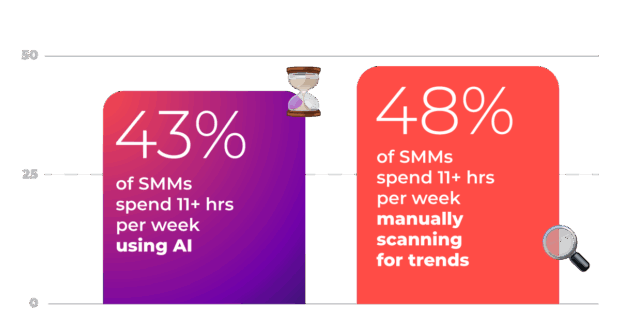
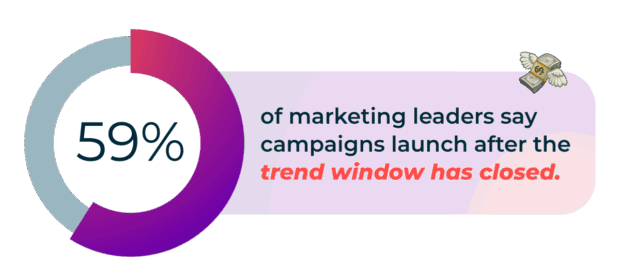
- Time Sinks and Missed Opportunities: Far from being the time-saving panacea they were pitched to be, many general AI tools inadvertently create more work. A recent survey revealed that 43% of social media managers now dedicate over 11 hours per week to AI tools, equating to a full third of their working hours spent refining outputs or compensating for the tools’ limitations. This substantial investment of time is often fruitless, as 59% of senior marketers report that their campaigns frequently launch after the relevant trend window has already closed. The economic implication of missing these fleeting opportunities can be substantial, leading to reduced engagement, diminished brand relevance, and lost revenue.
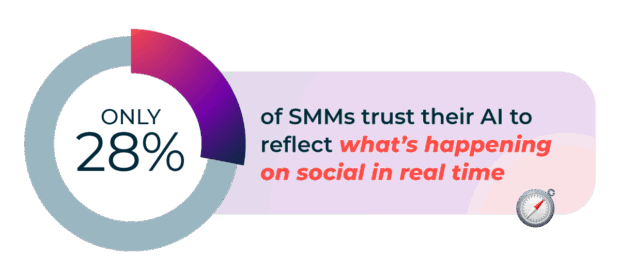
- The Disconnect in Understanding Social Nuances: A core failing stems from general AI’s inability to genuinely understand social media’s distinct conversational patterns and cultural context. 43% of social media managers observe that the content generated by these tools appears to be based on generic web data rather than platform-specific social sources. The resulting language often feels inauthentic, the insights superficial, and the overall tone misses the mark, as if written by an entity unfamiliar with actual online interaction. This fundamental lack of understanding erodes trust, with a mere 28% of social media managers expressing confidence in their current AI tools to accurately reflect real-time social dynamics.
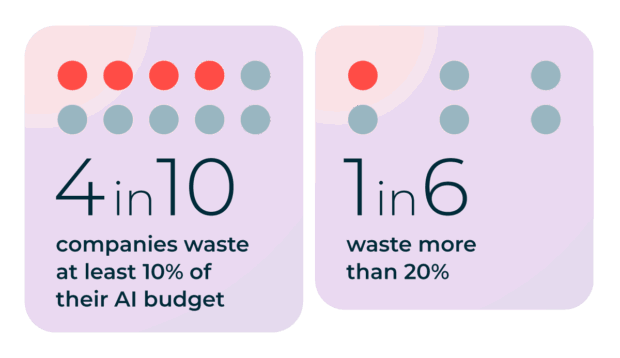
- Budgetary Strain and ROI Challenges: The rising tide of AI investment has also brought into focus the issue of wasted resources. 40% of senior marketers admit to squandering over 10% of their AI marketing budget on tools that failed to deliver tangible results. Despite an overwhelming 83% of senior marketers reporting increased AI budgets, and nearly half allocating over 10% of their total marketing spend to AI, a significant readiness gap persists, with only 30% of Chief Marketing Officers (CMOs) indicating their organizations possess the capabilities to scale AI effectively. This disparity between investment and operational readiness places immense pressure on marketing teams to demonstrate clear, measurable returns on AI expenditures, often without the specialized tools necessary to achieve them.
The Paradigm Shift: Defining Social-First AI
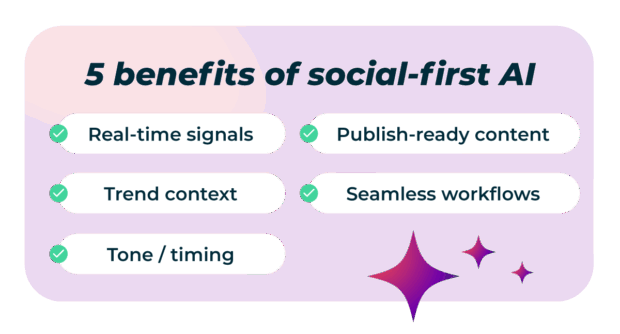
The limitations of general-purpose AI have catalyzed the development of social-first AI, a category built from the ground up to address the unique demands of social media. This specialized AI treats social platforms not as an afterthought but as its primary data source and workflow environment.
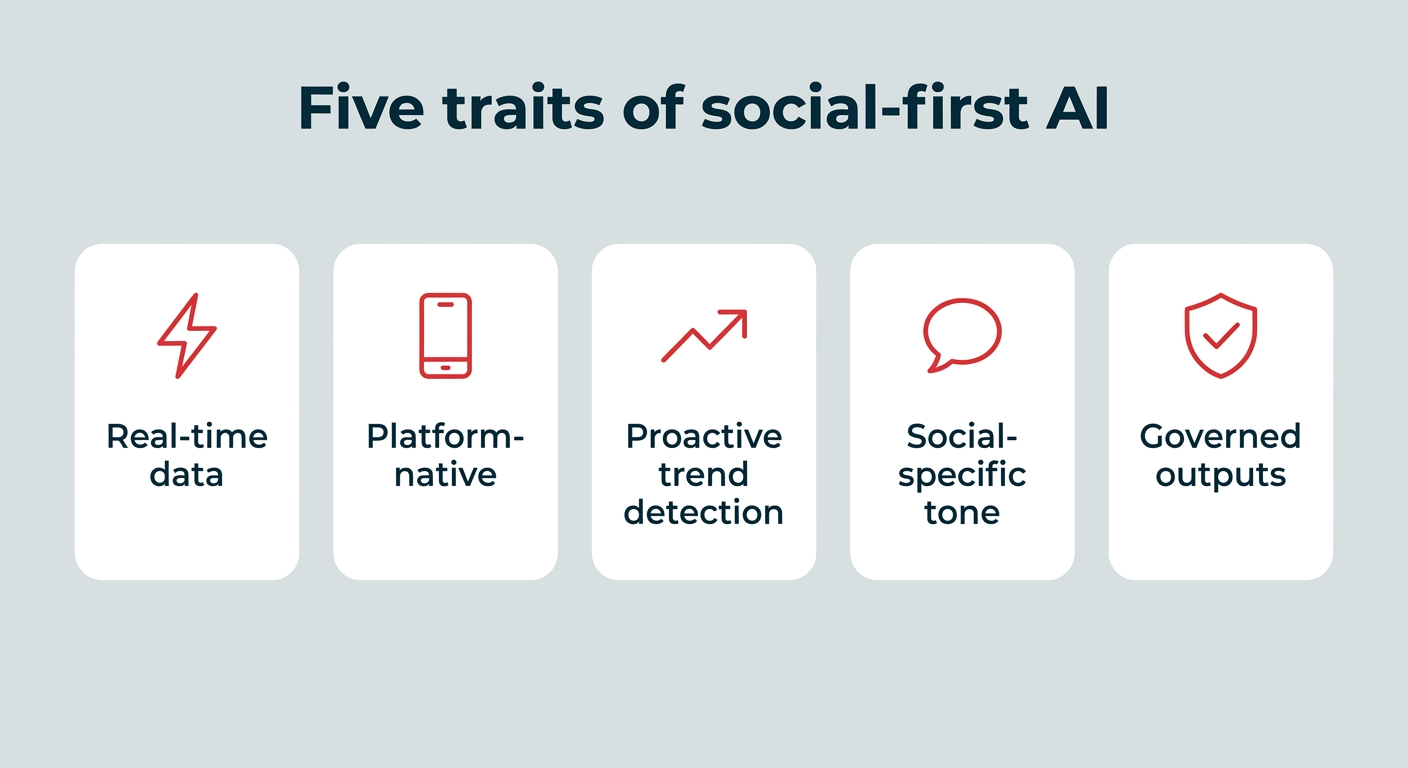
- Key Differentiators: Data, Timeliness, and Tone: The most critical distinction lies in its data source: social-first AI harnesses live social signals from across platforms, ensuring its insights are always current and relevant. This contrasts sharply with general AI’s reliance on static, often outdated web crawls. Consequently, social-first AI delivers real-time or near real-time intelligence, enabling brands to act decisively within critical trend windows. Its content generation is also platform-native, mirroring the authentic language and tone used by real people on each specific channel, moving beyond the generic or formal outputs of broader AI.
- Proactive Trend Detection and Platform-Native Understanding: A hallmark of social-first AI is its proactive approach to trend detection. Instead of reacting to established trends, it surfaces emerging conversations and shifts in sentiment as they gain momentum, providing brands with a crucial competitive edge. Furthermore, it possesses an inherent understanding of platform-specific formats, audience demographics, and community norms, ensuring that content is not only timely but also contextually appropriate. Crucially, social-first AI systems are designed with built-in governance, compliance, and approval workflows, addressing the critical need for brand safety and regulatory adherence—a feature often limited or bolted onto general AI solutions.
Implementing Social-First AI: A Strategic Framework
For organizations seeking to genuinely leverage AI for social media, selecting the right tools is paramount. The shift to social-first AI necessitates a rigorous evaluation based on specific criteria that prioritize social media’s unique requirements.
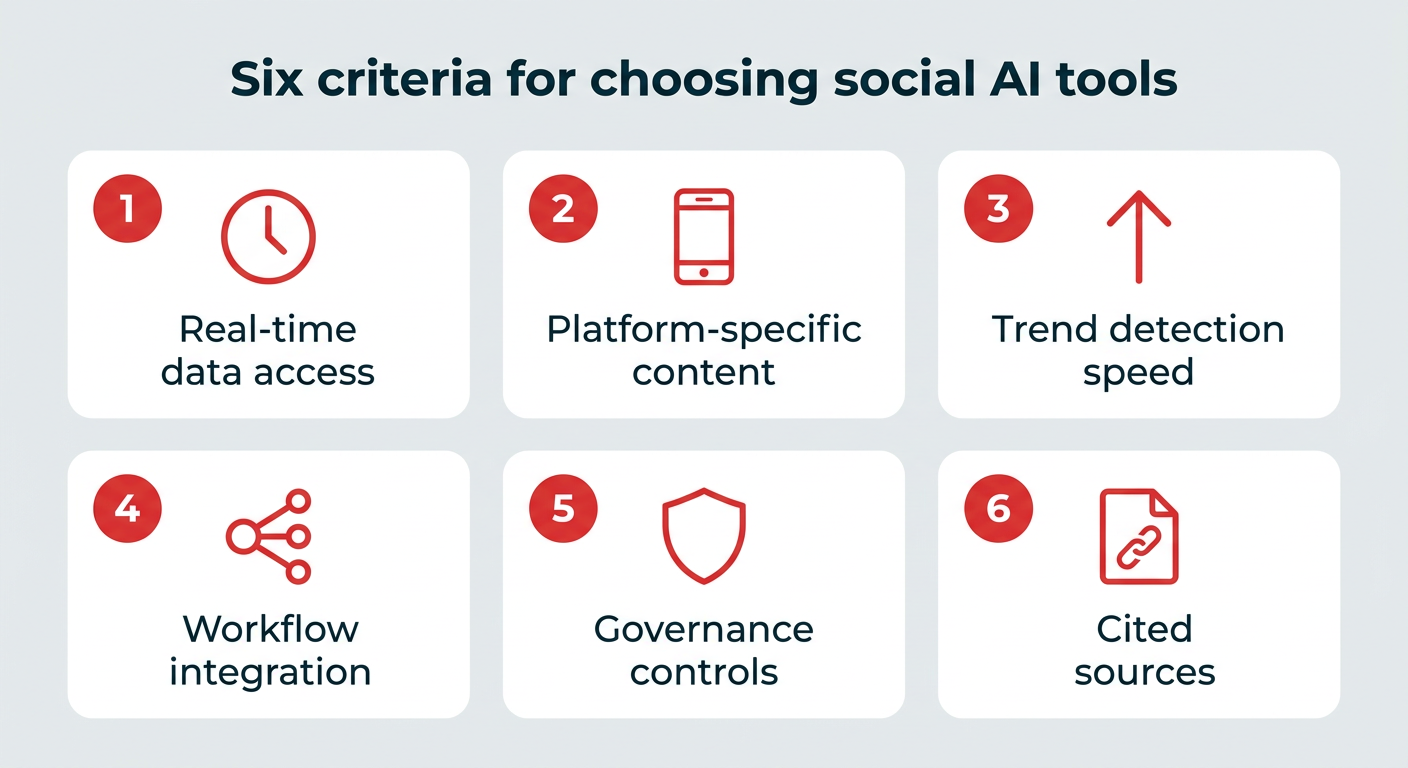
- Critical Evaluation Criteria for AI Tools: When assessing social AI tools, marketers should prioritize six key attributes:
- Real-Time Data Access: Does the tool draw from live social signals, ensuring up-to-the-minute insights?
- Platform-Specific Content: Can it generate content that inherently understands and adapts to the nuances of each social platform?
- Trend Detection Speed: How quickly can it identify and flag emerging trends, allowing for proactive engagement?
- Workflow Integration: Does it seamlessly integrate into existing social media management workflows, minimizing friction?
- Governance Controls: Are robust compliance, approval, and audit trail features built-in, rather than added as an afterthought?
- Cited Sources: Does it provide transparent citations for its insights, allowing for verification and building trust?
Tools that fall short on data freshness or governance are highly likely to contribute to the growing statistic of wasted AI budget.
- Transforming Day-to-Day Social Operations: The integration of social-first AI fundamentally redefines daily workflows for social teams, shifting focus from reactive management to proactive strategy.
- Catching Trends Before They Peak: Continuous social listening AI actively monitors conversations across millions of sources, flagging topics gaining traction in real-time. This capability directly counters the problem of delayed campaigns, enabling teams to receive alerts about rising conversations on day one, rather than discovering them in a weekly report days later. Human creativity then focuses on crafting compelling responses, while detection becomes an automated, continuous process.
- Creating Content that Matches the Platform: By grounding outputs in live social conversations, social-first AI drafts copy that inherently reflects current formats, references, and appropriate tones for each channel. This drastically reduces the number of edit cycles, allowing marketers to dedicate their time to strategic judgment calls and creative refinement, rather than rewriting robotic or generic content.
- Monitoring Brand Health in Real-Time: Beyond content creation, real-time intelligence provides a powerful defensive capability. Shifts in sentiment, sudden spikes in brand mentions, or critical competitor moves are surfaced as they happen. This immediate awareness grants teams a crucial head start in crisis response, reputation management, and dynamic competitive positioning, often translating into significant cost savings by mitigating potential damage before it escalates.
Case Study: Hootsuite Social OS as an AI-First Ecosystem
Platforms like Hootsuite Social OS exemplify the principles of an AI-first social operating system, where artificial intelligence is not merely an add-on but an integral layer embedded across the entire social workflow. This integrated approach connects intelligence, content creation, customer care, and governance within a unified system, eliminating the friction and inefficiencies of stitched-together tools.
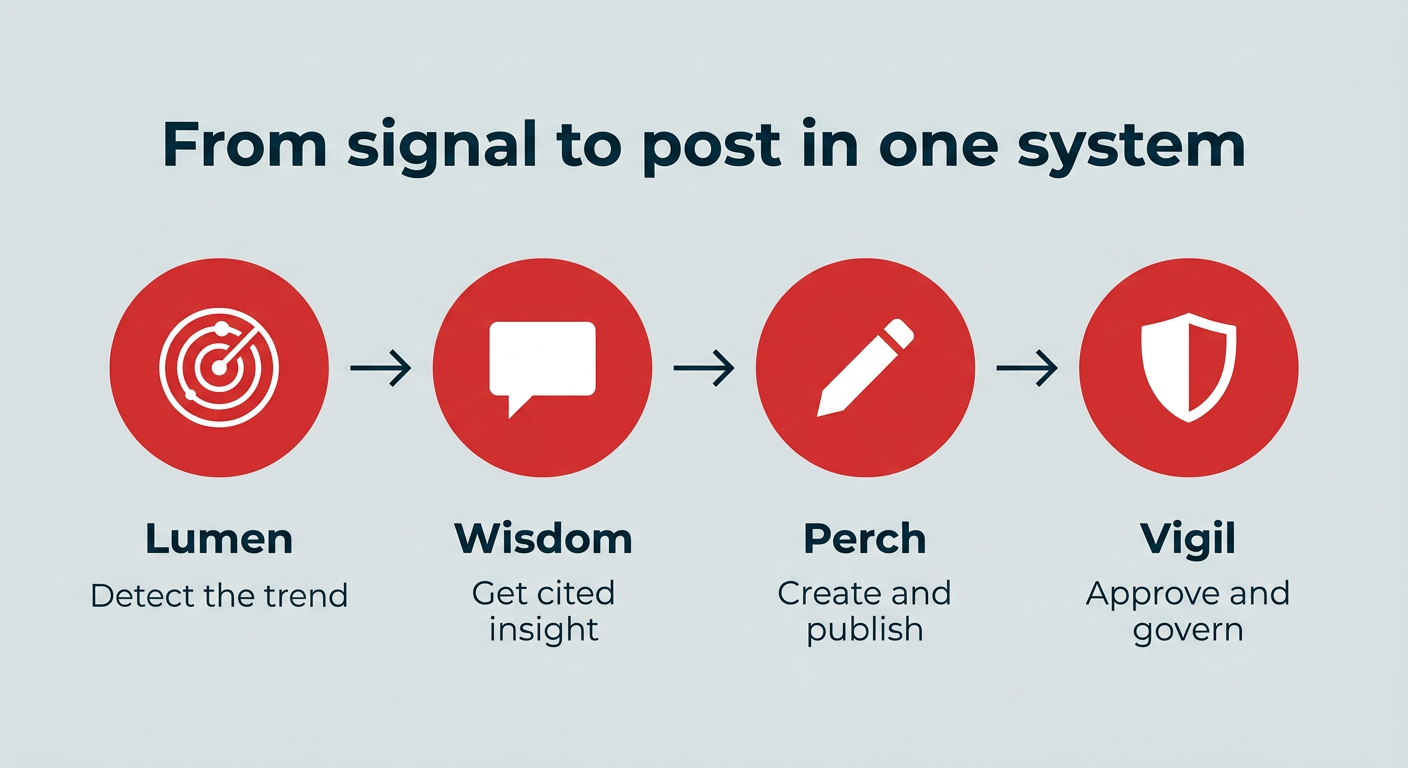
- Unifying Intelligence and Action: Within Hootsuite Social OS, dedicated applications address specific facets of the social-first AI workflow. Wisdom serves as the conversational AI layer, unifying previous assistants into a single agent capable of answering complex questions in plain language, grounded in live social data, and crucially, providing traceable citations. Lumen, the integrated insights and listening app, monitors conversations across over 150 million sources in 187 languages, delivering real-time sentiment analysis, trend detection, and competitive intelligence. Lumen also includes LLM Insights, tracking brand visibility within AI search results, a growing imperative as nearly half of US adults now use AI chatbots for research. This seamless integration ensures that insights gathered are immediately actionable within the same ecosystem.
- Ensuring Trust and Governance with AI: A critical component for enterprise-scale adoption is robust governance. Vigil acts as the governance layer within Hootsuite Social OS, providing essential controls for compliance, brand safety, and data privacy. Key governance considerations include: establishing clear approval workflows, maintaining comprehensive audit trails, setting user access controls, ensuring brand voice consistency, managing data privacy, and fostering explainability of AI outputs. Governed workflows transform speed from a potential liability into a strategic advantage, ensuring that rapid execution does not compromise brand integrity or regulatory compliance.
The Road Ahead: Agentic Workflows and Integrated Intelligence

The future trajectory of social-first AI is less about merely generating content and more about sophisticated coordination and intelligent augmentation. Early AI adoption focused on rudimentary tasks like drafting captions or summarizing reports. The ongoing shift is towards developing agentic workflows, where teams configure specialized AI agents to autonomously handle recurring tasks such as competitive monitoring or weekly performance synthesis, with human oversight for strategic review and final approval.

Moreover, the development of Multi-Channel Platform (MCP) connectors will enable social intelligence to flow seamlessly into other critical organizational systems. This means social data will transcend the confines of the social team, informing broader business decisions in areas like product development, customer service, and market strategy. This integration positions social-first AI as a crucial connective layer, bridging real-time social dynamics with holistic organizational action.
- Augmenting Human Creativity, Not Replacing It: Crucially, social-first AI is not designed to replace social media managers but to profoundly augment their capabilities. By automating data-intensive tasks like trend detection, content drafting, and performance synthesis, it liberates human practitioners to focus on high-value activities: strategic planning, creative ideation, nuanced community engagement, and the exercise of human judgment that AI cannot replicate. This synergy promises to elevate the role of social media professionals, transforming them into strategic architects of brand presence and community builders.
- Strategic Imperatives for Brands in the AI Era: For brands to thrive in this evolving landscape, a strategic embrace of social-first AI is paramount. This involves not only investing in the right tools but also cultivating an organizational culture that values real-time data, agile decision-making, and continuous learning. Those who effectively integrate social-first AI will gain a significant competitive advantage, characterized by enhanced brand relevance, superior audience engagement, and optimized marketing ROI. Conversely, neglecting this paradigm shift risks brands falling behind, struggling with outdated content, missed trends, and an inability to connect with consumers in the immediate, authentic manner that modern social media demands. The inflection point has arrived, and the imperative for specialized, intelligently governed AI in social media is clearer than ever.


 Neng Nana
 Lina Hope